This guide is for hosts and property managers deciding which design upgrades to pay for in a short-term rental. It ranks the usual upgrades by what they cost and by what guests notice in photos and reviews: beds and bedding, lighting, a focal wall, outdoor living, kitchen basics, a workspace and small repairs. Every price was checked on a retailer or cost-guide page on October 13, 2026.
By the end you can score any upgrade idea before you buy it, budget each room at three levels, test whether an upgrade would earn back its cost if your rate or booked nights change, work through a priority checklist room by room, and hand a photographer a shot list. Nothing here promises a higher nightly rate. The tools show what happens if your numbers change, and your next reviews show whether the work fixed what guests noticed.
- Spend first on what every guest uses and what your first five photos show: beds, bedding, blackout curtains and lighting. Airbnb says the first five photos are the most important on a listing.
- Airbnb chooses Guest favorites from overall ratings, review text, messages and six category ratings, including accuracy and value. A home needs at least 5 reviews in the past 4 years to be eligible.
- At IKEA on October 13, 2026, two queen sheet sets, a duvet insert, blackout curtains and two lamps came to about $135 to $630 per bedroom. A queen mattress added $379 to $649.
- Taskrabbit's guide, updated October 1, 2026, prices a hired repaint at $300 to $750 for a bedroom and $900 to $2,000 for a living room. Paint alone runs $20 to $100 a gallon.
- No source can promise a higher rate after a redesign. The payback calculator below shows what happens if your rate or booked nights change, and how long the upgrade would take to earn back its cost.
- Reshoot every changed room the week the work ends: horizontal photos, daylight, no flash, at least 1024 x 683 pixels, with the best upgraded room as your cover photo.
What Airbnb Measures and Guests Search For
Design money works hardest where it meets something Airbnb measures. Airbnb publishes how guests rate a stay, how it picks Guest favorites and which amenities guests search for most. Read those three lists before you open a store website.
The Six Ratings Every Guest Gives
After a stay, guests rate the overall experience and six categories. Airbnb's guide to reviews for hosts, dated September 17, 2025, lists them as check-in, cleanliness, accuracy, communication, location and value. Design and condition show up in three of them:
- Accuracy asks whether the place met the guest's expectations based on the listing. Photos that make a room look newer than it is cost you here, and so do props that leave with the photographer.
- Value asks how the place compared with its price. A good bed, a dark bedroom and a seat for every guest are part of that judgment at every price point.
- Cleanliness asks how well the home was cleaned before the guest arrived. Mildewed caulk, stained grout and scuffed walls can look dirty after a full clean, so small repairs belong in a design budget.
The same guide says the overall rating is not an average of the categories, that your average overall rating appears in search after 3 guests rate the listing, and that hosts and guests have 14 days after checkout to review each other. So the first reviews of an upgraded room arrive within two weeks of each checkout, and you can read the verdict on a fix within a few stays.
How Guest Favorites Are Chosen
Airbnb's Guest favorites help article says eligible homes are evaluated every day on overall star ratings, feedback in review text, guest-host messages, the six category ratings, the host cancellation rate, the review removal rate and quality-related incidents reported to customer service. A home needs at least 5 reviews in the past 4 years, with at least 1 of them in the past 2 years. Airbnb adds that other factors may apply and can change.
The ranking works in both directions. Places in the top 1%, 5% and 10% get a highlight on the listing page and a label above their reviews. Places in the bottom 10% can also get a label above their reviews, after Airbnb has sent the host a quality-related message. Review text is one of the inputs Airbnb names, so a complaint about a sagging bed or a dark bathroom matters alongside the stars.
The Amenities Guests Search For Most
Airbnb's article on the amenities guests want, updated August 31, 2026, lists the ten amenities guests searched for most worldwide from January 1 to December 31, 2025, based on Airbnb's internal data: pool, free parking, wifi, air conditioning or heating, kitchen, hot tub, washer or dryer, self check-in, TV or cable, and BBQ grill.
The same article lists the essentials guests expect: toilet paper, hand and body soap, one towel per guest, one pillow per guest, and linens for each guest bed, with more for larger groups and longer stays. Remote workers appreciate fast and reliable wifi, a dedicated workspace, ergonomic support such as a laptop stand, good lighting, and office supplies including a universal charger. Guests with accessibility needs often search for a step-free entrance, fixed grab bars in a bathroom and accessible parking.
Use the lists as a filter on your wish list. The kitchen, the BBQ grill and the remote-work items fit inside a design budget this month. A pool or a hot tub is a construction project with its own decision.
What Airbnb publishes
Guests rate check-in, cleanliness, accuracy, communication, location and value after each stay.
The first five are displayed prominently, and the first is the large image in search.
Airbnb's worldwide search data for 2025, from pool to BBQ grill.
Sources: Airbnb Resource Center, September 2025 and August 2026; Airbnb Help Center, October 2026
What Public Amenity Data Shows
Beyond, a company that sells pricing software to hosts, compared listings with and without certain amenities in major U.S. markets and published the results on October 6, 2026. In its amenities analysis, homes with a hot tub in Atlanta, Oahu, Los Angeles and the North Carolina mountains carried a 20% to 25% premium over homes without one, and pools showed premiums of 22% in New York, 18% in Los Angeles and 14% in San Diego. Wifi, cable TV, air conditioning, heating and free parking showed little lift, because guests expect them.
Read that data with care. Beyond doesn't publish its sample size or period, doesn't say whether the premium is in nightly rate or revenue, and compares different homes: a house with a hot tub may also be bigger or better placed than one without. Treat it as a sign of what guests value in those markets, and test any change to your own home under your own assumptions in the calculator further down.
Upgrades Ranked by Cost and What Guests Notice
The table ranks the upgrades hosts ask about most. The third column ties each one to a rating, a photo or one of Airbnb's lists from the section above. Costs come from the price sheet in the next section. Hired-work prices are U.S. averages, so your city can be higher or lower.
| Upgrade | Cost found, October 2026 | Where guests notice it | Priority |
|---|---|---|---|
| Beds and bedding | $135 to $630 a bedroom for sheets, duvet insert, curtains and lamps; $379 to $649 for a queen mattress | Every night of every stay; value rating and review text; linens are an Airbnb essential | First |
| Blackout curtains | $24.99 to $79.99 a pair | Sleep, so value and review text | First |
| Small repairs | About $38 an hour for a handyman; $150 to re-caulk a tub or shower | Cleanliness and accuracy ratings; close-up photos | First |
| Lighting | $9.99 to $79.99 a table lamp; $50 to $250 a wall light job; $75 to $250 a ceiling light job | Every photo and every evening; good lighting is on the remote-work list | Second |
| Kitchen basics | $49.99 to $79.99 for 18-piece dinnerware; $300 to $750 for a hired repaint | Kitchen is fifth on the most-searched list | Second |
| Workspace | About $130 to $780 for a desk, chair and lamp | Remote workers; a dedicated workspace is on the remote-work list | Second |
| Focal wall | $2 to $6 a square foot to paint; $150 to $600 to install wallpaper | Wide photos of the wall behind the bed or sofa | Third |
| Outdoor living | $99.99 to $699.99 for a dining set; $475 for a 3-seat conversation set | BBQ grill is on the most-searched list; evening and golden-hour photos | Third, or first if your best photo is outside |
| Full repaint | $300 to $750 a bedroom; $900 to $2,000 a living room | Wide photos, where scuffs and dated colors show | Third |
| Remodel of a kitchen, bath or floors | Local quotes | Photos; cleanliness when old finishes look dirty | Last |
Two rules settle most ties. Money goes first where every guest goes: the bed, the shower, the lights and the seats are used on every stay, while an accent chair mostly gets looked at. And a dollar that fixes a complaint already in your reviews beats a dollar spent on something no guest has mentioned.
Example: two recent reviews mention early sun in the back bedroom, and you're also eyeing new art for the living room. A pair of blackout curtains from $24.99 fixes a complaint guests already wrote down, so it goes first. The art waits until it can pass the same tests.
When you're torn between two purchases, score each one with the card below. It turns the ranking into ten checks, weighted toward the ones tied to ratings and photos. Score the cheapest version of each idea first, then the version you'd like to buy.
Score One Upgrade Before You Buy It
Pick one upgrade you're considering and answer each line for it. Nothing leaves your device.
Budget Tiers by Room
Each row prices one room at three levels. Starter fixes what guests touch, mid adds the bigger item guests use every night, and full adds the work that changes how the room looks in photos. Each level includes the one before it. The totals are estimates built from the published prices in the price sheet below: the low end uses the cheapest item found for each line and the high end the most expensive, before tax and delivery.
| Room | Starter | Mid, in total | Full, in total |
|---|---|---|---|
| Bedroom with one queen bed | 2 sheet sets, a duvet insert, blackout curtains and 2 lamps: $135 to $630 | Adds a queen mattress: $515 to $1,280 | Adds a hired repaint and a wallpapered wall behind the bed: $965 to $2,630, plus the paper |
| Living room | An 8 x 10 ft rug and 2 lamps: $150 to $560 | Adds a hired repaint: $1,050 to $2,560 | Adds a ceiling light job and a wallpapered focal wall: $1,275 to $3,410, plus the fixture and paper |
| Kitchen | An 18-piece dinnerware set for 6: $50 to $80 | Adds a hired repaint: $350 to $830 | Adds 2 pendant light jobs: $650 to $1,430, plus the fixtures |
| Bathroom | Re-caulk the tub or shower: about $150 | Adds a wall light job at the mirror and a hired repaint: $350 to $700 | Vanity, tile or shower work: get local quotes |
| Outdoor space | A table, 2 chairs and an indoor/outdoor rug: about $300 | Adds a 3-seat conversation set: about $775 | Swaps in a table with 6 armchairs and adds an outdoor light job: $1,475 to $1,875, plus the fixture |
How the bedroom row adds up: 2 queen sheet sets at $29.99 to $69.99 each, a Full/Queen duvet insert at $29.99 to $249, a pair of blackout curtains at $24.99 to $79.99, and 2 table lamps at $9.99 to $79.99 each come to $134.94 to $628.95. A queen mattress at $379 to $649 brings the room to about $515 to $1,280. A hired repaint at $300 to $750 and a wallpapered wall at $150 to $600 to install bring it to about $965 to $2,630, plus the paper, which starts at about $25 a roll.
Example: a two-bedroom, one-bath home with a queen bed in each bedroom, a living room, a kitchen and a small deck. The starter level everywhere comes to about $920 to $2,350. The mid level in both bedrooms with starter everywhere else comes to about $1,680 to $3,650. The mid level in every room comes to about $3,550 to $7,420. The middle option puts most of the money where guests sleep and saves the big paint jobs for later, when your reviews tell you whether they're needed.
Where a line has a wide spread, decide what guests need before you decide what to spend. Duvet inserts ran from $29.99 for a light polyester insert to $249 for a warm duck-down one: the cheaper insert may suit a warm beach market, and the warmer one a ski town.
Price Sheet
Every price below was on the seller's or cost guide's own page when we checked. IKEA prices are from its U.S. website on October 13, 2026, before tax and delivery, and they change often, so recheck before you order. Taskrabbit's figures are U.S. averages from guides updated October 1, 2026. Its lighting guide doesn't say whether the ranges include the fixture.
| Item | Price found | Source |
|---|---|---|
| Queen sheet set | $29.99 to $69.99 | IKEA sheets |
| Duvet insert, Full/Queen, light warm polyester | $29.99 | IKEA SÄFFEROT |
| Duvet insert, Full/Queen, warm duck down | $249 | IKEA FJÄLLHAVRE |
| Queen mattress | $379 to $649 | IKEA mattresses |
| Mattress by price tier | Budget $250 to $1,000; mid-range $500 to $1,500; luxury $1,200 to $3,000 or more | Sleep Foundation, updated July 15, 2025 |
| Blackout curtains, one pair | $24.99 to $79.99 | IKEA blackout curtains |
| Table lamp | $9.99 to $79.99; check whether a bulb is included | IKEA table lamps |
| Rug, about 8 x 10 ft | $129.99 to $399.99; indoor/outdoor rugs $199.99 | IKEA rugs |
| Desk | $59.99 to $299.99 | IKEA desks |
| Office chair | $59.99 to $399.99 | IKEA office chairs |
| Dinnerware set, 18 pieces for 6 | $49.99 to $79.99 | IKEA dinnerware sets |
| Outdoor dining set | $99.99 for a table and 2 chairs to $699.99 for a table and 6 armchairs | IKEA outdoor furniture |
| Outdoor 3-seat conversation set | $475 | IKEA outdoor furniture |
| Hired repaint | Bathroom $150 to $300; bedroom or kitchen $300 to $750; living room $900 to $2,000 | Taskrabbit painting |
| Accent wall paint job; paint | $2 to $6 a square foot; $20 to $100 a gallon | Taskrabbit painting |
| Wallpapered accent wall | $150 to $600 to install; paper from about $25 a roll | Taskrabbit wallpapering |
| Light installation, per fixture | Wall light $50 to $250; ceiling light $75 to $250; pendant or recessed $150 to $300; outdoor $100 to $500; chandelier $400 to $2,000 | Taskrabbit light installation |
| Handyman | About $38 an hour through Taskrabbit; drywall repair $250; sealing and caulking $150; mounting $150 | Taskrabbit handyman |
Room-by-Room Upgrade Notes
Work through the rooms in this order unless your reviews point somewhere else. Finish one room before you start the next, so every dollar shows up in a finished photo.
Bedrooms
- Mattress. Lie on every mattress for a few minutes. Replace any that sags, squeaks or has drawn a comment in a review before you buy anything decorative. The Sleep Foundation's mattress price guide puts budget mattresses at $250 to $1,000, mid-range at $500 to $1,500 and luxury at $1,200 to $3,000 or more, with average queen prices of $600, $1,000 and $1,800. Put a waterproof protector on every new mattress.
- Bedding. Buy two full sets per bed so one is always clean on turnover day, plus spare pillows beyond Airbnb's one-per-guest essential. White or one quiet color photographs cleanly and is easy to match when a piece wears out.
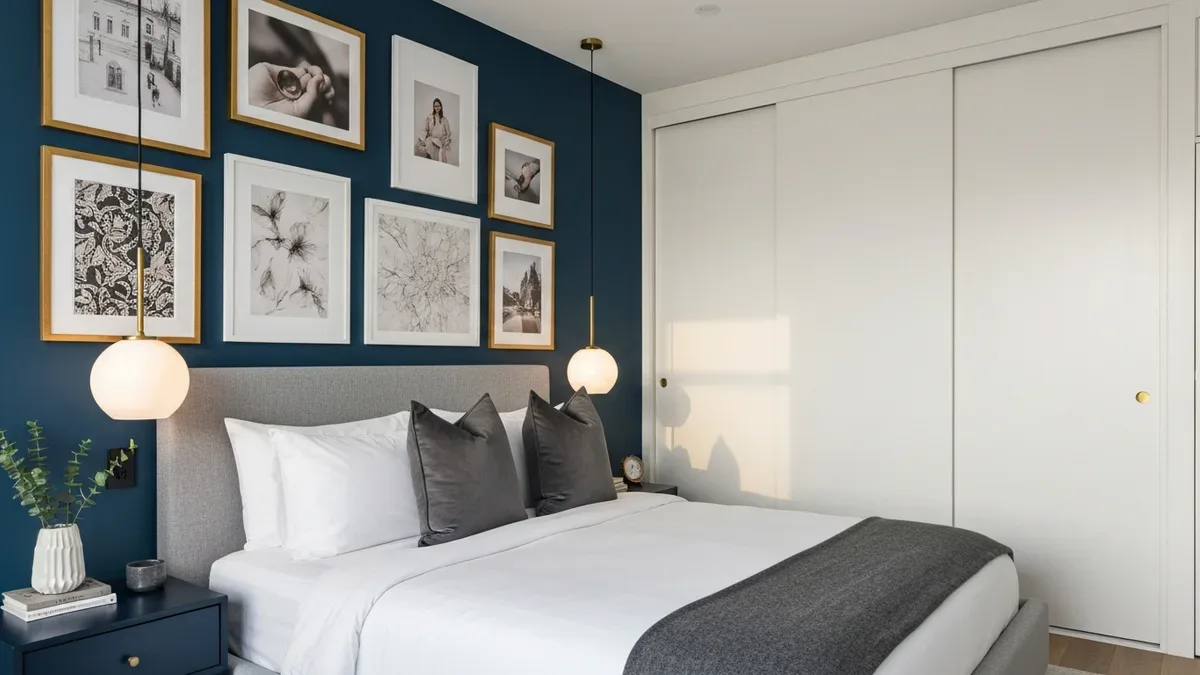
- Light control. Hang blackout curtains on any bedroom window that gets early sun or street light. Mount the rod higher and wider than the window frame so the panels clear the glass when open: the window looks bigger in photos and the room gets darker at night.
- Bedside basics. A lamp and a reachable outlet or charger on each side of the bed, so no one unplugs a lamp to charge a phone.
- Storage. Empty drawers and a few free hangers in each bedroom. They cost nothing, and guests use them on any stay longer than a night.
Second and third bedrooms get the same standard for the bed and bedding. The review covers the whole stay, including whoever slept in the smaller room. Save on the extras there instead: a simpler lamp, a smaller rug, less art.
Living Room and the Focal Wall
- A seat for every guest. Count seats against your maximum occupancy. If the listing sleeps six and the living room seats four, fix that before you buy art.
- A rug that fits. An undersized rug makes a room look smaller in a wide shot. Rugs of about 8 by 10 feet ran $129.99 to $399.99 on IKEA's rugs page when we checked.
- Layered light. One overhead light plus at least two lamps at different heights. Swapping a dated ceiling fixture is a $75 to $250 job in Taskrabbit's guide, and a pendant $150 to $300. Ask whether the quote includes the fixture.
- One focal wall. Pick the wall your wide photo faces, usually the one behind the sofa, or behind the bed in the primary bedroom. Paint it, paper it, or hang one large piece of art on it. One big piece reads better in a wide shot than a cluster of small frames, and it's one item to straighten on turnover day.
Example: a focal wall 12 feet wide and 8 feet high is 96 square feet. At Taskrabbit's $2 to $6 per square foot for an accent wall, a hired paint job comes to about $192 to $576. Wallpaper installation for an accent wall runs $150 to $600 in Taskrabbit's wallpaper guide, and traditional and peel-and-stick paper both start at about $25 a roll.
Bathrooms
- Towels. One towel per guest is on Airbnb's essentials list, and the same article suggests more for larger groups and longer stays. Matching white towels are easy to replace and bleach.
- Caulk and grout. Fresh caulk around the tub or shower removes the dark lines that look dirty in a close-up. Taskrabbit's handyman guide lists sealing and caulking at $150.
- Light at the mirror. A dim bathroom photographs badly and is hard to get ready in. A wall light over the mirror is a $50 to $250 job in Taskrabbit's lighting guide.
- Paint and hardware. A hired bathroom repaint runs $150 to $300. New towel bars, hooks and a shower curtain in one finish make the room look updated for little money.
- Grab bars. Fixed grab bars are on Airbnb's list of features guests with accessibility needs search for. Have them installed by a qualified pro into solid backing, then list and photograph them accurately.
Kitchen Basics
Kitchen is fifth on Airbnb's most-searched list, and a usable kitchen doesn't need a remodel. Start with what guests use: plates, bowls, glasses and cutlery for your maximum occupancy plus spares, one sharp chef's knife, a cutting board, two or three pans that suit the stove, and a working coffee setup. IKEA's 18-piece dinnerware sets, which serve six, ran $49.99 to $79.99, so a home that sleeps eight needs a second set or a few extra pieces.
For the photo, start with paint and light before you price new cabinets. A hired kitchen repaint runs $300 to $750 in Taskrabbit's guide, and two pendants over a counter or table cost $150 to $300 each to install. Clear the counters except for the coffee setup.
Workspace
A dedicated workspace, ergonomic support, good lighting and fast wifi are all on Airbnb's list of what remote workers appreciate. A desk at $59.99 to $299.99, an office chair at $59.99 to $399.99 and a table lamp at $9.99 to $79.99 came to about $130 to $780 at IKEA. Put the desk near a window and an outlet, add a laptop stand and a universal charger, and test the wifi speed at the desk itself. For homes that take long stays, our guide to designing for 30-day stays goes further on setting up for remote workers.
Outdoor Living
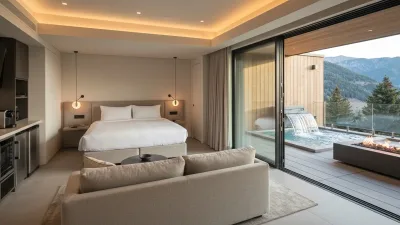
BBQ grill is on Airbnb's most-searched list, and a well-furnished outdoor space can earn a place in your first five photos. Furnish it for the number of guests you sleep. IKEA's outdoor furniture ran from $99.99 for a table and 2 chairs to $699.99 for a table and 6 armchairs, a 3-seat conversation set was $475, and an indoor/outdoor rug of 7 feet 10 inches by 10 feet was $199.99. An outdoor light installed by a pro runs $100 to $500 per fixture in Taskrabbit's guide, and it gives you an evening photo.
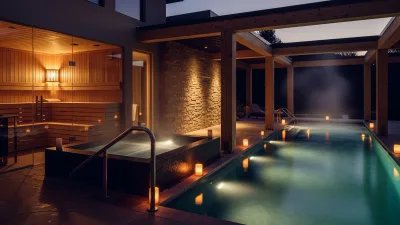
A pool or a hot tub is a different decision: construction, permits, insurance, safety rules and running costs. Check local rules first, then run the numbers through the Amenity ROI calculator or the payback calculator below before you ask for quotes.
Entry, Check-In and Small Repairs
Self check-in is eighth on Airbnb's most-searched list. If you don't offer it yet, a keypad smart lock is a small purchase next to a remodel; check which locks your booking software supports before you buy. Inside the door, a hook, a bench or shelf for bags and a mirror make the first minute of the stay easier.
Then walk the home with a roll of painter's tape and mark every small fault: nail holes, scuffs, chipped paint on doors and trim, a sticky lock, a loose handle, a dead bulb. Handymen hired through Taskrabbit average about $38 an hour, against a U.S. average of $50 to $125, and many charge a minimum of 1 to 2 hours, so batch the whole list into one visit. While you're on the walk-through, test the smoke and carbon monoxide alarms: Airbnb strongly urges both in spaces with fuel-burning appliances, and suggests a fire extinguisher and a first-aid kit.
Buy bulbs for the whole home in one color temperature. Warm and cool bulbs mixed in one room show up as patches of yellow and blue in a wide photo, and matching them costs only the bulbs.
Use the checklist below on a walk-through with your phone in hand, and tick each item once the work is finished. Your progress stays on this device, so you can come back to it as deliveries arrive.
Priority Checklist by Room
Work top to bottom and tick items off as you finish them. Your progress stays on this device.
- Bedrooms
- Bathrooms
- Living room
- Kitchen
- Workspace
- Outdoor
- Entry and repairs
- Photos and listing
Upgrade Payback Calculator
A design upgrade earns back its cost only if something changes: you charge more a night, you book more nights, or both. No one can tell you in advance that either will happen, so this calculator works the other way round. You enter what you think could happen, and it shows the result if it does.
How to Fill It In
- Upgrade cost. The full price: items, tax, delivery, labor, and the income from any nights you block for the work.
- Average nightly rate and booked nights. Your last 12 months, from your booking platform or your software's reports.
- Nightly rate change you expect. A modest number you'd be comfortable defending, or zero to test an occupancy change alone.
- Occupancy change in points. One percentage point of a 365-night year is 3.65 nights. Enter zero to test a rate change alone.
- Share you keep. What's left of each extra booking dollar after the platform fee and per-stay costs. Airbnb's service fee article says most hosts on the single-fee structure pay 15.5%, and most hosts on the split fee, which Airbnb is phasing out, pay 3%. Then take off the cleaning, laundry and supplies your cleaning fee doesn't cover.
What an Upgrade Returns If Your Numbers Change
Enter your own numbers and the change you think could happen. Nothing leaves your device.
Example inputs only, not averages or a forecast. The results show what happens if your rate and bookings change by the amounts you enter; they do not predict that they will.
Example: a host is pricing a $3,000 bedroom and lighting refresh for a home that averages $220 a night over 180 booked nights a year, and keeps 80% of each extra booking dollar. If the rate rises $10 and occupancy rises one point, the calculator shows about 3.7 extra nights, $2,112 a year kept, and 17 months to earn back the cost. A rate rise working alone would need to be $10.42 a night to pay the cost back within two years. If neither number moves, the upgrade never pays back in bookings, which is why cheap fixes for complaints already in your reviews come first.
How to Read the Result
- Compare payback with lifespan. If payback takes longer than the items will last under weekly turnovers, buy a cheaper version or skip it.
- Test the downside. Set the rate change and the occupancy change to zero, then to half of what you entered. If the upgrade only works at your most hopeful numbers, treat it as a gamble.
- Check after the photos go live. Compare your rate and booked nights for the 90 days after the new photos with the same 90 days a year earlier, so the seasons don't mislead you.
- Count the reviews too. An upgrade that ends a repeated complaint can be worth doing even with a long payback, because review text and category ratings feed Guest favorites.
Doing It Yourself or Hiring Help
Labor is where doing it yourself saves the most, because the soft goods cost the same whoever hangs them. Taskrabbit's cost guides, all updated October 1, 2026, give these U.S. averages:
- Interior painting from $40 an hour, with paint at $20 to $100 a gallon depending on brand, quality and sheen (painting guide)
- Light installation from $44 an hour (light installation guide)
- Wallpaper installation from $62 an hour (wallpaper guide)
- Handyman work at about $38 an hour through Taskrabbit, against a U.S. average of $50 to $125 an hour (handyman guide)
A sensible split for most hosts: buy, assemble and place the soft goods yourself, hire out painting when the rooms are large or the ceilings are high, and hire a licensed electrician for any new wiring or new fixture locations. Electrical work can need a permit depending on where you are, so check with your local building department before you book the job, and with your HOA or landlord if you have one.
Ask every pro to list labor, materials, cleanup and disposal on separate lines. Cost guides don't always say what a range includes, and line items let you compare two or three quotes fairly.
A Quote Request You Can Send
Send the same scope to two or three local pros. Fixed dates matter more in a rental than in a home you live in, because a job that runs over can cost you a booking.
Quote request for painting, lighting or repairs
Hi [Contractor name],

I'm collecting quotes for work at a short-term rental at [Address]. Guests are booked around the job, so the work has to start and finish between [Start date] and [End date], with the furniture back in place and the rooms clean by [Time] on [Last day].

Scope:
- [Room]: [Job, for example paint walls and ceiling, about 12 x 14 ft, 8 ft ceilings]
- [Room]: [Job, for example replace the ceiling light; I supply the fixture]
- [Small repairs, for example patch nail holes in two rooms and re-caulk the tub]

Please quote a fixed price with labor, materials, cleanup and disposal on separate lines, and tell me if any of it needs a permit. Photos of each area are attached.

Thanks,
[Your name]
[Phone number]
When a Designer Is Worth It
Bring in a designer when the home is high-end, when you're furnishing from empty, or when you can't settle on a direction and keep buying pieces that don't go together. Our guide to luxury Airbnb interior design covers what changes at the top of the market. Ask any designer for a fixed fee, a shopping list with prices you can buy from yourself, and a plan for photo day, so the result reaches your listing.
The Photo Plan After the Upgrade
An upgrade reaches future guests through your photos. Book the shoot for the week the work ends, and update the listing text the same day so the photos, the description and the amenities all match what guests will find. Airbnb's photo tour help article sets the rules:
- The first 5 photos are the most important because they're displayed prominently, and the first one is the large image in search results.
- New photos are sorted into rooms automatically, and every room or space needs at least one photo to appear in the photo tour.
- Photos must be at least 1024 x 683 pixels, and bigger is better.
- A new cover photo can take up to 30 minutes to appear.
- Each room can carry a description, and Airbnb suggests adding details such as sleeping arrangements, amenities and accessibility features.
Airbnb's photo tips for hosts, updated November 8, 2024, add the craft. Shoot horizontal, because search results crop images into squares. Center the subject and hold the camera straight. Open the curtains and turn off the flash. Mix wide, mid-range and close-up shots, and shoot outdoor spaces in the 60 minutes after sunrise or before sunset. The article suggests files of at least 1200 x 800 pixels and up to about 10 megabytes, and says Airbnb offers professional photography in select cities.
Shot List
Use this order for a home with two bedrooms, a living room, a kitchen, a workspace and an outdoor space. Make the cover whichever upgraded room looks best in daylight, and move the rest up or down to match.
| Shot | What it shows | Where it goes |
|---|---|---|
| Best upgraded room, wide, in daylight | The change guests see first in search | Photo 1, the cover |
| Primary bedroom, wide, curtains open | New bed, bedding and lamps in one frame | Photo 2 |
| Primary bed, close-up | Bedding texture, pillows, bedside lamp and outlet | Photo 3 |
| Living room, wide from a corner | A seat for every guest, the rug and the focal wall | Photo 4 |
| Outdoor space in the hour before sunset | Seating, dining set, grill, lights on | Photo 5 |
| Kitchen, wide, plus one close-up | Clear counters, dinnerware or the coffee setup | Photo tour, kitchen |
| Workspace | Desk, chair, lamp and outlet in one frame | Photo tour, the room with the desk |
| Second bedroom, wide | The same bed standard as the primary | Photo tour, that bedroom |
| Bathroom with the mirror light on | Fresh caulk, towels, the new light | Photo tour, bathroom |
| A bedroom with the curtains closed in daytime | How dark the room gets | Photo tour, after that bedroom's wide shot |
Photo-day brief for your photographer
Hi [Photographer name],

We've just updated [Property name] in [Town or neighborhood] and need new listing photos on [Date], from [Start time] to [End time]. Sunset that day is at [Time], so let's finish outside then.

Shot list, in this order:
1. Cover: [Best upgraded room], wide, in daylight
2. Primary bedroom, wide, curtains open
3. Primary bed, close-up of the bedding and a bedside lamp
4. Living room, wide from a corner, with [Focal wall or main art piece] in frame
5. [Outdoor space] in the hour before sunset, lights on
6. Kitchen, wide, plus one close-up of [Coffee setup or set table]
7. Workspace: desk, chair and lamp in one frame
8. Every other room at least once: [List of rooms]
9. One bedroom with the blackout curtains closed in daytime

Please shoot horizontally with the camera level, skip the flash, and deliver files of at least 1200 x 800 pixels by [Delivery date]. The fee we agreed is [Fee].

Thanks,
[Your name]
Then add a short paragraph to the description so guests reading the listing know what changed and when. Keep it factual and match it to the photos.
"Recently updated" paragraph for your listing description
Updated in [Month and year]: [New mattresses and bedding] in [Which bedrooms], blackout curtains in [Rooms], new lighting in [Rooms], and a dedicated workspace with a desk, an office chair and a lamp in [Room]. Outside, [Outdoor change, for example a dining table for six on the deck]. The photos show the home as it is today.
Close the Loop on Past Reviews
If a review mentioned the problem you just fixed, a short public response under it tells future guests the issue is gone. Keep it factual, thank the guest, and don't argue with the original point.
Public response to a review that mentioned the problem
Thank you for staying with us, [Guest first name], and for mentioning [the issue, for example the early light in the back bedroom]. We've since [the fix, for example hung blackout curtains in both bedrooms], so future guests can [the result, for example sleep past sunrise]. Thanks again for the helpful note.
Upload the same new photos everywhere the home is listed, including your own website and Google listing, so a guest comparing them sees one home. For more on photo order and captions, see our guide to Airbnb listing photos that book.
What Not to Spend On
Some purchases change nothing a guest uses or a review mentions. Skip these until the checklist above is done.
- More decor on every surface. Fewer, larger pieces photograph better and take less time to dust and straighten on turnover day.
- Personal items. Family photos, kids' artwork and your own clothes remind guests they're in someone else's home, and they clutter the photos.
- Short-lived trend pieces. A trend that dates quickly means buying again. Check our 2027 interior design trends post, which separates the trends that suit a rental from those on the way out, before you buy anything trend-led.
- Styling that leaves with the photographer. Rented props, borrowed art and staged breakfast trays set an expectation the stay can't meet, and accuracy is one of the six ratings.
- Pale, delicate fabrics on seats. A white linen sofa looks good on day one and shows every mark after a few turnovers. Pick washable or performance fabrics for anything guests sit on.
- A remodel before the basics. New cabinets or tile can wait if the beds are tired and the bedrooms are bright at dawn.
- Tech no one searches for. TV or cable is on Airbnb's most-searched list, and a whole-home smart system isn't. Fast wifi and self check-in come first.
What to Do This Week
You can do the planning in five short sessions this week and have the starter items ordered by the end of it. Hired work and the photo shoot follow on the dates your calendar allows.
- Day 1Read every review and guest message from the past 12 months. List each comfort or condition complaint by room, and note your category ratings for cleanliness, accuracy and value.
- Day 2Walk the home as a guest: arrive, cook, shower, work and sleep. Tick the priority checklist and take a horizontal phone photo of every room as it is today.
- Day 3Score your top five ideas with the scorecard and price them with the budget tiers. Run anything over $1,000 through the payback calculator, including a test with no change at all.
- Day 4Order the starter items for the bedrooms and bathrooms, and send the quote request for any hired work, with fixed dates around your bookings.
- Day 5Book the photographer for the week the work ends, and send the shot list.
- After the shootUpload the photos, set the first five, update the description and amenities, and respond to any review that mentioned a problem you fixed.
- Next 90 daysWatch your category ratings and review text, and compare your rate and booked nights with the same period last year.
Spend in this order: beds, light, repairs and photos first, then statement pieces and remodels once your reviews show the basics are right.
If you'd like a second opinion before you spend, Cavmir™ offers interior design consulting for vacation rentals.
Once the new photos are up, run the listing through the Listing Grader to check the rest of it against the home you now have.
Sources
Every figure in this guide comes from these sources, checked in October 2026.
- Airbnb Help Center, "Guest favorites", October 2026: airbnb.com
- Airbnb Resource Center, "The amenities guests want", August 2026: airbnb.com
- Airbnb Resource Center, "Why reviews matter", September 2025: airbnb.com
- Airbnb Help Center, "Setting up a photo tour for your home listing", October 2026: airbnb.com
- Airbnb Resource Center, "How to take great photos for your listing", November 2024: airbnb.com
- Airbnb Help Center, "Airbnb service fees", October 2026: airbnb.com
- Beyond, "These Vacation Rental Amenities Are the Most Profitable (Plus a Few that Are Not)", October 2026: beyondpricing.com
- Sleep Foundation, "How Much Does a Mattress Cost?", July 2025: sleepfoundation.org
- Taskrabbit, "Interior painting cost guide", October 2026: taskrabbit.com
- Taskrabbit, "Light installation cost guide", October 2026: taskrabbit.com
- Taskrabbit, "Wallpaper installation cost guide", October 2026: taskrabbit.com
- Taskrabbit, "Handyman cost guide", October 2026: taskrabbit.com
- IKEA US, "Sheets", October 2026: ikea.com
- IKEA US, "SÄFFEROT duvet insert, light warm, Full/Queen", October 2026: ikea.com
- IKEA US, "FJÄLLHAVRE duvet insert, warm, Full/Queen", October 2026: ikea.com
- IKEA US, "Mattresses", October 2026: ikea.com
- IKEA US, "Black-out curtains", October 2026: ikea.com
- IKEA US, "Table lamps", October 2026: ikea.com
- IKEA US, "Medium and large rugs", October 2026: ikea.com
- IKEA US, "Desks and computer desks", October 2026: ikea.com
- IKEA US, "Office chairs", October 2026: ikea.com
- IKEA US, "Dinnerware sets", October 2026: ikea.com
- IKEA US, "Outdoor furniture", October 2026: ikea.com