
Your property name shows up on Airbnb, in guest text messages, in Instagram captions, in email subject lines, and in word-of-mouth conversations. It's the one brand asset you create once and benefit from forever. Yet most hosts name their property something like "Cozy 2BR near Beach" and call it a day. That's not a name — that's a listing title.
A real property name builds recall. It gives guests something to repeat to their friends. It creates a hook for your Instagram handle, your direct booking domain, and eventually, your reviews ("We loved staying at The Sandpiper — already planning our return"). This piece walks you through how to get there.
Why Naming Is a Strategic Asset, Not a Cosmetic Choice
When a guest tells someone about their stay, they don't say "we rented a three-bedroom with ocean views on Airbnb." They say "we stayed at Blue Heron House." That one distinction is the difference between a referral you get and a referral you don't.
A memorable property name also anchors your whole brand ecosystem. Your Airbnb listing title, your direct booking website, your Instagram account, your welcome book, your front door sign — they all become cohesive when anchored to a single distinctive name. Without it, your property is just inventory. With it, you've got a brand.
Source: Cavmir internal research & host interviews, 2024
Think about direct bookings too. If a guest wants to rebook and remember where they stayed, a good name becomes their search query. "The Driftwood House Maui" is findable. "Cozy beachfront condo" is not. The name you choose today will either work for you or against you for the entire life of your listing. Treat it like the asset it is.
For properties in destination markets, this is especially true. See how the best-performing properties in Maui consistently have names that evoke place, mood, and a specific promise. It's not coincidence — it's deliberate positioning.
The 4 Naming Formulas That Actually Work
There's no single right formula, but there are proven frameworks. Here are the four that work best in short-term rentals, with real examples and the logic behind each.
Formula 1: Location + Feeling
This pairs the destination with an emotional state or sensory experience. It's descriptive enough to be understood and distinctive enough to be remembered. Think: Malibu Drift, Aspen Stillness, Keys Glow, Harbour Hush. Two words. Clean. The location grounds it; the feeling sells it. This works best for properties where the destination is a major draw — beach towns, mountain markets, island escapes.
Formula 2: Animal or Nature Mascot
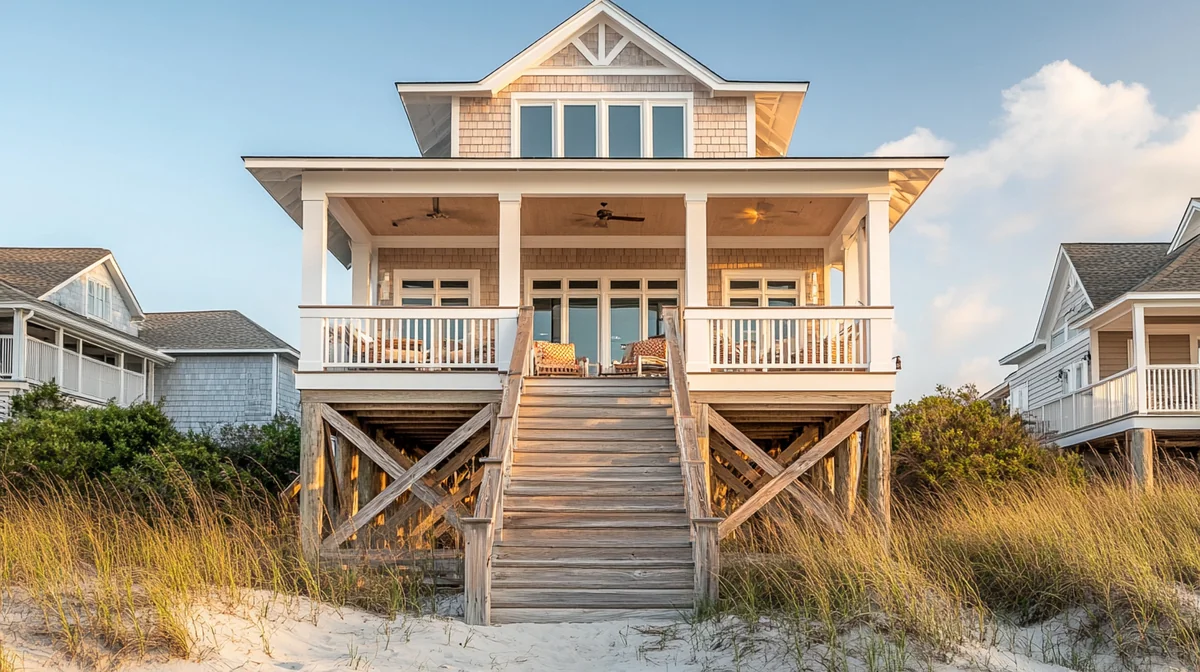
Pick a creature or natural element tied to your location and build around it. The Blue Heron. The Sand Dollar House. Osprey Cottage. The Driftwood. This formula is beloved for a reason: it's inherently visual, it suggests local character, and it produces names that guests remember and repeat. It also makes for excellent welcome book branding and front-door signage. The risk is being too generic — "The Beach House" doesn't count. Go specific.
Formula 3: Adjective + Noun
Simple, elegant, and versatile across property types. Wild Oak Lodge. The Quiet Pines. The Golden Door. Still Waters Cabin. The adjective should evoke your property's mood — rustic, serene, bold, minimal. The noun should ground it in the property type or landscape. Avoid vague pairs like "Cozy Retreat" or "Luxury Suite" — these read as listing titles, not names. Specificity makes it stick.
Formula 4: The Owner's Name (Done Right)
This works only when the name has charm or sounds like it belongs on a heritage property. Casa Delgado. The Brennan House. Villa Marchetti. It implies personal hosting and provenance — which is a genuine luxury signal when done well. It fails when the name is awkward, unpronounceable, or sounds arbitrary. If your last name is Henderson, "Henderson House" probably isn't distinctive enough. But if it's musical or unusual, lean in.
Write your top three name candidates on a piece of paper and leave them on your kitchen counter for 24 hours. Which one are you still excited about the next morning? That's the test. Names that feel clever at 11pm often feel flat by morning — and the reverse is also true.
Searchability vs. Memorability: You Need Both
A named property signals intentionality to guests before they even read the description.
Here's the tension every host faces: Airbnb's search algorithm rewards keyword-rich listing titles, but guests remember evocative names. The solution is to separate the two.
Your property name is your brand: "The Driftwood House." Your Airbnb listing title incorporates the name plus search terms: "The Driftwood House · Oceanfront · Private Pool · Maui." You get the memorability of the name and the searchability of the keywords — in the same field. This is standard practice among top-performing hosts.
Airbnb listing titles cap at 50 characters. That's tight. Your property name should ideally be 2–4 words — short enough to fit into a title, long enough to carry personality. If your name alone is 40 characters, you've left yourself no room for the keywords that drive clicks.
characters — the maximum length of an Airbnb listing title. Your property name should use no more than 20–25 of them, leaving room for location and key amenity keywords.
Check Domain and Handle Availability Before You Commit
Before you fall in love with a name, spend five minutes checking three things: Is the .com available? Is the Instagram handle available? Does anything awkward come up in a Google search of the name?
You don't need to register the domain on day one — but if you ever want a direct booking website (and you should), having the matching .com makes your brand cohesive and your direct booking URL clean. TheDriftwoodHouse.com is a professional direct booking URL. Airbnb.com/h/your-property is not.
For Instagram, the handle matters because guests share stays there constantly. If your property is "The Blue Heron" but @theblueheronhouse is taken by a restaurant in Ohio, you're stuck with @theblueheron_maui or something awkward. Check first, decide second.
Tools to check both simultaneously: Namechk.com lets you search a name across dozens of platforms in one shot. Takes 30 seconds. Do this for your top two or three candidates before you make a final call.
Names to Avoid (And Why They Fail)
Generic names fail because they describe the category, not the property. "Cozy" and "luxury" are adjectives that every host uses. They signal nothing distinctive. Numbered properties ("Villa #3") tell guests they're in a managed inventory — fine if you're a large operator, problematic if you're trying to command premium pricing on intimacy and uniqueness. Names that are essentially just search keywords ("Amazing Sunset Views") may perform marginally in SEO but give guests nothing to hold onto in their memory.
Avoid names that are hard to spell, impossible to pronounce on a phone call, or that accidentally mean something unfortunate in another language. If your target guests include international travelers — and if you're in a destination market like Maui, they will — run your shortlist past someone who speaks another language before finalizing.
The Bottom Line
Your property name is a 10-minute decision that will either work for you or against you for years. It affects what guests say to their friends, what they search when they want to rebook, how your direct booking website looks, and whether your Instagram account has any coherent identity.
Pick one of the four formulas. Make it specific to your property's mood and location. Check that the .com and Instagram handle are available. Run the 24-hour memory test. Then commit — and let your branding grow from there.
If you want to go deeper on how to translate a property name into a full brand identity — photography style, description tone, guest communication voice — that work starts with a proper branding strategy. Cavmir's branding service is built specifically for short-term rental properties, from name all the way through to visual identity.
Once you've got your name locked in, your next step is the listing description — because the name opens the door but the description closes the booking.