What Is in the Guide
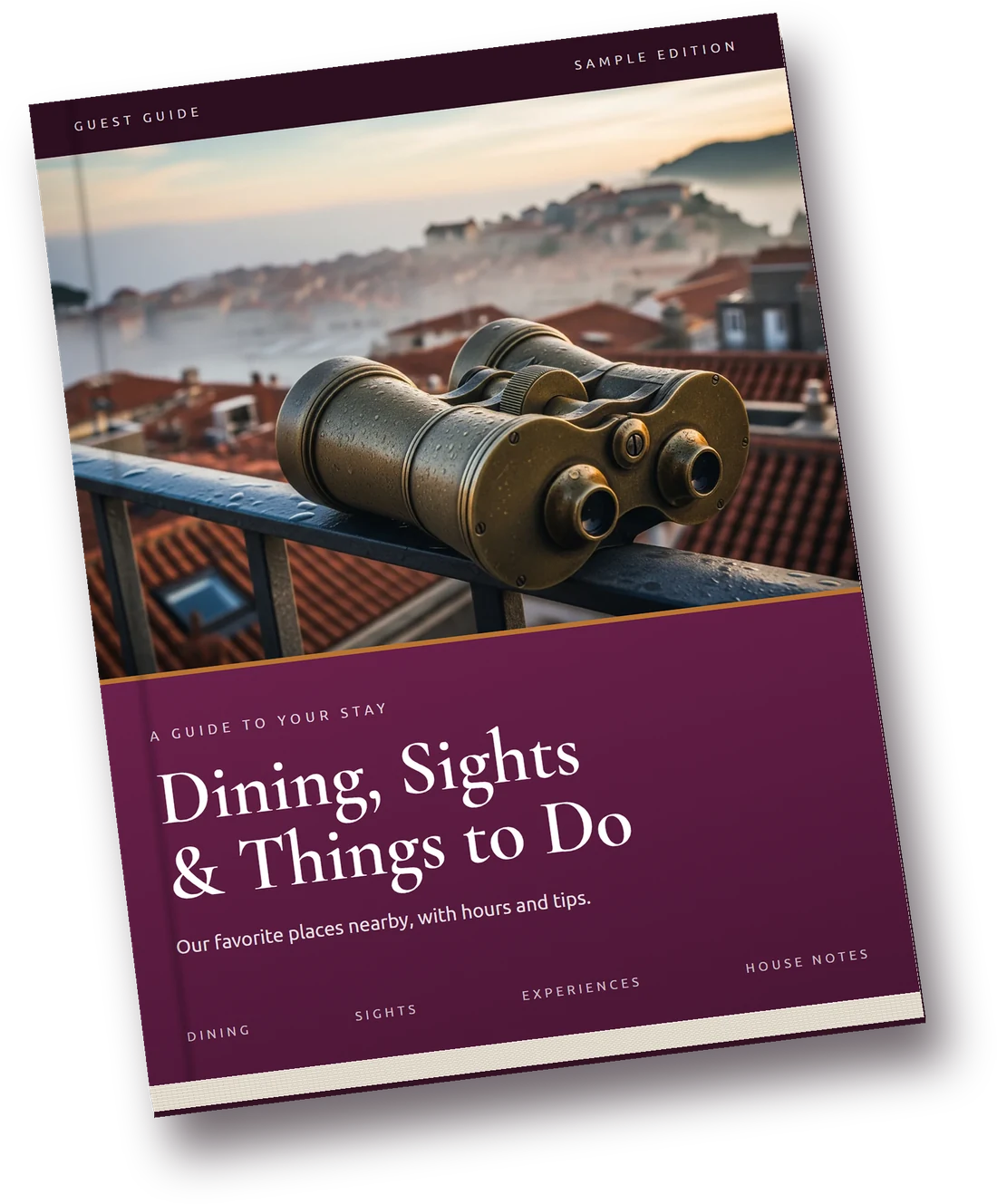
The guide is a designed document for one property or one portfolio, set in your colors and type. It opens with a short welcome from you, then covers the area in sections: where to eat, what to see, what to do, what to book ahead, rainy-day plans, getting around, and the house notes your guests need once they arrive. The length follows the place, and we agree the outline with you before we write anything.
Every entry names the place, says in a sentence or two what it is, says who it suits, and gives the practical detail: where it is, when it is open, whether to reserve. Hours and prices carry the date we checked them, so you and your guests can tell a current line from an old one.
The picks are yours. You know which restaurant you send guests to and which one you quietly avoid. We take your list first, fill the gaps from primary sources, and cut anything you do not stand behind.
Why Guests Give an Email Address for It
A booking page asks for money and a commitment. A guide asks for an email address and gives something back at once. For someone comparing three places, that is an easier yes, and a useful one: a guest planning the trip around your recommendations has already started picturing the stay.
It also reaches people your platform listings never will. Airbnb and Vrbo do not hand hosts their guests' email addresses. A visitor to your own website who signs up for the guide has told you directly that they want to hear from you, and that is a list you own.
What the Sign-Up Does
The form asks for a name and an email address, nothing else. Under it sits an unticked consent box with one plain sentence about what the person will receive, and a link to your privacy policy. When the guest submits, the guide opens on the page. We store the consent wording, the date and the page the person signed up from, so you can show how each address got on your list.
The address goes to the email list kept for your property. Where your plan includes the monthly email, those are the people it goes to. Every email carries an unsubscribe link, and a person who unsubscribes stays unsubscribed.
We do not email anyone who has not ticked the box, and we do not buy, rent or scrape addresses.
How the Guide Is Researched
Each place comes from your list or from a primary source: its own website, the local tourism office, the official page for a park or museum. We check what is open, what has closed and what has moved. We do not copy another site's guide, and we do not repeat review text. Where a fact cannot be confirmed we leave it out rather than guess. Photos are yours, or images we are licensed to use, with the credit shown where the license asks for it.
You see the draft before anything goes live. Cut what you want, add what we missed and tell us what to reword. The guide goes on your site only after you approve it.
How It Fits With the Rest of Your Marketing
The guide works best on a direct booking site, where it can sit on the homepage and on the pages guests land on from search. It also gives your social posts and your monthly email something worth linking to. Our direct booking website service can build the sign-up in from the start, and brand guidelines give the guide its colors and voice.
Who It Is For
Hosts and managers with a direct booking website, or a page on their own site, who know their area well enough to recommend it: a single villa, a small collection, a boutique hotel, a manager with an owner portfolio in one town. It suits places where guests plan their days, which describes most vacation destinations. It is less useful for a property that is a stopover, where guests rarely leave the building.
Keeping It Current
Restaurants change hands and trails close. Because every line is dated, you can see at a glance what is due for a check. We recommend a refresh once a year, before your busy season, and we will quote an updated edition whenever you want one. The sign-up and the list carry on unchanged.