
Start here Work with Cavmir in Medellín
Get a Proposal (786) 751-3426
$95
Avg. Nightly Rate
72%
Avg. Occupancy Rate
$2,060
Avg. Monthly Revenue
12–16%
Est. Cash-on-Cash ROI
LOW
Seasonality
MEDIUM
Regulatory Burden

* Market averages. Properties marketed by Cavmir typically exceed these figures by 25–45%. Data sourced from AirDNA, STR market reports, and Cavmir internal analytics.

The Market

Why Medellín is One of the World's Premier STR Markets

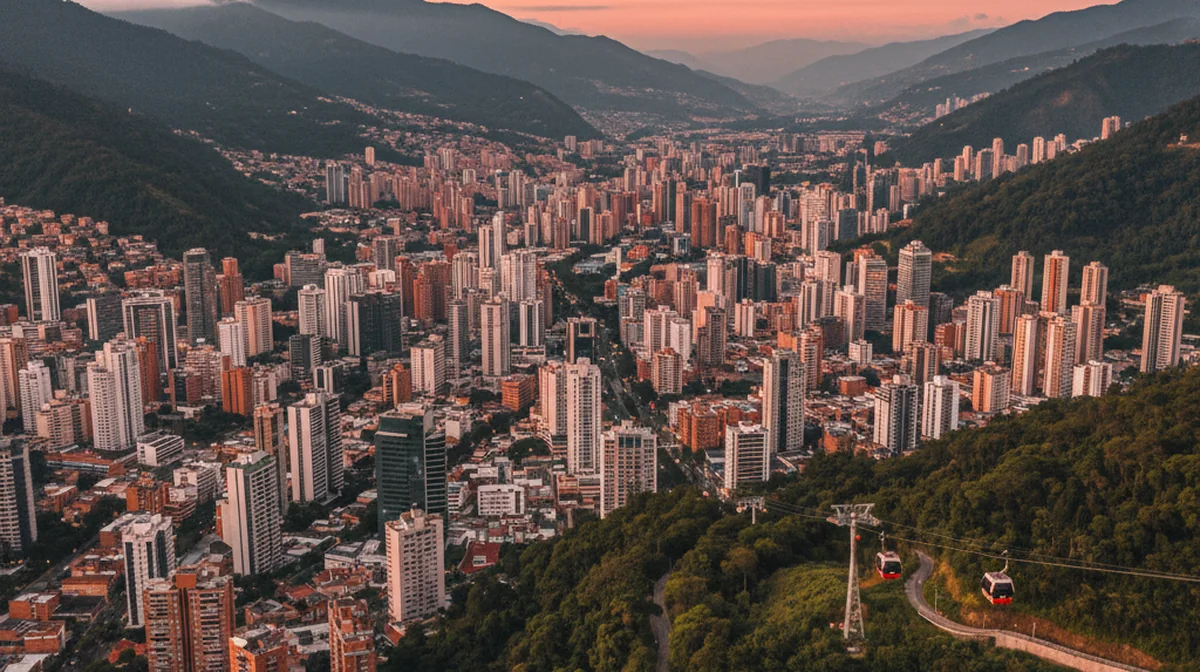
Medellín is the most transformed city in Latin America — the "City of Eternal Spring" nestled in a narrow Andean valley at 1,495 meters, with year-round daytime temperatures of 22–28°C and a reputation that has moved from cartel-era notoriety to one of the most visited and most livable destinations on the continent. El Poblado and Provenza anchor the international-traveler and digital-nomad corridor; Laureles and La Florida carry the boutique and design-forward segment; El Centro, Comuna 13, and Guatapé draw the cultural-tourism visitor; Envigado sits quietly as the residential luxury alternative. The Metrocable integrates the city in ways most Latin American capitals have not managed.

Medellín's STR market is the clearest ROI story in Latin America — low operating costs, high occupancy, essentially no seasonality, and sustained digital-nomad demand. El Poblado and Provenza command the international-traveler premium; Laureles holds sharper ROI thanks to lower per-square-meter property prices against similar nightly rates. 30+ day stays are a structural segment worth designing for. Recent 2024–2025 municipal regulatory tightening on short-term rental registration has professionalized the market without denting demand.

Top Attractions & Landmarks

  • El Poblado
  • Provenza
  • Laureles
  • Comuna 13
  • Plaza Botero
  • Pueblito Paisa
  • Guatapé (El Peñol)
  • Parque Arví

Nearby Markets: Panama City  |  Rio de Janeiro  |  São Paulo

Airbnb marketing services in Medellín, Colombia, LATAM
Why Cavmir

The Cavmir Advantage
in Medellín

Cavmir positions Medellín properties for the international remote-worker and the week-long traveler who discovered Medellín through a friend and now books returning trips. Our cinematic photography captures the valley topography at golden hour, the Comuna 13 murals, and the Provenza courtyard-building design vernacular that distinguishes Medellín from every other Latin American capital. Our direct-booking infrastructure is decisive in a market where monthly-stay and repeat-traveler bookings now dominate.

State of the Industry · History

The Medellín STR Market — Past & Present

Medellín sits in a narrow valley in the Andes at around 1,495 metres, high enough that the air stays mild all year. That single geographic fact — the reason people have called it the "City of Eternal Spring" for generations — is the quiet foundation under everything the rental market does here. Founded in the seventeenth century and grown into the capital of Antioquia, the city built its early wealth on gold and then on coffee and textiles, and for a long stretch of the twentieth century it was better known abroad for violence than for anything it made.

What happened next is the part of the story guests actually arrive curious about. Over the last three decades Medellín rebuilt itself with unusual deliberateness — the Metro that residents treat almost as a point of civic pride, the Metrocable cars that carry hillside neighbourhoods into the transit system, the libraries and public spaces put into the poorest comunas on purpose. Comuna 13, once a byword for the worst years, is now one of the most-visited spots in the city for its escalators and street art. That arc from crisis to reinvention is not marketing spin; it is the thing a large share of your guests have read about and come to see for themselves.

For an owner, the practical lesson is that Medellín's demand rests on three durable legs rather than one season: international leisure travellers drawn by the story and the climate, remote workers and digital nomads who stay for weeks or months, and medical tourists who come for dental and cosmetic care. Understanding which of those three your unit serves is where good marketing here begins.

Pricing Strategy & Seasonality

Pricing, Seasonality & When to Capture ROI

Pricing Strategy

Medellín prices differently from a tropical beach market because its weather barely moves. There's no rainy-season collapse and no scorching low season to discount into, so the base of demand holds far steadier through the year than owners coming from Cartagena or the Caribbean coast expect. The upside of that is a business you can plan around; the risk is complacency, because the real money is made on top of that steady base, on the dates that genuinely spike.

El Poblado is the district that carries the tourist and nightlife trade — Parque Lleras and the Provenza strip are the centre of gravity for short-stay visitors, and a walkable unit there commands the clearest premium. Laureles is the quieter, more residential, famously walkable alternative that a growing share of longer-stay guests and nomads now prefer, and Envigado sits just south for guests who want calm over nightlife. Price those areas for who actually books them: El Poblado can run a nightlife premium on weekends, while Laureles rewards the monthly rate that keeps a remote worker for six weeks instead of six nights.

Long stays are the lever most owners underuse. Digital nomads and medical-tourism patients often want a month or more, and a well-set weekly and monthly discount fills the shoulder weeks that a nightly-only calendar leaves empty. Set those rates deliberately rather than leaving Airbnb's defaults in place — a strong monthly price is what turns Medellín's steadiness into your steadiness.

Seasonality & ROI Windows

The mild climate flattens the curve, but four windows lift it. The signature spike is the Feria de las Flores in early August — in 2026 it runs July 31 to August 9, finishing with the Desfile de Silleteros on Sunday, August 9 — and demand across the city firms up hard around it. December brings the Alumbrados Christmas-light displays plus the Christmas and New Year holidays, another genuine peak. Semana Santa around Easter fills again, and the whole northern-hemisphere winter, roughly December into March, brings North Americans and Europeans escaping the cold to a city that's a comfortable spring while home is frozen. Load those windows early; treat the truly quiet weeks as your reshoot-and-maintenance stretch.

Regulation & Licensing

What the Law Requires in Medellín

Colombia treats a short-term rental as tourist accommodation, not a casual private let, and that framing drives the rules. The first requirement is the Registro Nacional de Turismo, the RNT. Under national tourism law, anyone offering tourist lodging — including stays under thirty days on platforms like Airbnb, Booking or Vrbo — is expected to hold an active RNT, register it, and renew it annually early in the year. Your RNT number gets displayed on the listing; the major platforms have moved to require it, and operating without it exposes you to fines and suspension. This is the box owners most often skip and most often regret.

The second layer is your building. Under Colombia's horizontal-property regime — Ley 675 — the assembly of co-owners can vote, by a qualified majority, to authorise or to prohibit tourist rental in the building, generally on grounds of security or the tranquility of residents. There has been active national debate and a reform effort around exactly how far those powers reach and how "viviendas turísticas" fit the residential model. The takeaway for you is unchanged by the legal back-and-forth: the decisive document is your building's reglamento and its assembly minutes, not a city web page. Read them before you buy.

The third layer is specific to Medellín and needs stating plainly. Tied to combating the sexual exploitation of minors and sex tourism, the city has at times imposed measures in El Poblado and Provenza — ID checks that turn away minors, tightened nightlife hours, and coordination with lodging operators. These measures have come and gone, but they are a real part of operating responsibly here: know your guests, keep proper records, and never let your unit become part of that problem.

Tax is the last piece. Rental income is taxable in Colombia and administered by the DIAN. None of the above is legal or tax advice — confirm your RNT status, your building's position and your filings with a Colombian abogado and a contador before you list.

Market-Specific Tips & Challenges

Local Tips & Unique Market Challenges

Tips That Actually Move Revenue in Medellín

Name the neighbourhood in the first line, not the city. "Medellín" tells a guest nothing about the experience they'll have; "Laureles, walkable, five minutes to the Estadio Metro station" tells a nomad they can live without a car, and "one block off Provenza in El Poblado" tells a first-timer they're in the middle of it. In a city this segmented by district, the neighbourhood is most of the product.

Sell the workspace like you mean it, because a huge slice of your best guests are working from the unit. Fast, genuinely reliable wifi and a real desk — not a stool at the kitchen counter — are the two things a remote worker screens for before anything else. If you know the connection speed, state it. If there's a dedicated work chair and good light, photograph it. Nomads compare listings on this the way beach guests compare on the view.

Lean into the climate honestly, and let it save you money. The spring-like weather means many units genuinely don't need heating or air conditioning, and saying so plainly is both true and reassuring — a guest from a humid tropical market often assumes they'll swelter without AC and is relieved to learn the altitude does the work. Don't oversell it; if the unit gets warm on a bright afternoon, say a fan handles it.

Map the real walk. A ten-minute honest radius of cafés, the Provenza restaurants, a Metro or Metrocable station, and a supermarket does more work than any adjective. Guests here plan around walkability and the Metro, so give them the map they're actually going to use.

Position for the day trips. Guatapé and El Peñol are the classic outing, and Comuna 13, Plaza Botero and the Museo de Antioquia are in-city draws. A short, accurate "here's how you'd spend three days" note reads as local knowledge, which is exactly what a nomad or first-time visitor is buying.

Unique Medellín Challenges

The first challenge is compliance drift. The RNT and the building's Ley 675 position aren't one-time boxes — the RNT renews annually, and an assembly can change its stance. An owner who set things up correctly two years ago and stopped paying attention is the one who gets locked out of the platform or voted out of the building. Treat compliance as a standing task, not a launch step.

The second is the city's reputation management. Medellín is actively working to shed the sex-tourism association, and the measures around El Poblado and Provenza are real. Market your unit to families, remote workers, couples and genuine travellers, keep clean guest records, and don't chase the party segment that the city itself is pushing back on. It's the responsible position and, increasingly, the durable business one.

The third is oversupply in El Poblado. It's the most obvious place to buy and therefore the most crowded shelf, and a generic unit there competes only on price. The way out is precise positioning — a specific guest, a specific block, a genuine work setup or a genuine view — rather than another interchangeable listing hoping to win on being ten dollars cheaper.

The city that engineered its own comeback
Medellín's Metro is the only heavy-rail metro in Colombia, and the Metrocable gondolas that plug steep hillside neighbourhoods into it were among the first of their kind used as everyday public transit anywhere. Paired with the library parks and the Comuna 13 escalators, they became the physical symbols of a deliberate turnaround that urban planners now study around the world. For an owner, this isn't just a good story to tell — it's a genuine marketing asset. A large share of your international guests arrive already curious about that reinvention, so a listing that helps them see it firsthand — the Metrocable ride up, the street art in Comuna 13, the transformed public spaces — is selling the exact thing that put Medellín on their list, rather than a generic "vibrant city" line that could describe anywhere.
Finance Essentials — Medellín
🛡️

Insurance

A standard residential policy is unlikely to respond correctly to paying guests coming and going, and in a dense vertical building the exposures are specific: liability for a guest in a common area, water damage that travels between units, and theft or damage during a stay. Ask your insurer directly how the policy treats short-term paying guests, whether guest liability is covered inside the unit and in the building's shared areas, and how the copropiedad's own insurance interacts with yours. Get the answer in writing before your first booking rather than after a claim — Colombian coverage terms don't always mirror what a foreign owner assumes from home.

🧾

Property & Income Tax

Rental income earned in Colombia is taxable and administered by the DIAN, and short-term tourist lodging is treated as a tourism activity rather than a casual rental, which can carry its own registration and tax consequences. Platforms don't settle your Colombian tax obligations for you, and direct bookings are entirely your responsibility. The rules around thresholds, deductions and how tourism services are taxed change, and a foreign owner in particular shouldn't assume the treatment they know from home applies. Confirm your current obligations with a Colombian contador — this is general information, not tax advice.

🏦

Financing & Ownership

Financing conditions in Colombia differ substantially from North American norms, and foreign buyers especially should take local advice before assuming a mortgage structure they know from home applies here. The Medellín-specific point is the same one that governs everything else: a lender or co-investor underwriting projected short-term rental income needs that income to be legally achievable, and in a horizontal-property building the assembly can vote it away, while the RNT keeps it on the platform. Settle the building and registration questions before the financing question, and talk to a local advisor who has actually closed short-term rental purchases in the city. Treat this as general information rather than financial advice.

Future Outlook · 2027 & Beyond

Where Medellín is Headed Next

Medellín's direction is legible because its pull is structural, not a passing trend. The climate isn't going to change, the reinvention story keeps drawing curious first-time visitors, and the remote-work wave that made the city a nomad hub has become a fixture rather than a moment. The Ruta N innovation district and the city's push to brand itself as a technology and business hub keep adding a professional, longer-staying layer of demand on top of the leisure base. Those are durable segments, and they're the reason Medellín is one of the more resilient rental markets in the region.

The regulatory direction is the thing to watch, and it points toward more formality, not less. The RNT requirement is being enforced harder through the platforms, the reform conversation around Ley 675 and tourist rentals in residential buildings continues, and Medellín's own measures around responsible tourism aren't going away. The owners who win over the next few years are the ones who treat compliance as a feature — registered, transparent, in a building that has settled its position — rather than the ones hoping enforcement never reaches them. As the market formalises, the informal operators are the ones who get squeezed out.

On the demand side, the competitive pressure is quality. El Poblado is crowded and getting more so, and as supply grows the market splits between well-presented units with a clear guest and a clear story, and a long tail of generic listings competing only on price. A genuine work setup, honest local positioning, a direct-booking relationship and a responsible guest profile are what keep you out of the discount tier and on the right side of a city that's actively choosing what kind of tourism it wants.

From the Desk of Sofie Sinag

Why We Love Marketing in Medellín

Medellín is a satisfying market to work in because the truth sells better than the hype ever could. The city has a real story — a genuine, studied turnaround — and a real climate advantage, and neither of those needs inflating. When the honest facts are this good, our job is mostly to get out of their way: name the neighbourhood, show the desk, map the walk, and let the place do the convincing.

We like that the demand is layered rather than seasonal. Because the weather barely moves, you're not marketing your way out of a dead low season — you're stacking the steady nomad and medical-stay base underneath the real spikes of the Feria in August, the Alumbrados in December and the northern winter. That gives us something to plan against instead of guessing at a mood, and it rewards owners who set a proper monthly rate and show up early for the big dates.

And we like that Medellín is choosing what kind of tourism it wants. The responsible position — market to families, remote workers, couples and genuine travellers; keep clean records; stay registered — is also the durable business position here, and that alignment is rare and worth saying out loud. Properties that tell the truth clearly — the district, the Metro stop, the work setup, the climate that means you probably won't need AC — outperform the ones reaching for "vibrant" and "hidden," every time. That's a market we're glad to work in.

Why It Matters

Medellín doesn't need a high season to sell. It sells a climate, a comeback story, and a place to work — market those honestly and the calendar stays full.

Market Intelligence · Seasonality

Airbnb seasonality in Medellín, month by month

Medellín's spring-like climate flattens the curve — demand holds steadier here than in any tropical market — but four windows lift it clearly: the Feria de las Flores in early August, the Alumbrados and holidays in December, Semana Santa around Easter, and the northern-hemisphere winter when the cold-weather crowd escapes. Here's how the year actually books.

Peak demandSteadyQuieter

The steady base

Because the climate barely moves, there's no dead season to discount into. Digital nomads and medical-tourism guests keep demand alive in the shoulder months, especially in Laureles and El Poblado, and a well-set monthly rate is what captures them. This steadiness is Medellín's structural advantage over tropical markets — plan around it rather than waiting for a peak.

The festival & holiday spikes

Early August is the Feria de las Flores — July 31 to August 9 in 2026, ending with the Desfile de Silleteros on the 9th — and December brings the Alumbrados lights plus Christmas and New Year. Both are known, published dates. Load event pricing the moment the calendar firms up and don't leave those weeks at ordinary rates.

The winter-escape stretch

Roughly December into March, North Americans and Europeans trade winter for a city that's a comfortable spring. Semana Santa around Easter adds another fill. Market the climate plainly to the cold-weather crowd, and use any genuinely quiet weeks between spikes for reshoots and maintenance.

Dates that fill first

Feria de las Floresearly August
The city's signature festival and its clearest single spike; in 2026 it runs July 31–Aug 9, with the Silleteros parade the biggest day.
Alumbrados & holidaysDecember
The Christmas-light displays plus Christmas and New Year fill the city; a genuine peak that books well ahead.
Semana Santaaround Easter
The Easter holiday week draws domestic and regional travel and firms up the calendar for the stretch around it.
Northern-hemisphere winterDec–March
Cold-weather guests from the US, Canada and Europe escape to the eternal spring — a long, dependable window, not a single weekend.
Market Intelligence · Guests

Who books Medellín Airbnbs — and how far ahead

Digital nomads & remote workers
A defining segment here. Weeks-to-months stays, often in Laureles or El Poblado. They screen for fast, reliable wifi, a real desk, and walkability to cafés and a Metro station before anything else.
International leisure travellers
Drawn by the climate and the reinvention story. First-timers who want Comuna 13, Guatapé, Plaza Botero and the Provenza restaurants within easy reach.
Medical tourists
Dental and cosmetic patients, often from the US, who need calm, comfort and a longer, quieter stay near their clinic — value a kitchen and easy recovery over nightlife.
Festival visitors
Feria de las Flores and December-holiday crowds. Fixed dates, lower price sensitivity, and they book once the calendar is out.
Domestic & regional travellers
Colombians from Bogotá and the coast, plus neighbouring-country visitors, for weekends, Semana Santa and long holidays.

The booking window

Festival and holiday dates book furthest ahead — often as soon as the Feria calendar is published — and reward being visible early. Nomad and medical stays run on a different clock: a shortlist of a few strong long-stay options compared carefully, where a clear monthly rate and an honest workspace matter more than last-minute availability.

Typical stays

Medellín skews longer than most city markets. Nomads take weeks or months, medical guests settle in for a recovery, and even leisure visitors linger to work the city as a base. A well-set weekly and monthly discount earns more here than a nightly-only calendar that leaves the shoulder weeks empty.

Where guests fly in from (international)

United StatesCanadaMexicoSpainPanama

Where guests fly in from (domestic)

BogotáCartagenaBarranquillaCaliSanta Marta
Most guests fly into José María Córdova International (MDE) in Rionegro, about 45 minutes to an hour from the city; the small Olaya Herrera (EOH) handles regional flights closer in. Tell the guest which airport their flight uses and how long the transfer really takes — it prevents the most common bad review in the city.
Market Intelligence · What Wins

The Airbnb that wins in Medellín

A well-located one- or two-bedroom in Laureles or El Poblado wins here — walkable to cafés, restaurants and a Metro station, in a building that's settled its position on tourist rental, with a genuine work setup. For a market this full of remote workers, an honest desk and honestly-stated wifi beat a view, and location precision beats size. Say which neighbourhood and which station in the first line.

Amenities that move bookings here

fast, honestly-stated wifia real desk & work chairwalk to a Metro stationbuilding security & porteríapool or gymwalk to Provenza or Laureles cafésin-unit laundry
You can often skip the AC line honestly — the altitude keeps Medellín spring-like year-round, and many units simply don't need heating or cooling. Say so plainly; a guest from a humid market finds it reassuring, and it's one of the few claims this city lets you make that's both a selling point and completely true.
Straight Answers

Medellín Airbnb Marketing:
Questions, Answered

Does Cavmir offer Airbnb marketing services in Medellín?

Yes. Cavmir works with short-term rental owners and boutique hotels in Medellín and across Colombia — property branding, listing optimization, photography direction, direct-booking websites, SEO, and paid campaigns. Properties near El Poblado, Provenza and Laureles are exactly the kind of stays we market.

What do short-term rentals earn in Medellín?

The market snapshot on this page shows average nightly rates around $95 with occupancy near 72% for Medellín. Treat those as directional market averages, not guarantees — the spread between a well-marketed property and a poorly marketed one in the same market is wide.

When is demand highest for Medellín rentals?

Medellín runs steadier than most markets, without extreme seasonal swings. Consistent year-round demand rewards properties that build a brand and repeat-guest channel rather than relying on one peak season.

Are short-term rentals regulated in Medellín?

Medellín sits in the middle of the regulatory spectrum — some registration or permit requirements typically apply. Rules change often in this industry, so confirm the current requirements with local authorities before you list. Cavmir handles the marketing side; we don't provide legal or permitting advice.

How do I get more direct bookings in Medellín?

Give guests a way to book you without a platform in the middle: a fast direct-booking website, a complete Google Business Profile, and follow-up that brings past guests back. Cavmir builds that stack — see vacation rental SEO — so your repeat Medellín guests stop paying platform fees to find you.

How much does Airbnb marketing cost for a Medellín property?

It depends on scope. Current plans and one-time project pricing are on the pricing page — most owners start with a listing overhaul or the 12-step system. A conversation about your property costs nothing: contact Cavmir.

Free Property Review

What is your Medellín property actually worth per night?

Send us the listing and we'll tell you what we'd change. Not a pitch deck — a straight read on your photos, your title, your rates against the Medellín comp set, and whether a direct-booking site would pay for itself.

You'll hear back from a person, usually inside one business day. If we don't think we can move your numbers, we'll say so. Cavmir is a short-term rental marketing agency — we position and market properties, we don't manage them.

  • No obligation, and no automated call sequence
  • We market and position — we never manage your property or hold keys
  • Works whether you're on Airbnb, Vrbo, or direct

Market Intelligence · Seasonality

Airbnb seasonality in Medellin, month by month

Demand in Medellin peaks around August and December and runs quietest around February, March and April. Here is how the year actually books — and what to do about each stretch of the calendar.

Peak demandSteadyQuiet

Peak season

Medellin's spring-like climate barely changes, so demand rides events and holidays rather than temperature. The clear crest is early August, when the Feria de las Flores brings the city its biggest crowds, and again in December for the Alumbrados and the Christmas holidays. Have the listing dialed and priced up for both, with firm minimum stays through the Flower Festival's headline weekend.

The shoulders

Most of the year is a steady, event-light shoulder held up by Medellin's deep base of remote workers and long-stay visitors. The drier stretches and the July festival build keep occupancy healthy without a single dominant driver. This is the window to court digital nomads, longer stays and value-minded travelers with a real workspace and a fair monthly rate.

The quiet stretch

The softer weeks fall in the mid-year and early fall between the big holidays, though nothing here is a true dead season thanks to the year-round nomad base. Lean into month-long stays, remote workers and returning guests, and use the gaps for maintenance and a photography refresh. Price these dates for occupancy rather than holding out for a festival number.

Dates that fill first

Feria de las Flores (Flower Festival)early August
Medellin's signature festival crowns the summer with parades and the Silleteros flower procession, and it's the single biggest demand week of the year. Lodging in El Poblado and near the parade routes books far ahead, so price it up and hold.
Alumbrados (Christmas lights)December
The city's famous Christmas lighting along the river and the holidays draw crowds through December. It's the second peak of the year and fills the calendar for the season.
ColombiamodaJuly
Latin America's major fashion and business event brings industry travelers to the city in late July, building demand right into the Flower Festival. Well-located, design-forward flats win it.
Feria de las Flores Silleteros ParadeAugust
The closing flower-carriers parade is the festival's headline day and packs the city. It's the single most valuable date of the peak week for centrally located listings.
Market Intelligence · Guests

Who books Medellin Airbnbs — and how far ahead

Digital nomads and remote workers
The backbone of Medellin's calendar: foreigners settling in for weeks or months for the climate and cost of living. Fast wifi, a real workspace and a fair monthly rate win them, and they fill the shoulders that carry the year.
Festival and event travelers
Visitors in for the Feria de las Flores, Colombiamoda and the December holidays. They book around specific dates and pay up for a well-located flat near the action.
US and regional short-break travelers
Guests in from Miami, New York and around Latin America for long weekends of food, nightlife and culture. They cluster in El Poblado and Laureles and respond to polished photos and a clear neighborhood story.
Medical and wellness travelers
Medellin is a regional hub for medical and dental care, drawing patients and companions for procedures and recovery. They value comfort, quiet and flexible longer stays.
Couples and city-break leisure
Couples in for a stylish few days who choose a design-forward flat over a hotel. They compare on photography and location within El Poblado or Laureles.

The booking window

Long-stay nomads and medical travelers plan weeks or months ahead, while short city breaks book on a shorter fuse. The Feria de las Flores and December holidays fill well in advance. Lock the festival weeks early and firm, then keep the everyday pricing responsive for the constant flow of long-stay and last-minute demand.

Typical stays

The calendar leans on long remote-work stays of weeks to months, layered with short event weekends and city breaks. Festival dates concentrate demand, but the nomad base keeps occupancy steady year-round. It's a market that rewards a listing tuned for long stays with the flexibility to catch the festival and weekend surges.

Where guests drive from

RionegroGuatapeSanta Fe de AntioquiaPereira

Where guests fly from

MiamiNew YorkBogotaPanama CityFort LauderdaleMadrid
Medellin draws its fly-in volume from the US, led by Miami, New York and Fort Lauderdale, plus Bogota and regional Latin America and a Spanish long-haul layer from Madrid. The drive market is Antioquia and the coffee region, so geo-target the US feeder cities for nomads and short breaks and the domestic hubs for weekends.
Market Intelligence · What Wins

The Airbnb that wins in Medellin

The winner is a modern, bright flat in El Poblado or Laureles with a genuine workspace, fast internet and a comfortable place to spend a long stay. A pool, a balcony catching the mountain breeze and a secure building raise the appeal for the nomad and short-break crowds alike. This is a long-stay and lifestyle market, so a well-connected apartment that photographs light and livable beats a splashy one-night look.

Amenities that move bookings here

fast wifidedicated workspaceair conditioning or mountain breezepoolwalk to El Poblado or Laurelessecure buildingself check-in
Make the workspace and the internet the headline. Medellin's core guest is a remote worker sizing up weeks or months, so prove the wifi and the desk in your photos and description and the long bookings follow.
Straight Answers

Medellin Airbnb marketing questions, answered

How do I market my Airbnb in Medellin?

Position the listing for long stays first, with photography that proves the workspace, the fast internet and a bright, livable interior in El Poblado or Laureles. Price the calendar around events, because the Feria de las Flores and the December holidays behave nothing like ordinary weeks and fill well ahead. Add a Google Business Profile for map searches and a direct-booking site for the nomads and repeat guests who return each season. That's the marketing layer Cavmir builds for Medellin hosts, and in a long-stay market a professional listing that ranks well keeps the calendar full year-round.

When is peak season for Medellin Airbnbs?

Because the climate barely changes, Medellin peaks on events rather than weather. Early August's Feria de las Flores is the biggest week of the year, and December's Alumbrados and holidays are the second crest. The rest of the year is a steady shoulder held up by a deep base of remote workers and long-stay visitors.

How far in advance do guests book Medellin Airbnbs?

Long-stay nomads and medical travelers plan weeks or months ahead, while short city breaks book on a shorter fuse. The Feria de las Flores and December holidays fill well in advance. Lock the festival weeks early and firm, then stay responsive for the constant long-stay and last-minute demand.

Where do most Medellin Airbnb guests come from?

The fly-in volume comes from the US, led by Miami, New York and Fort Lauderdale, plus Bogota, regional Latin America and a Spanish layer from Madrid. Nearer guests drive in from Antioquia and the coffee region for weekends. The remote-work base skews heavily toward US and international long-stay travelers.

What amenities matter most for a Medellin Airbnb?

Fast, reliable wifi and a dedicated workspace top the list for a long-stay market, followed by a comfortable, bright interior. A pool, a balcony catching the mountain breeze and a secure building in El Poblado or Laureles raise the appeal for the nomad and short-break guests comparing on lifestyle.

Ready to Grow in Medellín?

Let's Put Your Medellín
Property on the Map

Talk to Cavmir today. We'll show you exactly what your Medellín property is leaving on the table — and how fast we can change that.

Book a Free Strategy Call

Photography via Wikimedia Commons (images resized and cropped): 2018 Medellín fachada de la iglesia de La Veracruz by Felipe Restrepo Acosta (CC BY-SA 4.0) · 2018 Medellín iglesia de San Ignacio by Felipe Restrepo Acosta (CC BY-SA 4.0) · Ruta N medellin by Dr EG from Medellin, Colombia (CC BY 2.0) · 2019 Medellín - Fachada de la iglesia de San Antonio by Felipe Restrepo Acosta (CC BY-SA 4.0).