Start here Work with Cavmir in Panama City
Get a Proposal (786) 751-3426
$130
Avg. Nightly Rate
68%
Avg. Occupancy Rate
$2,680
Avg. Monthly Revenue
10–13%
Est. Cash-on-Cash ROI
LOW
Seasonality
MEDIUM
Regulatory Burden

* Market averages. Properties marketed by Cavmir typically exceed these figures by 25–45%. Data sourced from AirDNA, STR market reports, and Cavmir internal analytics.

The Market

Why Panama City is One of the World's Premier STR Markets

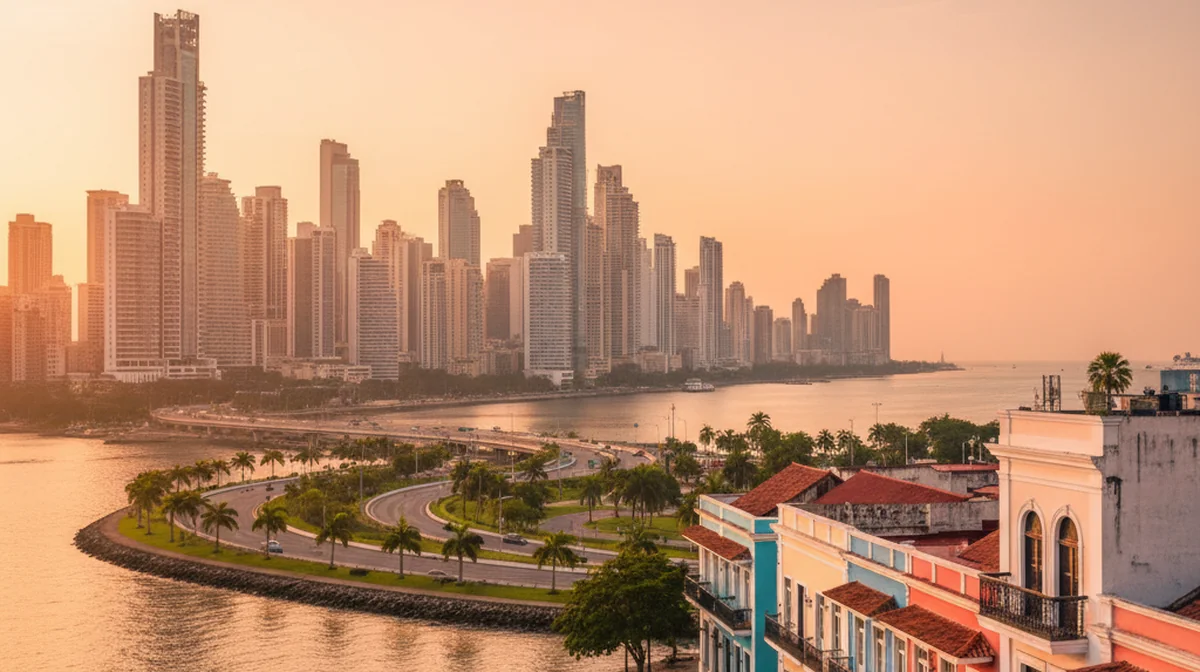
Panama City is the only true skyline on the Pacific side of Central America — a crossroads capital where the canal economy, a U.S.-dollar banking center, and a UNESCO-listed colonial quarter sit within a 15-minute drive of each other. Casco Viejo is the design-traveler and heritage corridor; Punta Pacífica, Punta Paitilla, and Avenida Balboa carry the high-rise and corporate-traveler segment; Costa del Este offers residential calm within reach of Tocumen airport; Amador Causeway connects the city to the canal entrance. Guests come for business tied to the canal and the regional finance hub, for cruise-turnaround stays, and for a capital that delivers boutique-hotel-level coffee culture alongside rainforest day trips (Gamboa, Soberanía National Park) that no other capital in the Americas can match.

Panama City's STR market is corporate- and crossroads-driven — steady weekday demand from canal-industry, logistics, and Latin American regional headquarters business; cruise-turnaround family and group bookings on weekends; and a growing digital-nomad and retirement-relocation segment. Casco Viejo commands the highest rates per square meter thanks to heritage supply constraints; Punta Pacífica leads on volume. The U.S.-dollar economy makes the city structurally easy for international operators. Monthly stays tied to the Qualified Investor Visa and relocation-to-Panama trend are an under-exploited premium segment.

Top Attractions & Landmarks

  • Casco Viejo (UNESCO)
  • Panama Canal (Miraflores Locks)
  • Cinta Costera
  • Punta Pacífica
  • Amador Causeway
  • Ancon Hill
  • Biomuseo
  • Soberanía National Park

Nearby Markets: Medellín  |  Tulum  |  Cabo San Lucas

Airbnb marketing services in Panama City, Panama, LATAM
Why Cavmir

The Cavmir Advantage
in Panama City

Cavmir positions Panama City properties for the dual audience — the Monday-morning banker checking in for an Avenida Balboa meeting and the Friday-afternoon couple arriving at a Casco Viejo heritage apartment. Our editorial photography captures the restored colonial facades of Casco, the Punta Pacífica skyline at dusk across the Cinta Costera, and the canal-lock views that make Panama unmistakable. Our direct-booking infrastructure captures corporate long-stay and retirement-relocation demand with much better margins than platform-only listings.

State of the Industry · History

The Panama City STR Market — Past & Present

Panama City was founded in 1519 on the Pacific coast, the first European city on the Pacific side of the Americas and the staging point from which Spanish gold and silver crossed the isthmus. In 1671 the privateer Henry Morgan sacked and burned it, and the survivors moved a few miles west to a defensible point and rebuilt. That second city is the Casco Antiguo — the Casco Viejo — a UNESCO-listed grid of colonial and republican streets, plazas and churches that today holds the boutique hotels, rooftop bars and restaurants most visitors picture when they picture Panama. The ruins of the original 1519 city still stand across town as Panamá Viejo.

The thing that has always defined this city is the crossing. The Panama Canal opened in 1914 and turned a transit town into a permanent hub, and the modern skyline of Punta Pacífica, Punta Paitilla and Costa del Este grew on the back of banking, logistics and the money that moves through a place where two oceans nearly meet. Panama City is a finance capital and a logistics capital first, and a tourist city second — and that order matters for how rentals behave here.

For an owner, the useful way to read Panama City is as two markets sitting side by side. There is the colonial tourism city of the Casco, where guests come for the old town, the causeway and the canal. And there is the corporate high-rise city of the banking district, where guests come for meetings, connections and the airport. Both are real. Knowing which one your unit actually serves is the first decision you make here.

Pricing Strategy & Seasonality

Pricing, Seasonality & When to Capture ROI

Pricing Strategy

Panama City prices on two calendars at once, and the smart owner reads both. The Casco Antiguo runs on a leisure rhythm — weekends, dry-season tourism, the events in the old town — while the banking districts of Punta Pacífica, Punta Paitilla, Marbella and Costa del Este run on a business rhythm, where weeknights near the towers and the convention centres frequently hold up as well as weekends. If you own in the corporate city, treating a Tuesday like a slow night is leaving money on the table; if you own in the Casco, the weekend and the dry-season week are your engine.

Currency takes one variable off the board. Panama uses the US dollar in everyday life — the balboa is pegged one-to-one and the two circulate together — so North American guests price your listing in money they already understand, with no exchange-rate friction to talk them out of a booking. That is a genuine, quiet advantage this city hands you.

The events calendar is where the clear premiums sit. The Panama Jazz Festival in mid-January and Carnival in February are the two dates the whole city feels, and both fall inside the peak dry season. Add Semana Santa around Easter and the run of trade and shipping conferences the hub city attracts, and you have a set of known, publishable dates. Load them at event pricing the moment they firm up rather than hoping demand finds you.

Minimum stays deserve real thought here because of the law, not just the market. The 45-day tourism rule shapes what you can legally offer, and we cover it in full below — but the short version is that if your building is legally set up for short stays, keep minimums short to catch the business traveller and the layover guest; if it is not, do not improvise around the rule.

Seasonality & ROI Windows

Panama is tropical, and the year splits cleanly into a dry season and a green one. The dry season, roughly mid-December to mid-April, is the high season — it lines up with the North American winter escape, brings the least rain, and holds the jazz festival, Carnival and the bulk of the leisure traffic. The green, rainy season from May to November is lower for pure leisure, but it is not dead: business travel runs steady year-round, because the canal, the banks and the airport do not have an off-season. Treat the wet months as your steady-business floor and the dry months as your upside, and price the two differently.

Regulation & Licensing

What the Law Requires in Panama City

This is the part of Panama City you cannot afford to get wrong, and a lot of confident advice online gets it exactly wrong. Panama regulates short stays hard, and the rule is not a soft guideline — it decides whether your rental is legal at all.

Under Ley 80 de 2012, in the District of Panama a stay of fewer than 45 days is generally treated as tourist lodging, and tourist lodging has to be provided through a property that holds a "permiso de alojamiento público turístico" from the Autoridad de Turismo de Panamá — the ATP. In plain terms: to legally host guests for under 45 days in Panama City, the building itself has to be authorised for tourism accommodation, the way a hotel or an aparthotel is. Renting an ordinary residential condominium — a unit in a propiedad horizontal, a "PH" — for under 45 days generally falls outside what the law allows, and there is no individual tourism licence a single apartment owner can obtain to fix that. A vote of the building's owners cannot conjure a permit the law does not offer. Fines for operating outside the rule are real and can run well into five figures, even if enforcement over the years has been uneven.

There is an important exception, and it is where much of the legitimate short-stay business actually happens. Designated tourism zones — Casco Viejo (San Felipe) and parts of Santa Ana among them — allow short-term tourist rentals in buildings that are properly ATP-registered. So the decisive question in Panama City is not "can I list?" but "is this specific building authorised for tourism lodging?" An ATP-registered aparthotel or a tourism-permitted building in the Casco can do short stays legally; a plain residential tower in Punta Pacífica generally cannot, however beautiful the unit.

The landscape may shift: a national short-term-rental bill (widely referred to as Bill 35) has been under discussion to create clearer rules for hosts. Until something passes and is in force, Ley 80 and the 45-day tourism threshold are the law you plan around. Confirm the building's exact ATP status, and confirm your tax position — income tax and ITBMS treatment for lodging — with a Panamanian lawyer and accountant before you list. None of this is legal or tax advice.

Market-Specific Tips & Challenges

Local Tips & Unique Market Challenges

Tips That Actually Move Revenue in Panama City

Lead with the district, not the city. "Panama City" tells a guest nothing about whether they are next to the old town's restaurants or in a banking tower with a canal view. "Casco Viejo, two blocks from Plaza Herrera, walk to the rooftop bars" and "Punta Pacífica, ten minutes to the banking district and the convention centre" are completely different products for completely different guests. Say which one you are in the first line.

Be honest about the heat, then solve it. Panama City is hot and humid year-round, and air conditioning is not a nice-to-have — it is the amenity. Say that the AC is strong and works in every room, because a guest who arrives to a warm bedroom in this climate writes the review you never recover from. Treating AC as a headline feature rather than an afterthought is one of the simplest wins in this market.

Sell the crossing. Guests come to Panama City for things they can genuinely reach — the Miraflores locks and the Agua Clara visitor centres to watch ships transit, the Amador Causeway and Frank Gehry's Biomuseo, the Cinta Costera waterfront, Panamá Viejo and the Casco. Map what is actually near your unit and how long it really takes to get there. The canal is the reason many people book Panama at all; name your relationship to it plainly.

Use the airport as a selling point, honestly. Tocumen International is the "Hub of the Americas" and Copa Airlines' home, which means a steady flow of guests on stopovers and long layovers who want one comfortable night near the terminal, not a week downtown. If your unit is a sensible transfer from Tocumen, state the real drive time at the hour they land — and if it is genuinely close, that layover guest is a segment most owners ignore.

Price the dollar advantage into your copy without saying it out loud. North American guests pay in US dollars here with no conversion, so your rate reads as exactly what it is. That removes a hesitation other Latin American markets create — lean into clear, confident pricing rather than burying it.

Unique Panama City Challenges

The first challenge is the one that dwarfs the rest: the 45-day rule. A gorgeous, well-located unit is worth very little as a short-term rental if its building is not ATP-authorised for tourism lodging. This is the risk that ends the business rather than dents it, so confirm the building's status before you buy, not after you list.

The second is that the two cities inside Panama City need different marketing. A Casco guest wants character, walkability and the old town; a banking-district guest wants a desk, fast wifi and a quiet room near the towers. Photographing and describing a corporate unit as if it were a leisure escape, or the reverse, quietly costs you bookings.

The third is the green-season expectation gap. May through November is genuinely rainy, and a leisure guest who booked expecting dry-season sunshine and gets afternoon downpours will be disappointed if you oversold the weather. Be honest about the season, and lean on the business and canal demand that holds up regardless.

The city where two oceans nearly touch
Panama City sits on the Pacific entrance of the canal, and because of the isthmus's odd bend the sun famously rises over the Pacific and sets over the Atlantic side of the country — the canal here actually runs roughly north-to-south. It is the only place many guests will ever stand where a container ship crosses from one ocean to the other in an afternoon. For an owner, that is not just trivia — it is the single most bookable thing about the city. A listing that tells a guest exactly how to watch a transit at Miraflores, or that frames its canal or ocean view honestly, is selling the reason people fly here rather than a generic "great location." The crossing is the product; most listings forget to mention it at all.
Finance Essentials — Panama City
🛡️

Insurance

A standard residential policy is unlikely to respond correctly to paying guests coming and going, and in a dense vertical city the exposures are specific: liability for a guest in a common area, water damage that travels between units, and theft or damage during a stay. Ask your insurer directly how the policy treats short-term paying guests, whether guest liability is covered inside the unit and in the building's common areas, and how the building's own insurance interacts with yours. In a tourism-registered building the requirements can differ again. Get the answer in writing before your first booking rather than after a claim.

🧾

Property & Income Tax

Rental income in Panama is subject to income tax, and lodging activity can bring ITBMS — Panama's value-added tax — into play, along with the tourism-registration obligations that come with operating legally under Ley 80. Where a stay is bundled with hotel-like services, the treatment can shift again and raise questions about operating as a company. Platforms do not settle your Panamanian tax obligations for you, and direct bookings are entirely your responsibility. Confirm the current rates, thresholds and filing obligations with a Panamanian accountant — this is general information, not tax advice.

🏦

Financing & Ownership

Panama is an established market for foreign buyers, the everyday currency is the US dollar, and titled ownership is available to non-residents — but financing conditions still differ from North American norms, and terms for foreigners vary by bank. The Panama-specific point governs everything else: a lender or co-investor underwriting projected short-term rental income needs that income to be legally achievable, and under Ley 80 that depends entirely on the building's ATP tourism status. Settle the building question before the financing question. Talk to a local advisor who has actually closed tourism-rental purchases here, and treat this as general information rather than financial advice.

Future Outlook · 2027 & Beyond

Where Panama City is Headed Next

Panama City's direction is legible because its demand is structural rather than fashionable. This is the banking, logistics and canal capital of the region, with the busiest connecting hub in the Americas at Tocumen and a currency that is effectively the US dollar. Business travellers, canal tourists, layover guests, and the steady stream of expats and retirees who make Panama a top relocation destination are durable segments that do not depend on a single season staying fashionable. That is what makes the underlying demand here resilient.

The regulatory direction is the story to watch, and it cuts both ways. Ley 80 and the 45-day rule keep legal short-stay supply concentrated in ATP-registered tourism buildings and the designated zones like the Casco — which protects the owners who are properly set up from a flood of casual competition. At the same time, a national short-term-rental bill has been under discussion that could redraw the rules and, potentially, widen who can operate legally. The owners who win through that transition will be the ones on the right side of the permit line, not the ones improvising around it.

On the demand side, the fundamentals keep pointing up. The canal's expansion and the conference traffic it attracts, the retiree and expat inflow, and a Casco Viejo that keeps maturing as a boutique-hotel and restaurant destination all reinforce each other. The competitive pressure, as everywhere, is quality: as supply grows, the market splits between well-presented, legally-solid properties with a clear story and a long tail of listings competing only on price. Legal standing, honest presentation and a direct-booking relationship are what keep you out of the discount tier here.

From the Desk of Sofie Sinag

Why We Love Marketing in Panama City

Panama City is a clarifying market to work in, because it forces you to be honest about two things at once: what your building can legally do, and which of the city's two guests you actually serve. We like that, because both questions have real answers, and once you have them the marketing writes itself. There is no room here for a listing that waves vaguely at "Panama" — the guest booking the Casco for a rooftop weekend and the guest booking the banking district for three nights of meetings want to hear completely different things, and getting that right is most of the job.

We like that the demand is a calendar and a hub rather than a mood. When you can see the dry season, the jazz festival, Carnival and the conference weeks laid out ahead — and know that the airport quietly feeds you layover guests all year — marketing becomes a matter of showing up early and pricing with confidence instead of guessing at a season. The dollar helps too: your North American guests read the rate in money they already trust.

And we like that the city hands you a genuinely great story for free. Two oceans, a canal you can watch a ship cross in an afternoon, and a colonial old town that survived a pirate. Properties here that tell the truth clearly — the district, the AC that actually works, the real drive from Tocumen, the honest relationship to the canal — outperform the ones reaching for "luxury" and "paradise," every time. That is a market we enjoy.

Why It Matters

In Panama City the first question isn't "how do I market it?" It's "is this building legal for short stays?" Get that right, and the crossing sells itself.

Market Intelligence · Seasonality

Airbnb seasonality in Panama City, month by month

Panama City runs on two currents at once — a dry-season leisure peak from mid-December to mid-April, and a business-and-hub floor that never really drops out. Here is how the year actually books, and what to do with each stretch.

Peak demandSteadyQuiet

The dry-season peak

Mid-December through mid-April is high season: least rain, the North American winter escape, and the two events the whole city feels — the Panama Jazz Festival in mid-January and Carnival in February. This is when leisure demand and event demand stack on top of the year-round business floor. Publish event pricing the moment the dates firm up and hold your rate through the run.

The green-season floor

May through November is rainier and softer for pure leisure, but it is not empty. The canal, the banks and the Tocumen hub keep business travel and stopover demand steady all year. Price honestly for the season, lean on the corporate and layover guest, and don't oversell the weather to a leisure booker who'll be disappointed by an afternoon downpour.

The steady stretches

Semana Santa around Easter and the run of shipping, canal and finance conferences produce their own known spikes outside the dry-season peak. These are publishable dates. Treat the quieter green-season weeks as your maintenance-and-reshoot window, and be ready to raise minimums and rates when a conference or holiday lands.

Dates that fill first

Dry seasonmid-Dec – mid-Apr
The leisure peak — least rain, winter-escape demand, and the year's biggest events all fall inside it.
Panama Jazz Festivalmid-January
A major international festival that draws visitors into the city and the Casco during peak season.
CarnivalFebruary
One of Panama's biggest celebrations, centred on the Cinta Costera waterfront between the Casco and the towers.
Semana Santa & conferencesEaster / year-round
Holy Week plus the hub city's shipping, canal and finance conferences produce known spikes outside the peak.
Market Intelligence · Guests

Who books Panama City Airbnbs — and how far ahead

Business travellers
A core, year-round segment. Short stays near the banking districts — Punta Pacífica, Marbella, Costa del Este — who want a desk, honest wifi speed, strong AC and the real drive to the towers and the convention centre.
Canal & culture tourists
In town for the Miraflores locks, the Amador Causeway, the Biomuseo and the Casco Viejo. Dry-season weighted, leisure-paced, and drawn to the old town's character.
Layover & stopover guests
Tocumen is the Hub of the Americas and Copa's home, so a steady flow of one-night guests want a comfortable, easy transfer from the airport — a segment most owners ignore.
Expats, retirees & relocators
Panama is a top retirement and relocation destination. Longer, quieter stays from people scouting neighbourhoods before they commit — but note the 45-day rule on how you can host them.
Event & regional leisure
Jazz festival, Carnival and conference crowds, plus weekend visitors from within the region drawn by the dollar economy, the restaurants and the Casco.

The booking window

Event and conference dates book furthest ahead and reward being visible early. Business and layover travel are the opposite — short windows, often inside a week — so being instantly bookable and an easy, honestly-stated transfer from Tocumen matters more than long-lead visibility for those guests.

Typical stays

Business and layover stays skew short, one to a few nights. Retiree and relocation scouting runs longer. The 45-day tourism rule shapes what your building can legally offer — set your minimums to fit your building's ATP status, not around it.

Where guests fly in from (regional)

BogotáSan JoséMexico CityLimaCartagena

Where guests fly in from (international)

MiamiNew YorkHoustonTorontoMadrid
Tocumen International (PTY) is the Hub of the Americas and Copa Airlines' home base — the reason Panama City carries steady stopover and connecting demand all year. Tell the guest the real transfer time at the hour they land; it prevents the most common bad review in the city.
Market Intelligence · What Wins

The Airbnb that wins in Panama City

The winner here starts with legality: a unit in a building that is genuinely ATP-authorised for short tourism stays — a Casco Viejo tourism building or a registered aparthotel — beats a beautiful residential condo that legally can't host under 45 days. After that, precision wins: say which district, name the AC, state the real drive from Tocumen, and frame your honest relationship to the canal.

Amenities that move bookings here

strong AC in every roomfast, honestly-stated wifia real desk24h building securitypool & gymocean, skyline or canal vieweasy Tocumen transfer
In a hot, humid city, air conditioning that actually works in every room is the amenity — not a footnote. Say so plainly, and back it up. It does more for your reviews than any adjective.
Straight Answers

Panama City Airbnb Marketing:
Questions, Answered

Does Cavmir offer Airbnb marketing services in Panama City?

Yes. Cavmir works with short-term rental owners and boutique hotels in Panama City and across Panama — property branding, listing optimization, photography direction, direct-booking websites, SEO, and paid campaigns. Properties near Casco Viejo (UNESCO), Panama Canal (Miraflores Locks) and Cinta Costera are exactly the kind of stays we market.

What do short-term rentals earn in Panama City?

The market snapshot on this page shows average nightly rates around $130 with occupancy near 68% for Panama City. Treat those as directional market averages, not guarantees — the spread between a well-marketed property and a poorly marketed one in the same market is wide.

When is demand highest for Panama City rentals?

Panama City runs steadier than most markets, without extreme seasonal swings. Consistent year-round demand rewards properties that build a brand and repeat-guest channel rather than relying on one peak season.

Are short-term rentals regulated in Panama City?

Panama City sits in the middle of the regulatory spectrum — some registration or permit requirements typically apply. Rules change often in this industry, so confirm the current requirements with local authorities before you list. Cavmir handles the marketing side; we don't provide legal or permitting advice.

How do I get more direct bookings in Panama City?

Give guests a way to book you without a platform in the middle: a fast direct-booking website, a complete Google Business Profile, and follow-up that brings past guests back. Cavmir builds that stack — see vacation rental SEO — so your repeat Panama City guests stop paying platform fees to find you.

How much does Airbnb marketing cost for a Panama City property?

It depends on scope. Current plans and one-time project pricing are on the pricing page — most owners start with a listing overhaul or the 12-step system. A conversation about your property costs nothing: contact Cavmir.

Free Property Review

What is your Panama City property actually worth per night?

Send us the listing and we'll tell you what we'd change. Not a pitch deck — a straight read on your photos, your title, your rates against the Panama City comp set, and whether a direct-booking site would pay for itself.

You'll hear back from a person, usually inside one business day. If we don't think we can move your numbers, we'll say so. Cavmir is a short-term rental marketing agency — we position and market properties, we don't manage them.

  • No obligation, and no automated call sequence
  • We market and position — we never manage your property or hold keys
  • Works whether you're on Airbnb, Vrbo, or direct

Market Intelligence · Seasonality

Airbnb seasonality in Panama City, month by month

Demand in Panama City peaks around January through February and runs quietest around October through November. Here is how the year actually books — and what to do about each stretch of the calendar.

Peak demandSteadyQuiet

Peak season

Panama City is a near-equator business-and-leisure metro, so its high season tracks the dry-season months of December through April rather than a beach summer. January and February run hottest, powered by the Panama Jazz Festival, Carnival and a wave of North Americans escaping winter, with the year-end holidays close behind. Keep pricing firm through the dry season and around the events, and hold the business-week rates steady since corporate demand runs Monday to Thursday all year.

The shoulders

The middle of the year is a working shoulder carried by steady business travel, regional visitors and conferences even as the rains build. August lifts around the city's founding anniversary. Use mid-week corporate positioning, longer-stay offers for relocating professionals, and weekend leisure pricing to keep the calendar full as leisure demand softens.

The quiet stretch

October and November are the honest low, the heaviest-rain months when leisure travel thins and only the business layer holds steady. Court longer stays, relocating professionals and value travelers, sharpen your weekend pricing, and use the window for maintenance and a fresh photo set. Reset your dry-season and event pricing now, because December through February rebuilds quickly.

Dates that fill first

Panama Jazz FestivalJanuary
A week of concerts and workshops across the city that draws an international music crowd in the heart of the dry season. It lifts January demand, especially near the venues and the old town.
Carnaval de PanamaFebruary
The country's largest celebration fills the city in mid-February before Lent, with parades and street parties. It is a firm four-day demand spike, so price it early.
Semana Santa (Holy Week)March or April
Holy Week brings regional travel and a domestic pause that shifts demand, with visitors moving through the capital. Plan pricing around the exact dates each year.
Panama City founding anniversaryAugust
The mid-August commemoration of the city's founding brings civic events and a leisure lift in the softer season. Homes near the historic Casco Viejo benefit.
Christmas and New Year holidaysDecember
The year-end holidays combine local celebration with inbound leisure and diaspora travel. Set rates ahead and expect a strong close to the year.
Market Intelligence · Guests

Who books Panama City Airbnbs — and how far ahead

Corporate and business travelers
The steady backbone, in town for the banking sector, the canal economy and regional headquarters. They book Monday-to-Thursday, value fast wifi, a desk and proximity to the business districts.
Stopover and canal tourists
Travelers pairing a few city nights with the canal, Casco Viejo and onward Caribbean or Pacific trips. They want walkable location, a view and easy airport access.
Regional Latin American visitors
Guests from Colombia and across the region who come for shopping, medical and business trips. They book on convenience, value and closeness to the malls and clinics.
Relocating and long-stay professionals
Expats and remote workers settling in for weeks or months, drawn by Panama's business ties and dollar economy. Reliable internet, a workspace and a fair monthly rate win them.
Weekend and event leisure travelers
Visitors timing trips to Carnival, the Jazz Festival or a long weekend in Casco Viejo. They book on location, style and a good rooftop or view.

The booking window

Business travel books on a short, rolling horizon, often inside a couple of weeks, which keeps the weekday calendar liquid. Carnival, the Jazz Festival and the year-end holidays book further out. Leisure weekends fill on a medium horizon. Price the events early and firm, and keep weekday and weekend rates responsive to the steady short-fuse demand.

Typical stays

Panama City runs on short business stays of a few weekday nights year-round, layered with weekend leisure trips and a real long-stay segment of relocating professionals. Event weeks draw shorter, higher-energy bookings. The steady corporate base makes this calendar less seasonal than a beach market, rewarding hosts who serve both the business and leisure guest.

Where guests drive from

DavidSantiagoChitrePenonomeColon

Where guests fly from

MiamiNew YorkHoustonBogotaToronto
As a mainland capital, Panama City carries a genuine domestic drive layer, with visitors coming to the capital from David, Santiago, Chitre, Penonome and Colon for business and medical trips. Fly-in guests arrive through Tocumen International (PTY), a major regional hub, so target Miami, New York, Houston, Bogota and Toronto.
Market Intelligence · What Wins

The Airbnb that wins in Panama City

A modern, well-connected apartment in the business and dining districts, or a characterful unit in Casco Viejo with a rooftop or a view, is the winning profile. This is a location-and-connectivity market first, so proximity to the offices, the old town and the airport beats square footage. Fast, reliable internet, a genuine workspace and a comfortable, professional interior are what convert both the corporate and the leisure browser.

Amenities that move bookings here

fast reliable wifidedicated workspacereliable air conditioningcity or ocean viewin-building gym or poolsecure parking or garagewalkable locationself check-in
Fast, reliable internet plus a real workspace is the highest-leverage combination here, because both the corporate traveler and the relocating professional screen for it before they look at anything else.
Straight Answers

Panama City Airbnb marketing questions, answered

How do I market my Airbnb in Panama City?

Position for both the business and the leisure guest, since this city runs on weekday corporate stays and weekend or event leisure trips. Lead with location relative to the business districts, Casco Viejo and the airport, and photograph the workspace, the view and any rooftop or building amenities. Make internet speed explicit, because professionals screen for it. Price Carnival, the Jazz Festival and the year-end holidays early and firm. A Google Business Profile for map searches and a direct-booking site for repeat corporate and relocating guests are the marketing layer Cavmir builds, and Panama City's steady business return traffic makes that direct channel especially worth owning.

When is peak season for Panama City Airbnbs?

Peak is the dry season from December through April, led by January and February around the Panama Jazz Festival, Carnival and winter-escape travel, with the year-end holidays strong too. Steady business demand cushions the middle of the year. October and November, the heaviest rains, are the quiet low.

How far in advance do guests book Panama City Airbnbs?

Business travelers book on a short, rolling horizon, often inside a couple of weeks, keeping the weekday calendar liquid. Carnival, the Jazz Festival and the year-end holidays book further out, and leisure weekends fill on a medium horizon. Price the events early and keep everyday rates responsive.

Where do most Panama City Airbnb guests come from?

Fly-in guests arrive through Tocumen International, a major regional hub, mostly from Miami, New York, Houston, Bogota and Toronto. As a mainland capital, the city also draws a domestic drive layer from David, Santiago, Chitre, Penonome and Colon for business and medical trips.

What amenities matter most for a Panama City Airbnb?

Fast, reliable internet and a real workspace lead, because business travelers and relocating professionals screen for them first, backed by air conditioning and a walkable location. A city or ocean view and in-building gym or pool help close leisure bookings. Self check-in suits the short-notice corporate guest.

Ready to Grow in Panama City?

Let's Put Your Panama City
Property on the Map

Talk to Cavmir today. We'll show you exactly what your Panama City property is leaving on the table — and how fast we can change that.

Book a Free Strategy Call

Photography via Wikimedia Commons (images resized and cropped): Catedral Metropolitana de Panamá. by Jjimenez0921 (CC BY-SA 3.0) · Archivos de Panamá 03 by Edward Ortiz (CC BY-SA 4.0) · Paseo General Esteban Huertas by Nelsonteng (CC BY-SA 3.0) · Panama city fishing boats by Darmok and jalad at tanagra (CC BY-SA 4.0).