



Morning
Pastel de nata at Manteigaria, coffee at Fábrica
Manteigaria for the warm-pastel-flakes-still-glowing standard; Fábrica Coffee Roasters for the specialty-roaster alternative. A host who recommends both sounds like a resident.

Expert short-term rental marketing to grow your bookings and nightly rate in Lisbon, Portugal, Europe.
Sixteen services, one team. Everything below is built in-house and scoped to your property and market. Most owners start with the 12-Step System.
Every engagement is quoted to your portfolio. These are the ready-made scopes owners pick most — our Fall Special (55% off list or more) is already applied to the website, King Broker, Hotels and à la carte scopes. A clear proposal within 48 hours.
The work is public. Selected engagements and what changed — and reviews from the owners and managers behind them.
* Market averages from AirDNA and STR market reports. A single home's numbers depend on its size, its location and how it is marketed.
Cavmir is an Airbnb marketing agency. We build the brand, the direct-booking website and the marketing for short-term rentals in Lisbon.
Lisbon has emerged as one of Europe's most beloved travel destinations — a city of extraordinary charm built on seven hills, facing the Tagus River. Alfama's labyrinthine Moorish streets and Fado houses, Belém's Age of Discovery monuments, Chiado's literary cafes and design boutiques, and LX Factory's repurposed industrial creativity have made Lisbon a destination of global conversation. The city's value proposition — quality of life, world-class food and wine, safety, and relative affordability — continues to attract visitors and long-term residents alike.
Lisbon's STR market has experienced explosive growth driven by digital nomad migration, NHR tax residency interest, and Portugal's Golden Visa program. Alfama and Mouraria lead in authentic-experience demand; Príncipe Real commands the luxury segment. Mid-term stays (1–3 months) are an increasingly significant revenue stream.
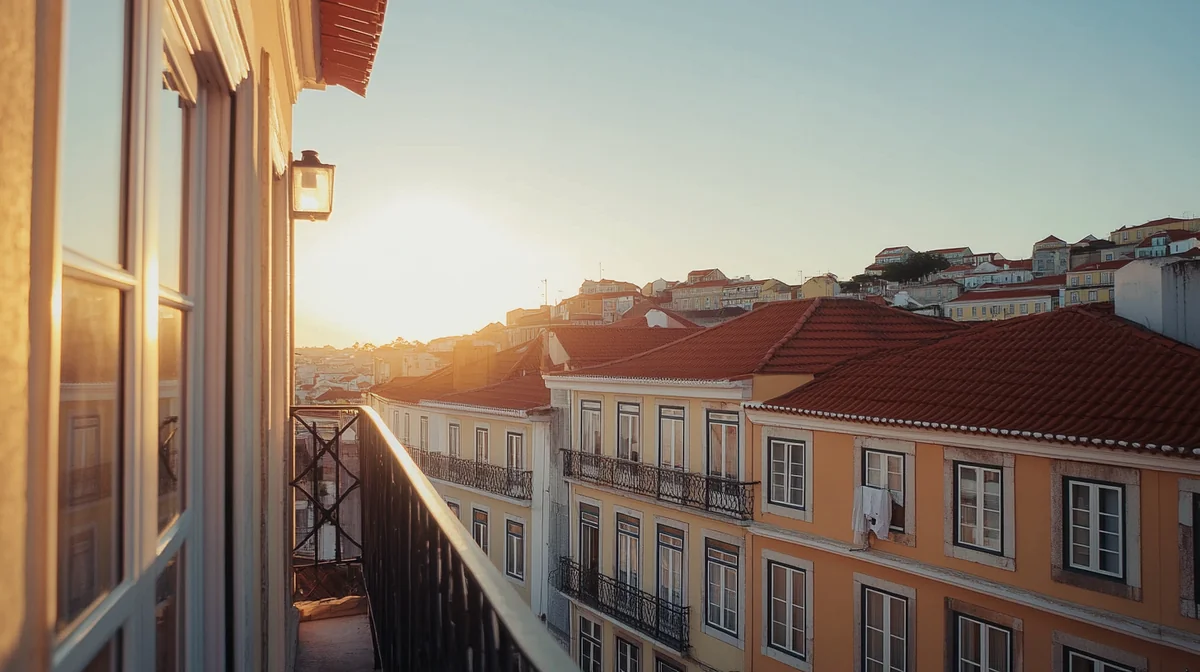
Cavmir positions Lisbon properties to capture both the short-stay tourist and the growing mid-term digital nomad segment — building listings that perform year-round with intelligent pricing strategy and multi-channel distribution.
Lisbon is one of Europe's oldest continuously inhabited cities — Phoenicians, Romans, Visigoths, and Moors each built atop what the previous civilization left. The 1755 earthquake, tsunami, and fire destroyed most of the medieval city; the subsequent rebuild under the Marquis of Pombal created the Pombaline downtown grid that defines central Lisbon today — wide streets, 5-story uniform buildings, earthquake-resistant wooden framing. This deep heritage shapes Lisbon's contemporary short-term rental market: much of the inventory sits in 200-year-old buildings with azulejo-tile facades, iron balconies, and original features that cannot be reproduced in new construction.
The modern Lisbon STR market is astonishingly recent. Before 2010, Lisbon was a relatively unknown European secondary destination. Portugal's Golden Visa program (launched 2012), the NHR (Non-Habitual Resident) tax regime, the rise of digital nomad culture, and Lisbon's Instagram-driven popularity through the late 2010s drove explosive visitor growth. Alojamento Local (AL) licenses proliferated. By 2025, Lisbon had among the highest STR density per capita of any major European city — and the regulatory framework is now in its fourth or fifth iteration in a decade.
Lisbon's pricing centers on Alfama, Baixa-Chiado, Príncipe Real, Graça, and the LX Factory/Alcântara corridor. Alfama's Moorish-era winding streets and fado-house culture command authentic-experience premium. Príncipe Real and Lapa anchor the luxury tier. Baixa-Chiado's commercial-center position supports year-round demand. Cais do Sodré and Santos attract the design-and-nightlife creative traveler. Mid-term stays (1–3 months) are a significant and growing revenue layer — digital nomads, Golden Visa applicants, and NHR tax residents drive sustained demand at monthly rates.
Medium seasonality. Peak: May–October (warm weather, festivals, wine-tourism season). Strong secondary: December–early January (Christmas markets, New Year). Weakest: November and February. Lisbon's mild winter climate supports year-round demand better than most of Europe — January and February are the genuine lull, but not empty. Mid-term stays smooth seasonality considerably; a property split between peak-season nightly and shoulder-season monthly earns more reliably than nightly-only.
Portugal's Alojamento Local (AL) framework is nationally established but locally administered. The Lisbon suspension on new AL registrations has been extended repeatedly; while the national freeze was lifted, Lisbon city council continues its local restriction. In November 2025, Lisbon approved new containment zone rules: any parish with an AL ratio at or above 10% is blocked from new AL registrations (absolute containment); parishes between 5% and 10% require exceptional authorization (relative containment). Alfama, Mouraria, parts of Baixa, and Bairro Alto are in absolute containment as of 2026.
A nationwide insurance-proof cleanup has already cut the register: Lisbon cancelled 6,765 of its nearly 20,000 AL registrations, leaving 11,779 active licenses on 1 February 2026. Condominium (propriedade horizontal) rules are the other significant restriction — many Lisbon buildings have adopted AL prohibitions in their building regulations. VAT (IVA) applies at 6% on short-term accommodation. Tourist tax (Taxa Municipal Turística) is €4/night in Lisbon. Enforcement has been inconsistent but tightening through 2025–2026.
The Lisbon strategic tip: mid-term (30+ night) stays are the defensive revenue layer. Digital nomads, Golden Visa applicants, and NHR tax residents often stay 1–6 months. Properties marketed to this segment — with proper workspace, reliable internet, monthly-rate pricing, and tenancy-framework knowledge — earn stable revenue with lower turnover costs and lower regulatory exposure than pure nightly rentals. Some mid-term structures fall outside AL licensing entirely (though legal structure matters — consult a Portuguese attorney).
Second — if you hold an existing AL license in a containment zone, protect it meticulously. Lapse, non-renewal, or loss of license typically means inability to reinstate in the current zone. Third — lean into authentic Lisbon character. Azulejo tiles, hand-painted ceramics, rooftop terraces with Tagus views, and neighborhood walkability photograph well and distinguish from generic international apartment inventory. Fourth — Portuguese-language customer service improves repeat-guest and local-word-of-mouth performance, even though the primary booking audience is international.
Lisbon's challenges: regulatory instability (rules have changed multiple times in a decade), containment zones locking out new supply in the most desirable neighborhoods, condominium-level restriction expansion, 2023 NHR tax regime changes reducing some foreign-resident incentives, and the end of Portugal's real-estate-Golden Visa pathway (2023–2024) affecting foreign-investor demand. Infrastructure — water pressure in old buildings, elevator availability in multi-floor walkups, summer heat without AC common — affects guest experience.
Portuguese property insurance (seguro multirriscos) with AL-specific endorsement. As of 2025, proof of insurance is required for AL registration validity. Specialty AL-focused insurance products available (Tranquilidade, Fidelidade, Allianz). Budget €400–€2,000 annually for typical apartments.
Portuguese income tax on AL rental income — category B (business) taxation typical, with regime simplificado deductions. IRS rates progressive; non-residents typically 25% flat. Corporate (IRC) treatment if operating through Portuguese company. IMT and IMI property-transaction and annual property taxes apply. Non-habitual Resident regime has been substantially reformed as of 2024.
Portuguese mortgages for foreign buyers available — BPI, Santander Portugal, Caixa Geral de Depósitos all have non-resident programs. Typical 60–70% LTV for non-residents, 80% for Portuguese residents. Rates tied to Euribor. Specialist mortgage brokers in Lisbon frequently the best route.
A guest who reaches your own site has usually seen the flat on Airbnb or Booking.com already, and is checking three things before paying you direct: that you exist, that the price on the screen is the full price, and that the street looks like the photos. In 2025 non-residents made up 81.4% of overnight stays in Grande Lisboa, on INE's preliminary figures, so most readers meet your site in a second language, on a phone, often from a hostel bunk or a gate at the airport. A direct-booking website for a Lisbon flat wins on proof it can show: the registration number, the city tax, the gradient of the street and the count of stairs up to the door.
The United States held the largest foreign share of Grande Lisboa's overnight stays in 2025, at 16.8%, and the city's other main international markets were the UK, Spain, Brazil and Germany, with China growing. Brazil ranked third in Lisbon's overnight stays behind the US and the UK, with 735,000 nights in the Lisbon Region from January to July 2025. That sets the build order: English first, then Portuguese twice over, a pt-PT version for Portuguese weekenders and a pt-BR version whose spelling and phrasing reads as home to a family from São Paulo or Belo Horizonte, then Spanish and German. Give each language its own URL with hreflang tags and a human translator; a translate widget hands Google one page and hands a Madrid couple machine Spanish. Charge in euros, and if you show a US-dollar or Brazilian-real figure, label it a guide. Write bed sizes in centimetres and in the American names, and state up front whether there's a lift.
Start with the RNAL number, the national Alojamento Local registration that Turismo de Portugal treats as your title to open and to advertise. Put it in the footer of every page and beside the booking button. Under Regulation (EU) 2024/1028, in force for platforms since 20 May 2026, every listing has to show that number, platforms check numbers at random and report activity to the authorities each month, so a number on your site that differs from your Airbnb listing looks wrong to a guest and to an answer engine. The 2026 cleanup raised the stakes: Lisbon cancelled 6,765 registrations, about 40% of nearly 20,000, for missing proof of insurance, leaving 11,779 licences active on 1 February 2026. Show the city's tourist tax, €4 per guest per night for up to seven nights, so €28 at most, as its own line before payment; on a direct booking you charge it and pay it to the Câmara yourself. Portugal also requires a visible link on your site to the electronic complaints book at livroreclamacoes.pt, with replies within 15 working days, and ASAE receives those complaints. Cookies fall under the GDPR and Portugal's e-privacy law, policed by the CNPD (Comissão Nacional de Proteção de Dados), so analytics and ad pixels wait for consent. The EU's online cooling-off right doesn't cover a stay booked for set dates, which makes your published cancellation rule the binding one. Have a Portuguese lawyer read the final terms.
Guests search Lisbon by bairro, so give each one near you its own page: Alfama and Mouraria for fado and the June arraiais, Graça for the miradouros, Príncipe Real and Estrela for the gardens and antique shops, Campo de Ourique for its market and the tram terminus at Prazeres, Parque das Nações for the riverside promenade and the conference halls. Add a getting-here page that starts at Humberto Delgado airport and walks the guest through the Metro's red line, a taxi or a ride-hail to your door, last hill included. Then shoot what guests here filter on: the view from the window at the hour you name, the staircase, the lift if there is one, the air-conditioning unit in the bedroom for August, the heater for a damp January, and a kitchen fit for a fortnight. A floor-plan sketch that counts the steps from the street will save you more reviews than another sofa angle. Each bairro page is also an SEO target, because guests type those names straight into Google.
GEO (generative engine optimization) is the work of getting your flat quoted when a traveller asks ChatGPT, Gemini, Copilot, Perplexity or Google's AI Mode where to stay, instead of scanning ten blue links. The habit is strongest in Lisbon's largest foreign market. In a Talker Research survey of 2,000 Americans published in August 2025, 29% had asked AI where they should go and about one in five had let it build a whole-trip plan. An answer names only a handful of places, so the rentals that get named are the ones whose facts are easy to lift and confirmed somewhere else. Cavmir's July 2026 study of 550 Google AI answers across 15 U.S. markets found independent and regional operators took 82% of citations, with Airbnb or Vrbo in 17% of answers; it says nothing about Lisbon itself, but it shows the platforms don't own these answers.
Travellers ask in full sentences and in their own language. An American asks for a two-bedroom in Alfama with air conditioning, a lift and a fado house within walking distance. A family from Belo Horizonte asks, in Portuguese, for a flat near a metro station with a washing machine for a week in July. A couple from Seville asks which neighbourhood to sleep in for the Marchas on Avenida da Liberdade. A founder asks for a quiet flat with a desk near the red line to Oriente for Web Summit, held from 9 to 12 November 2026 at MEO Arena and FIL. Others ask about what unsettles a first-timer: how steep the climb is from Rossio, whether the €4 tax is already in the price, whether Sintra works as a day trip by train. Each question is a page or a paragraph you can publish, written in the language it's asked in.
Answer engines lift short declarative sentences, so write the core facts once and repeat them word for word on the site and every listing: the RNAL number; how many guests it sleeps and in which beds; the floor, and whether there's a lift or how many steps; the minutes on foot to a named metro station such as Baixa-Chiado or Martim Moniz; air conditioning room by room; the €4 city tax per guest per night, charged for up to seven nights; and the cancellation deadline in days. Keep them in plain visible text near the top of the page and mirror them in schema markup for the lodging, the address and the FAQ, so the crawled data and the copy agree. Then hold the name, bed count and street address identical across Airbnb, Booking.com, Vrbo and the site. If one platform calls the flat “Alfama Loft” and another calls it “Sé Apartment”, a machine reads two different places, and neither gets the citation.
Answer engines lean on the sources Lisbon already trusts. Turismo de Lisboa, the city's visitors and convention bureau, runs visitlisboa.com with the event agenda, the Lisboa Card and the Ask Me Lisboa tourist offices, and its what's-on listings are the natural reference for your event guides. In Portuguese, the outlets that write about where to sleep and eat include Público's Fugas travel supplement, Expresso's Boa Cama Boa Mesa guide, Time Out Lisboa, NiT and Observador. In English, The Portugal News and Portugal Resident reach expats and second-home owners. A mention, a quoted host tip or an entry in one of them gives an answer engine a second voice confirming what your site says. That's the digital PR half of GEO, and it compounds: a local story about the restored azulejo stairwell in your building carries more weight than anything you publish about yourself.
Content marketing for a Lisbon rental runs on the city's calendar. Each guide below ties to a dated reason to come or to a question guests ask before they book, and each gives Google and the answer engines a page worth citing. Publish in the order the dates arrive, well ahead of each one, and put a “last checked” date on every guide so readers and machines can see it's current. Short, factual pages updated every year beat one long city essay that never changes.
The next window is already open. Turismo de Lisboa's agenda lists doclisboa from 15 to 25 October 2026, LEFFEST, the Lisboa Film Festival, from 6 to 15 November, and Misty Fest from 1 to 29 November, while Web Summit fills MEO Arena and FIL from 9 to 12 November 2026 and brings more than 70,000 people to the city each year. A Web Summit page should give the metro route from your door to Oriente station, the walk from the station to the venue, the desk, the measured Wi-Fi speed and whether you take mid-week stays. A film-festival page can list the cinemas within walking distance and where to eat after a late screening. Both are short and easy to refresh when next year's programmes appear.
June is Lisbon's biggest local draw. In 2026, 20 marchas paraded down Avenida da Liberdade on the night of 12 June from 21h00, organised by the city's cultural company EGEAC, and 13 June is Lisbon's municipal holiday, with arraiais running late in Alfama, Mouraria, Graça and Madragoa. A Santo António page should say which streets near you host an arraial, how late the music runs, where to stand for the parade and how to get home when the metro is packed; it serves the light sleeper and the party group equally. Around it, write one guide per bairro within walking distance of your door, with its miradouros, tram stops, bakeries and the steepest stretch, and keep each one current.
The rest of the plan covers the logistics guests put to AI before they pay. A getting-here guide from Humberto Delgado airport by metro, taxi and ride-hail, with the final hill described. A tax-and-terms page setting out the €4 city tax, the seven-night cap, your cancellation rule and the complaints book. A day-trip guide to Sintra by train from Rossio and to Cascais from Cais do Sodré. A winter long-stay page for remote workers escaping northern Europe and North America, with heating, desk and the monthly price. And a pt-BR page that answers what guests from Brazil ask, from the metro card to the nearest pharmacy.
Lisbon through 2027 and beyond: the containment zones reshape the market permanently. Expect existing licensed properties in absolute-containment parishes to appreciate significantly; new-supply-area expansion shifts to Almada, Cascais, and emerging districts. Mid-term stays will continue to grow. Golden Visa post-real-estate reforms will reshape foreign-buyer flows. Tax regime stability a political question. Overall visitor demand strong; Lisbon remains one of Europe's fastest-growing tourism destinations. Compliance-first operators significantly advantaged over casual landlords.
If Lisbon's containment-zone restrictions rule out your plans, Portuguese alternatives include Porto (similar regulatory framework, lower price point), the Algarve (vacation-beach market), and Cascais (Lisbon-adjacent, separate municipal rules). Outside Portugal, Zurich offers premium business-travel exposure and Ibiza provides Mediterranean seasonal luxury with ETV license scarcity.
Lisbon is a market built on light. The specific quality of the Lisbon sun — refracted through the tile-clad buildings of Alfama, caught on the azulejos of the Chiado, falling through the terraced miradouros at sunset — is a photography opportunity most listings fail to use. Generic "Lisbon apartment" framing flattens one of the most photographable cities in Europe into a commodity. The marketing opportunity is lighting, specificity, and neighborhood character: Alfama's fado-and-laundry-lines soul, Príncipe Real's design-district weekday life, Baixa's grand-boulevard geometry, LX Factory's creative-class repurposing, Belém's architectural heritage.
What we love about Lisbon is how fast the city has matured as a booking destination. The guest profile has shifted dramatically in five years — from backpacker weekenders to a design-conscious, food-obsessed, creative-class traveller with real willingness-to-pay for the right property. The marketing that wins Lisbon now is editorial-grade: Portuguese-register copy (not translated-American), photography that uses the specific light, and welcome-book knowledge that signals a host who lives here, not just invests here.
The picks Cavmir recommends for Lisbon welcome books — specific, Portuguese-register, and aware of how quickly the city's recommended-spots evolve.
Manteigaria for the warm-pastel-flakes-still-glowing standard; Fábrica Coffee Roasters for the specialty-roaster alternative. A host who recommends both sounds like a resident.
The highest public viewpoint in Lisbon. West-facing at sunset, with the full city and Tejo River in frame. A host who flags the 30-minute-before-sunset timing earns the review.
Alfama's narrow streets when the light is at its best; Chiado's grand avenues when the cafés start to fill. Two entirely different Lisbons.
Belcanto for the two-Michelin-star aspirational; Bairro do Avillez for the mid-price José Avillez showcase; Prado for the farm-to-table Cais do Sodré scene.
Cherry liqueur in a chocolate cup. A Lisbon ritual most guests don't know exists. Under €2, photographable, genuinely local.
Post-summer crowd departure, weather holds, light gets better. Lisbon's quietest-beautiful window. Pricing has softened.
Sintra by train for the Pena Palace and Monserrate gardens; Cascais for the coastal-fishing-village-meets-resort afternoon. Both add a proper half-day.
Tram 28 is a pickpocket trap without a strategy; restaurant reservations at well-regarded places require 3-7 day lead time. A printed strategy for each prevents the most common guest friction.
Representative Cavmir engagements in Lisbon. Property identifiers removed; figures composited from internal campaign analytics and AirDNA market ranges.
Character-rich historic apartment whose marketing flattened its identity. Photography was real-estate-grade; copy read tonally American for a Portuguese-market listing.
Rebuilt with Portuguese-register copy (native-speaker adaptation, not translation), photography at the specific golden-hour Alfama light, welcome-book knowledge specific to the quarter's fado houses, specific bakery corners, and tile-route walks.
ADR climbed 32%. Occupancy moved from 67% to 86%. European-guest share (particularly German, Dutch, and British) grew to 58% of bookings, driving higher review scores and longer stays.
Design-forward property marketed generically. Missing the design-tourism and creative-industry-traveller audience that specifically booked the quarter.
Repositioned around Príncipe Real's design-district identity. Photography emphasised the walk to EmbaiXada, the specific boutique scene, the weekend-morning park life. Pitched to a design publication for feature coverage.
ADR up 41%. Design-industry long-stay bookings grew substantially. Peak-season pricing now holds at a 35% premium to neighborhood median.
Coastal-escape property competing against Algarve alternatives and losing. Missing the longer-stay family-and-remote-work audience that treated Lisbon-area coastal as an alternative to Algarve.
Repositioned as a Lisbon-area family-and-digital-nomad base rather than an Algarve alternative. Photography emphasised the daily-Lisbon-commute possibility, the Cascais walkability, the remote-work-ready infrastructure. Long-stay-focused pricing structure.
Average stay length grew from 4.8 to 16 nights. ADR up 26%. Cleaning-cost-per-revenue-dollar dropped 58%. Year-ahead bookings from repeat-remote-worker guests now stabilise the revenue floor.
Yes. Cavmir works with short-term rental owners and boutique hotels in Lisbon and across Portugal — property branding, listing optimization, photography direction, direct-booking websites, SEO, and paid campaigns. Properties near Belém Tower, Jerónimos Monastery and Alfama District are exactly the kind of stays we market.
The market snapshot on this page shows average nightly rates around $165 with occupancy near 74% for Lisbon. Treat those as directional market averages, not guarantees — the spread between a well-marketed property and a poorly marketed one in the same market is wide.
Lisbon sees moderate seasonality — clear peaks, but respectable demand through the rest of the year. That shoulder-season demand is exactly where marketing earns its keep, because travelers have more choices and pick the property that looks the part.
Yes — Lisbon is a heavily regulated short-term rental market. Expect permit or registration requirements and zoning restrictions, and confirm the current rules with local authorities before you list. Cavmir handles the marketing side; we don't provide legal or permitting advice.
Give guests a way to book you without a platform in the middle: a fast direct-booking website, a complete Google Business Profile, and follow-up that brings past guests back. Cavmir builds that stack — see vacation rental SEO — so your repeat Lisbon guests stop paying platform fees to find you.
It depends on scope. Current plans and one-time project pricing are on the pricing page — most owners start with a listing overhaul or the 12-step system. A conversation about your property costs nothing: contact Cavmir.
Send us the listing and we'll tell you what we'd change. Not a pitch deck — a straight read on your photos, your title, your rates against the Lisbon comp set, and whether a direct-booking site would pay for itself.
You'll hear back from a person, usually inside one business day. If we don't think we can move your numbers, we'll say so. Cavmir is a short-term rental marketing agency — we position and market properties, we don't manage them.
Demand in Lisbon peaks around June, July and September and runs quietest around January through February. Here is how the year actually books — and what to do about each stretch of the calendar.
Lisbon runs two peaks that nearly touch. June through July is the summer high, powered by the Santo António street parties and NOS Alive, and September holds almost as strong with warm weather and a wave of returning city travel. Keep pricing firm across late spring through early autumn, tighten minimum stays around the big weekends, and have the listing polished before June so you catch the long booking runway.
April, May, October and November are genuinely good months here, not dead time. The weather stays mild, the crowds ease, and Web Summit alone turns a chunk of November into peak-grade demand. Court couples, culture travelers and the business layer with mid-week angles, and price the shoulders to keep steady occupancy rather than chasing summer rates.
January and February are the true low, though Lisbon never fully switches off the way a beach town does. Rates soften and the crowd thins to weekend breaks and longer-stay visitors escaping colder northern winters. Use the quiet weeks for maintenance, a copy refresh and new photography, and lean on monthly rates to keep the calendar from going dark.
Summer and the marquee events book the furthest out, with festival and Web Summit dates filling months ahead. The everyday city-break layer moves inside a few weeks, and short-notice weekend trips run all year. Set your event weeks early and firm, then keep the rest of the calendar responsive to the short booking window.
Most bookings are short city breaks of two to four nights, weighted to weekends and event dates. Summer and the transatlantic crowd stretch stays toward a week, and the winter months add a long-stay layer of remote workers. It is a versatile calendar that rewards hosts who can market to both the quick trip and the extended stay.
The Lisbon winner is a characterful apartment in a walkable, well-connected neighborhood, Alfama, Chiado, Príncipe Real or Graça, with a view, a balcony or the tiled charm guests come for. Location and light beat square footage here. A comfortable one or two-bedroom in the right pocket, honestly photographed and easy to reach, outperforms a bigger place in a duller spot.
Win on neighborhood and light first, because Lisbon guests choose a location and a feeling before a floor plan. Lead with photography that sells the view, the tiles and the walkable street, and listing copy that names the neighborhood and what is genuinely nearby. Price the event calendar deliberately, since Santo António, NOS Alive and Web Summit behave nothing like ordinary weeks. A Google Business Profile for map searches and a direct-booking site for repeat and long-stay guests round it out, and that layered marketing is what Cavmir builds for Lisbon hosts.
June and July are the summer high, driven by Santo António and NOS Alive, and September holds almost as strong with warm weather and returning travel. November spikes for Web Summit, and the spring and fall shoulders stay busy. January and February are the true low, though the city never fully quiets.
The marquee events book the furthest out, with Web Summit and festival weeks filling months ahead. The everyday city-break crowd books inside a few weeks, and weekend trips run short-notice all year. Set your event dates early and firm, then keep the rest of the calendar nimble.
Lisbon is a fly-in market led by London, Paris and Frankfurt, with a strong transatlantic line from New York in summer and fall. A regional drive layer from Cascais, Sintra and Setúbal fills weekends. Aim ad spend at the European hubs for trip planners and keep the domestic weekend market warm.
Fast wifi and air conditioning lead, followed by a real work desk for the long-stay and nomad crowd. A balcony, a view or genuine tiled character helps a listing stand out, and self check-in smooths the many late arrivals. Above all, be clear about stairs and elevators, because a surprise walk-up is the fastest way to a bad review.
Talk to Cavmir today. We'll show you exactly what your Lisbon property is leaving on the table — and how fast we can change that.
Book a Free Strategy Call