$385
Avg. Nightly Rate
68%
Avg. Occupancy Rate
$7,860
Avg. Monthly Revenue
7–10%
Est. Cash-on-Cash ROI
MEDIUM
Seasonality
MEDIUM
Regulatory Burden

* Market averages. Cavmir-managed properties typically exceed these figures by 25–45%. Data sourced from AirDNA, STR market reports, and Cavmir internal analytics.

The Market

Why Cotswolds is One of the World's Premier STR Markets

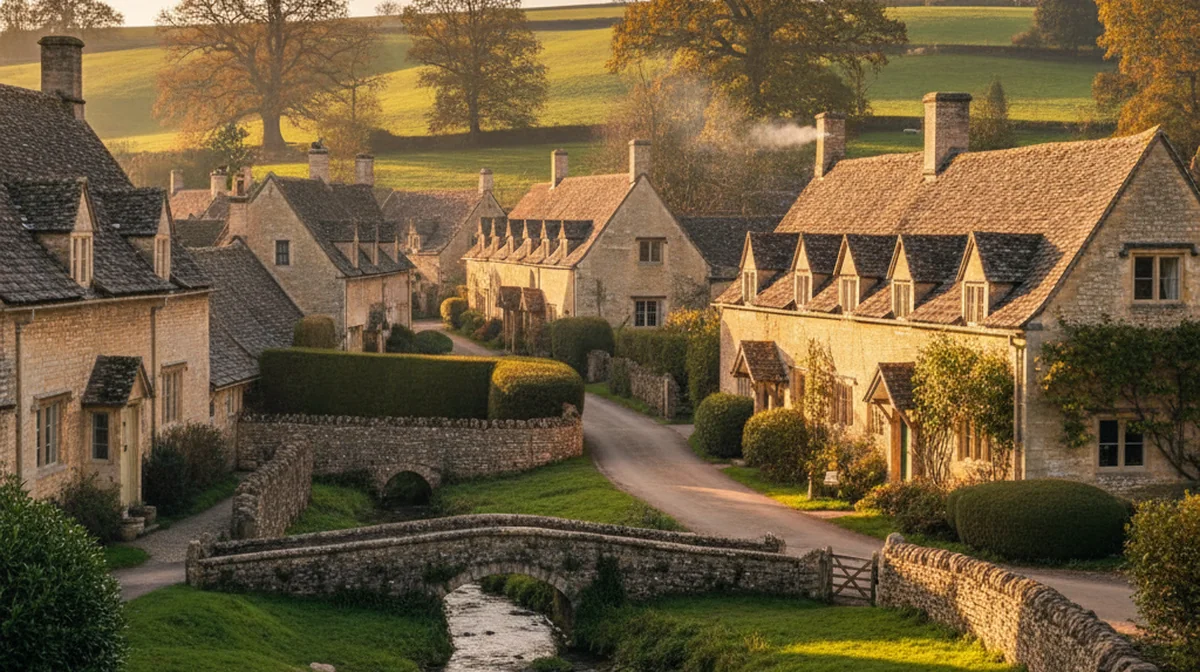
The Cotswolds is England's flagship rural luxury short-term rental market — an Area of Outstanding Natural Beauty stretching across roughly 800 square miles of Gloucestershire, Oxfordshire, Warwickshire, Wiltshire, and Worcestershire, defined by honey-coloured limestone villages, drystone walls, ancient wool-trade market towns, and a country-house-and-cottage rental tradition that anchors the UK's premium domestic-leisure economy. Bibury, Castle Combe, Bourton-on-the-Water, Stow-on-the-Wold, Burford, Chipping Campden, and Painswick run the village-tourism spine; the Daylesford Organic and Soho Farmhouse corridor near Kingham defines the contemporary luxury benchmark; Lower Slaughter and Upper Slaughter hold the storybook-cottage inventory. Premium rentals range from converted barn conversions and listed manor houses to thatched cottages and modern architectural retreats hidden along beech-lined lanes.

Cotswolds STR demand is structurally year-round with summer peak (June through September), Christmas/New Year, Easter, and bank-holiday weekends as compressed revenue windows. UK domestic leisure is the dominant segment — London weekenders, multi-generational family gatherings, walking-and-cycling tourism, wedding-and-anniversary buyouts — supplemented by US, Australian, and German heritage-travel visitors. Regulation is medium: no Cotswold-specific licensing regime, but planning law and Article 4 directions in some districts increasingly govern change-of-use; council tax versus business-rate elections matter materially for owner economics. Premium country-house inventory clears £600-£2,500 per night in peak weeks; six-bedroom rural manor buyouts at £8,000-£20,000 per weekend are the market norm at the top.

Top Attractions & Landmarks

  • Bibury
  • Castle Combe
  • Bourton-on-the-Water
  • Stow-on-the-Wold
  • Burford
  • Daylesford Organic
  • Sudeley Castle
  • Painswick Rococo Garden

Nearby Markets: London  |  Edinburgh  |  Paris

Airbnb marketing services in Cotswolds, England, United Kingdom, Europe
Why Cavmir

The Cavmir Advantage
in Cotswolds

Cavmir markets Cotswolds properties around the actual booking moment — the London couple booking eight weeks out for a Friday-Sunday escape, the multi-generational family booking fourteen months out for a summer reunion, the destination-wedding party booking the manor twenty-four months out, the US heritage-travel family pairing the Cotswolds with a London-and-Edinburgh circuit. We build the cinematic editorial library the Cotswolds guest expects (the dawn-mist beech-lane drive, the honeyed-stone village at golden hour, the wood-burner-lit drawing room in winter), distribute through the right travel-advisor and editorial channels, and architect direct-booking sites that capture the repeat household.

State of the Industry · History

The Cotswolds STR Market — Past & Present

The Cotswolds is the United Kingdom's largest Area of Outstanding Natural Beauty — designated 1966, covering roughly 800 square miles across Gloucestershire, Oxfordshire, Warwickshire, Wiltshire, and Worcestershire. The region's honey-coloured Jurassic oolitic limestone is the geological anchor: drystone walls, mullion-windowed cottages, Perpendicular wool churches, and market-town squares are built from the same locally-quarried stone, giving the Cotswolds a visual coherence almost unique in rural Europe. The medieval wool trade (the Cotswold sheep, the 'Cotswold Lion', produced wool that funded Chipping Campden, Cirencester, Northleach, and the great wool churches of the 15th century) created the architectural inheritance modern tourism trades on.

Modern Cotswolds STR runs on three distinct layers. The first is the storybook-village-and-cottage tradition — Bibury, Castle Combe, Bourton-on-the-Water, the Slaughters, Painswick — supplying the iconic visual library that defines the destination internationally. The second is the country-house and converted-barn tier — Burford, Stow-on-the-Wold, Chipping Campden, the lanes around Tetbury, Daylesford, and Kingham — where multi-bedroom rural manor inventory at £2,000-£10,000 per weekend defines the buyout-and-celebration market. The third, more recent, is the Daylesford Organic / Soho Farmhouse / Estelle Manor corridor near Kingham and Chipping Norton — the contemporary luxury benchmark that has drawn London's media-and-finance set into a near-permanent weekend rotation since the 2010s and reset the area's premium pricing ceiling.

Pricing Strategy & Seasonality

Pricing, Seasonality & When to Capture ROI

Pricing Strategy

Storybook cottages (1-3 bed, Bibury/Bourton/Stow): £180-£450 per night standard, £400-£800 in peak weeks. Premium country-house barn conversions and listed manors (4-6 bed): £600-£1,800 per night, with weekend buyouts £3,000-£10,000. Soho-Farmhouse-corridor architectural retreats and design-led buyout properties (6-10 bed): £1,500-£3,500 per night, weekend buyouts £8,000-£25,000. Wedding-and-anniversary buyouts at the top end clear £30,000-£60,000 for 3-day events at the right manor.

Seasonality & ROI Windows

Medium seasonality, with material year-round demand. Peak: June through September. Super-peak: late July, August, early September school-holiday weeks. Compressed peaks: Christmas/New Year week, Easter week, all UK bank-holiday weekends (May, August). Wedding-season extension: April through October. Strong shoulder: October-November (autumn colour, half-term), February (spring half-term, Valentine's weekend). Low: January, late November, early December. Missed revenue: November and February for operators who haven't built winter-product (wood-burner, dog-friendly, mulled-wine welcome) editorial.

Regulation & Licensing · 2026

What the Law Requires in Cotswolds

Cotswolds STR regulation is medium and patchwork. There is no Cotswold-specific licensing regime; the area sits under five district councils (Cotswold, Stroud, West Oxfordshire, Tewkesbury, and parts of Wiltshire and Warwickshire), each with its own planning policy and Article 4 directions in a small number of villages. The principal regulatory issue is planning law: change of use from C3 (dwellinghouse) to C4 / Sui Generis short-term let is increasingly contested in popular villages, and at least one parish (Bibury) has actively lobbied for restrictions. The UK government's national STR registration scheme (consultations ongoing 2024-2026) will likely require all English STRs to register, bringing a Scotland-style operator-license layer. Council Tax vs business rates election (Furnished Holiday Lettings test) remains a load-bearing operator decision: business-rates election with Small Business Rate Relief can zero out the annual-rates liability for sub-£12,000-RV properties — but Welsh and English rules continue to evolve.

Market-Specific Tips & Challenges

Local Tips & Unique Market Challenges

Tips That Actually Move Revenue in Cotswolds

The Cotswolds strategic tip: build the editorial library that matches the actual booking moment, not the Instagram brief. The London-finance couple booking a Friday-Sunday escape in November is buying a wood-burner-and-Sunday-roast product — and the photography that converts her is the pre-dawn beech-lane drive, the wood-stack and Aga shot, the dog-on-stone-flag-floor moment, not the summer-garden-table-set-for-twelve frame. Build the four-season library and merchandise it accordingly.

Tactically: first, the wedding-and-anniversary buyout product is the ceiling of the market and rewards specialist marketing — partner with Cotswold Wedding Planners, Daylesford-corridor florists, and the small caterer and private-chef pool that the area's better events run on. Second, lean into the multi-generational family product: specifically, the 12-bed sleeps-25 country house for summer reunion weeks rents at materially higher per-bed ADRs than smaller inventory and the segment is structurally underserved. Third, build the dog-friendly editorial specifically — UK domestic walking-and-dog tourism is one of the most loyal repeat segments and operators who merchandise the village pubs that welcome dogs, the named circular walks from the front door, and the local veterinary-and-grooming relationships earn outsized loyalty. Fourth, the autumn-colour and Christmas-cottage products are seasonal fillers most operators leave on the table — the Cotswolds in late October light is genuinely cinematic and the Christmas-village week (Castle Combe, Bourton-on-the-Water) draws a specific repeat audience.

Unique Cotswolds Challenges

Cotswolds challenges: the area's tourism intensity has driven village-level pushback (Bibury's parking and visitor-flow issues being the most public example), and the policy direction is toward more restrictive planning — operators should expect the regulatory environment to tighten through 2027. Rural staffing scarcity is real (cleaning, maintenance, hospitality labour) and operators relying on next-day-turnover models need locally-rooted teams. Christmas and bank-holiday weeks see traffic congestion on the A40 and A429 that operators should brief guests on.

A Curious Cotswolds Fact
The honey-coloured Cotswold limestone changes hue across the region — a fact every serious Cotswold guide and a vanishingly small share of marketing copy mentions. In the north (around Chipping Campden) the stone is a deeper, more orange-honey tone; in the central Cotswolds (Bourton, Stow) it shifts to the classic mid-honey colour; in the south (around Bath and Tetbury) it lightens toward a paler cream. The stone was quarried locally village-by-village; the variation is geological, not artistic, and walking enthusiasts often structure routes specifically to traverse the colour shift.
Finance Essentials — Cotswolds
🛡️

Insurance

UK rural-property insurance through Hiscox, Sterling, Lloyd's-syndicate-backed underwriters. Listed-building cover where applicable (Grade I, Grade II*, Grade II) is its own specialist line — premiums materially higher and reinstatement valuations professionally surveyed. Buildings, contents, public liability, accidental damage, and event-day cover for wedding-and-buyout properties. Rural-fire, oil-boiler, and outbuilding cover load-bearing for converted-barn inventory. Budget £900-£3,500 annually for typical country-house-rental coverage at adequate limits.

🧾

Property & Income Tax

UK rental income under the Furnished Holiday Lettings regime (through April 2025) gave Cotswold STR operators access to capital allowances, full mortgage-interest relief, and Business Asset Disposal Relief on disposal — a materially better treatment than standard residential letting. The April 2025 abolition shifts STR income into the standard framework with restricted finance-cost relief and section-24 treatment; tax counsel review of structuring (sole trader vs limited company, group structures for portfolios) is load-bearing. Council Tax versus business-rates election, Stamp Duty Land Tax (SDLT) 3% additional surcharge on second properties, and inheritance-tax planning for legacy estates all matter materially.

🏦

Mortgages & Financing

UK rural specialist STR mortgages through Hampden & Co, Coutts, Investec, and challenger lenders (Together, LendInvest, Hodge). LTVs typically 65-75% for FHL-qualifying inventory; rates track Bank of England base plus meaningful spread. Listed-building purchases require specialist underwriting (Pegasus, Hiscox, Lloyd's syndicates) and structural-survey requirements. Cash purchases the norm at the £2m+ country-house tier given competitive bidding timelines.

Future Outlook · 2027 & Beyond

Where Cotswolds is Headed Next

Cotswolds through 2027 and beyond: the AONB designation, the architectural inheritance, and the proximity to London (Paddington-Charlbury, Paddington-Moreton-in-Marsh, Marylebone-Bicester are all sub-90-minute corridors) combine into one of Europe's most durable rural luxury STR stories. The Daylesford-Soho-Farmhouse-Estelle-Manor corridor will continue to elevate the area's premium ceiling and pull a younger metropolitan demographic into the rotation. National STR registration arriving in 2025-2026 will standardise compliance overhead but is unlikely to reduce supply meaningfully. The wedding-and-buyout market continues to compound. Climate shift extends the productive shoulder season and Cotswold autumn light is the segment's most underrated photographic asset.

From the Desk of Sofie Sinag

Why We Love Marketing in Cotswolds

The Cotswolds rewards hosts who understand the difference between the Friday-night-arrival London couple and the Wednesday-night-arrival multi-generational family. The London couple wants the wood-burner lit and the kitchen stocked for the lazy-pub-lunch-Saturday and the Sunday-roast-then-train-back rhythm; the family of fourteen wants the manor's sleeping configuration mapped to grandparents-and-grandchildren on the ground floor, the named local farm-shop delivery scheduled for Wednesday afternoon, and the village-pub-walk briefed for the teenage cousins. These are genuinely different products in the same building and the operators who merchandise them as such outperform the generic 'cottage in the Cotswolds' framing every time.

What we love about marketing the Cotswolds is the four-season depth most listings ignore. The honey-stone village photographs everyone leans on are summer-afternoon shots, but the competitive ceiling lives in the November-mist beech-lane frame, the Christmas-cottage interior with the Aga radiating and the tree decorated in real candles, the February-snowdrop Painswick churchyard, the May-bluebell Westonbirt wood. Operators who build the four-season library and merchandise the actual booking moment unlock pricing power their summer-only competitors can't reach.

Cavmir's Cotswolds Cheat Sheet

The Picks We Recommend for Your Welcome Book

The picks Cavmir recommends for Cotswolds welcome books — the details that separate resident-hosts from the 'thatched-roof-and-cream-tea' script.

Morning

Bibury before 8 a.m. or after 6 p.m.

The walk along the River Coln past Arlington Row (reputedly the most-photographed street in England) is genuinely magical only outside the 9 a.m.–5 p.m. coach-tour window. A host who briefs the early-morning or late-evening visit prevents the trip's biggest disappointment.

Golden Hour

Broadway Tower at sunset

The 18th-century folly above Broadway, a 25-minute walk from the village, with panoramic views over the Vale of Evesham. Particularly cinematic 30 minutes before sunset; in summer, dusk runs to 9:30 p.m.

Neighborhood Walk

The Slaughters between cottages

The 1.5-mile walk between Lower Slaughter and Upper Slaughter along the River Eye is the storybook-Cotswolds experience without the Bibury-coach-traffic problem. Best walked early morning or late afternoon; the village pub lunches at the Slaughters Country Inn or the Lords of the Manor are the right end-points.

Dinner That Photographs

The Wild Rabbit (Kingham) or The Bull (Charlbury)

The Wild Rabbit at Kingham is the Daylesford-corridor destination evening; The Bull at Charlbury is the wood-fire Sunday-roast version. Reservations 6 weeks out for weekend slots; midweek 2 weeks is fine.

Local Obsession

Diddly Squat Farm Shop and the unfilmed Cotswolds

Jeremy Clarkson's farm shop near Chipping Norton has become a destination unto itself — the queues are real but the produce is excellent and the shop is a credible lunch stop. A host who knows when the queue is shortest (weekday 10–11 a.m. typically) outperforms blanket advice.

Shoulder Season Secret

Mid-October to mid-November

Autumn-colour peak in the beech and oak woodland (the Cotswolds' overlooked structural advantage), pre-Christmas pricing has lifted, the Daylesford-corridor restaurants are bookable, and the post-half-term week is the year's most underrated weekend window.

Weekend Escape

Bath and the Wiltshire downs

The 50-minute drive south to Bath (the Roman Baths, the Royal Crescent, Sally Lunn's) plus the loop back via Castle Combe and Lacock for genuinely-medieval-village lunch. The day trip that pairs the Cotswolds with the Georgian-Bath frame guests almost always want.

What Guests Ask For

Wedding-reception versus walking-and-pub-lunch product

The Cotswolds is genuinely both — and the same property may rent as a 14-bed wedding buyout one weekend and a couples-walking-and-pub-lunch product the next. A host who briefs each guest segment with the right welcome-book edition prevents both kinds of mismatch.

Local Work · Composite Case Vignettes

What Cavmir Has Done for Cotswolds Properties

Representative Cavmir engagements in the Cotswolds AONB. Property identifiers redacted; figures composited from internal analytics and market benchmarks.

4BR Stone Cottage · Bourton-on-the-Water area
The Brief

Honey-stone four-bedroom cottage commoditised against peer Cotswold-village inventory. Peak ADR flat at £420/night; shoulder-season pricing weak.

What We Did

Rebuilt the brand around the four-season library — summer-garden, autumn-beech-lane, Christmas-cottage, spring-snowdrop. Welcome book with named circular walks from the front door, dog-friendly pub list, and the local farm-shop delivery relationship. Direct-booking site optimised for the London-weekender repeat-booking pattern.

The Result

Peak ADR climbed to £680. Shoulder-season ADR up 32%. Direct-booking share reached 47%. A core London-couple repeat book emerged delivering 9 stays annually.

8BR Manor House · Daylesford corridor
The Brief

Premium country-house manor underexploiting the destination-wedding and multi-generational-family buyout segments peer Cotswold inventory was capturing.

What We Did

Three-product brand build. Wedding tear-sheet distributed through London and Cotswold wedding planners and venue-pairing relationships. Multi-generational family product positioned for summer reunion weeks. Corporate-retreat product for UK C-suite gatherings within 90 minutes of London. Editorial-location availability for film and fashion shoots.

The Result

Wedding buyouts now contribute a material annual-revenue share. A single 3-day wedding cleared £42,000. Leisure ADR climbed on the elevated brand.

5BR Converted Barn · Stow-on-the-Wold area
The Brief

Architectural barn conversion competing against generic Cotswold inventory. Strong design credentials but poor narrative and weak shoulder-season demand.

What We Did

Repositioned around the design-and-architecture guest specifically — Architectural Digest editorial framing, named relationships with Cotswold interior designers, and curated walking-and-design itineraries (Daylesford, Bamford, the Hauser & Wirth Somerset corridor 90 minutes south). Distribution through design-and-lifestyle media.

The Result

Shoulder-season ADR up 41%. The architectural positioning separated the property from the generic Cotswold-cottage category. Editorial appearances in Vogue Living and House & Garden lifted brand credibility materially.

Ready to Grow in Cotswolds?

Let's Put Your Cotswolds
Property on the Map

Talk to Cavmir today. We'll show you exactly what your Cotswolds property is leaving on the table — and how fast we can change that.

Book a Free Strategy Call