





Morning
Cafe du Monde or the quieter Cafe Beignet on Royal
Cafe du Monde is the landmark and worth one visit. Cafe Beignet on Royal is where locals actually stop — same beignets, half the wait, better light for photos.

North America · Airbnb Marketing
Expert short-term rental marketing to grow your bookings and nightly rate in New Orleans, Louisiana, USA.
Sixteen services, one team. Everything below is built in-house and scoped to your property and market. Most owners start with the 12-Step System.
Every engagement is quoted to your portfolio. These are the ready-made scopes owners pick most — our Fall Special (55% off list or more) is already applied to the website, King Broker, Hotels and à la carte scopes. A clear proposal within 48 hours.
The work is public. Selected engagements and what changed — and reviews from the owners and managers behind them.
* Market averages from AirDNA and STR market reports. A single home's numbers depend on its size, its location and how it is marketed.
Cavmir is an Airbnb marketing agency. We build the brand, the direct-booking website and the marketing for short-term rentals in New Orleans.
New Orleans is one of the only cities in America where the architecture, food, music, and cultural calendar are essentially inseparable from the rental experience itself. The wrought-iron balconies of the French Quarter, the oak-lined avenues of the Garden District, the Creole cottages of Marigny and Bywater, and Uptown's streetcar corridor all carry centuries of history that no staged interior can manufacture. Guests come for Mardi Gras, Jazz Fest, Essence Fest, French Quarter Fest, and the everyday New Orleans no other city has.
New Orleans STR revenue is famously festival-driven — Mardi Gras, Jazz Fest, and Essence Fest clear more than a month's worth of baseline revenue in a single week. Downtown and the French Quarter lead on rate; the Garden District and Marigny/Bywater command character-driven premiums. The 2023 ordinance tightened non-owner-occupied STR rules, which favors legally permitted operators who run professional listings.
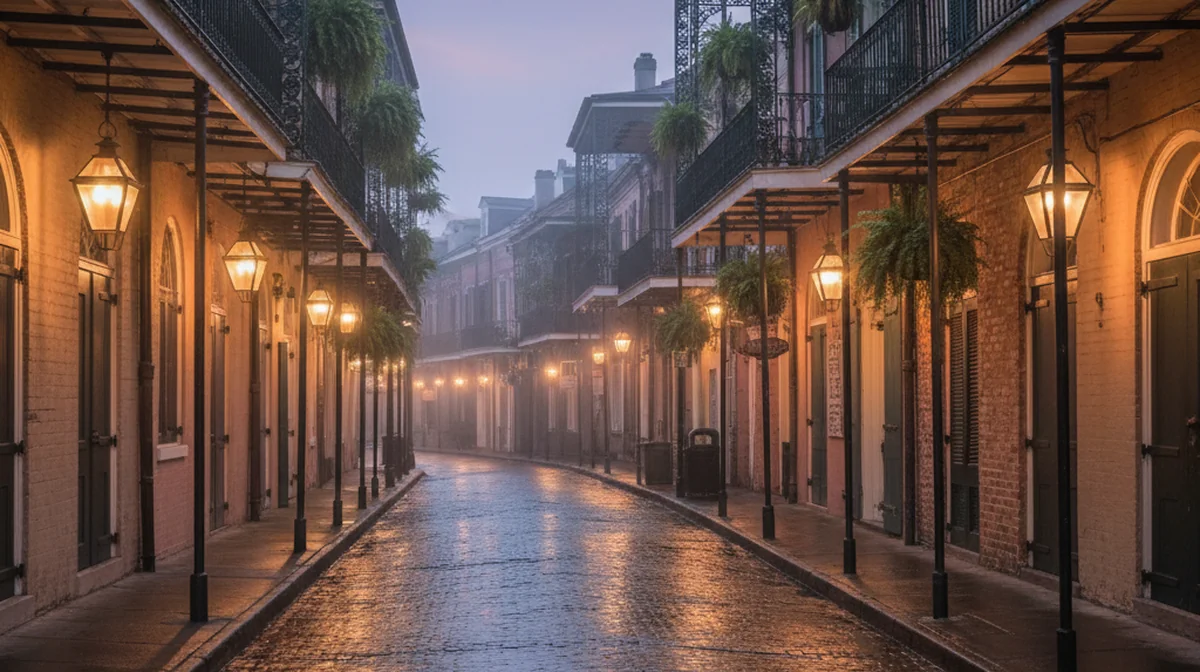
A few of the visual fingerprints we lean into when we shoot, brand and market a New Orleans property — courtesy of the open Wikimedia Commons archive.

Cavmir treats New Orleans listings as editorial, not real-estate descriptions — because the guest is buying a city experience, not a room. Our photography captures architectural character, our festival pricing strategy clears peak windows at true market rates, and our direct-booking infrastructure protects repeat guests from platform fee creep.
New Orleans has hosted paying visitors longer than almost any American city. The French Quarter's grid was laid out in 1721, the St. Charles streetcar began running in 1835, and by the late 1800s the city was already a major tourism economy built on Carnival, the port, and a reputation for food and music that had spread as far as Europe. Boarding houses, guesthouses, and Creole townhouse rentals predate the hotel era entirely. The French Quarter has regulated residential rental activity in some form for longer than most American cities have had zoning codes.
The Airbnb era arrived here in the early 2010s and collided almost immediately with a city that was still recovering from Katrina, protective of its neighborhoods, and carefully aware of how much of its housing stock is irreplaceable historic architecture. A first wave of STR regulation arrived in 2017, a 2019 overhaul tightened it, and the 2023 ordinance — the one most current owners actually operate under — rewrote residential STR rules again after the Fifth Circuit struck down portions of the previous framework. The result is a city where commercial-zone STRs remain viable, residential STRs are tightly constrained, and compliance is genuinely a specialist's job.
New Orleans pricing is event-dominated to a degree that very few American markets match. A single week — Mardi Gras — routinely clears a disproportionate share of annual revenue on peak-positioned properties. Jazz Fest, Essence Fest, French Quarter Fest, Saints home games, and Morial Convention Center bookings create a second tier of sharp revenue peaks. The pricing mistake most owners make is underpricing Mardi Gras and Jazz Fest weeks because they set rates off platform suggestions rather than event-specific demand data. Properties in the Marigny, Bywater, Garden District, and the CBD with smart event ladders often clear multiples of their baseline rate during those windows.
Outside peak events, rate strategy looks different. Summer is the soft season — heat, humidity, and hurricane risk thin demand even on well-positioned listings. Minimum-stay rules matter as much as ADR here: 4-to-5-night minimums during Mardi Gras and Jazz Fest prevent shorter bookings from locking out full-week revenue, and 2-night minimums through the rest of the year keep cleaning-cost ratios in range. Ask your pricing tool to treat event weeks as distinct products, not premiums on a flat curve.
New Orleans is one of the most highly seasonal STR markets in the US. Peak revenue concentrates in Mardi Gras (February or March), Jazz Fest (late April into May), Essence Fest (July Fourth window), and French Quarter Fest (April), with Saints home weekends and convention bookings layered on top. Summer is genuinely soft — hurricane season plus extreme heat keeps leisure demand down. Fall recovers as conventions return, and December holds up well around holiday travel. Owners who fight the summer softness with remote-worker and extended-stay campaigns usually outperform owners who simply drop rates.
New Orleans is one of the most carefully-regulated STR markets in the country, and understanding the 2023 ordinance is table stakes for operating here legally. The 2023 residential STR ordinance — adopted after a Fifth Circuit ruling struck down portions of the previous framework — tightened residential STR rules meaningfully. In most residential zones, residential STRs need a permitted operator on site whenever guests are present (the homestead rule was struck down in 2022), and they are subject to a one-per-block lottery cap. The ordinance is designed specifically to prevent investor-owned whole-home STRs from concentrating in residential neighborhoods.
Commercial STRs remain legal in certain commercial and mixed-use zones — parts of the CBD, the Warehouse District, portions of Mid-City, and specific commercial corridors — and these are where most professional STR operators now focus. The French Quarter has prohibited most residential STRs since long before Airbnb existed, predating the modern regulatory framework entirely. Separately, Louisiana charges state sales tax, Orleans Parish adds a local sales tax, the city collects a hotel occupancy privilege tax, and a 6.75% occupancy tax plus a $5 or $12 nightly STR fee apply. Airbnb and Vrbo collect and remit much of this automatically, but the permit holder carries compliance responsibility. Condominium declarations are the third regulator — many CBD and Warehouse District buildings restrict STR use in their bylaws regardless of city zoning, and ask your lawyer to read the declaration before you close.
The New Orleans-specific tip most new owners miss: buy in a zone where STR use is structurally permitted, not one where a permit exists today and may not tomorrow. Commercial and mixed-use zones offer the most durable STR profile. Residential-zone STRs under the 2023 ordinance require a license won in a block lottery and an operator on site during every stay — a real option for house-hackers but a poor fit for remote investors. Ask your lawyer to confirm zoning before you sign.
Second — market to the event calendar, not against it. Mardi Gras, Jazz Fest, Essence Fest, and French Quarter Fest are the four pillars of the revenue year. A listing that builds event-specific landing pages, Mardi Gras parade-route content, and Jazz Fest shuttle guidance converts at higher rates than generic copy. Third — invest in hurricane-season content. Summer guests fear storms more than heat, and a property with a transparent cancellation policy, clear flood elevation, and an honest note about what to expect weather-wise can hold occupancy through a window most competitors discount into the floor.
The signature New Orleans challenge is the regulatory environment itself — the 2023 ordinance is the most restrictive residential STR framework the city has ever run, and enforcement has been real. Insurance is the second major challenge: flood insurance is effectively mandatory for most of the city, wind and named-storm premiums have risen sharply since 2020, and some properties have become effectively uninsurable on the private market. Add hurricane-season demand softness and a tourist economy highly concentrated in a handful of event weeks, and operating here rewards specialists and punishes generalists.
Standard homeowners policies typically exclude STR use. New Orleans owners usually carry an STR-specific or commercial landlord policy plus flood insurance through the NFIP or a private carrier — effectively mandatory given the city's elevation profile. Named-storm deductibles are significant, and wind premiums have risen meaningfully since 2020. Budget a higher-than-national-average insurance line and ask your broker specifically about post-Katrina risk pricing.
Louisiana charges state income tax on STR income, plus state and Orleans Parish sales tax on bookings. The city adds a hotel occupancy privilege tax, a 6.75% occupancy tax and a $5 or $12 nightly STR fee. Platforms collect and remit much of this automatically, but compliance remains the owner's responsibility. Ask your accountant which pieces you still need to file yourself, and whether homestead exemption affects your specific setup.
US lenders treat New Orleans STR-purpose properties as second homes (10% down minimum, slight rate premium) or investment properties (20–25% down, a rate premium typically in the 0.5–0.875% range). DSCR loans underwritten against projected rental income are popular for commercial-zone STR buyers. Flood insurance is often a lender-required escrow item, and expect underwriters to ask for recent elevation certificates on properties in flood zones.
Two federal appeals rulings now frame every short-term rental decision in New Orleans. In October 2025 the Fifth Circuit struck down the city's ban on business entities holding permits, threw out the rule limiting each listing to one unit, and read the operator rule narrowly: your operator has to be on the property while guests are there. On August 5, 2026 the same court upheld the two rules that matter most to a buyer — one license per residential block, handed out by lottery, and the 2024 ordinance that bars Airbnb and the other platforms from taking a fee on an unlicensed booking. If you plan to buy through an LLC, confirm how the city is processing entity applications since the ruling before you form one.
In residential neighborhoods you're applying for an NSTR, the non-commercial license, and the city allows one NSTR or bed-and-breakfast per square, its word for a city block. Each quarter it holds a lottery on any square that draws more than one complete application, and if a license already sits on your square, you can't enter at all. The latest window ran September 16 to 22, 2026, with the draw on October 6. Every application carries a $50 non-refundable fee, and a winner has five calendar days to pay or the license passes to the next name drawn. Recent fee schedules put the owner permit at about $500 for a full license year, prorated by quarter, plus about $150 for the operator permit; confirm the current figures with the city's Short Term Rental Administration. Licenses expire every June 30, and renewal needs a valid operator license, the city's STR course, no unpaid fines or liens on the lot and no open permits. The file needs a floor plan capped at 3 bedrooms and 6 guests, an evacuation plan with smoke and carbon-monoxide alarms, parking, noise and sanitation plans, and a named operator, 18 or older, who answers complaints within one hour. One owner permit per person or entity still applies. The special-exception route to a second license on a square ended with an ordinance adopted March 27, 2025, and no NSTR is allowed inside the Garden District box formed by St. Charles Avenue, Jackson Avenue, Magazine Street and Louisiana Avenue.
For new buyers, the commercial license (CSTR) sits behind a council vote. The city stopped accepting new CSTR applications on June 8, 2023, and since a council motion adopted October 29, 2025, any new commercial rental, hotel, hostel, timeshare or B&B needs a conditional use approved by council ordinance under a Transient Lodging interim zoning district. Existing CSTRs can renew as legal nonconforming uses when the license predates June 8, 2023, hasn't lapsed more than 180 days and carries no open STR violations, and every one has needed a working noise monitor since July 1, 2023. None of it survives a sale. Licenses don't transfer, so the buyer of a licensed condo or a lottery-won cottage starts from zero, and on a residential square the forfeited license goes back into the next quarterly lottery for anyone on that block. Enforcement has teeth: cases at adjudication carry fines up to $1,000 per violation, each loud night counts on its own (louder than conversation, or music heard at the property line, from 10 p.m. to 8 a.m.), and a revoked license can't be renewed. Platforms must check your license through the city's verification system before a booking and recheck it at least every 30 days, and they can't collect a fee on an unlicensed stay. Condo declarations stack on top, so have a local real-estate attorney read the declaration and confirm the lot's license status with the city before you close.
A short stay here carries three percentage taxes: Louisiana's 5% state sales tax (the rate for places with nine or fewer rooms, set through December 31, 2029), Orleans Parish's 5% gross rentals tax and its 6.75% occupancy tax, or 16.75% before the nightly charges. On top sit a $5 fee per night on a non-commercial license or $12 on a commercial one, plus a $0.50 occupancy privilege tax per room night. Airbnb's tax page shows it collecting all three percentage taxes, the $0.50 privilege tax and a $12 nightly fee by listing type. Vrbo lists the city's sales, privilege and STR occupancy taxes plus the Neighborhood Housing Improvement Fund fee, and it began collecting the state sales tax on August 1, 2025. Check your payout statements against the $5 fee before you assume a platform covered it. Direct bookings from your own website are where owners slip, because no platform is collecting anything: you register with the city's Bureau of Revenue and the Louisiana Department of Revenue, charge the full stack, and file the city return by the 20th of the following month. Have a Louisiana CPA who files Orleans Parish lodging returns set this up before your first direct booking.
In New Orleans the zoning district decides whether you can rent at all, before the neighborhood decides who books. Match the property to the guest already searching that block, and check the square on the city's NSTR license map before you write an offer. It's the read Cavmir starts from when we market a home here, because the address sets both the story and the legal ceiling long before the photos do.
The French Quarter is the hardest place in town to license. Its residential districts aren't on the city's NSTR list; city planners describe the VCE district, eight blocks of Bourbon Street between Iberville and St. Ann, as the only Quarter district that allows commercial rentals, and a bed-and-breakfast on a block rules out a license there. New hotels and B&Bs have been under a moratorium since 1969. Outside those Bourbon blocks, plan a Quarter purchase as a second home or a rental of 30 days or more. The Garden District core is closed to NSTRs too, but the streets around it aren't: the Lower Garden District, downriver of Jackson Avenue, and the Irish Channel, on the river side of Magazine Street, run on the ordinary square-by-square lottery. Those blocks sell the St. Charles parade route at Carnival, Magazine Street's shops and bars, and the streetcar, and a raised shotgun or a cottage with a porch fits that guest. Check which side of the Jackson-to-Louisiana box the property sits on, because a single block can decide it.
The Historic Marigny/Treme/Bywater residential districts are on the NSTR list, so the lottery decides here, square by square. The Marigny wins the music traveler walking to Frenchmen Street, Bywater wins couples after Crescent Park, galleries and a quieter porch, and Treme sells second lines and an easy walk to the Quarter. Mid-City, Bayou St. John and the Esplanade corridor are mostly Historic Urban neighborhoods of single and double shotguns, and they win Jazz Fest groups headed to the Fair Grounds and families using City Park. A double is the layout that fits the operator rule most naturally, since your operator can stay in one half while guests use the other; confirm with the city's STR office that your setup qualifies. Lakeview and much of Gentilly sit in suburban districts that also appear on the list and draw drive-in families who want a driveway, but the cap of 3 bedrooms and 6 guests means a big house can't sell every bed. Across the river, Algiers Point trades the walk for the ferry to the foot of Canal Street and a quieter street, under the same lottery.
Downtown is where the convention guest and the stadium crowd stay, within a walk of the Morial Convention Center, the Superdome and the Quarter. Most CBD districts (CBD-1, 2, 3, 5 and 6) are on the NSTR list, so a condo can be licensed by lottery with an operator on site, while a new commercial license needs a conditional use from the council. On paper CBD-5 still lets commercial rentals in by right, capped at 25% of the units in any one building with no block limit, but the interim district now routes any new one through that same council vote. The rules may move again. The Planning Commission adopted the Transient Lodging Study with changes on January 27, 2026; staff and the consultant proposed small, medium and large commercial tiers, with large whole-home rentals allowed only in the maritime district out at Lake Catherine, and the council's June 24, 2026 motion sent the rewrite to a public hearing. Treat all of that as pending, and price a commercial play only on what the code allows today.
Looking past 2026, New Orleans' regulatory trajectory is clearly toward protecting residential neighborhoods and concentrating STR activity in commercial zones. Expect the 2023 ordinance to be refined rather than loosened, with continued emphasis on operator-presence checks, permit number display, and platform license verification. The French Quarter's long-standing prohibitions will stay. Commercial-zone STR operators will continue to carry the bulk of professional activity, and the price of those parcels reflects that regulatory premium.
On the demand side, New Orleans' core is intact. Mardi Gras, Jazz Fest, Essence Fest, and convention bookings at Morial are not going anywhere, and the city's place on national and international travel lists is durable. Climate risk is the real long-horizon question — insurance costs will keep shaping which properties pencil out, and flood-elevation profile will matter more in underwriting each year. The owners who win past 2027 are the ones operating in commercial zones, carrying proper insurance, and marketing around the event calendar with genuine specificity.
New Orleans photographs like nowhere else in America. The French Quarter's wrought-iron balconies at the blue hour, a second-line parade spilling out of Treme on a Sunday afternoon, the oak canopy on St. Charles Avenue with a streetcar running through it, the specific color the Mississippi turns when the sun hits it just right from the Algiers ferry — every block is a frame. Bywater's pastel shotguns, Marigny's music-bar porches, the Garden District's columned grandeur, Mid-City's bayou light: each is its own film. The mistake most STR listings make is photographing the unit and ignoring the city that makes the unit worth booking in the first place.
What we love about marketing in New Orleans is that the city tells you what to do if you listen. Guests don't come here for generic hospitality; they come here for Mardi Gras, for Jazz Fest, for Commander's Palace on a Friday lunch, for a second line they weren't expecting. A property that builds its brand around which New Orleans it actually belongs to — Quarter-adjacent, Marigny-musical, Garden-District-grand, Bywater-arty — consistently out-earns the property that tries to be everything to everyone. Our job at Cavmir is to identify the right New Orleans for your listing and document it like editorial. That's how you move past competing on price and start competing on desire.
The picks we recommend our New Orleans clients include in their welcome books — the small specifics that turn a first-time visitor into a repeat guest.
Cafe du Monde is the landmark and worth one visit. Cafe Beignet on Royal is where locals actually stop — same beignets, half the wait, better light for photos.
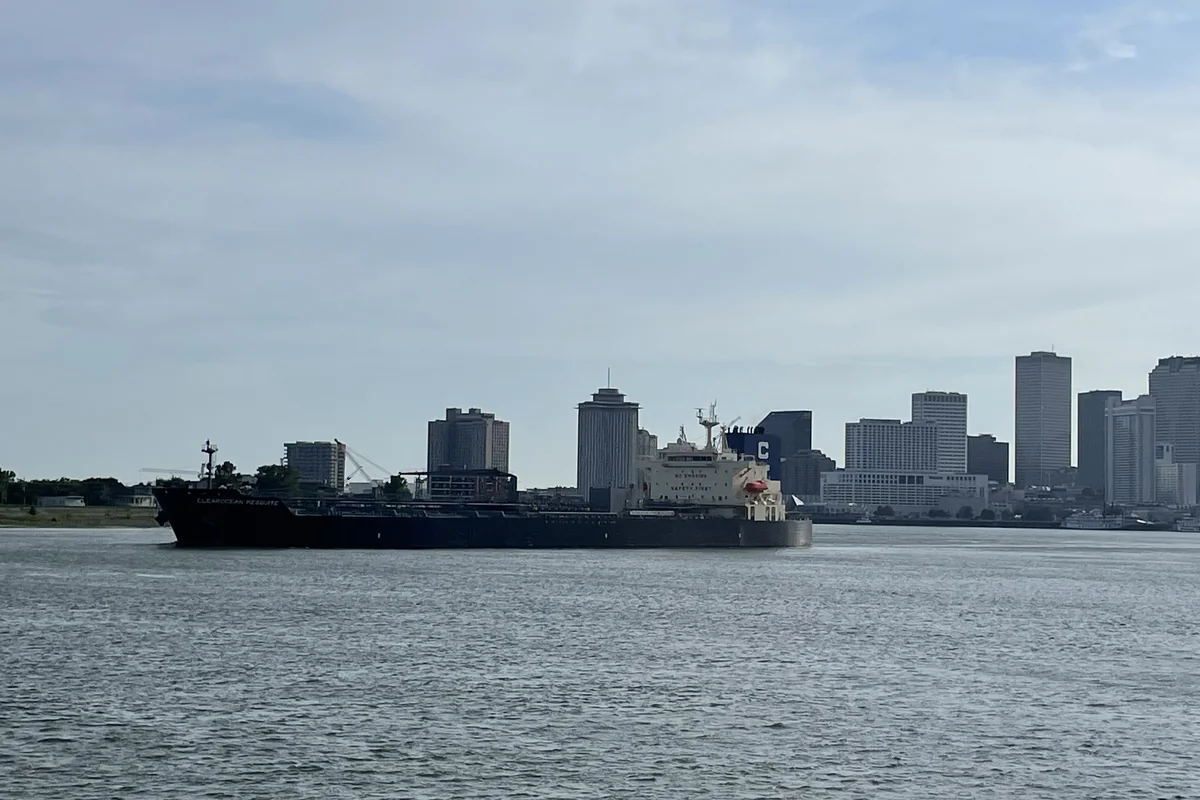
The riverwalk path behind Jackson Square. West-facing light on the Crescent City Connection bridge with Jackson Brewery in frame. A welcome book should flag it — most guests miss it.
The Marigny's music-bar strip is where locals actually go at night. Walk it first in daylight to spot the venues — The Spotted Cat, d.b.a., Snug Harbor — then come back after dinner.
Commander's Friday lunch is the New Orleans ritual. Compere Lapin in the Warehouse District reads editorial in photos. Bacchanal in Bywater with backyard live jazz is the one guests repeat to friends back home.
The po-boy debate is local religion. Parkway's roast beef is the Mid-City institution; Mahony's on Magazine offers a more modern spin. A welcome book that picks a side wins trust.
Free festival across the Quarter with local music lineups that often outclass what guests pay for at Jazz Fest. Hotels fill early — a well-positioned STR with a FQF-ready listing converts strongly.
Forty minutes across Lake Pontchartrain to Covington for a day, or an hour west on the River Road for antebellum architecture. Reliable reasons to book a second or third night.
Parade routes, street closures, which neighborhoods are walkable, which are impossible by car. A host who sends a one-page Mardi Gras brief 48 hours ahead earns a five-star review before check-in.
A few representative engagements — property types Cavmir has worked with in New Orleans, with identifying details removed. Figures are composite ranges drawn from Cavmir internal analytics cross-referenced against AirDNA market data.
A commercially-zoned STR struggling with generic photography and a listing that failed to signal its Marigny-musical personality. ADR was tracking under the submarket median and Mardi Gras week had cleared at a modest premium the prior year — well below what a properly-positioned property should have achieved.
We rebuilt the listing around the neighborhood. New photography placed the property inside the Marigny — pastel exteriors as context, a front-porch shot at golden hour, interiors styled to echo the district's live-music character. Copy was rewritten for the Jazz Fest guest, the Frenchmen Street regular, and the design-conscious couple. We launched a direct-booking micro-site with a Mardi Gras and Jazz Fest rate ladder, ran a paid campaign against music-and-travel audiences, and added event-specific landing pages.
Mardi Gras week and Jazz Fest cleared at rate multiples meaningfully above the previous year. Annual occupancy improved into the upper band of the submarket. Direct-booking share grew into a double-digit percentage of revenue, reducing platform-fee dependency.
A commercial-zone condo in a Warehouse District building competing against dozens of near-identical listings. Owner was winning convention-week bookings but losing the Jazz Fest and couple-weekend guest to more differentiated listings nearby.
Cavmir treated the project as a brand repositioning. We identified the Jazz Fest music-tourist and the Morial-convention couple-trip segments as the primary targets. Photography emphasised skyline views, walkability to Frenchmen Street, and the building's architectural character. Copy was rewritten to signal a refined-not-generic identity. We built distribution through music-travel newsletters and corporate housing platforms, and partnered with a local concierge service for Jazz Fest week shuttles.
Jazz Fest cleared a full-week calendar at a significant premium to the prior year. Midweek convention occupancy held, and weekend couple-trip bookings filled a gap that had previously been discount inventory. Review velocity improved once the target mix tightened.
A beautifully-restored antebellum home with photography that flattened its architecture, copy that read like a real-estate listing, and pricing that trailed newer competitors despite being materially more distinctive. The property's Garden District identity was invisible online.
We rebuilt the editorial around the Garden District's columned-grandeur identity. Architectural photography at golden hour highlighted the portico, the oak canopy, and the side garden. A short-form video walked the St. Charles streetcar line from the property to Commander's Palace. The welcome book was framed around Garden District literary history — Anne Rice, the streetcar, the cemeteries. We pitched a Southern lifestyle publication and earned a feature, then layered an influencer placement with a Southern-design creator.
ADR climbed from the lower range of the neighborhood into the upper band. Booking pace for Mardi Gras and Jazz Fest roughly doubled year-over-year. A growing share of bookings now arrive as direct repeat stays from guests who followed the property on social after their first visit.
Demand in New Orleans peaks around February through April and runs quietest around August. Here is how the year actually books — and what to do about each stretch of the calendar.
February through May is the season that makes the year. Carnival builds for weeks before Mardi Gras, French Quarter Fest and Jazz Fest carry April into May, and the weather is the best it gets. Set festival pricing and minimum stays early — regulars book these dates many months ahead — and have your photography and reviews in shape before the first parades roll.
October through early January is the working shoulder. The heat breaks, convention season picks back up, Halloween is a genuinely big weekend here, and the holidays bring the Bayou Classic, bowl season and Reveillon dinners. The play is date-by-date pricing: this stretch is a series of strong specific weekends rather than a wall of demand.
July through September is the low — heat, humidity and hurricane season keep leisure travel thin, with Essence Festival in early July the big exception. Loosen minimums, court longer stays and traveling professionals, and use the slow weeks for deep maintenance and a photo refresh. Flexible cancellation settings earn their keep in these months.
Mardi Gras and Jazz Fest fill many months out — the most devoted regulars rebook almost as soon as they leave. Ordinary weekends run a much shorter window, often a few weeks, and summer can be nearly last-minute. Practically: lock festival pricing early, then stay nimble the rest of the year.
The long weekend is the core booking — Thursday or Friday through Sunday, built around food, music or an event. Festival guests stay longer, and a meaningful share of Jazz Fest visitors bridge both weekends. Summer's thinner traffic skews toward longer, value-minded stays.
The winner here is a shotgun double or Creole cottage with a porch, balcony or courtyard in the Marigny, Bywater, Treme, Mid-City or the Magazine Street corridor — character a guest can't get at home. Outdoor space matters more than square footage, and serious air conditioning is non-negotiable. Generic condo finishes struggle in this market; a house that feels like New Orleans is the product.
Build everything around the calendar, because New Orleans demand arrives in named waves: Carnival, French Quarter Fest, Jazz Fest, Essence, Bayou Classic. That means event-aware pricing, listing copy that names your neighborhood and what it's near, and photography that leads with the porch or courtyard. Then add the pieces that compound: a Google Business Profile for map-search visibility and a direct-booking site so festival regulars can rebook you year after year without platform fees. That's the stack Cavmir builds for hosts here — it works because this city's best guests are repeat guests.
February through May — Carnival season through Jazz Fest — is the clear peak, with the best weather of the year underneath it. October through the holidays is a strong second act of specific big weekends like Halloween and the Bayou Classic. July through September is the low, with Essence Festival in early July the exception worth pricing hard.
Festival dates fill many months ahead — Mardi Gras and Jazz Fest regulars often rebook nearly a year out — while ordinary weekends move inside a few weeks. Summer bookings can be close to last-minute. The practical takeaway is to lock your festival pricing and minimums early, then keep the rest of the calendar responsive.
The drive market comes from the Gulf South — Baton Rouge, Houston, Jackson, Mobile, Memphis — for weekends and games. The festivals pull fly-in guests from every major metro, with Atlanta, Chicago, New York, Dallas and Los Angeles well represented. If you run ads, Texas and the Southeast are the efficient year-round targets, with national pushes timed to festival announcements.
Strong air conditioning is first and it isn't close — summer here tests every system. After that: usable outdoor space, because the porch or courtyard is what guests are buying emotionally; off-street parking, which removes a real anxiety during parade season; and blackout curtains plus laundry for festival guests staying the week.
Run your Airbnb, Vrbo, or website through Cavmir's free grader. It checks the things that decide whether guests book in New Orleans — photos, listing copy, page speed, local search — and shows you where bookings leak. Takes about a minute, and there's no sales call attached.
If the report says your booking engine is the weak link, that's fixable: a direct-booking website of your own means repeat guests stop paying platform fees to come back to you. That's the work Cavmir does — see Airbnb website design in New Orleans.
Counted from City of New Orleans Open Data — STR licenses & applications, deduplicated by permit number — real registry data, not an estimate. See the full Louisiana permit data →
As of July 2026, City of New Orleans Open Data — STR licenses & applications shows 1,754 currently active licenses in New Orleans. The registry holds 1,755 records in total, including lapsed and historical entries. A license is not always one listing — some licenses cover multiple units — so treat this as a verified floor for the size of the legal market.
New Orleans ranks number 1 of Louisiana's tracked markets by records on file, holding about 7% of the 26,029 records we compiled for Louisiana. Every one of those operators shows up in the same searches your guests use — which is why presentation, photography, and a direct-booking path decide who gets seen.
The number above comes from City of New Orleans Open Data — STR licenses & applications, an official public source, pulled and deduplicated in July 2026. Rules and requirements change — always confirm current licensing requirements with the program directly before you buy or list.
Send us the listing and we'll tell you what we'd change. Not a pitch deck — a straight read on your photos, your title, your rates against the New Orleans comp set, and whether a direct-booking site would pay for itself.
You'll hear back from a person, usually inside one business day. If we don't think we can move your numbers, we'll say so. Cavmir is a short-term rental marketing agency — we position and market properties, we don't manage them.
Talk to Cavmir today. We'll show you exactly what your New Orleans property is leaving on the table — and how fast we can change that.
Book a Free Strategy CallPhotography via Wikimedia Commons (images resized and cropped): Crescent City Connection (closeup) by Vegasjon~commonswiki (CC BY-SA 4.0).
