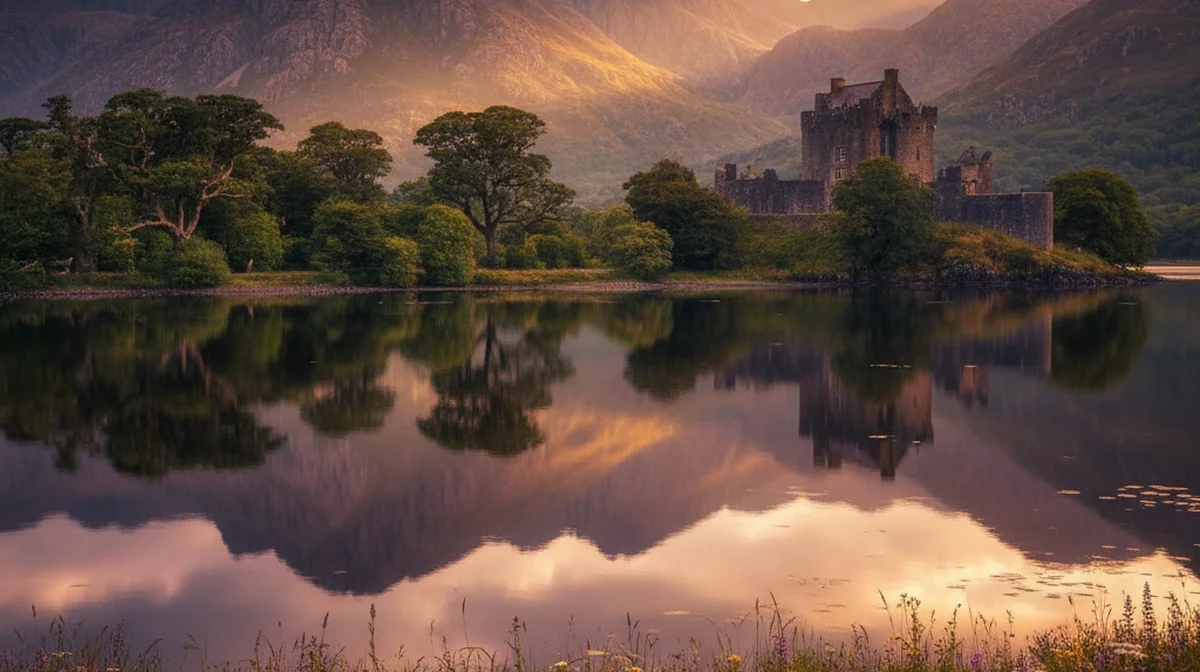
Lough Leane shore walk before the coach tours arrive
The lake path from Ross Castle through the Muckross estate to Muckross Abbey, best walked 7–9 a.m. before the Killarney coach groups mobilise. The Killarney that existed before tourism.
Expert short-term rental marketing to grow your bookings and nightly rate in Killarney, County Kerry, Ireland, Europe.
Sixteen services, one team. Everything below is built in-house and scoped to your property and market. Most owners start with the 12-Step System.
Every engagement is quoted to your portfolio. These are the ready-made scopes owners pick most — our Fall Special (55% off list or more) is already applied to the website, King Broker, Hotels and à la carte scopes. A clear proposal within 48 hours.
The work is public. Selected engagements and what changed — and reviews from the owners and managers behind them.
* Market averages from AirDNA and STR market reports. A single home's numbers depend on its size, its location and how it is marketed.
Cavmir is an Airbnb marketing agency. We build the brand, the direct-booking website and the marketing for short-term rentals in Killarney.
Killarney is Ireland's classic luxury leisure market — a market-town base at the edge of Killarney National Park where 26,000 acres of lakes, oak woodland, and MacGillycuddy's Reeks mountain terrain frame a country-house tradition that stretches back to the 18th century. The Europe Hotel & Resort, the Muckross Park, Killarney Park Hotel, and the Lake Hotel anchor the hospitality benchmark; Sheen Falls Lodge and the Park Hotel Kenmare run the sister luxury corridor a half-hour south. The STR market here skews toward Georgian country-house villas, lakeside cottages in Beaufort and Muckross, and townhouse rentals in Killarney town itself — the base camps for the Ring of Kerry, the Dingle Peninsula, and the Skellig Coast.
Killarney's visitor mix is structurally North-American-heavy — the Irish diaspora traveller from the US East Coast is the market's anchor segment and returns year after year, often to the same property. UK, German, and increasingly Italian and French travellers fill the shoulder months. Irish STR regulation is light at present (new short-term-letting registration system phasing in from 2024–2026, but the County Kerry implementation remains broadly accommodating). The season is longer than stereotypes suggest — May through October is prime, with Christmas and spring-wedding windows adding a meaningful secondary pulse.
Cavmir markets Killarney properties around the actual demand layers — the US Irish-heritage traveller on a once-in-a-decade trip, the UK-London couple on a long weekend, the Ring-of-Kerry golf-and-driving circuit, the wedding-and-honeymoon segment Sheen Falls helped create — each with its own visual library and distribution angle. We pair that with direct-booking sites and the advisor-channel partnerships that capture the repeat heritage traveller platforms routinely miss.
Killarney sits at the edge of the 26,000-acre Killarney National Park in County Kerry — Ireland's oldest national park, established 1932 when Maud Bowers Bourn Vincent donated the Muckross Estate to the Irish state. The park's three interconnected lakes (Lough Leane, Muckross Lake, the Upper Lake), oak-and-yew woodlands, and the flanking MacGillycuddy's Reeks (Ireland's highest mountain range) form the scenic anchor of the entire southwestern Irish tourism corridor. The town of Killarney itself developed from medieval settlement around Ross Castle and Muckross Abbey; it served as a market-town base through the 18th and 19th centuries, with early tourism stimulated by Queen Victoria's 1861 visit to Muckross House.
Modern Killarney luxury tourism has two distinct historical layers. The country-house hotel tradition — Lake Hotel (opened 1820, rebuilt multiple times), Killarney Park Hotel, Hotel Europe, Muckross Park Hotel, Aghadoe Heights — built the destination's reputation with the US Irish-heritage traveler segment that has been the market's structural anchor for over a century. The second layer was the 1990s–2010s luxury renewal around Sheen Falls Lodge, Park Hotel Kenmare, and the Europe's spa expansion, which positioned Killarney against peer Scottish highland and English country-house destinations. Today the rentable country-house and villa pool totals roughly 800–1,400 properties of material scale across Kerry, with the highest-yielding inventory in Beaufort, Fossa, Muckross, and the Kenmare corridor.
Sheen Falls Lodge-adjacent estates, Muckross lakeshore country houses, and Kenmare Bay-view properties anchor the luxury tier at €800–€3,000 per night in peak summer. Beaufort, Fossa, and Aghadoe premium villas run €400–€1,200 per night. Killarney town townhouses and Killorglin cottages run €200–€600 per night. Wedding weekends at Muckross and Ballyseede drive the rate ceiling; the Ring of Kerry golf weeks (summer and shoulder) sustain premium pricing.
Medium seasonality, genuinely longer than stereotypes suggest. Peak: June through September. Super-peak: August. Shoulder: April–May, October. Wedding-season extensions: late April through early October. Low: November–March (Christmas and spring-wedding windows add secondary pulses; winter US Irish-heritage travelers are a small but loyal segment). Missed revenue: May and September where weather is reliably the best of the year and US Irish-heritage group bookings outrun operators' marketing attention.
Ireland's short-term-letting regulatory framework has been evolving since 2019. The short-term letting register run by Fáilte Ireland opens on 1 December 2026, after a delay from May, and every operator letting for 21 nights or fewer must register each property by 31 December 2026 and display its registration number on every listing and advert. County Kerry implementation has been relatively accommodating relative to Dublin's more restrictive rent-pressure-zone regime. Rental income taxed under Irish tax schedules — Case V (rental income) or Case I (furnished-holiday trading) depending on operating model. The Help-to-Buy and other residential supports don't apply to investment property. VAT on short-term lettings applies above Revenue's €42,500 annual turnover threshold for services, and holiday accommodation is charged at the reduced 13.5% rate. Foreign ownership is unrestricted; non-Irish buyers require a PPS number (Personal Public Service) for transactions.
The Killarney strategic tip: market the US Irish-heritage traveler with editorial specificity, not generic 'Irish charm'. The US diaspora guest planning a Killarney trip is often doing a once-in-a-decade heritage journey — visiting specific ancestral counties, researching family names, driving the Ring of Kerry or the Dingle Peninsula on a carefully structured itinerary. Properties that merchandise that specificity — named walking routes into the national park, a welcome book with county-by-county genealogy resources, curated Ring of Kerry driving itineraries, named relationships with the area's best pubs and restaurants — consistently out-earn peer properties that default to generic 'Fáilte / Ireland of the welcomes' marketing.
Tactically: first, build the US-market distribution directly — specialist Irish-heritage travel advisors in Boston, New York, Chicago, and Philadelphia control disproportionate Killarney demand and reward direct relationships. Second, invest in wedding-and-anniversary product — Sheen Falls, Ballyseede Castle, and Muckross Park have built the county into a credible destination-wedding market, and nearby country-house rentals capture overflow. Third, lean into the rugby and equestrian tourism segments; Ireland's international rugby calendar and the Kerry equestrian circuit create specific-event demand pulses most general Killarney marketing ignores. Fourth, build the Christmas warm-hospitality product — the US Irish-heritage traveler has quietly discovered that a December week in Kerry is among the most atmospheric experiences in Europe, and operators who recognize that are earning the segment first.
Killarney challenges: Ireland's weather variability, the evolving STL registration regime that will standardize within the next two years, staffing scarcity in smaller Kerry towns, and the genuine rural character of much of the region (which is an asset but also a driving-distance friction point for first-time visitors). Kerry (KIR) and Cork (ORK) airports serve the market but most US guests arrive via Dublin or Shannon and drive — arrival logistics matter.
Irish country-house insurance is domestic-market with Lloyd's syndicate capacity for estates above €3 million. Fire, liability, and storm-flooding coverage standard; peat-fire and heating-oil-boiler coverage are worth explicit review. Budget €2,500–€10,000 annually for luxury country houses with adequate limits (€1.5–4 million building plus liability). Pool-liability (where applicable) and staff-workers'-comp riders standard; wedding-and-event coverage warrants specific discussion for properties hosting private events.
Irish rental income is taxed at progressive rates (20% and 40% bands) plus USC and PRSI where applicable for residents; non-residents face 20% withholding via tenant or agent and self-assessment through a Revenue-appointed tax agent. Annual Local Property Tax (LPT) based on property banded valuation (modest in practice). Acquisition Stamp Duty 1% on the first €1 million, 2% up to €1.5 million and 6% above that for residential. Irish Non-Domiciled resident regime remains attractive for certain foreign-income strategies; consult Irish counsel.
Irish mortgages for foreign buyers through Bank of Ireland, AIB, and Permanent TSB at 60–70% LTVs for non-residents, rates tracking ECB plus meaningful spread. Private banking through Investec Ireland extracts better terms on ultra-luxury transactions. Cash purchases common at the Sheen Falls / Muckross country-house tier given transaction timeline.
A Killarney guest tends to meet your house twice. The first time is on a platform or in an AI answer while they're plotting a Ring of Kerry loop; the second is when they type the house name into Google to check you exist before they hand over a deposit. That second visit is where a direct-booking website pays for itself, and in Kerry it has three jobs: speak to a guest who may be flying in from Boston or driving down from Cork, carry the registration and pricing details Irish law is about to demand, and answer the touring questions people ask before they choose a base for the Reeks and the lakes.
Start from the arrivals data. The CSO counted about 6.59 million overnight visitors from abroad in 2024: roughly 2.44 million from Great Britain, 1.24 million from the US, 463,000 from Germany, 392,000 from France, 313,000 from Belgium, the Netherlands and Luxembourg, 248,000 from Italy and 198,000 from Canada. Add the Irish weekenders who drive down from Cork, Limerick and Dublin, and the American heritage traveller this page already describes, and the language plan for Killarney follows. English carries the site, written with the American reader in mind (“vacation rental” and “rental car” on pages aimed at the US, “holiday home” and “hire car” for British and Irish guests). German and French come next, each a full hreflang version with its own URLs instead of a translate widget, with Dutch and Italian added once those pages draw visits. Quote and charge in euro, and show an approximate US$ and £ figure beside the nightly rate, because a family from Philadelphia budgets a Kerry fortnight in dollars. Americans also want straight answers on driving on the left, whether the lane to a Beaufort or Black Valley cottage suits a large automatic hire car, and how far the nearest shop is.
EU Regulation 2024/1028 has applied since 20 May 2026 and expects a host's registration number to sit clearly in every listing, yet Ireland's own register isn't open. After the Irish Self Catering Federation lobbied over planning uncertainty, the Department of Enterprise, Tourism and Employment moved Fáilte Ireland's opening to 1 December 2026, and every operator letting stays of 21 nights or fewer must register by 31 December 2026. Fáilte Ireland says the number goes on all listings and advertisements, one per unit, renewed every year, so build the slot now in your footer, on each property page and in the booking confirmation, and fill it in December. Planning is the bigger Killarney question. The Short-Term Letting and Tourism Bill, published on 6 October 2026 and still before the Oireachtas, restricts short lets in places above 20,000 people. Killarney, at roughly 14,500, sits under that line, which under the draft rules means two years to put planning in order, with a presumption in favour where a home has been let short-term for seven years without enforcement; the Government's first proposal, a 10,000 cap, would have caught the town. On price, Ireland charges no per-night tourist tax, but once your turnover passes Revenue's €42,500 services threshold, holiday accommodation carries 13.5% VAT, and the figure on your site must already include it along with the cleaning fee and any other unavoidable charge; the Competition and Consumer Protection Commission treats a total that grows at checkout as misleading. Cookies fall under GDPR and Ireland's ePrivacy rules, enforced by the Data Protection Commission, so analytics and ad pixels wait for the guest's consent. Kerry County Council answers planning questions, and a Kerry solicitor or accountant should confirm how each rule applies to your house.
Guests search Kerry by place name, so give each area its own page: Killarney town for the guest who wants High Street pubs and the railway station on foot, Muckross and the lakes for the national-park walkers, Aghadoe for the view down over Lough Leane, Fossa and Beaufort for the Gap of Dunloe and the Reeks, and Kenmare or the Ring villages if you have a house there. Add a getting-here page covering Kerry Airport at Farranfore, the drives from Shannon, Cork and Dublin, and the train into Killarney, with your Eircode, the turn off the main road and a photo of the gate, since sat-navs strand guests in the boreens around the park. The facts Killarney guests filter on are local ones: the drive to Kate Kearney's Cottage at the head of the Gap, parking for two hire cars, a drying room or boot rack for wet hiking gear, the heating (oil central heating, a stove or both), a ground-floor bedroom for the grandparents on a three-generation heritage trip, the Reeks from the window if you have that view, and the minutes on foot to the town centre. A site built for search states each of these in text on the page, where an interiors-only gallery can't.

GEO (generative engine optimization) is the work of getting your house into the short list ChatGPT, Gemini, Copilot or Google's AI Mode gives when someone asks where to stay near the Killarney lakes. The home market has moved quickly: Aer Lingus research published in January 2026 found 34% of Irish adults had used AI tools such as ChatGPT to plan a trip, up from 21% a year before, and 49% of 18–34s had done so. Those are the couples from Cork and Dublin booking a Killarney weekend around the races or the rally. The mechanics take two lines: pages a crawler can read without running scripts, and schema that labels the property, its address and its reviews. Everything else is about stating the right Kerry facts, in the right places, the same way every time.
People put planning questions to answer engines, and the questions carry place names. “Is Killarney or Kenmare the better base for the Ring of Kerry?” “Which way round should we drive the Ring, and which way do the coaches go?” “Can we do the Gap of Dunloe and the boat back to Ross Castle without a car?” “Where should a golf group stay for the Ryder Cup at Adare Manor?”, with the matches set for 17 to 19 September 2027 and Waterville and Ballybunion on the same trip. “A cottage near Killarney National Park that sleeps eight, with parking and a fire.” German walkers ask in German (“Ferienhaus bei Killarney mit Kamin”, “Wanderurlaub auf dem Kerry Way”) and French visitors in French (“gîte près du parc national de Killarney”). A page that answers one of those questions directly, in the guest's language, hands the engine a sentence it can lift. A paragraph of adjectives about the lakes hands it nothing.
Put a short fact block on every property page and repeat it word for word on Airbnb, Booking.com and Vrbo: the Fáilte Ireland registration number once it's issued, the Eircode, how many it sleeps, bedrooms and en-suites, and distances written as plain statements (“a ten-minute walk to Killarney railway station”, “fifteen minutes by car to Kate Kearney's Cottage”, “Muckross House gate by bike along the lake path”), using your own measured times. Add the price rule (“all prices include cleaning and VAT”), check-in and check-out times, the minimum stay in July and August, and the cancellation terms in one sentence. Keep it consistent. When Booking.com says the house sleeps six and your site says eight, a guest comparing the two sees two different houses, and so does any system reading both. Name the landmarks the way Kerry signs them, so Lough Leane, Torc Waterfall and Ladies' View match what the guest typed.
Answer engines lean on pages that already describe the town. Fáilte Ireland runs Discover Ireland for the home market and the Wild Atlantic Way brand that wraps the Ring of Kerry; Tourism Ireland speaks to overseas visitors; Destination Killarney promotes the town itself; and the National Parks and Wildlife Service publishes the park's own information. The local press is within reach: the Killarney Advertiser, The Kerryman, Kerry's Eye and Radio Kerry cover new openings, walking routes and event weekends, and the Irish Examiner and the Irish Times travel pages carry Kerry stories nationally. That's your digital PR list. A restored farmhouse in Beaufort, a Ryder Cup golf-week offer or a well-researched Gap of Dunloe guide gives those editors a reason to mention you, and each mention becomes a source a model can cite. Keep the house name, address and Eircode identical across the site, Airbnb, Booking.com and Vrbo so every mention points to one place. For scale, Cavmir's July 2026 study of 550 Google AI answers across 15 U.S. markets found independent and regional operators took 82% of citations, with Airbnb or Vrbo appearing in 17% of answers; it's a U.S. sample, so read it as a sign that small operators with clear pages do get named, never as a Kerry figure. Our GEO guide covers the method.
Content marketing in Killarney works when each page answers a question visitors already put to Google and the AI tools, tied to a place or a date you can name. The ten pages below cover the questions Kerry guests raise before they book, in the order to publish them. Write each so one paragraph can stand on its own when quoted: the answer first, then drive times from your door, the season, and booking advice that comes from your own calendar.
Start with getting to Killarney: Kerry Airport at Farranfore, the drives from Shannon, Cork and Dublin, the train, hire-car advice for the narrow roads, and your Eircode. Second, the Ring of Kerry from Killarney: one day or two, which direction suits a self-driver, where to stop (Killorglin, Glenbeigh, Cahersiveen, Waterville, Sneem, Kenmare, Moll's Gap and Ladies' View) and where to eat along the way. Third, the Gap of Dunloe: walking, cycling or the jaunting car up from Kate Kearney's Cottage, and the boat from Lord Brandon's Cottage across the Upper Lake back to Ross Castle. Fourth, Killarney National Park on foot: Muckross House and the lake path, Torc Waterfall, Ross Island and Knockreer, with a wet-day version. These four answer what every first-time visitor asks, they stay useful for years, and they give the language versions a strong base to translate.
Fifth comes the Ryder Cup at Adare Manor, with competition from 17 to 19 September 2027: where Killarney sits for the drive to the course, the Kerry links golfers add on at Waterville, Ballybunion and Tralee, and your golf-week minimum stay. Publish it early, since golf groups plan these trips well ahead. Sixth, the spring and summer fixtures the town already fills for, Rally of the Lakes on the early-May bank holiday and the Ring of Kerry Charity Cycle in July, written for the visitor rather than the competitor: road closures, parking, where to watch, and when to book. Seventh, August in mid-Kerry, with Puck Fair in Killorglin and the Rose of Tralee a short drive away, for touring guests who want one festival day inside a longer stay. Each event page carries the date, the distance from your door and a realistic drive time, and gets new dates every year so it never goes stale.
Eighth, Skellig Michael from Portmagee: how the boat landings work, why sailings depend on the weather and sell out, and the Skellig Ring and Valentia Island as the plan when the boats don't go. Ninth, Killarney in winter: the park at its quietest, open fires, Christmas in town and long-stay rates, which speaks to the December heritage guest this page already describes. Tenth, a Kerry family-history page for the guest tracing roots: where to begin with parish and civil records, how to plan a day around an ancestral townland, and which drives from your house reach the parishes they name. One well-researched page a month gets the full set live before the busy summer months, and every page should link to the property's fact block and booking page so a reader, or an engine, can go from the answer straight to the dates.
Killarney through 2027 and beyond: the Killarney National Park and Ring of Kerry scenic corridor are permanent scarcity anchors no competing market can replicate. The US Irish-heritage traveler pipeline is durable and compounding as second-and-third-generation Irish-Americans rediscover the country. Ireland's low corporate-tax regime and English-speaking advantage continue to draw US corporate migration that feeds the business-plus-leisure traveler mix. The evolving STL registration regime will standardize operator compliance but is unlikely to cap supply in rural Kerry. Climate shift may actually benefit Irish tourism as Mediterranean summers grow extreme. The 2027 Ryder Cup at Adare Manor (roughly 60 miles north) will draw meaningful overflow demand into the Kerry corridor.
Killarney rewards hosts who understand that the US Irish-heritage traveler is not a tourist in the ordinary sense — they are making a pilgrimage. The grandmother from Boston visiting her grandfather's birthplace, the Philadelphia couple retracing the emigration route, the multi-generational family renting an Aghadoe country house for a week to gather three generations from four cities on two continents — these are bookings carrying emotional weight generic vacation rentals never touch. The operators who respect that weight, and who build welcome-book content with the specificity the heritage-traveler actually wants, earn the kind of repeat loyalty that makes the Irish country-house market genuinely unusual in European luxury STR.
What we love about marketing Killarney is how much editorial room the market leaves on the table. Most Kerry listings default to generic 'céad míle fáilte' framing and photographs of sheep in the Ring of Kerry. The properties that actually outperform are the ones that lean into specificity — the named Torc Mountain trail, the Kate Kearney's Cottage at the Gap of Dunloe, the Nick's in Killorglin dinner, the Ross Castle boat across Lough Leane at dusk. Editorial honesty, not marketing polish, is what converts the heritage traveler into the five-star repeat booking.
The picks Cavmir recommends for Killarney welcome books — the details that separate resident-hosts from the 'craic and sheep' script.
The lake path from Ross Castle through the Muckross estate to Muckross Abbey, best walked 7–9 a.m. before the Killarney coach groups mobilise. The Killarney that existed before tourism.
The classical viewpoint above the upper lakes, named for Queen Victoria's ladies-in-waiting. Particularly cinematic 30 minutes before Irish sunset (which runs 9:30 p.m. in June). A host who times the guest's return drive earns the memory.
The 20-minute walk through the town past the 19th-century St. Mary's Cathedral to the medieval friary ruins. The cultural-history walk most visitors skip.
Park Hotel Kenmare (45 minutes south) for the formal-dining evening residents drive for. Foleys in town for the traditional-Irish dinner that genuinely respects the tradition.
The Killarney pub institutions where locals actually drink. Live traditional music without the tour-bus patrons. A host who routes the US heritage traveler here for a Friday evening delivers the trip's most-remembered night.
Pre-peak pricing, typically the year's best weather, wildflower-season hillside, and the kind of empty scenic drives that Instagram still hasn't ruined.
The 90-minute drive west to Dingle town, plus the full Slea Head loop. Lunch at Out of the Blue for seafood. The day trip that best explains what coastal Ireland actually looks like.
The traditional horse-and-carriage jaunting-car is iconic but limited in range. A host who explains the jaunting-car for the Gap of Dunloe and the rental-car for the full Ring prevents the common itinerary misallocation.
Representative Cavmir engagements in Killarney and the Kerry corridor. Property identifiers redacted; figures composited from internal analytics and market benchmarks.
Beautiful Georgian-era country house above Killarney with view of the lakes, commoditized in search against peer Kenmare-corridor inventory. Peak ADR flat at €620/night; US heritage-traveler distribution under-developed.
Rebuilt the brand around the US Irish-heritage narrative. Cinematic property film framed for the Boston-and-Philadelphia repeat-family audience. Welcome book with county-by-county genealogy resources and a named relationship with a Killarney-based family-history researcher. Distribution through Boston, New York, and Chicago specialist advisors.
Peak-week ADR climbed to €1,050. US direct-booking share reached 52%. A three-generation repeat-family book emerged, filling four weeks annually.
Stone cottage outside Killarney competing against generic Ring-of-Kerry inventory. No differentiation in brand, shoulder-season demand weak.
Repositioned around the walking-and-hiking shoulder product — MacGillycuddy's Reeks circuits, Black Valley routes, Carrauntoohil summit access. Welcome book with named guide relationships. Distribution through German and Dutch walking-travel channels.
Occupancy climbed from 57% to 79%. Shoulder-season ADR up 28%. The hiking-specialist positioning separated the cottage from the commoditized ring-of-Kerry category.
Ultra-luxury Sheen Falls-adjacent manor missing the destination-wedding and corporate-retreat revenue streams peer Irish country-house inventory was capturing.
Three-product brand build. Destination-wedding tear sheet distributed through Dublin, London, and New York planners. Corporate-retreat product for US tech-company C-suite gatherings (Kerry's appeal to US tech leadership is underrated). Editorial-location availability.
Wedding buyouts and corporate retreats now contribute a meaningful annual-revenue share. A single three-day US tech corporate offsite cleared €68,000. Leisure ADR climbed on the elevated brand.
Yes. Cavmir works with short-term rental owners and boutique hotels in Killarney and across Ireland — property branding, listing optimization, photography direction, direct-booking websites, SEO, and paid campaigns. Properties near Killarney National Park, Muckross House & Gardens and Ross Castle are exactly the kind of stays we market.
The market snapshot on this page shows average nightly rates around $225 with occupancy near 68% for Killarney. Treat those as directional market averages, not guarantees — the spread between a well-marketed property and a poorly marketed one in the same market is wide.
Killarney sees moderate seasonality — clear peaks, but respectable demand through the rest of the year. That shoulder-season demand is exactly where marketing earns its keep, because travelers have more choices and pick the property that looks the part.
Killarney is comparatively light on short-term rental regulation today, but rules change quickly in this industry. Confirm current requirements with local authorities before you list. Cavmir handles the marketing side; we don't provide legal or permitting advice.
Give guests a way to book you without a platform in the middle: a fast direct-booking website, a complete Google Business Profile, and follow-up that brings past guests back. Cavmir builds that stack — see vacation rental SEO — so your repeat Killarney guests stop paying platform fees to find you.
It depends on scope. Current plans and one-time project pricing are on the pricing page — most owners start with a listing overhaul or the 12-step system. A conversation about your property costs nothing: contact Cavmir.
Send us the listing and we'll tell you what we'd change. Not a pitch deck — a straight read on your photos, your title, your rates against the Killarney comp set, and whether a direct-booking site would pay for itself.
You'll hear back from a person, usually inside one business day. If we don't think we can move your numbers, we'll say so. Cavmir is a short-term rental marketing agency — we position and market properties, we don't manage them.
Demand in Killarney peaks around May through August and runs quietest around January. Here is how the year actually books — and what to do about each stretch of the calendar.
Late spring through summer is the heart of the year, May to September, when the Ring of Kerry, the national park and the mountains draw touring visitors from home and abroad. Rally of the Lakes over the early-May bank holiday kicks the season off with a bang. Hold firm pricing across the summer, favor multi-night minimums, and have the property dialed before the May bank holiday, because that weekend sets the tone for the whole season.
April and September are gracious shoulders. Spring greens the park and the touring routes open up, and September keeps a steady flow of coach tours, walkers and international road-trippers after the school-holiday crowds thin. March gets a lift from St. Patrick's weekend. These are the months for mid-week touring stays and couples' breaks, and a listing that sells the scenery does the work.
November through February is the low, when short days and Atlantic weather quiet the tourist trade. Lean into longer stays, hardy walkers and off-season road-trippers who want the park to themselves, and use the downtime for maintenance and a photography refresh. A woodburner, warm interiors and honest off-peak pricing are what keep the deep-winter calendar from going dark.
Peak summer weeks and the big event dates fill the furthest out, with Rally of the Lakes and international touring guests booking early. Off-season and mid-week touring stays come together closer in. Set the summer and event weekends early and firm, and keep the shoulder and winter calendar flexible for short-notice bookings.
Killarney runs on multi-night touring stays through the summer, often two-to-four nights as part of a wider Ireland road trip, with week-long family holidays around school breaks. Events bring short weekend bursts, and winter leans on longer stays. It's a leisure-led calendar that rewards presenting the scenery and the location above all.
Two profiles win here. In town, a comfortable house or flat within walking distance of the center owns the events, the races and the couples who want pubs and restaurants on the doorstep. Out toward the park and the Ring of Kerry, a house with a view, parking and room to gather owns the touring families and groups. Either way, a woodburner and a genuine sense of place lift the listing. Show the scenery, the walk to town or the mountain view, because that's what guests are booking.
Build the listing around your location, whether that's a short walk into town or a house facing the mountains and the Ring of Kerry, and back it with photography that sells the scenery, the light and the setting. Price the calendar deliberately, since the summer touring season, the races and Rally of the Lakes behave nothing like a quiet February. Add a Google Business Profile so international road-trippers find you on the map and a direct-booking site for the returning touring guests, and write copy that speaks to walkers, families and couples alike. That's the marketing layer Cavmir builds for Killarney hosts, and this touring market rewards it.
May through September is the heart of the year, driven by the Ring of Kerry, the national park and the summer touring season, with Rally of the Lakes kicking things off over the early-May bank holiday. April and September are gracious shoulders, March gets a St. Patrick's bump, and November through February is the low.
Peak summer weeks and the big event dates fill the furthest out, with Rally of the Lakes and international touring visitors booking early. Off-season and mid-week touring stays come together closer in. Lock the summer and event weekends early and firm, then keep the shoulders flexible.
Most drive in from around Munster, from Cork, Tralee, Limerick and Kenmare, or arrive as part of a wider Ireland road trip. International visitors, many from the US, fly into Kerry Airport at Farranfore or Cork Airport and pick up a car, which is why clear directions and the scenery matter so much in the listing.
A woodburner or open fire and easy parking lead, both of which suit the touring and outdoor crowd, followed by a good kitchen and drying space for wet gear. Mountain or park views and a genuine sense of place do the marketing work, and pet-friendliness helps with the walking visitors who bring dogs.
Talk to Cavmir today. We'll show you exactly what your Killarney property is leaving on the table — and how fast we can change that.
Book a Free Strategy Call