

There is more folklore around Airbnb's search algorithm than around any other topic in hosting. Update your calendar daily and the algorithm rewards you. Stuff keywords into your title. Change one photo a week. Some of this is harmless ritual, some of it wastes hours every month, and almost none of it comes from anything Airbnb has actually said.
Here's the useful part: Airbnb publishes a plain-language explanation of how its search results work, and it has repeated the same core framework for years. This guide sticks to what's documented — and clearly labels the parts that are host-community speculation — then translates each documented factor into something you can actually do this week.
What Airbnb Has Actually Documented
Airbnb's own help documentation describes search ranking as a machine-learning system weighing a large number of factors — the company has historically cited over a hundred — grouped around a few pillars: quality, popularity, price, and location.
- Quality. The algorithm assesses listing content — photos, ratings and reviews from guests, host communication on the platform, and listing characteristics. Higher-quality listings with better ratings tend to rank higher.
- Popularity. Airbnb evaluates how guests engage with a listing: how often they click it in results, save it to a wishlist, message the host, and complete a booking. More engagement, higher rank.
- Price. The algorithm compares your total price — nightly rate plus cleaning and other fees — against comparable listings in your area for the same dates. Airbnb states plainly that listings priced below comparable listings tend to rank higher.
- Location. Listings in areas where guests actually want to stay — near the landmarks and neighborhoods people search for — get a natural advantage. You can't move your property, but you can make sure your listing communicates proximity to what guests in your market search for.
Beyond those pillars, several host-side behaviors are documented or confirmed by Airbnb as affecting search placement: response rate and response time, acceptance rate, and host cancellations (which Airbnb penalizes both in search and with fees). New listings can also receive a temporary visibility boost while the system gathers engagement data on them — which is why brand-new properties sometimes rank surprisingly well for their first weeks, then settle.
Instant Book deserves a careful sentence. Guests can filter search results to show only instantly bookable listings, so turning it off removes you from every filtered search — that part is simple fact. Whether Instant Book additionally boosts unfiltered ranking is something Airbnb has been less explicit about in recent documentation, so treat claims of a direct ranking bonus as plausible but unverified. The filter exposure alone is reason enough for most hosts to leave it on.
The Engagement Loop: Why Click-Through Is the Quiet Kingmaker
Look at the popularity pillar again and you'll notice it describes a funnel: impressions → clicks → saves and messages → bookings. Your listing gets shown; the algorithm watches what guests do next. A listing that gets shown 1,000 times and clicked 15 times is telling Airbnb something different than one clicked 50 times — and the system responds accordingly.
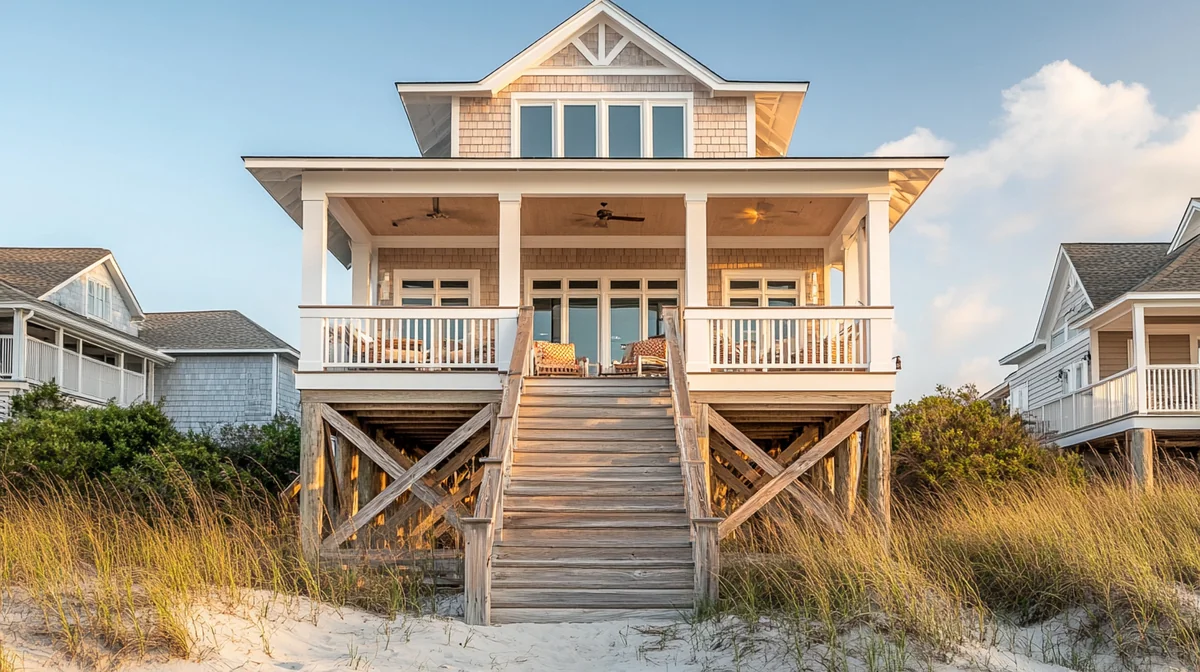
This is why the single highest-leverage item on Airbnb is your cover photo. It's the only thing guests see at impression time besides price, rating, and a truncated title. A dim exterior shot at dusk and a bright, high-contrast shot of your best feature are competing for the same click, and only one of them wins. Our photography guide breaks down what makes a cover image click-worthy; if you change nothing else after reading this article, test a new cover photo and watch your views.
Wishlist saves matter for the same reason — they're a strong engagement signal per Airbnb's own description of popularity. You can't ask guests to wishlist you, but listings that photograph aspirationally (the hot tub under string lights, the view from the deck) collect saves from trip-planners months before they book.
Airbnb shows you views and booking conversion in your listing insights. Divide bookings by views each month and write the number down. That ratio is your listing's real health metric — a falling ratio with steady views means a listing-content problem (photos, price, reviews), while falling views with a steady ratio means a visibility problem. Knowing which one you have tells you where to spend your next hour.
The Concrete Actions, Ranked by Effort-to-Impact
1. Answer everything, fast
Response rate and time are documented factors, they feed the Superhost requirements, and they're entirely within your control. Set up saved replies for the five questions you get most. If you can't be on your phone, scheduled messages through your PMS keep response times short without keeping you glued to the app. Aim for a 100% response rate within an hour — it's one of the few ranking inputs where perfection is realistic.
2. Protect your acceptance rate and never cancel
Declining requests and letting inquiries expire drags on a documented factor. If you get requests you can't take, adjust the settings creating them — minimum stays, advance notice, trip length — rather than declining over and over. And host cancellations are the single most punished action on the platform: Airbnb documents fee penalties and search-ranking consequences. If a date genuinely can't be hosted, blocking it early is infinitely cheaper than cancelling a confirmed reservation.
3. Price against your real comp set, not your ego
Airbnb compares your total price to nearby comparable listings, date by date. That means static pricing is a ranking handicap in any market with seasonality — you're overpriced (and buried) in shoulder season, underpriced in peak. Dynamic pricing, whether from a tool or a disciplined manual calendar review, keeps you inside the competitive band the algorithm rewards. The full framework is in our dynamic pricing guide. Watch total price especially: a modest nightly rate with a bloated cleaning fee still ranks and converts like an expensive listing, because guests and the algorithm both see the total.
4. Build review velocity, not just review count
Ratings and reviews sit inside the documented quality pillar, and recent reviews reassure both the algorithm and the guest reading your page. A systematic post-stay follow-up raises the share of guests who leave a review; if you're starting from zero, the playbook in getting your first 10 reviews applies at any listing age.
5. Complete every field Airbnb gives you
Listing characteristics are part of quality assessment, and amenities are search filters: every amenity box you accurately check is a filtered search you stay visible in. Hosts routinely forget dedicated workspace, self check-in, EV charger, crib, or fast wifi — filters that guests in 2026 actively use. Walk your property with the amenity list open once a season.
6. Keep the calendar honest and current
An accurate, open calendar is a prerequisite for appearing in date-filtered searches at all — most guests search with dates. Whether the act of updating your calendar is itself a ranking signal (the famous "touch your calendar daily" ritual) is speculation the community repeats with confidence and Airbnb has not confirmed. Update it because stale availability loses real searches and creates cancellation risk, not because the tap itself is magic.
What's Speculation — Label It Honestly
In the interest of not adding to the folklore, here's where the evidence gets thin:
- Keyword-stuffing titles and descriptions. Airbnb search is driven by location, dates, filters, and the behavioral factors above — not by matching keywords in your description the way Google matches a query. Write your title for the human deciding whether to click (our listing description formula covers this); any direct ranking effect from keywords is unproven.
- Daily calendar touches, weekly photo swaps, constant price nudges as rituals. Each has a legitimate underlying reason (accuracy, testing, competitiveness). The superstition is the belief that the activity itself is rewarded. Unconfirmed.
- Instant Book as a direct ranking bonus. As covered above — the filter effect is real and documented; the ranking bonus on top of it is plausible but not clearly documented in current help content.

Every documented ranking factor traces back to one of two things: how guests respond to your listing, or how reliably you behave as a host.
One More Variable: Your Market's Density
The same listing quality produces very different rankings in different markets. In a market with a few hundred active listings, the actions above can move you to page one in a season. In a market like Kissimmee or Destin — tens of thousands of near-identical bedrooms competing on the same dates — ranking is a knife fight, and the difference is made at the margins: cover photo click-through, total-price discipline, and review velocity. High-density markets are also exactly where a presence outside Airbnb (your own website ranking on Google for "[market] beach house with pool") stops being optional, because on-platform visibility is structurally capped by competition. That's a different discipline — search engine optimization for the open web — and it compounds in a way platform ranking never can, because you own the asset.
The Bottom Line
Airbnb SEO in 2026 is not a bag of tricks. The company tells you the framework openly: quality content, engaged guests, competitive total pricing, reliable host behavior. Every documented factor rewards the same underlying thing — being a listing guests click, save, book, and review well, run by a host who responds fast and never cancels. Do the six concrete actions above consistently and you'll outrank the hosts still performing calendar rituals.
If you'd rather have a professional audit than a checklist, Cavmir's listing optimization service does exactly this work — cover-photo testing, total-price positioning against your comp set, amenity completeness, and review systems — with the before/after measured in your own listing insights. Get in touch if you'd like us to take a look at your listing; no pressure, and you'll get an honest read either way.