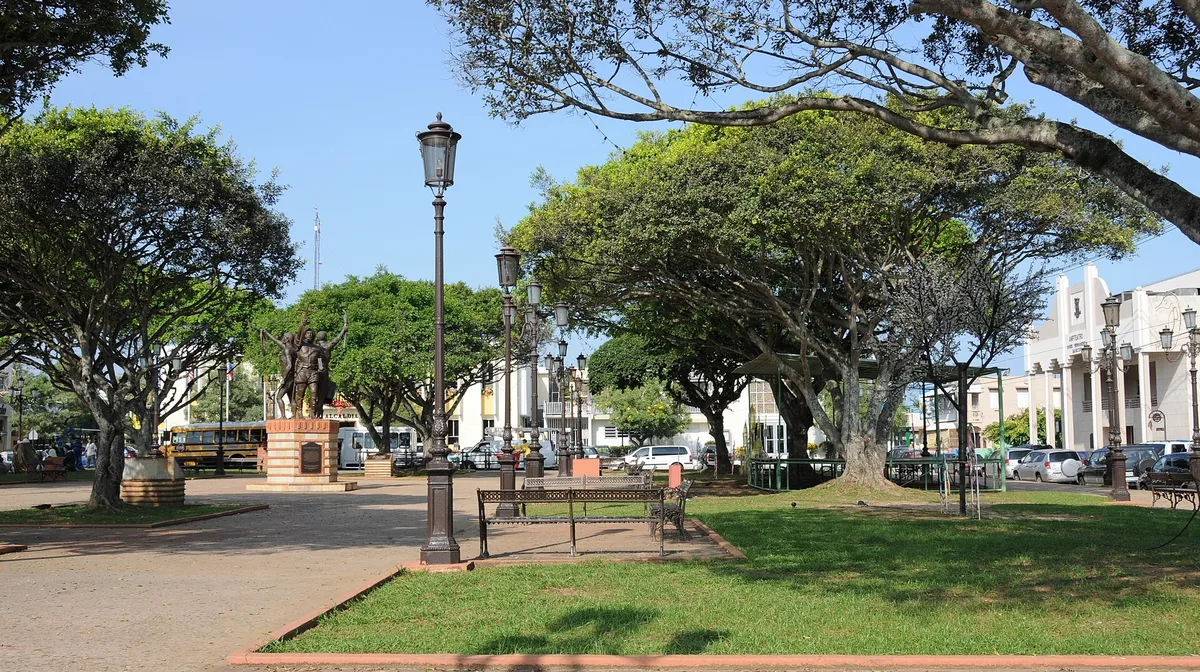
The plaza in Dorado town before the heat
Guests staying behind a gate rarely find the actual town. The plaza, the church and a proper Puerto Rican coffee and mallorca are ten minutes and change the trip. Tell them to go early.
Expert short-term rental marketing to grow your bookings and nightly rate in Dorado, Puerto Rico, USA.
* Market averages. Properties marketed by Cavmir typically exceed these figures by 25–45%. Data sourced from AirDNA, STR market reports, and Cavmir internal analytics.
Dorado is the luxury end of the Puerto Rico rental market and it does not behave like the rest of the island. It sits about thirty-five minutes west of San Juan on a stretch of north coast that Laurance Rockefeller bought in the 1950s and turned into a resort, and the golf, the beach clubs and the gated communities that grew from that decision still define the town. Dorado Beach East, Dorado Beach West, The Isles, the Ritz-Carlton Reserve residences and Sabanera all sit behind gates, and the guest who books here is not comparing you to a Condado apartment. They are comparing you to a resort suite, and they will pay accordingly if the property is presented at that level. Act 60 has brought a steady flow of mainland buyers and new residents to this corridor over the past decade, which changed both the ownership profile and the standard of the housing stock. The result is a market with the highest nightly rates in Puerto Rico outside a handful of San Juan penthouses, a genuinely affluent guest, and a listing set where the gap between the best-presented properties and the rest is enormous.
Two things make Dorado unusual to market. The first is that the resort infrastructure does a great deal of the selling for you, which is a trap as much as a gift. Owners lean on the golf courses, the beach club and the Ritz-Carlton name and forget to sell the actual house, so listings end up describing amenities the guest cannot always access and skipping the things that decide a booking — the room count, the layout for a multi-generational group, the pool, the walk to the sand. Access rights vary enormously between communities and even between properties inside them, and being precise about what your guest actually gets is both an honesty issue and a conversion issue. The second is that this is a high-value, low-volume market. You are not filling a calendar with a hundred short stays. You are filling it with a smaller number of longer, expensive bookings from people who research carefully and who will not tolerate a listing that looks careless. Photography at this price point is not optional, and phone photography reads as a warning sign. Regulation is the island-wide Puerto Rico stack plus whatever the municipality requires, and gated-community and HOA rules are frequently the real constraint — several communities here restrict or prohibit short-term rental regardless of what the town allows.
Nearby Markets: San Juan | Rincón | Puerto Rico

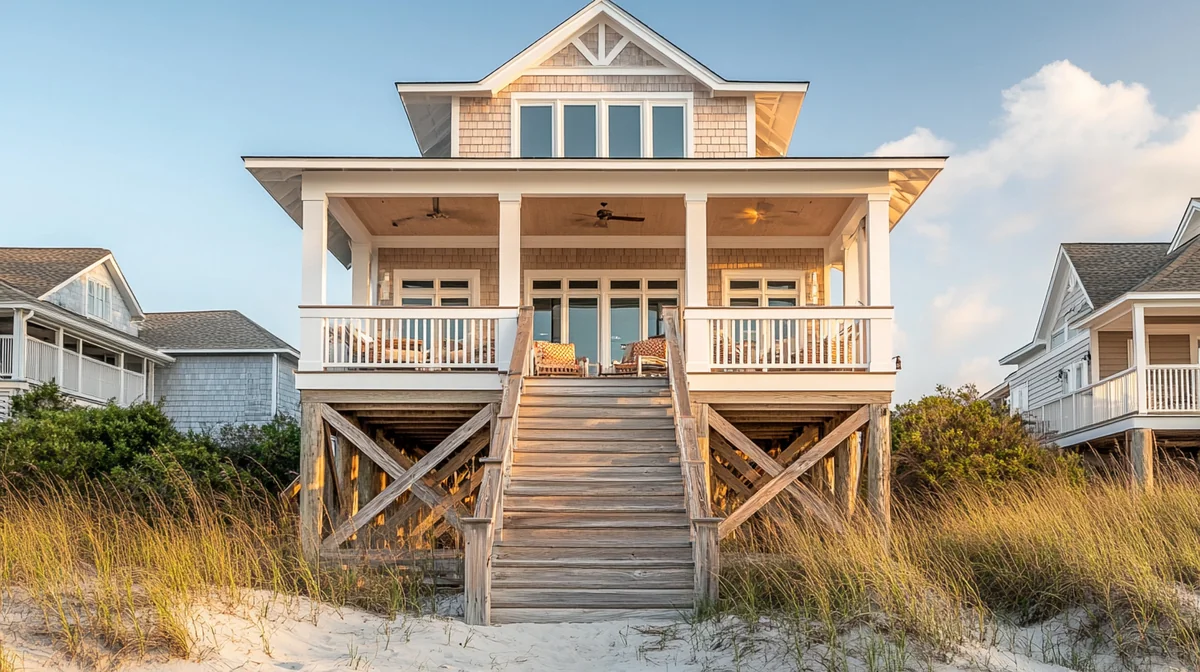
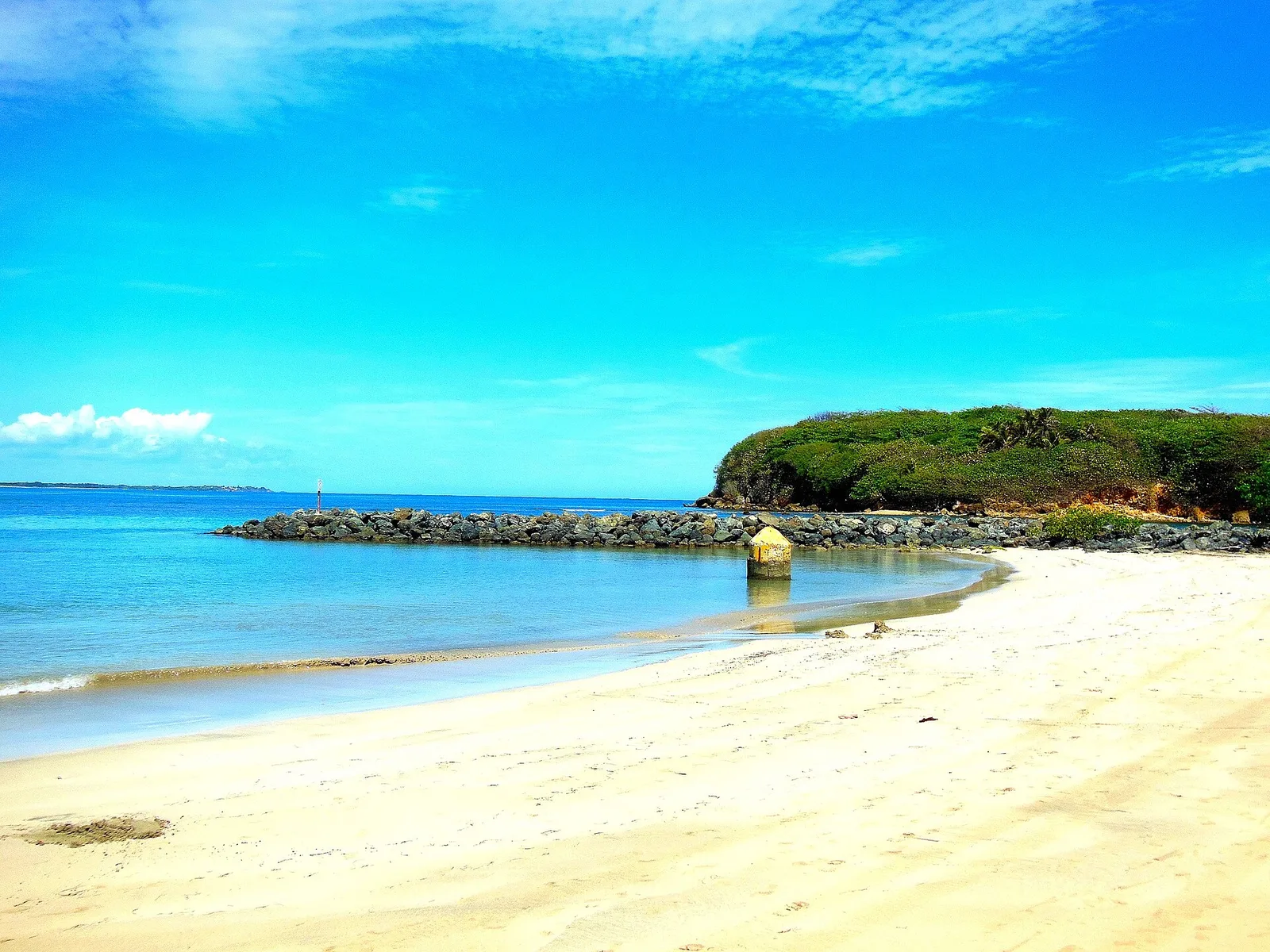
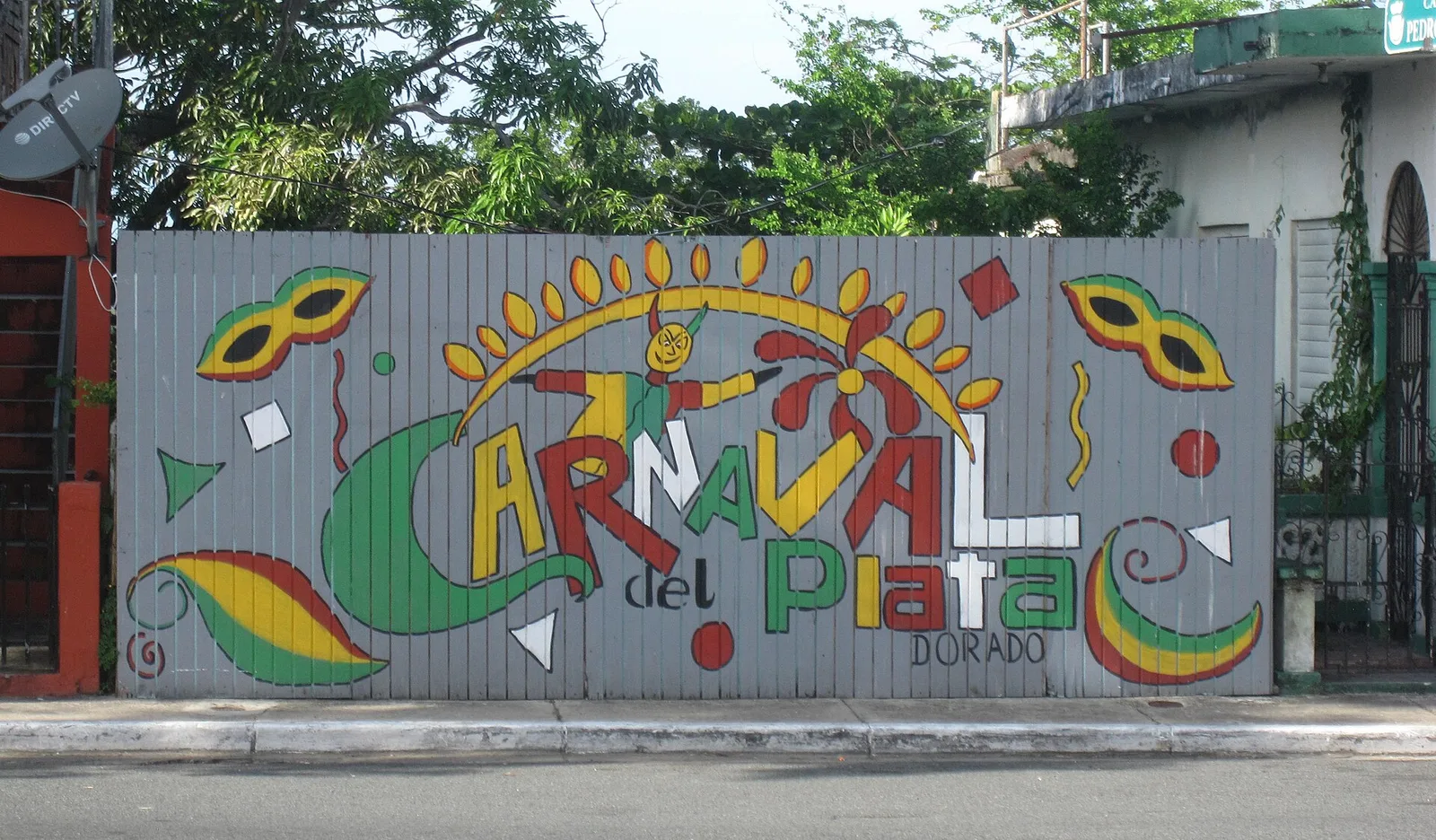
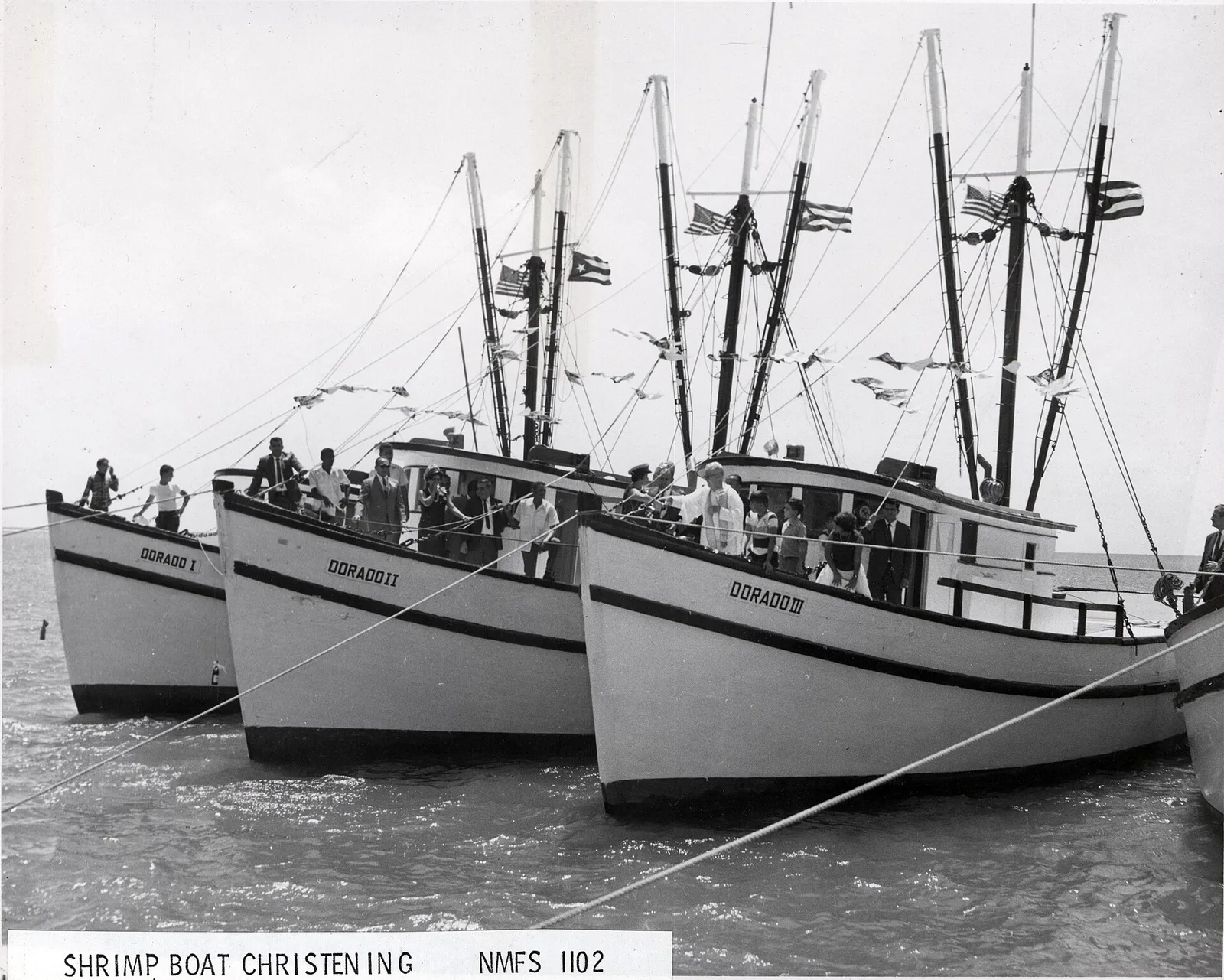
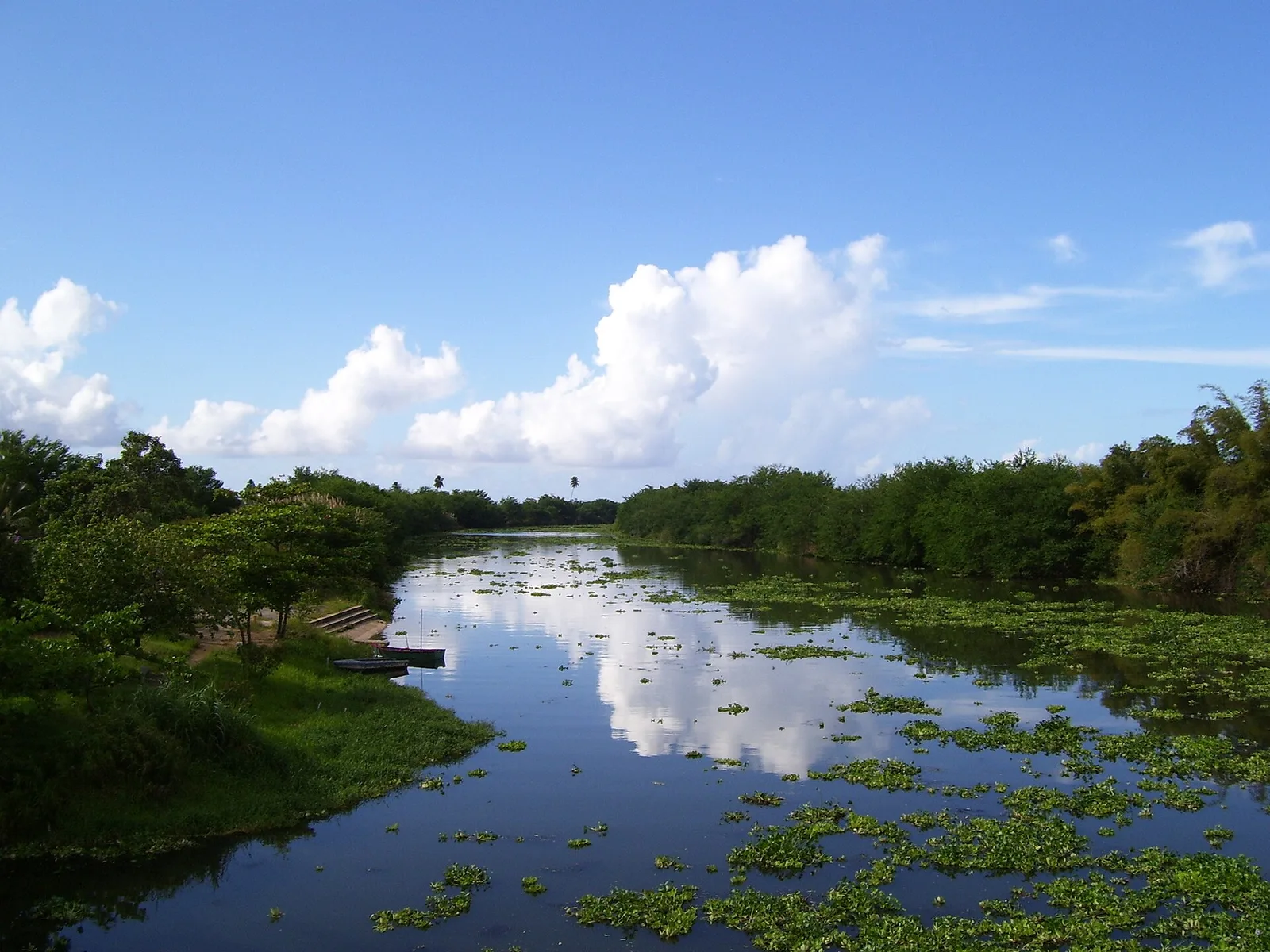
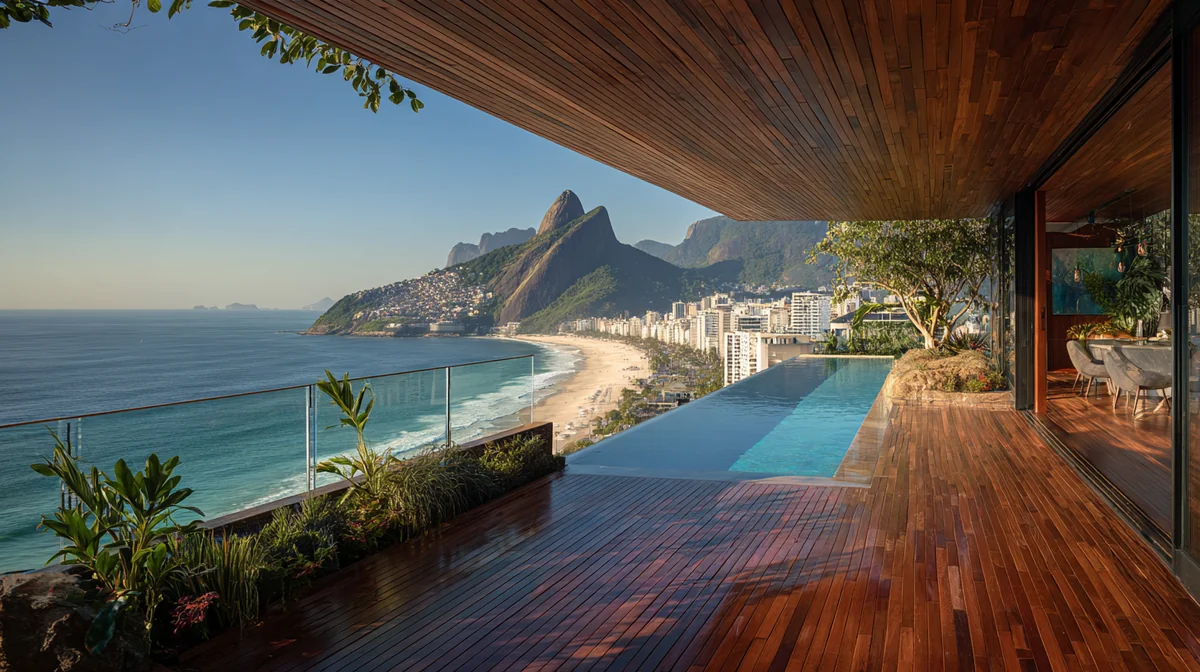
A few of the visual fingerprints we lean into when we shoot, brand and market a Dorado property — courtesy of the open Wikimedia Commons archive.
Cavmir markets Dorado properties at the standard the price point demands. We photograph the house properly, in the light that flatters the architecture and the water, and we build the image order around how an affluent guest actually evaluates a property rather than around a template. We write the listing and the site to be exact about what the guest receives — which club access, which pool, how many bedrooms sleep how many adults, what the walk to the beach really is — because at this rate, vagueness costs bookings and generates the wrong ones. We build your direct-booking site, rank it for the searches that bring high-value travelers to this corridor, and set up the email and repeat-guest flow that a market with long stays and returning families rewards heavily. We handle platform copy and photo order too, and we will make sure your community's rules and your compliance position are straight before we write a word. We do not promise revenue multiples we cannot prove. We help position and market your property. We never manage it or touch your keys.
Dorado became its own municipality in 1842, when Jacinto López Martínez petitioned the Spanish governor Santiago Méndez Vigo to separate the ward from Toa Baja. For most of the century that followed it was sugar, coconuts and cattle on a flat green stretch of the north coast, and nothing about it suggested what it would become.
The turn came in 1905, when Alfred T. Livingston arrived representing a group of mainland real estate investors, decided he liked the place better than the deal, and stayed. He bought roughly seventeen hundred acres and planted coconuts and grapefruit for export. When he died, his daughter Clara took over the plantation at twenty-five and ran it for the next two decades. Clara Livingston was not a conventional planter. She learned to fly in 1930, became the two hundredth licensed woman pilot in the world, cut her own landing strip out of the property, and later commanded the Puerto Rico wing of the Civil Air Patrol from 1947 to 1962. Her airstrip is still the Dorado airport.
In 1955 she sold the land to Laurance Rockefeller, and on the first of December 1958 the Dorado Beach hotel opened on it. Rockefeller brought in Robert Trent Jones to lay out golf across the old plantation, and the combination of that coastline, those courses and that name pulled a particular kind of traveler to a town that had never seen one. The resort went through several owners and a long closure before reopening as a Ritz-Carlton Reserve, and the residential communities that grew up around it — Dorado Beach East and West, The Isles, Sabanera — turned the surrounding farmland into some of the most expensive housing stock in the Caribbean.
The most recent chapter is fiscal. Puerto Rico's tax incentive framework, consolidated into Act 60 in 2019, brought a steady flow of mainland residents and investors to the island, and a disproportionate share of them landed in this corridor. That is why Dorado today reads less like a Puerto Rican town with a resort attached and more like a resort corridor with a town attached, and why the rental market here behaves nothing like San Juan's.
Dorado is the highest-rate, lowest-volume market of the five Puerto Rico pages on this site, and it should be priced that way rather than benchmarked against the island. Peak runs from mid-December through April, when mainland winter traffic, holiday family gatherings and the golf season all land at once, and the week between Christmas and New Year is the single most valuable stretch of the year by a wide margin. Spring holds well through Easter. Summer softens on rate but not as far as people expect, because school-holiday family bookings and a steady stream of San Juan-adjacent weekend traffic keep the calendar moving. September and October are the genuinely quiet months and the most active part of hurricane season. The specific pricing mistake in this market is treating it like a nightly-rate market at all. A large share of Dorado's revenue comes from stays of a week or longer — multi-generational families, golf groups, mainland owners' friends, people trying the island out before they buy — and a rate card built around three-night weekends leaves most of the available money on the table. Build a weekly rate that is genuinely attractive relative to seven nights, set a hard holiday premium with a seven-night minimum twelve months out, and price the shoulder months to fill with longer stays rather than discounting the peak. Do not benchmark against Condado apartments. Different product, different guest.
Peak is mid-December through April, with Christmas and New Year at the top and a strong Easter week. The golf calendar and mainland winter escape traffic carry the whole stretch. May and June hold up better than most Caribbean markets because family travel starts and rates are still reasonable. July and August bring school-holiday families and local weekend traffic; rates soften but occupancy does not collapse. September and early October are the softest weeks of the year and the height of hurricane season, which is when cancellation policy becomes the first question a guest asks. November recovers on Thanksgiving traffic and early winter bookings. Because so much of the demand here is repeat and referral rather than search-driven, Dorado rewards owners who keep a guest list far more than it rewards owners who chase the algorithm.
Three layers apply in Dorado and you need all three straight before you take a booking. The first is island-wide. Puerto Rico requires short-term rental operators to register with the Puerto Rico Tourism Company, the Compañía de Turismo, as an innkeeper for stays of ninety days or less, which produces a hotel registration number. The room occupancy tax is collected on those stays and remitted monthly. You also need a merchant registration with Hacienda, the treasury department. Booking platforms may collect and remit some of this on reservations they process, but the legal responsibility stays with you and platform collection never covers a direct booking — which matters here, because direct booking is a large share of this market.
The second layer is municipal. Dorado adopted its own short-term rental ordinance, reported as Ordenanza Núm. 114 of the 2021–2022 series, requiring a municipal short-term rental licence and a residential-use permit from the municipal planning office before you operate, with licence categories, bedroom and occupancy limits and penalties for operating without one. Reported figures circulate for the fee schedule and the occupancy caps, and they have moved since adoption. Do not rely on a blog post or on this page for the current numbers. Go to the municipality, ask for the current ordinance text and the current fee schedule in writing, and keep the copy.
The third layer is the one that actually stops most Dorado deals, and it is private. Nearly every property worth renting in this corridor sits inside a gated community or a condominium regime, and those associations set their own rules about short-term rental — some restrict the minimum stay, some require registration with the association, some prohibit transient rental outright, and several control whether your guest may use the beach club, the golf courses or the gate at all. An association restriction is enforceable against you regardless of what the municipality allows. Read the bylaws, the rules and regulations and any recent amendments before you buy, and get written confirmation of what guest access actually includes. Marketing access your guests do not have is the fastest way to earn a bad review in this market.
Sell the house, not the resort. The single most common failure in Dorado listings is a photo set and a description that lean on the Ritz-Carlton name, the golf courses and the beach club while barely showing the property the guest is actually renting. It reads as borrowed credibility and it converts badly, because the guest at this price point is comparing your house to a resort suite and needs to see why the house wins — the space, the kitchen, the pool, the room for three generations, the fact that nobody is charging them thirty dollars for breakfast. Second, be exact about access. Say which community you are in, whether beach club access is included, whether golf is available and on what terms, and what the gate procedure is for arriving guests. Vague access language produces exactly the wrong booking. Third, photograph in the right light. This coastline goes green and gold late in the afternoon and flat white at noon, and the difference between the two is the difference between a listing that looks expensive and one that looks like a rental. Fourth, market the week rather than the weekend, because that is how this calendar actually fills. Fifth, build a direct-booking site and an email list. A market with this much repeat and referral traffic pays back an owned channel faster than almost anywhere else on the island. Sixth, answer the practical questions before they are asked — the airport run from San Juan, whether a car is needed, which grocery, what happens in an outage — because affluent guests read carelessness in the small things.
Acquisition cost is the obvious barrier and it compresses yield: this is the most expensive residential real estate in Puerto Rico, and a strong nightly rate on a very expensive asset is still a modest return. Association rules are the second barrier and they defeat more plans here than the municipality does. Insurance is expensive on a hurricane coast and windstorm coverage deserves attention early. Power and water reliability remain a real operating fact across the island, and guests at this rate expect a generator or battery system and a clear explanation of it. Staffing quality — cleaning, maintenance, a reliable on-island contact — is a genuine constraint, and the standard your guest expects is a resort standard. And the market is thin: fewer transactions, fewer comparables, and a longer road back if you misprice the first season.
Insurance is a serious line item in Dorado and it should be quoted during diligence rather than after closing. You are on a hurricane coast, so windstorm coverage is the central question and the deductible will usually be a percentage of insured value rather than a flat figure — on an expensive property that percentage is a large number, and you should know it before you buy. Flood is separate and turns on elevation and zone. Coverage availability in Puerto Rico has moved a great deal since 2017 and carriers enter and leave the market, so a quote from two years ago tells you very little about today. On the rental side, a standard homeowner's policy will not follow you into transient use. You need a short-term rental or commercial policy with real liability limits, and pools, hot tubs, beach access, golf carts and any watercraft need to be disclosed specifically rather than assumed to be covered. Ask for guest injury, guest property damage, loss of rental income and post-storm business interruption to be written into the policy in terms you can read. If the property sits in a gated community, confirm what the association's master policy covers and where its coverage stops, because the gap between the two is your exposure.
Puerto Rico is a US territory with its own tax system, and that is the single most important thing to understand before you model a Dorado property. The room occupancy tax administered by the Puerto Rico Tourism Company applies to stays of ninety days or less and is remitted monthly — confirm the current rate for your registration category directly with the agency, because rates differ by lodging type. You will also hold a Hacienda merchant registration, and the municipality collects its own licence fees and may levy a municipal business tax. Property tax runs through CRIM, the municipal revenue collection centre, and the assessed values on this island are frequently out of step with market values in both directions, so ask what the actual bill is rather than estimating. Income tax is where mainland owners most often get surprised: Puerto Rico-source rental income is generally reported to Hacienda, and how that interacts with your federal return depends entirely on whether you are a bona fide resident of Puerto Rico. If you are here on an Act 60 decree, the interaction is more complicated still. This is not a section to handle with a mainland accountant who has never filed in Puerto Rico. Get a local CPA involved before the first booking, not at year end.
Financing in Dorado is doable and it is not a mainland process. Puerto Rico's local banks handle most of the volume, and mainland lenders who do not routinely lend on the island will often decline or price it as foreign. Every real estate transfer here is executed as a public deed before a notary who is also a licensed attorney, and that deed then records in the Registro de la Propiedad — a process that is more formal, more thorough and usually slower than a mainland closing, so build the timeline in rather than fighting it. Expect the lender to want clarity on windstorm insurability before anything else; a property that cannot be insured cannot be financed, and in this market that question is live. Second-home and investment terms will carry a higher rate and a larger down payment than an owner-occupied loan, and debt-service-coverage products underwritten on rental income exist but are less common here than on the mainland. If the property sits in a gated community, the lender will want the association's financials and its insurance certificate. Cash and mainland-equity purchases are common at this price point, which is worth knowing because it shapes how quickly good properties move. Have your accountant model insurance at current island pricing, the room tax, CRIM and association dues against a realistic seasonal curve rather than a flat occupancy number.
Dorado's near-term outlook rests on three things. The first is the tax-incentive traffic. Act 60 continues to bring mainland residents and capital into this corridor, and any material change to that framework — at either the Puerto Rico or the federal level — would be felt here before it was felt anywhere else on the island. Watch it, because it drives both your buyer pool and a meaningful slice of your guest pool. The second is regulation. Puerto Rico has legislation on the table to create a uniform island-wide short-term rental licensing framework with a municipal registry, and if it passes, the patchwork of town-by-town ordinances will consolidate. That would be good news for legitimate operators and bad news for anyone running unregistered. The third is infrastructure. Grid reliability, water and road capacity are the practical constraints on this whole coast, and the properties that solve them privately — a proper generator, a cistern, a battery system — will keep commanding a premium as long as that stays true. Underneath all three, the structural position is strong: this is a small, gated, supply-constrained corridor with a resort anchor, an affluent and repeat-heavy guest, and no realistic path to a flood of new inventory. Own the guest relationship and that position is durable.
Dorado is the part of Puerto Rico that most visitors never see and most owners underestimate. Thirty-five minutes west of San Juan the road flattens out, the traffic thins, and you are suddenly in a green, quiet, low-rise stretch of coast that feels a long way from Condado. The beaches here are the calm kind — Playa Sardinera and the balneario have real swimming water rather than the surf that defines the west and the north-east — and the bike path that runs along the old resort road is genuinely one of the pleasant things to do on this island. There are horses in fields, a plaza with a church on it, and a bakery queue at seven in the morning that has nothing to do with tourism. Then there is the other Dorado, behind the gates, where Robert Trent Jones laid golf out across a coconut plantation in the late fifties and the housing that followed turned into some of the most valuable property in the Caribbean. What we like about it commercially is the gap. This is a market with a genuinely affluent, repeat-heavy, referral-driven guest, and a listing set where most owners are still selling the resort's name instead of their own house. The distance between a Dorado property that is properly photographed, honestly described and directly bookable and one that is not is larger here than in any other market on this site, and it shows up in the rate.
A great property in Dorado doesn't just want a listing — it wants a point of view, an audience, and a brand the city itself would recognise.
Eight answers to put in your guest guide. These are the questions guests ask anyway, and getting them right in advance is the cheapest review insurance there is.
Guests staying behind a gate rarely find the actual town. The plaza, the church and a proper Puerto Rican coffee and mallorca are ten minutes and change the trip. Tell them to go early.
There is more here than the resort dining rooms, and in season the good tables go. Tell guests to reserve when they book the stay, not on the day.
Flat, shaded, right along the water and open to anyone. It is the single most-used amenity in this town and the one guests are most surprised by. Say where to rent bikes.
The forts, the blue cobbles and the museums are an easy half-day from here. Tell guests to go on a day with no cruise ships in and to park in one of the garages rather than circling.
The winter crowd is gone, hurricane season has not started, the water is warm and flat and the rates have come off their peak. The best value window on this coast and almost nobody markets it.
A short walk to a rock formation and river mouth on the edge of town, quiet and free, and about as far from a resort as you can get in fifteen minutes.
Calm, shallow, protected water that works for small children, with the light going gold off the water after five. Tell guests which entrance to use and where to park.
Yes to the car — Dorado is spread out and the good beaches, the town and the airport all need one. And be straight about power: say what your generator or battery system covers and for how long. Affluent guests do not mind the answer, they mind not being told.
A few composite engagements, drawn from how Cavmir typically works with owners at the luxury end of the Puerto Rico market. Illustrative rather than any single client's file.
A listing that spent its first eight photographs and most of its description on the resort's golf and beach club, so the house itself barely appeared and the property competed on amenities the guest could not fully verify.
Reshot the villa properly in late-afternoon light, rebuilt the photo order to lead with the pool, the outdoor living space and the room count for a multi-generational group, and rewrote the copy to state exactly which club access came with the house and on what terms.
The property started being evaluated on its own merits rather than as a proxy for the resort, and enquiries arrived from larger groups booking longer stays instead of couples booking weekends.
A rate card built around three-night weekends in a market where most of the money is in seven-night family and golf-group stays, leaving the peak weeks sold early and cheap.
Rebuilt the rate structure around weekly stays with a genuine seven-night advantage, set hard holiday minimums and premiums twelve months out, and repositioned the listing and site copy toward the week-long trip rather than the weekend.
Average stay length increased and the highest-demand weeks stopped clearing at ordinary rates months in advance, with turnover costs falling as a side effect.
A steady flow of repeat guests and word-of-mouth referrals all being funnelled back through a platform search every year, so the owner paid to reacquire guests they already had.
Built a direct-booking site with the compliance details visible, migrated the existing guest list onto an email flow with a pre-season release for returning families, and made the direct route the one every guest was pointed toward at checkout.
A growing share of the returning guests booked direct at the same rate, and the owner gained a list they controlled rather than a channel they rented.
Demand in Dorado peaks around January, February and March and runs quietest around September through October. Here is how the year actually books — and what to do about each stretch of the calendar.
Mid-December through April, with the week between Christmas and New Year the single most valuable stretch of the year by a wide margin. Mainland winter traffic, holiday family gatherings and the golf season all land at once. Holy Week is a second hard peak. Set both a year ahead with real minimum stays rather than letting an algorithm find them late.
May, June and November hold up better than most of the Caribbean, carried by family travel and by weekend traffic from the San Juan metro. These months suit longer stays and are consistently priced as a discount rather than as a season, which leaves money on the table.
September and October are the softest weeks of the year and the most active part of hurricane season. Put a monthly rate in the market, be calm and specific about cancellation, and use the window for maintenance and a pre-season reshoot.
The Christmas stretch books furthest out, often most of a year ahead, followed by Holy Week and the winter golf weeks. A great deal of the business here is repeat and referral, which arrives outside the normal search cycle entirely and is why an owned email list matters more in this market than in most.
Long by island standards. A large share of revenue comes from stays of a week or more, with multi-week bookings common in winter. Weekend stays exist but are mostly local, which means a rate card built for three-night weekends misprices the market.
Whole villas and houses that genuinely work for a multi-generational group outperform smaller premium units, because the guest at this price point is comparing you to a resort suite and needs a reason the house wins. A pool, outdoor living space and honest, specific club and beach access are the deciding factors. A generator or battery system is expected at this rate rather than a bonus, and should be photographed and explained.
Start with photography that shows what a guest actually gets here, then write the listing around a real itinerary rather than a feature list. Build a direct-booking site so returning guests can come back without going through a platform, and keep an email list segmented by season so you can reach last year's visitors before the calendar opens. Local search matters more than people expect in a market this size, because guests search the destination and the attraction rather than the word rental. A marketing agency layer handles the photography, the listing copy, the direct-booking site and the local SEO as one system instead of four disconnected jobs.
Mid-December through April, with the week between Christmas and New Year the strongest of the year and Holy Week a second hard peak. The golf season runs through the same window. Summer holds up better than most of the Caribbean on family travel and metro weekend traffic. September and October are the quiet months and the most active part of hurricane season.
The Christmas stretch books furthest out, often most of a year ahead, with Holy Week and the winter golf weeks close behind. A large share of the business here arrives through repeat and referral rather than search, which is why an owned guest list matters more in this market than in almost any other on the island.
Mainland guests from the north-east corridor, Florida and Chicago, flying into San Juan about forty minutes east. Alongside them, weekend traffic from the San Juan metro that fills summer and shoulder dates, and a steady flow of people trying the corridor before buying.
Backup power, a private pool and real outdoor living space carry the booking at this price point. After that: reliable high-speed internet, secured parking and a kitchen worth cooking in. The single most important thing is not an amenity at all — state exactly which club, beach and golf access the guest actually gets, because vagueness produces the wrong booking.
Run your Airbnb, Vrbo, or website through Cavmir's free grader. It checks the things that decide whether guests book in Dorado — photos, listing copy, page speed, local search — and shows you where bookings leak. Takes about a minute, and there's no sales call attached.
If the report says your booking engine is the weak link, that's fixable: a direct-booking website of your own means repeat guests stop paying platform fees to come back to you. That's the work Cavmir does — see Airbnb website design in Dorado.
Talk to Cavmir today. We'll show you exactly what your Dorado property is leaving on the table — and how fast we can change that.
Book a Free Strategy Call