Here is how a guest actually looks at your listing: your cover photo gets a fraction of a second in search results, and if it earns the click, the next few photos get a fast swipe on a phone before the guest decides whether to keep reading or go back. That's the whole game. Your amenity list, your carefully written description, your five-star reviews — none of it gets seen unless the photos survive those first seconds.
This is not an article about buying a camera. It's the shot list and the ordering system we use when preparing listings — which photos to take, which one leads, and what sequence turns a swipe into a booking. If you're deciding between shooting it yourself and hiring a professional, our photography guide covers that decision and what to expect from a pro shoot; this article is the brief you'd hand to whoever holds the camera.
The Cover Photo: One Job, Ruthlessly
The cover photo has one job — win the click against the eight other thumbnails on the screen — and it should be chosen like an ad, not like a favorite. The strongest covers share three traits:
- One unmistakable subject. The hot tub under lights, the A-frame against the trees, the wall of windows facing the water. A wide shot that shows "everything" reads as nothing at thumbnail size.
- Brightness and contrast that survive shrinking. Thumbnails are small and search pages are white. Dim, moody shots that look cinematic at full size become gray mud at 300 pixels. Bright wins.
- The thing guests in your market search for. A desert market rewards the stargazing deck; a ski market rewards snow on the roof and the fireplace glowing. Your cover should answer the fantasy your market runs on, not the feature you spent the most on.
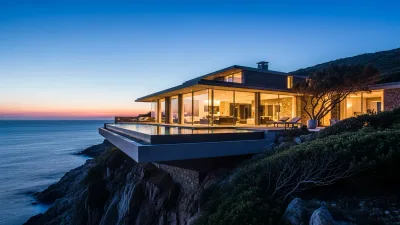
If your property's best feature is the setting — a Joshua Tree boulder field at dusk, a Gulf-front balcony at Gulf Shores — lead with the setting and let the interior follow. If the property itself is the star (a design-forward interior, a dramatic great room), lead inside. Either way: horizontal orientation, shot at the property, no stock imagery, no renders.
The First Five: The Mini-Tour That Decides Everything
On the mobile app, the first handful of photos carry most of the persuasion. Treat them as a self-contained pitch — if a guest saw only these five, would they book?
Photo 1: the cover — your single best frame, per above.
Photo 2: the living space at its widest and brightest — the "this is where we'll be" shot.
Photo 3: the number-two amenity — pool, view, fire pit, chef's kitchen. The shot that separates you from the listing below you in the results.
Photo 4: the primary bedroom, bed made hotel-tight, lamps on.
Photo 5: the experience shot — the set dining table on the deck, two mugs by the window, the towels rolled by the tub. One frame that shows the stay, not the structure.
Most listings fail this test by accident: their first five are exterior, exterior, hallway, hallway, garage. Re-ordering existing photos costs nothing and is the highest-leverage fifteen minutes in listing optimization.
The Full Shot List, in Booking Order
After the first five, sequence the gallery the way a guest would walk the property on the best afternoon of their stay. Aim for 25 to 35 finished photos — enough to answer every question, few enough that each frame earns its place.
- Living areas (3–5 shots). One wide from each corner that matters, one from seated height — guests imagine themselves sitting, not hovering at ceiling height. TV visible if guests care, hidden if design is the sell.
- Kitchen (2–4 shots). One wide, one of the coffee setup (the most looked-for detail in the room), one of anything genuinely above-standard — the range, the island, the stocked spice shelf. Counters cleared of everything that isn't styled.
- Every bedroom (2 shots each). Wide from the door, then a detail — reading lamps, the view from the pillow. Label them in captions ("Bedroom 2 — queen, sleeps 2") because guests planning group trips count beds in photos, and a bedroom that isn't pictured doesn't exist.
- Every bathroom (1–2 shots each). Clean, staged with folded towels, toilet lid down, counters bare. Nobody books because of a bathroom photo, but plenty of guests don't book because of a missing or grim one.
- Outdoor spaces (3–6 shots). Deck, grill, pool, yard, hot tub — shot in use-condition: cushions out, cover off, lights on. Golden hour (the hour after sunrise or before sunset) makes every exterior warmer and is free.
- The amenity guests filter for (1–2 shots). Dedicated workspace with a chair pulled out, EV charger on the wall, crib set up. If a guest can filter for it, photograph it — the photo confirms the checkbox.
- Detail and trust shots (2–4 shots). The welcome basket, the local guidebook, the firewood stack, the board-game shelf. These frames signal care, and care is what reviews get written about.
- Neighborhood (1–3 shots). The beach path, the main street, the trailhead — only if genuinely close and only shot by you. Skylines from the internet erode trust the moment a guest recognizes them.
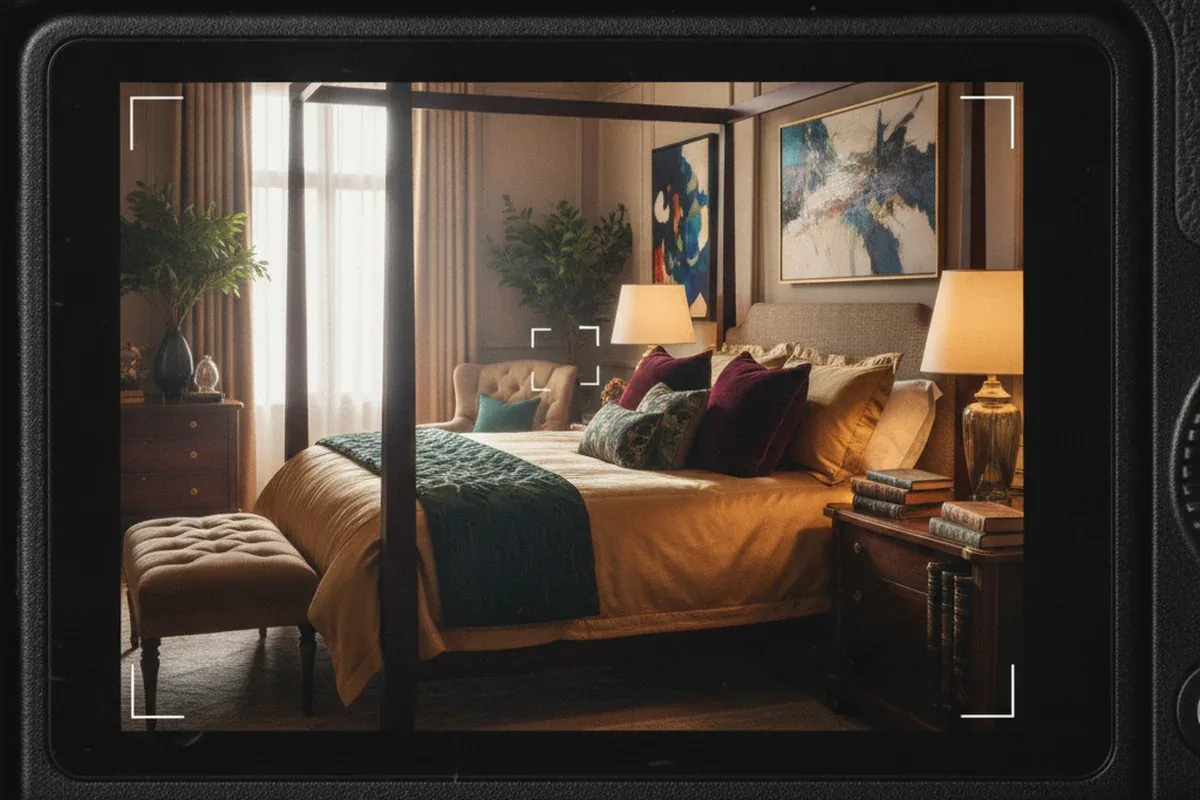
Every room gets the same treatment: lights on, staging done, camera level, shot from the doorway height a guest actually sees first.
Light and Staging: The 80% That Isn't the Camera
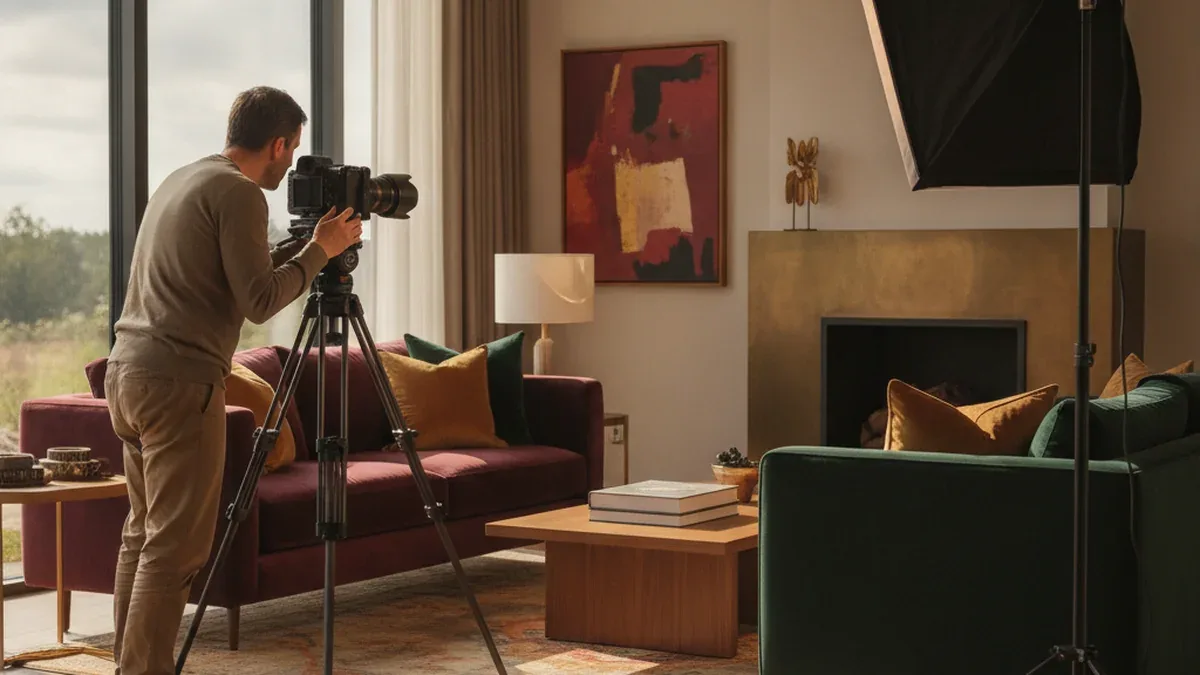
The difference between amateur and professional listing photos is mostly light and prep, not gear. The rules that move the needle:
- Turn on every light in every shot, including lamps — it's the fastest way to make interiors feel warm instead of clinical, and it hides the mixed shadows that make rooms look small.
- Shoot interiors midday, exteriors at golden hour. Midday sun through windows gives interiors life; harsh noon light flattens exteriors that glow an hour before sunset.
- Stage like a hotel, not like a home. Beds pulled drum-tight, six items or fewer per surface, cords hidden, personal photos and cleaning supplies out of frame. Walk each room with your phone in camera mode — the screen shows clutter your eyes have learned to skip.
- Keep the camera level and at chest height. Tilted verticals and ceiling-heavy angles read as amateur instantly. Level horizon, corners square.
- Edit honestly. Brighten, straighten, correct color — and stop. Oversaturated grass and stretched wide-angle rooms book stays the property can't deliver, and the invoice arrives as a three-star review mentioning "smaller than the photos." Reviews are the compounding asset; photos that overpromise spend it down.
Photo changes are the easiest marketing test in hosting because Airbnb hands you the data. Note your listing's views and bookings for the 30 days before a photo change, make one change — new cover, re-ordered first five — and read the same numbers 30 days after. Views moving means the cover is working; views flat while conversion climbs means the gallery is doing its job. Change one thing at a time or you'll never know which change earned the money.
Captions: The Most Ignored Selling Surface on Airbnb
Every photo accepts a caption, most hosts leave them blank, and guests who are seriously considering a booking read them. That's a persuasion channel with zero competition. The rules for captions that work:
- Caption facts, not adjectives. "Sleeps 2 on a queen with blackout curtains" beats "Cozy bedroom retreat." The guest is fact-checking their trip against your gallery; help them say yes.
- Answer the question the photo raises. A photo of a steep driveway gets "AWD recommended in winter — or park in the lower spot." A photo of the loft gets "Loft ladder — great for kids, not ideal for limited mobility." Honest captions on imperfect features prevent the mismatched bookings that become your worst reviews.
- Sell the use, not the object. "Morning coffee happens here" on the balcony shot; "Board games and a record player for the rainy afternoon" on the shelf shot. You're captioning the stay the guest is imagining.
- Name the distances guests care about. "Four-minute walk to the beach access" under the exterior shot does more for conversion than the same fact buried in paragraph three of your description.
The Five Mistakes That Quietly Kill Conversion
When we audit underperforming listings, the same photography problems appear over and over: a dark or cluttered cover photo chosen out of attachment rather than performance; vertical phone shots mixed into a horizontal gallery, which read as unprofessional at a glance; galleries front-loaded with exteriors and hallways while the best amenity hides at photo nineteen; bathroom photos missing entirely, which guests interpret as concealment; and over-edited images that book a property the real one can't deliver, converting a five-star stay into a three-star review about expectations. None of these requires a reshoot to fix — an honest hour of culling, re-ordering, and captioning fixes four of the five for free.
When to Reshoot, and What It's Worth
Photos age faster than hosts think. Reshoot — or at least re-edit and re-order — when any of these is true: the listing photos are more than three years old, you've renovated or restyled anything guests see, your photos are all one season in a market that sells two (snow photos in July cost bookings in ski towns and mountain markets alike), or your views are healthy while your conversion lags the market. A seasonal supplement shoot — a dozen frames in the property's other season — is one of the cheapest upgrades available, and in two-season markets it effectively gives you a second listing.
Professional real estate photographers in most US markets charge a few hundred dollars for a full listing shoot, and the good ones deliver in both horizontal and vertical crops so the same shoot feeds your listing, your social content, and a direct booking site. Amortize that against a single incremental booking and the decision usually makes itself — presentation is the rare marketing spend that keeps paying without a subscription. If you'd rather have the shot list, the shoot direction, and the editing handled, that's exactly what Cavmir's photography service does.
The Bottom Line
Listing photos convert in a specific order: the cover wins the click, the first five win the consideration, the full gallery in walk-through order wins the booking, and honest editing protects the reviews that keep it all compounding. Shoot the list above, sequence it deliberately, measure the before-and-after in your listing insights, and refresh by season. It's not art direction for its own sake — it's the highest-ROI surface in your entire marketing stack, because every guest who ever considers your property looks at it first. Start with the fifteen-minute version tonight — re-order the first five, caption the top ten, retire the weakest frames — and let the numbers tell you whether the property has earned a professional reshoot this season.