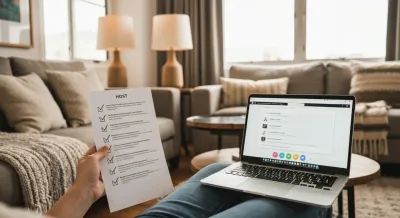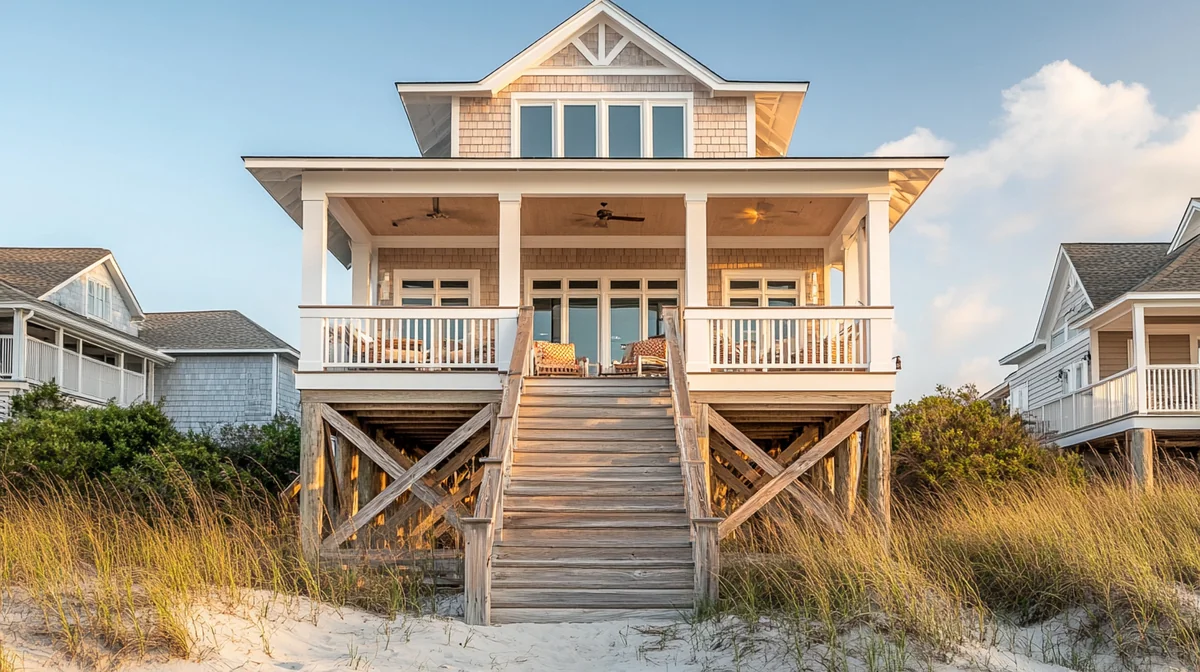
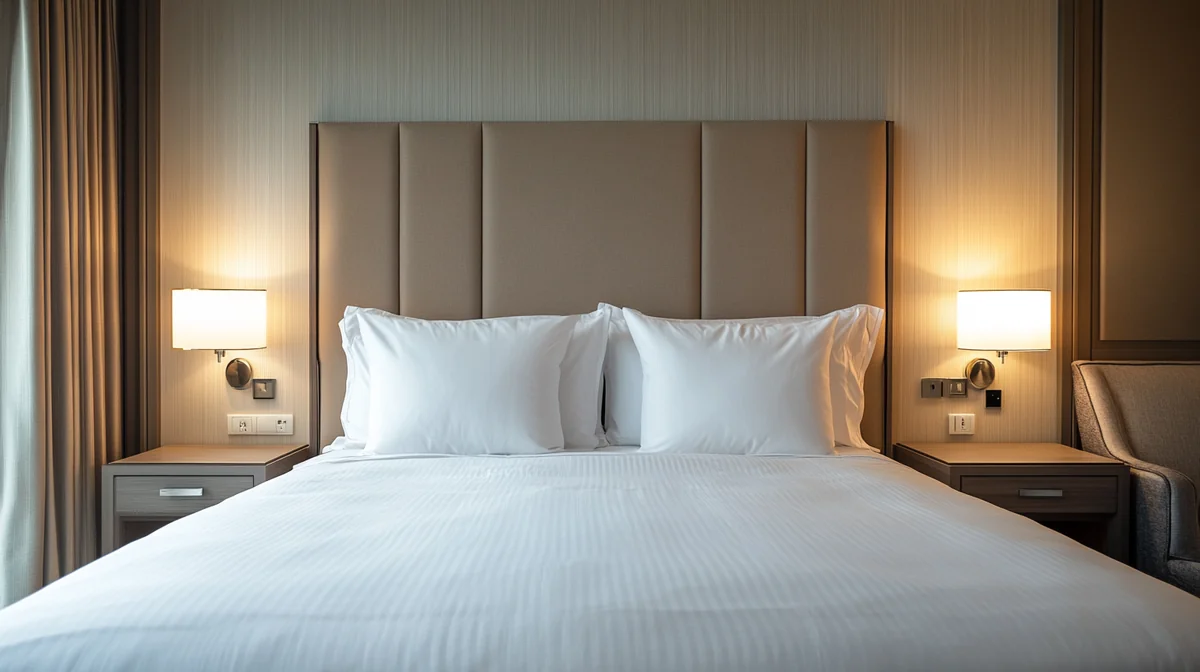

Your Airbnb title is the short line of text that sits under your cover photo in search results, and it might be the hardest-working sentence you'll ever write for your rental. When a guest types in a city and some dates, they get a wall of near-identical squares. Your title is one of the few things you fully control that can make a scrolling thumb stop moving.
Here's the fast answer if you're pressed for time. A strong Airbnb title puts your single best selling point in roughly the first thirty-something characters, because that's about all a phone shows before the line cuts off. It pairs that hook with one standout feature and a location or vibe cue, and it drops the tired filler words that every other host is already using. That's the whole job. Everything after this is about doing it well, with a large pile of real Airbnb title ideas you can adapt tonight.
I've spent six-plus years writing and rewriting listing copy for short-term rentals, and the title is the piece hosts most often get wrong and most easily fix. You can rewrite one in five minutes and watch the effect show up in your own insights within a week or two. Not many things in this business hand you a feedback loop that quick.
What an Airbnb title actually does at impression time
An impression is Airbnb's word for a single time your listing gets shown to a searcher. Someone runs a search, your card appears in the grid or on the map, and that counts as one impression whether they look closely or scroll right past. Your title only has value in the split second around that impression, so it helps to be honest about what it's competing against.
At that moment your title isn't working alone. It's part of a four-part first impression: the cover photo, the price, the star rating, and the title itself. The photo grabs the eye first and does most of the heavy lifting, which is exactly why your cover photo carries the other half of this job and deserves as much attention as your words. The price and rating get a fast gut-check. Then the eye lands on the title, and that's where a guest decides whether you're the right kind of place for their particular trip, not just a nice-looking one.
The number you're trying to move here is click-through rate (CTR), the share of people who see your listing and actually tap it. A higher click-through rate means more of those impressions turn into real visits to your listing page, where your photos, description, and reviews can go to work. Airbnb notices that signal too. When your card earns clicks at a healthy pace, the algorithm reads that as proof your listing is a good match for those searches, and it tends to show you to more people. If you want the mechanics of that feedback loop, I broke down how Airbnb's search ranking actually works in a separate guide.
So the title has two audiences at once. It has to earn a human click in the moment, and it has to feed the system a clear signal about who your place is for. A title that does both is specific, readable at a glance, and front-loaded with the one thing that sets you apart. A title that does neither is a string of pleasant words that could describe ten thousand other rentals.
How your title truncates on mobile versus desktop
Most of your guests are booking on a phone. That single fact should shape how you write every title, because a phone screen is narrow and Airbnb cuts your title off with an ellipsis once it runs out of room. On a typical phone, you get roughly the first thirty-something characters before the text trails off into three dots. On a wider desktop screen you get more, sometimes a good deal more, but you should never plan around the generous case.
Count the spaces. Thirty-something characters is short. "Charming Home in a Great Location" is already gone before it says anything real. By the time the phone would have shown your best detail, the line has ended. If your differentiator is sitting in the back half of the title, a huge share of your audience never sees it.
The fix is front-loading, which I'll come back to in its own section because it matters that much. For now, the rule is simple: write your title so the first few words can stand on their own. Read only the opening stretch, imagine the rest is chopped off, and ask whether a guest still knows why your place is worth a tap. If the answer is no, you've buried your best card.
Pull up your own listing on your phone, not your laptop, and look at it inside real search results next to your competitors. Not the edit screen, the live grid. You'll instantly see where your line gets cut and whether your best word survives the chop. I do this test for every client before we call a title finished, and it changes the wording about half the time.
The anatomy of a strong Airbnb listing title
After writing a few thousand of these, I've landed on a simple three-part shape that works across almost every property type. A strong Airbnb title is a lead differentiator, plus one standout feature, plus a location or vibe cue. That's it. Three moves, in that order, front to back.
Part one: the lead differentiator
This is the first thing a guest reads and the reason your listing is different from the one above and below it. It answers the question "why this place?" in a few words. It might be a view, a location perk, a standout amenity, or a distinct style. "Oceanfront," "Walk to Main Street," "Private Hot Tub," "Mid-Century Gem." Whatever your single strongest hook is, it goes here, in the opening slot, where the phone will actually show it.
Part two: one standout feature
The second beat backs up the promise with one concrete detail. Notice the word one. You are not listing every amenity you own. You're picking the second-most persuasive thing and letting it ride shotgun. A hot tub, a chef's kitchen, a wall of windows, a fenced yard, a king bed, a rooftop deck. Pick the feature your ideal guest would care about most, and leave the rest for the photos and description.
Part three: the location or vibe cue
The third beat grounds the listing in a place or a feeling. "Steps to the Pier," "Downtown," "Quiet Cul-de-Sac," "Wine Country." This does two jobs. It reassures the guest that you're where they want to be, and it quietly reinforces the search terms people actually type. A guest looking for a walkable trip is comforted by "Walk Everywhere." A guest booking a romantic weekend leans toward "Cozy Retreat."
Put the three together and you get titles with a clear rhythm: "Oceanfront Condo, Private Balcony, Walk to Pier." Or "A-Frame Cabin, Hot Tub, Creekside." Or "Design Loft, Wall of Windows, Arts District." Each one leads with the hook, backs it with a feature, and lands in a place. Once the three-part shape is in your head, you'll never stare at a blank title box again. A title this clear also sets up the rest of your copy, so the description that carries the momentum can pick up where the title leaves off instead of repeating it.
Airbnb title formulas you can copy tonight
Formulas get a bad reputation because they can turn everything into mush when overused. Used lightly, though, they're a fast way to get unstuck. Think of these as scaffolding you fill with your own specifics, then tweak until the words sound like a real place instead of a template. Here are the patterns I reach for most.
- Differentiator + Feature + Location. The workhorse. "Beachfront Studio, King Bed, Walk to Pier." Leads with the hook, adds one detail, lands in a place.
- Style + Property Type + Perk. Great for design-forward places. "Mid-Century Bungalow with Private Pool." The style word does the differentiating.
- Experience + Setting. When the feeling is the product. "Stargazing Cabin in the Pines." You're selling the trip, not the square footage.
- Proximity + Property + Standout. Ideal for event or city travel. "5 Min to Convention Center, Loft with Parking." Solves the traveler's exact problem up front.
- Group Fit + Feature + Vibe. Built for a specific traveler. "Family Home, Fenced Yard, Near the Beach." Tells the right guest they're home.
None of these are rules. They're starting points. The best title for your place might bend a formula or ignore it entirely, and that's fine. What matters is that you lead with a real difference, keep it concrete, and stay readable at a glance. If a formula helps you get there faster, use it and then rough it up so it doesn't read like a fill-in-the-blank.
One more note on the formulas. Commas are your friend, and so is a simple word like "with." Both give the phone a natural place to break the line and make a scannable title feel like a series of quick promises rather than one long run-on. Read your draft out loud. If you run out of breath, it's too long and probably too vague.
Airbnb title ideas across every property type
This is the part to bookmark. Below is a big set of Airbnb title ideas grouped by property type, so you can find the closest match to your place and adapt it. First, though, a quick before-and-after table, because seeing weak titles next to strong ones teaches the pattern faster than any explanation.
| Weak title | Why it falls flat | Stronger rewrite |
|---|---|---|
| Cozy Apartment in a Great Location | Says nothing specific; "cozy" and "great" describe anything | Walk-to-Beach Loft, King Bed, Private Balcony |
| Beautiful Home for Your Vacation | Tells instead of shows; no differentiator survives the phone cutoff | Ocean-View Home, Hot Tub, Sleeps 8 |
| Nice Cabin in the Mountains | Filler-heavy; every mountain cabin claims this | Creekside A-Frame, Hot Tub, Dog-Friendly |
| Luxury Villa for Rent | "Luxury" is a claim, not proof; "for rent" wastes the best slot | Hilltop Villa, Infinity Pool, Chef's Kitchen |
| Great Place for Families | Vague; a family can't tell what makes it work for them | Fenced Yard, Bunk Room, 5 Min to the Beach |
| Modern Studio Downtown | Generic; thousands of studios say the exact same thing | Architect's Studio, Wall of Windows, Walk Everywhere |
See the pattern? Every weak title burns its opening words on something that could describe any listing. Every strong rewrite spends those same words on a real, specific hook. Now let's go type by type.
Beach condos and coastal rentals
Water sells itself, so your job is to be precise about the water. "Oceanfront" beats "ocean view," and "ocean view" beats "near the beach," so claim the highest honest tier and no higher. Guests know the difference and will call you out in reviews if you stretch it.
- Oceanfront Condo, Private Balcony, Walk to Pier
- Steps to Sand, Sunset Views, Heated Pool
- Top-Floor Beach Studio, King Bed, Sleeps 2
- Gulf-View Retreat, Balcony, Free Beach Chairs
- Surfside Condo, Walk to Town, Fast Wi-Fi
Mountain cabins and lake houses
Here the setting and the wind-down amenities do the work. A hot tub, a fireplace, a creek, or a real view of something. Lead with whichever one your guests mention most in reviews.
- Creekside A-Frame, Hot Tub, Dog-Friendly
- Secluded Cabin, Mountain Views, Wood Fireplace
- Lakefront Cottage, Private Dock, Kayaks Included
- Stargazing Cabin in the Pines, Hot Tub
- Ski-In Chalet, Sleeps 10, Game Room
City lofts and apartments
In a city, walkability and proximity are the currency. Name the neighborhood if it's a draw, and solve a real travel problem like parking or a short walk to a venue.
- Design Loft, Wall of Windows, Arts District
- Walk Everywhere, Rooftop Deck, Free Parking
- Historic Loft, Exposed Brick, Near the Square
- 5 Min to Convention Center, Loft with Parking
- Sunlit One-Bedroom, Balcony, Metro at the Door
Luxury villas and high-end homes
At the top of the market, do not lean on the word "luxury." Show the thing that makes it luxurious. A named designer, an infinity pool, a private chef's kitchen, a gate. Specifics read as expensive; adjectives read as insecure.
- Hilltop Villa, Infinity Pool, Chef's Kitchen
- Gated Estate, Tennis Court, Sleeps 12
- Architectural Villa, Ocean Views, Private Pool
- Vineyard Estate, Pool, Wine-Country Setting
- Cliffside Retreat, Glass Walls, Butler Service
Family houses and group homes
Families scan for a very short list: enough beds, a safe outdoor space, and distance to whatever they came for. Answer those directly. "Sleeps 8" and "Fenced Yard" do more work than "spacious and welcoming."
- Family Home, Fenced Yard, 5 Min to the Beach
- Bunk Room, Big Kitchen, Sleeps 10
- Backyard Pool, Playground Nearby, Sleeps 8
- Reunion House, Two Living Rooms, Game Room
- Kid-Friendly Ranch, Fenced Yard, Near Trails
Pet-friendly places
If you welcome dogs, say so in the title, not just the filters. Plenty of guests search with a dog in tow and will click the first listing that promises their pup is welcome. Pair it with the feature that makes the stay easy for a pet owner, like a yard or a nearby trail.
- Dog-Friendly Cabin, Fenced Yard, Near Trails
- Bring the Dog, Beach Access, Ground-Floor Unit
- Pet-Friendly Bungalow, Big Yard, Quiet Street
- Two Dogs Welcome, Hot Tub, Mountain Views
- Dog Park Across the Street, Loft with Patio
Design studios and style-forward stays
When the look is the product, let the aesthetic lead. A specific style word does the differentiating and attracts the guest who's booking with their eyes. Just make sure the photos back up the promise, or you'll pull clicks that bounce.
- Architect's Studio, Wall of Windows, Walk Everywhere
- Mid-Century Bungalow, Private Pool, Desert Views
- Scandinavian Loft, Skylights, Near Cafes
- Restored Firehouse, Soaring Ceilings, Downtown
- Boho Casita, Courtyard, Steps to the Plaza
Adapt, don't copy. The point of a long list like this is to show you the moves, not to hand you a title to paste in verbatim. Your real hook is sitting in your own reviews and your own photos. Borrow the structure, fill it with your specifics, and you'll have something that fits your place and no one else's. If you're building a brand across several listings, it's also worth giving the property an actual name so the title has a memorable anchor to lead with.
Words that earn clicks versus dead filler words
Every character in your Airbnb title is competing for that scarce space before the phone cuts you off, so every word has to pull its weight. Some words do real work. They're concrete, they answer a question, and they help the right guest picture the trip. Other words feel nice but say nothing, and they're the first thing to cut.
Words that earn clicks are specific and sensory. Think "oceanfront," "hot tub," "walk to," "fenced yard," "rooftop," "king bed," "fireplace," "chef's kitchen," "sleeps 8," "steps to," "private pool," "dog-friendly." Every one of those either answers a search or paints a clear picture. They give the guest something to want and something to trust.
Dead filler words are vague and self-congratulatory. "Cozy," "charming," "beautiful," "amazing," "perfect," "great," "lovely," "stunning," "welcoming," "wonderful," "nice," and "home away from home." They aren't wrong, exactly. They're just empty, because they could describe any listing on the platform, which means they describe none of them. Worse, they hog the opening slot where your real hook should live. When you cut "Beautiful and Cozy" from the front of a title, you free up prime space for a detail that actually sells.
There's a middle tier worth naming too: words that pretend to be specific but aren't. "Luxury," "upscale," "boutique," "unique," "one-of-a-kind." They sound like claims, but they're really just adjectives wearing a suit. Replace them with the proof. Instead of "luxury villa," show the infinity pool. Instead of "unique loft," show the wall of windows. Let the guest conclude it's special; don't tell them and hope they believe you.
Run a quick swap test on your own title. For each word ask, "Could this describe the listing three squares over?" If yes, it's filler and it's costing you space. Trade it for a detail only your place can honestly claim. I've watched this one exercise turn a flat title into a click magnet without adding a single character of length.
Front-loading and choosing your single strongest feature
Two ideas run this whole guide, and they're worth their own section because they're where most hosts stumble. The first is front-loading: putting your best word first. The second is picking one hero feature instead of cramming in five. They work together, and once they click, your titles get sharper on their own.
Front-loading is a direct response to the phone cutoff. Since a guest may only ever read the first thirty-something characters, those characters have to carry your strongest argument. Not your property type, not "welcome to," not your listing name if the name isn't a draw. Your best real detail. If your hook is the ocean, the word "oceanfront" should be at or near the very start, not floating in the middle after "Lovely 2BR Getaway."
Choosing your single strongest feature is the harder discipline, because every host thinks their place has ten things worth mentioning. Maybe it does. But a title with ten features has zero focus, and the phone will cut off eight of them anyway. Your job is to find the one detail that makes the right guest think "that's the one" and lead with it. Everything else moves to the photos, the amenities list, and the description, where there's room to breathe.
How do you find your one hero feature? Read your reviews. Guests tell you, in their own words, what they loved most. If four out of five five-star reviews mention the hot tub under the stars, your hero feature is the hot tub, and it belongs in the title. Your guests have already done the research for you; you just have to listen. If your listing is getting shown but not clicked, this is usually the first thing I check, and it's a common thread in the reasons a listing stalls out on views.
Airbnb's title rules and how to stay on the right side of them
Airbnb has content standards, and titles are covered by them. Break the rules and you risk having your title edited, hidden, or your listing quietly held back. None of the rules are hard to follow once you know them, and most of them happen to line up with good writing anyway. You can read Airbnb's own guidance on listing content for the current specifics, but here's what matters in practice.
No ALL CAPS. Writing your whole title in capital letters reads as shouting, and Airbnb discourages it. It also looks spammy and can get your title flagged or auto-corrected. Use normal title case, where the important words start with a capital and the rest stay lowercase. It's easier to read and it won't trip any filters.
No promotional spam. Titles are not the place for prices, discounts, "BOOK NOW," "BEST DEAL," exclamation-point storms, or claims like "cheapest in town." Airbnb wants the title to describe the place, not to advertise a sale. Beyond the rules, this stuff reads as desperate, and desperation doesn't earn trust. Let the price field show the price and let your title do the describing.
No contact info or off-platform nudges. Don't put a phone number, an email, a website, or a hint to "book direct" in your Airbnb title. That's against the rules and it can get a listing penalized. There's a right way to build a direct channel, and it isn't smuggled into your title. More on that below.
The emoji question
Emoji in Airbnb titles are a real "it depends." A single, tasteful emoji can add a spot of color and draw the eye in a grid of plain text, and some hosts see a small bump from it. But go heavy and it reads as clutter, it eats characters you can't spare, and it can render as an ugly box on some devices. My honest take from client work: skip emoji unless you have a specific reason, and if you use one, use exactly one, place it at the end, and never let it replace a real word. A palm tree is not a substitute for the word "oceanfront." When in doubt, leave it out and let your words carry the title.
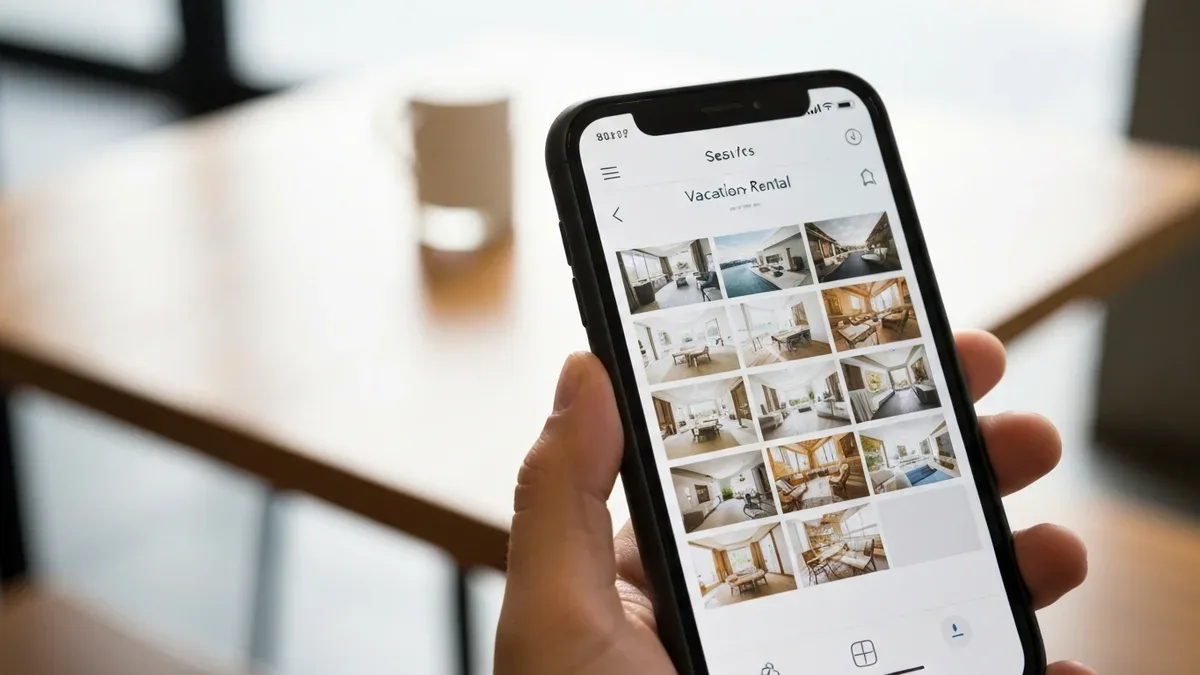
On a phone, your title competes head-to-head with the cover photo, the price, and the star rating in a split-second scan, so the first few words have to earn the tap.
Matching your title to guest search intent and season
A title isn't written in a vacuum. It's written for a specific guest, on a specific kind of trip, at a specific time of year. The closer your title mirrors what that guest is actually searching for, the more likely they are to feel like your place was made for them and click. This is where search intent comes in: the reason behind the search, not just the words in it.
Different guests carry different intent. A couple booking an anniversary weekend wants words like "romantic," "hot tub," "private," and "cozy retreat." A family reunion wants "sleeps 12," "big kitchen," and "fenced yard." A business traveler wants "fast Wi-Fi," "walk to convention center," and "free parking." A ski group wants "ski-in," "hot tub," and "sleeps 10." You can't serve all of them in one title, so you write for the guest you most want and can most honestly host. Trying to please everyone produces a title that moves no one.
Season shifts intent, sometimes dramatically. The same beach condo is a "sunset swim, heated pool" listing in July and a "walk to the winter festival, cozy fireplace" listing in December. A mountain cabin is a "hiking basecamp, creekside deck" in summer and a "ski-in, hot tub under the snow" place in winter. When you match your title to the season the searcher is planning for, you meet them exactly where their head already is. Tools that show demand patterns, like market data platforms such as AirDNA, can help you see when your area's search interest shifts, so you're not guessing at the calendar.
Swapping titles seasonally
Here's the move most hosts never make: change your title with the seasons. Your title is not a tattoo. It's one of the easiest edits on the whole platform, and refreshing it a few times a year keeps it aligned with what guests are searching for right now. Before summer, lead with the pool and the beach. Before the holidays, lead with the fireplace and the walkability to whatever's festive nearby. Before a big local event, lead with your proximity to it.
You don't need a dozen versions. Two or three per year, tuned to your area's real seasons, is plenty. Keep a simple note of which title you're running and when you swapped it, so you can tell later whether the change helped. A seasonal title also pairs naturally with a seasonal cover photo, and updating both at once gives your listing a fresh look right when demand turns. Small effort, and it keeps you feeling current in a grid full of listings that haven't been touched since they went live.
Testing titles with your views-to-impressions signal
You don't have to guess whether a title is working. Airbnb hands you the data in your listing insights, and once you know which number to watch, testing a title becomes a calm, repeatable habit instead of a shot in the dark. The key relationship is between impressions and views. Impressions are how many times your card was shown. Views are how many people actually clicked through to your listing page. The ratio between them is, effectively, your click-through rate.
Here's how to run a clean test. Write down your current impressions and views over a stretch of time, say the last two or three weeks, while traffic is steady. Then change only your title, nothing else, and leave the cover photo, price, and everything else alone. Wait a comparable stretch with a comparable amount of traffic, then compare the ratio of views to impressions. If more of your impressions are turning into views, your new title is pulling harder. If the ratio dropped, roll it back. Change one thing at a time or you'll never know what caused the shift.
Two cautions from experience. First, give it real time and real volume. A day or two of data during a slow week tells you nothing; wait for enough impressions that the numbers stop bouncing around. Second, watch for outside noise. A holiday, a price change you forgot about, a new competitor, or a season turning can all move your numbers for reasons that have nothing to do with your title. When you see a big swing, ask what else changed before you credit or blame the words.
Keep a tiny title log in a notes app or a spreadsheet: the date you changed it, the exact title, and your views-over-impressions ratio before and after. Three or four entries in, you'll have a personal playbook of what your specific guests respond to, which beats any generic advice, including mine. This is the same log I keep for every listing I work on.
Airbnb titles versus the page titles and H1s on your own site
If you also run a direct-booking website, and more hosts should, it helps to understand that the title on Airbnb and the "titles" on your own site are different animals doing different jobs. Confusing them is a common mistake, and it leaves both channels weaker than they should be.
On Airbnb, your title is a marketing hook competing inside a closed marketplace grid. Its whole job is to earn a human click against near-identical neighbors. It's short, punchy, and tuned to the way people browse Airbnb specifically. It doesn't need to rank on Google, because it lives inside Airbnb's own search, not the open web.
On your own website, you have two different things that both get called a "title," and they aren't the same as your Airbnb hook. The first is the page title, technically the title tag, which is the clickable blue line that shows up on a Google results page, also known as a search engine results page (SERP). That one needs to read like a search result and often includes your location and property type so it can be found, for example "Oceanfront Condo in Miami Beach, Sleeps 4." The second is the H1, the main visible headline (H1) at the top of the page when a guest lands on it. The H1 greets a visitor who has already arrived, so it can be warmer and more branded, like the property's name.
The practical takeaway: don't just paste your Airbnb title into your website's title tag and call it done. Your Airbnb title is built to win a tap inside a grid. Your website's title tag is built to be found on Google, and your H1 is built to welcome someone who already clicked. Each channel rewards a slightly different voice, and treating them as one flattens all three. Getting this right is a big part of how you win more bookings straight through your own site instead of paying platform fees on every stay.
Common Airbnb title mistakes to avoid
I've rewritten enough listings to see the same handful of mistakes over and over. None of them are fatal, and all of them are fixable in a few minutes. Run your current title against this list and you'll probably spot at least one.
- Burying the hook. The single most common one. Your best detail is sitting in the back half of the title where the phone cuts it off. Move it to the front.
- Filler in the opening slot. "Beautiful," "cozy," and "charming" up front waste the most valuable characters you have. Lead with a real, specific detail instead.
- Cramming in everything. Six features separated by dashes reads as a list, not a hook, and the phone hides most of it anyway. Pick one hero feature and let the rest live in your photos.
- Claiming instead of showing. "Luxury," "unique," and "one-of-a-kind" are adjectives pretending to be facts. Show the infinity pool; don't announce the vibe.
- Overpromising. "Steps to the beach" when it's a ten-minute drive earns you an angry review and a lower rating. Be honest, and let a slightly smaller claim you can back up do the work.
- Stuffing keywords. "Beach Beachfront Ocean Sea Condo Near Beach" reads like a robot wrote it and does nothing for you. Write for the human; the right search terms show up naturally when you're specific.
- Set-and-forget. Writing a title once at launch and never touching it again. Seasons change, competitors change, and your reviews teach you new things. Revisit it a couple of times a year.
- Ignoring the data. Guessing at what works when your insights are right there. Watch your views-to-impressions ratio and let it settle the argument.
If you find several of these in your own title at once, don't panic. That's normal, and it means you've got easy room to improve. Fix the front of the title first, since that's where the phone cutoff does the most damage, then work backward. The title is one line in a larger picture, so it's worth walking through the whole listing the same way you'd walk through a house before guests arrive.
How to write your Airbnb title in seven steps
Enough theory. Here's the exact process I use to write a title from scratch or fix a tired one. Work through it in order and you'll come out the other side with something specific, front-loaded, and honest.
- Read your reviews first. Skim your last twenty reviews and note every feature guests mention by name. The words they repeat are the words that sell your place. Your hook is almost always hiding in here.
- Pick your single hero feature. From that list, choose the one detail that makes the right guest think "that's the one." Not two, not five. One. Everything else moves to the photos and description.
- Name your guest and their season. Decide who you're writing for, a couple, a family, a ski group, a business traveler, and what time of year they're booking. This sets the tone for every word that follows.
- Draft with the three-part shape. Write a first version as differentiator, plus one feature, plus a location or vibe cue. "Oceanfront Condo, Private Balcony, Walk to Pier." Don't polish yet; just get the bones down.
- Front-load and cut the filler. Move your strongest word to the very front. Delete "beautiful," "cozy," "charming," and any adjective that could describe someone else's listing. Every character you free up buys you space for a real detail.
- Check it on a phone. Look at the title on an actual phone, inside real search results, and confirm your best word survives the cutoff. If your hook disappears into the ellipsis, rearrange until it doesn't.
- Publish, then watch the ratio. Post it, note your views-to-impressions numbers, and give it a couple of weeks of steady traffic. Let the data tell you whether it's working, and swap it seasonally when your guests' intent shifts.
That's the whole method. It takes maybe fifteen minutes the first time and five minutes every time after. The hardest step, honestly, is number two, picking just one hero feature, because it means letting go of things you're proud of. Trust that the photos and description will carry them. The title only has one job, and it does that job best when it makes one clear promise.
Key Takeaways
- Your Airbnb title competes for the click at impression time alongside the cover photo, the price, and the star rating, so it has seconds to work.
- Phones cut your title off after roughly the first thirty-something characters, so front-load your single strongest detail and never bury the hook.
- The reliable shape is lead differentiator, plus one standout feature, plus a location or vibe cue, in that order.
- Pick one hero feature, pulled straight from your reviews, and let the photos and description carry everything else.
- Trade filler words like "cozy," "beautiful," and "luxury" for concrete, specific details that only your place can honestly claim.
- Follow Airbnb's rules: no ALL CAPS, no promotional spam or prices, no contact info, and at most one tasteful emoji if any.
- Match the title to your ideal guest's intent and the season, and swap it a few times a year as demand shifts.
- Test by watching your views-to-impressions ratio in insights, changing one thing at a time.
- Your Airbnb hook is not the same as your website's Google title tag or your on-page H1; each rewards a different voice.
When it makes sense to get help
You can absolutely write a strong Airbnb title on your own with the process above, and most hosts should try before they hire anyone. The steps are simple, the feedback loop is fast, and there's real satisfaction in watching your own edits move the numbers. If you only take one thing from this guide, let it be this: lead with your single best detail, say it in words a phone can show, and let the data settle the rest.
That said, a title is one line in a listing full of moving parts, and sometimes it helps to have someone who does this all day look at the whole picture. In our client work at Cavmir, the title is usually where we start, because it's the fastest win, but it rarely travels alone. It goes hand in hand with the cover photo, the description, the pricing story, and the way the listing reads on a phone. If you'd rather hand that off, Cavmir helps short-term rental hosts and boutique properties sharpen exactly this kind of thing through our listing optimization work and our professional photography, and it's especially worth it in a high-supply market like Miami where every title is fighting a crowd. If that sounds useful, tell us about your place and we'll take a look, no pressure either way.