
You open your host dashboard and the line is flat. A handful of views this week, maybe fewer than last week. Meanwhile the market around you looks busy, other homes seem booked, and your listing sits there like a shop with the lights off. When a listing gets no attention at all, it doesn't feel like a marketing problem — it feels like being invisible.
Here's the reassuring part: invisibility on Airbnb is almost never mysterious. It's usually one of a small number of specific, checkable causes — and most of them are settings, not curses. The frustrating part is that those causes hide in places hosts rarely look, and the generic advice ("update your calendar! tweak your title!") doesn't touch them.
This article is the diagnostic. We'll walk the visibility funnel from the top, figure out where yours is breaking, and fix that — no folklore required.
First, make sure you're reading the right diagnosis. This guide is for listings that barely appear in search — few impressions, few views, a dashboard that looks asleep. If your listing gets plenty of views but the calendar stays empty, your problem is conversion, not visibility, and the fixes are different: start with getting views but no bookings. And if you were booking steadily and everything stopped cold, that's a distinct pattern with its own causes: read when your Airbnb bookings stop suddenly.
The Visibility Funnel: Three Numbers That Tell You Everything
Before you change a single setting, understand the funnel your listing lives in. Every booking starts as three events in sequence:
- Impressions. Your listing appeared somewhere in a guest's search results. They may never have scrolled to it, but Airbnb counted it as shown.
- Views. A guest actually tapped or clicked through to your listing page. This is the number most hosts mean when they say "views."
- Engagement and bookings. From the listing page, guests wishlist you, message you, or book. These are the signals that feed back into where you appear next.
Airbnb's host dashboard includes a performance area that reports how often your listing is viewed and how those views turn into bookings, and depending on your account it may show how often you appeared in search as well. The exact labels shift with app updates, so don't hunt for a specific menu name — look for the section that reports views and conversion over time. Screenshot it or write the numbers down before you change anything, so you have a baseline.
Now read your own funnel like a mechanic:
- Almost no impressions? You're not in the result set at all. That's a filter, settings, or calendar problem — the next three sections are for you.
- Decent impressions, few views? Guests see your thumbnail and scroll past. That's a cover-photo and title problem — skip to the click-through sections.
- Views fine, no bookings? You're in the wrong article — head back to the conversion guide linked above.
How Airbnb Decides Who Appears
When your listing does qualify for a search, its position is set by Airbnb's ranking system, which the company's own help center describes in terms of a few pillars: quality (photos, reviews, listing content), popularity (how guests engage — clicks, wishlists, bookings), price (your total cost against comparable listings), and location. In short, the system promotes listings that guests respond to and that are priced sensibly for what they are. We've broken down every documented factor — and separated it from the host-forum folklore — in our full Airbnb SEO guide, so we won't restate it here. This article stays focused on the problem upstream of ranking, because here's what most ranking advice misses: you can't rank in a search you've been filtered out of.
The Filter Knockouts: The Biggest Silent Killer
Guests almost never search unfiltered. They enter dates and a guest count at minimum, and many add more: a price range, Instant Book, pets, specific amenities. And here's the part that matters — a filter doesn't demote you, it removes you. There's no page ten for a listing that fails a filter. You simply aren't in the results, and your impressions count stays near zero no matter how good your photos are. Our Airbnb algorithm tips cover each of those settings, from pets to minimum nights.
The usual suspects:
- Minimum stay. A three-night minimum removes you from every one- and two-night search. In markets where weekend trips dominate, that can be most searches. Your minimum stay should reflect how guests in your market actually book, not how you'd prefer they book.
- Instant Book turned off. Guests can filter results to instantly bookable listings only, and many do. With Instant Book off, those guests never see you exist. Whatever you decide, decide it knowing the cost.
- No pets. The pet filter is one of the most-used on the platform. A no-pets rule may be the right call for your property — but it's a visibility trade, and you should make it deliberately.
- Restrictive guest rules. Marking your place unsuitable for children or infants pulls you out of family searches. Tight guest-count caps shrink the pool of searches you qualify for. Rules built to keep parties out sometimes keep quiet families out too — check that yours draw the line where you actually want it.
- Fee outliers. Guests filter by total price for their dates, and Airbnb compares totals, not nightly rates. A modest nightly rate with a heavy cleaning fee can push your all-in price above the cap a typical searcher sets — and out of their results entirely.
The incognito audit: search like a stranger
You can find your own knockouts in about fifteen minutes. Open a private or incognito browser window so you're logged out and the results aren't personalized to you, then:
- Search your city or neighborhood with a typical stay for your market — say, two guests, a weekend about a month out.
- Scroll the list and pan the map until you find your listing. Note whether you appear at all, and roughly where.
- Now add filters one at a time, the way a real guest would: Instant Book, pets, a realistic price band, then a shorter stay.
- After each filter, check for your listing again. The filter that makes you vanish is your knockout.
- For each knockout, make a deliberate choice: change the setting, or keep it and accept the smaller audience.
Not every knockout should be "fixed." Some rules protect your property and your sanity. The goal isn't to pass every filter — it's to stop losing searches by accident.
Calendar and Settings Accidents
The second family of invisibility causes is quieter: your listing is fine, but the dates guests are searching for aren't actually available — sometimes without you realizing it. Since nearly every guest searches with dates, a blocked date means you don't exist for that search.
- Blocked dates you didn't block. If you sync an external calendar — another platform, a channel manager, an old iCal feed — a stale or misconfigured sync can import blocks across whole months. Open your calendar and page through the next several months looking at what's genuinely open.
- Preparation-time buffers. A setting that automatically blocks a day or more before and after each booking is useful for cleaning — and quietly removes a surprising share of your calendar in busy stretches. Check whether yours is set wider than your turnover actually needs.
- Advance notice and availability window. Requiring several days' notice erases you from every last-minute search; a short availability window erases you for guests planning far ahead. Both are legitimate tools, and both are common accidental handbrakes.
- A snoozed or paused listing. It happens more than anyone admits: a listing snoozed for repairs and never woken, or paused by the platform and the notification email missed. The incognito search above is also your liveness check — if you can't find your listing logged out with open dates and no filters, confirm it's actually published before debugging anything else.
The Thumbnail Decides: Turning Impressions Into Views
If your impressions look healthy but views stay low, your problem isn't visibility — it's the split second a guest spends on your thumbnail. At impression time, a guest sees your cover photo, the total price, your rating, and a truncated title. That's the whole pitch, and the photo takes up most of it.
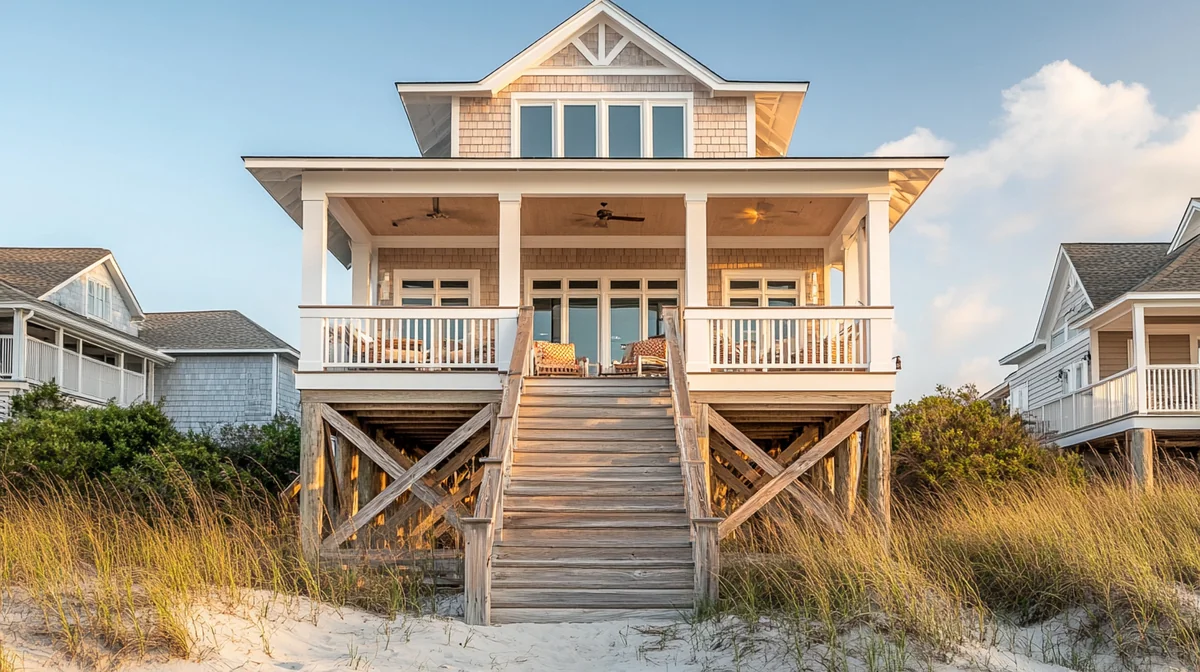
A cover photo that wins clicks tends to be bright, high-contrast, and built around one distinctive subject — the water view, the pool at dusk with the lights on, the fireplace wall — rather than a dim exterior or an anonymous sofa that could belong to any of forty listings on the same page. Guests scrolling results are pattern-matching for something that feels different; your job is to hand them the difference at thumbnail size. What makes a photo book, and how to shoot or select one, is the whole subject of our guide to listing photos that book — and if your current gallery was shot on a phone at midday, professional photography is the single upgrade with the clearest before-and-after in most hosts' funnels.
Title and photo should tell one story
The title's job is to caption the photo, not to compete with it. Two illustrative versions of the same two-bedroom:
- Before: a beige living-room shot, titled "Comfortable and Clean 2BR Apartment — Great Location!" On a phone that truncates to "Comfortable and Clean 2B…" — which promises nothing the photo doesn't already fail to show.
- After: the balcony table with the bay behind it, titled "Bay-View Balcony · 2BR · 5-Min Walk to the Boardwalk." The differentiator comes first, so it survives truncation, and the photo proves the claim the title makes.
Guests process the pair as one unit. A great photo with a generic title wastes the click it earned; a specific title with a mismatched photo reads like a stretch. Lead both with the same single best thing about your place.
The New-Listing Period, Honestly
New listings often get a temporary lift in visibility while Airbnb's system gathers engagement data on them — which is why brand-new properties sometimes appear surprisingly high for their first stretch, then settle to a rank the data supports. Two honest implications follow.
First, launch complete, not "good enough for now." The engagement your listing earns during that early window — clicks, wishlists, first bookings, first reviews — is the data your long-term rank gets built on. A half-finished listing spends its most visible weeks teaching the algorithm that guests scroll past it.
Second, if your views faded after a strong first month, that's probably the new-listing period ending — not a penalty. It's the boost expiring, and it's normal. Resist the forum advice to delete and relist to chase the boost again: relisting resets your reviews and booking history, which are worth far more than a temporary bump, and building a business on repeatedly restarting is a treadmill, not a strategy.
The 10-Step Visibility Checklist
Run this top to bottom in one sitting. Most hosts find their problem before step six.
- Open an incognito window, search your market with typical dates and guests, and confirm your listing appears at all.
- Add common filters one at a time — Instant Book, pets, price band, shorter stays — and note which one makes you vanish.
- Check your minimum stay against how guests in your market actually book.
- Make the Instant Book decision deliberately, knowing what "off" removes you from.
- Page through your calendar for the next few months; unblock anything you didn't consciously block, and check any synced calendars.
- Review preparation-time buffers, advance notice, and your availability window.
- Sanity-check your total price — nightly rate plus every fee — against nearby comparable listings for the same dates.
- Judge your cover photo at thumbnail size: would it stop your own scroll in a page of forty?
- Rewrite your title to front-load the one thing that makes your place different, and make sure the photo proves it.
- Fill in every amenity field truthfully — each accurate checkbox is another filtered search you stay visible in.
If the checklist surfaces more problems than you have hours, that's the audit-and-fix work our listing optimization service exists for.
Measuring Week Over Week, Without Superstition
Whatever you change, measure it like an adult. Pick one day a week, open the performance area of your dashboard, and log the same numbers each time: impressions if you can see them, views, and bookings. A plain note on your phone is enough.
Then follow three rules. Change one thing at a time — if you swap the cover photo, drop the minimum stay, and cut the cleaning fee in the same afternoon, you'll never know which one worked. Give each change a couple of weeks before judging it; daily numbers are noisy, and reacting to a slow Tuesday is how hosts end up performing rituals instead of running experiments. Compare against your market's rhythm, not just last week — views sliding into your low season is gravity, not failure, and a flat week during a local event weekend is worse than it looks.
And keep reading the funnel, not just the total. If views recover but bookings don't follow, you've graduated to a different problem — the conversion guide linked at the top of this article picks up exactly there. The rest of our diagnostics live in the Learn library whenever a new symptom shows up.
If You'd Rather Hand This Off
Most invisible listings turn out to be one or two settings away from visible — a filter knockout, a calendar accident, a thumbnail that never earns the tap. If you'd like a second pair of eyes before you start changing things, our free listing grader will flag the obvious gaps in a few minutes. And if you'd rather have someone run the whole audit and fix what it finds, that's work Cavmir does every week — get started here and we'll take a look.