
Morning
Cala Deià swim before the cliffside restaurants open
The tiny cove below Deià village, empty before 10 a.m. The swim that defines Tramuntana mornings.

Expert short-term rental marketing to grow your bookings and nightly rate in Mallorca, Balearic Islands, Spain, Europe.
Sixteen services, one team. Everything below is built in-house and scoped to your property and market. Most owners start with the 12-Step System.
Every engagement is quoted to your portfolio. These are the ready-made scopes owners pick most — our Fall Special (55% off list or more) is already applied to the website, King Broker, Hotels and à la carte scopes. A clear proposal within 48 hours.
The work is public. Selected engagements and what changed — and reviews from the owners and managers behind them.
* Market averages from AirDNA and STR market reports. A single home's numbers depend on its size, its location and how it is marketed.
Cavmir is an Airbnb marketing agency. We build the brand, the direct-booking website and the marketing for short-term rentals in Mallorca.
Mallorca is the Balearic Islands' largest and most architecturally diverse luxury market — a 3,600-square-kilometre island where the Tramuntana mountains above Deià and Sóller meet the Pollença-and-Formentor headlands in the north, the Palma Old Town cathedral city anchors the south, and the Son Vida gated residential corridor holds the high-end villa inventory on the capital's western edge. Belmond La Residencia in Deià, Cap Rocat near Cala Blava, and Castell Son Claret above Es Capdellà define the hotel benchmark; the villa rental market spans from farmhouse fincas above Valldemossa to clifftop Formentor estates.
Mallorca's STR regime is one of Europe's most tightly regulated — the Consell de Mallorca caps total licensed-rental inventory, new ETV licenses are effectively unavailable in most of the island, and unlicensed platform listings face meaningful fines. This structural scarcity has turned existing licensed properties into a materially more valuable category. Peak season runs May through September; the shoulder (April and October) has strengthened significantly with the cycling, hiking, and culinary tourism segments. Luxury villa rates at Deià, Formentor, and Son Vida routinely clear €1,500–€6,000 per night.
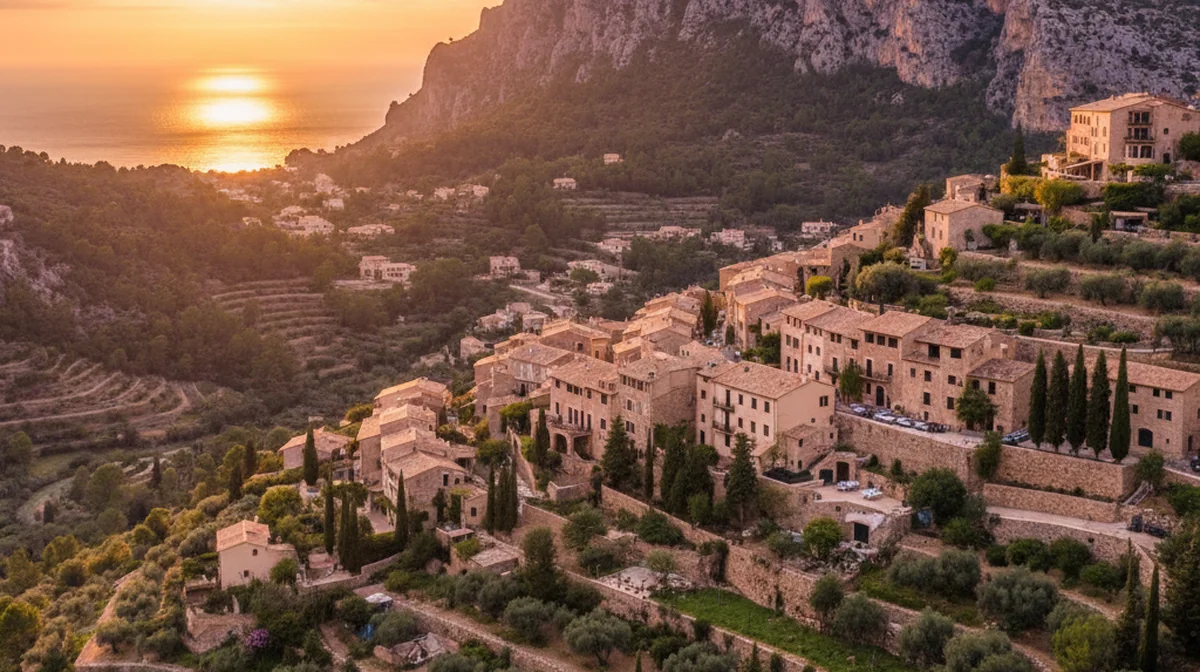
Cavmir specializes in positioning scarce-supply European properties for the international traveler. We market licensed Mallorca villas in English, German, French, and Portuguese — the languages that actually drive the booking — and we build direct-booking infrastructure that protects revenue through whatever regulatory evolution arrives next. For ETV-licensed properties, this is the moment to build a direct guest relationship, not depend on platforms.
Mallorca is the largest of the Balearic Islands — a 3,640-square-kilometre island whose layered history runs from Talaiotic Bronze Age settlements through Roman Palma (founded 123 BCE), a 300-year Moorish emirate (902–1229), and the Kingdom of Majorca under James I's Aragonese conquest. Palma's Gothic cathedral (La Seu, begun 1229) and the Almudaina palace next door anchor the architectural heritage. The Tramuntana mountain range along the northwest coast — terraced for olives, almonds, and vines for a thousand years — was declared a UNESCO World Heritage Site in 2011.
Modern Mallorca tourism divides into two distinct eras. The 1960s–1990s mass-tourism build-out on the bays of Palma, Alcúdia, and Magaluf created the commodity beach-resort reputation the island is still shaking. The 2000s luxury correction — anchored by Belmond La Residencia in Deià (long-established), Cap Rocat's opening in 2009, Son Brull, Castell Son Claret, and the Jumeirah Port Sóller — pulled a completely different traveler mix to the northwest coast, Pollença, and the Palma-adjacent villa corridor. Today the rentable licensed villa pool totals roughly 3,500–4,500 properties, tightly controlled by the Consell de Mallorca ETV license regime.
Deià, Port d'Andratx, Formentor, and the Son Vida gated corridor anchor the ultra-luxury tier — licensed villas with pool, garden, and privacy clear €1,500–€6,000 per night in peak. Pollença, Alcúdia Old Town, and Valldemossa hold the upper-mid tier at €700–€2,000 per night. Palma apartments and Soller-area fincas run €400–€1,200 per night. Summer peak and specific-event windows (Formentor literary prizes, Ironman Mallorca) drive pricing spikes.
Medium seasonality; longer shoulders than Ibiza thanks to cycling, hiking, and culinary segments. Peak: June through early September. Super-peak: August. Shoulder: April–May, late September–October. Low: November–March (some villas close; a growing warm-winter rental market from UK, German, and Scandinavian long-stays is emerging). Missed revenue: May cycling-season window where professional and amateur cyclists book for two-week stays.
Mallorca's ETV (Estancias Turísticas en Viviendas) license regime is one of the most restrictive in Europe. New licenses are effectively unavailable across most zones; the Consell de Mallorca capped total licensed-rental inventory and closed several municipalities to new licenses entirely (Palma city, several Tramuntana villages). This structural cap has made existing licensed inventory materially more valuable. Operators require the ETV number displayed on every platform listing; unlicensed listings face fines of up to €50,000, or up to €500,000 for very serious breaches (Decreto ley 4/2025). Rental income taxed at Spanish progressive rates (non-residents face 19–24% on rental-income derived inside Spain). Balearic tourist tax (ecotasa) €2/guest-night for holiday homes, 75% off November–April. VAT does not apply to short-term residential rentals below commercial-hotel threshold.
The Mallorca strategic tip: verify ETV status before any acquisition, and protect direct-booking above all. Licensed villas have become a protected asset class in Europe's most tightly-controlled luxury market — the ETV is worth as much as the building. Operators who depend entirely on OTAs are giving up the one durable commercial advantage their license actually confers. Direct-booking infrastructure, repeat-guest cultivation, and advisor-channel relationships are what compound value on a licensed property year over year.
Tactically: first, market into the German, UK, Swiss, and Scandinavian cycling segments explicitly during April–May — these are two-to-three week stays at premium rates that most operators miss by focusing purely on August. Second, build the warm-winter long-stay product for November–March; the NHR-adjacent long-term traveler mix is real and growing. Third, invest in Tramuntana hiking and culinary storytelling — the UNESCO heritage overlay is a free marketing asset most operators don't activate. Fourth, cultivate German-market advisor relationships specifically; Mallorca is Germany's closest and most-visited premium Mediterranean destination.
Mallorca challenges: ETV scarcity is the asset and the operating risk — any license revocation or infraction compounds into material value loss. August water pressure and island-wide infrastructure strain. Acute peak-season traffic on the MA-10 Tramuntana coastal road. Building permits in Deià and the Tramuntana corridor run multi-year timelines. Spain's regulatory trajectory has tightened continuously since 2017 and is unlikely to loosen.
Spanish villa insurance is domestic-market with Lloyd's capacity for estates above €5 million. Fire, liability, and storm coverage standard; earthquake coverage modest (Balearics sit at low seismic risk relative to mainland Spain). Budget €4,000–€18,000 annually for luxury villas with adequate limits (€2.5–6 million building plus liability). Pool-liability and staff-workers'-comp riders standard. Named-storm coverage optional (Mediterranean cyclones are rare but not unknown).
Non-residents pay Spanish Income Tax on Non-Residents (IRNR) at 19% for EU residents and 24% for non-EU on gross rental income (with deduction allowed for EU residents only). Residents pay Spanish progressive income tax. Annual IBI property tax varies by municipality; Balearic Wealth Tax (Impuesto sobre el Patrimonio) applies above €700,000–€3 million thresholds depending on residency. Acquisition ITP (transfer tax) runs 8–11% progressive by purchase price. US owners remain subject to US tax with Spain-credit offsets.
Spanish mortgages for foreign buyers through Santander, BBVA, CaixaBank, and Banco Sabadell at 60–70% LTVs for non-residents, rates tracking ECB plus spread. Private banking in Palma extracts better terms on premium inventory. Non-EU buyers face tighter documentation. Spain's Golden Visa residency program was terminated for property investment in April 2025, which has redirected some buyer demand but has not collapsed the market.
Start with who lands at Son Sant Joan. Mallorca counted 13,557,606 tourists in 2025, and 4,573,834 of them came from Germany, about one visitor in three. Britain sent 2,280,511, the Spanish market 1,842,730, France 756,364 and Italy 315,350, with France up 13.24% and Italy up 20.18% on the year. Palma's airport also handled 1,303,533 passengers on Swiss routes. That mix decides the build: a German-first, multilingual booking site that shows the island registration number, quotes a full price with the Balearic tourist tax inside it, and answers what a family from Düsseldorf or a rider from Zurich checks before paying a deposit.
German comes first, written by a native speaker and published as its own /de/ pages joined to the others with hreflang tags, because a translate widget leaves search engines and AI tools nothing to index in German. English follows for the British market, then Spanish for domestic guests, then French and Italian once the core pages are done, since those two markets are the ones adding visitors fastest. Quote in euros; if you show pounds or Swiss francs, label them as a guide and charge in euros. German guests look for the Stornobedingungen (cancellation terms) and the Endpreis (final price) before anything else, so put both on the booking page in plain German, never in a PDF. Spanish law expects an aviso legal naming the business behind the site, and German visitors look for the same information under the word Impressum, so link it from the footer in both languages. British guests often write Majorca, so use both spellings on the English pages, and keep Catalan place names (Sóller, Pollença, Santanyí) spelled the way the road signs spell them.
Three rules shape the booking page. The first is the registration number from the Consell de Mallorca's tourist register. The Balearic Decreto ley 4/2025 of 11 April 2025 makes platforms require and display it, and raised fines to up to €50,000 for serious breaches and €500,000 for very serious ones. EU Regulation 2024/1028, applicable from 20 May 2026, sets the same display duty across the EU, and Spain's national NRA registration procedure was annulled by Supreme Court ruling 620/2026 of 19 May 2026, so the island number is the one guests and inspectors check: put it in the footer, on every property page and in each confirmation email. The second is the ecotasa. Balearic law charges a holiday home €2 per guest per night, with 75% off from 1 November to 30 April, 50% off from the ninth night, and nobody under 16 pays. The operator has to charge it before the stay ends, and on a direct booking no platform does it for you, so show it as its own line inside the total. The third is consent: since 11 January 2024 Spain's data regulator, the AEPD, has wanted the reject button on the cookie banner at the same level as accept, under the GDPR and Spain's e-commerce law. Balearic rules also cap a tourist stay at one month, passed at more than 30 nights, and require a no-parties clause in the contract, so set the booking engine's maximum stay and terms to match. Confirm your own case with the Consell de Mallorca and a local lawyer or gestor.
Build the site the way guests search the island, with one page per area they type by name: Palma's old town around La Seu, Santa Catalina and Portixol; Port d'Andratx in the southwest; Deià, Valldemossa and Sóller in the Tramuntana; Pollença, Port de Pollença, Alcúdia and Playa de Muro in the north; Santanyí and its coves in the southeast. Each page gives the drive from Palma's airport, the walk in minutes to the nearest beach or square, and where to park, which matters most in old-town Palma and Sóller's narrow streets. Events get their own pages: the Mallorca 312 sportive starts in Playa de Muro on 24 April 2027 over 312, 225 and 167 km routes, the Palma International Boat Show filled Moll Vell from 29 April to 2 May 2026, and the Copa del Rey MAPFRE regatta sailed the Bay of Palma from 1 to 8 August 2026. Then photograph what Mallorca guests filter on: the lockable bike room for April riders, air conditioning in each bedroom for August, a shaded terrace, the pool fence for families with small children, and the real view, captioned with the bay or headland it faces. A direct-booking website built this way carries all of it in four or five languages, and the same pages feed GEO, covered next.
GEO (generative engine optimization) is the work of getting your home named when a guest asks ChatGPT, Gemini or Google's AI Mode where to stay. For Mallorca the figure to watch is German. In a Bitkom survey of 1,006 people in Germany, published on 24 July 2025, 22% had already let an AI tool suggest accommodation and 18% had used one to pick a destination, with ChatGPT and Google Gemini the tools named. Germans are a third of the island's visitors, so a real share of your next guests ask a machine before they open Airbnb. Cavmir's July 2026 study of 550 Google AI answers across 15 U.S. markets found independent and regional operators took 82% of citations, while Airbnb or Vrbo appeared in 17% of answers; it's a U.S. reading, and it shows answer engines will cite a well-documented independent site.
The questions are specific and come in several languages. A family in Cologne types “Finca mit Pool bei Pollença für acht Personen, Ende August, nah am Strand”. A cycling club asks in English for a villa near Playa de Muro with secure bike storage for the 312 weekend. A couple from Lyon asks in French for a quiet flat in Santa Catalina they can reach from the airport without a car. Many guests also ask whether a rental is legal, because Palma's rules are in the news: the city's general-plan change, initially approved early in 2026, counts 632 authorised tourist-rental properties with 4,473 places and allows no new places of any type. A page that states your registration number answers the legality question before anyone raises it. Write each answer in the language it's asked in, on its own language page, with the area named the way the island names it.
An AI answer quotes short, checkable sentences, so write them once and repeat them word for word on the site, Airbnb, Booking.com and Vrbo: the Consell de Mallorca registration number; how many guests the home sleeps and in how many bedrooms; the walk in minutes to a named place such as Cala Sant Vicenç, the Port de Sóller tram stop or the beach at Playa de Muro; the drive from Palma's airport; a tourist-tax line (“Balearic sustainable tourism tax: €2 per guest per night from May to October, a quarter of that from November to April, free for under-16s”); and the cancellation rule in one sentence. The German pages carry the same facts in German, in full. On the technical side, each language version needs crawlable HTML and VacationRental or LodgingBusiness schema that matches the visible text. That's all the mechanics a page needs before the facts do the work.
Answer engines lean on sources that already describe the island. The official voices are the Consell de Mallorca's tourism foundation, Fundació Mallorca Turisme, and the city's own tourism foundation, which runs Visit Palma. The press splits by language: Mallorca Zeitung and Mallorca Magazin for German readers, the Majorca Daily Bulletin for the British, Diario de Mallorca and Ultima Hora in Spanish, and Ara Balears in Catalan. Event organisers count too, from the Mallorca 312 to the Real Club Náutico de Palma during regatta week. Digital PR here means pitching one of those desks a story its readers can use, such as a German-language guide to the spring cycling roads around your town. Keep the property name, address and phone identical on Airbnb, Booking.com, Vrbo and the site, so a model reading all four sees one home.
Content marketing on a Mallorca site works when each page answers a question tied to a date or a place the guest already has in mind. The island's calendar hands you the schedule: riders in April, yacht crowds around Palma in spring and August, families all summer and slow travellers in winter. Publish in the order below, write each page in German and English first, and put a date, a source and the author's name on every one, so an answer engine can see the page is current.
Start with a getting-here page from Palma's airport, which handled 33,806,427 passengers in 2025, including 9,837,735 on German routes, 5,921,981 on British routes and 1,303,533 on Swiss ones: give the drive time to your door, where the hire-car desks are, and what the last stretch of road looks like after dark. Second, a Mallorca 312 page for the 24 April 2027 edition: the start at Playa de Muro, the 312, 225 and 167 km routes, your drive time to the start line, bike storage, an early breakfast and a wash-down spot. Third, an area guide for your own town, whether that's Pollença, Sóller, Santa Catalina or Santanyí, with walking times to named beaches, squares and markets. Fourth, a plain page on the ecotasa and the house rules: the rate, the low-season reduction, the under-16 exemption, quiet hours and the no-parties term, written in German first because that market is a third of the island's visitors.
Next, a page for Copa del Rey MAPFRE week, which ran in the Bay of Palma from 1 to 8 August 2026, aimed at crews and spectators who want a base near the Real Club Náutico, and one for the Palma International Boat Show, held at Moll Vell from 29 April to 2 May 2026, for brokers and buyers who need a few nights near the old town. Then add French and Italian versions of your top pages: France sent 756,364 visitors in 2025 and Italy 315,350, the two fastest-growing markets in the year's figures. Last, a winter page for slow travellers that respects the Balearic limit of one month per tourist stay, offering stays of up to 30 nights and saying so in plain words. Update each event page as soon as the next edition's dates are out, and change the year in its title the same day.
Every page opens with a two-sentence answer an AI can lift, then the detail. Each one names its sources (the Consell de Mallorca, Aena's airport figures, the event organiser), carries a last-checked date, and repeats the property facts exactly as the listings state them. Link the area guide to the event pages and both to the booking page, and keep the German and English versions in step, because an answer engine that finds two prices or two bedroom counts for one house has no reason to trust either. It's the publishing plan Cavmir starts from when we market a home on the island.
Mallorca through 2027 and beyond: the ETV cap is politically durable across both major Spanish parties, which structurally supports licensed-inventory values regardless of broader market dynamics. Shoulder-season expansion (cycling, culinary tourism, warm-winter long-stays) is the credible growth story. UNESCO-protected Tramuntana inventory continues to appreciate faster than generic coastal product. Water scarcity and municipal infrastructure pressure are the material operational risks. The shift away from Russian and toward GCC and US buyers that began 2022 appears durable. Expect continued Consell-level tightening on ETV enforcement.
Mallorca is Europe's most interesting luxury STR market precisely because the ETV license regime has done the market segmentation for us. Licensed inventory is a scarce asset class with a defensible moat; unlicensed inventory is a regulatory risk with vanishing commercial future. The operators we work with on licensed villas have a structural advantage that compounds every year — and the marketing work is about making sure the license's scarcity shows up in the property's brand, not just in the paperwork.
What we love about marketing Mallorca is the year-round demand opportunity that most villa operators still leave unexploited. The August family is the easy week to sell. The April cyclist, the October walker, the December warm-winter expat long-stay — these are the weeks that separate the average Mallorca villa from the materially profitable one. The island's climate and infrastructure support a longer operating season than almost any other European luxury market, and hosts who build for that see it in their annual statements.
The picks Cavmir recommends for Mallorca welcome books — the details that separate resident-hosts from the generic Balearic script.
The tiny cove below Deià village, empty before 10 a.m. The swim that defines Tramuntana mornings.
The dramatic headland viewpoint at the island's northern tip. The sunset most guests see from their car; a host who times the visit right (arrive 90 minutes before dusk) turns it into a memory.
The 45-minute walk along the old coastal path from Deià to Archduke Ludwig Salvator's former estate. Olive terraces, sea-cliff views, the Mallorca that pre-dates tourism.
Es Racó d'es Teix for the Michelin-starred Tramuntana evening; Zaranda for the modern-Mallorcan two-star institution. The non-obvious choices residents actually recommend.
The 1912 narrow-gauge wooden train from Palma to Sóller village, then the tram down to the port. 90 minutes of pure early-20th-century Mallorca. A host who routes guests onto it earns the review.
Pre-peak pricing, peak climate, almond-blossom or olive-harvest season depending on timing. The two weeks residents protect.
The protected archipelago south of the island, accessible only by licensed boat charter. A day trip most guests never know is possible.
Guests torn between Palma's city-base access and Pollença's quieter north coast. A host who explains the 45-minute driving difference and the different guest experiences prevents the common Mallorca first-day misallocation.
Representative Cavmir engagements in Mallorca. Property identifiers redacted; figures composited from internal analytics and market benchmarks.
ETV-licensed finca with beautiful architecture, booking at €2,800/night peak and losing to larger Deià properties on platform search. The UNESCO-Tramuntana positioning wasn't being marketed.
Repositioned around the UNESCO-terrace agricultural-landscape narrative. Cinematic property film across olive harvest and spring almond-blossom. Welcome book with named Es Racó and Belmond La Residencia relationships. Direct-booking site in English, German, French, Swedish.
Peak-week ADR up from €2,800 to €4,100. German and Swedish direct-booking share reached 38% of annual revenue. Shoulder-season occupancy climbed 22 points on the repositioning.
ETV-licensed bay-front villa competing against Port Pollença resort inventory on pure price. No differentiation in brand, seasonal demand flat.
Differentiated on the cycling-and-hiking shoulder-season product. Welcome book built around the Sa Calobra and Puig de Maria routes. Distribution through German and Dutch cycling-travel agents. Long-stay rates published for November–March.
Occupancy climbed from 61% to 84%. Shoulder-season ADR up 29%. The warm-winter long-stay product now fills four consecutive months that were previously vacant.
Gated-community estate near Palma missing the destination-wedding and corporate-retreat revenue peer properties in the Son Vida corridor were capturing.
Three-product brand build. Wedding tear sheet distributed through Palma and Barcelona planners. Corporate-retreat product for Madrid and Frankfurt family offices. Editorial-location availability for fashion and automotive shoots.
Event revenue contributes a meaningful share of annual totals. A single four-day corporate buyout cleared €95,000. Leisure ADR climbed on the elevated brand.
Yes. Cavmir works with short-term rental owners and boutique hotels in Mallorca and across Spain — property branding, listing optimization, photography direction, direct-booking websites, SEO, and paid campaigns. Properties near Palma Cathedral (La Seu), Deià Village and Cap de Formentor are exactly the kind of stays we market.
The market snapshot on this page shows average nightly rates around $345 with occupancy near 69% for Mallorca. Treat those as directional market averages, not guarantees — the spread between a well-marketed property and a poorly marketed one in the same market is wide.
Mallorca sees moderate seasonality — clear peaks, but respectable demand through the rest of the year. That shoulder-season demand is exactly where marketing earns its keep, because travelers have more choices and pick the property that looks the part.
Yes — Mallorca is a heavily regulated short-term rental market. Expect permit or registration requirements and zoning restrictions, and confirm the current rules with local authorities before you list. Cavmir handles the marketing side; we don't provide legal or permitting advice.
Give guests a way to book you without a platform in the middle: a fast direct-booking website, a complete Google Business Profile, and follow-up that brings past guests back. Cavmir builds that stack — see vacation rental SEO — so your repeat Mallorca guests stop paying platform fees to find you.
It depends on scope. Current plans and one-time project pricing are on the pricing page — most owners start with a listing overhaul or the 12-step system. A conversation about your property costs nothing: contact Cavmir.
Send us the listing and we'll tell you what we'd change. Not a pitch deck — a straight read on your photos, your title, your rates against the Mallorca comp set, and whether a direct-booking site would pay for itself.
You'll hear back from a person, usually inside one business day. If we don't think we can move your numbers, we'll say so. Cavmir is a short-term rental marketing agency — we position and market properties, we don't manage them.
Demand in Mallorca peaks around June through August and runs quietest around January, November and December. Here is how the year actually books — and what to do about each stretch of the calendar.
July and August are the height, when the island fills with family beach weeks and anything with a pool near the coast is booked well ahead. June and September ride nearly as high on warm water and thinner crowds. Set firm summer pricing with a weekly minimum on the best villas, and have the listing fully dialed by spring, because Mallorca's summer fills early and rewards it.
Spring is a genuine second season here, driven by cycling: February through April, the island is a training destination for riders from all over Europe, and the Mallorca 312 sportive in late April is a marquee weekend. Autumn holds warm weather and calmer beaches into October. Market the cycling angle in spring and the quieter island to couples in the shoulders, and these months stay busy.
November through January is the quiet stretch, mild but well off the pace, when much of the coast winds down. A small long-stay and winter-sun layer keeps some calendars ticking. Pitch longer stays, use the lull for maintenance and a fresh photo set of the pool and the island light, and price the true off-season honestly.
The best summer villas fill through the spring, with the peak weeks going first, while cycling trips book a month or two ahead around the season and the 312 weekend. Winter long-stays are often arranged well in advance. Set the summer weeks early, court the cycling market through late winter, and keep shoulder pricing responsive.
Summer runs on week-long family beach stays, while spring brings midweek cycling trips of varying length and the shoulders add couples weekends. Winter contributes a modest long-stay layer. Mallorca's cycling season gives it a genuine spring engine that pure beach islands lack, which rewards hosts who market to riders as well as summer families.
The property that wins is a villa or apartment with a private pool and outdoor living, well-located for the coast in summer or the cycling routes in spring. Pool and outdoor space are the first filters for the beach market. For cyclists, secure bike storage, easy route access and a comfortable place to recover tip the decision, and few competitors cater to them properly.
Build the listing around the pool and outdoor living for summer, and make the spring cycling angle explicit with bike storage and route access, because that second season is real money most hosts leave on the table. Price the summer weeks firmly and court the cycling market through late winter, then shoot photography that sells both the coast and the island's scenery. Add a Google Business Profile for map searches and a direct-booking site for the families and riders who return every year. That is the marketing layer Cavmir builds for Mallorca hosts, and this island's two seasons make it compound.
July and August are the clear height for family beach weeks, with June and September nearly as strong. Spring is a genuine second season driven by cycling from February through April, capped by the Mallorca 312, and November through January is the quiet, mild off-season.
The best summer villas fill through the spring, with the peak weeks going first, while cycling trips book a month or two ahead around the season and the 312 weekend. Winter long-stays are often arranged well in advance. Set the summer weeks early and keep shoulder pricing responsive.
Nearly all guests fly into Palma from the UK and German-speaking Europe, led by London, Frankfurt, Manchester, Amsterdam and Zurich, which is where paid marketing pays. On the island, guests search using towns like Palma, Alcudia, Pollenca, Port de Soller and Cala d'Or, worth naming in your listing and local SEO.
A private pool and a proper terrace lead for the summer market, with air conditioning close to mandatory. Bike storage and route access are the sleeper amenities that win the spring cycling season, and fast wifi, parking and a barbecue round out what families and groups expect.
Talk to Cavmir today. We'll show you exactly what your Mallorca property is leaving on the table — and how fast we can change that.
Book a Free Strategy Call