Start here Work with Cavmir in Cornwall
Get a Proposal (786) 751-3426
£178
Avg. Nightly Rate
56%
Avg. Occupancy Rate
£2,990
Avg. Monthly Revenue
4-6%
Est. Cash-on-Cash ROI
HIGH
Seasonality
MEDIUM
Regulatory Burden

* Market averages. Properties marketed by Cavmir typically exceed these figures by 25–45%. Data sourced from AirDNA, STR market reports, and Cavmir internal analytics.

The Market

Why Cornwall is One of the World's Premier STR Markets

Cornwall is Britain's biggest holiday-let market and its most argued-about one, and both facts are now written into the tax bill. Since 1 April 2025 Cornwall Council has charged a 100% council tax premium on second homes, and by March 2026 the premium element alone had raised £24.7 million from the 10,740 properties classed as second homes out of roughly 289,000 dwellings in the county. Six weeks earlier, the Furnished Holiday Lettings tax regime had ended nationally, so a mortgaged Cornish cottage lost its interest relief and its 10% capital gains rate in the same spring the council doubled the standard bill on anything not run as a genuine business. What is not in force, despite a great deal of confident writing online, is a licence: England's national short-term-let register has slipped repeatedly and is still not live in mid-2026, the C5 use class has not been laid before Parliament, and Cornwall Council has not made an Article 4 direction removing permitted development rights for holiday lets — its own guidance describes that as a power it could seek, taking up to a year. The one place the planning system already bites hard is St Ives, where the neighbourhood plan adopted by referendum in May 2016 restricts new open-market homes to principal-residence occupancy. What all of this produces is a market that has stopped rewarding casual ownership and started rewarding operators.

Cornwall's demand is enormous, seasonal and increasingly split between two very different businesses. The summer business is families: six weeks from late July that fill everything within a mile of a beach at the year's top rates, booked from January by people who have been coming to the same cove since childhood. The other business is the shoulder — surfers, walkers on the South West Coast Path, food travellers heading for Padstow and Port Isaac, dog owners, and the retired couples who deliberately avoid August — and that is where the margin now sits, because the summer weeks sell themselves and the spring and autumn weeks do not. Geography sets the rate: the north coast from Bude through Padstow, Newquay and St Agnes trades on surf and drama, the south coast from Fowey through Falmouth to the Roseland trades on sheltered water and sailing, and the far west around St Ives, Penzance and the Lizard trades on light, art and the last-place-in-England romance. Blended nightly rates sit near £178 with occupancy around 56% across tens of thousands of listings, which is the honest picture of a market where a genuinely great property is full and an average one is empty for half the year. Small hotels, inns and surf lodges compete for exactly the same guest.

Top Attractions & Landmarks

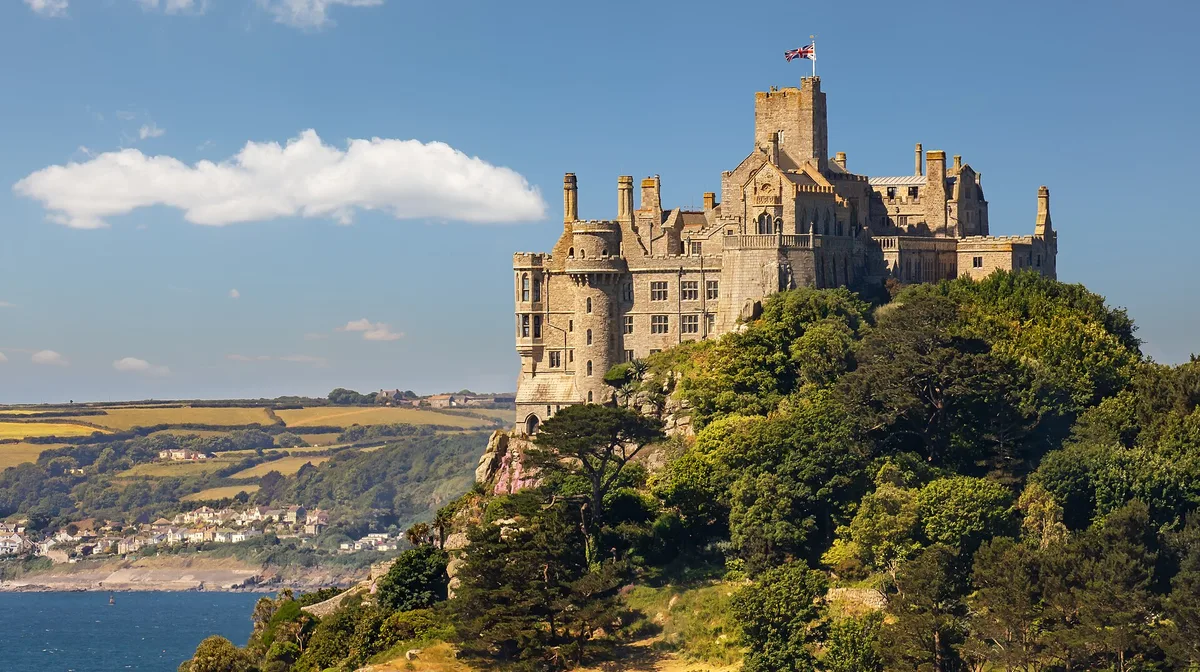
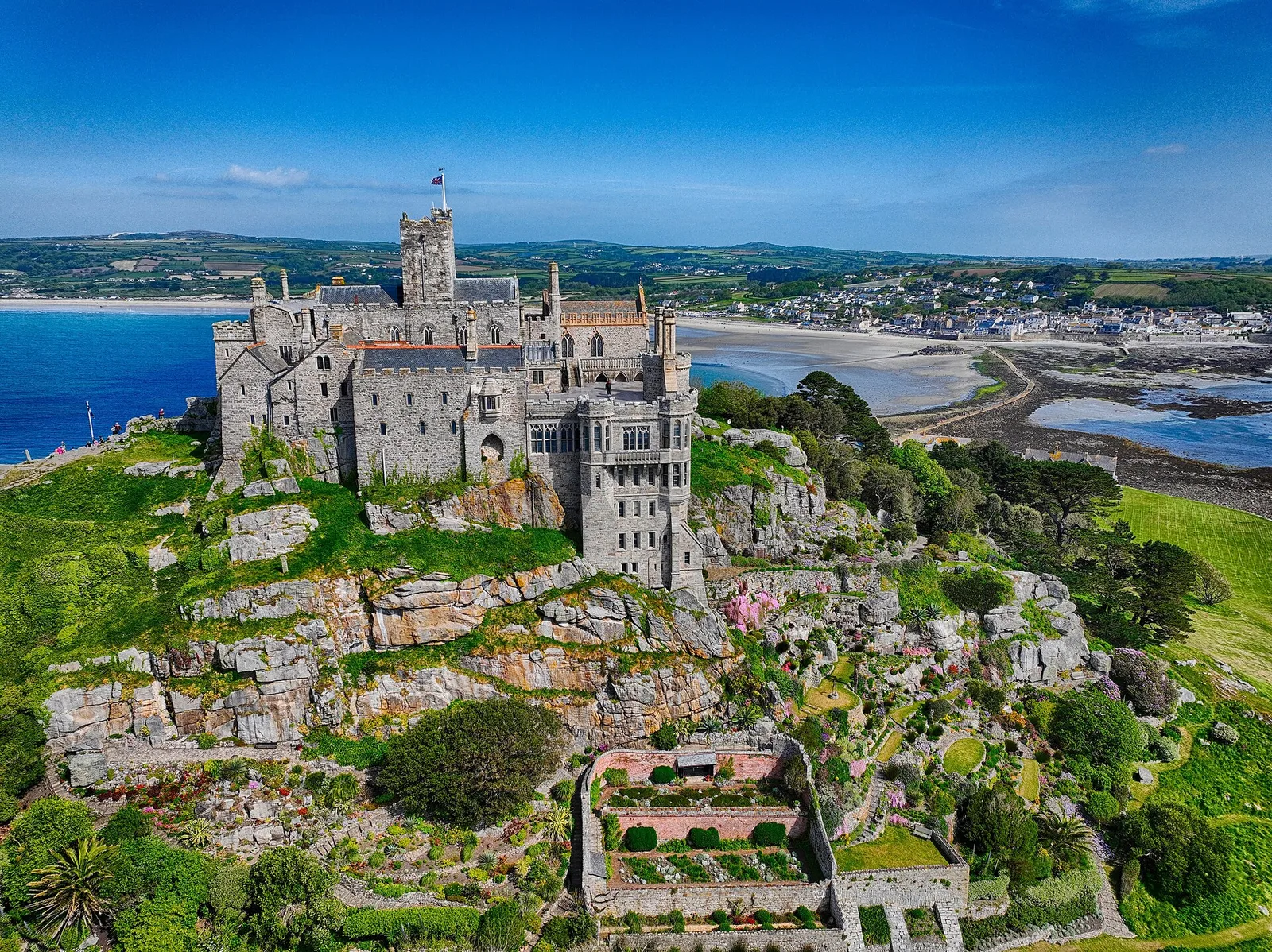
  • St Michael's Mount
  • The Eden Project
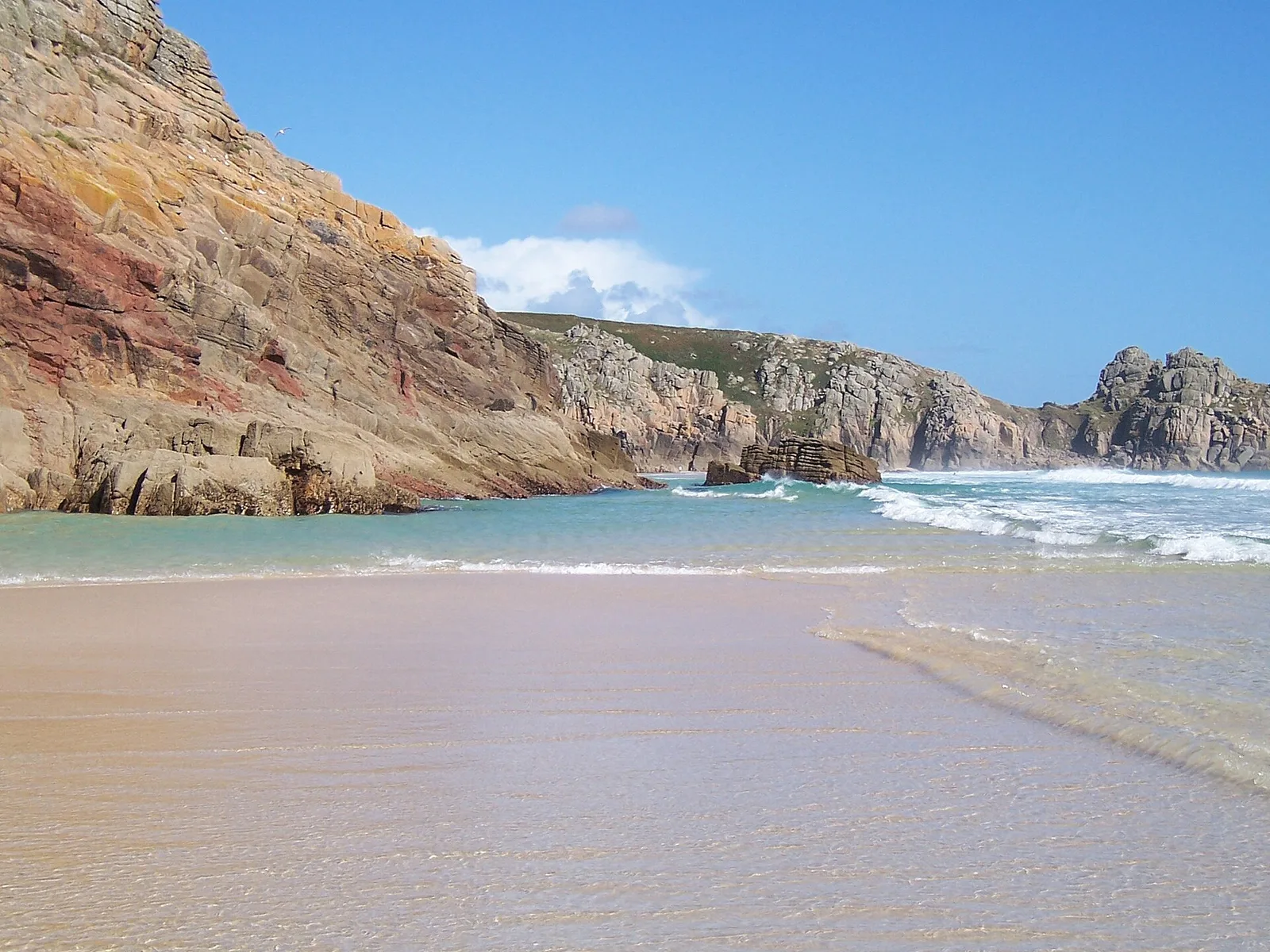
  • The Minack Theatre at Porthcurno
  • Tate St Ives and Barbara Hepworth Museum
  • The South West Coast Path
  • Lost Gardens of Heligan
  • Tintagel Castle and its cliff footbridge

Nearby Markets: Devon  |  Bath  |  Brighton

Airbnb marketing services in Cornwall, England, United Kingdom, Europe
Postcards

Cornwall through the lens

A few of the visual fingerprints we lean into when we shoot, brand and market a Cornwall property — courtesy of the open Wikimedia Commons archive.

St Michaels Mount from air — Cornwall airbnb marketing
Local Color
St Michaels Mount from air
Porthcurno beach — Cornwall airbnb marketing
Local Color
Porthcurno beach
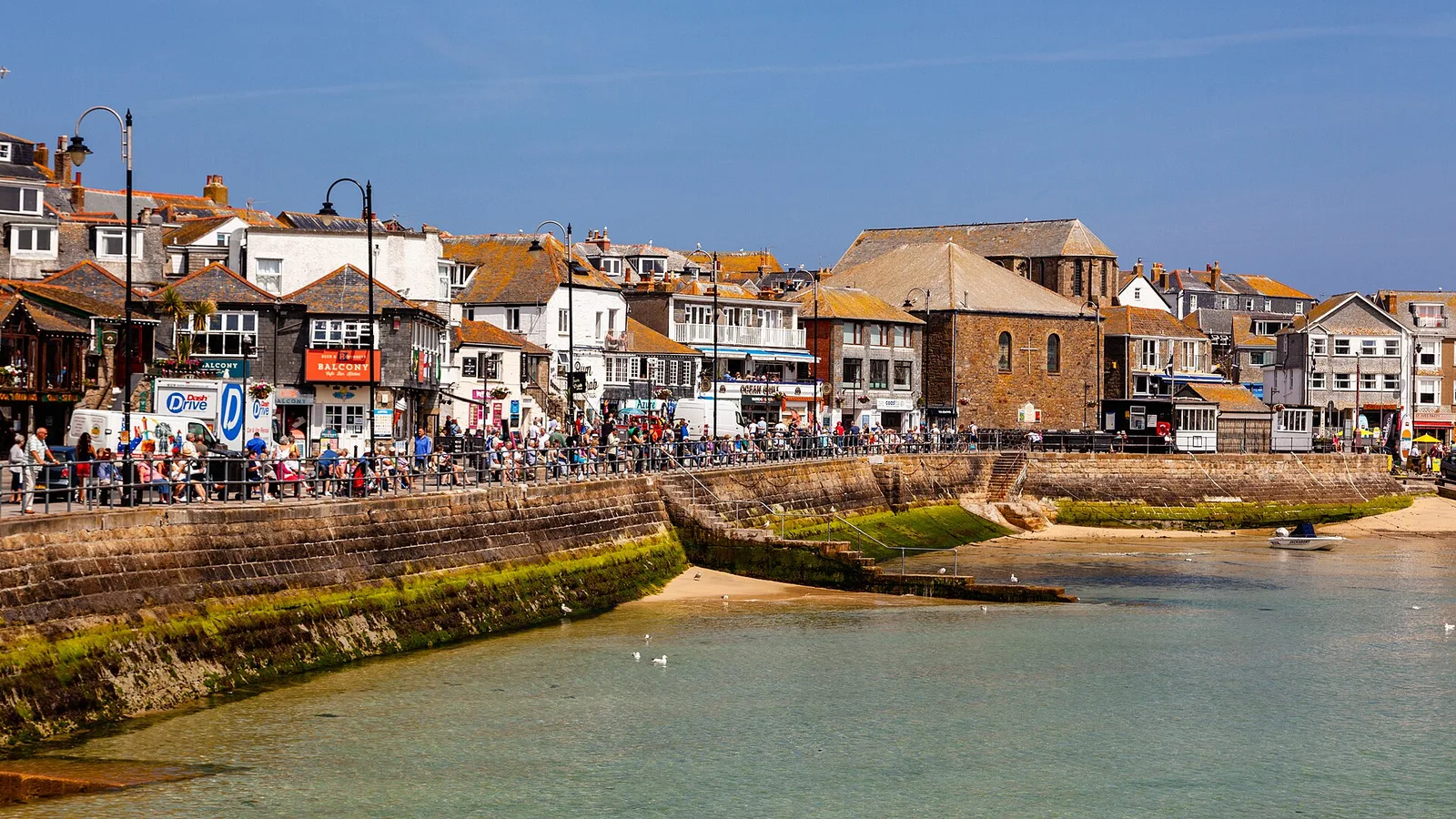
St Ives Cornwall Harbour promenade — Cornwall airbnb marketing
Local Color
St Ives Cornwall Harbour promenade
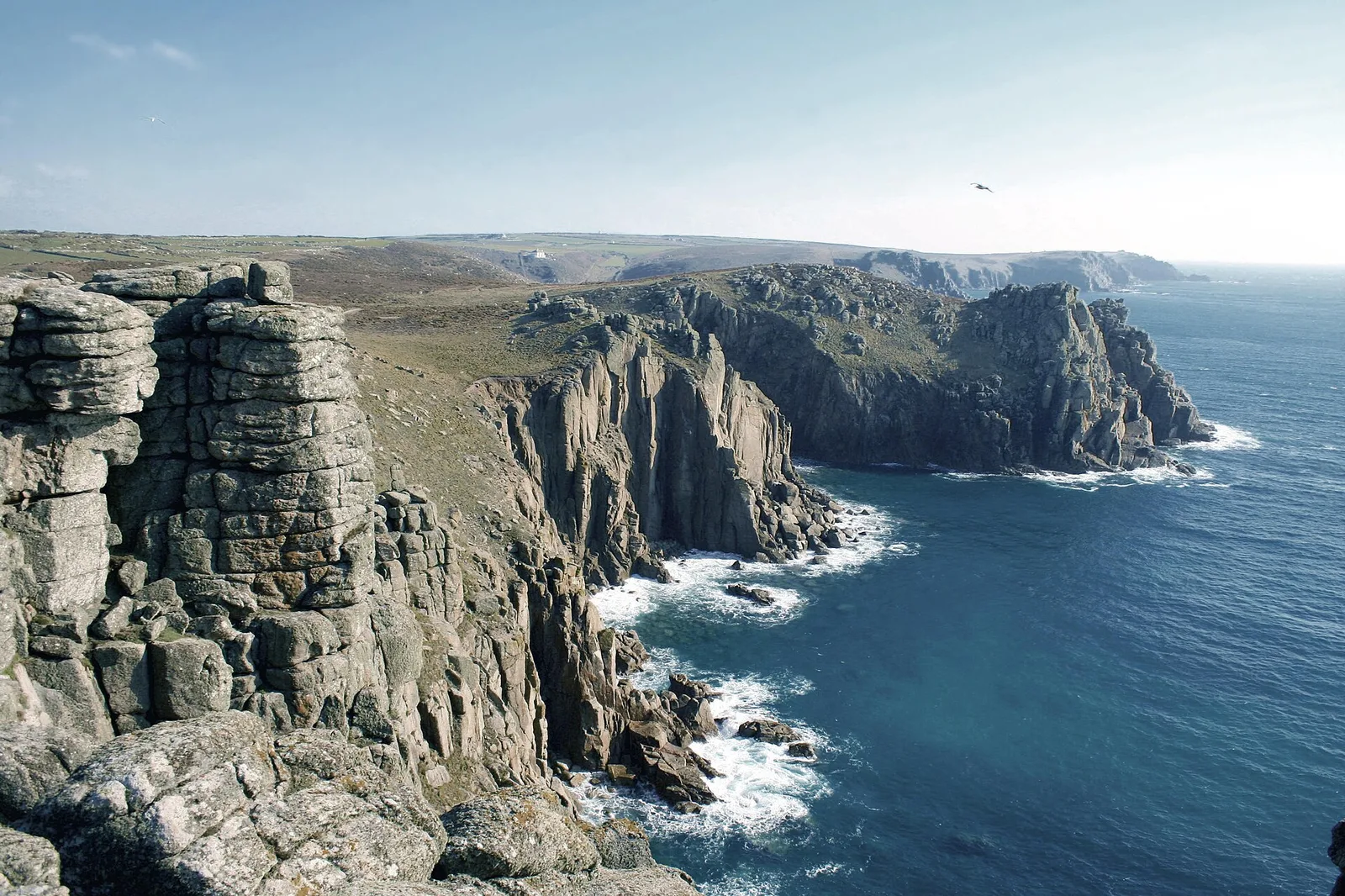
Land's End, Cornwall, England — Cornwall airbnb marketing
Local Color
Land's End, Cornwall, England
Why Cavmir

The Cavmir Advantage
in Cornwall

Cavmir wins in Cornwall because the county is oversupplied with pretty and undersupplied with specific. Everyone has a photograph of a beach; almost nobody has written down how long the walk to it takes, whether it is passable at high tide, where the parking actually is in August, and which cove is the right one when the wind swings north. We build listings around those answers, because in a market this crowded the property that removes uncertainty is the one that gets booked. We shoot Cornwall properly — early light on wet sand, the coast path from the door, the fire lit in October rather than another empty white living room in July — and we price the calendar the county publishes: the 'Obby 'Oss on 1 May, the Royal Cornwall Show in June, Boardmasters in August, the St Ives September Festival, and the half-terms that carry the shoulder. Then we go after the weeks that decide whether the year works. Autumn and spring are sold on different promises to summer, and most owners never write that second set of promises down. For Cornwall's small hotels, inns, surf lodges and B&Bs we build direct-booking websites and repeat-guest programs, because a family that has come back four Augusts running should not still be paying commission for the privilege. We help position and market your property. We never manage it or touch your keys.

State of the Industry · History

The Cornwall STR Market — Past & Present

Cornwall was rich long before it was pretty. Tin and copper were being worked here in the Bronze Age and traded across the Mediterranean, and by the early nineteenth century Cornish mines produced a large share of the world's copper, with engine houses standing on cliff edges because that was where the lodes ran. The industry collapsed in the second half of that century, taking a generation of Cornish miners to South Africa, Australia and the Americas, and leaving behind the ruined stacks that now sell holiday cottages. Fishing and china clay carried what was left — the clay pits behind St Austell shipped porcelain material worldwide and, in 2001, one exhausted pit at Bodelva became the Eden Project. What turned Cornwall into a holiday economy was the railway. The Great Western reached Penzance in 1867, the Cornish Riviera Express began running in 1904, and the company marketed the county's climate to Edwardian Britain with a poster campaign comparing its shape to Italy's. Artists arrived at the same time and for the same reason — the light. Newlyn drew a school of painters from the 1880s, St Ives drew another wave in the twentieth century around Barbara Hepworth, Ben Nicholson and Bernard Leach, and Tate opened a gallery there in 1993.

The modern rental economy grew out of the same trains and the same light, and by the 2010s it had become the county's defining political argument. Cornwall has some of the lowest wages and highest house-price-to-income ratios in England, and in several coastal parishes a large share of the housing is not lived in year-round. St Ives went first: a neighbourhood plan built by the community, backed at referendum on 5 May 2016, carrying a principal residence requirement that new open-market homes must be somebody's actual home. Other parishes followed with their own versions. The council pressed government for a registration scheme, and central government eventually legislated for one in 2023 — a register that still had not launched by mid-2026. In the meantime the lever that actually moved was money: a 100% council tax premium on second homes from April 2025, which had raised £24.7 million by the following March, arriving weeks before the national Furnished Holiday Lettings tax regime was abolished. Cornwall's rental market in 2026 is the market those two decisions made — smaller at the amateur end, more professional at the top, and far more dependent on how well a property is actually marketed.

Pricing Strategy & Seasonality

Pricing, Seasonality & When to Capture ROI

Pricing Strategy

Cornwall's rate map is really a coast map with a walk-time overlay. Padstow, Rock and the Camel estuary sit at the top on food tourism, sailing and a long-established second-home base, with estuary views carrying a clear premium. St Ives and the far west price on light, galleries and beaches you can reach on foot from the town, and hold their rates deeper into September than anywhere else in the county. Newquay and the north coast surf towns run a younger, higher-volume market with a sharp August peak, Boardmasters week as a spike and genuine winter surf demand that most owners ignore. Falmouth, Fowey and the south coast trade on sheltered water, sailing weeks and a softer, longer season, which suits couples and older guests. The Lizard, Bodmin Moor and the inland villages are the value tier, where the honest sell is space, a hot tub, dog-friendliness and a ten-minute drive rather than a pretended sea view. Blended, Cornwall runs near £178 a night at about 56% occupancy — an average that hides a market where the best-run properties are close to full and the flat-priced ones sit empty from October to April.

Seasonality & ROI Windows

Cornwall's year is the steepest curve in this portfolio. From late July to the end of August almost everything is full at the highest rates it will see, and that six-week block can be forty per cent of an unmanaged property's income. Either side, Easter, the May half-term and the late-May bank holiday build fast, and June is genuinely strong without being frantic. September is the connoisseur's month — warm sea, empty beaches, festival programming in St Ives. October holds up on half-term and walking, then November through February is the test: the properties that sell fires, storm-watching, dogs and cliff walks keep trading, and the ones that only sell beaches go dark for four months.

Regulation & Licensing · 2026

What the Law Requires in Cornwall

Cornwall is a medium-regulation market where the tax is heavy and the licensing is, so far, absent. There is no Cornwall-wide holiday-let licence. England's national short-term-let register was legislated for in the Levelling Up and Regeneration Act 2023 but the portal has slipped from 2024 to spring 2026 to later in 2026, and it is expected to run voluntary before it becomes mandatory. The C5 short-term-let use class, which would let councils require planning permission for conversions from residential use, has not been implemented in England — no statutory instrument has been laid. Cornwall Council has not made an Article 4 direction removing permitted development rights for short-term letting; its published guidance treats that as a power it would have to justify and which would take up to twelve months to bring in. Anything you read describing a Cornish licence or a C5 classification as a current requirement is describing an intention. What is real is money and neighbourhood planning. The 100% second home council tax premium has applied since 1 April 2025, doubling the bill on furnished properties that are not somebody's main residence. A genuine holiday let can be assessed for business rates instead if it was available to let for at least 140 days and actually let for at least 70 days in the previous year, and small business rate relief often follows — which makes the 70-day test the single most important number in a Cornish owner's year. Separately, several parishes now carry principal-residence policies in adopted neighbourhood plans, St Ives first among them since 2016; those bite on new-build open-market housing rather than on existing lets, but they shape what can be bought and built. Check the neighbourhood plan for the specific parish, not just the county position.

Market-Specific Tips & Challenges

Local Tips & Unique Market Challenges

Tips That Actually Move Revenue in Cornwall

Sell the shoulder, because summer sells itself. Write two different properties into one listing: the July family beach house and the November fire-and-coast-path retreat, with photographs for both. Put the walk to the beach in minutes and metres, say whether it is passable at high tide, and name the beach — Cornish guests know exactly which cove they want. Be explicit about parking in August, when it is the number one cause of a bad arrival. If you take dogs, say so in the title and mean it: an outside tap, towels, a drying space and a list of dog-friendly beaches with their seasonal restrictions will out-earn a second bathroom. Price the fixed calendar — 1 May in Padstow, the Royal Cornwall Show, Boardmasters, the St Ives September Festival — instead of running one summer rate. Keep a genuine winter offer rather than closing: storm weekends, walkers and short midweek breaks cover standing costs and keep reviews flowing. And build the email list from the first booking, because Cornish guests are the most loyal in Britain and the fourth visit should never cost you commission.

Unique Cornwall Challenges

Cornwall's frictions are real and mostly structural. The season is brutally concentrated, so cash flow is lumpy and a bad August is not recoverable. Supply is enormous and much of it looks identical in thumbnails, which pushes undifferentiated properties into price competition they cannot win. Distance is a genuine constraint — much of the county is four or more hours from the major population centres, so weekend breaks are harder to sell than week-long stays and last-minute demand is thinner than in the Cotswolds or the South Downs. Staffing changeovers on peak Saturdays is a known headache, and cleaner availability in August is the operational bottleneck. Local sentiment toward holiday lets has hardened, which shows up in policy and occasionally in neighbours. And the tax picture tightened twice in a single spring, which means the arithmetic that worked in 2023 needs redoing.

A Coast Path Built by Customs Officers
The South West Coast Path exists because of smuggling. Nineteenth-century coastguards had to walk the cliffs looking for contraband, and to see into every cove they had to go around every headland rather than cutting across. Their patrol route became the right of way, which is why the modern path hugs the edge so obsessively and covers 630 miles between Minehead and Poole rather than a far shorter inland line. Every Cornish clifftop view your guests photograph was originally a sightline for catching brandy runners.
Finance Essentials — Cornwall
🛡️

Insurance

Coastal exposure is the Cornish underwriting story: salt air, storm damage, flood risk in some estuary and cove locations, and long winter vacancies in properties that empty out in October. You need holiday-let or commercial cover with public liability, loss of rent, accidental damage by guests and an escape-of-water position that reflects unoccupied winter weeks. If you have a hot tub, declare it and follow the water-testing regime, because it is the most common cause of a disputed claim in this market. Check flood mapping before you buy as well as before you insure.

🧾

Property & Income Tax

Two changes landed six weeks apart in spring 2025 and together they reset Cornish holiday-let economics. From 6 April 2025 the Furnished Holiday Lettings regime ended, so income is taxed as ordinary UK property income: mortgage interest relief is restricted to a basic-rate credit, capital allowances on new expenditure are replaced by replacement of domestic items relief, and Business Asset Disposal Relief's 10% capital gains rate no longer applies on sale. From 1 April 2025 the council tax premium doubled the bill on second homes. The escape route for a genuine business is business rates via the 140/70 test, where small business rate relief can reduce the liability substantially. VAT arrives once turnover passes the registration threshold, which catches multi-property owners sooner than they expect. Ask your accountant to model your specific structure before the next return.

🏦

Mortgages & Financing

Holiday-let mortgages in the UK come from a narrower lender panel than buy-to-let, usually want 25-30% deposit, and assess affordability on projected seasonal income evidenced by a letting agent's letter rather than a single long-term rent. The April 2025 tax change matters here more than anywhere: with interest relieved only at basic rate, a highly geared Cornish purchase stress-tests far worse than it did two years ago. Prices in the coastal hotspots run well above county averages while local wages run below national ones, which is precisely the tension driving the policy. Model it with a broker who lends in Cornwall regularly.

Future Outlook · 2027 & Beyond

Where Cornwall is Headed Next

Cornwall's direction is set by two forces pulling in opposite directions. On the supply side, the second-home premium and the end of the Furnished Holiday Lettings regime are steadily squeezing out owners who were never really running a business, and some of that stock is coming back to the sales market. If the national register finally launches it will make the true size of the sector visible for the first time, and if the C5 use class is ever laid, Cornwall is one of the places most likely to use it — the council has been asking for controls for years. Plan on more visibility and more paperwork, not on a ban. On the demand side, the fundamentals are strong and getting better outside summer. The South West Coast Path, the food economy around Padstow and Port Isaac, the year-round surf, the Eden Project's winter programming and an ageing, affluent domestic market that actively prefers October to August all point the same way: the season is lengthening at both ends. The operators who will be doing well in 2028 are the ones building shoulder-season and winter demand now, with properties that work in the rain and marketing that says so, and who own their guest relationships rather than renting them from a platform six weeks a year.

From the Desk of Sofie Sinag

Why We Love Marketing in Cornwall

We love Cornwall because it refuses to be one thing. The county that gives you a turquoise cove in July gives you a wall of Atlantic weather in January, and the people who love it most love both. There is the version everyone knows — Padstow at lunchtime, the Minack at dusk with the sea behind the stage, St Ives light doing what it has done to painters for a century — and then there is the version you get in October, when the beaches empty, the surf gets serious, the pubs put the fire on and the coast path belongs to whoever is prepared to walk it in a coat. Underneath the holiday economy there is a working county with its own language being revived, its own flag flown seriously, engine houses on the cliffs and fishing boats that are not there for the photograph. For marketers, Cornwall is the great test of craft: there is more supply here than anywhere else in Britain and almost all of it is beautiful, so the only edge left is precision — the right beach, the right walk, the right week, described exactly. Our job is to make sure your property is the one that answers the question the guest is actually asking.

Why It Matters

A great property in Cornwall doesn't just want a listing — it wants a point of view, an audience, and a brand the city itself would recognise.

Cavmir's Cornwall Cheat Sheet

The Picks We Recommend for Your Welcome Book

The picks we send Cornwall guests — chosen for the weeks either side of August, when the county is at its best and the queues are somebody else's memory.

Coffee & First Light

Da Bara Bakery, Truro

Proper Cornish sourdough and pastries from a bakery that supplies half the good cafés in the county. Send guests early with a flask and point them at a beach — a first-light walk with a warm bag of something is the ritual that makes people book the same week next year.

The Splurge Table

Paul Ainsworth at No. 6, Padstow

The town has more than one famous kitchen, but this is the one locals send visitors to for the trip's big night — a Michelin-starred dining room in a Georgian townhouse a street back from the harbour. Book months ahead for August and a fortnight ahead for October.

Local Obsession

A proper pasty, eaten outside

Crimped on the side, not the top, and eaten from the paper bag on a harbour wall while gulls plan their approach. Every Cornish town has the bakery locals swear by; ask your guests to try two and pick a side. It is the cheapest and most reliable memory of the trip.

Shoulder Season Secret

The Minack Theatre in September

A theatre carved into a cliff above Porthcurno by Rowena Cade from 1931, with the Atlantic as the backdrop. September evenings are warm enough, the season is still running and the crowds have gone. Take a cushion and a blanket; the seats are granite and they mean it.

Weekend Escape

The coast path from Porthcurno to Land's End

Roughly four miles of the most dramatic walking in England, past the Logan Rock and Nanjizal's sea arch, finishing where the country stops. Do it in October with the wind behind you and it is the single best argument for a Cornish autumn break.

What Guests Ask For

The beach walk, the parking and the dog rules

Cornish enquiries are always the same three questions plus one about tides. Put the named beach and the walking time in the first line, be honest about August parking, state the dog policy clearly, and include a note on seasonal dog bans — and most bookings will arrive with no messages at all.

Local Work · Composite Case Vignettes

What Cavmir Has Done for Cornwall Properties

A few composite engagements drawn from how Cavmir typically works in this market. The details are illustrative and consistent with Cornwall, not pulled from a single named client.

Four-bedroom cottage · near Padstow
The Brief

A well-kept cottage twenty minutes from the Camel estuary filled every August and sat empty from October to Easter. The listing sold a summer beach holiday to an audience that only exists for six weeks, and the owner had written the winter off entirely.

What We Did

Cavmir built a second identity for the property — fire, drying room, dog kit, coast-path routes from the door — reshot it in autumn light, priced October half-term and winter weekends deliberately, and targeted walkers and dog owners rather than families.

The Result

The empty half of the calendar started producing bookings that covered the standing costs, October half-term went to a proper rate rather than a fill-it discount, and the owner stopped treating eight months of the year as unavoidable dead time.

Twelve-room inn · north coast
The Brief

A coastal inn with rooms above a busy bar took nearly all its accommodation bookings through platforms, paid commission on guests who had eaten in the restaurant for years, and had a website that could not take a room reservation on a phone.

What We Did

Cavmir built a direct-booking site with real photography of the rooms and the sea view, packaged surf-and-stay and walking breaks, put the fixture of local events into the rate calendar, and set up a post-stay sequence inviting guests to book direct next time.

The Result

Repeat guests began arriving through the inn's own site, the shoulder-season weeks that used to be filled with discounted platform inventory sold earlier at better rates, and the owners finally had a mailing list they controlled.

Surf apartment · Newquay
The Brief

A two-bedroom apartment near Fistral competed with dozens of near-identical listings, won only on price, and attracted one-night stag bookings during Boardmasters week that produced complaints and a difficult relationship with the building.

What We Did

Cavmir repositioned it around surf logistics — board storage, wetsuit rinse, the walk to the break, tide and swell guidance — set minimum stays and a clear house policy for festival week, and priced winter surf demand that the rest of the street ignored.

The Result

The guest mix shifted to surfers and couples on longer stays, festival week stopped generating complaints while still earning its premium, and the winter months began producing steady bookings from an audience nobody else in the building was marketing to.

Market Intelligence · Seasonality

Airbnb seasonality in Cornwall, month by month

Demand in Cornwall peaks around July through August and runs quietest around January through February. Here is how the year actually books — and what to do about each stretch of the calendar.

Peak demandSteadyQuiet

Peak season

The six weeks of the English school summer holidays, from roughly the third week of July to the end of August, are the most concentrated demand block in Britain outside London. Almost everything within a mile of a beach is full at the highest rates it will see all year, changeovers run Saturday to Saturday, and families book from January for coves they have been visiting since childhood. A property that is empty in August has a marketing problem, not a market problem.

The shoulders

The shoulder is where Cornish margins are actually won or lost. Easter, the May half-term and the late-May bank holiday build fast and price well. June is genuinely strong without the chaos. September is the connoisseur's month — the sea is at its warmest, the beaches empty out and the St Ives September Festival gives the far west a reason to stay busy. October half-term brings walkers, dog owners and families back for a final week before the weather turns.

The quiet stretch

November through February is the honest test of a Cornish property. Storm-watching, coast-path walking, dog holidays and short midweek breaks all exist as real demand, but only for properties that sell them: a working fire, a drying space, dog kit, and photographs taken in weather rather than sunshine. Properties marketed purely on beaches go dark for four months and lose the fixed costs. Christmas and New Year are a genuine spike for larger houses that can take an extended family.

Dates that fill first

Padstow 'Obby 'Oss1 May
One of Britain's oldest surviving folk customs, filling Padstow's streets on a fixed calendar date every year. The Camel estuary books out around it, and unlike most events you can price it years in advance because the date never moves.
Royal Cornwall Show, WadebridgeJune
Three days of the county's agricultural show that fill accommodation well beyond the showground and across mid-Cornwall. A reliable early-summer spike in a month most owners still price as ordinary shoulder season.
Boardmasters, NewquayAugust
A surf and music festival that fills the north coast for a week at the height of summer. Enforce minimum stays and a clear house policy — the rate premium is real but so is the risk to a property without rules.
St Ives September FestivalSeptember
Two weeks of music, art and spoken word in the far west during its best month, with warm sea and thin crowds. The single strongest shoulder-season argument in Cornwall and an easy anchor for a September rate strategy.
Falmouth Sea Shanty FestivalJune
A free harbour-town festival that fills Falmouth and the south coast for a weekend of singing across dozens of venues. It draws a repeat audience that returns to the same accommodation year after year if you ask them to.
Market Intelligence · Guests

Who books Cornwall Airbnbs — and how far ahead

Returning summer families
The backbone of August. Four to seven people, Saturday to Saturday, often booking the same week and often the same house for years. The most valuable audience in Cornwall to move onto direct booking, because they will never stop coming.
Coast path walkers
Couples and small groups walking sections of the South West Coast Path in spring and autumn. They want drying space, a bath, an early breakfast and luggage-friendly logistics, and they book the weeks other guests ignore.
Dog owners
A very large and underserved Cornish market that travels off-season by choice. An outside tap, towels, a secure garden and a proper list of dog-friendly beaches with seasonal restrictions will out-earn a second bathroom.
Surfers
North coast demand that runs year-round, not just in summer. Board storage, a wetsuit rinse, the walk to the break and honest swell guidance matter more than interior styling to this audience.
Small hotel, inn and B&B guests
Cornwall's inns, surf lodges and harbour-town B&Bs compete for the same couples and walkers as the whole-home lets, and generally have far more direct-booking upside than they are currently using.

The booking window

August books extraordinarily early — the strongest properties fill from January and February, and returning families often rebook before they leave. Easter and half-terms fill two to four months out. Autumn and winter demand is genuinely late, with walkers and dog owners booking two to six weeks ahead and storm weekends going inside a fortnight, which is why closing the winter calendar costs more than it saves.

Typical stays

Seven nights Saturday to Saturday is the August standard and worth protecting. Outside summer the market shifts to three and four nights, with midweek short breaks doing well in autumn and winter if they are priced as their own product rather than as a discounted week. Two-night minimums work off-season; anything shorter erodes margin once changeover costs are counted.

Where guests drive from

BristolBirminghamLondonExeterPlymouth

Where guests fly from

London (Gatwick and Heathrow)ManchesterNewquay AirportDublinEdinburghAmsterdam
Cornwall is a drive market first — four to six hours from most of England, which favours week-long stays over weekends and makes the M5 corridor the core targeting geography. For paid social, the highest-return audiences are Midlands and Home Counties families for summer, and dog-owner and walking interest audiences in the same regions for the shoulder and winter weeks.
Market Intelligence · What Wins

The Airbnb that wins in Cornwall

The winning Cornish property is one that works in two seasons. A three- or four-bedroom house with a genuine sea or estuary outlook, a named beach within walking distance, parking that actually exists in August, a working fire, a drying space and a dog policy will fill summer at top rate and still trade through October to March. Character and location beat square footage; an average house on the right lane out-earns a beautiful one twenty minutes inland.

Amenities that move bookings here

A working fire or wood burnerOutside tap, hose and drying spaceOff-street parking, stated honestlyA hot tub with a published testing regimeBoard and wetsuit storage on the north coastDog kit: towels, bowls, secure gardenFast wifi with the speed statedBlackout in the bedrooms for summer light
The single most valuable thing you can do is write a genuine winter offer — fire, dogs, storms, coast path — and photographing it in weather. Cornwall has no shortage of properties that photograph well in July; it has a real shortage of properties that make a November booking feel like a good idea.
Straight Answers

Cornwall Airbnb marketing questions, answered

How do I market my Airbnb in Cornwall?

Stop selling summer, because summer sells itself. The money in Cornwall is made in the weeks either side, and that means writing a second property into the same listing: the July family beach house and the October fire-and-coast-path retreat, each with its own photographs. Name the beach, give the walk in minutes, say whether it is passable at high tide, and be honest about August parking. State the dog policy clearly and include seasonal beach restrictions. Then price the fixed calendar — 1 May in Padstow, the Royal Cornwall Show, Boardmasters, the St Ives September Festival — rather than running a single summer rate all year.

When is peak season in Cornwall?

The six weeks of the English summer holidays, roughly the third week of July to the end of August, are the peak and the curve is steep. Easter, the May half-term and the late-May bank holiday build strongly ahead of it, and June is genuinely good. September is the best month for anyone who is not tied to school dates — the sea is at its warmest and the beaches are empty. October half-term is a real week. November through February works only for properties that have deliberately marketed fires, dogs, walking and storm-watching, and goes dark for the ones that have not.

How far in advance do guests book in Cornwall?

August is the earliest-booking market in Britain outside major events — the best properties fill from January and February, and returning families often rebook their week before they check out. Easter and half-terms fill two to four months ahead. The shoulder and winter are the opposite: walkers, dog owners and storm-watchers book two to six weeks out, and genuine last-minute demand exists inside a fortnight. That asymmetry is why closing your winter calendar costs more than leaving it open at a sensible rate.

Where do Cornwall's guests come from?

Overwhelmingly by car, from the Midlands, the South East, Bristol and the South West along the M5 corridor — four to six hours for most of them, which is why week-long stays outsell weekends and why last-minute weekend demand is thinner here than in the Cotswolds. There is a smaller fly-in market through Newquay and a growing international layer around St Ives and the food towns. For advertising, Midlands and Home Counties family audiences carry the summer, and dog-owner and walking interest audiences in the same regions carry the shoulder.

What amenities matter most for a Cornish holiday let?

The ones that make an off-season booking possible. A working fire or wood burner, an outside tap and a real drying space, secure parking, and a dog policy with the kit to back it up will do more for your annual revenue than another bathroom. On the north coast, board storage and a wetsuit rinse turn a summer property into a year-round one. A hot tub earns a premium but bring a published water-testing regime with it, because it is the most common cause of a disputed insurance claim in this market.

Free Tools · Websites That Book

See what your listing in Cornwall is leaving on the table

Run your Airbnb, Vrbo, or website through Cavmir's free grader. It checks the things that decide whether guests book in Cornwall — photos, listing copy, page speed, local search — and shows you where bookings leak. Takes about a minute, and there's no sales call attached.

If the report says your booking engine is the weak link, that's fixable: a direct-booking website of your own means repeat guests stop paying platform fees to come back to you. That's the work Cavmir does — see Airbnb website design in Cornwall.

What the grader measures

  • Photos and the first-impression frame
  • Listing title and copy
  • Your direct-booking website (or the lack of one)
  • Page speed and mobile experience
  • Local search and Google visibility
Grade My Listing — Free
Ready to Grow in Cornwall?

Let's Put Your Cornwall
Property on the Map

Talk to Cavmir today. We'll show you exactly what your Cornwall property is leaving on the table — and how fast we can change that.

Book a Free Strategy Call