Start here Work with Cavmir in Pembrokeshire
Get a Proposal +1 (786) 751-3426
£219
Avg. Nightly Rate
41%
Avg. Occupancy Rate
£2,220
Avg. Monthly Revenue
91 days
Avg. Booking Lead Time
HIGH
Seasonality
HIGH
Regulatory Burden

* Market averages in pounds from AirROI data for Tenby, Pembrokeshire, October 2025 to September 2026; the lead time is the average number of days between booking and arrival. A single home's numbers depend on its size, its location and how it is marketed.

The Market

Why Pembrokeshire Works as a Holiday Let Market

Cavmir is a holiday let marketing agency. We build the brand, the direct-booking website and the marketing for holiday lets in Pembrokeshire.

This page covers Pembrokeshire, the county in the far south-west of Wales that Visit Pembrokeshire describes as surrounded by sea on three sides. The Pembrokeshire Coast Path runs 186 miles around it, from St Dogmaels in the north to Amroth in the south-east, almost entirely inside the Pembrokeshire Coast National Park, and the National Park Authority points out that nowhere in the park is more than ten miles from the sea. Several holiday let markets share that coastline. Tenby, Saundersfoot and Manorbier on the south coast sell beaches, harbours and castles to families; St Davids (Tyddewi), Solva, Little Haven, Broad Haven and Dale in the west sell the coast path, the islands and the boats; Fishguard and Newport in the north sit below the Preseli hills; and Narberth, inland, sells food, shops and space. A family after a harbour-view flat in Tenby for August and two walkers after a stone cottage near St Davids in May want different things, so a listing does best when it picks one of them.

Tenby gives the clearest read on the money. In the year to September 2026 AirROI followed 411 active listings in its Tenby market: they charged about £219 a night and were booked 41% of the time, and the average one took about £26,600, 11.5% more than the year before and about a third above the Welsh average of £20,023. Active listings rose 15% over the same year. Saundersfoot, next along the coast, is a separate AirROI market of 233 listings averaging £232 a night and about £26,100 a year, Penally's 73 listings averaged about £27,300, and Redberth, about four miles inland, averaged the most of any market near Tenby, about £33,900 from 37 listings at 52% occupancy. Manorbier's 30 listings averaged £150 a night and Freshwater East's 88 about £15,900 a year. AirROI also publishes a market it labels Pembrokeshire, 346 listings without published boundaries, which averaged £193 a night, 39% occupancy and about £18,000 a year. The stats box on this page uses the Tenby market throughout, and AirROI converts its figures to pounds at the period's average exchange rate.

Most guests come from within Britain. AirROI's guest data puts 88% of Tenby's guests in the UK, with Cardiff, London and Bristol the top three home cities, and the largest overseas groups from the United States (3.3%), Australia (1.9%), Germany (1.5%) and Canada (1.3%). Ireland is a short sea crossing away: Stena Line runs four sailings a day between Fishguard and Rosslare. For guests without a car, Visit Pembrokeshire lists the coastal buses, the Puffin Shuttle, the Poppit Rocket, the Strumble Shuttle, the Celtic Coaster and the Coastal Cruiser, which run seven days a week from May to September and two days a week in winter, and Fflecsi buses that connect with the railway stations at Haverfordwest, Milford Haven and Fishguard.

It's also a market the Welsh Government is reshaping. The Welsh Revenue Authority's register opened on 1 October 2026, and anyone in Wales who takes bookings for overnight stays of 31 nights or less must join it by 31 March 2027. A self-catering let pays business rates instead of council tax only if it's available for 252 nights and actually let for 182 nights a year, and Pembrokeshire County Council adds a 125% premium to the council tax on second homes, a rate it has set again for 2027–28. Wales has passed a visitor levy, which Pembrokeshire isn't charging, and a licensing law for self-catering whose legal default start is March 2030. Inside the National Park, the planning authority's local plan allows new self-catering development only on previously developed sites in its Centres and in conversions in the countryside.

Those rules shape the marketing as much as the money does. A let that has to reach 182 nights needs bookings in October and February as well as August, and a listing that carries a registration number, a clear sleeping plan and a total price answers a careful guest's questions before they're asked. Cavmir handles the selling: the brand, the listing copy, the photographer's brief, a booking site of the cottage's own, a presence in Google and AI answers, and campaigns that reach Cardiff, Bristol and London. Registering with the Welsh Revenue Authority, the tax return, planning and the fire risk assessment remain the owner's, with an accountant, solicitor or letting agent alongside. Below are the market, the Welsh and Pembrokeshire rules, a calendar that runs from puffin season to the Tenby Blues Festival, and the plans Cavmir would build for a harbour flat in Tenby, a coast path cottage near St Davids and a barn conversion near Narberth.

Top Attractions & Landmarks

  • The Pembrokeshire Coast Path, 186 miles from St Dogmaels to Amroth
  • Tenby's harbour and medieval town walls
  • St Davids Cathedral, in Britain's smallest city
  • Puffins on Skomer Island from May to July
  • Pembroke Castle, birthplace of Henry VII
  • Carew Castle and Tidal Mill
  • Castell Henllys Iron Age Village
  • The Preseli hills, source of some of Stonehenge's bluestones

Nearby Markets: Devon  |  Snowdonia  |  Cornwall

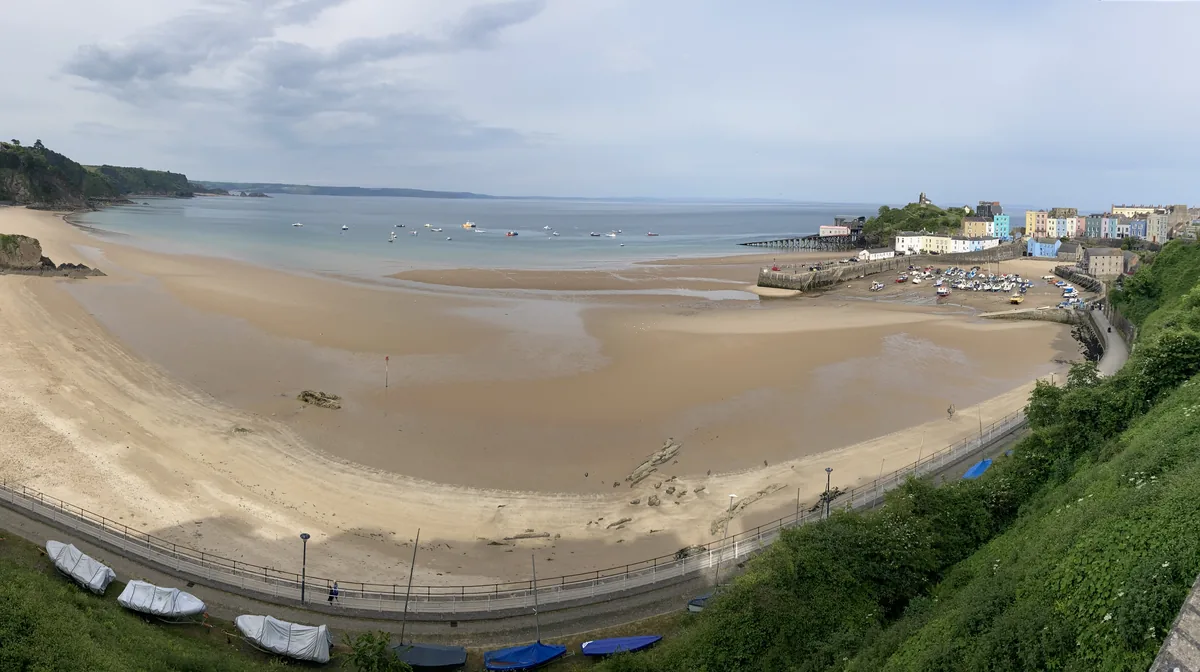
North Beach at Tenby at low tide, with the harbour and the town's coloured houses

Photo: Seth Whales · CC BY-SA 4.0 · via Wikimedia Commons

Why Cavmir

The Cavmir Advantage
in Pembrokeshire

Cavmir sells each Pembrokeshire property for what it is, within the Welsh rules it lets under. A flat in Tenby's walled town goes to market on the walk to the harbour and North Beach, with August sold by the week and IRONMAN weekend priced on its own; a cottage near St Davids leads with the coast path, the cathedral and the boat trips to the islands; and a barn conversion near Narberth sells space for two families and the food festival in September. A Cardiff family booking its summer week, a London couple after a long weekend by the sea and a Bristol triathlon club coming for IRONMAN look in different places, so the work reaches across Google, AI assistants, Instagram and an annual email that brings families back to the cottage they know. We're a marketing agency only. There are no keys, changeovers or guest messages on our side: every enquiry and booking from the cottage's own site goes to the owner or their letting agent, and the guests stay theirs.

State of the Industry · History

The Pembrokeshire Holiday Let Market — Past & Present

People have been coming to this corner of Wales for a very long time. Visit Pembrokeshire notes that some of Stonehenge's smaller bluestones came from the Preseli hills, more than 150 miles away, and that the Golden Road, an eight-mile route along the spine of the hills, is said to date back about 5,000 years to the Neolithic and was a main prehistoric route to and from Ireland. The hills rise to 536 metres in the north of the county, and the National Park lists Iron Age hill forts and burial mounds among its oldest monuments; at Castell Henllys, near Crymych, there is an Iron Age village set in thirty acres of woodland and river meadows. St Davids is old in a different way. The cathedral says there has been a church on its site since the 6th century and that prayer and worship have been offered there daily for the past 1,500 years, and with just over 1,400 residents St Davids is, in Visit Pembrokeshire's words, the smallest city in Britain.

The Normans left the castles. Pembroke Castle says it was established by the Normans in 1093, and it tells the story of the birth there of Henry VII, the first Tudor king; the National Park Authority dates Henry Tudor's victory at Bosworth to August 1485. Tenby, Dinbych-y-pysgod in Welsh, the 'little town of fishes', was founded by the Normans as a fortified town, and most of its old walls still enclose the medieval streets, while only a small keep tower remains of the castle on Castle Hill. More than 500 years ago, when Tenby was a busy trading port, a merchant built the three-storey house to live in and trade from that is now the Tudor Merchant's House. A few miles away, Carew Castle and its tidal mill were named Best Attraction 2024–2025 in Visit Pembrokeshire's Croeso Awards.

Fishguard holds a stranger record. Visit Pembrokeshire tells it as the last invasion of Britain: about 1,400 French soldiers landed at Carreg Wastad Point on 22 February 1797 and surrendered two days later, and the peace treaty was signed at the Royal Oak on Market Square. Lower Town, the old harbour below the cliff-top main town, was a trading port that imported limestone and coal and exported slate, woollen goods and food, with a small fishing fleet of its own. Film crews came later: Moby Dick, with Gregory Peck, was filmed in Fishguard and Goodwick, and Under Milk Wood, with Richard Burton, in Lower Town's quayside streets.

Holidays came with the Georgians and Victorians, when, as Visit Pembrokeshire puts it, Tenby became a popular seaside resort. Industry left its marks too, and the National Park points to the Victorian mining remains at Stepaside and the old brickworks at Porthgain. The path most walking guests come for opened in 1970 as the first National Trail in Wales, and its route through what the trail's own site calls Britain's only truly coastal National Park is the reason many guests come at all: spring for migrating and breeding birds, early summer for the puffins on Skomer, and autumn for the seal pups.

The market today is mostly whole homes. In AirROI's Tenby data, 97.3% of listings are entire homes, 52.8% houses and 42.8% flats, and two-bedroom homes are the most common size, 152 of the 400 entire homes. Much of the market is run by agencies and experienced hosts: 35% of listings are professionally managed, 45% are run by Superhosts, and the ten largest hosts operate 42% of all listings. Guests rate the town well, 4.77 on average, with location the highest category at 4.93 and value the lowest at 4.69, and 40% of listings carry Airbnb's Guest Favourite badge. The listings themselves leave room to do better: they show 11 photos on average, only a quarter show their exact location, and fewer than 1% show a registration or permit number. When we audit a Pembrokeshire listing, we start with what costs bookings: a sea view that isn't the first photo, no word on parking or stairs, a dog policy buried at the bottom, and no offer at all between November and March.

The rules arrived in stages. Pembrokeshire County Council first charged a 50% council tax premium on second homes from April 2017, raised it to 100% in 2022 and 200% in 2024, then cut it to 150% in 2025 and 125% from April 2026. In October 2022 Wales created separate planning use classes for main homes, second homes and short-term lets, and from April 2023 councils could charge premiums of up to 300% while self-catering lets had to be let for 182 nights a year to stay on business rates. The national register and the visitor levy became law on 18 September 2025, the licensing Act received Royal Assent on 27 April 2026, and the register opened on 1 October 2026. The Welsh Government says about 8,000 self-catering properties are now listed for business rates, against more than 11,000 in 2023, and it consulted until 23 October 2026 on whether the 182-night threshold is set at the right level. For an owner, each of those dates is also a marketing fact, because the number of nights a cottage has to sell is partly set by tax.

Pricing Strategy & Seasonality

Pricing, Seasonality & When to Capture ROI

Pricing Strategy

AirROI's Tenby figures show a market that charges for size and for the view. Rank its listings by price for the year to September 2026 and the one in the middle charged about £175 a night; the cheapest quarter asked £125 or less, the dearest quarter £270 or more and the top one in ten at least £380. Two-bedroom homes, the most common size, averaged £202 a night at 42% occupancy and about £24,700 a year; three-bedroom homes £234 at 41% and about £29,200; and one-bedroom flats £150 at 43% and about £18,800. The 20 homes with five or more bedrooms averaged £505 a night and about £62,300 a year, and the market's top earner, a five-bedroom home, grossed about £186,700 at £986 a night. In AirROI's comparison, listings with a sea view earned 49% more than those without, yet only 12% of Tenby's listings have one, and listings with a patio or balcony earned 39% more.

The monthly figure in the box needs reading carefully. AirROI's monthly tiers put the median Tenby listing at about £2,330 a month, the top quarter at £3,580 or more and the top tenth at £5,310 or more. The box's £2,220 sits below that median because it divides the average year, about £26,600, by twelve, closed months and all, and plenty of Tenby lets close for part of the year: 35.5% took bookings on 271 days or more, 37.7% on 181 to 270 and 23.8% on 91 to 180. Summer is where the money is. In July 2026 the average listing earned about £4,850 at 61% occupancy and £267 a night, and in August about £5,890 at 75% and £274. AirROI's cost model then deducts £4,000 for the Airbnb fee, £3,370 for cleaning and laundry, £1,330 for utilities and internet, £800 for repairs, £530 for guest supplies, £270 for insurance and £130 for registration, leaving the average Tenby listing about £16,180 a year, roughly £1,350 a month, before the mortgage and the rates or council tax; a top-quarter listing keeps about £25,050.

Two levers are worth pricing before the season starts. By AirROI's sums, selling ten extra nights a year at Tenby's median rate would bring the average listing about £1,750 more, and raising the rate by a tenth on the nights it already sells about £2,320. Add-ons shape the total as well: nearly three in four listings, 73%, charge for cleaning, at a median £93 and an average £230, and those fees come to 12.7% of what guests pay, about £20 a night over the average 4.1-night stay. Two-night and three-night minimums are each used by 41% of listings, one night by 9% and four nights or more by 9%, and most listings use firm, strict or 60-day super strict cancellation terms. Stays run longest in July and August, at 5.4 and 5.1 nights in 2026, against under four nights in most other months, so a week with a fixed changeover day in the school holidays and two or three nights the rest of the year match how guests already book.

Quote the full price. The Competition and Markets Authority's guidance on the Digital Markets, Competition and Consumers Act 2024 says the total price should normally include any unavoidable or mandatory charges, and that it's illegal to hide additional fees, taxes or other charges, so a compulsory cleaning fee belongs in the headline price on your own site. Value is already the lowest-scoring review category in Tenby, at 4.69 against 4.77 overall, which makes a total that matches the listing worth more than a discount. If Pembrokeshire ever adopts the Welsh visitor levy, it will be one more per-person, per-night line to show, and an owner whose taxable turnover passes £90,000 over 12 months must register for VAT; a direct-booking site that adds everything up before checkout keeps the guest's number and the owner's books in step.

Seasonality & ROI Windows

The year here is steep. In AirROI's typical year for Tenby, the average listing earns about £1,240 in January and £5,780 in August, almost five times as much, and occupancy runs from about 24% to 75%. The three strongest months bring in 43% of annual revenue. AirROI's own seasons show the shape: May to August averages about £4,290 a month at 60% occupancy and £244 a night, April and September about £2,740 at 48%, and October to March about £1,700 at 33% and £187. Guests plan the summer early, booking August stays about 125 days ahead in a typical year against about 43 days for February. On Skomer the puffins arrive from mid-April and have gone by the end of July, which gives a cottage within reach of the island boats an early summer of its own to sell.

The shoulder months hold up better than the winter. In September 2025 Tenby ran 52% occupancy at £232 a night, with stays booked about 131 days ahead, and October still reached 41% at £207. The calendar helps: IRONMAN Wales brings its sunrise swim to Tenby's North Beach in September, and the 2027 race on 19 September is already sold out to athletes; the Narberth Food Festival comes to the Town Moor in late September, on 25 and 26 September in 2027; and the National Trail recommends autumn for seal pups. Carew Castle turns its tidal mill into the Creepy Mill through October half-term in 2026. The best time to sell those weeks is in August, while summer guests are still in the cottage and can book their return on the way out.

Winter is the quiet stretch, though not an empty one. Tenby's occupancy fell to about 30% in November 2025 and 23% in January 2026, and January stays were booked about 54 days out. December is the exception in the booking data: December 2025 stays were booked about 114 days ahead, so Christmas and New Year guests plan in late summer and early autumn, and a cottage should have its festive offer live by September. The winter has events of its own. The Tenby Blues Festival puts about 50 acts into more than 20 venues, most of them free, from 13 to 15 November 2026, Pembroke Castle holds a Christmas market with more than 80 stalls, and Carew Castle keeps shorter hours, 11am to 3pm, from 2 November to early February, apart from a Christmas closure and weekdays only in January. St Davids Cathedral opens every day of the week, and Oriel y Parc's gallery opens daily. January's empty weeks are the ones for a reshoot, the jobs list and an early offer of next summer to past guests.

Regulation & Licensing · 2026

What the Law Requires in Pembrokeshire

Start with the national register. The Welsh Revenue Authority opened it on 1 October 2026, and anyone who takes bookings for overnight stays in visitor accommodation in Wales, for one night, seasonally or all year, must register, as long as the bookings are for 31 nights or less. Registration is free and must be done by 31 March 2027, even where the local council doesn't charge a visitor levy. From 1 April 2027 the penalty for not registering starts at £100 for each unregistered property, with daily penalties after that, and each registered provider gets a unique number, with details such as the business name, the property's address, its type and its maximum occupancy shown on a public register. The same law, the Visitor Accommodation (Register and Levy) Etc. (Wales) Act 2025, which became law on 18 September 2025, lets each council introduce a visitor levy after consulting its communities, from April 2027 at the earliest. The higher rate, which covers self-catering lets, B&Bs, hotels and caravan pitches, is £1.30 per person per night for guests of all ages, babies included, while hostels and tent pitches pay 75p per adult. Nights from a single booking of 32 nights or more are exempt, the provider stays liable for the levy even if a guest refuses to pay it, and VAT on the levy is paid to HMRC. As of late October 2026 the Welsh Government's checker lists only Cardiff Council as charging it, from 1 April 2027, and no council as consulting, and Pembrokeshire County Council said in April 2025 that it didn't intend to take a levy forward during this administration.

Licensing comes next, though not yet. Wales's licensing law, the Development of Tourism and Regulation of Visitor Accommodation (Wales) Act 2026, became law with Royal Assent on 27 April 2026; self-catering is the first type of accommodation its scheme will cover, the legal default start is March 2030, and ministers will consult on the regulations first. Fire safety law applies now. Wales's three fire and rescue services wrote a joint guide for small self-catering premises under the Regulatory Reform (Fire Safety) Order 2005, and it is plain that the owner must complete a fire risk assessment, put right what it finds and keep it up to date. For a house or cottage with bedrooms on the ground and first floors it expects interlinked mains-wired smoke alarms with battery back-up in the areas where a fire might start (a Grade D1, LD1 system under BS 5839-6), at least a fire blanket in the kitchen, regular servicing and testing of alarms, gas appliances and electrical appliances with a record kept, and portable electrical appliances inspected at each changeover. The fire and rescue services enforce the order, and the Welsh Government publishes its own guide, Make your guest accommodation safe from fire, for B&Bs and self-catering properties.

Business rates or council tax is the biggest question for most owners. Since 1 April 2023 the Welsh test has been far stiffer than England's: a self-catering cottage is non-domestic, on business rates instead of council tax, only if it was offered for 252 nights and booked for 182 in the past 12 months and will be offered for 252 in the next 12. A property that misses the test moves to council tax. Two changes from 1 April 2026 soften it: an owner who falls short of 182 nights in one year can rely on the average over two or three years, and up to 14 nights given free to a registered charity's beneficiaries count towards the total. The Welsh Government consulted from 31 July to 23 October 2026 on whether the threshold is set at the right level, saying a cut of more than four weeks could undermine its aim, and on five new exemptions, among them properties under a relevant planning restriction and properties on the owner's farm; any change is meant to take effect on 1 April 2027. Once a let is on business rates, ask Pembrokeshire County Council's business rates team which reliefs apply to it.

Council tax brings the premium. Since 1 April 2023 Welsh councils may charge up to 300% extra on second homes and long-term empty homes, and the decision is each council's. Pembrokeshire's second-home premium is 125% on top of the standard charge from 1 April 2026, down from 200% in 2024–25 and 150% in 2025–26, and after a public consultation in the summer of 2026 the council's own page now lists the same 125% again from 1 April 2027. The council's exceptions include homes being marketed for sale or to let (for up to a year), annexes, and homes whose planning conditions prevent occupancy for at least 28 days a year or allow use only as a holiday let. Planning is the other track. Since October 2022 Wales has had separate use classes for main homes (C3), second homes (C5) and short-term lets of up to 31 days a stay (C6), with permitted changes between them unless an Article 4 direction removes them. Inside the National Park, the Pembrokeshire Coast National Park Authority decides planning, and Policy 40 of its Local Development Plan 2 allows new self-catering development only on previously developed land in its Centres or in conversions in the countryside, and only where the site or building isn't suitable for market or affordable housing. In March 2023 its officers said more research would be needed before any Article 4 direction and recommended case-by-case conditions limiting some new homes to main-home use. Outside the park, the county council handles planning applications.

Taxes complete the picture. HMRC's manual dates the end of the Furnished Holiday Lettings rules to 6 April 2025 for income tax and capital gains tax and 1 April 2025 for companies paying corporation tax; since then a holiday cottage counts as part of an ordinary property business for tax, so ask your accountant what that means for your costs and for any future sale. Registering for VAT becomes compulsory at £90,000 of taxable turnover in any 12 months, or if you expect to cross that line within 30 days. Read all of this as a guide to the ground, not legal advice: the Welsh Revenue Authority, the county council, the National Park Authority and your accountant or solicitor settle the detail, and Cavmir keeps to the marketing.

Market-Specific Tips & Challenges

Local Tips & Unique Market Challenges

Tips That Actually Move Revenue in Pembrokeshire

Lead with the facts a guest can check. Put the Welsh Revenue Authority registration number on the direct-booking site once you have it, give the sleeping plan bed by bed, and say where the car goes, because Tenby's walled streets, a lane above Solva and a farm track near Narberth each answer that question differently. Only a quarter of Tenby's listings show their exact location and the average listing shows 11 photographs, so a listing that names the street or the farm, gives the walk to the beach and the coast path in minutes, and shows every room including the stairs answers questions its neighbours leave open. If dogs are welcome, say so in the first lines: Visit Pembrokeshire markets the county for dog-friendly holidays, and the coastal buses take dogs.

Sell the view and the season. In AirROI's comparison, Tenby listings with a sea view earned 49% more than those without, and only 12% have one; listings with a patio or balcony earned 39% more, and those with an outdoor dining area 29% more. If the cottage has any of these, they belong in the first photograph and the first line, shot at the hour guests will use them. Then give each season its reason to come: the puffins on Skomer from May to July, the coast path and the birds in spring, the seal pups in autumn, the cathedral and the gallery at Oriel y Parc in St Davids on a wet day, and Castell Henllys or Carew Castle for families with children.

Price the year in three seasons, as AirROI's data already does. August stays are booked about four months ahead and July and August stays run longest, so set summer rates and a weekly minimum with a fixed changeover day by early spring. Keep April and September for three-night breaks priced close to summer, since September 2025 ran 52% occupancy at £232 a night. October to March runs at about a third occupancy with short stays, so that's the time for two-night breaks, a midweek price and photographs taken in winter light. Christmas is the exception that plans early: December stays were booked about 114 days ahead in 2025, so the festive offer should be live by September.

Market to the cities that send guests. Cardiff, London and Bristol lead Tenby's guest list, so time paid search and social to when those households plan their summer, in winter and early spring, rather than when they travel. Event weeks need their own audience: IRONMAN Wales brings athletes and supporters who want early check-in, somewhere safe for a bike and a late checkout on race day; the Pembrokeshire County Show brings two busy midweek days in August 2026 and the Narberth Food Festival a weekend of families and groups; and the Tenby Blues Festival gives a November weekend its own crowd. For guests from Ireland, describe the drive from the Fishguard ferry, and for the 12% of guests from overseas, give bed sizes, parking and a total price in pounds.

Give returning guests a direct way back. Families who take the same August week each year, walkers back every May and couples who return for the Blues Festival are worth more than any new booking, and they should be able to book again without going through a platform. Give them a direct-booking website that works quickly on a phone and carries the Welsh Revenue Authority number and the whole price, and an email list that offers past guests next year's weeks first. Tenby's reviewers give location 4.93 but value only 4.69, so a direct price that adds up in plain sight matters more than a money-off code.

Unique Pembrokeshire Challenges

The business-rates test turns marketing into a tax question. A self-catering let that isn't let for 182 nights in 12 months, or on average over two or three years, moves from business rates to council tax, and in Pembrokeshire a second home pays a 125% premium on top of that bill. AirROI's Tenby data shows how demanding 182 nights can be: average occupancy is 41% of open nights, and in the low season from October to March it averages a third. A let that sells only July and August can't reach the threshold, so the shoulder and winter offers, the short breaks and the event weekends are what keep it on business rates. Track the nights let every month, not just at the year end, and talk to your accountant before the year runs out.

The season is steep and the costs aren't. The three strongest months bring in 43% of a Tenby listing's revenue, while insurance, utilities and upkeep run all year; AirROI's model puts the average listing's running costs, including the Airbnb fee and cleaning, at about £10,430 a year before the mortgage, council tax or business rates. Supply is growing too: active listings rose 15% in the year to September 2026, and the market is well organised, with 35% of listings professionally managed and the ten largest hosts running 42% of them. A new let competes with established agencies for the same August weeks, so its edge has to come from better photographs, clearer copy and guests who come back direct.

The rules limit what you can build or buy. Inside the National Park, new self-catering development is allowed only on previously developed land in the Centres or in countryside conversions, and only where the site isn't suitable for housing, and the Authority has said it will consider conditions limiting some new homes to main-home use case by case. Its officers cited a rule of thumb that a condition restricting holiday letting puts a new home's value at about 95% of open market value. Before buying, check the use class, any planning conditions and how many nights the property was let last year, and expect the licensing scheme due by March 2030 to bring standards of its own. Owning from London, Bristol or further away brings its own problems: the photographs date, enquiries wait and the winter dates never get opened, which is why up-to-date marketing and a local contact who picks up the phone matter so much here.

A Curious Pembrokeshire Fact
The last invasion of Britain ended with a treaty signed in a pub. About 1,400 French soldiers landed at Carreg Wastad Point, west of Fishguard, on 22 February 1797, and surrendered two days later; the peace treaty was signed at the Royal Oak on Fishguard's Market Square. Local history credits Jemima Nicholas with capturing twelve of the invaders on her own, a story worth a line in any Fishguard welcome book.
Finance Essentials — Pembrokeshire
🛡️

Insurance

Ask for a policy written for holiday lets rather than a standard home policy: one that covers public liability for paying guests, accidental damage by guests and the loss of bookings if the cottage can't be let after damage. AirROI's cost model allows about £270 a year for this in Tenby, which is a planning figure, not a quote. Keep the fire risk assessment, the alarm, gas and electrical check records and the portable appliance tests in one file, because the All-Wales fire guidance expects a record of testing and maintenance, and they're the first papers you'll need if you ever make a claim. A broker who covers coastal self-catering in west Wales is the right person to price it.

🧾

Property & Income Tax

Three questions are worth settling with an accountant before the season. The first is the business-rates test: whether the cottage was let for 182 nights in the last 12 months, or on average over two or three years, decides whether it pays business rates or council tax with Pembrokeshire's 125% premium, and the Welsh Government's review could change the threshold from April 2027. The second is income tax: with Furnished Holiday Lettings status gone from 6 April 2025, the cottage is taxed as ordinary property income, which changes how finance costs, furnishings and a later sale are handled. The third is VAT: an owner whose taxable turnover passes £90,000 in a year must register, and once registered would owe VAT on any visitor levy as well. Ask your accountant how each applies to you.

🏦

Mortgages & Financing

House prices give a rough benchmark. In August 2026 the average Pembrokeshire home was worth £211,074 on HM Land Registry's UK House Price Index, 2.5% down on a year before; detached houses averaged £307,316, semis £192,297, terraces £162,229 and flats and maisonettes £110,592. Those are averages for the whole county, so price the specific street or farm, and remember that a holiday-let-only planning condition can lower what a later buyer will pay. Ask a broker whether you need a holiday let mortgage, model only the nights you can realistically sell, and keep in mind that the business-rates test, not just the mortgage, depends on how often the cottage is let.

UK and US Compared

Pembrokeshire and Cannon Beach Compared

Pembrokeshire and Cannon Beach sell a coastline of sea stacks, beaches and cliff-top walks to people who drive in from the nearest big cities: Cardiff, London and Bristol for Tenby, Portland and Seattle for Cannon Beach, going by AirROI's guest data. Both also put rules on holiday homes, but the rules pull in opposite directions. Cannon Beach limits how often a house may be rented, while Wales uses tax to push a self-catering let to be let more often, or to pay council tax with a premium if it isn't.

The figures below come from AirROI's twelve months to September 2026 for its Tenby and Cannon Beach markets, and from the Welsh, Pembrokeshire, Oregon and Clatsop County rules as published in October 2026. Welsh figures are in pounds and Oregon's in US dollars.

Pembrokeshire and Cannon Beach, Oregon, side by side
TopicPembrokeshireCannon Beach
What a let earnsAirROI's Tenby market averaged £219 a night at 41% occupancy, about £26,600 a year per listing, across 411 listings.AirROI's Cannon Beach market averaged US$482 a night at 49% occupancy, about US$70,800 a year per listing, across 220 listings.
Registering the letSince 1 October 2026 every provider taking overnight bookings of 31 nights or less must register, free, with the Welsh Revenue Authority by 31 March 2027. Fewer than 1% of Tenby listings show a number today.The city issues permits for short-term rentals, and Clatsop County registers every rental for its room tax and issues a certificate of authority that must be displayed at the property. None of the 220 listings on AirROI shows a permit number.
Limits on lettingNo cap on nights or permits. Wales sets a floor instead: a self-catering let stays on business rates only if it's let for at least 182 nights in 12 months.A 14-day permit allows two renters a month. The city stopped renewing five-year unlimited permits from November 2019, and lifetime permits aren't replaced when they end.
What's comingA statutory licensing scheme for self-catering became law on 27 April 2026, with a legal default start of March 2030, and Wales is reviewing the 182-night threshold for April 2027.The council began exploring a cap on the number of rentals in 2023, when about 200 of the city's nearly 1,900 homes, 11%, were used as vacation rentals.
Tax on the stayNo visitor levy in Pembrokeshire as of October 2026. Welsh councils may charge £1.30 per person per night; only Cardiff has adopted it, from 1 April 2027.Oregon's state lodging tax is 1.5%, rising to 2.75% on amounts charged from 1 January 2027, and Clatsop County's countywide room tax rose to 3% on 1 January 2026, on top of city room taxes.
Who collects itWhere a levy applies, the provider is liable for it even if a guest refuses to pay, and VAT registration applies once taxable turnover passes £90,000.Oregon requires providers and intermediaries, such as booking platforms, to collect the state tax; whoever takes the payment is responsible for remitting it.
Second homesA let that misses the 182-night test pays council tax, and Pembrokeshire adds a 125% premium on second homes, set at the same rate again from 1 April 2027.Cannon Beach is a town of second homes: only about 37% of its nearly 1,900 homes were occupied, going by the 2020 Census figures reported in 2023.
The owner's income taxNo special holiday-let regime since 6 April 2025: a cottage's profit is taxed as ordinary property income. Ask your accountant.Owners generally report rental income on Schedule E, or on Schedule C if they provide substantial services to guests. Ask an accountant.
Showing the priceThe CMA's guidance on the 2024 consumer law says the headline total should normally contain any unavoidable charge and that hidden fees are unlawful, so compulsory cleaning goes in the price.The FTC's rule on unfair or deceptive fees has covered short-term lodging since 12 May 2025: the first price shown must include every mandatory fee, while taxes can be listed separately before the guest pays.
Typical stay4.1 nights on average; two- and three-night minimums are each used by 41% of listings, and stays run longest in July and August.6.8 nights on average; 37% of listings ask for four to six nights and 30% for two.
The yearAugust averages about £5,780 a listing and January about £1,240; the three best months bring in 43% of the year's revenue.August averages about US$13,100 a listing and January about US$3,560; the three best months bring in 41% of the year's revenue.
Where guests come fromAbout 88% from the UK, led by Cardiff, London and Bristol; 3.3% from the United States.About 97% from the United States, led by Portland and Seattle; 0.5% from the United Kingdom.

The differences change the marketing. A Cannon Beach owner works inside a permit that limits how often the house can be let, so longer stays and fewer, bigger bookings make sense there. A Pembrokeshire owner faces the opposite pressure: a cottage that wants to stay on business rates has to be let for 182 nights, which makes the shoulder and winter offers a tax question as well as an income one. The pricing rules have converged, though. Both countries now expect the headline price to include compulsory fees, so a direct-booking site that shows the full total before checkout works on either side of the Atlantic.

American guests are a small share in Tenby, about one in thirty, but the United States was Britain's top inbound market in 2025 for both visits and spending, according to VisitBritain, which counted 40.8 million inbound visits worth £29.8 billion that year, 6.4 million of them from North America. A Cannon Beach guest stays 6.8 nights on average and a Tenby guest 4.1, so an American family planning a week in Wales may want a longer stay than the British norm, and a seven-night option in the shoulder months gives them something many British guests don't ask for.

Both coasts peak in August and both have long, quiet winters, so the work is the same in both countries: give the shoulder months their own photographs, offers and reasons to come, and keep a direct line to the guests who return.

What American guests expect in Pembrokeshire

  • Bed widths, not just names: a British king is close to an American queen, so give the size in centimetres or inches.
  • Whether there's air-conditioning or a fan, and how the bedrooms stay cool on a warm August night by the sea.
  • Driving on the left, narrow lanes with passing places, and exactly where the car goes on arrival.
  • The coastal buses, such as the Puffin Shuttle and the Poppit Rocket, run seven days a week from May to September, so a car-free day on the coast path is possible.
  • British three-pin plug sockets, and whether you provide adapters or USB chargers.
  • Whether there's a coffee machine; many British kitchens have only a kettle and a cafetière.
  • Prices in pounds, with the cleaning fee already inside the total.

The American side in more detail: vacation rental marketing in Cannon Beach, Oregon.

Future Outlook · 2027 & Beyond

Where Pembrokeshire is Headed Next

The rules are still moving. The Welsh Government's consultation on the 182-night threshold closed on 23 October 2026, with any change meant for 1 April 2027; the licensing scheme for self-catering has a legal default start of March 2030, with consultation on its regulations to come; and Pembrokeshire has set its second-home premium at 125% again for 2027–28. The visitor levy is a council's choice and needs consultation first, and as of October 2026 Pembrokeshire isn't consulting, though a future council could. Owners who plan around those dates and keep their letting records up to date will spend less time catching up.

Overseas visitors are a small share here. VisitBritain counted 40.8 million inbound visits to the UK in 2025, worth £29.8 billion, with the United States the top market for both visits and spending, yet only about one Tenby guest in eight comes from abroad. A listing written with an overseas guest in mind, covering the route from London or the Fishguard ferry, the sleeping plan in plain terms and a total price in pounds, can reach travellers planning a longer trip around Britain, and the shoulder months, when cottages still have open weeks, are the time to aim those offers.

Guests are also changing where they start. A walker planning May can ask an AI assistant to find a cottage near St Davids that sleeps four, takes a dog and sits a short stroll from the coast path, and get names back before visiting any booking site. Assistants pick from what's published, so a cottage website that spells out the Welsh Revenue Authority number, the beds, the distance to the path and each season's events gives them a reason to choose it. Cavmir's write-up on generative engine optimisation for holiday lets sets out how that works, and it's the reason the booking site and the AI-search work come from one team.

From the Desk of Sofie Sinag

Why We Love Marketing in Pembrokeshire

What I love about Pembrokeshire is how much of its best marketing is already on record. Wales's first National Trail opened here in 1970, St Davids has had a church on the same ground since the 6th century, Henry VII was born at Pembroke Castle and the Normans built Tenby as a fortified town: plain facts like those make a listing sound as if it was written locally, and every one can be checked.

I also like the way the year divides. Spring belongs to walkers and birds, May to July to the puffin boats, August to families on the beaches, September to the race and the food festival, and November to a blues weekend in Tenby. Giving each of those seasons its own offer means each of those guests has a reason to book, and stitching them into one year's plan is what I enjoy most here.

And the range fits into one county: flats above Tenby's harbour, houses in Saundersfoot, cottages along the coast path near St Davids and Solva, barns near Narberth and farmhouses below the Preseli hills. Each suits a different guest at a different time of year, and finding that fit is most of the job.

Cavmir's Pembrokeshire Cheat Sheet

The Picks We Recommend for Your Welcome Book

The picks we'd put in a Pembrokeshire welcome book: the places guests ask about between Tenby and St Davids, plus the first page that keeps a registered let running smoothly.

Wildlife

Skomer Island

Less than a mile off the coast, Skomer holds more than 40,000 puffins and nearly 350,000 breeding pairs of Manx shearwaters, according to the Wildlife Trust of South and West Wales. The puffins arrive from mid-April, are there from May to July and have gone by the end of July, so May and June guests should plan the island first. The island can be visited for the day or for an overnight stay.

Cathedral

St Davids Cathedral

There has been a church on this site since the 6th century, in the city Visit Pembrokeshire calls the smallest in Britain. The cathedral opens from 10am to 4pm Monday to Saturday and from 1pm to 3pm on Sunday, with a suggested donation of £5 for each adult visitor.

Rainy Afternoon

Oriel y Parc, St Davids

The National Park's discovery centre and gallery shows art and artefacts from the National Collection of Wales alongside work by local artists. The shop and discovery centre open daily from 9.30am to 5pm, the main gallery from 10am to 4pm, and The Brunch House café serves from 9.30am to 3pm.

Castle

Pembroke Castle

Established by the Normans in 1093 and the birthplace of Henry VII, the first Tudor king, the castle opens from 10am to 5pm with free guided tours at 11am, 1pm and 3pm. Guests can go down into Wogan Cavern below the castle, and its Christmas market brings more than 80 stalls.

Castle and Mill

Carew Castle and Tidal Mill

Named Best Attraction 2024–2025 in Visit Pembrokeshire's Croeso Awards. In 2026 the castle opened daily from 23 March to 1 November, 10am to 4.30pm, and the tidal mill from 11am to 5pm, and the castle keeps shorter winter hours, 11am to 3pm, on most days until early February. Archery, ghost tours, open-air theatre and Christmas events run through the year.

Iron Age

Castell Henllys

An Iron Age village set in thirty acres of woodland and river meadows near Crymych, where a member of the village's 'tribe' explains life in the Iron Age and guided tours are included in admission. In 2026 it opened every day from 30 March to 1 November, 10am to 5pm, with last admission at 4pm.

Adventure

TYF Adventure, St Davids

Coasteering, kayaking, surfing, climbing and paddleboarding from St Davids, with a company that has taken people out on the Pembrokeshire coast for more than thirty years. All ages and abilities are welcome; book ahead in the school holidays.

Car-Free Day

The coastal buses

The Puffin Shuttle, Poppit Rocket, Strumble Shuttle, Celtic Coaster and Coastal Cruiser run seven days a week from May to September and two days a week in winter, on a hail-and-ride basis with dogs and buggies allowed. Walk a stretch of the coast path one way and ride back.

Food

Narberth Food Festival

Food stalls, guest chefs, live music and a bar beside the Town Moor in Narberth, now in its 26th year. The 2027 festival is on 25 and 26 September, a date worth giving guests when they book a September stay.

Music

Tenby Blues Festival

The 20th festival runs from 13 to 15 November 2026, with about 50 acts in more than 20 venues around the town, most of them with free admission. It's a ready-made reason to sell a November weekend.

First Page

Registration, safety and a local number

Open the welcome book with the Welsh Revenue Authority registration number, the guest count, the house rules, where the alarms and the fire blanket are, the way out in an emergency, and a local contact who answers the phone. With those on page one, the welcome book agrees with the listing and the usual first-night questions answer themselves.

Website Design · Pembrokeshire

A Website for a Holiday Let in Pembrokeshire

Guests who find a holiday let in Pembrokeshire on Airbnb or Booking.com often search its name afterwards, and the page they should land on is the owner’s own site. Cavmir builds holiday let websites of 40 to 125 pages in the owner’s brand. For a home that only lists on Airbnb, that is a website for your Airbnb listing: your name and domain, your photos, your area guides and your reviews, with a button that sends guests to the listing. For homes on Hostaway, Guesty or Hospitable it is a direct booking website: live availability and prices from the PMS, the whole stay priced before checkout, and the booking completed in the PMS. Both start from the same holiday let website design, run the TrollBuster™ compliance scan before launch, and are yours at launch: domain, code, content and photos.

The guide pages of your site can start with the picks on this page: Skomer Island, St Davids Cathedral and Oriel y Parc, St Davids. Each one is a search a guest makes before choosing where to stay, and each becomes a page that leads to the booking button.

Packages start at about £1,100 (US$1,475) for the Starter Website (40 pages, two to three weeks) and run to about £2,780 (US$3,732) for Full with Direct Booking (125 pages, booking synced with your PMS). Cavmir bills in US dollars; the pound figures use the Bank of England’s average rate for October 2025 to September 2026 (about US$1.34 to the pound), and the current prices are on the pricing page.

Local Playbook · Three Property Types

How Cavmir Markets Pembrokeshire Properties

Three property types that do well in Pembrokeshire, a common starting point for each, and the plan Cavmir builds for it.

Harbour Flat · Tenby
The Situation

A two-bedroom flat inside Tenby's old town walls, a short walk from the harbour and North Beach. It runs a two-night minimum and one rate from Easter to October, every photo is an interior, the listing doesn't say which floor it's on or where guests park, and nothing is on offer for Christmas, the Blues Festival or IRONMAN week.

The Plan

Cavmir starts with the paperwork guests and the law both care about: the Welsh Revenue Authority registration, so the number can go on the direct-booking site, and the fire risk assessment the All-Wales guidance asks for, which also tells the listing what to say about alarms and the way out. Then the plan: a photo brief that opens on the harbour view and the walk to the beach, copy that gives the floor, the stairs and the nearest parking, weekly stays with a fixed changeover in August, short breaks for November and December, and an offer for the IRONMAN weekend of 19 September 2027 sent to past guests well before race entries and rooms run out.

What It Targets

A flat priced for its location in each season, a listing that answers the parking and stairs questions before they're asked, and a winter calendar with its own reasons to book. Track the August rate, winter nights booked, repeat guests and the share of bookings taken direct.

Coast Path Cottage · near St Davids
The Situation

A three-bedroom stone cottage between St Davids and Solva that the owner's family uses at Easter and in August and lets for the rest of the summer. Shoulder and winter weeks sit empty, so the cottage risks missing the 182 nights Wales asks for business rates, which would move it to council tax with Pembrokeshire's 125% second-home premium on top.

The Plan

Cavmir checks the letting record against the test first, including the averaging over two or three years that Wales allows from April 2026, and the owner's accountant confirms the position. The marketing then builds the nights the cottage needs: walkers' short breaks in spring and autumn with the coast path, the cathedral and Oriel y Parc in the copy, a puffin-season offer from May to July, a dog-friendly listing if the owner agrees, and a direct-booking site with the registration number, the full price and a sign-up for past guests.

What It Targets

A cottage sold across three seasons instead of one, with its letting record watched month by month. Track nights let against the business-rates test, spring and autumn bookings, review scores for value and the bookings taken direct.

Barn Conversion · near Narberth
The Situation

A four-bedroom barn conversion on a farm outside Narberth, approved with a planning condition that it is used only as a holiday let. It's let through one cottage agency, sells mainly in August, and its listing never mentions the castles, the food festival or the beaches within a short drive.

The Plan

Cavmir reads the planning condition and the agency contract first, so the direct channel works alongside the agency rather than against it; the holiday-let-only condition also matters for council tax, because Pembrokeshire excepts such homes from its second-home premium. The barn then gets its own brand and site for groups: families who want space for two households, the Narberth Food Festival weekend in September, IRONMAN supporters who don't need to sleep in Tenby, and short winter breaks around Carew Castle's Christmas events. Paid search and social aim at Cardiff, Bristol and London in the months those cities plan their summers.

What It Targets

A barn that sells to groups across the year under its own name, with the agency and the direct site working from one calendar. Track group bookings, festival and race weekends, the agency's share against direct, and repeat guests.

FAQ

Pembrokeshire Holiday Let Marketing:
Questions, Answered

Does Cavmir offer holiday let marketing services in Pembrokeshire?

Yes. Cavmir markets holiday cottages, harbour flats, barn conversions, guest houses and B&Bs across Pembrokeshire, from Tenby, Saundersfoot and Manorbier to St Davids, Solva, Little Haven, Dale, Fishguard, Newport and Narberth. We write the listing, shape the brand, brief the photographer, make a direct-booking website, look after search and AI visibility and run paid campaigns, and the county's biggest houses can join Cavmir's estates and private collections tier. The cottage itself, its keys and its guests stay with you or your letting agent.

What can a holiday let earn in Pembrokeshire?

AirROI's Tenby market, the one in the box, averaged about £219 a night at 41% occupancy over the year to September 2026, about £26,600 in gross bookings, which gives the £2,220 a month shown once spread across twelve months. Saundersfoot came in at about £26,100, Manorbier about £16,100 and the wider market AirROI labels Pembrokeshire about £18,000. As a gross yield, which ignores registration, cleaning, the Airbnb fee, insurance, management and council tax or business rates, £26,609 comes to about 12.6% of HM Land Registry's August 2026 Pembrokeshire average of £211,074 and about 8.7% on the county's detached average, £307,316; on AirROI's figure after running costs, about £16,180, those become roughly 7.7% and 5.3%. A cottage bought for more than that average shows a lower yield, so take these as a rough guide, not a forecast.

Which months are busiest for Pembrokeshire holiday lets?

August, with July close behind. In AirROI's data, Tenby ran about 61% occupancy in July 2026 and 75% in August, at £267 and £274 a night, and August stays were booked about four months ahead. The puffins on Skomer give May to July a draw of their own, September holds up with IRONMAN Wales and the Narberth Food Festival, and October still ran about 41% in 2025. From November to March occupancy sits between about a quarter and a third, with the Tenby Blues Festival in November and Christmas bookings made months ahead.

Do I need to register my holiday let in Wales?

Yes. The Welsh Revenue Authority's register opened on 1 October 2026, and anyone who takes bookings for overnight stays of 31 nights or less in visitor accommodation in Wales must be on it by 31 March 2027, whether or not the local council charges a visitor levy. Registration is free, each provider gets a unique number, some details appear on a public register, and from 1 April 2027 an unregistered property faces a £100 penalty, followed by daily penalties. Licensing is a separate, later step: the Development of Tourism and Regulation of Visitor Accommodation (Wales) Act 2026 creates it, starting with self-catering, and its legal default start is March 2030. Cavmir's role is the marketing, not legal or registration advice.

Is there a visitor levy in Pembrokeshire?

Not as of October 2026. Welsh law lets each council introduce a levy after consulting, from April 2027 at the earliest, at £1.30 per person per night for self-catering lets and most other accommodation and 75p per adult for hostels and tent pitches. The Welsh Government's checker lists only Cardiff Council as charging it, from 1 April 2027, and no council as consulting, and Pembrokeshire County Council said in April 2025 that it didn't intend to take a levy forward during this administration. If that changes, the provider is liable for the levy even when a guest won't pay it, so build it into the price.

How does the 182-night rule affect my cottage?

It decides whether you pay business rates or council tax. A self-catering property in Wales is rated for business rates only if it was available to let for 252 nights and actually let for 182 nights in the last 12 months; from April 2026 you can use the average over two or three years, and up to 14 nights donated to a registered charity count. If it misses, it pays council tax, and Pembrokeshire charges second homes a 125% premium on top, set at the same rate again for 2027–28. The Welsh Government consulted until 23 October 2026 on the threshold, with any change meant for April 2027. Ask your accountant where your cottage stands; the marketing's job is to sell the nights it needs.

Can I turn a house or barn in the National Park into a holiday let?

Ask the planning authority before you buy or build. Inside the Pembrokeshire Coast National Park, the Authority's Local Development Plan 2 allows new self-catering development only on previously developed land in its Centres or in conversions in the countryside, and only where the site or building isn't suitable for market or affordable housing, and it may add conditions limiting some new homes to main-home use. Wales's use classes separate main homes (C3), second homes (C5) and short-term lets (C6), and moving between them is permitted unless an Article 4 direction removes that right. Outside the park, ask Pembrokeshire County Council. Cavmir's part starts once the let is allowed: the listing, the site and the campaigns.

How are Cavmir's fees set for a Pembrokeshire cottage?

By the work the cottage needs. Monthly plans and one-off projects are priced on the pricing page; for a cottage in Pembrokeshire, the 12-step system or a rebuilt listing makes a good start, and holiday let SEO covers the search side. Tell us about your cottage and the first look is free.

Free Property Review

What is your Pembrokeshire property actually worth per night?

Send us the listing and we'll tell you what we'd change. Not a pitch deck — a straight read on your photos, your title, your rates against the Pembrokeshire comparable lets, and whether a direct-booking site would pay for itself.

You'll hear back from a person, usually inside one business day. If we don't think we can move your numbers, we'll say so. Cavmir is a holiday let marketing agency — we position and market properties, we don't manage them.

  • No obligation, and no automated call sequence
  • We market and position — we never manage your property or hold keys
  • Works whether you let through Airbnb, Booking.com, Vrbo, a letting agency or direct

Market Intelligence · Seasonality

Holiday let seasonality in Pembrokeshire, month by month

Demand in Pembrokeshire peaks around July through August and runs quietest around January. Here is how the year actually books — and what to do about each stretch of the calendar.

Peak demandSteadyQuiet

Peak season

July and August are the peak, when families come for the beaches at Tenby, Saundersfoot and along the south coast and book the longest stays of the year, often a full week with a fixed changeover day. Guests plan these weeks months ahead, so summer rates, weekly minimums and new photographs need to be ready by early spring. The Pembrokeshire County Show adds two busy days in mid-August, and the puffin season on Skomer gives cottages near the west coast an early-summer peak of their own.

The shoulders

April, May, June and September are the shoulder, and they hold up well here because the coast path, the birds and the islands draw walkers and couples outside the school holidays. September carries IRONMAN Wales in Tenby and the Narberth Food Festival, and October half-term is the last family break before Christmas. Three-night breaks, walkers' offers and event packages keep these months moving, and the best time to sell them is to summer guests before they leave.

The quiet stretch

November to March is quiet, with short stays booked close in, apart from Christmas and New Year, which guests plan months ahead. The Tenby Blues Festival gives November a busy weekend, Carew Castle and St Davids Cathedral stay open through the winter, and the coast path works in any season for walkers with the right kit. Keep two-night breaks and a midweek price bookable all winter, and save January for reshoots, repairs and an early word to past guests about next summer.

Dates that fill first

Puffin season on SkomerMay to July
The puffins arrive from mid-April and have gone by the end of July, and the season draws visitors who time their stay around it. Cottages within reach of the island boats should say so in the first lines and offer stays timed to the season.
Pembrokeshire County ShowAugust
Two days at the Haverfordwest Showground in the middle of the school summer holidays, falling midweek in 2026. Price those midweek nights like a weekend rather than discounting, and mention the show in August listings within a short drive of Haverfordwest.
IRONMAN WalesSeptember
The race starts with a sunrise swim from Tenby's North Beach and brings athletes and supporters to the town for the weekend. Offer early check-in, somewhere safe for bikes and a late checkout, and give past guests the next race date as soon as it is announced.
Narberth Food Festivallate September
A weekend of food stalls, guest chefs and live music beside the Town Moor in Narberth, now well over two decades old. Inland cottages and barns can sell it as a weekend away for groups and couples.
Tenby Blues FestivalNovember
Around fifty acts in more than twenty venues across Tenby over a November weekend, most of them free to get in. It gives the quietest stretch of the year a weekend with real demand, so price it like a shoulder weekend and market it to couples.
Market Intelligence · Guests

Who books holiday lets in Pembrokeshire — and how far ahead

Summer holiday families
The core of July and August: a week by the beach in Tenby, Saundersfoot or along the south coast, booked months ahead. They want the sleeping plan, parking and the walk to the sand spelled out, and they come back to the same week if invited.
Coast path walkers
Couples and small groups walking sections of the coast path in spring and autumn, often with a dog. They want a drying space for boots and coats, a bus stop or a lift back to the start, and a three-night break rather than a week.
Wildlife and island trippers
Visitors timing a stay to the puffins on Skomer, the boat trips and the seal pups in autumn. They book around the season and the weather, and the cottage that explains how far it is to the boats wins them.
Event visitors
IRONMAN Wales athletes and supporters, County Show families and food festival groups who arrive for a fixed date on a published calendar. They want walking distance, early check-in or a late checkout, and they book as soon as the date is set.
Winter short-break couples
Two-night stays from Cardiff, Bristol and London for the Blues Festival, Christmas, a castle or a quiet stretch of coast. They book close in, apart from Christmas and New Year, and respond to a midweek rate and a log burner in the photographs.

The booking window

Summer is booked furthest ahead, typically around four months out for August, and Christmas and New Year are planned in late summer and early autumn. Winter and early-spring breaks come in at a few weeks' notice, so those dates need to stay open with prices loaded.

Typical stays

Summer stays run longest, often a full week with a fixed changeover day in July and August, while the rest of the year is mostly short breaks of two or three nights. Two- and three-night minimums are the norm outside the school holidays, and event weekends sell as two or three nights.

Where guests drive from

CardiffSwanseaBristolLondonBirmingham

Where guests fly from

New YorkSydneyFrankfurtToronto
Most guests come from within the UK, led by Cardiff, London and Bristol, so parking and the drive matter in every listing. The largest overseas groups come from the United States, Australia, Germany and Canada and travel west from wherever they land, and Irish guests can arrive on the ferry into Fishguard, so target South Wales, Bristol and London for summer and short breaks and give overseas guests the route by road and rail in the listing.
Market Intelligence · What Wins

The holiday let that wins in Pembrokeshire

The winning Pembrokeshire let is a two- or three-bedroom house or flat within a walk of a beach or the coast path, with the sea view in the first photograph if it has one, parking named plainly and a garden or patio for the evening. Larger houses of five bedrooms or more earn the most per listing in Tenby but are few, and inland barns win on space for groups. Dog-friendly lets with a drying space suit the walkers who come outside the school holidays.

Amenities that move bookings here

sea viewpatio or balconyoutdoor dining areabarbecuenamed parking spacedog-friendly roomsboot and coat drying spacefast wifi
If you do one thing, make the view and the outdoor space the first photograph and the first line of the listing, shot at the hour guests will use them. In Tenby's data, listings with a sea view or a patio earn noticeably more than those without.
FAQ

Pembrokeshire holiday let marketing questions, answered

How do I market my holiday let in Pembrokeshire?

Start with the facts a guest checks first: the sleeping plan, parking, the walk to the beach or the coast path, whether dogs are welcome and the full price. Photograph the view and the outdoor space at the hour guests use them, and give each season its own reason to come, from the puffins and the coast path in spring to IRONMAN and the food festival in September and the Blues Festival in November. Add the cottage's own booking site and some local search work, and the families and walkers who return can come straight to you. Each of those pieces supports the others, which is why Cavmir offers them as one plan.

When is peak season for holiday lets in Pembrokeshire?

July and August, when families come for the beaches and stay longest, with August the busiest month of the year. May to July has its own draw in the puffins on Skomer, and September holds up with IRONMAN Wales and the Narberth Food Festival. November to March is quiet apart from Christmas and New Year and the Tenby Blues Festival weekend.

How early do guests book a Pembrokeshire holiday let?

Summer books furthest ahead, typically around four months out for August, and Christmas and New Year are planned in late summer and early autumn. Spring, autumn and winter breaks are booked much closer in, often within a few weeks. Have summer rates and photographs ready by early spring and the festive offer live by September.

Where do most Pembrokeshire holiday guests come from?

Most come from within the UK, led by Cardiff, London and Bristol, with smaller groups from the United States, Australia, Germany and Canada. Irish guests can arrive on the ferry into Fishguard. Aim paid search and social at South Wales, Bristol and London in the winter and early spring, when those households plan their summer, and give overseas guests the route, the bed sizes and a total price in pounds.

What amenities matter most for a Pembrokeshire holiday let?

A sea view, a patio or balcony and somewhere to eat outside are among the features linked to higher earnings in Tenby's data, so photograph them first if you have them. After that come a named parking space, dog-friendly rooms, a drying space for walkers' boots and coats, a barbecue and fast wifi. For larger houses and barns, space for two families and a clear sleeping plan decide the group bookings.

Free Tools · Websites That Book

See what your listing in Pembrokeshire is leaving on the table

Run your listing on Airbnb, Booking.com or Vrbo, or your own website, through Cavmir's free grader. It checks the things that decide whether guests book in Pembrokeshire — photos, listing copy, page speed, local search — and shows you where bookings leak. Takes about a minute, and there's no sales call attached.

If the report says your booking engine is the weak link, that's fixable: a direct-booking website of your own means repeat guests stop paying platform fees to come back to you. That's the work Cavmir does — see holiday let website design in Pembrokeshire.

What the grader measures

  • ✓Photos and the first-impression frame
  • ✓Listing title and copy
  • ✓Your direct-booking website (or the lack of one)
  • ✓Page speed and mobile experience
  • ✓Local search and Google visibility
Grade My Listing — Free
Ready to Grow in Pembrokeshire?

Let's Put Your Pembrokeshire
Property on the Map

Talk to Cavmir today. We'll show you exactly what your Pembrokeshire property is leaving on the table — and how fast we can change that.

Book a Free Strategy Call