


Morning
Breakfast at Signe's Bakery or Harold's Diner
Signe's for the bakery pastry tradition that's older than most of the plantations; Harold's for the old-Hilton-Head diner breakfast.

Expert short-term rental marketing to grow your bookings and nightly rate in Hilton Head Island, South Carolina, USA.
Sixteen services, one team. Everything below is built in-house and scoped to your property and market. Most owners start with the 12-Step System.
Every engagement is quoted to your portfolio. These are the ready-made scopes owners pick most — Low-season pricing shown (through September 15), discount already applied. A clear proposal within 48 hours.
The work is public. Selected engagements and what changed — and reviews from the owners and managers behind them.
* Market averages from AirDNA and STR market reports. A single home's numbers depend on its size, its location and how it is marketed.
Cavmir is an Airbnb marketing agency. We build the brand, the direct-booking website and the marketing for short-term rentals in Hilton Head Island.
Hilton Head Island is the South's most refined beach destination — a 12-mile Sea Island where world-class golf (Harbour Town Golf Links, host of the PGA Tour's RBC Heritage), private plantation communities, and 12 miles of pristine Atlantic beaches coexist in harmony. The island's strict development codes preserve its natural beauty: no billboard signs, underground utilities, and buildings that blend with the forest landscape.
Hilton Head attracts affluent families and golf enthusiasts who prioritize quality, privacy, and predictability. Plantation communities like Sea Pines, Palmetto Dunes, and Port Royal command premium rates. The shoulder seasons (April–May and September–October) are increasingly popular as awareness grows of the island's spring blooms and fall serenity.
Nearby Markets: Savannah, GA | Charleston, SC
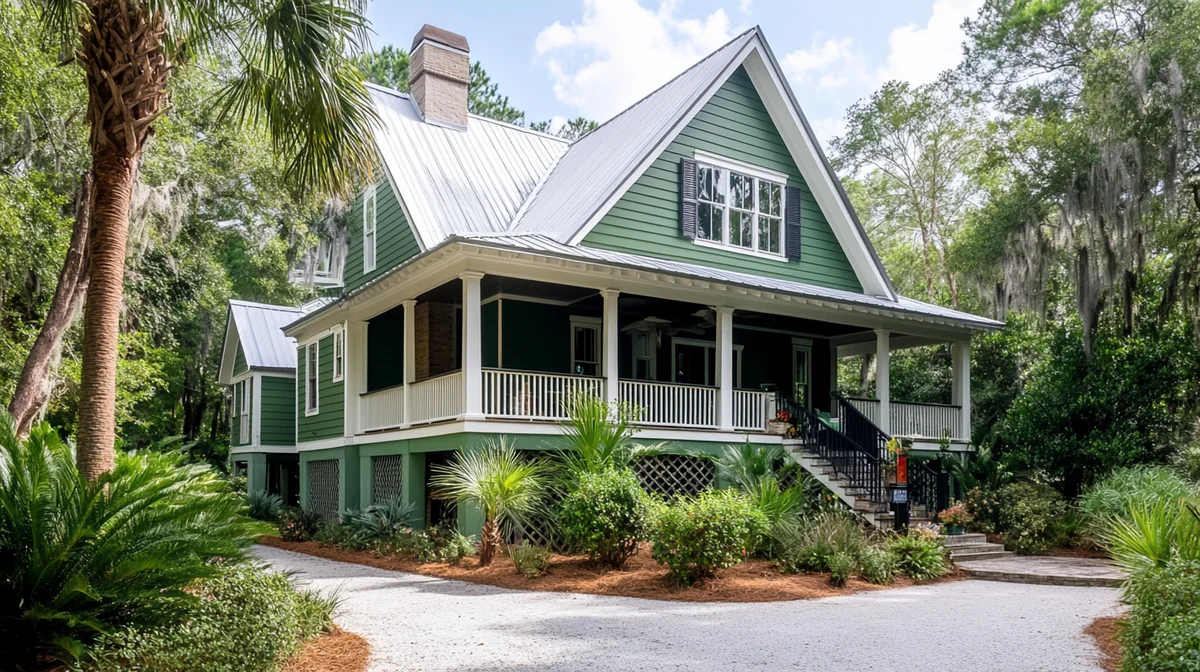
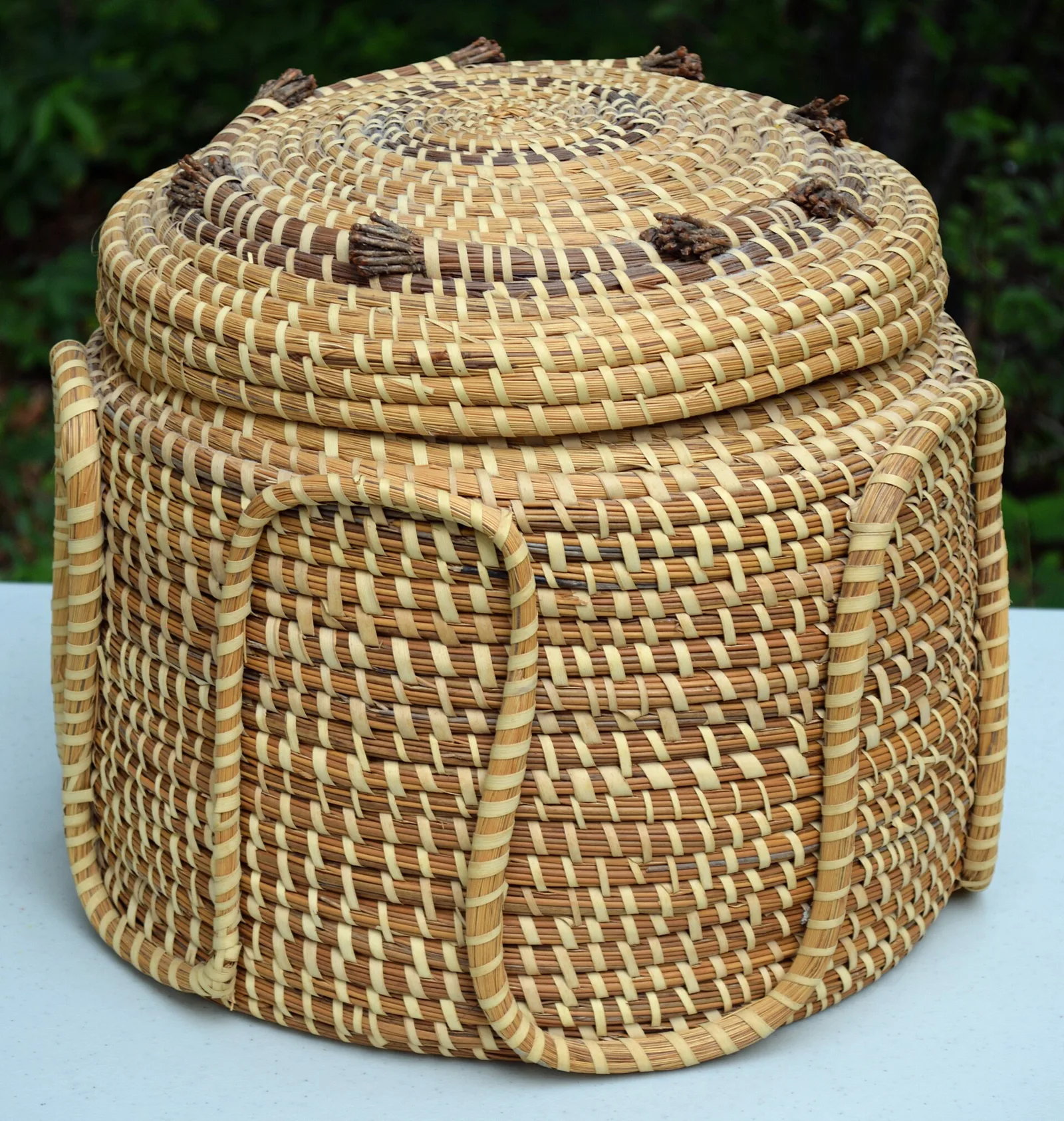
A few of the visual fingerprints we lean into when we shoot, brand and market a Hilton Head property — courtesy of the open Wikimedia Commons archive.
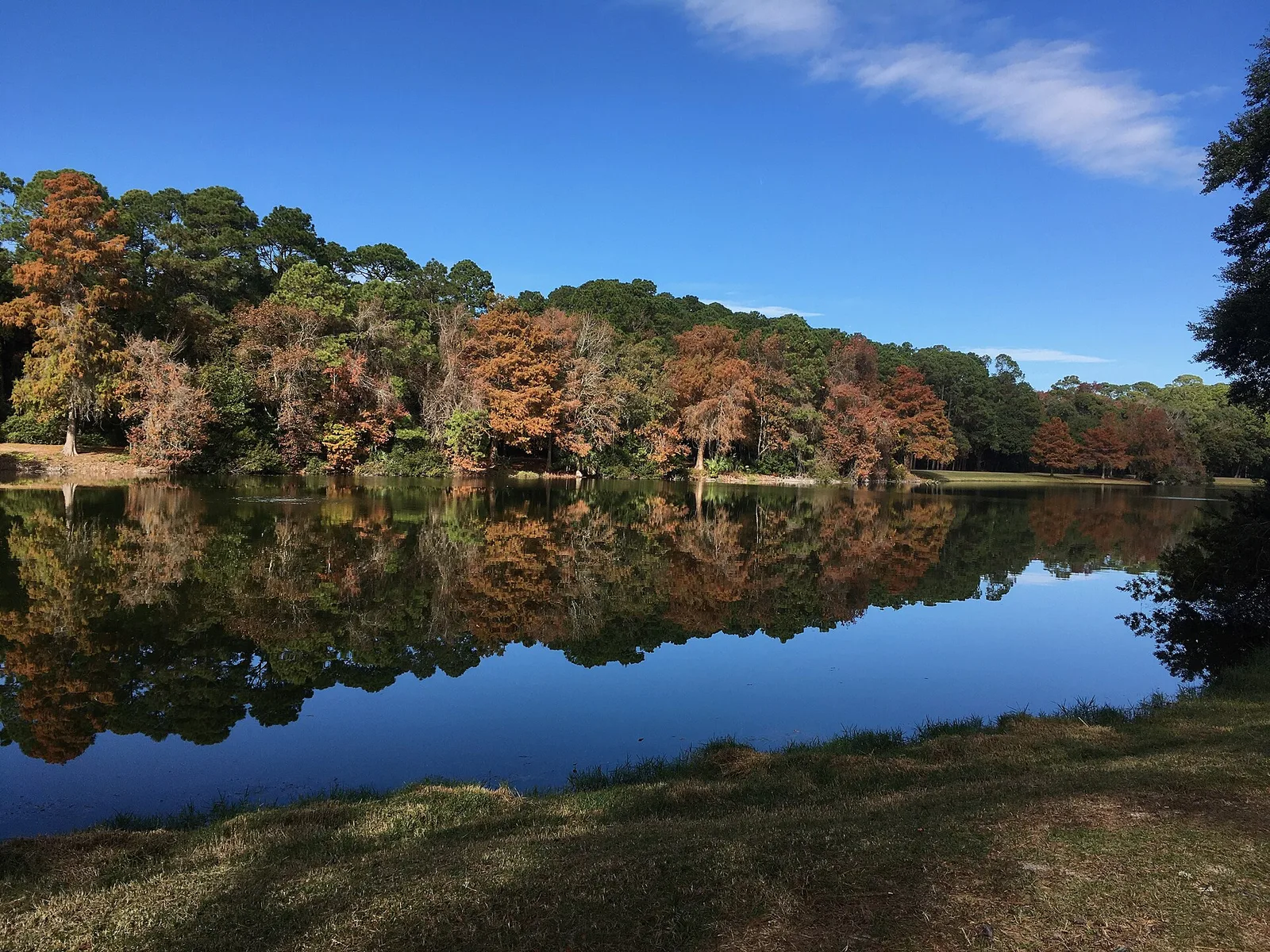
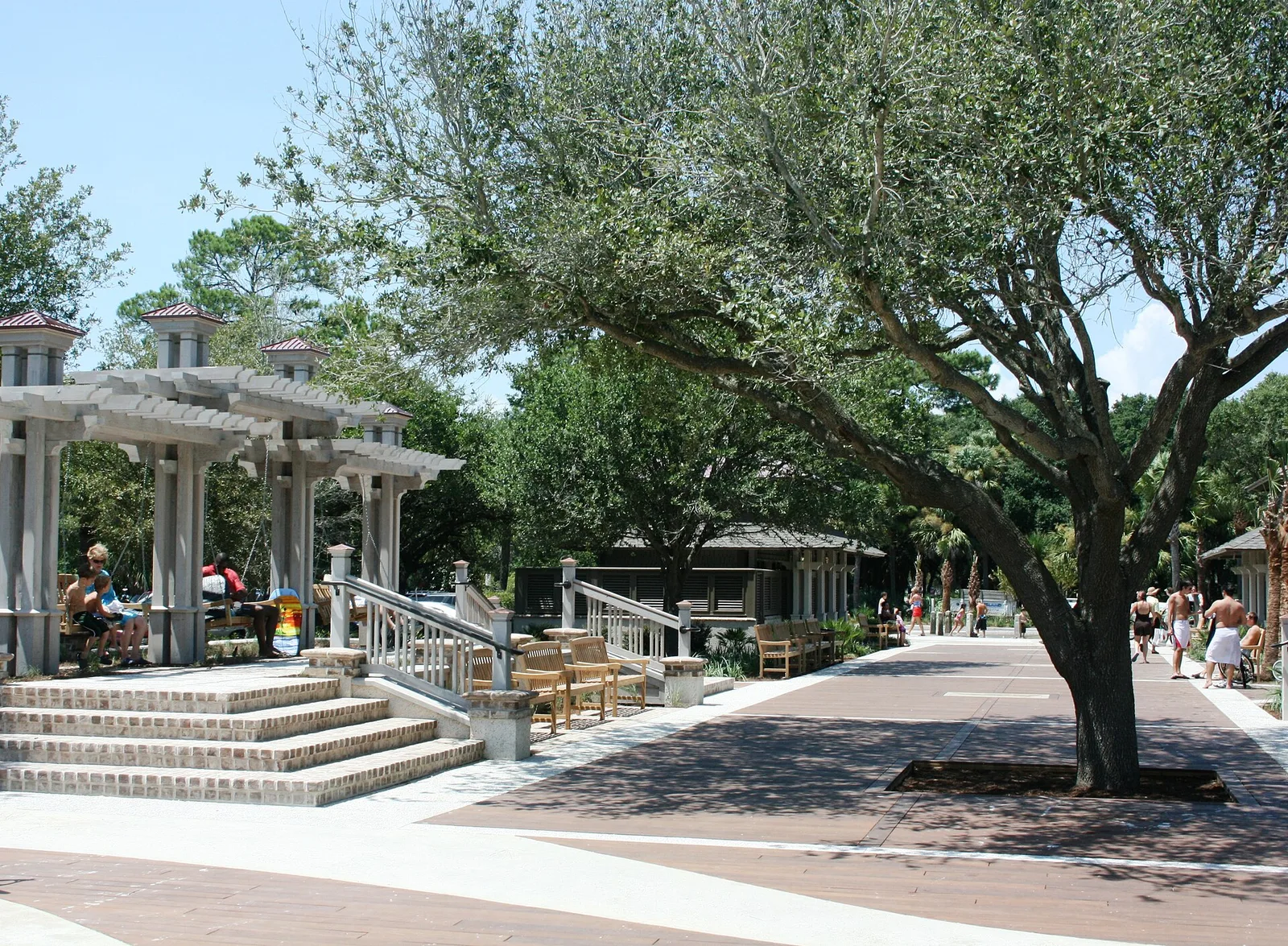
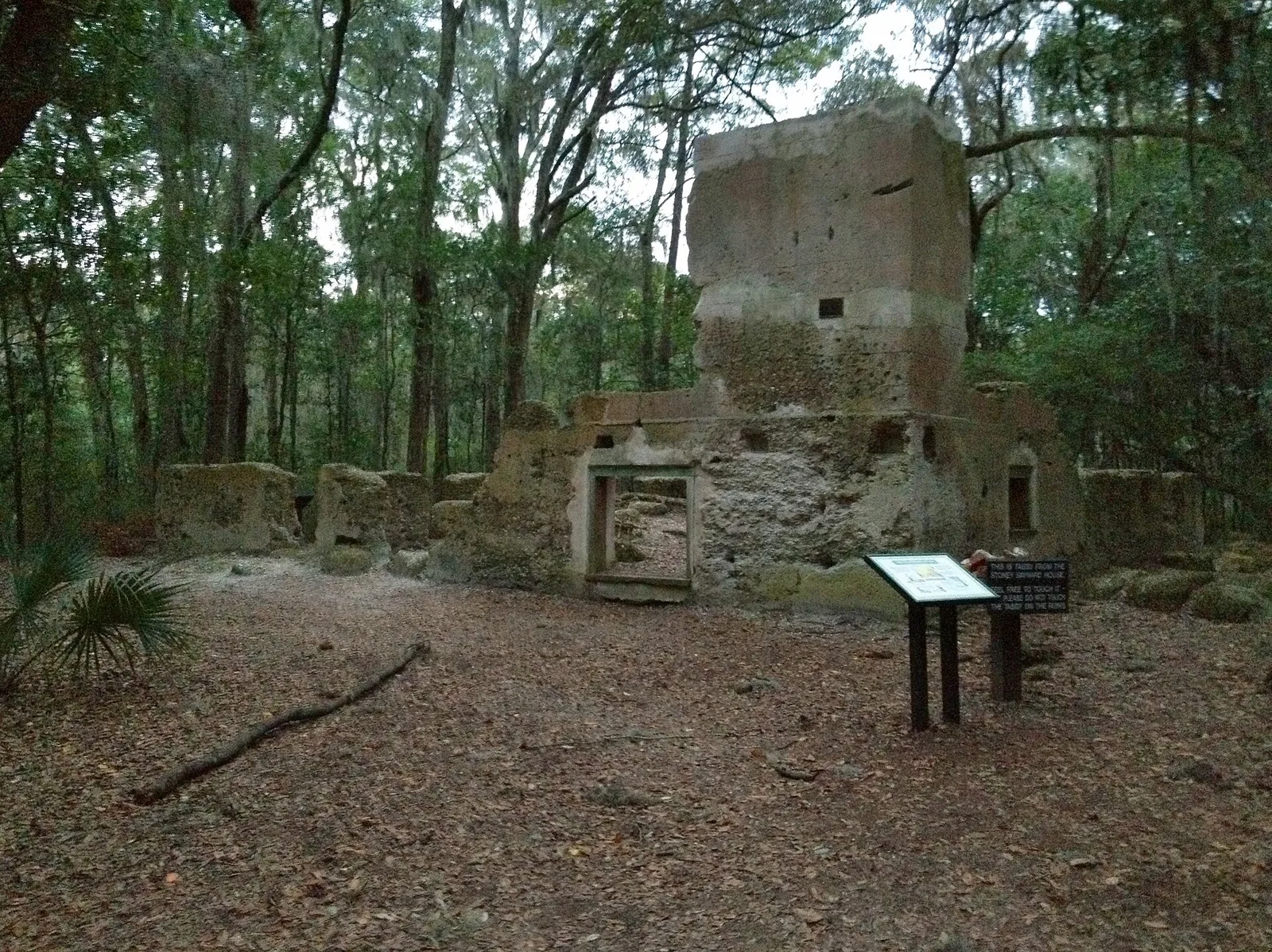
Cavmir positions Hilton Head properties for the discerning family and couple who have experienced lesser rentals and are ready to upgrade. Our brand building, golf-season marketing campaigns, and high-quality photography create a listing that earns the trust of guests before they ever read the description.
Hilton Head was planned, planted and promoted into a resort within living memory, and the covenants Charles Fraser wrote in the 1950s still shape every stay. Cavmir writes the chapter guests book now.
Hilton Head Island was sparsely populated farmland and forest through the first half of the 20th century. The modern island began in 1956 when Charles Fraser, Sea Pines Plantation's founder, developed the first master-planned gated community specifically designed around environmental preservation. Fraser's development ethic — no billboards, strict architectural review, underground utilities, forest canopy preservation, buildings subordinate to trees — became the template for Sea Pines, Palmetto Dunes, Port Royal Plantation, and every subsequent plantation community on the island. That deliberate aesthetic has been Hilton Head's most durable competitive advantage against other Southeast beach destinations.
Short-term vacation rental has been core to the island economy since the 1970s. The PGA Tour's RBC Heritage (formerly the Heritage Classic), played at Harbour Town Golf Links since 1969, is the island's signature annual event — week following the Masters, major television exposure, and sustained premium rates for a week each April. The Sea Pines Plantation model — villa rentals managed by on-site plantation companies — remains the dominant institutional approach. Owner-direct Airbnb inventory is smaller, but growing.
Before the platforms, Fraser sold a planned island to the nation: covenants that kept the trees over the rooflines, a lighthouse built to be a landmark, and a golf tournament that put Harbour Town on national television. The channel changed; the work is identical: presentation, positioning, and an island designed to photograph well. It is the same business Cavmir is in today.
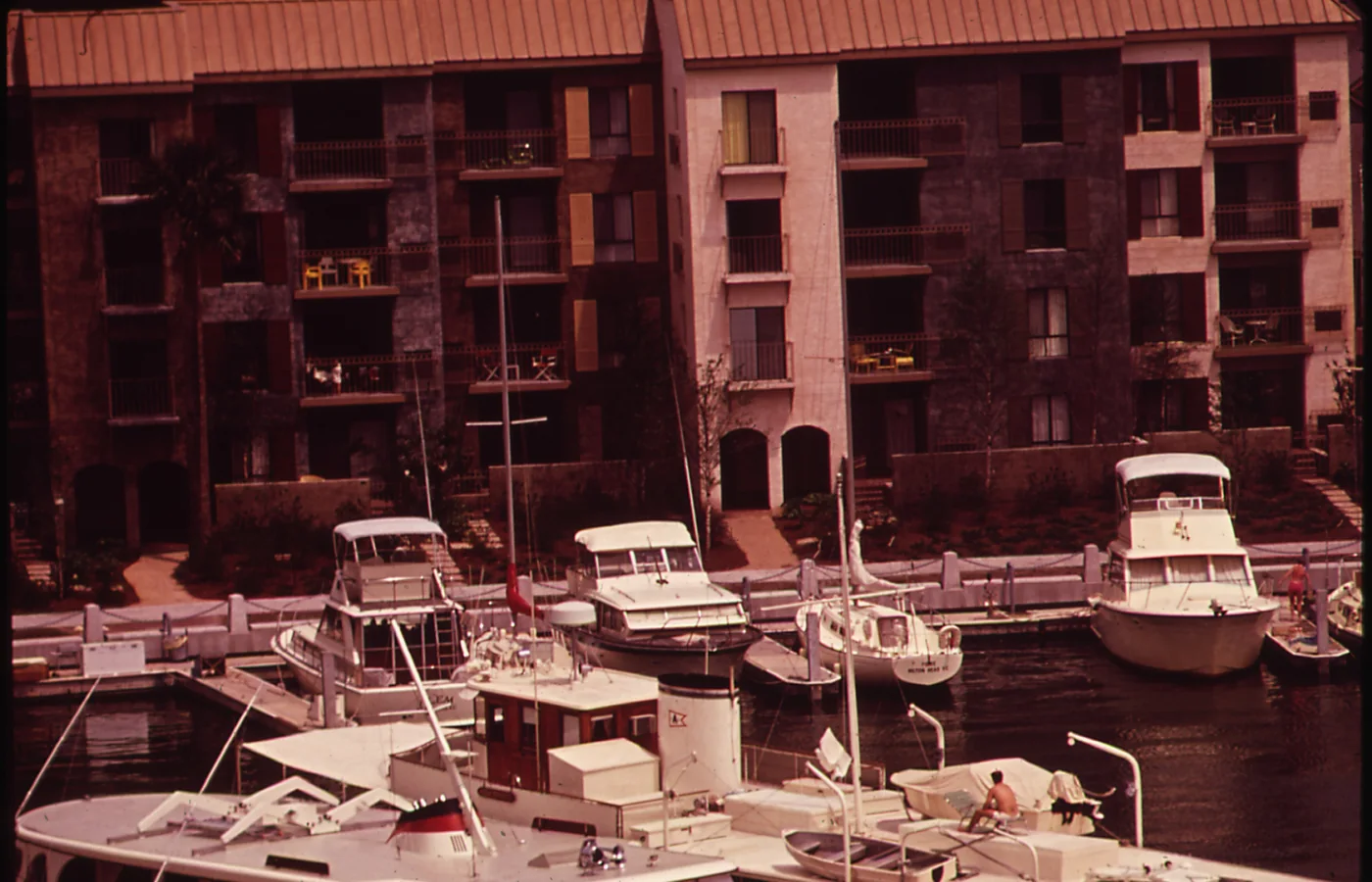
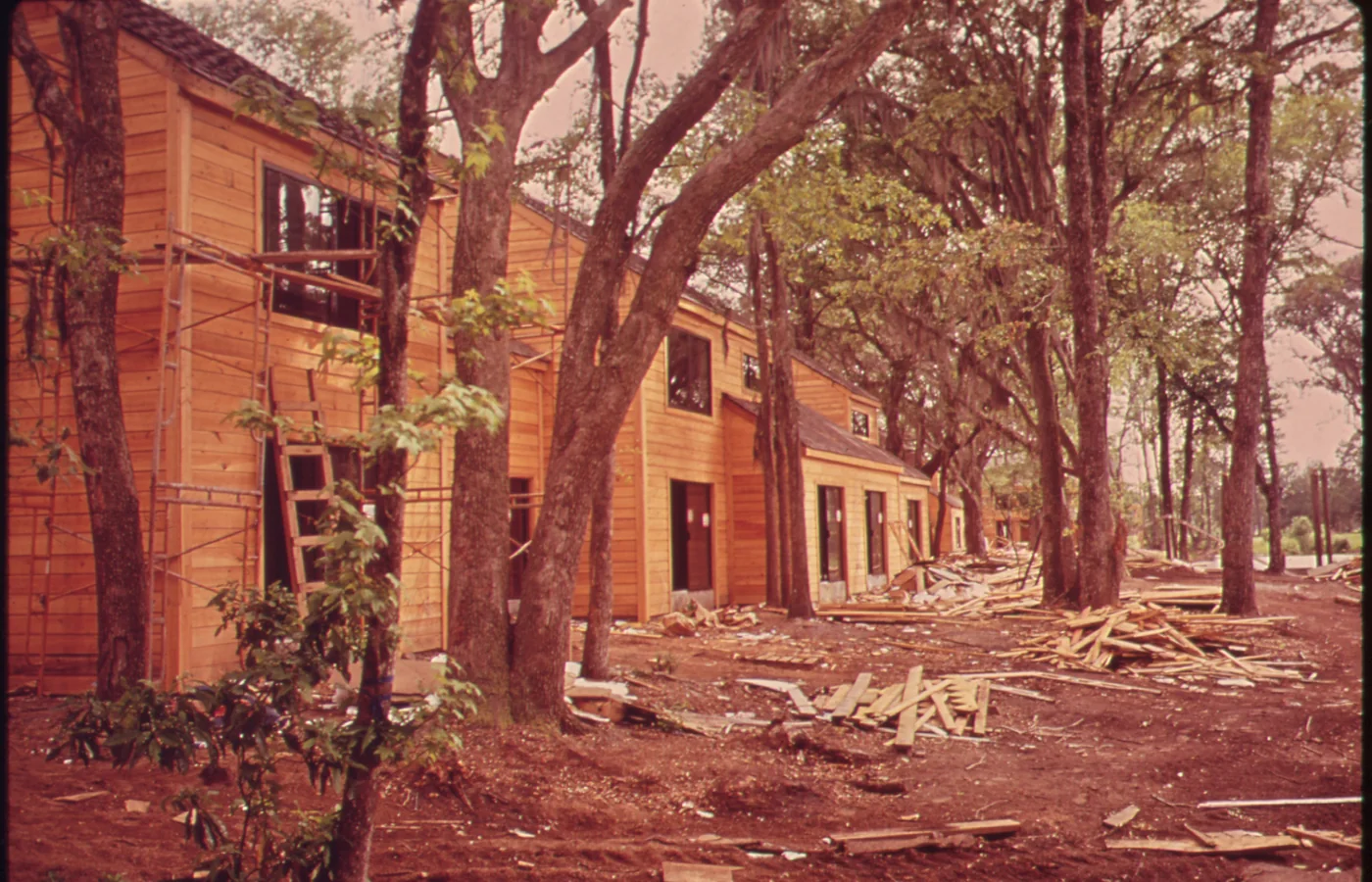
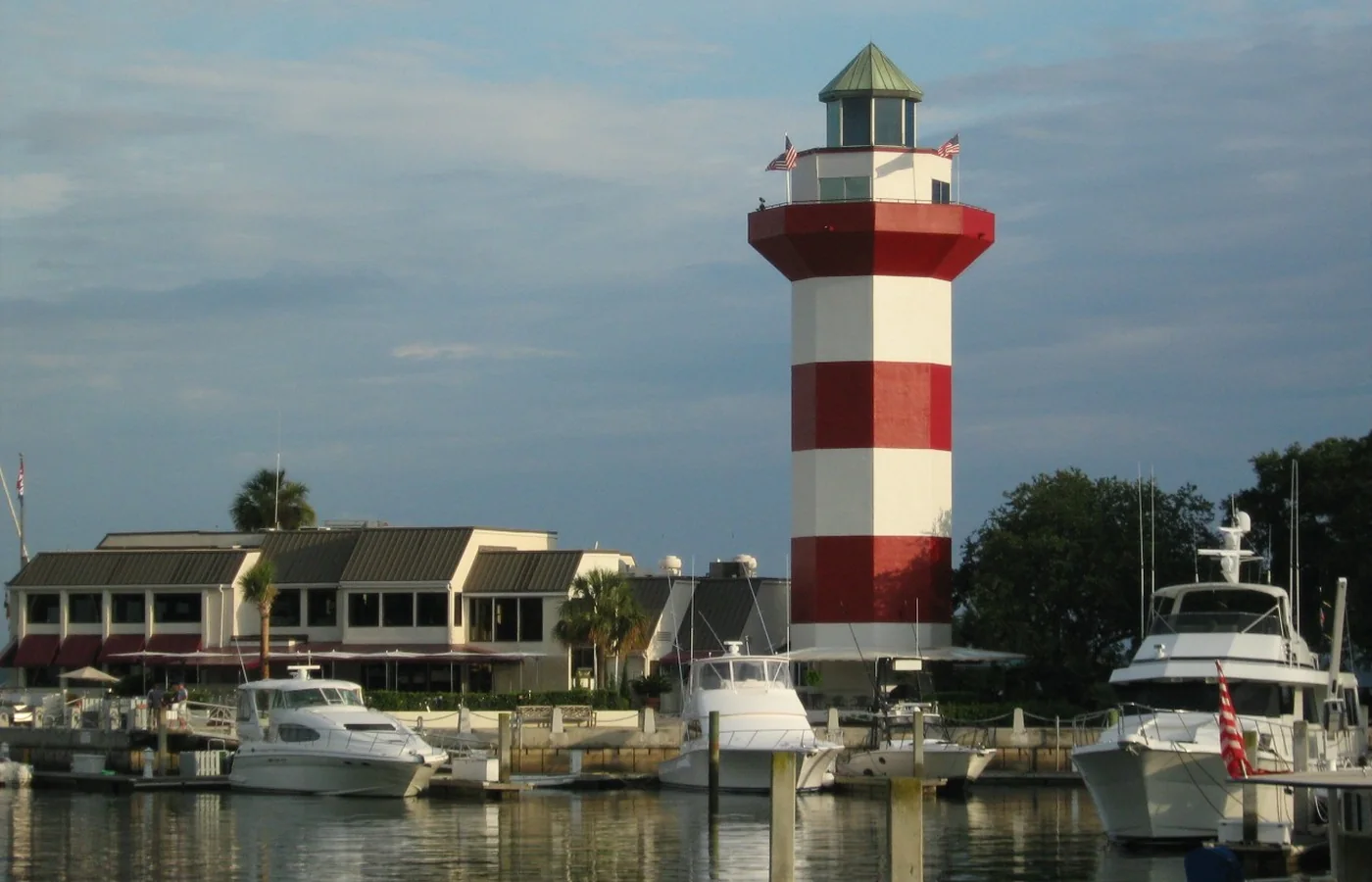
Historical images: public domain and Creative Commons via Wikimedia Commons — Paul Conklin / EPA DOCUMERICA via the U.S. National Archives, Locust member, and others.
Hilton Head pricing reflects plantation-community prestige. Sea Pines (south end, Harbour Town) and Palmetto Dunes (mid-island, Shelter Cove marina) are the tier-one markets. Port Royal Plantation, Indigo Run, and Wexford trade at secondary-premium. Off-plantation Forest Beach, Coligny, and North Forest Beach offer more affordable beach-proximity inventory. Oceanfront is the pricing anchor — a Sea Pines oceanfront home can clear $10,000+ per week in peak season. Golf-course-frontage properties carry separate premium. Private-home market rewards character; generic condo inventory competes primarily on price.
Highly seasonal but with a long peak. Peak: late March through late October. Super-peaks: Heritage week (April), Memorial Day weekend, July 4, mid-July through mid-August family peak, Thanksgiving. Shoulders: late October through mid-March are meaningfully weaker. Growing cool-weather demand from Midwestern and Northeastern retirees spending 6 weeks to 3 months on the island. The missed revenue window is late February through early April — rates stay low but strong spring-break and early-season family demand exists.
Hilton Head Island (the Town) and Beaufort County jointly regulate. The Town requires an Accommodations Tax license for all short-term rentals, annual registration, life-safety compliance, responsible-party contact, and compliance with noise, parking, and occupancy rules. The island is relatively permissive — the plantation-community STR tradition is deeply embedded politically. South Carolina state law supports local regulation but the Home Rule authority does not allow outright STR bans. South Carolina charges a 5% sales tax and a 2% state accommodations tax on lodging, and the Town adds 3% (local accommodations tax plus beach preservation fee); Beaufort County's 3% applies only in unincorporated areas. Total guest-collected lodging tax approximately 10%.
Plantation HOA rules are the most detailed operational layer. Each plantation (Sea Pines, Palmetto Dunes, Port Royal, Wexford, Indigo Run, Long Cove) has its own property-owners' association and its own rental-management relationships. Short-term rental through the plantation-affiliated management company is typically encouraged; independent Airbnb operation may require specific approvals. Sea Pines specifically has well-established rental-management protocols. Verify the plantation's rules before assuming you can operate your property through any platform.
The Hilton Head tip: invest in authentic Lowcountry brand positioning. The island's guests are sophisticated, often multi-generation returners, and they respond to properties that lean into Lowcountry aesthetic — oyster-shell paths, Spanish-moss photography, historical context about Gullah culture and Daufuskie Island, biking-and-beach itineraries that most mainland properties skip over.
Second — golf programs are serious revenue. The island has 24 golf courses. Properties with golf-cart access to specific courses, or walking-distance positioning to golf-heavy neighborhoods (Harbour Town, Shipyard), should market golf packages as a primary product. Third — bike is a real amenity. Hilton Head has 60+ miles of bike paths; properties with well-maintained bikes for every guest consistently outperform identical-otherwise homes. Fourth — manage expectations around plantation gate access and regulations — first-time plantation-community guests often arrive confused, and clear pre-arrival communication about gate procedures avoids 5-star-vs-4-star review differential.
Hurricane and tropical storm exposure — Hurricane Matthew (2016) and others have caused significant island damage. Evacuation orders disrupt summer calendars. Flood insurance costs. Plantation POA fees ($1,500–$5,000+ annually) are a meaningful line item. The market is genuinely seasonal — carrying costs through winter require strong financial planning. And golf-course and oceanfront property inventory is increasingly constrained by the island's mature development pattern.
Coastal SC insurance is specialty — hurricane, wind, and flood coverage required. Most carriers use South Carolina Wind and Hail Underwriting Association for windstorm. NFIP flood required in most zones. Budget $4,500–$15,000 annually for oceanfront or oceanfront-adjacent homes. STR liability standard.
South Carolina state income tax graduated 0–6.5%. Property tax comparatively low for in-state residents (homestead) but higher for out-of-state owners — ~6% of assessed value on second homes. Combined lodging tax ~10% guest-collected.
Hilton Head financing is mature — local lenders (Coastal States Bank, Carolina Bank) and national investment-focused lenders. Plantation POA financials can affect condo lending (master-association litigation or capital projects can slow approvals). Jumbo territory for oceanfront. 20–25% down typical.
Hilton Head came closer to a hard limit than most owners realize. In September 2025, Town Council discussed a pause on new short-term rental properties. Mayor Alan Perry said he didn't support a moratorium, no vote followed, and the debate ended in the amendments that took effect on May 1, 2026. The headline items, from the permit number in every ad to the HOA letter, are covered in the permit section of this page. What decides whether your house passes, and what a bad weekend costs you, is the fine print under them, along with a tax stack that older guides often get wrong. Here's that fine print, read from the owner's side of the table.
Start with parking, because the rule is subtler than a car count. The cap is six outside parking spaces, based on the property's site plan, and spaces inside a garage don't count toward it, so an attached garage is a real asset for a big-group house. The fire-safety tier at 3,600 square feet calls for a fire alarm system built to the National Fire Alarm and Signaling Code, which is a contractor's job with a lead time, so get it scoped before you close on a large home. Smaller items catch owners of every size: an outdoor propane grill needs a 60-minute shutoff valve, and propane detection alarms are required where they apply. Bedrooms count only when they're used mainly for sleeping and meet building and safety codes, so a den with a pull-out sofa or a bonus room without proper egress shouldn't appear in your bedroom count. What the ordinance leaves out matters as much. The occupancy cap that was debated didn't make the amended version, so the practical limits on headcount come from your bedrooms, your POA's rules and your insurer.
The escalating fine schedule has details owners miss. The count resets only after 12 months with no violations, so a noisy July can follow you into the next spring. Unpaid fines pick up a $25 late fee after 30 days, and every outstanding fine has to be paid before the permit renews, so a citation you meant to contest can hold up next year's listing. The defense is operational. Name a responsible contact who lives on the island and can stand in your driveway within the hour, put the parking plan and trash rules in the house manual in plain words, and brief your cleaners to report overflowing bins and extra cars before a neighbor does. Applications also have to be filed in a person's name now, not a company's, so if you're buying a permitted house, plan to file your own application after closing and ask the Town what, if anything, carries over from the seller's permit.
On the island, a stay shorter than 90 days carries about 10% in lodging taxes: South Carolina's 5% sales tax and 2% state accommodations tax, plus the Town's 3% in local accommodations tax and beach preservation fee. Beaufort County's own 3% accommodations tax applies only in the unincorporated county, so it doesn't touch a home inside the Town, and there's no county sales tax on top today, because the 1% Green Space tax expired effective March 1, 2025, taking the county's sales-tax rate from 7% to 6%. Airbnb collects the state taxes and the Town's 3% on stays of 89 nights and shorter. Vrbo doesn't collect the Town's taxes, so on Vrbo stays and on every direct booking your own website earns, you collect the 3% yourself and file returns with the Town's Revenue Services Office quarterly. The state side follows the same logic. An owner who rents only through a marketplace needs no state lodging-tax registration, but the first direct booking changes that, so register with the South Carolina Department of Revenue before you take one. One vote to watch: on November 3, 2026, Beaufort County decides a 1% transportation sales tax that would be collected from May 1, 2027 if it passes, and transportation taxes are among the local taxes Airbnb collects in South Carolina. Confirm the current figures with the Town, and have an accountant who files Beaufort County rental returns set up your accounts and filing calendar before the first guest arrives.
The resort plantations get most of the attention and most of the island's rental beds, yet they're only part of the market an owner can buy into. The rest is where buyers make expensive assumptions: the residential club communities, the mainland town across the bridges, and the island you reach only by boat. Each one answers to a different government, a different tax line and its own covenants, so before you ask what a house will rent for, find out who decides whether it can rent at all. It's the read Cavmir starts from when we market a home here, because the address sets the guest, the season and the paperwork before the photos do.
Hilton Head Plantation and Port Royal on the north end, Long Cove and Wexford off Broad Creek, and Indigo Run in the middle of the island were built mainly as places to live, and their rental rules vary from gate to gate. A dock or a fairway in the listing photos tells you nothing about whether the covenants allow a week-long renter, and since May 2026 that question has teeth: a home inside an HOA needs the association's letter confirming it may operate as a short-term rental before the Town issues the permit. Get that letter, or the association's written rental rules, before you sign a contract, and read the recorded covenants for minimum-stay terms. Where rentals are allowed, the guest is different from the summer beach family: golfers on longer stays, families visiting retired parents, boaters, and snowbirds who want a quiet street more than an ocean view. Price for longer stays, put the clubhouse, the harbor or the bike route to the beach in the photos, and state the drive to the sand in minutes so nobody arrives expecting an oceanfront walk.
Across the bridges, Bluffton is a separate town with a stricter rulebook on paper. You need a Town of Bluffton short-term rental permit before you advertise, and recent fee schedules put its annual renewal at about $325, with permits expiring December 31, plus a business license that starts at about $50 and renews by April 30. The Town asks for off-street parking of one space per bedroom, a posted copy of the permit, and a guest information sheet inside the unit that lists maximum occupancy, where to park, emergency numbers, the trash schedule, the nearest hospital and quiet hours. Several zoning districts, the Riverfront Edge historic district among them, allow only one rental unit per lot. Bluffton's local accommodations tax is 3%, and Airbnb's South Carolina tax list has no Bluffton line, so plan to collect and file it yourself unless the Town tells you otherwise. The guest differs as well. Old Town Bluffton and the May River sell oysters, galleries and a walkable village to couples, wedding parties and families visiting relatives. Confirm the current figures with the Town of Bluffton, and check whether your parcel sits inside town limits at all, because a Bluffton mailing address doesn't settle that, and private communities such as Palmetto Bluff add their own rental rules on top.
Daufuskie Island, a ferry ride from Hilton Head, and the county land around Bluffton fall under Beaufort County's rules, and neither town's permit applies there. The county requires a short-term rental permit before you rent, issues business licenses for a year that runs May 1 to April 30, and states that business licenses don't transfer, so a buyer starts their own paperwork. The county's 3% accommodations tax applies to stays shorter than 90 days, due by the 20th of the following month, with a 1.5% penalty for each month it's late, and Airbnb collects it on bookings in unincorporated areas. Daufuskie adds its own community code, how rentals fit into it has been argued on the island since at least 2022, and private communities such as Haig Point keep their own rental rules. The Daufuskie guest wants the trip itself: the ferry, golf carts on sand roads, Gullah history and a few unplugged nights. Sell the logistics as part of the adventure, spell out ferry times and luggage handling in the listing, and price around long weekends and weddings. For anything on title, zoning or covenants in these areas, a local real-estate attorney costs less than a wrong assumption.
Hilton Head through 2027 and beyond is a stable, mature destination. Regulatory risk is low relative to most US STR markets. Plantation POAs' continued professionalization of rental management has been mostly neutral for Airbnb-style owner-operated listings. Climate exposure continues to drive insurance costs. Beaufort County has expressed interest in broader short-term-rental regulation, worth watching. Golf-tourism demand is stable; family-vacation segment continues to grow slowly. The island's disciplined aesthetic is its most durable competitive asset.
Hilton Head is the American resort-STR market that runs on repeat bookings. Multigenerational families book the same week at the same property for twenty consecutive years. What we love about marketing here is the loyalty economics — the cost of acquiring a repeat family is substantially lower than acquiring new guests, and the lifetime value of a multi-decade family relationship dwarfs any one-time booking. A listing that builds genuine brand equity with its repeat-family guests outperforms a listing that treats every stay as a transaction.
The marketing mistake most Hilton Head listings make is interchangeable plantation-community positioning. Sea Pines isn't Palmetto Dunes isn't Shipyard isn't Port Royal. Each has a distinct guest profile, bicycle-path pattern, beach-access logic, and golf-course affiliation. Being specific about which community you're in — and which family audience you best serve — is the difference between commodity and brand. Hilton Head rewards patience and editorial depth.
The picks Cavmir recommends for Hilton Head welcome books — the specifics that make a rental feel like a family tradition rather than a one-off reservation.
Signe's for the bakery pastry tradition that's older than most of the plantations; Harold's for the old-Hilton-Head diner breakfast.
Sea Pines-end of the island, west-facing harbour, the signature red-and-white lighthouse. The OBX of Hilton Head photography.
The quintessential Hilton Head beach-town walk. Ice cream, shops, beach-chair rental, that feels unchanged since 1985.
CQ's for the waterfront-upscale; Old Fort for the live-oak-canopy-and-plantation-history dinner. Two different Hilton Heads.
The lowcountry classic. A host who directs guests across the bridge to Bluffton for the more authentic version demonstrates serious local knowledge.
Post-Labor-Day but pre-cold-front. Water 80°F, no crowds, golf at peak condition, pricing has collapsed. The Hilton Head pricing window that rewards marketers.
Savannah is 40 minutes. Beaufort is 45 minutes in the other direction. Either adds a half-day that lifts the trip's review quality.
Hilton Head is a biking island. A pre-set bike rental and a printed beach-access-by-community map is the single highest-ROI welcome-book addition.
Representative Cavmir engagements in Hilton Head. Property identifiers removed; figures composited from internal analytics and AirDNA benchmarks.
Premium family villa whose marketing was fifteen years behind the competitive curve. ADR tracking $200 below comparable Sea Pines inventory.
Full editorial rebuild. Photography at architectural-magazine quality across all four seasons. Listing pitched as a multi-generational family destination with a welcome-book PDF specifically for reunion planning. Direct-booking site built around year-ahead family bookings with a deposit-and-hold structure.
ADR moved 41% higher. Direct-booking share climbed to 48% of revenue. Year-ahead deposits now fund operational cashflow in a way that changes the property's financial profile.
One of dozens of near-identical beachfront condos. Generic marketing, generic photography, pure price competition.
Differentiated through a specific Palmetto-Dunes-lagoon-system identity. Photography emphasised the bike-path access to the lagoon kayak rental, the tennis facility, the family-specific amenity pattern. Repositioned copy for the tennis-and-watersports family audience.
Occupancy climbed from 64% to 82%. ADR up 24%. Guest profile shifted toward longer-stay repeat bookings at higher review scores.
Legacy home whose marketing hadn't evolved since the 1990s. Losing to newer, less-characterful properties with better photography.
Rebuilt the home's identity around its own heritage — the legacy-family-vacation-property story, the mature landscaping, the specific Shipyard-community amenity package. Photography emphasised the timeless character that newer properties couldn't replicate.
Occupancy moved to 78% year-round. ADR up 33%. The property now books two-plus weeks per booking at a pattern that materially changes its economics.
Hilton Head is a gated market. The word "plantation" here means what Charles Fraser made it mean in the 1950s: a master-planned resort community with its own gate, its own covenants, its own golf, and its own rental tradition. Where a property sits — which gate, which side of the gate, how far from the sand — decides who books it, what season fills it, and what the listing should lead with. A Sea Pines golf villa and a Folly Field beach condo are both "Hilton Head" on a map and almost unrelated as rental products. Owners who market the island generically are competing against thousands of listings; owners who market their plantation are competing against their street.
The calendar runs through every gate the same way but lands differently in each. April belongs to the Heritage and to golf, and it pays best closest to Harbour Town. Summer belongs to families, and it saturates the whole island — the oceanfront homes and villa complexes fill first and hold the highest rates. The spring and fall shoulders belong to golf groups and couples, and they favor the plantations with courses inside the gate. January through March belongs to snowbirds booking by the month, and it favors the villa and condo stock — Shipyard, Forest Beach, the mid-island complexes — where a warm winter at a sensible monthly rate is the entire pitch. A property positioned for the wrong season's guest sits empty in the seasons it could own.
The original, occupying the island's southern end, and still the strongest brand on it. Sea Pines contains the things the island is known for — Harbour Town and its lighthouse, the Harbour Town Golf Links, the South Beach marina, the forest preserve — and its rental stock splits cleanly in two. The villa clusters around Harbour Town and the club courses are the golf product: groups of four to eight, spring and fall trips, buddies' weeks that rebook annually. The oceanfront and near-ocean homes along the Atlantic side are the family product: summer weeks, multi-generation gatherings, and the highest nightly rates on the island. RBC Heritage week each April is the market's single most predictable premium window — the tournament is played inside this gate, walking distance from the villas, and demand for that week reaches across the whole island but lands hardest here. Sea Pines also carries the island's deepest on-site rental-company tradition, so an independent listing inside the gate competes with institutional inventory; the ones that win do it on presentation and direct-guest relationships rather than price.
Mid-island and oceanfront, Palmetto Dunes is the island's family resort engine. Three named courses — Robert Trent Jones, George Fazio, Arthur Hills — a major racquet and pickleball center, a lagoon system guests kayak, and a run of oceanfront villa complexes that produce more bookable beds per acre than anywhere else on the island. The oceanfront villas draw summer families who want the pool, the beach and the bike paths without needing a car all week; the interior golf- and lagoon-view homes draw golf groups and shoulder-season couples. Across William Hilton Parkway, Shelter Cove adds the marina, the shops and the summer fireworks calendar, which is worth a line in any Palmetto Dunes listing. This is the plantation where amenity photography works hardest: the guest is choosing between near-identical villa floor plans, and the listing that shows the lagoon, the bikes and the walk to the sand wins the booking.
Shipyard is the quiet one: villas under tall pines, golf in every direction, a racquet club, and a beach reached through the plantation's oceanfront corner. Its guest skews to couples, small golf groups and value-conscious families who want the gated calm at a gentler rate than Sea Pines; in winter it takes a meaningful share of the island's monthly snowbird stays. Forest Beach, directly south of it, is the opposite proposition and the island's most underestimated submarket: no gate at all. North and South Forest Beach hold the island's classic beach-town stock — older low-rise condos and beach houses within walking distance of Coligny Plaza, the beach park and the restaurant strip. It draws younger groups, first-time visitors and families who would rather walk to dinner than drive through a gate, and its winter condo inventory is a snowbird staple. Listings here should sell walkability above all else, because nothing else on the island offers it.
Folly Field, Singleton Beach and the mid-island beach pockets sit outside the great gates but on some of the island's best sand, anchored by Islanders Beach Park. The stock is beach-access condo complexes and a scattering of houses, the rates are the island's value tier, and the summer demand is dense and family-driven. This is where the gap between asset and presentation is widest on Hilton Head: complexes full of near-identical units marketed with the same balcony photo. A unit here with real photography, a named target guest and a direct-booking channel outperforms its neighbors by a wider margin than a Sea Pines home ever could, because the competition is weakest exactly where the inventory is thickest.
Since January 2023, every short-term rental on Hilton Head Island — inside the gates and out — has needed an annual permit from the Town, alongside a Town business license. The permit runs $250 per property per year, registration and renewal go through the Town's online portal, and every permitted property must designate a contact reachable around the clock who can respond to a complaint within one hour. In October 2025 Town Council tightened the program with amendments taking effect May 1, 2026: the permit number must appear in every advertisement, applications must be made in an individual's name rather than a corporate entity's, properties inside an HOA must provide a letter confirming short-term rental is allowed there, driveways are capped at six parked vehicles, and homes of 3,600 square feet or more must meet enhanced fire-safety and smoke-detection requirements. Violations carry escalating fines — $250, then $500, then $1,000 — and three citations within twelve months put the permit itself at risk. The structure matters as much as the fees: this is a compliance regime, and a property that meets the standards gets its permit. The layer that actually restricts supply is the one the plantations run themselves — the POA covenants and rental rules covered in the regulation section above — which is why the permit application and the POA letter belong in the same folder, checked before the first listing goes live, and why Cavmir treats the permit number, like the plantation name, as part of the marketing: proof to the guest that the house is run properly.
Demand in Hilton Head peaks around June through July and runs quietest around January. Here is how the year actually books — and what to do about each stretch of the calendar.
Summer is the whole game on Hilton Head. June and July run wall-to-wall with family beach weeks, most of them booked Saturday to Saturday, and August holds strong until Southern school calendars pull families home mid-month. Returning families rebook the same week year after year, so your job in peak is retention: flawless turnovers, a listing that photographs the beach lifestyle honestly, and rates set early rather than reactively.
April and May are the island's quality shoulder, led by RBC Heritage week, when golf crowds pay peak-level rates for homes near Sea Pines. September and October stay pleasant long after the families leave, which suits couples, golf groups and off-season beach walkers. The play is to pivot your copy each fall from family logistics to quiet-season selling points: empty beaches, tee times, screened-porch evenings.
November through February is a real low season, and pretending otherwise just earns empty nights. The honest strategy is monthly and multi-week stays for snowbirds escaping northern winters, who want a washer-dryer, a decent kitchen and a bike more than resort polish. It's also the window for deep maintenance, photography refreshes and getting summer pricing published before the January rebooking wave from returning families.
Summer weeks fill remarkably early, because returning families rebook their same week almost a year ahead, and the January-to-March window is when the remaining summer inventory gets claimed. Heritage week books far out as well. Shoulder and winter stays move on a shorter fuse, often inside a month or two. Your summer rates need to be published and confident by New Year's.
Summer runs on the classic Saturday-to-Saturday beach week, and that rhythm defines the market. Shoulder seasons shift to three-and-four-night golf trips and couples' weekends, while winter flips to month-long snowbird stays. Very little here looks like a one-night city booking.
The Hilton Head winner is an updated villa or home inside Sea Pines or Palmetto Dunes with a short, flat walk or bike ride to the beach, or a Forest Beach house that puts sand within a few minutes on foot. Renovation status separates the market brutally: guests scroll past dated coastal interiors from the nineties no matter how good the location is. Light, current finishes plus accurate beach-distance copy beats square footage.
Lead with the two things every Hilton Head guest checks first: true distance to the beach and how current the interior looks, both proven with photography rather than adjectives. Price around the island's real rhythm, with summer weeks published early for the January rebooking wave and Heritage week treated as its own event. Then build the retention layer: a Google Business Profile for map searches and a simple direct-booking site, because this island runs on returning families who would happily skip platform fees. That's the stack Cavmir builds for Hilton Head hosts.
June and July are the peak, booked heavily as Saturday-to-Saturday family beach weeks, with early August strong until Southern schools resume. April is the standout shoulder month thanks to RBC Heritage week and spring golf. November through February is a genuine low season, best served with monthly snowbird stays.
Further ahead than almost any city market, because returning families rebook their same summer week close to a year out and the rest of summer gets claimed between January and March. Heritage week fills far ahead too. Shoulder and winter stays book inside a month or two, so the calendar needs confident summer rates by New Year's while staying flexible everywhere else.
Summer families drive in from Atlanta, Charlotte, Columbia and across the Southeast, while a loyal fly-in crowd arrives from the Northeast and Midwest, with New York, Washington DC, Pittsburgh and Cincinnati especially well represented. Many of these guests have been coming for decades. Ads aimed at Atlanta and Charlotte in the January booking window tend to work hardest.
Beach proximity and pool access are the entry fee, and after that the deciders are practical: bikes included, beach gear provided, an updated kitchen and a washer-dryer for week-long stays. Golf storage matters for the spring and fall groups. The single cheapest win is bikes, because the island's path network makes them part of the vacation itself.
Run your Airbnb, Vrbo, or website through Cavmir's free grader. It checks the things that decide whether guests book on Hilton Head — photos, listing copy, page speed, local search — and shows you where bookings leak. Takes about a minute, and there's no sales call attached.
If the report says your booking engine is the weak link, that's fixable: a direct-booking website of your own means repeat guests stop paying platform fees to come back to you. That's the work Cavmir does — see Airbnb website design on Hilton Head.
Send us the listing and we'll tell you what we'd change. Not a pitch deck — a straight read on your photos, your title, your rates against the Hilton Head Island comp set, and whether a direct-booking site would pay for itself.
You'll hear back from a person, usually inside one business day. If we don't think we can move your numbers, we'll say so. Cavmir is a short-term rental marketing agency — we position and market properties, we don't manage them.
Talk to Cavmir today. We'll show you exactly what your Hilton Head Island property is leaving on the table — and how fast we can change that.
Book a Free Strategy CallPhotography via Wikimedia Commons (images resized and cropped): Gullah basket by Bubba73 (Jud McCranie) (CC BY-SA 4.0) · Lake Joe, Sea Pines Forest Preserve, Hilton Head by Geoffrey.landis (CC BY-SA 4.0) · Plage-Hilton-Head-Island-6 by Thierry Caro (CC BY-SA 3.0) · Stoney-Baynard Ruins by DDima (CC BY-SA 3.0) · Harbour Town July 2007 by MoodyGroove of English Wikipedia (CC BY-SA 3.0).
