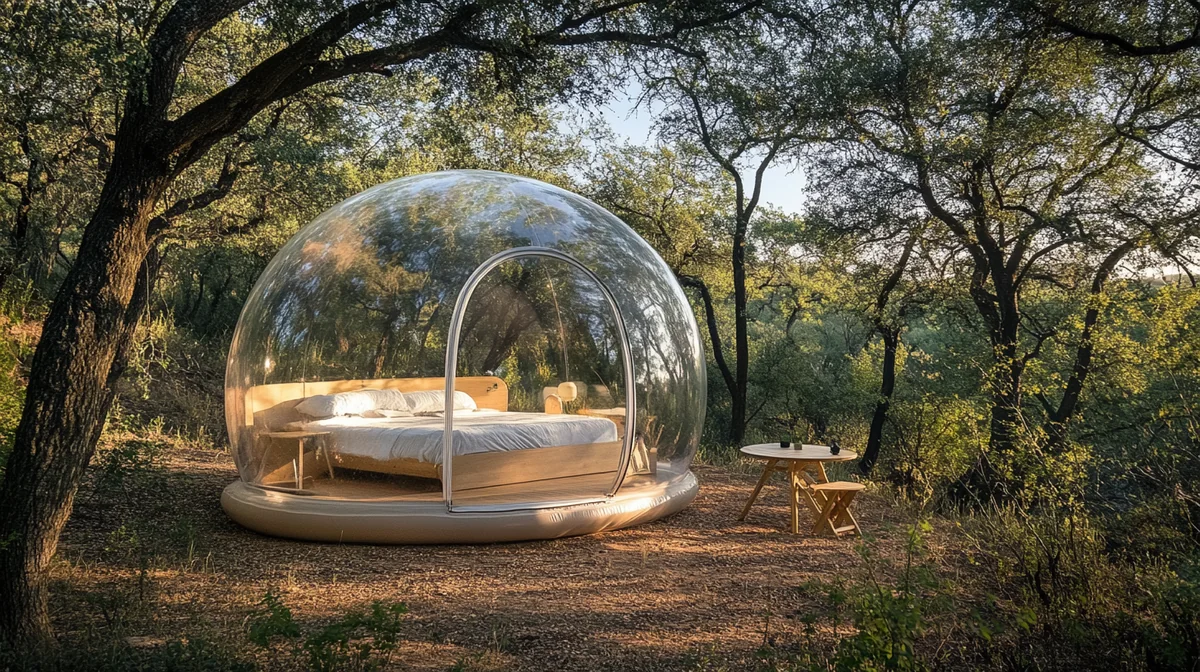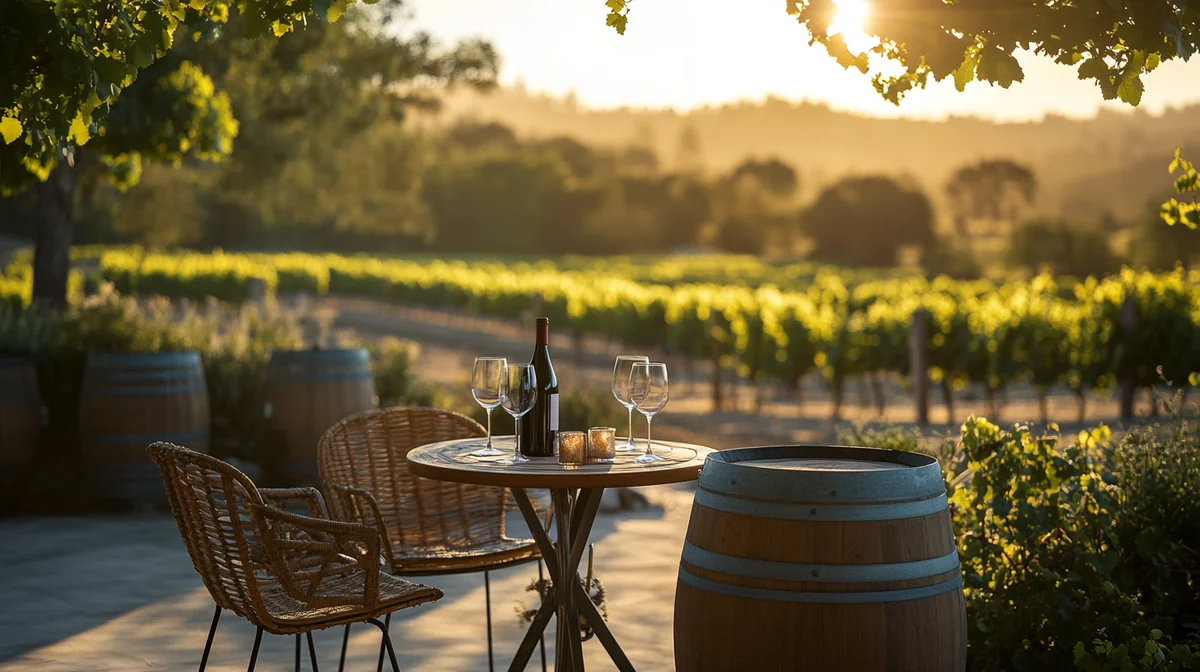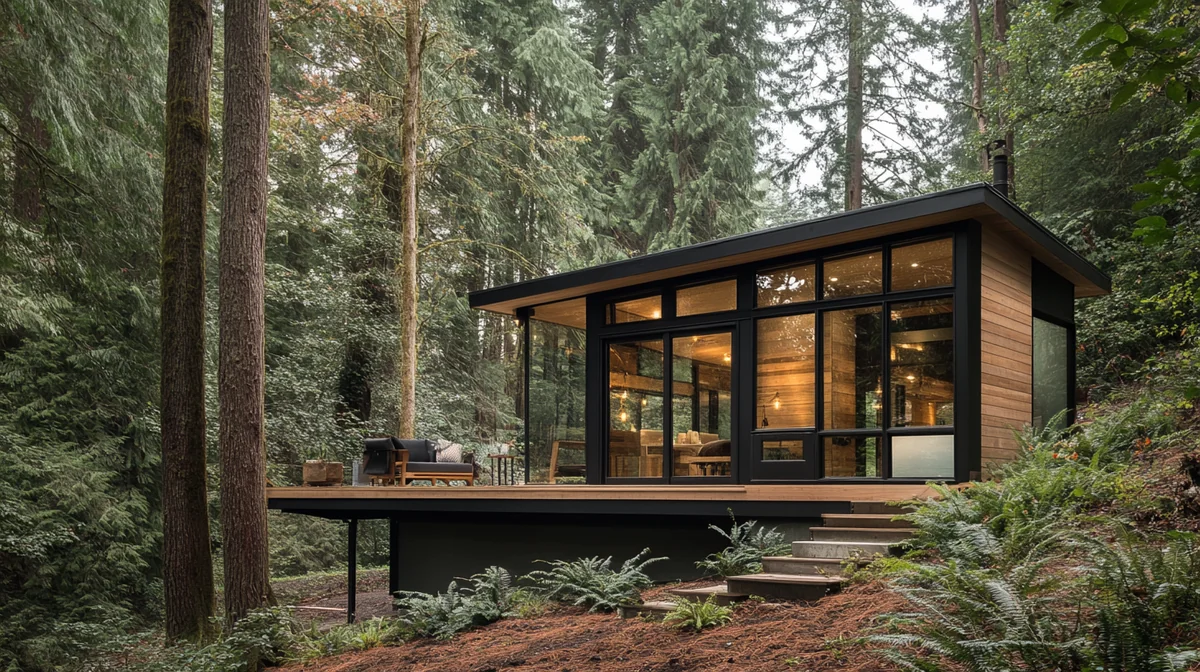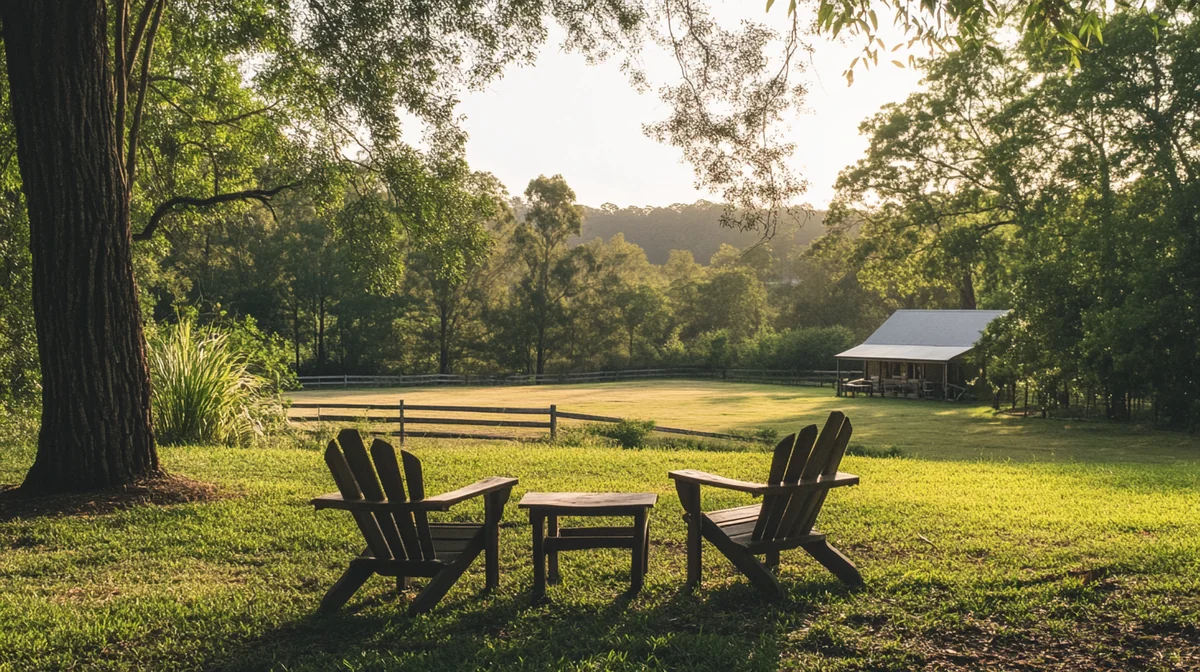

This page is for farmers and rural owners who rent a farmhouse room, a cabin, a converted barn or a campsite on working land. A farm stay sells what a city guest cannot get at home: the animals, the harvest and food from the place. That changes the marketing, and it brings farm-specific rules on liability, land use and food.
Below, you will find what the 2022 Census of Agriculture says about agritourism income, how state agritourism laws and county zoning treat guests on farmland, what to ask your insurer, and the CDC's advice on animal contact. Then the marketing: the platforms that list farms, the photos and words that help Airbnb place you in its Farms category, a year planned around your crop calendar, and how to reach city travelers.
Who Books a Farm Stay and What They Come For
A farm stay sells the parts of farm life a city guest never sees at home: the animals at feeding time, the field at harvest, the food that came from the place. The guest is buying a morning on a farm as much as a bed. That is the first difference from an ordinary rental, and every marketing choice on this page follows from it.
The federal data points the same way. USDA's Economic Research Service defines agritourism as on-farm services for recreation, such as hunting or fishing, for hospitality, such as overnight stays, and for entertainment, such as festivals or petting zoos. In its note on the 2022 Census of Agriculture, ERS points to research linking higher agritourism income to farms in more populated counties, to farms that grow grapes, fruit and tree nuts or raise specialty livestock, and to farms in or near places rich in natural amenities. In plain terms, visitor income runs higher where there are people nearby, fruit to pick or animals to see, and country worth the drive.
Airbnb's numbers show how many hosts already court this guest. When Airbnb launched search categories in May 2022, its media guide listed about 150,000 homes worldwide in the Farms category and about 14,000 in Barns. A farm stay that looks like any other country cottage gets lost in a crowd that size.
What Guests Come For
- Animals. Feeding, gathering eggs, brushing a horse, watching the milking. Name every species in your listing so parents know what their children will meet.
- The harvest. Picking fruit, digging potatoes, pressing apples, cutting flowers. Give guests one real task, not a view from the fence. If grapes are your crop, our page on vineyard stays covers the wine side.
- The food. Eggs from that morning, bread, jam, honey, a box of vegetables, a meal from what grows there. Serving food brings its own permits, covered below.
- Quiet and space. Dark skies, no traffic, a walk to the creek. Describe it in plain words, such as how far away the nearest neighbor lives.
- The farmer. Guests want to ask questions. A host who explains the work gives guests something to write about in their reviews.
The Worries City Guests Bring
Someone who has never slept on a farm wonders about mud, smells, flies, the rooster at dawn, whether the animals are safe for a toddler, and how far it is to a grocery store. Answer each one in the listing before they ask. A guest who books after reading plain facts arrives expecting the farm you run, and that match is what good reviews are made of.
Agritourism in the 2022 Census of Agriculture
USDA's Census of Agriculture counts what U.S. farms earn from agritourism and recreational services. Table 7 of the 2022 national report compares the latest results with 2017. These are the figures for the whole country:
- 28,617 farms reported agritourism and recreational services income in 2022, close to the 28,575 that did in 2017.
- $1.26 billion was their combined income in 2022, up from $949 million in 2017.
- $44,004 was the average per farm in 2022, up from $33,222 in 2017.
- 13,645 farms, almost half, took in less than $5,000 from agritourism in 2022.
- 6,601 farms took in $25,000 or more, and together they earned $1.14 billion, about 91% of the total.
The Economic Research Service puts the rise at 12.4% after adjusting for inflation. It also found that about 57% of U.S. counties reported agritourism income, with a median county income of $161,000. The top 50 counties were spread across 23 states, with eight in Texas and four each in California, Colorado and Hawaii, and those 50 counties earned $352 million, more than a quarter of the national total.
What the Numbers Mean for Your Farm
The number of farms barely moved between the two censuses while income rose, so the average farm earned more from visitors. That income is concentrated. Fewer than a quarter of the farms, the ones with $25,000 or more in receipts, earned about nine-tenths of it, while almost half earned less than $5,000. A farm stay that wants to be in the first group has to be priced, listed and marketed like a lodging business, with the photos, the copy and the booking path to match.
Two cautions. First, the census line mixes overnight stays with hunting, fishing and entertainment, so it measures the whole field, not farm stays alone. Second, this page does not quote an average nightly rate or occupancy for farm stays, because both depend on place, buildings and season, and we found no national figure we could verify. Build your estimate from comparable listings near you and from your real costs: cleaning, linens, insurance, permits, platform fees and your own time.
Agritourism Liability Laws and Warning Signs
The National Agricultural Law Center, which keeps a compilation of state agritourism statutes, reports that over half of U.S. states have passed laws that address agritourism. They range from liability protection for operators to tax credits to zoning rules, and the center last updated its compilation in December 2025. Start there to find your state's law, then read the statute itself.
The liability laws in the three states below share a basic idea: an operator who meets the law's conditions is shielded from some claims by visitors hurt during farm activities. Each of the three calls for a posted warning, and each writes the details its own way.
Three State Examples
- Virginia. Code of Virginia sections 3.2-6400 to 3.2-6402 cover activities on a farm or ranch that let the public view or enjoy rural activities, including farming, wineries, ranching, horseback riding and harvest-your-own. The inherent risks named include the condition of land and water, the behavior of wild or domestic animals and the ordinary dangers of structures or equipment. The warning sign must stand at the entrance and at the site of the activity, in black letters at least one inch tall, and written contracts for instruction or equipment rental must carry the same notice.
- Texas. Civil Practice and Remedies Code Section 75A.003 sets the wording of the warning sign an agritourism entity posts in a clearly visible location on or near the premises, to qualify for the liability limit in Section 75A.002.
- Minnesota. Under Statute 604A.40, the farm must post plainly visible signs at one or more prominent locations. A University of Minnesota Extension post notes that the law does not cover negligence or claims arising from the sale or use of alcohol, and that it does not stop anyone from filing a claim.
What These Laws Do Not Do
- They do not excuse negligence. Virginia's law still holds an operator liable for negligence, for a known dangerous condition not disclosed to the participant, and for intentional injury.
- They may not reach your lodging. Virginia's definition lists farming, wineries, ranching, horseback riding, historical and cultural activities, harvest-your-own and natural attractions. It does not mention overnight stays, so ask a lawyer whether the cabin, and not only the hayride, is covered in your state.
- They do not replace insurance. A claim can still be filed, and defending one costs money.
- They are not portable. Each state writes its own wording, so a sign copied from another state's law will not match yours.
Photograph each posted sign with the date every season and file the photos with your insurance papers. If a claim ever comes, you can show the warning was in place.
This section is general information, not legal advice. Laws change and vary by state. Read your own statute, then ask an agricultural lawyer to check your signs, your contracts and your guest agreement before you open.
Zoning, Permits and Food Rules for Farm Lodging
Whether guests may sleep on agricultural land is a land-use question, and your county or town is where you get the answer. The rules differ widely from one place to the next, so treat the examples below as a guide to what to ask, not as your rules.
Sonoma County Farmstay Rules
Example: Sonoma County's coastal agricultural zoning code, Section 26C-325.9, sets these standards for an agricultural farmstay:
- The farm must produce agricultural products as its primary source of income, and the lodging and meals must be incidental to the farming.
- No more than five guest bedrooms, with two people per room, not counting children under three.
- Guests stay in the primary residence or a guest house, not in farmworker housing, second units, tents or RVs.
- Food is served only to registered guests, its price is included in the lodging, and the farmstay needs a food facility permit.
- The operator runs a program of agricultural promotion and guest education, which can include guests taking part in farm work.
- The owner or a tenant farmer lives on the property, and the permit ends on sale or transfer of the property, or when the owner moves out, unless a tenant farmer keeps running the farm and the farmstay.
- All farmstay activities must meet the county's General Plan noise standards.
Under this code, a tent site or an RV pad is not a farmstay. If camping is part of your plan, ask which rules cover it before you list.
California's Food Rules for Farm Meals
Meals add a second layer. California Health and Safety Code Section 113893 defines an agricultural homestay as a place with no more than six guest rooms or 15 guests that serves food only to its registered guests, includes the price of food in the lodging, keeps lodging and meals incidental to the farm, and sits on a farm whose primary source of income is agricultural products. Sonoma's zoning cap of five rooms is tighter than the state food code's six, which shows how a county can layer its own limits on top of state rules.
Questions to Ask Your County Before You Build or List
- Is lodging allowed in my zoning district, and in which buildings?
- Do I need a use permit, a zoning permit or a short-term rental registration?
- Does the permit stay with the land if I sell, or end with me?
- Which health or food permit applies if I serve breakfast or farm dinners?
- What do septic, well water and fire rules require for guest rooms?
- Which lodging or occupancy taxes apply, and who collects them on platform bookings?
- Does the same permit cover events such as weddings, workshops or farm dinners?
For the short-term rental side of permits, our report on the state of short-term rental permits in 2026 is a useful companion once you know how your land is zoned.
Insurance and Liability Waivers for Farm Guests
A farm policy is written for farming. Paying overnight guests, animal contact and events are different risks, so do not assume your policy covers them until your insurer says so in writing.
A University of Minnesota Extension post on agritourism liability gives practical steps: ask your insurance representative very specific questions about how the policy applies to each activity, get the answers in writing, check whether injury or damage caused by your animals is covered and ask to add it if it is not, and look at event liability coverage for one-off events. It also says to read every endorsement and exclusion, then ask questions.
What to Tell Your Agent
- The lodging. Which buildings guests sleep in, how many guests, and how many nights a year.
- The animals. Which species guests can touch or feed, and who supervises.
- The activities. Picking, hayrides, riding, fishing, swimming, campfires and anything else guests do.
- The food and drink. Breakfasts, farm dinners, produce sales and any alcohol.
- The events. Weddings, festivals, school visits and workshops.
- The platforms. Where you list, and what each platform's protection does and does not cover.
Platform Protection Has Limits
Platforms add some cover, with conditions. Hipcamp says every booking includes $1M liability insurance and $10K property protection, subject to eligibility and exclusions, through third-party partners. Read the terms for each platform you use and ask your agent how your own policy fits around them. Our directory of STR insurance and damage protection providers is a starting point if you need a lodging policy.
Waivers and Written Agreements
A signed release is a separate tool from a state's warning sign. Whether it holds up depends on your state's law, so have a lawyer draft it. Some statutes write the warning into your paperwork: Virginia requires its notice, in clearly readable print, in every written contract an agritourism professional makes for professional services, instruction or equipment rental. Put your house rules and warning notice in the listing and the house manual, use a lawyer-drafted agreement where your platform allows one, and keep a record of what each guest accepted.
Safety Rules Around Animals and Machinery
City guests do not know the rules of a farm, so you have to teach them. Two areas need written rules: animal contact and machinery.
Animal Contact
The CDC's advice for animal exhibits fits any farm where guests touch animals:
- Wash hands with soap and running water right after touching animals or anything in the areas where they live, roam or eat. Use an alcohol-based sanitizer with 60% alcohol when soap and water are not available, then wash as soon as you can.
- Do not eat or drink around animals, and keep food and drinks out of animal areas.
- Do not let children under 5 touch reptiles, amphibians or poultry, such as chickens or ducks.
- Always supervise children around animals.
- Leave strollers, cups and toys outside animal areas.
- Follow simple touch rules, such as the two-finger touch some petting exhibits use.
The poultry rule matters on a farm stay where egg gathering is the chore you advertise. Give the youngest guests a different job, such as picking vegetables with a parent, and say so in the listing so families are not surprised at the coop.
Put a handwashing station with soap, running water and paper towels at the exit of every animal area, and mention it in the listing. It answers a parent's question before they ask it.
Machinery, Water and Working Areas
Tractors are the hazard to plan around. A 2022 NIOSH feature, citing the Agricultural Children Safety Network, says tractors are responsible for 41% of accidental farm deaths of children under 15. Keep guests, and above all children, away from working machinery:
- Mark guest areas and working areas on a simple map in the listing and on a sign at check-in.
- Lock or fence the shop, the chemical store, the fuel tank and the manure pile.
- Take the keys out of parked tractors, mowers and utility vehicles.
- Allow no riders on tractors or implements. If you run hayrides, use a wagon built to carry people and a sober, trained driver.
- Fence or sign ponds, troughs and creeks, and say in the listing whether there is open water.
- Tell guests when machinery will run, such as mowing, spraying or harvest days.
The First Walk
Give every new guest a short walk on arrival: where they may go and where they may not, which gates stay shut, how to approach each animal, and where to wash hands. Put the same rules in the house manual and the listing so guests read them before they book. Rules a guest agreed to in advance are easier to hold at the gate.
Where to List a Farm Stay
You do not have to pick one channel. Here is how the main options for farms describe themselves on their own pages, checked in October 2026. Our comparison of STR and vacation rental booking platforms covers more of them.
Airbnb
Airbnb lists farmhouses, cottages and converted barns, and when it launched categories in 2022 it sorted homes into groups such as Farms, Barns, Countryside and Vineyards. In its 2022 Summer Release media guide, Airbnb said machine learning looks for keywords in listing titles, descriptions, photo captions and guest reviews to decide which homes belong in a category, and that it picks a photo that makes the category visually obvious. So use the word farm in your title and description, caption your farm photos with what is in them, and give Airbnb at least one photo that says farm at a glance. Airbnb's search has changed since 2022, so treat this as how the system worked at launch.
Hipcamp
Hipcamp is a camping marketplace whose hosts range from family farms and nature preserves to RV parks and glamping resorts. Listing is free, and Hipcamp charges a commission on confirmed bookings at a rate that depends on your property type, shown when you create the listing. Hipcamp says many first-time hosts begin with self-contained campers, such as RVs with an onboard toilet, which lets a farm start before it builds a bathhouse. Check your county's camping rules first. For the tent and cabin version of a farm stay, see our page on glamping and eco retreats.
Harvest Hosts
Harvest Hosts is a membership network for travelers in self-contained RVs who stay overnight at wineries, farms, breweries, golf courses, museums and other places with products to sell. Hosting is free. Members are asked to support the host with a purchase, with no minimum, and they stay one night, so you do not need to provide power, water or a dump station. You block the dates you want and choose how many spaces to offer; Harvest Hosts suggests one to four. It suits a farm with a farm stand, a shop or a tasting room.
Your Own Website
A website is the one place that can sell the whole farm: the stay, the add-on experiences, the produce boxes, the events and the calendar. Bookings made there carry no platform commission, and the site gives search engines and AI tools a source to read about your farm. The marketing section below covers how to use it.
Marketing a Farm Stay to City Travelers
City travelers book on pictures and plain facts. Your job is to show exactly what kind of farm this is and what guests will do there, then remove each doubt that keeps a first-timer from booking.
Say Exactly What Kind of Farm It Is
Example: "a working sheep and vegetable farm on 40 acres, where guests help with evening feeding" sets a different expectation from "a small hobby farm with six hens and a kitchen garden." Both can be lovely stays for the right guest. Trouble starts when a hobby farm is sold as a working operation, or when a working farm hides its noise and mud.
The Shot List
- A guest doing a chore in morning light. An adult or older child gathering eggs, feeding goats or picking berries. Use it as your lead photo.
- The bedroom from the doorway. Bed made tight, so the comfort is obvious.
- The bathroom and the kitchen. A family needs to know both work.
- The table. Set with what the farm produces.
- The animals. Each species once, close and calm.
- The land. The orchard, the pasture, the pond, the path to the barn.
- The farmer. At work, in one frame.
- The arrival. Gate, track and parking, so nobody gets lost after dark.
Shoot in the working season and caption each photo with what it shows. Our guide to Airbnb photo mistakes and their fixes shows what to avoid.
Words That Answer City Worries
Open the description with a morning on the farm, then give the practical layer: which areas are open to guests, the safety rules, the smells and sounds, the rooster, mud season, cell signal and wifi, the drive time from the nearest city, and the distance to groceries and restaurants. Use the words guests search, such as farm stay and farmcation, along with plain terms like working farm, ranch and agritourism, and name your animals and crops. Those same words feed the category signals Airbnb described.
Sell the Experiences and Produce on Your Own Site
Tours, workshops, produce boxes, farm dinners and seasonal events do not fit a platform listing. They fit a website with a page for each, a calendar of the farm's seasons and a booking path for the stay. Our direct booking website service builds that site.
Build direct demand from people who find you on their own: through Google search and Maps, your farm stand and farmers market table, local food shops, and short video of the goats at the fence or the first picking. Your market customers already trust your food, so a sign at the stand that says you host guests reaches people who know you. Keep platform guests on the platform. Airbnb's Off-Platform and Fee Transparency Policy bars hosts from asking guests to move current, future or repeat bookings off Airbnb, from taking payment outside Airbnb, and from using guest contact information for marketing.
Planning the Year Around Your Crop Calendar
A farm stay's year follows the farm's year. Guests book the weeks when something happens: new animals in the barn, the first picking, the harvest, the pressing, the first frost on the fields. Your marketing year starts with a list of those weeks.
Build the Calendar
- Write out the farm's year week by week: births, planting, bloom, picking, harvest, processing and rest.
- Mark the weeks guests can take part safely and the weeks the farm is too busy to host well.
- Turn each high point into a named stay that says what guests will do, such as a picking weekend or a cider-pressing weekend.
- Publish those dates on your site and your listings as soon as you know them, so families can plan around school calendars.
- Shoot photos and video in each season, and rotate your lead photo with the season.
- Write one plan for the quiet months: longer stays, a winter rate, or a planned closure for repairs.
Example: an orchard can sell blossom weekends in spring, picking weekends at harvest and quiet winter weeks for writers and remote workers, all from the same cabin.
Keep the promise small. Weather moves harvests, so describe a picking weekend as the week you expect to pick, and say what guests will do if rain or a late frost moves it. For the slow months, our guide to off-season revenue covers ways to keep a rental earning outside its peak.
Name each seasonal stay by what guests do, such as Apple Picking Weekend or Lambing Week, not by a mood. A plain name tells a city guest what they are booking.
How Cavmir Works With Farm Stays
Cavmir is a marketing agency for distinctive vacation rentals, and a working farm gives a rental a clear story to tell. For a farm stay we plan the photography around the farm's calendar, write listings that say plainly what the farm is and what guests do, and build a direct booking website with pages for the stay, the experiences, the produce and the seasons. Around it we run SEO, GEO (getting named in AI answers), Google Business Profile work, social and paid ads aimed at the city travelers most likely to book. We do not promise results. We record your starting numbers before the work begins and report against them.
Travelers now ask AI tools which platform is best for a farm or vineyard stay. In Cavmir's July 2026 study of 550 Google AI answers across 15 U.S. markets, independent and regional operators got 82% of citations, and Airbnb or Vrbo appeared in 17% of answers. The full study is on our AI search visibility research page, and our GEO service works on getting a farm's own site named in those answers.
Frequently Asked Questions
Questions owners ask about this property type, answered from public sources checked in October 2026.
What is a farm stay?
A farm stay is paid lodging on a working farm or ranch, where guests can see and often join the farm's work, such as feeding animals, gathering eggs or picking fruit. Some travelers call it a farmcation. USDA's Economic Research Service counts overnight accommodations as one kind of agritourism, next to recreation such as hunting and fishing and entertainment such as festivals or petting zoos. The bed can be a farmhouse room, a cabin, a converted barn or a campsite.
What is the best platform for a farm or vineyard stay?
No single platform suits every farm. Airbnb launched Farms and Vineyards categories in 2022 and said it reads words in titles, descriptions, photo captions and reviews to decide which homes belong in them. Hipcamp lists campsites and glamping, with hosts from family farms to RV parks, free to list with a commission on confirmed bookings. Harvest Hosts sends travelers in self-contained RVs to farms and wineries that have products to sell. You can pair one or two of these with your own website.
How much money can a farm stay make?
It depends on location, buildings, season and price, so this page does not quote a national nightly rate. The census shows the spread: in 2022, 28,617 U.S. farms reported $1.26 billion in agritourism and recreational services income, an average of $44,004 each, yet 13,645 of them took in less than $5,000. The 6,601 farms with $25,000 or more earned about 91% of the total. Build your own estimate from nearby comparable listings and your real costs.
Do I need a permit to run a farm stay?
Check before you build or list. Approval comes from your county or town, and the rules vary widely. Sonoma County's coastal zoning code, for example, allows an agricultural farmstay with a permit, up to five guest bedrooms, guests only in the main house or a guest house, food only for registered guests, and the owner or a tenant farmer living on the property. Ask your county planning and health offices about septic, lodging tax and events too.
Do agritourism laws protect me if a guest gets hurt?
They can reduce your risk, within limits. The National Agricultural Law Center reports that over half of states have statutes addressing agritourism. Virginia, Texas and Minnesota all call for posted warning signs, and Virginia sets the exact wording and a minimum letter height of one inch. Virginia's and Minnesota's laws do not cover negligence, and Virginia's definition of agritourism activity does not mention overnight lodging. Read your state's statute and ask an agricultural lawyer how it applies to your stay.
Does my farm insurance cover overnight guests?
Do not assume it does. A University of Minnesota Extension post advises asking your insurance representative specific questions about each activity, getting the answers in writing, checking whether injuries caused by your animals are covered, and looking at event coverage for one-off events. Platform cover has limits too: Hipcamp says each booking includes $1M liability insurance and $10K property protection, subject to eligibility and exclusions. Tell your agent about the lodging, meals, animal contact and events.
Can children feed and pet the farm animals?
Yes, with rules. The CDC advises washing hands with soap and running water right after touching animals, keeping food and drinks out of animal areas, supervising children at all times, and not letting children under 5 touch reptiles, amphibians or poultry, such as chickens and ducks. On a farm where egg gathering is the chore you advertise, give the youngest guests a different job. Put a handwashing station at every animal area and the rules in your listing.
Can I serve meals to farm stay guests?
That depends on your state's food code and your county. California's Health and Safety Code, for example, defines an agricultural homestay: no more than six guest rooms or 15 guests, food served only to registered guests with the price included in the lodging, lodging and meals incidental to the farm, and a farm whose primary income is agricultural products. Ask your county environmental health office which permit applies before you plan breakfasts or farm dinners.
How do I market a farm stay to city travelers?
Show them what they cannot get at home and answer the worries they bring. Lead with a guest doing a real chore in morning light, then show the bedroom, bathroom and kitchen. Name the animals, the crops in season and the drive from the nearest city. State plainly which areas are working areas and what the rules are. Then reach them through the platforms, search, your own website, your farm stand and short video.
Can I host RV travelers through Harvest Hosts?
If your farm has products to sell, it may qualify. Harvest Hosts says hosting is free for farms, wineries, breweries and similar businesses. It asks members, who travel in self-contained vehicles, to support the host with a purchase, with no minimum, and members stay one night. Hosts block their own dates and choose how many parking spaces to offer. The value to you comes from what members buy at your farm stand, shop or tasting room.