
The Airbnb algorithm gives every new listing a visibility boost in the first 30 days. It's your best chance to land early bookings, earn early reviews, and establish a performance baseline that the platform will reference for months. Most new hosts don't know this window exists — and they waste it. Here's how not to waste it.
Weeks 1–2: Listing Foundation
Source: Cavmir new host audit data, 2024; industry hosts consensus
Before you publish, your listing needs to be genuinely complete. That means professional-quality photos (at minimum: every room, outdoor spaces, the view, and a compelling hero shot), a title that combines your property name with searchable keywords, a description that leads with the best thing about your property, and all amenities accurately checked.
Don't publish an incomplete listing thinking you'll improve it later. First impressions in the algorithm matter, and a listing that launches with three photos and a thin description starts its performance record on the wrong foot. Spend Week 1 getting everything right, then publish in Week 2.
Set up your automated messages immediately: booking confirmation, pre-arrival info (sent 3 days before check-in), check-in instructions (sent night before arrival), check-out reminder, and a post-stay follow-up that includes a gentle review request. These messages can all be automated through Airbnb's platform or a PMS — set them up before your first booking arrives, not after.
Enable Instant Book. You'll get fewer inquiries and more direct bookings, which Airbnb's algorithm rewards in the early period. The concern about problematic guests is real but overrated for new hosts — Instant Book guests still have verified IDs and prior reviews, and you can set screening requirements.
Weeks 3–4: Launch Pricing Strategy
New hosts almost universally price too low. This is covered in detail in the new host pricing mistake piece, but the short version: don't undercut the market. Start at approximately market rate (what comparable listings charge), not 20–30% below it. The algorithm's first price signal becomes a baseline it references in future ranking decisions.
What you can do during launch is set your minimum stay to 1–2 nights to maximize early booking volume. More bookings in the first 30 days means more early reviews, faster social proof accumulation, and better algorithm positioning. You can raise your minimum stay to 3–5 nights once you have 10+ reviews and solid occupancy.
Look at your market's seasonal pattern. If you're launching into peak season, you're in the best possible position — bookings and reviews will come fast. If you're launching into shoulder season, you might extend the boost window by targeting last-minute travelers with a modest discount on remaining open nights.
On the day you publish your listing, share it with 5–10 people in your personal network and ask them each to click through and wishlist it. This generates early search signal that tells Airbnb your listing is getting engagement — which feeds into early ranking. Don't ask them to book (that's a terms violation for a discount arrangement), just to browse and wishlist.
Weeks 5–8: First Guests and First Reviews
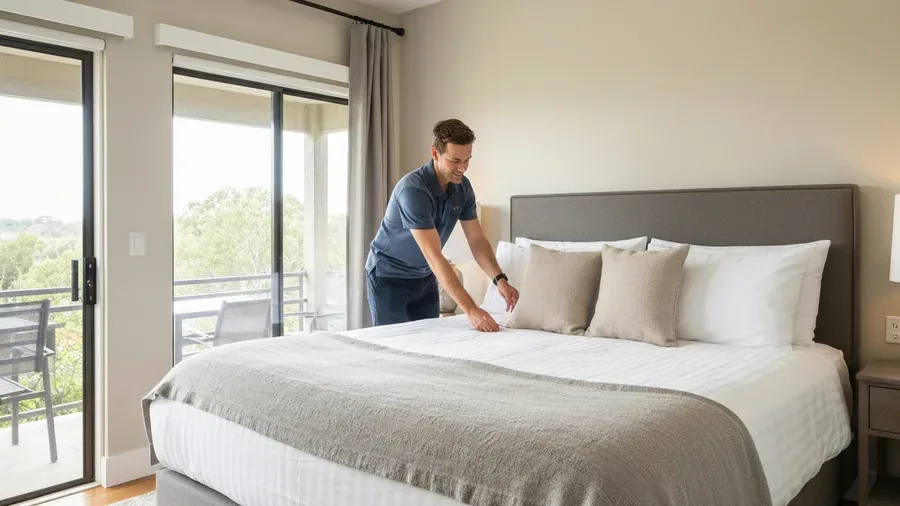
The welcome experience for your first guests determines your first reviews — and those reviews anchor your listing's reputation for months.
Your first five guests will produce your first five reviews. Treat every one of them as a VIP, because the reviews they leave will be read by every future guest who visits your listing. This is not the time to cut corners on cleanliness, welcome experience, or responsiveness. Over-deliver on everything.
Respond to every message within 1 hour during this period. Airbnb measures your response rate and speed — response metrics affect your listing's search ranking. More practically, quick responses build guest confidence during the booking decision phase, reducing the number of hesitant inquiries that go to a competitor instead.
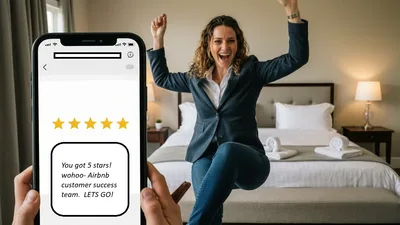
Leave a review for every guest the same day they check out. When you review first, it triggers a notification to the guest reminding them to review you — which significantly increases the rate at which guests actually leave reviews. This is fully within Airbnb's guidelines and it works. Aim for all 5 stars, but be honest. Don't leave a fraudulent review.
For your complete strategy on accumulating first reviews, there are eight specific tactics that work — including some that are Airbnb-compliant ways to accelerate the process beyond just waiting.
Weeks 9–12: Pricing Normalization and Optimization
By week nine, you should have at least five reviews and a clearer picture of your listing's performance. Now it's time to adjust. Review your occupancy rate (aim for 65–80% in most markets), your average nightly rate versus comps, and your conversion rate on views-to-bookings (visible in the Airbnb host dashboard). If conversion is low, your photos or description need work. If occupancy is high but rate is low, raise prices.
This is also the point where you should set up a dynamic pricing tool like PriceLabs, Wheelhouse, or Airbnb's own Smart Pricing (which, to be direct, tends to under-price your listing — PriceLabs is the stronger option). Dynamic pricing will adjust your rates automatically based on demand signals, local events, and competitive pricing — which would otherwise take you hours per week to manage manually.
Common Launch Mistakes to Avoid
The 3-Month Audit
At the end of 90 days, run a structured audit: How many reviews do you have? What's your average rating on each subcategory? What are the recurring themes in your reviews — positive and negative? What's your occupancy rate? What's your conversion rate from listing views to bookings?
The patterns in this data tell you exactly where to invest next. If WiFi is mentioned negatively in two reviews, upgrade the router. If guests consistently mention the great location, make sure your description leads with it more strongly. If conversion is low, compare your photos to competitors and identify where they're visually stronger.
This 90-day foundation is the difference between a listing that compounds its performance over time and one that plateaus at mediocre occupancy. The hosts who treat launch like a product launch — with preparation, a plan, and clear milestones — consistently outperform those who treat it as a passive investment. Cavmir's listing optimization service can review your setup at any point in this process and identify exactly where to focus.
The Bottom Line
Your first 90 days on Airbnb aren't just about getting bookings. They're about building the review base, algorithm standing, and host track record that determines what your listing earns for years. Treat the launch window like it matters — because it does. Set up the systems before you need them, price correctly from day one, and make your first five guests feel like they stayed somewhere exceptional.
Once your Airbnb foundation is solid (around day 60), start expanding distribution. Vrbo is almost always the second listing; from there the right additions depend on your inventory type and audience. See our booking platforms directory for the full menu of 22 platforms — including the niche channels (Hipcamp for outdoor, Furnished Finder for mid-term, Plum Guide for boutique, Stayz/Bookabach for AU/NZ) that most first-time hosts overlook.