


The Industry Is Bifurcating
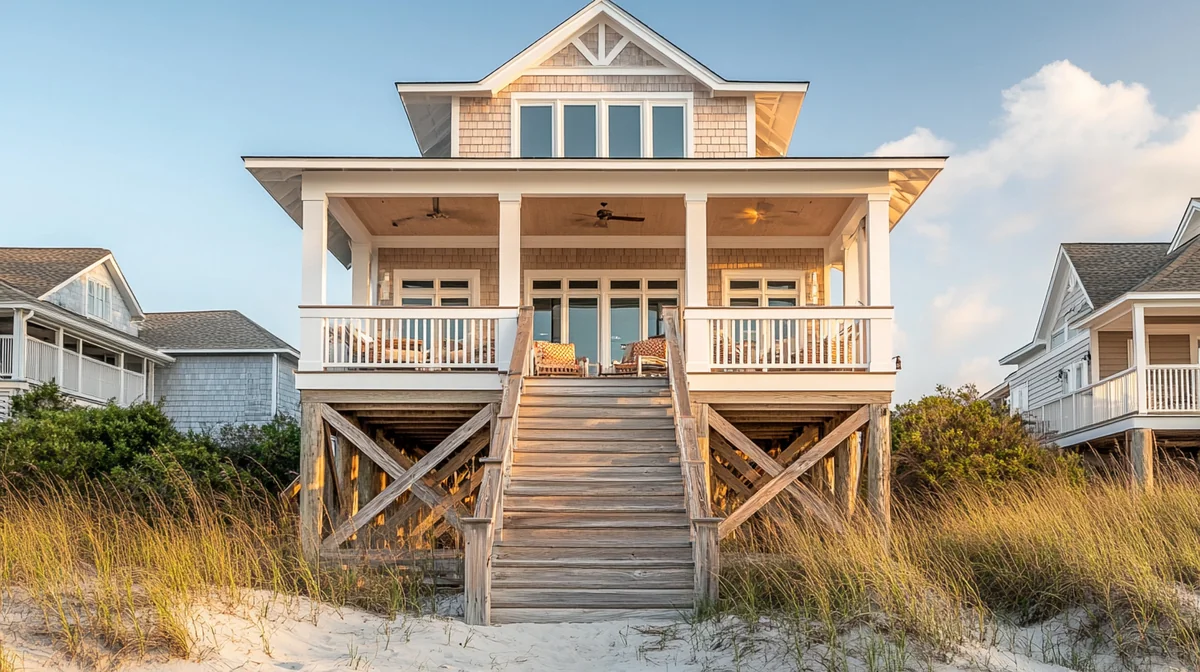
The most important structural shift in the STR industry right now is bifurcation. The middle of the market — the average, undifferentiated listing — is getting squeezed from both sides. Above it, a growing premium segment commands higher rates and higher occupancy because it delivers a genuinely exceptional guest experience. Below it, budget properties compete primarily on price in an increasingly crowded commodity market. The properties stuck in the middle are losing share to both.
This bifurcation is driven by supply growth, maturing guest expectations, and platform algorithms that increasingly reward quality signals over quantity signals. Understanding where you sit in this structure — and how to move toward the premium segment — is the most consequential strategic question facing independent hosts right now.
Trend 1: Regulatory Tightening Will Accelerate
Every major STR market is moving toward stricter regulation, and the pace is accelerating. The New York Local Law 18 framework — effectively requiring in-person host presence for all Airbnb stays — has become a template that Barcelona, Amsterdam, and dozens of other cities are studying and adapting. By the end of 2026, the majority of top-25 global STR markets will have permit requirements, density caps, or occupancy limits in place.
What this means for operators: compliance becomes a competitive advantage. Properties that are fully licensed and regulation-compliant in tightening markets will operate while competitors are forced offline. Get ahead of your local regulatory environment now — read our full analysis in the STR regulations guide and our permits and licensing overview.
Trend 2: Direct Booking Is Becoming a Strategic Necessity
Airbnb's fee structure has crept upward over multiple platform updates. Combined with algorithm changes that favor Airbnb's own promotional products (guest favorites, sponsored placement, Airbnb Plus/Luxe), the economics of pure-Airbnb dependency are worsening for independent hosts. Properties that have built direct booking channels are increasingly insulated from these dynamics.
Direct booking as a percentage of STR revenue grew from an estimated 12% of total bookings in 2020 to 21% in 2024 for independent operators who actively invested in the channel. By 2026, the gap between operators with and without direct booking infrastructure will be a primary differentiator in net profitability.
Trend 3: Experience-Led Stays Are Commanding Premium Rates
The fastest-growing segment of the STR market is not a property type — it's a positioning strategy. Experience-led stays, where the entire property is designed around a specific guest activity or lifestyle identity, are commanding 40–80% rate premiums over comparable square footage in the same market.
The "surf shack" that provides boards, wetsuits, a rinse station, and a local break map is not competing with other beach houses — it's a category unto itself. The same is true for the cycling lodge with a gear room and route guides, the yoga retreat with a dedicated studio and meal prep kitchen, and the culinary stay with a professional kitchen and market visit itinerary. Specificity beats generality in the premium market.
Trend 4: AI Is Changing Guest Expectations for Communication
As AI-powered guest communication becomes standard, guests are recalibrating their expectations upward. The host who responds in 45 minutes is now competing with the AI-assisted host who responds in 90 seconds. This doesn't mean replacing human communication — it means augmenting it. Hosts who use AI for routine queries and reserve personal communication for complex situations will have both efficiency and warmth.
More significantly, AI is beginning to affect how guests discover properties. AI travel planning tools (integrated into search engines and travel platforms) are trained on content signals — listing descriptions, reviews, website copy — that well-optimized properties produce more of. SEO for STR listings is becoming an AI optimization problem as much as a traditional keyword problem.
Trend 5: Supply Growth Is Peaking in Some Markets, Not Others
Supply dynamics vary dramatically by market type. Urban US markets that saw aggressive STR supply growth in 2021–2023 are now in consolidation phases where weaker listings are exiting and stronger ones are gaining share. Nature-adjacent markets — mountains, national park proximity, coastal rural — are seeing constrained supply due to regulatory and geographic limits, creating pricing power for existing properties.
Trend 6: Portfolio Diversification Across Platforms and Markets
The operators best positioned for 2026 are distributing their risk across multiple booking platforms, multiple markets, and multiple property types. Single-platform, single-market concentration creates vulnerability to Airbnb algorithm changes, local regulatory shifts, and market-specific demand softness. Multi-channel distribution (Airbnb + VRBO + Booking.com + direct) plus geographic diversification is the structure that survives the most scenarios.
For the individual host with one or two properties, this trend means building direct booking infrastructure and cross-listing on at least one non-Airbnb platform, even if the volume is initially low. The option value of having established accounts on multiple platforms before you need them is significant.
Trend 7: Sustainability Is Becoming a Booking Factor
The percentage of guests who actively filter or preference-weight for sustainability credentials has grown from negligible to meaningful in five years. Solar power, EV charging, sustainable cleaning products, and carbon-offset programs are transitioning from differentiators to table stakes in certain market segments — particularly urban markets with younger guest demographics and European markets where sustainable travel has more mainstream adoption.
This trend is not yet universal, but its trajectory is clear. Properties investing in verifiable sustainability credentials now will be ahead of the requirement curve in three to five years. Speak with our consulting team about sustainability upgrades with the best ROI for your market and property type.
The Bottom Line
The STR industry in 2025–2026 rewards clarity of positioning, operational sophistication, and proactive adaptation to regulatory and platform changes. The structural trends — bifurcation, regulatory tightening, experience premiums, AI adoption, supply dynamics — all point in the same direction: generic, passive operation is becoming a losing strategy while intentional, differentiated operation creates durable competitive advantage. The window to build that advantage is open now, and it is narrowing.
Was this article helpful?
Thanks for your feedback!