
This page is for people who run, or plan to open, a glamping site or eco retreat: safari tents, domes, treehouses, yurts and small cabins on land worth the drive. Marketing them differs from marketing a house. Guests pick the setting and the structure first, then look hard at the bed, the bathroom and the heat. Your marketing has to sell the first and settle the second.
The sections below start with what a glamping marketing agency should do and how to vet one. Then come the facts a new site runs into: who books glamping, from KOA's 2026 report; zoning, health and insurance rules, with a Wisconsin town and a Utah county as worked examples; and what domes and treehouses need, with costs from published price pages. The last sections cover eco claims under the FTC Green Guides, photos, listing copy and booking platforms.
How Glamping Marketing Differs From Marketing a House
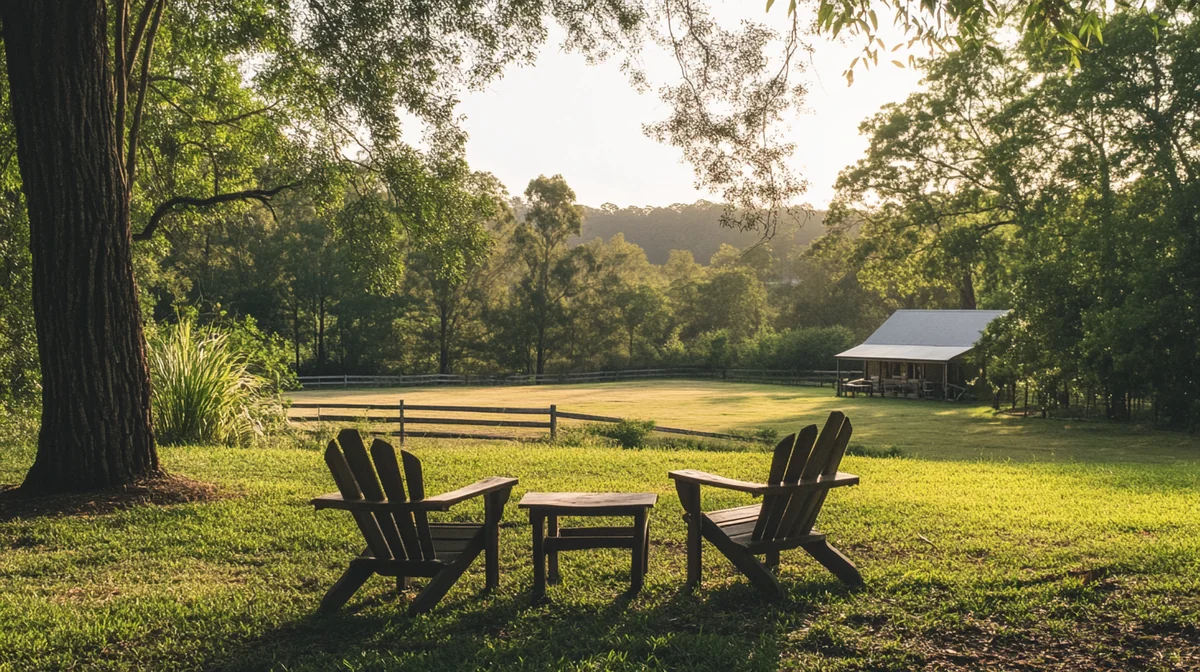
A house is booked for its rooms. A glamping site is booked for its setting and its structure: the safari tent on the ridge, the dome under open sky, the treehouse in the canopy. Guests decide on the place first. Then they read every line about the bed, the bathroom, the heat and the walk from the car, because those are the parts of camping they hope to skip.
So glamping marketing has two jobs. The photos and the first lines sell the setting. The rest of the listing, the website and the messages before arrival settle the comfort questions. A site that does only the first job gets the click and loses the booking, or wins the booking and loses the review.
What Changes With a Multi-Unit Site
- You run a small resort. Guests choose between units, add extras such as firewood, a breakfast basket or a sauna slot, and book several units for a group. A platform listing sells one unit at a time. Your own website can sell all of it in one booking.
- Each structure has its own search. Guests search for a dome, a treehouse, a yurt or a safari tent as well as for a place. Give every unit type its own page and its own listing.
- The structure sets the season. An uninsulated canvas tent and a heated dome sell different months. Match your calendar, photos and copy to what each unit can do in each season.
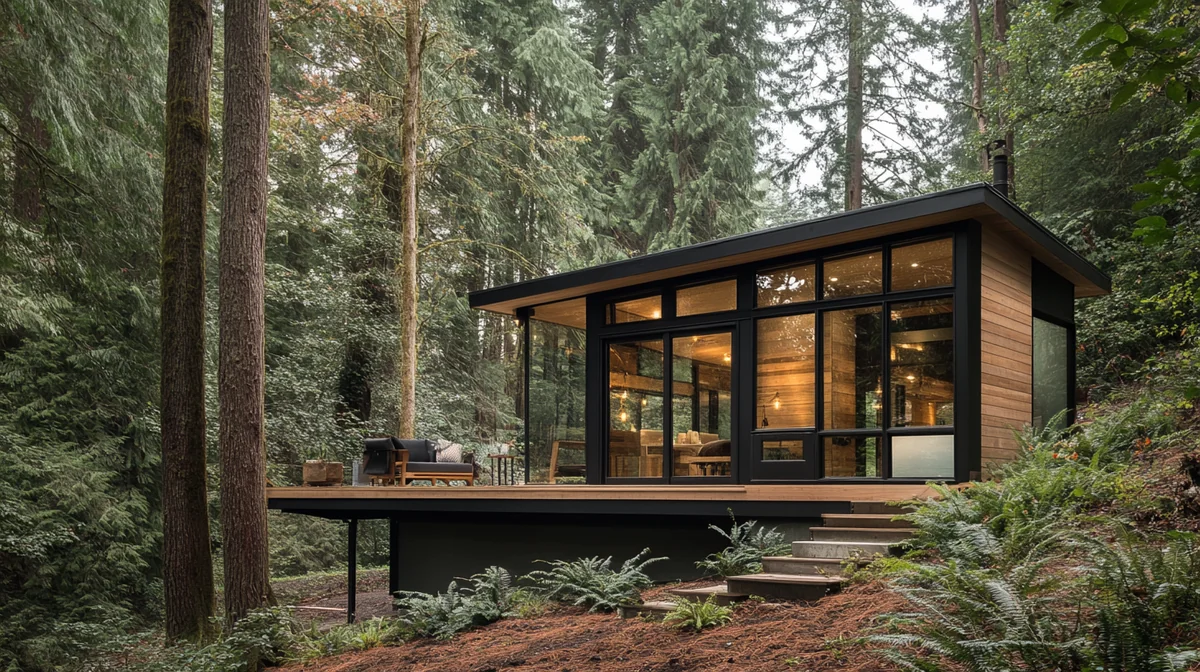
- Design is part of the product. A design-forward site is built to be photographed. Its photos, its name and its website need the same standard as the build.
Eco retreats add a third job: proving every environmental claim. The section on the FTC Green Guides below shows what you can say and how to back it up.
How to Choose a Glamping Marketing Agency
A glamping marketing agency should cover the work that turns interest into bookings: photography direction, listing copy for each unit and each platform, a website with its own booking engine, search work for the place and structure names guests type, GEO (getting named in AI answers), digital PR, social video and paid ads. Marketing is a separate job from property management. Cleaning, maintenance and guest messages need their own team.
Questions to Ask Before You Sign
Google's own page on hiring an SEO suggests questions for any firm that will work on your site. Adapted for glamping, ask these:
- Past work. Can you show examples and results for outdoor stays, unusual structures or small resorts?
- Methods. Do you follow Google Search Essentials? Will you tell me every change you make to my site?
- Measurement. What results do you expect, over what timeframe, and how will we measure them against my numbers today?
- Category and region. What do you know about my structure type and about my region's guests, rules and seasons?
- Ownership. Will the domain, website, booking engine, Google Business Profile, analytics and ad accounts be in my name?
- Price and term. Is the fee fixed, what does it include each month, and how do I end the contract?
Red Flags
- Promised rankings. Google says no one can promise a number one ranking in its results. It also warns about firms that claim a special relationship with Google or email you out of the blue.
- Review schemes. The FTC's rule on fake reviews, announced in August 2024, bans fake reviews, paying for positive or negative reviews, undisclosed insider reviews, review suppression and fake followers or views. It lets the FTC seek civil penalties against knowing violators.
- Unproven green copy. "Eco-friendly" with nothing behind it is the kind of general claim the FTC tells marketers not to make.
- Off-platform tricks. Any plan to move guests from Airbnb to your own site breaks Airbnb's off-platform policy.
AI answers are a second search channel to plan for. In Cavmir's July 2026 study of 550 Google AI answers across 15 U.S. markets, independent and regional operators got 82% of citations, and Airbnb or Vrbo appeared in 17% of answers. A glamping site with its own website, specific facts and outside mentions can be one of the sources those answers cite. Ask any agency how it handles AI search as well as classic Google results.
Who Books Glamping
The broadest recent numbers come from Kampgrounds of America's 2026 Camping and Outdoor Hospitality Report, released April 14, 2026 and based on 4,088 surveys of U.S. and Canadian households. Its findings that matter for glamping:
- Market. Over 52 million North American households camped in 2025.
- Share. Glamping accounted for 29% of all camping experiences in 2025.
- First-timers. 31% of new campers chose glamping accommodations. KOA calls glamping the gateway for first-time campers.
- Returning campers. Boomers came back to camping after a few years of light participation, which KOA reads as experienced travelers looking for lifestyle and leisure trips.
What That Means for Your Marketing
Write for the first-timer. Someone who has never camped may not know what a vault privy is, how cold a canvas tent gets before dawn or whether to bring towels. Put the answers in the listing, on the website and in the message before arrival. Each question answered in advance is one less surprise on site.
Then write for the experienced camper. They know what a tent site costs and will compare. Show what your rate buys: the bed, the private bathroom, the heat, the setting and the firewood already stacked.
Find Your Own Guest Mix
National surveys describe the market, not your guests. Pull your own numbers: party size, nights per stay, how far ahead guests book, the cities they drive from and the words they use in reviews. That tells you whether you mostly host couples, friend groups, families, small retreats or solo travelers, and in which months. Market first to the guests you already win, then add the next group with its own page, photos and offer.
Zoning, Permits, Health Rules and Insurance for a New Glamping Site
Glamping is regulated place by place. The same structure can fall into different categories in different places, depending on its size, its foundation and the local definitions. Before you buy land or structures, get answers from the zoning or planning office, the building department, the health department (water, wastewater, toilets and showers) and the fire authority. State campground codes can apply on top. Two real ordinances show what the answers look like. Treat them as examples, not as your rules, and have a local land-use lawyer review your plan.
Example From the Town of Dunn, Wisconsin
The Town of Dunn glamping ordinance, Ord. 2025-02, adopted May 14, 2025, defines a glamping unit as a temporary dwelling under 400 square feet with no permanent foundation. Its rules for a glampground:
- Zoning. Mainly on General Agriculture parcels. Other districts need an exception from the town.
- Density. A maximum of eight units or one unit per 2.5 acres.
- Stays. No reservation longer than seven consecutive days.
- Toilets. At least one vault privy, permitted pit privy or permitted flush toilet for every four units.
- Safety. A fire extinguisher in every unit, EMS access to within 400 feet of any unit, and campfires only in rings no larger than 36 inches with a buffer at least 12 feet across.
- Parking and insurance. One off-street space per unit and general commercial liability insurance.
- License. An annual town license. The site map goes to the Plan Commission for review and to the Town Board for approval.
Wisconsin's state campground code adds its own terms. ATCP 79.03 defines a camping cabin as a structure of 400 square feet or less, including a yurt but not a tent, and a dependent camping unit as one with no toilet facilities. Definitions like these decide which rules apply, so learn your state's before you choose structures.
Example From Garfield County, Utah
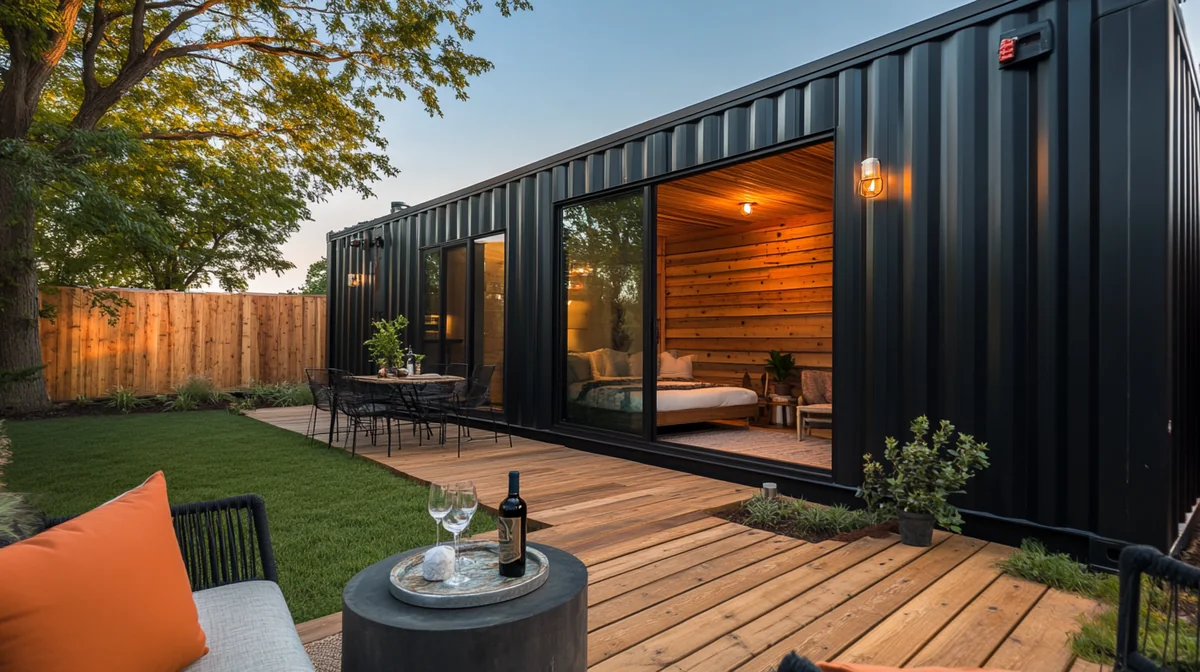
Garfield County adopted a glamping ordinance in 2019 and has updated it since, the county's planning and economic development director wrote for Utah State University Extension in 2022. The county defines glamping as a canvas or membrane-covered frame structure, including tents, yurts, teepees, covered wagons, inflatable spheres and geodesic domes, and leaves out RVs, tiny homes and shipping containers. It requires access for emergency services, and it worked with the local health department on standards for drinking water and wastewater.
Questions for the Health Department
- Fixtures. How many toilets, sinks and showers do you require per unit or per guest, and which types count: flush, vault or composting?
- Distance. How far may a unit be from the nearest toilet and shower?
- Water. What testing does a private well need before guests drink from it?
- Wastewater. Which septic or holding-tank permit covers the bathhouse and any sinks in the units?
- Food. Do breakfast baskets or a shared kitchen need a food permit?
Insurance
- Hipcamp. Its host page says every booking includes $1 million in liability insurance and $10,000 in property protection, subject to eligibility and exclusions, through third-party partners.
- Airbnb. AirCover for Hosts includes $1 million in host liability insurance and up to $3 million in damage protection, with exclusions.
- Your own policy. Platform cover applies to that platform's bookings. Direct bookings need your own commercial policy. Give your insurer the full list: tents, domes, treehouses, hot tubs, fire pits and any guided activity. Start comparing on the insurance resources page.
Ask every office the same written question: which category does this structure fall into, at this size, on this foundation? Keep the answers. They become your permit file, your insurer's file and the facts your listing can safely state. For short-term rental permits by state, see State of STR Permits 2026, and if the site sits on a working farm, read the farm stays page too.
Geodesic Dome Foundations, Heating, Condensation and Permits
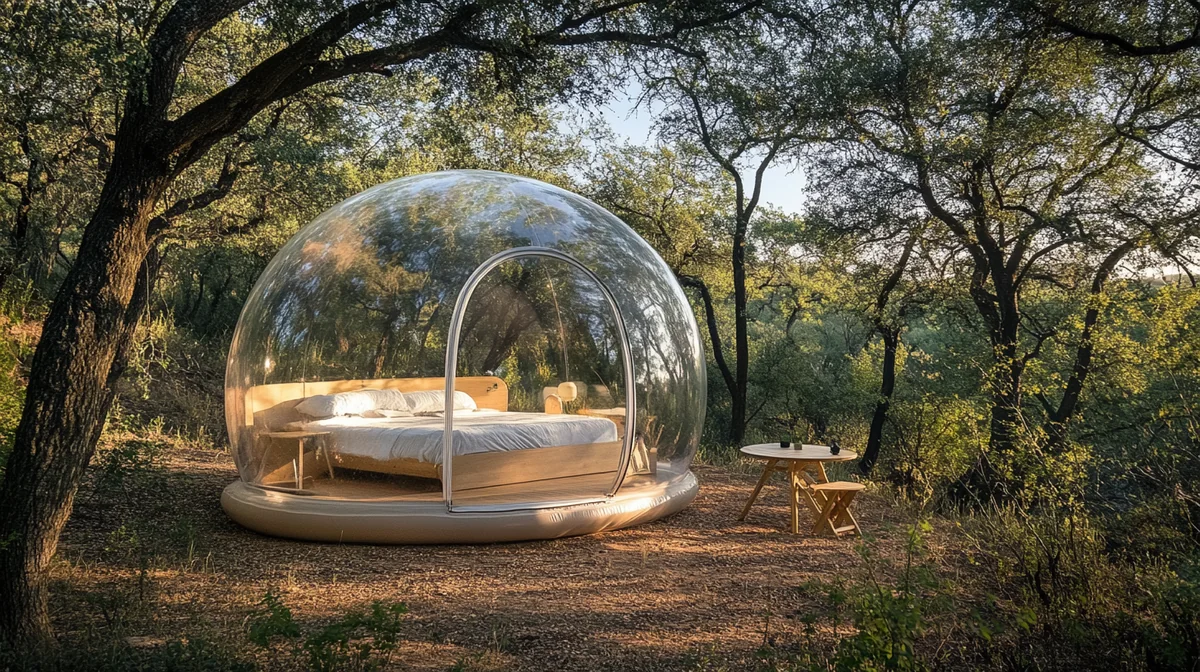
A dome is one of the easiest structures to recognize in a photo. It is also a light shell of fabric or panels, and that shapes what it needs before a guest sleeps in it.
Foundation and Ratings
Plan the deck or platform and the anchoring together with the dome, not after it. Ask the supplier for the engineered wind and snow ratings and the anchoring details in writing, then compare them with the design loads your building department uses. Note the life of the cover as well as the frame, because the cover is a cost you will pay again.
Example: one retailer lists a 20-foot dome kit at $4,995 as of October 2026, with a 30-ounce PVC cover, a wind rating of 120 km/h and a snow load rating of 75 kg per square meter. Its cold-weather package, with insulation and a wood stove outlet, costs $4,595 more. The page puts the PVC fabric's life at 8 years, pro-rated, against 15 years for the frame. Winterizing nearly doubles the shell price in that case.
Heating and Condensation
A single-skin dome loses heat fast, and its inner surface gets cold on cold nights. Warm, moist air from breathing, showers and kettles condenses on that surface and drips. Plan for it from the start:
- Insulation. A liner or insulation package keeps the inner surface warmer.
- Ventilation. Vents low and high let moist air out. The kit above includes four vent windows and a roof vent.
- Steady heat. Run heat steadily rather than in bursts, and size the heater for your coldest booked night.
- Moisture sources. Put the shower in a separate, ventilated space where you can, and add a dehumidifier in damp climates.
- Summer heat. Clear panels gain heat in sun. Shade, vents and cooling matter as much as the stove does in winter.
Permits
Some local rules name domes outright. Garfield County, Utah, lists geodesic domes and inflatable spheres in its glamping definition. Size counts too. Example: a dome 20 feet across covers about 314 square feet of floor, under the Town of Dunn's 400-square-foot line for a glamping unit, while a dome 26 feet across covers about 531 square feet and would not fit that definition. A permanent foundation would also take a dome outside Dunn's definition, which requires a unit with no permanent foundation.
Selling the Dome
Lead with the night frame: the dome lit from inside under a dark sky. Follow with the bed under the apex, the view through the window panel, the heat source and the bathroom. If you sell stargazing, describe what guests can see from your site on a clear night, in your own words from your own nights there, and leave out superlatives you cannot prove. Yurts share many of these needs, and the yurt marketing guide covers them.
Treehouse Codes, Costs and Safety
On the published price pages below, a treehouse costs many times more than the dome kit above, and it puts guests above the ground. Codes, costs and safety come before a single photo.
Codes and Permits
Building codes are adopted and amended by states and local governments, so the rules for a rental treehouse come from your local building department. We could not find a section of the International Residential Code written for structures supported by living trees, so expect to work from engineered drawings and the building official's review. Nelson Treehouse, a design-build firm, tells rental clients that a building permit may be necessary and asks them to research permit feasibility with the local jurisdiction before design starts.
Published Build Costs
Two builders publish prices. As of October 2026:
- The Treehouse Guys. Their price page starts an open-air platform with roof and railing at $100,000, a closed-in treehouse with a finished interior at $200,000, and a fully finished treehouse with the amenities of home, meant for living in or renting out, at $250,000, all with economy materials. Crew travel and lodging are extra, plumbing and electricity are add-ons, and engineering is not included: $5,000 to $10,000 for public or commercial settings and from $2,500 for some private ones.
- Nelson Treehouse. Its vacation rental page puts the baseline for designing and building a custom rental treehouse at approximately $400,000. Design is about 10 to 15 percent of the total, with a minimum of about $30,000 for a fully permitted and engineered design. Water and power infrastructure is the owner's job to permit and install, at extra cost.
Example: if a $250,000 treehouse cleared $100 a night after operating costs, it would need 2,500 booked nights to repay the build. That is close to seven years with every night sold. Run the same sum with your own rate, costs and a realistic occupancy before you commit. Rate, occupancy and season length move that answer as much as the build cost does.
Safety and Operations
- The tree. Have an arborist assess the tree's health and species before design, and again on a schedule after the build.
- The attachment. Use engineered connections, and let the engineer set the guest and snow loads.
- The climb. Check stairs, bridges and railings after every storm. Say plainly in the listing how many steps there are or how long the bridge is, so guests who cannot climb know before they book.
- The insurer. Name the treehouse, its height and any decks, tubs or rope bridges on the application.
Selling the Treehouse
Shoot from inside the canopy looking out, and at dusk with warm light in the windows. The title names the structure, the setting and the signature feature: "Cedar canopy treehouse, rope bridge, soaking tub." Then answer the practical questions early: the climb, the bathroom (in the tree or on the ground), the heat and the walk from parking.
Eco-Luxury Claims, Certifications and the FTC Green Guides
If your retreat markets sustainability, read the FTC Green Guides, 16 CFR Part 260, before you write a word. They say an unqualified general environmental claim is hard to interpret, likely suggests far-reaching benefits and may suggest no negative environmental impact at all. Because a marketer can rarely prove every meaning a reader takes from such words, the guides say not to make them unqualified. The FTC's own example treats the brand name "Eco-friendly" as deceptive when those broad benefits cannot be substantiated.
What to Claim Instead
Limit each claim to the specific benefit, and do not present a negligible benefit as a significant one. The guides say both.
- Vague. "An eco-friendly luxury retreat."
- Specific. "Each tent runs on power from our solar array, with a propane backup for cloudy weeks."
- Vague. "Sustainable glamping."
- Specific. "Composting toilets in every unit and a rainwater-fed outdoor shower."
Keep a claims file with the invoice, meter reading or photo behind each line. If a claim stops being true, for example while the solar array is down for repair, change the copy that week.
Certifications
A third-party certification helps only if it fits your kind of lodging and you say what it covers. Section 260.6 of the guides says a certifier's seal can count as an endorsement, that certification does not replace your own proof, and that a seal which does not convey its basis should not be used without clear qualifying language.
- Green Key Global. Its Eco-Rating is a third-party certification aimed at hotels and lodging facilities. Audits are sold in packages covering three years, $500 for a virtual audit or $2,500 in person plus any travel, and certified properties retake the assessment every three years. Ask whether your structure types qualify before you apply.
- GSTC. The Global Sustainable Tourism Council sets criteria for hotels and tour operators and accredits the certification bodies that apply them, but it does not certify businesses itself, as its Wikipedia entry notes. If a program cites GSTC, ask exactly what the link is and use those words in your copy, never "GSTC certified."
Put a sustainability page on your own website that lists what you do, since when and how you measure it. It answers the guest who asks, and it gives search engines and AI answers specific facts to quote instead of a slogan.
The Shot List and Listing Copy for Tents, Domes and Treehouses
Glamping guests are buying the outdoors without the discomfort, and the photos have to prove both. A set that shows only the setting leaves the comfort questions open. Brief your photographer for both halves:
- Dusk exterior. The unit in its setting with the lights on inside, wide enough to show the view.
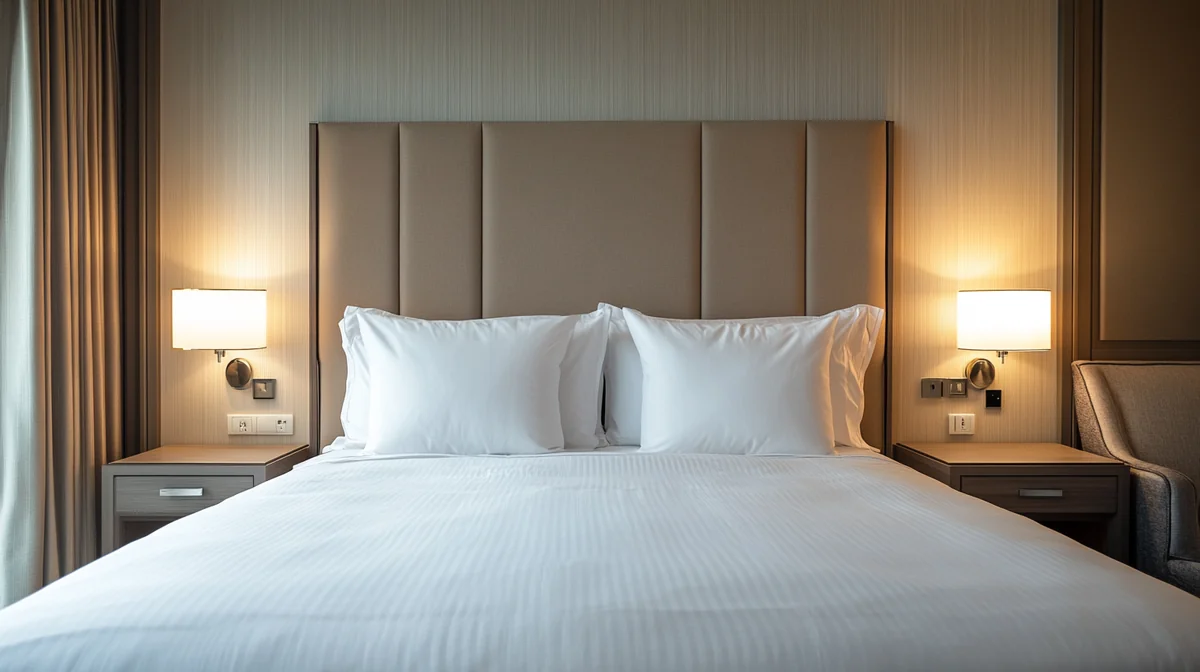
- The bed. Shot from the entrance, made tight, with the view through the door, flap or window.
- The bathroom. Whatever kind it is, en-suite, private outdoor or a shared bathhouse, shown plainly.
- Heat and cooling. The stove, heater, fan or shade, so the temperature question is answered in the photos.
- The outdoor room. The deck, the tub, the fire ring and the chairs facing the view.
- The night frame. Stars if you have them, string lights, the fire lit.
- Shared spaces. The kitchen, lodge, sauna or pool, if you have them.
- Distance and privacy. The path and the space between units.
- The arrival. Parking, the walk in, the cart if there is one.
Shoot in the season you sell most and show the others too. A canvas tent in summer heat and a dome in snow are both bookable when the listing says what the unit does about the weather. Cavmir's Airbnb photography guide goes deeper on the shoot itself.
Listing Copy
The title names the unit type, the setting and the comfort feature guests worry about: "Safari tent on a private ridge, king bed, en-suite bathroom, wood-fired hot tub." People search for the unit type, so "dome," "safari tent," "treehouse," "yurt" or "cabin" belongs in the title. If your units differ, give each its own listing and photos.
The first lines describe the evening or the morning: the fire, the stars, coffee on the deck. Then the practical layer, in this order: the bathroom, heating and cooling, the bed, bugs and season, the walk from the car, what to bring, food options and the distance to the nearest store, wifi and cell signal. A listing that says "composting toilet, no wifi, bring a headlamp" draws the guest who wants exactly that.
Tag every amenity a filter can find: heating, air conditioning, private bathroom, hot water, kitchen or kitchenette, fire pit, hot tub, wifi, parking and pet policy. Then write the destination into the copy, the park, the lake, the trail, so the listing matches searches for the place. The listing optimization service rewrites a whole set of units at once.
Hipcamp, Glamping Hub, Airbnb and Your Own Booking Website
Each channel reaches a different guest and charges in a different way. Fees change, so check current terms before you list. As of October 2026:
- Hipcamp. Free to create a listing, with a commission only on confirmed bookings. The rate depends on property type and is shown when you create the listing. Listings can be campsites, RV spots or structures, and each booking carries the liability and property cover noted above.
- Glamping Hub. A marketplace for rentals with direct access to nature, from treehouses and yurts to safari tents. Rentals United, a channel manager that connects to it, lists a 4% host commission on the booking total and a guest service fee of up to 12%. Confirm the rate with Glamping Hub before you sign up.
- Airbnb. A broad audience and AirCover, with firm rules. Its Off-Platform and Fee Transparency Policy bars hosts from asking or encouraging guests to book off Airbnb, offering discounts to book elsewhere, asking for contact details before booking, and using a guest's contact information for marketing.
- Hotel-style channels. If you have lodge-style rooms, channels such as Booking.com may suit them. Read each channel's property-type rules and contract before you list tents or domes.
Your Own Website
A glamping site with more than one unit sells like a small resort: unit choice, dates, extras and group bookings in one flow. Platforms sell one unit at a time. Your own direct booking website can show every unit with its own gallery and calendar, sell the extras, take group buyouts and skip the platform commission on those bookings. Fill it with guests who find you through search, AI answers, social video and press, not by moving guests off a platform.
The pages that matter: one page per unit type, an extras page, a site map that shows privacy and the walk from parking, a plain page on seasons, weather and what to bring, and a destination page written for the searches guests type. For booking engines and related tools, see the booking platforms directory.
How Cavmir Works With Glamping & Eco Retreats
Cavmir is a marketing agency for distinctive vacation rentals, not a property manager. For a glamping site or eco retreat, the work covers photography direction built around your setting and your comfort features, listing copy for each unit on each platform, a direct booking website with unit pages and extras, SEO for the place and structure searches guests type, GEO so AI answers can name your site, digital PR around what makes it distinctive, social video and paid ads. Eco and safety claims are checked against the records behind them before they go live.
Every glamping site starts from a different place, so we do not promise a percentage. We record your starting numbers before the work begins and report against them. The aim is more bookings through your own website, a fuller shoulder season and rates that match what the site offers.
Frequently Asked Questions
Questions owners ask about this property type, answered from public sources checked in October 2026.
What does a glamping marketing agency do?
It turns a glamping site into bookings. The work usually covers photography direction, listing copy for each unit on Hipcamp, Glamping Hub and Airbnb, a website with its own booking engine, search work for the place and structure names guests type, getting named in AI answers, digital PR, social video and paid ads. Marketing is separate from property management, and every account the agency builds should be in your name.
How do I choose a glamping marketing agency?
Ask for past work with outdoor stays or unusual structures, how results will be measured and over what timeframe, and who will own the domain, website and ad accounts. Google's guidance on hiring an SEO says no one can promise a number one ranking, so treat that promise as a warning. Walk away from anyone who offers to buy or write reviews. The FTC's 2024 rule bans fake reviews and lets the FTC seek civil penalties against knowing violators.
Do I need a permit to start a glamping site?
Glamping is regulated place by place, so the answer depends on your town, county and state. Example: the Town of Dunn, Wisconsin, requires an annual glampground license, allows a maximum of eight units or one per 2.5 acres, and requires general commercial liability insurance. Garfield County, Utah, adopted its own glamping ordinance in 2019. Ask the zoning office, building department and health department before you buy land or structures, and have a local land-use lawyer review the plan.
What bathroom and toilet rules apply to a glamping site?
Sanitation rules can come from the state, county and town, so check all three. Example: the Town of Dunn, Wisconsin, requires at least one vault privy, permitted pit privy or permitted flush toilet for every four glamping units. Wisconsin's campground code has a separate term, dependent camping unit, for a unit with no toilet facilities. Garfield County, Utah, worked with its health department on drinking water and wastewater standards. Ask your health department before you design bathhouses.
How much does it cost to build a rental treehouse?
Published builder prices give a starting point. As of October 2026, The Treehouse Guys list a fully finished treehouse with the amenities of home, meant for living in or renting out, from $250,000 with economy materials, before crew travel, engineering and add-ons such as plumbing. Nelson Treehouse puts its baseline for designing and building a custom vacation rental treehouse at about $400,000, with water and power infrastructure extra. Get a site-specific quote and a permit answer before design.
Can a geodesic dome be rented in winter?
Yes, if it is insulated, heated and rated for your snow and wind. Example: one retailer lists a 20-foot dome kit at $4,995 with a snow load rating of 75 kg per square meter, and sells a cold-weather package with insulation and a wood stove outlet for $4,595 more. Ask for engineering documents, compare them with your local design loads, and plan for condensation with insulation, vents and steady heat.
Can I call my glamping site eco-friendly?
Not without qualification. The FTC Green Guides say marketers should not make unqualified general environmental claims such as eco-friendly, because such words likely convey far-reaching benefits that are hard to prove. Name the specific benefit instead, such as solar power for the units, composting toilets or a rainwater shower, and keep the records behind each claim. The FTC's own example treats an Eco-friendly brand name as deceptive when it cannot be substantiated.
Which eco certification suits a glamping business?
Choose one whose criteria and audits fit your kind of lodging, and ask whether it covers tents, domes or campgrounds before you pay. Green Key Global describes its Eco-Rating as third-party certification for hotels and lodging, sells audits in three-year packages at $500 virtual or $2,500 in person plus any travel, and requires a new assessment every three years. The Global Sustainable Tourism Council does not certify businesses itself; it accredits certification bodies.
Where should I list a glamping site?
Use more than one channel and compare terms. Hipcamp is free to list, charges a commission only on confirmed bookings and includes $1 million in liability insurance per booking, subject to exclusions. Rentals United lists Glamping Hub's host commission at 4% of the booking total. Airbnb reaches a broad audience but bars hosts from steering its guests to book elsewhere. Your own website is where multi-unit stays, extras and guests from your own marketing book.
What is eco glamping?
Eco glamping is a marketing term for glamping run with a smaller environmental footprint, such as solar power, composting toilets or low-impact platforms. It is not a certification. Because the FTC treats broad words like eco-friendly as general environmental benefit claims that need qualifying, describe the specific practices you use and how you measure them, or name a third-party certification and say exactly what it covers.