
This guide is for hosts who want to sell something with the stay: a private chef on the first night, a captained boat morning, a guided hike from the door, an in-home massage, or a birthday setup waiting in the living room. Guests already ask you where to eat and what to book. A package turns that answer into something they can reserve, and it gives your listing and your website something specific to show.
You'll be able to pick the right route for each idea, stay inside Airbnb's rules as of October 2026, check that the right person holds the license and the insurance, and price a package so it pays. There's a pricing calculator, a partner check, eight package examples by property type and copy you can paste. If you want to list an Experience or a Service on Airbnb yourself, our guide to Airbnb Experiences and Services covers the application in depth.
- There are three routes: a provider sells through Airbnb Experiences or Services, a licensed local partner sells under a written referral deal, or you sell packages on your own website to guests who book there.
- Airbnb typically charges Experience hosts a 20% fee and Service hosts 15%, with a $6 minimum, taken from the provider's payout. Recommending a chef who's listed there costs you nothing.
- For an Airbnb stay, every payment goes through Airbnb, extras included. Request an optional fee in the Resolution Center within 60 days of checkout, and keep outside links out of your listing and messages.
- Whoever delivers the activity holds the license and the insurance, such as a charter captain's Coast Guard credential. Airbnb's $1 million liability cover applies only to Experiences and Services booked on Airbnb.
- Price a package as total cost divided by (1 minus fee minus margin). Example: $475 of cost, a 3.3% card fee plus 30 cents and a 20% margin come to $620.
Three Ways to Sell Experiences With a Stay
Every package fits one of three routes. They differ in who sells it, who takes the money and who carries the risk, so choose the route before you write any copy.
| Route | Who sells and collects | What it costs you | Your risk | Fits best |
|---|---|---|---|---|
| Airbnb Experiences or Services | The provider, on Airbnb | Nothing; the provider pays Airbnb's fee | Low: you recommend a business by name | Chefs, massage, photographers and food tours already listed on Airbnb |
| Local partner on a referral deal | The partner, through its own booking system | Your time to set up the deal and recheck it each season | Medium: your name is on the recommendation | Boat trips, guided hikes, fishing, classes |
| Package on your own website | You, at checkout or by invoice | Payment fees, supplies and your time | Highest: the guest paid you | Celebration setups, stocked fridges, gear, multi-part weekends sold with a stay |
You can use all three at once. Example: a made-up lakefront home recommends a chef who's listed on Airbnb Services, sends boat mornings to a licensed charter captain for a referral fee, and sells its own anniversary setup on its website. Each piece sits with whoever is best placed to deliver it every time.
Pick the Route by Who Can Deliver It
- If it happens inside the home and you control every part, such as flowers, a cheese board or a fire laid in the fireplace, you can sell it yourself.
- If it needs a license, a boat, a vehicle or a commercial kitchen that isn't yours, it belongs with a provider who runs it as a business.
- If the provider already sells on Airbnb Services or Experiences, recommending them by name is the simplest route for Airbnb guests. The booking, the payment and Airbnb's insurance stay with the provider.
- If a partner sells on its own, a referral deal keeps the booking and the liability with the business that runs the activity. Your part is a short list you trust.
If a guest found you on Airbnb, the stay and anything you charge them for it stay on Airbnb. Packages on your own website are for people who find you there.
Package Examples by Property Type
The best package grows out of what the home already has. Start with the feature guests mention most in your reviews, then add one thing that makes it easier to enjoy. These eight examples mix your own setup with a partner's service, and the last column is the check to run before you sell each one.
| Property type | Package example | What's included | Who delivers | Check before you sell |
|---|---|---|---|---|
| Mountain cabin | Trail and chef weekend | Guided morning hike from the door, packed lunch, chef dinner in the cabin on night two | A guide and a private chef | The guide's permit for the trail; how the chef meets your county's food rules |
| Ski home | Ski-day reset | Boot dryers and gear room ready, hot drinks set out at 4 pm, in-home massage after the slopes | You and a massage therapist | The therapist's state license; your house rules allow massage |
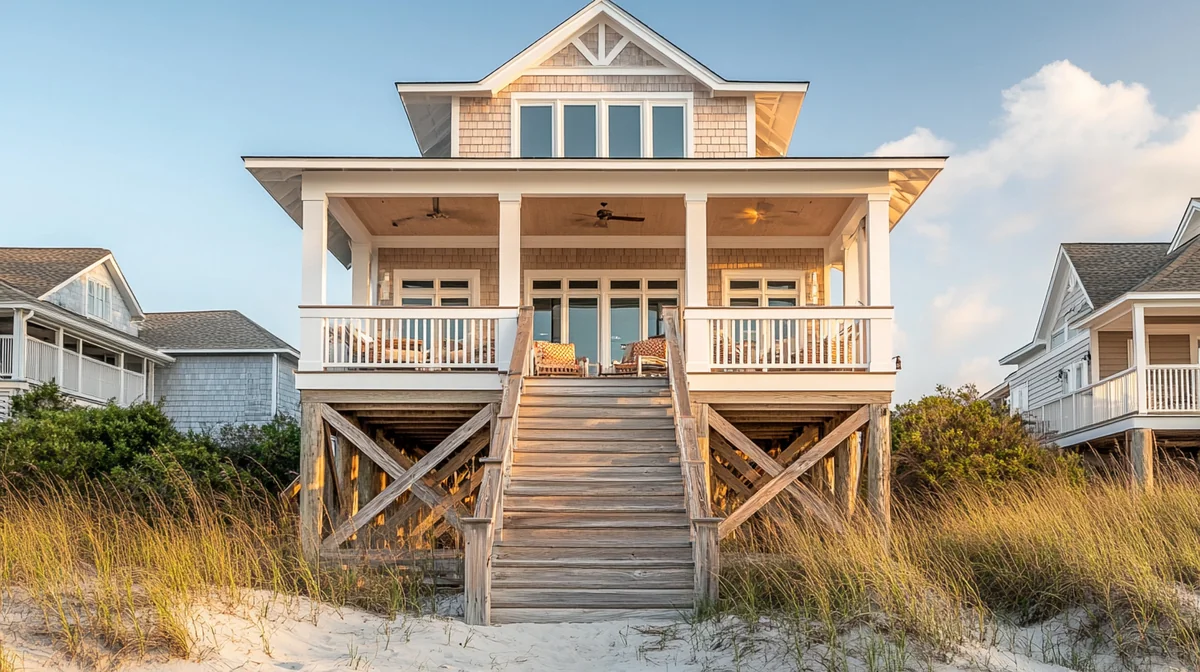
| Beach house | Family beach day | Chairs, umbrella and cooler set on the sand, photographer for the last hour of light | You and a photographer | Local beach equipment rules; the photographer's insurance and photo rights |
| Lake house | Lake weekend | Fridge stocked from the guest's list, half-day captained boat trip from the dock | You and a charter captain | The captain's Coast Guard credential and the boat's insurance |
| Desert or dark-sky home | Night sky package | Telescope lesson on arrival night, guided stargazing on night two | An astronomy guide | A permit if the tour uses park or other public land |
| City apartment | First night in the city | Prepared meal delivered on arrival, food tour the next morning | An Airbnb Services meal provider and a tour company | The tour company's insurance; building rules for deliveries |
| Farm or wine-country home | Harvest weekend | Breakfast basket of local produce, winery tour with a driver | You and a tour operator | State alcohol rules before wine is part of a paid package; who drives and their insurance |
| Large group house | Celebration weekend | Catered dinner for the group, table setup, photographer | A caterer and a photographer | The caterer's license and insurance; your event and guest-count rules |
Any package that depends on weather needs a written backup before you sell it: an indoor alternative, a second date or a refund for that part. Offer seasonal packages only in the months they work, and say so on the package. For ways to look after high-end guests during the stay itself, see our concierge service standard.
Build a Three-Tier Ladder
Airbnb asks Service hosts for at least one offering per listing and recommends three: entry, standard and premium. The same ladder works for a stay package, because guests can pick a level without asking you to build something custom.
- Entry. Example: an arrival setup with flowers, a local cheese board and a handwritten card.
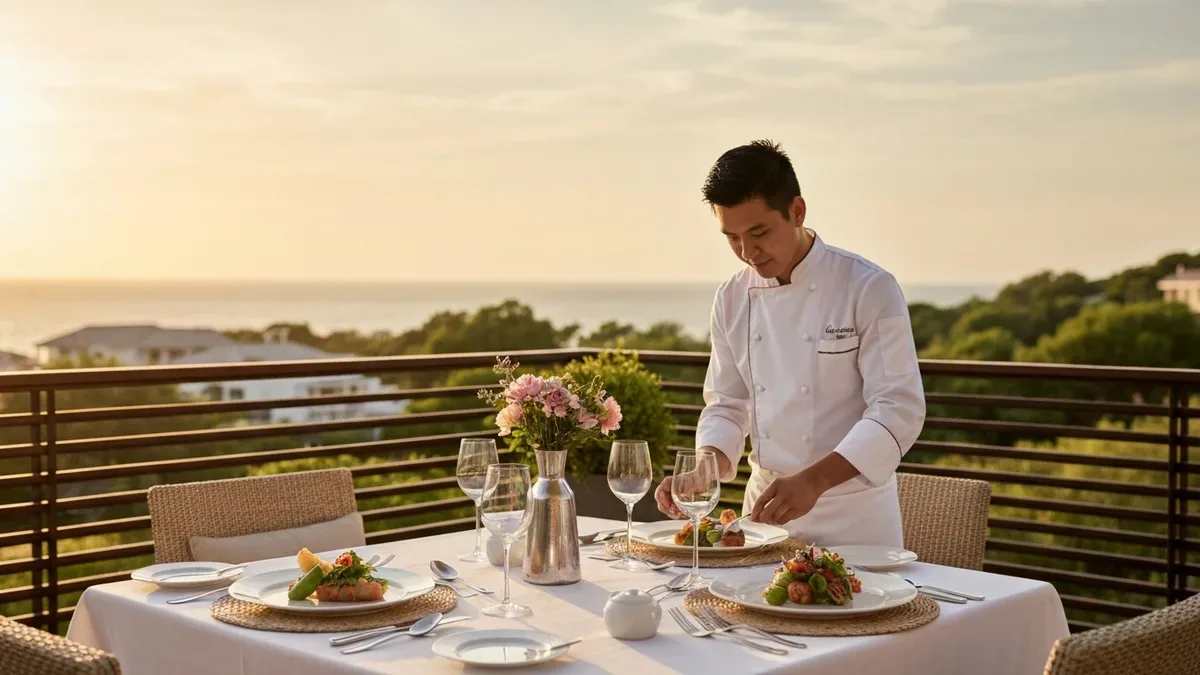
- Standard. Example: the arrival setup plus a three-course dinner cooked in the home by a partner chef.
- Premium. Example: the dinner plus an in-home massage from a licensed therapist and late checkout when the calendar allows.
Price each rung on its own with the calculator further down, so every tier covers its own costs.
Airbnb Experiences and Services Rules for Hosts
On May 13, 2025, Airbnb launched Services and relaunched Experiences. Services started with 10 categories in 260 cities: chefs, photography, massage, spa treatments, personal training, hair, makeup, nails, prepared meals and catering. Experiences launched in 650 cities. Guests don't need to be staying in an Airbnb to book a Service.
The 2026 Summer Release on May 20, 2026 added grocery delivery, airport pickups, luggage storage and car rentals as service categories, through partners such as Instacart in more than 25 U.S. cities and Welcome Pickups in more than 160 cities. In select cities, a host can receive a guest's grocery order and stock the home before check-in. Airbnb also counted more than 3,000 landmark experiences and more than 2,500 food culture experiences.
What Airbnb charges and covers
The typical rate, taken from the host's payout.
The typical rate, with a minimum fee of $6 USD.
Excess over the host's own insurance, for bookings made on Airbnb.
Sources: Airbnb Help Center fee and insurance articles, checked October 2026
Who Can List an Experience or a Service
Experiences and Services are listings of their own, separate from your home, and each goes through Airbnb's review. These are the main bars in Airbnb's standards and requirements as of October 2026:
- Every host: identity verification, criminal background checks where applicable, and a statement that you hold and will keep the licenses, insurance and certifications the activity needs. Airbnb may ask for proof.
- Experiences: at least one of five or more years of hands-on experience, multi-generational or heritage knowledge, or press and endorsements from established outlets. The activity must connect to what the city is known for, the itinerary needs at least three activities, and the listing needs at least five color photos with no text on them.
- Services: relevant experience, education and a professional reputation, at least five high-quality photos with one for each offering (photographers need 15 portfolio photos), and at least one offering, with three recommended.
Read those bars from the provider's side too. A chef, guide or therapist who has passed them has already shown Airbnb an ID and attested to their credentials and insurance, which makes a listed provider a good first filter for your own partner list. It doesn't replace your own check.
How Approval Works
Airbnb's review article says it checks each submission against those standards, may confirm employment, education and awards with the organizations involved, and may run background checks where the law allows. If a license needs checking, you may be asked to send it to Airbnb's third-party provider, Evident. You initially have 30 days to submit, and if Evident can't review a document you get one resubmission before the listing is declined. Airbnb doesn't publish a review timeline, so don't promise guests an Experience that isn't live yet.
What Airbnb Charges
Airbnb's fee article for services and experiences says it typically charges Service hosts 15%, with a minimum fee of $6 USD or the local equivalent, and Experience hosts 20%. The fee is deducted from the provider's payout. If you only recommend a chef who sells through Airbnb Services, that fee is the chef's cost. If you list your own Experience, build the 20% into its price the same way the calculator below builds in a card fee.
Insurance Through Airbnb
Airbnb's Experiences & Services liability insurance provides $1 million in coverage when a host is legally responsible for a guest's injury, or for damage to or theft of a guest's property, during the Experience or Service or while preparing or cleaning up for it, within a 24-hour window. It's excess cover: it pays above the host's own insurance, which Airbnb requires every Experience and Service host to carry. It excludes intentional acts, the host's own belongings, aircraft and certain extreme activities, and it doesn't cover hosts offering experiences in Japan. Most important for package sellers, it applies only when the incident arises from an Experience or Service booked through Airbnb.
Decide Which Services Can Happen in Your Home
Services can take place in a guest's stay, at the provider's own location, at a place of business or in a public space. Airbnb's house rules article for services says it's up to you which services can take place in your home, and that you contact Airbnb to update your house rules so guests know. Prepared meals are allowed at all home listings, because they're delivered and don't take place in your home.
Airbnb's guest article on adding a service tells guests that some hosts allow all services and others limit or ban them, and to check the home's house rules before they book. Decide now if you're comfortable with an in-home chef, a massage table, or a hair and makeup team on a wedding morning, and set the rule before a guest books one.
Your listing and your house rules have to agree. If your description suggests an in-home chef, make sure your service rules don't block chefs.
Selling Extras to Airbnb Guests Within the Rules
When someone who booked your home on Airbnb asks for the anniversary setup or a chef, Airbnb's Off-Platform and Fee Transparency Policy decides how you handle it. As of October 2026, it sets these rules:
- Payments stay on Airbnb. Requesting, sending or receiving payments outside Airbnb is prohibited, including fees related to the reservation. The policy's own example is an optional fee to heat the pool. Only hotels may collect optional fees off the platform.
- No outside links. Listings and messages can't include links that take people off Airbnb.
- Messages stay on Airbnb. Before booking, all communication stays on Airbnb. After booking, you can't use Airbnb messaging to ask for a guest's email address or other ways to reach them.
- No moving bookings. You can't ask or encourage guests to move current, future or repeat bookings off Airbnb, or offer discounts to do it.
- No marketing to guests. You can't use guest contact information for marketing or put guests on a contact list.
Airbnb says repeated or severe violations can lead it to suspend or permanently deactivate listings or accounts. For each Airbnb upsell tool step by step, see our guide to Airbnb upsells.
How to Charge for an Extra on an Airbnb Booking
Airbnb's Resolution Center article lists optional fees as a permitted use, with paid transportation and guest access to selected amenities as its examples. You have up to 60 days after checkout to send a request. The article doesn't say whether a service fee applies to these requests, so check the request screen before you set the price. If the reservation itself changes, such as the dates, use Airbnb's change reservation tool instead.
The guest asks for the extra, you agree the price in the Airbnb message thread, deliver it, and send the request through the Resolution Center.
- Only guests who want it pay for it
- Your nightly rate stays the same in search
- Get the guest's yes in the Airbnb thread before you send the request
You raise the rate and include the extra for every guest, which suits only things every guest gets, like a stocked welcome basket.
- Airbnb's host fee applies to the whole amount
- Every guest pays for it, wanted or not
- Your price looks higher in search
Airbnb's service fee article says host fees are a percentage of the nightly price and any fees the host charges. Most hosts on the single host-only fee pay 15.5%. Most hosts on the split fee pay 3%, and their guests pay a separate fee of 14.1% to 16.5% of the booking subtotal. On a $620 package folded into the rate, a 15.5% fee is $96.10.
Describe Extras Without Selling Off the Platform
- Lead with what's at the home and included: "Two kayaks and life jackets are in the boathouse for your use." Guests should be able to match each line to a photo.
- Mention each optional extra in one or two lines, with its price and how to ask for it, so guests know before they book.
- Name partners by business name only, with no links.
- Keep the listing about the stay. Airbnb's Content Policy bars content created only to advertise a separate business unrelated to the listing. "A partner chef can cook dinner in the home's kitchen" describes the stay. A paragraph selling a tour company's whole catalog doesn't.
- Caption photos of optional extras as optional, so nobody expects the chef's table to come with the nightly rate.
Our listing description formula shows where these lines fit in the rest of the description.
Airbnb listing section for optional extras (no links)
Optional extras (ask after you book)

Arrival setup: fresh flowers, a local cheese board and a handwritten card waiting when you walk in. [Price] per stay.

Private chef dinner: [Chef or business name] cooks a three-course dinner in the home's kitchen for up to [number] guests. Ask us for details, or find them on Airbnb Services if they're listed there.

Boat morning: we're happy to introduce you to [Charter business name], a licensed captain on [lake or harbor name].

Message us after you book and we'll send any extra you choose as a request through Airbnb.
Reply to an Airbnb guest who asks about dinner
Hi [Guest first name],

Congratulations on the anniversary. Two options for that night:

1. [Chef name] of [Business name] cooks a three-course dinner in the home's kitchen. You book and pay the chef, or book them on Airbnb Services if they're listed there.

2. We can have flowers, a local cheese board and a card waiting when you arrive for [price]. If you'd like that, reply here and I'll send the request through Airbnb.

Either way, tell me about any allergies and I'll pass them on.

[Your name]
A package page on your own website is for people who find you there, never a follow-up offer to someone who booked on Airbnb. Our direct booking strategy covers how to build that audience within the platforms' rules.
Licensing, Insurance and Liability by Activity
The working rule: whoever delivers the activity holds the license and the insurance for it, and you check both before you put your name next to theirs. Your own short-term rental policy was written for the stay, so ask your insurer, in writing, whether it covers anything you sell or arrange. Rules differ by state and county, so treat this table as the questions to ask, then confirm the answers with your insurer, your lawyer or the local office named in each row.
| Activity | Who holds the license or permit | Insurance to ask for | Your check |
|---|---|---|---|
| Captained boat trip | The captain: a Coast Guard credential, such as an OUPV or Master endorsement | Commercial liability cover for the boat and its passengers | See the credential and a current certificate of insurance; ask who will be at the helm on the day |
| Guided hike or tour | The guide or tour company, plus any permit for park or public land on the route | General liability | Ask which permit covers the route and the group size |
| Private chef or catering | The chef or caterer, under your state and county health rules | General liability | Ask how they meet your county's food rules and how they handle allergies |
| In-home massage or spa | The therapist, under your state's licensing rules | Professional liability | Look the license up on your state's licensing website, if your state issues one |
| Wine or cocktails in a package | Your state's alcohol agency decides who may sell or serve | Liquor liability if someone serves drinks | Check before alcohol is part of anything you charge for |
| Setup you prepare yourself | You; check local rules for candles, open flames and fire pits | Your own short-term rental policy | Ask your insurer whether it covers what you set up and sell |
| Gear you lend, such as kayaks or bikes | You, under local rules for the water or trails | Your own policy | Ask your insurer; inspect the gear before each stay and supply life jackets |
Boats and Guided Trips
A captained charter carries passengers for hire, and federal rules set who may run it. Under 46 CFR 15.605, a self-propelled uninspected passenger vessel must be under the direction and control of someone holding a Coast Guard merchant mariner credential endorsed as Operator of an Uninspected Passenger Vessel (OUPV), and one of 100 gross tons or more must be under the command of a Master. Ask to see the captain's credential and the boat's insurance before you recommend the trip. If guests will drive a rented boat themselves, ask the rental company what your state requires of the person at the wheel.
Guided trips often cross land with its own rules, and parks and other public lands can require a permit to guide for pay. One National Park Service page on commercial tours says only businesses with official Commercial Use Authorizations may offer guided tours in that park. Ask your guide which permit covers the route, and keep a copy with the partner agreement.
What the Provider Must Hold
- The license, credential or permit the activity needs, in the provider's own name.
- Liability insurance, with a current certificate of insurance on file with you and a duty to tell you if coverage lapses.
- Your business named as an additional insured on their policy, if their insurer allows it. Ask your own agent whether you need it.
- Their own booking terms, cancellation policy and safety briefing for guests.
Example: a made-up lake house partners with a charter captain. The credential, the boat's insurance and the safety briefing are the captain's. The host's part is the stocked fridge, the dock instructions and the schedule in the guest's confirmation.
What You Carry When You Sell It Yourself
When you take the money for a package, the guest looks to you if something goes wrong, even when a partner delivers part of it. Three habits cut that risk: sell only what you can deliver every time, put weather and cancellation terms in writing, and ask your lawyer whether your packages need a waiver. Airbnb's $1 million Experiences & Services cover won't help with a package sold on your own website, because it applies only to bookings made through Airbnb. Our guide to Airbnb insurance for hosts covers what your stay policy should include, and your insurer and lawyer should confirm the details before the first sale.
Ask every partner for a certificate of insurance and check that today's date falls inside the policy period. A spoken "we're fully insured" doesn't show the limits or the dates. Put a reminder on the expiry date.
Setting Up a Partner Deal With a Local Provider
You don't need to be a chef or a captain to offer a chef's dinner or a morning on the water. You need a short list of providers you trust and a one-page agreement with each. Score each candidate with the check below before your name goes next to theirs.
Partner Check Before You Recommend a Provider
Answer each line for one provider as things stand today. Nothing leaves your device.
Referral Terms
Most partner deals take one of three shapes. The amounts are examples, not market rates; agree your own with each partner.
- Flat fee per booking. Example: $15 for each party you send. Agree how bookings are tracked, such as your property name on the booking, and when you're paid.
- Percentage commission. Example: 10% of the price. Agree whether it's calculated before or after tax and tips, and the payment schedule.
- Guest perk, no fee. Example: first pick of tour times, or life jackets included with a boat rental. Agree what the perk is, how guests claim it and how long it runs.
Example: a kayak tour partner charges $90 per person and pays you 10%. A couple books, so the tour costs $180 and your share is $18. Ten couples over a season come to $180. That's small next to one night's rate, so judge a partner first by how pleased your guests are when they come back, and treat the fee as a bonus.
First email to a local provider
Subject: Guests at [Property name] asking about [activity]

Hi [Provider first name],

I host [Property name], a [number]-bedroom [type of home] in [town]. Our guests often ask about [activity], and I'd like to recommend a provider I trust.

Before I do, could you send:
- your license or permit for [activity], if one applies
- a current certificate of insurance
- your prices, how guests book, and your cancellation and weather policy

If it works for both of us, I'd suggest a one-page agreement covering how guests book, a [referral fee or guest perk], and who handles questions on the day.

Do you have 15 minutes for a call next week?

[Your name]
[Phone number]
What to Put in Writing
Turn this list into a one- or two-page agreement and have your lawyer review it before you sign.
- The legal names of both businesses.
- What the partner provides, where, for how many guests and at what price.
- How guests book and pay: directly with the partner, or through you.
- The referral fee or perk, how bookings are tracked, and when and how you're paid.
- The weather and cancellation policy, and who tells the guest when plans change.
- Response time for booking requests and a day-of phone number.
- The partner's license and insurance, a current certificate on file, and a duty to tell you if either lapses.
- If you'll be named as an additional insured on the partner's policy.
- Who handles complaints and refunds.
- How either side ends the deal, including your right to remove the partner from your materials at any time.
Disclose Referral Fees
If a partner pays you for referrals, tell guests. The FTC's Endorsement Guides Q&A says affiliate relationships should be disclosed clearly and conspicuously, that the closer the disclosure is to the recommendation the better, and that a single disclosure on a home page isn't enough for individual reviews. Put the line next to the partner on your package page and in your house guide. Ask your accountant how to report referral income.
Referral disclosure for your package page and house guide
We receive a referral fee when you book a partner marked with a star. We only list partners we have booked ourselves.
How to Price an Experience Package
Price each package on its own, separate from the nightly rate, so you can see whether it pays. Start from cost: the provider's quote, the supplies you buy and your own time. Then divide by what's left of each dollar after the payment fee and your target margin.
Package price = total cost ÷ (1 − fee − target margin)
Dividing makes sure the fee and your margin both come out of the final price. A plain markup on cost leaves you short once the fee is taken.
Example: a partner chef quotes $320 for a three-course dinner for two. Flowers, a local cheese board and a small cake cost $95, and your 1.5 hours of shopping, setup and cleanup are worth $60 to you. Total cost: $475. Square's fees page lists 3.3% plus 30 cents for card payments made online or through an invoice. With a 20% margin, ($475 + $0.30) ÷ (1 − 0.033 − 0.20) = $475.30 ÷ 0.767 = $619.69, rounded up to $620. Check: $620 − $20.76 in card fees − $475 = $124.24 kept, about 20% of the price.
Now compare a 20% markup on cost: $475 × 1.2 = $570. After $19.11 in card fees you keep $75.89, about 13% of the price. Same work, $48 less.
Experience Package Price and Profit
Enter your own quotes. The defaults are the made-up anniversary dinner above. Nothing leaves your device.
Example inputs only, from the made-up anniversary dinner above. Fee rates from Square and the Airbnb Help Center, October 2026; use your own processor's rate. The card option adds the 30-cent fixed fee.
Settle These Before You Publish a Price
- Taxes. Ask your accountant whether sales or lodging tax applies to the package, and whether a package sold together with the stay is taxed as lodging where your home is. Our Airbnb taxes guide for hosts covers the basics.
- The Airbnb fee if you fold the package into the rate. On the example above, 15.5% of $620 is $96.10, most of the $124.24 margin. Switch the calculator to the Airbnb option and the price climbs to $740 to keep the same 20%.
- Your processor's rate. Card fees differ by processor, plan and how the card is entered, so use the rate on your own processor's pricing page.
- Partner price changes. Put a review date on every package price and recheck partner quotes each season.
- Refunds. Decide what you refund when a partner cancels, and ask your processor whether its fee comes back to you on a refund.
Selling Packages on Your Own Website
Your own website is where packages fit best. You set the terms, describe each experience in full, and can sell the stay and the extras in one checkout. The audience is people who find you through search, social media, AI answers and word of mouth, plus guests who booked with you directly before. It's never guests you met through Airbnb.
One page per package also gives search engines and AI assistants something specific to read. In a July 2026 study by Cavmir™ of 550 Google AI answers across 15 U.S. markets, independent and regional operators received 82% of citations, and Airbnb or Vrbo appeared in 17% of answers. A page titled "Private Chef Dinner at a Lakefront Cabin" with real details gives those answers something specific to cite.
Package page template for your website
[Package name, plain and specific, e.g. Private Chef Dinner at the Lake House]

What happens: [One sentence: what, who delivers it, where and when.]

What's included:
- [Item]
- [Item]
- [Item]

Who delivers it: [Partner business name], [license or credential guests can check].

When: [Days and times offered]. Book at least [number] days before arrival.

Price: [Price] per [stay or person]. Not included: [tips, taxes or other items].

Weather and cancellation: [Backup plan]. Cancel up to [number] days before for a full refund of this package. Your stay follows its own cancellation policy.

How to add it: [At checkout, or by message before arrival].

[Only if a partner pays you: We receive a referral fee when you book a partner marked with a star.]
Checkout, Terms and Time Slots
- Check whether your booking engine or PMS can show optional add-ons at checkout or in a pre-arrival guest portal. If it can't, take package requests by message and send a separate invoice.
- Write cancellation and refund terms for each package, separate from the stay, so a rained-out boat trip doesn't turn into a dispute over the whole booking.
- Set a booking deadline for each part. A chef may need a week's notice; a beach setup may need a day.
- If you also host the same activity as an Airbnb Experience, Airbnb's standards recommend not mixing guests from Airbnb and other platforms on the same instance, so run separate time slots.
- If the home is also on Vrbo, read our post on Vrbo's 12% fee and rate parity before you put a stay discount or a free extra inside a package.
Running a Package From Booking to Checkout
A missed dinner costs you more than the package earns. A fixed timeline keeps each package on track, and one shared note per package (price, partner contacts, setup checklist, backup plan) means whoever does the turnover can deliver it without calling you.
- At bookingConfirm the package, date and guest count in writing. Pass the details to each partner the same day and get their confirmation.
- 7 days before arrivalAsk about allergies, mobility needs and timing. Reconfirm with partners. Check the weather outlook for outdoor plans.
- 48 hours beforeSend the schedule with partner names and meeting points. Decide on the weather backup and tell the guest which plan is on.
- Day ofCheck the setup yourself or through your cleaner, with a photo checklist. Keep partner phone numbers at hand.
- After checkoutAsk the partner how it went, note any problem, and settle referral fees on the agreed schedule.
Confirmation for a guest who booked a package on your website
Hi [Guest first name],

Your [Package name] is confirmed for [date].

[Time]: [Partner business name] meets you at [meeting point].
[Time]: [Second part of the package, if any].

If [weather condition] is forecast, we'll move it to [backup date] or refund that part of the package, whichever you prefer. We'll confirm the plan 48 hours before.

Allergies, mobility needs or timing changes? Reply here and we'll pass them on.

[Your name]
For messages at every other stage of a stay, see our guest communication templates.
What to Do This Week
Work through this list in order. The rules group comes first, because a package that breaks a platform rule or an insurance condition costs more than it earns.
Launch One Experience Package
Tick items off as you finish them. Your progress stays on this device.
- Rules and risk
- Build the package
- Show and sell
Start with one package, sell it for a season, and add the next rung only when the first runs without a hitch. If you'd rather not build package pages and a checkout yourself, Cavmir's direct booking website service can build them, and the direct booking calculator shows what platform fees cost you over a year.
Sources
Every figure in this guide comes from these sources, checked in October 2026.
- Airbnb Newsroom, "2025 May Release: Now you can Airbnb more than an Airbnb", May 2025: news.airbnb.com
- Airbnb Newsroom, "2026 Summer Release: Now there's even more to Airbnb", May 2026: news.airbnb.com
- Airbnb Help Center, "Airbnb Services and Experiences standards and requirements", October 2026: airbnb.com
- Airbnb Help Center, "How Airbnb reviews services and experiences", October 2026: airbnb.com
- Airbnb Help Center, "Airbnb service fees for services and experiences", October 2026: airbnb.com
- Airbnb Help Center, "Experiences & Services liability insurance", October 2026: airbnb.com
- Airbnb Help Center, "Update your house rules to share which services you allow", October 2026: airbnb.com
- Airbnb Help Center, "Add a service to your home reservation", October 2026: airbnb.com
- Airbnb Help Center, "Off-Platform and Fee Transparency Policy", October 2026: airbnb.com
- Airbnb Help Center, "How the Resolution Center helps you", October 2026: airbnb.com
- Airbnb Help Center, "Airbnb's Content Policy", October 2026: airbnb.com
- Airbnb Help Center, "Airbnb service fees", October 2026: airbnb.com
- Federal Trade Commission, "FTC's Endorsement Guides: What People Are Asking", October 2026: ftc.gov
- Square, "Our fees" (United States), October 2026: squareup.com
- Legal Information Institute, Cornell Law School, "46 CFR 15.605, Credentialed operators", October 2026: law.cornell.edu
- National Park Service, "Commercial Tours", October 2026: nps.gov
- Cavmir, "The AI-Search Visibility Study for Short-Term Rentals", July 2026: cavmir.com