
Tulum guests don't book a vacation rental the way guests in other markets do. They're not just looking for a place to sleep — they're buying into an identity. The eco-luxury jungle stay. The cenote-access morning ritual. The minimalist design that photographs beautifully and signals the right values. If you're a Tulum host treating your listing like a standard short-term rental, you're miscommunicating your property to the exact guests who would pay the most to stay there.
This is a market where Instagram and booking conversion are genuinely linked. A guest in Tulum is often choosing your property because of how it looks in photos — not just your photos, but how they imagine their own photos will look when they stay there. That's the Tulum booking psychology. It changes how you should approach photography, copy, and marketing entirely.
The Market Data: What's Actually Driving Rates
Source: AirDNA Mexico Market Report 2024, Tulum Hoteliers Association
The 3.2x cenote premium is the most important data point in the Tulum STR market. A property with private or semi-private cenote access — a natural swimming hole formed by collapsed limestone — commands rates that make equivalent-quality properties without that feature look mid-tier. This isn't just about the cenote itself. It's about the marketing story that cenote access enables. It's content. It's differentiation. It's the thing guests post about and tell people about when they get home.
If you own a property without cenote access, the question isn't how to fake it — it's how to build an equivalent differentiation story around what you do have. Jungle canopy views, sustainable design, outdoor shower gardens, and rooftop yoga decks can all function as the "signature feature" that drives booking decisions when the photography and copy frame them correctly.
Jungle vs Beach vs Inland: Understanding Tulum's Zones
Tulum's STR market operates across three distinct geographic zones, each with a different guest type and revenue profile:
Tulum Beach Road (Zona Hotelera): The highest ADRs and the most Instagram-famous properties. Beachfront and beach-access eco-villas here can reach $500–$900/night during peak. The trade-off: road quality, parking logistics, and the general chaos of the beach zone during peak season. Guests who book here are specifically seeking the Tulum beach aesthetic — they know what they're getting.
Jungle / Aldea Zamá area: The sweet spot for the wellness and digital nomad segments. Properties here combine the jungle aesthetic with more reliable infrastructure (paved roads, better WiFi). ADRs of $200–$350/night for well-designed properties. This zone is growing faster than the beach road because the guest profile is expanding: wellness retreat groups, remote work couples, and extended-stay travelers who want the Tulum experience without the beach road traffic.
Tulum Pueblo (town center): Budget-tier for STRs, though it's improving as the town itself gentrifies. Guests here are typically backpackers, budget travelers, or people who want access to Tulum's restaurant scene without paying beach road rates. Not the right positioning for eco-luxury marketing.
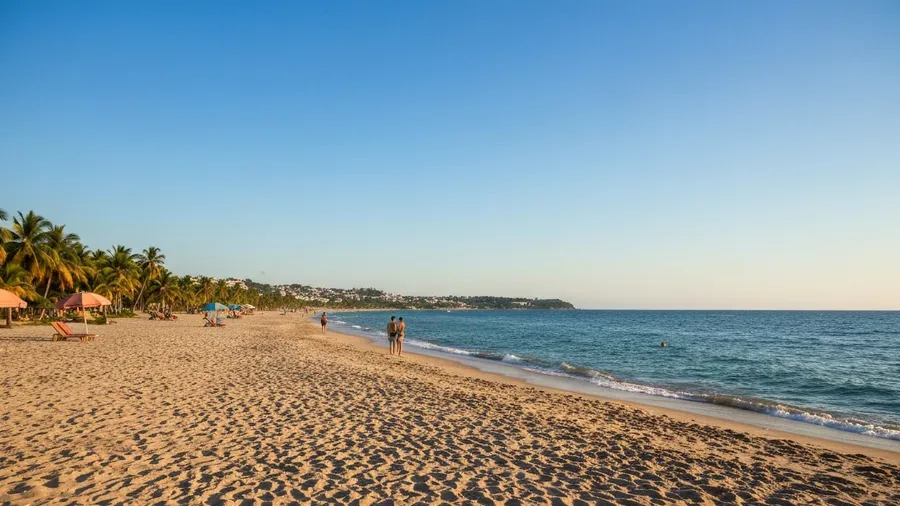
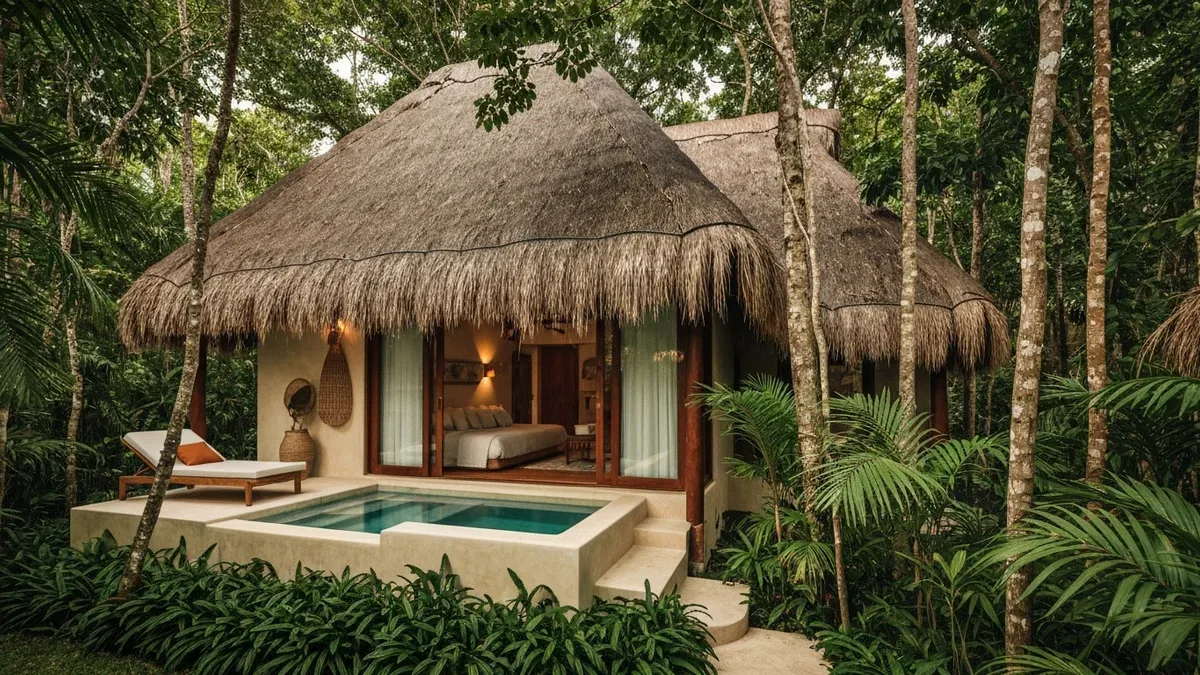
Jungle-zone properties that lead with outdoor living spaces, natural materials, and morning light photography convert at significantly higher rates than those using interior-only shots.
Sustainable Design as a Marketing Requirement
of Tulum STR guests in the $200+/night segment specifically mention "eco-friendly," "sustainable," or "natural materials" in their post-stay reviews — indicating these aren't just nice-to-haves, they're booking drivers.
In most STR markets, sustainability is a bonus feature. In Tulum, it's table stakes for the premium segment. Guests paying $280/night in Tulum are choosing it specifically over a Cancún all-inclusive or a Miami hotel. The trade they're making is comfort and convenience for experience and values alignment. If your property looks and operates like any other generic vacation rental — concrete floors, IKEA furniture, standard amenities — you've broken the implicit promise of the Tulum booking.
The specific design elements that consistently appear in high-converting Tulum listings: natural palapa roofs, raw wood and stone finishes, outdoor shower areas, jungle-facing hammocks or daybeds, solar panels (even if you also have grid power), locally sourced art, and composting or waste reduction practices that are listed explicitly in the amenities section.
None of this needs to be expensive renovation-level work. A $3,000 investment in a palapa-style palapa coverage for an outdoor seating area, strategic planting around the perimeter, and a local artist commission for two or three pieces can transform a property's visual identity entirely. What matters is that the photography captures it correctly — see our branding service for how we approach Tulum-specific visual identity work.
The Digital Nomad Overlap: Longer Stays, Lower Turnover
Tulum has developed a significant digital nomad and extended-stay community, particularly in the Aldea Zamá and Holistika areas. These guests are looking for 14–30 day stays, reliable fast internet (a genuine challenge in parts of Tulum), and a setup that lets them work during the day and experience Tulum in the evenings and weekends.
The economics of capturing this segment are compelling: longer stays mean dramatically lower turnover costs, fewer cleaning fees as a % of revenue, and more stable occupancy during shoulder months (May and October are prime remote work months when beach road tourists have gone home). A 28-day stay at $180/night nets more than two weeks of 3-night bookings at $280/night once you account for cleaning, turnover labor, and booking platform fees.
To attract this segment, you need: documented WiFi speed (advertise the actual Mbps, not just "fast WiFi"), a dedicated desk with a proper chair, blackout curtains for daytime work focus, and a monthly rate that's 30–40% below your nightly equivalent. List explicitly on Airbnb Monthly Stays and Furnished Finder. The best Tulum properties are booking this segment through May–October as their occupancy backbone.
Run an internet speed test during your listing photography session and include the screenshot in your listing photos. It sounds trivial — but digital nomads tell us it's one of the three things they check before even reading the listing description. If your WiFi is strong, prove it visually.
What Doesn't Work: Generic "Beachfront Paradise" Copy
The single most common mistake Tulum hosts make in their listing copy is using generic tropical vacation language: "your paradise escape," "beachfront bliss," "tropical heaven." This copy is invisible to Tulum's target guest because it sounds exactly like every other listing in the Yucatán Peninsula.
Tulum guests are sophisticated travelers who've often been to Bali, Costa Rica, and Portugal. They're not looking for "paradise" — they're looking for a specific experience that feels intentional and authentic. Your copy needs to describe that specificity: the morning sound of the jungle, the specific cenote five minutes from the property, the local chef who does private dinners, the yoga instructor on call.
The listing that books consistently at $280/night doesn't open with "Welcome to paradise!" It opens with: "Casa Kukulkán sits 200 meters from the Actun Chen cenote system, in the quiet jungle section of Aldea Zamá where you'll hear more howler monkeys than tuk-tuks." That's specific, visual, and impossible to confuse with a generic Cancún hotel listing.
Tulum STR Market Snapshot
Key Insights
- Cenote access drives a 3.2x rate premium — properties with this feature should lead every photo and the opening line of their listing description
- Digital nomad extended stays (14–30 days) are the most effective shoulder-season strategy for May–October occupancy
- Generic tropical copy is the most common listing mistake — Tulum guests are looking for specific, authentic experiences, not "paradise escape" language
The Bottom Line
Tulum is a market where the guest psychology is the strategy. These aren't generic vacationers — they're experience-seekers with specific aesthetic preferences, values, and content aspirations. If your property and listing speak directly to that identity, you compete at $280+/night with strong occupancy. If your property is generic, you compete at the bottom of the market in one of Mexico's most competitive STR destinations.
The investments that move the needle most in Tulum are photography (specifically, outdoor lifestyle photography that captures the experience rather than just the rooms), listing copy that's specific and place-rooted, and a clear digital nomad offering for the extended-stay market. None of these require rebuilding the property. They require reframing how it's presented.
See our Tulum market guide for zone-level data, review the glamping launch guide if you're considering an eco-luxury new build, and look at our Instagram Reels STR strategy for how to build the social content funnel that Tulum's guest acquisition depends on.