

Barcelona's city council made a decision in 2023 that sent a clear message to the STR market: existing tourist apartment licenses would not be renewed when they expire. Around 10,000 licenses are affected over the coming years, representing a substantial portion of the city's short-term rental supply. This is deliberate, structured, and very unlikely to reverse — the political will behind it is strong, driven by a genuine housing affordability crisis in one of Europe's most visited cities.
For hosts with expiring licenses, this is a crisis. For hosts with valid long-duration licenses, it's the best news the market has had in years. Fewer competitors, same level of tourist demand — and rates in Barcelona have already responded. Average daily rates are up 35% since supply began contracting. The constraint that's hurting some operators is directly benefiting others.
The License Non-Renewal Policy: What It Means in 2025
Source: Ajuntament de Barcelona Tourism Statistics, AirDNA Spain Report 2024
Barcelona's tourist apartment (HUT — habitatge d'ús turístic) licenses were previously renewable and transferable. The 2023 policy change declared that all HUT licenses would expire without renewal at their current expiration date, with no new licenses issued in central Barcelona districts. The affected zones cover Eixample, Gràcia, Sant Martí, Sants-Montjuïc, and the majority of where tourism demand concentrates.
Properties that still hold valid licenses — typically those with 3–10 year terms granted before the policy change — are operating in a substantially improved competitive environment. Occupancy for these properties in prime neighborhoods is running at 76%+ annually, with summer peak (June–September) pushing above 90% for well-positioned listings.
Eixample vs Barceloneta vs Gothic Quarter Positioning
Within the surviving compliant supply, neighborhood positioning drives significant rate differences:
Eixample: The design district. Modernist architecture, Antoni Gaudí proximity, high-end shopping. The most prestigious address for STR guests who want a Barcelona apartment rather than just a bed. Licensed apartments here average €200–€280/night. The Eixample guest is typically cultural-travel oriented, 35–60, and comparing your apartment to boutique hotels. Your listing needs to look like a design publication spread, not a real estate photo.
Barceloneta: The beach neighborhood. High demand from sun-and-sea tourists, bachelor and bachelorette parties, and young European summer travelers. ADRs of €150–€220/night. Operationally more demanding (high turnover, noise complaints risk, party guest incidents). The rate premium is real but the management overhead is higher than Eixample.
Gothic Quarter / El Born: The historic core. Narrow medieval streets, tapas bar density, walkable to the main tourist attractions. Strong demand from history and culture tourists. Licensed apartments here are rare because historic buildings have complex compliance requirements. When one comes to market, it commands premium rates — €190–€260/night — because the supply is genuinely constrained.
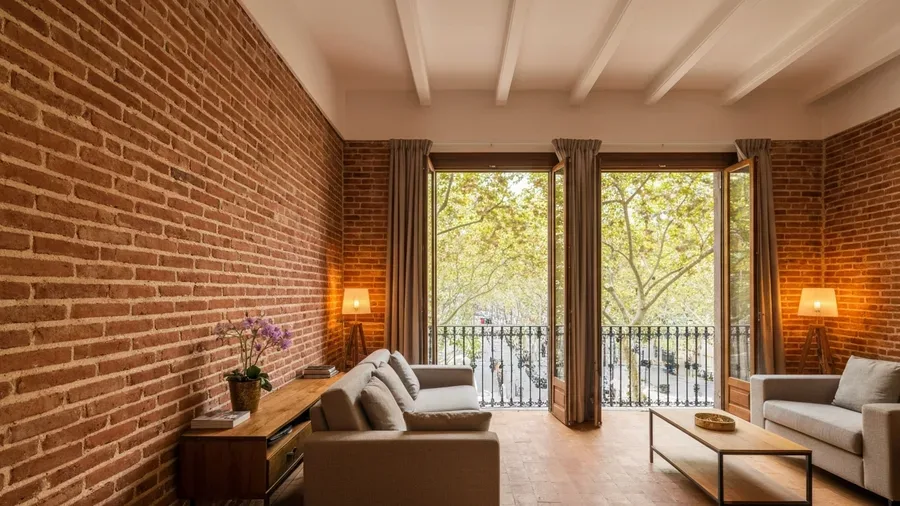
Eixample apartments that lead with original architectural features — Modernista details, original tile floors, high ceilings — consistently command 25–40% above equivalent modernized units.
The Cruise Ship Calendar: Using Demand Spikes Correctly
annual occupancy for top-tier licensed Barcelona listings — with June–September peaks above 90% driven by European summer travel and Barcelona's position as the Mediterranean's leading cruise port.
Barcelona is the busiest cruise port in Europe, handling 2.5–3 million cruise passengers per year at Port Vell. For STR hosts, the cruise calendar is a demand signal that most hosts either don't track or undervalue. Cruise turnaround days (when multiple ships arrive and depart the same day) create demand spikes from passengers who extend their stay before or after their cruise — they book 1–3 nights in the city.
The cruise calendar is publicly available via Port de Barcelona's published schedule. Cross-referencing your pricing calendar with major cruise turnaround days — particularly during shoulder months (April–May, October–November) — lets you time pricing increases to demand that most hosts miss. A Tuesday in October looks like a slow midweek night until you check and see four ships in port with 18,000 passengers turning over.
Alternative Opportunity: Rural Catalonia
For investors who want to enter the Catalan STR market but don't have a Barcelona HUT license, rural Catalonia represents the growth opportunity. The wine country around Penedès (30–45 minutes from Barcelona), the Costa Brava north of the city, and the Pyrenean foothills all have active rural tourism licensing that's still accessible for new applicants.
The demand profile for rural Catalan properties is different from Barcelona: longer stays (5–10 days), higher-spend guests (couples and families on gastronomic/nature travel), and lower operational complexity than urban short-term rentals. ADRs for quality rural properties range from €150–€350/night, and the gap between a well-presented rural Catalan property and a poorly positioned one is enormous — almost no one in this segment invests in professional photography or marketing.
See our branding service for how we approach rural Catalan property positioning, and review our Airbnb Luxe qualification guide for how rural premium properties can access Airbnb's highest-tier inventory.
If you hold a valid Barcelona HUT license, list the license number prominently in your listing description and include a line like "Licensed tourist apartment — fully compliant with Barcelona HUT regulations." Guests are increasingly aware of Barcelona's licensing situation and they specifically search for compliant properties. The license is a trust signal worth displaying.
The Bottom Line
Barcelona's supply contraction has made the remaining licensed properties more valuable than they've ever been. The 35% rate increase and 76% annual occupancy for compliant listings reflects a market where demand is strong, supply is shrinking, and the competitive dynamics favor the hosts who stayed legal and invested in quality presentation.
If you hold a Barcelona HUT license, this is the moment to maximize your listing quality — professional photography, a brand identity that justifies the rate premium, and smart pricing that captures cruise calendar and event demand during shoulder months. The competitive environment is the most favorable it's been in a decade.
If you're considering entering the Catalan STR market, the path runs through rural Catalonia's accessible licensing, not through Barcelona's constrained urban zone. The rural opportunity is under-marketed, under-photographed, and available to new entrants in a way the city isn't.
Compare Barcelona's regulatory trajectory with Lisbon's in our Lisbon market guide, and review the global regulatory trend overview in our STR regulations tightening guide. If you're competing at the luxury end of the Barcelona market, see how to position for the top tier with our competing with hotels guide.