Let's be honest about what this article is before you read a word of it. This is Cavmir handing Cavmir an award. We think we're the best short-term rental website builder for 2026, and we wrote 5,000 words explaining why. You should read it the way you'd read any company talking about itself — with a raised eyebrow.
So here's the deal we'll make with you. Instead of just claiming we're the best vacation rental website builder and asking you to nod along, we're going to lay out the actual standard first — the ten things a short-term rental website has to do in 2026 to earn the word "best." Then we'll show our work against each one. If a competitor does one of these better than we do, that section will tell you so. And at the end, if you're the kind of host who should buy DIY software instead of hiring us, we'll say that too, out loud, on our own site.
That's the honest version of a "choice award." Not a trophy we mailed ourselves. A checklist you can hold us to.
The category quietly changed under everyone's feet
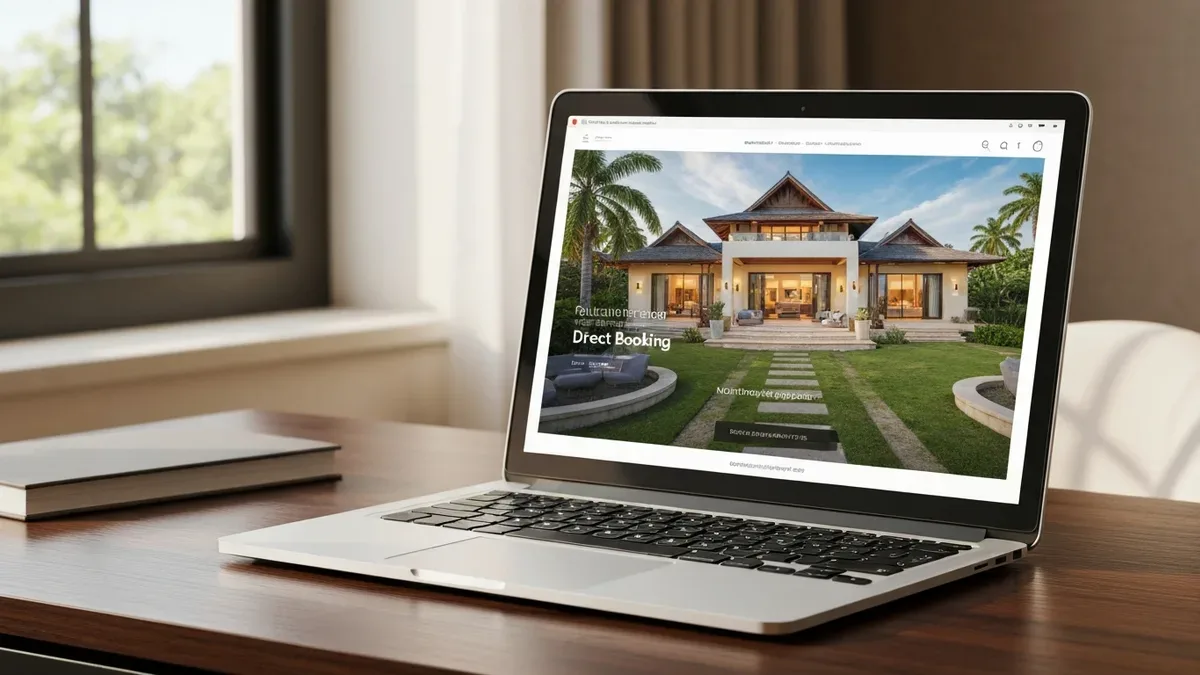
For about a decade, "short-term rental website builder" meant one thing: a tool that put a booking button on a template. You picked a theme, connected a calendar, and you had a direct booking website. That was the whole job. In 2019 it was even a competitive advantage, because most hosts didn't have one.
In 2026 that same website is table stakes, and the job has grown three sizes. Guests don't find stays the way they used to. They ask ChatGPT for "a dog-friendly cabin near Gatlinburg with a hot tub." They watch a fifteen-second reel and screenshot the handle. They open Google Maps and browse by pin. They compare four tabs before they trust a "Book Direct" button over the Airbnb they already have an account with. A booking button sitting on a static template doesn't win any of those moments.
Meanwhile the money math got sharper. Most software-connected Airbnb hosts now pay a 15.5% host-only service fee, and split-fee guests pay another 14.1%–16.5% on top of the nightly rate (Airbnb Help Center, July 2026). A direct booking runs roughly 3% in card processing. The direct channel was always worth building. What changed is that a bare website no longer captures it — the marketing around the website does, and the website has to be built to feed that marketing.
So when we score "website builders" for 2026, we're not scoring booking buttons. We're scoring whether the thing you get actually fills a calendar. Here are the ten criteria, then the case.

1. You can edit it yourself, without a developer
The oldest trap in agency web design is the beautiful site you can't touch. An agency builds you something gorgeous, it goes live, and then you spot a typo in your cancellation policy. Now you're emailing a project manager, waiting three days, and paying an hourly rate to fix a comma. Six months in, the whole site is quietly out of date because changing anything is a chore, and a stale website is a website guests stop trusting.
DIY software solves the typo problem by making you do everything — which is a different trap. You own the edit, but you also own the design, the copy, the photos, the SEO, and the four hours it takes to figure out why the header font changed on mobile.
The 2026 standard is the middle path, and it's the one we built: a site that's designed and written for you by people who do this all day, plus a simple self-editing backend where you can change your own copy, swap a photo, update a rate note, or fix that comma in ninety seconds, from your phone, without knowing what HTML is. When you hit save, it's live. No ticket, no wait, no invoice.
That's the Cavmir backend, and it's the feature hosts tell us they didn't know they were allowed to want. You get the polish of a done-for-you build and the control of a tool you own. If we did our job and you never need to touch it, great. If you want to run a last-minute "book three nights, get the fourth free" line across your homepage before a holiday weekend, you can do that yourself, right now, and take it down Tuesday.
A website you can edit is a website that stays alive. That's criterion one, and it's the foundation for half the ones that follow.
2. A real backend you actually own
There's a quiet clause in a lot of website tools that hosts don't read until it matters: what happens to your site the day you stop paying. With a lot of DIY builders, the answer is that it disappears. The pages, the content, the structure — it all lived inside their platform, and when the subscription ends, so does the website. You were renting, even if it never felt like it.
Owning your backend means owning the thing your business runs on. In 2026 your website isn't a brochure you print once; it's the operating layer for your direct channel — where your listings, your descriptions, your rates displays, your guides, and your leads live. That belongs to you.
The Cavmir backend is a proper client platform, not a folder we keep on our side. You get your own secure login, protected with two-factor authentication, and a real content system behind it. You can see your listings, manage what shows publicly, edit copy, and publish changes yourself. It's multi-property from day one, so whether you have one cabin or forty units, it's the same clean back office. And because the content is structured and yours, it travels with you — it isn't trapped inside a template you're afraid to outgrow.
This is also what makes everything else on this list possible. A site with a real backend can hold more than a booking calendar. It can hold long-term listings, sale listings, experiences, guides, and a map — because there's an actual system underneath instead of a string of template pages. Which brings us to the criterion that surprises people most.
3. More than nightly stays: long-term rentals and for-sale listings, too
Here's a pattern we see constantly. An owner starts with one short-term rental. Then a unit sits empty in the shoulder season and they think, I could rent this for three months to a traveling nurse. Then they buy a second property, and a year later they're ready to sell the first one. Suddenly they're a short-term host, a long-term landlord, and a seller — and they're running three completely disconnected tools to be all three, none of which share a brand.
A 2026-grade platform handles all three on one site, under one brand, on your own domain. Nightly stays, monthly rentals, and properties for sale, side by side, so a guest who loved the place can see that the building down the street is available to buy, and a long-stay inquiry doesn't have to bounce to some generic listings portal that looks nothing like you.
A word on how this works honestly, because it matters. Your nightly availability and pricing stay where they belong — inside your property management system, synced through, always accurate. We never become the source of truth for a nightly rate; your PMS is. What the Cavmir backend adds is everything the PMS doesn't do: the long-term listings, the for-sale listings, the story, the design, and the marketing wrapped around all of it. You get one branded home for every way you make money from real estate, without us pretending to run the parts your PMS already runs well.
This is a genuine gap in most "direct booking website builders," and it's not an accident. They're built to do one job — put nightly stays online — because that's the box they were designed for. If your ambitions are bigger than nightly stays, the tool that only does nightly stays becomes a ceiling. Ours is built to grow into a portfolio, and into real estate, because plenty of our clients are headed exactly there.
4. Experiences and local guides that sell the trip, not just the bed
Nobody books a week away because of a mattress. They book because of a feeling — the morning coffee on the deck, the trailhead ten minutes up the road, the taco place the owner swears by. The listings that win in 2026 sell the trip, and the website is where that story gets told properly, with room to breathe that an Airbnb listing never gives you.
So the standard here is content that goes beyond the property: an experiences section that curates what to do nearby, and local guide pages that read like a well-traveled friend wrote them, not a directory. Where to eat. When to visit. What's worth the drive. The best day trip nobody tells you about.
This does two things at once, which is why it's on the list. First, it converts — a guest who can already picture their trip is a guest who books, and books direct, because your site gave them something the OTA listing didn't. Second, it's some of the best SEO you can own. "Things to do in" and "best time to visit" searches are enormous, they're exactly what your future guests type, and a genuine guide library catches them long before they're ready to book. Then it hands them straight to your calendar.
We build these as part of the site, in your voice, tied to your specific market — not a generic widget bolted on. A short-term rental website that only talks about the four walls is leaving its best marketing on the table. The trip is the product. The bed is just where it happens.
5. A real map and real search
People think in places. "Somewhere near the beach." "Walking distance to Main Street." "On the lake, not just lake-view." A list of property cards doesn't answer that question; a map does. And once you have more than a couple of listings — or you're marketing a whole market — a map with real search stops being a nice touch and becomes how guests actually navigate.
The 2026 standard is an interactive, map-led way to explore: guests browse by pin, filter by what matters to them, and search across your portfolio or your market the way they'd search anything else. It's the difference between making someone read and letting them look. Look wins.
We build this because we already do it at scale — Cavmir maps and organizes stays across markets so a visitor can move from a region to a neighborhood to a specific property without ever feeling lost. On your own site, that same capability turns a flat list into something a guest wants to poke around in. And "wants to poke around in" is most of the battle, because time on the site is trust, and trust is what tips a guest from the platform they know to the direct booking you'd rather they make. You can see how we think about place-based browsing across our locations, then imagine that pointed at your own doors.
6. AI-assisted video
If you only add one thing to your marketing in 2026, make it video. Short-form motion is the format guests stop for — on your homepage, in a reel, in an ad. A still photo says "here is a room." A ten-second clip says "here is what your morning feels like." One of those sells a stay.
The old problem with video was cost and cadence. A proper shoot meant a crew, a day, and a bill, and you got a couple of polished clips that were dated the next season. That math kept video as a once-a-year luxury for most hosts. It doesn't have to anymore. AI-assisted production means we can create and refresh cinematic property video and short social clips on a real schedule, at a fraction of the old cost, without a film crew parked in your driveway every month.
We lean into this hard, and it's genuinely part of what you get — video for the website, video for social, video for ads, produced with an AI-assisted pipeline and finished by human eyes so it looks like your brand and not a template. The point isn't "we use AI" as a bragging right. The point is that motion used to be out of reach for a single-property host and now it isn't, and the hosts who put moving pictures in front of guests are the ones getting stopped mid-scroll.
A website builder that hands you an empty video slot and wishes you luck has missed the most important shift in how stays get sold this decade. The stay is a feeling. Video is how you transmit it.
7. Social content that actually ships — 30 days at a time
Every host knows they "should be posting." Almost none of them do it consistently, and the reason is completely human: it's a grind, it's easy to skip, and a skipped week becomes a skipped month becomes a dead account that makes your brand look abandoned. A website that doesn't come with a social engine is quietly asking you to take on a second unpaid job you already know you won't keep up.
So the 2026 standard is social content that ships on a schedule without living in your head. For us, that means we build a month of branded posts at a time — a run of thirty days of four-image carousels, each one designed in your colors, telling a little story about your property and your place, produced with AI and reviewed by a human before anything goes out. It posts to Instagram and Facebook on a cadence, so your feed looks alive whether or not you thought about it this week.
This is the part DIY software structurally can't give you, and it's worth being precise about why. A tool can give you a template; it can't give you thirty finished, on-brand, human-checked posts a month, every month, tied to the same brand as your website. That's not a feature you toggle on — it's work that gets done, by someone, on a schedule. A website that arrives with its own steady social presence is worth more than a prettier template with a silent feed, because attention is the thing you're actually competing for, and you only get it by showing up.
Consistency is the whole game with social, and consistency is exactly what a human running a busy property can't promise and a system can. That's the point of building it into the platform instead of leaving it as homework. You can see how we think about it on our social media work.
8. Built to be found in 2026 search — Google and the AI answer engines
A beautiful website that nobody lands on is a very expensive brochure. Getting found is the hard part, it's the part that actually fills a calendar, and in 2026 it split into two jobs instead of one.
The first is still classic SEO: ranking on Google for the searches your guests type — your market, your property type, "things to do," "pet friendly," "direct booking." That means fast pages, real content depth, clean structure, and the guide library we talked about in criterion four all working together. It's the discipline behind our SEO work, and it's why a Cavmir site is built as a search asset from the first line of code, not decorated with keywords afterward.
The second job is new, and it's the one racing up the priority list: getting cited by AI answer engines. More guests every month start their trip planning by asking ChatGPT, Perplexity, or Google's AI overviews instead of scrolling ten blue links. When someone asks an assistant for "a good direct-booking cabin near Asheville," you want to be in the answer. That takes structured data, genuinely useful content, and pages an AI can read and trust — the same fundamentals as good SEO, pointed at a new kind of reader.
Here's where we'll plant a flag, because it's the criterion the competition is loudest about. Getting mentioned by an AI is downstream of being a real, credible, well-structured source — and credibility is built on substance, not clever formatting. Cavmir brings something to that fight most website tools simply don't have: real data and real depth behind the brand, from market guides to a national short-term-rental permit dataset compiled from official records. When your site is part of an operation that publishes things worth citing, the AIs have a reason to cite you. A booking template with AI copy poured into it does not have that reason. Structure gets you in the door; substance is what gets you quoted.
9. Done for you, not assigned to you
This is the criterion that reorganizes all the others, so we saved it for near the end. Every capability on this list — the video, the social, the SEO, the guides, the map — is real work. The question no website builder wants you to ask out loud is: who actually does it?
DIY software answers honestly by omission. It hands you a powerful set of tools and a login, and every hour of the actual work is yours. That's a fair trade for a specific kind of person — more on them in a second — but it's important to see it clearly. Software subscriptions look cheap next to an agency until you price your own hours. The site goes up over a weekend, and then it sits: no new content, no campaigns, no video, no posts, while the OTAs keep collecting their 15.5% on every booking you didn't win directly (Airbnb Help Center, July 2026). A direct booking website with nobody driving it is a parked car.
The agency model exists because the marketing is the hard part, and the marketing is a job, not a purchase. Cavmir is a team you hire, not a tool you rent. We build the site, and then we run the channel — listing optimization, SEO, content, social, video, and ads — month after month, while you run the property. You approve; we operate. When something needs doing, a person does it. That's the entire difference between a login and a team, and it's the difference between a website that exists and a website that produces.
We're a marketing agency, to be clear about what we are and aren't. We don't manage your property or become your PMS. We make the phone ring and the calendar fill, and we make your brand look like it's worth the direct price. You can read exactly how we work in the direct booking website service and the wider 12-step system it lives inside.
10. One brand, everywhere
The last criterion is the one guests feel without being able to name it: coherence. A traveler who clicks from your Instagram to your website to your Airbnb listing to your Google profile should feel like they never left the same business. The same voice, the same look, the same promise. When those four things match, you feel established and trustworthy. When they don't — a slick site, a bare listing, a dead feed, a bare Google pin — you feel like a hobby, and hobbies don't get the direct booking.
A website builder that only builds the website can't give you coherence, because coherence lives in the gaps between the tools. The listing copy has to rhyme with the site. The social has to look like the homepage. The Google profile has to point back at the brand. Someone has to hold the whole thing together, and a single-purpose tool by definition doesn't reach past its own edges.
Because Cavmir does the site and the listings and the social and the search and the video as one engagement, the brand is consistent by construction, not by luck. That's the quiet compounding advantage of hiring one team for the whole channel instead of assembling five tools and hoping they agree. It's also, frankly, the thing you can't buy off a pricing page for $16 a month — not because the software is bad, but because coherence is work that a person does across tools, and there's no toggle for it.
The honest caveat: when you should not pick us
If you are a hands-on self-manager who genuinely enjoys building web pages, writing your own copy, and running your own marketing, and you want the lowest possible monthly bill — buy DIY software, sincerely. You will do fine, and you do not need an agency. We would rather tell you that here than after a sales call.
We promised at the top that we'd say when we're not the answer, so here it is plainly. The host who thrives on a tool like Lodgify or CraftedStays is a real person, and it's a specific person: someone with more time than budget who actually likes the work. They'll assemble the site, test headlines, learn the SEO, and post to social because they enjoy it. For them, paying an agency to do what they'd happily do themselves is a waste of money, and we'll say so.
Most owners we talk to aren't that person. They tried the DIY route, the site went up, and then it sat — because the marketing is a job, and they already have one. If that's you, the honest recommendation is a team, not a tool. If it's not you, we've written head-to-head breakdowns that are fair to the software: see Cavmir vs CraftedStays and Cavmir vs Lodgify, or the full three-ways-to-get-a-direct-booking-website map. And if you want to sanity-check where your current site actually stands before you decide anything, run it through our free website grader — it checks 27 real things and tells you the truth, even when the truth is "a weekend of fixes will carry you."
So, the 2026 choice
Score the ten criteria and the pattern is hard to miss. A booking button on a template — the thing "website builder" used to mean — clears maybe two of them. Modern DIY software clears more, honestly, and for the right host it's genuinely enough. But self-editing without becoming your own web team, a backend you own, long-term and for-sale listings alongside nightly stays, experiences and guides, a real map, AI-assisted video, social that ships thirty days at a time, search built for Google and AI, all of it done for you, all of it one brand — that's a different kind of thing than a website builder. That's a channel, built and run.
That's the standard we set out to clear, and it's why we're comfortable giving Cavmir our own 2026 choice — with the caveat right there in the previous section, in writing, on our own site. Not a trophy in the mail. A checklist you can hold us to, and a promise that we'll tell you when the tool is the smarter buy.
If the ten things above sound like exactly what you don't have time to do yourself, that's the whole reason we exist. See what a build-and-run engagement includes on the direct booking website page, check the openly published pricing, and when you're ready, talk to us. We'll start by telling you honestly whether you even need us.
And if you want to keep reading first, the direct booking website playbook, the Airbnb vs direct booking economics breakdown, and our honest PMS comparison all go deeper on the pieces this article only had room to summarize.