
Ask five web designers what a direct booking website costs and you'll get five answers spanning two orders of magnitude — anywhere from $16 a month to $30,000 upfront. All five answers can be technically true, which is exactly why so many hosts stall on the decision for years. The real question isn't "what does a website cost." It's "what does this specific kind of website cost, for my specific property, and how long until the commission savings cover it."
This guide walks through the honest numbers: the three ways to get a direct booking site built, what each actually includes, the commission math you can redo yourself with your own revenue figures, and — because it's true more often than agencies like to admit — the situations where a direct booking website is not worth building yet.
Start With the Math You Can Redo Yourself
Before pricing a website, price the problem it solves. Every booking that comes through a major platform carries a fee load. Airbnb's fee structure means roughly 14–16% of what your guest pays never reaches you, whether it's charged to your side, the guest's side, or split between the two. Booking.com commissions for accommodations typically start at 15% and run higher in many markets. Vrbo's pay-per-booking model takes a smaller host commission but adds service fees on the guest side that push your effective rates down.
Call it 15% as a working number. Now the math is simple enough to do on the back of a utility bill:
- Annual gross bookings × 0.15 = your annual platform fee load. A cabin grossing $60,000 a year is carrying roughly $9,000 in annual fees across host and guest sides.
- Realistic direct share × fee load = annual savings. You will not move 100% of bookings direct — nobody does. But repeat guests, referral guests, and guests who find you through Google are all realistic direct-booking candidates. If a direct site captures 20% of that $60,000 in bookings, you keep roughly $1,800 a year that the platforms would have absorbed — every year the site exists.
- Build cost ÷ annual savings = payback period. A $4,000 build against $1,800 in annual savings pays for itself in a little over two years, then keeps paying.
That's the conservative version. It ignores the second-order benefits: direct guests share their email addresses (which the platforms mask), direct guests can be marketed to for repeat stays, and direct rates can undercut your OTA rates by a few percent while still netting you more per night. If you want the mechanics of actually converting platform guests into direct ones, our guide to building a direct booking system alongside Airbnb covers that pipeline in detail.
of gross booking value is a reasonable working estimate for what the major platforms collect across host and guest fees. Whatever your exact channel mix, multiply your own annual gross by your own blended fee rate — that number, compounding every year, is what a direct booking website is competing against.
The Three Ways to Build, and What Each Really Costs
Option 1: DIY website builders — roughly $200 to $600 per year
General-purpose site builders run $16–50 per month depending on plan and features. Vacation-rental-specific builders that bundle a booking engine, calendar sync, and payment processing typically land in a similar monthly range, sometimes with a percentage fee on direct bookings layered on top.
What you get: a functional page with your photos, a calendar, and a way to pay. What you don't get: search visibility. DIY builds almost never rank for anything beyond your exact property name, because ranking requires the technical and content work — page speed, structured data, location-specific content — that templates don't do for you. A DIY site works fine as a destination for guests who already know about you (repeat guests, business cards, a link in your Airbnb host profile). It rarely generates new demand on its own.
Option 2: Template-based professional build — roughly $1,500 to $5,000
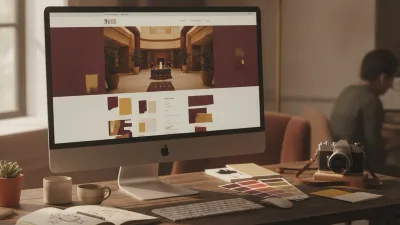
A freelancer or small studio takes a proven template, customizes it with your branding and photography, connects a booking engine, and handles the technical setup you'd otherwise get wrong. This is the sweet spot for many single-property and two-to-three-property hosts: professional enough to convert visitors, cheap enough to pay back within a couple of seasons.
The quality range here is wide. The difference between a $1,500 template job and a $5,000 one is usually the invisible work: whether the images are compressed properly, whether the site loads in under three seconds on a phone, whether schema markup tells Google this is a lodging business, and whether anyone wrote actual location content or just pasted your Airbnb description onto a prettier page.
Option 3: Custom agency build — roughly $5,000 to $20,000+
A ground-up build with custom design, professional copywriting, full SEO architecture, booking engine integration, and analytics. Past $20,000 you're generally paying for either multi-property portfolio functionality, custom software, or an agency's brand name. For most independent hosts and small inns, the meaningful custom range is $5,000–12,000.
Custom makes financial sense when the revenue justifies it: multi-property portfolios, high-ADR homes grossing six figures, and inns or boutique hotels where a few percentage points of direct share shift is worth tens of thousands of dollars a year. A host with a single $150-a-night cottage does not need a $15,000 website, and any agency that says otherwise is selling you their margin, not your payback.
What a Proper Build Includes (and What to Ask For)
Whether you're paying $2,000 or $10,000, a direct booking website that actually earns its keep needs five things. Use this as your checklist when comparing quotes:
- A real booking engine. Live availability, real-time pricing, and payment processing — not a contact form that says "inquire about dates." Every extra step between "I want these dates" and "paid" loses bookings. If you run a PMS, the engine should sync with it so you never double-book; our roundup of property management systems for short-term rentals covers which ones play well with direct sites.
- SEO architecture. Clean URLs, proper heading structure, meta titles written for the searches guests actually make ("cabin with hot tub near Gatlinburg"), and location content that gives Google a reason to show you. This is the difference between a site that generates demand and one that just receives it.
- Speed. Vacation rental sites are photo-heavy, and unoptimized photos are the number one reason they load slowly. Images should be served in modern formats and sized for the screen requesting them. Slow sites lose mobile visitors before the hero photo finishes loading.
- Structured data. Schema markup that identifies your property type, location, and amenities to search engines. It's a few hours of technical work that most cheap builds skip and most guests will never see — but Google reads it.
- Analytics from day one. If you can't see where visitors come from and where they abandon the booking flow, you can't improve either. Ask every builder how conversion will be measured. If the answer is vague, the build will be too.

The build quote is one number. The commission math against your own gross revenue is the number that actually decides whether to sign.
When a Direct Booking Website Is Not Worth It
An honest cost guide has to include this section. There are real situations where the right answer is "not yet":
- A single listing with a low ADR and modest gross. If your property grosses $25,000 a year, 15% is $3,750 — and a realistic 15–20% direct capture saves you $550–750 annually. A $4,000 build takes five-plus years to pay back. Use a DIY option or simply wait until you add a property or raise rates.
- Your calendar is already full at your target rate. If the platform fills you at the price you want, a direct site is a margin play, not a demand play — worthwhile eventually, but not urgent.
- You have no repeat-guest engine. Direct bookings come disproportionately from people who have already stayed with you or were referred. If you're in year one with no guest list, your money is usually better spent on photography and listing quality first.
- You're in a market where discovery is 100% platform-driven. Some markets have almost no direct-search behavior. Big drive-to markets like Gatlinburg and the Orlando–Kissimmee corridor have heavy "book direct" search volume; a remote lakeside cabin in a town nobody Googles may not. Check search volume for "[your town] vacation rental" before you build.
Before you spend a dollar, open your platform dashboards and count how many of last year's bookings came from previous guests or their referrals. That count times your average booking value times 15% is the floor of what a direct site saves you in year one — because those guests would have booked direct if you'd given them somewhere to do it. If that floor number is bigger than a template build, you already have your answer.
A Realistic Payback Timeline
Here's how the first two years typically play out for a host who builds a proper site and actually promotes it — the link goes in every guest message thread where the platform allows it, the welcome guide, the post-stay email, and a Google Business Profile where eligible:
Months 1–6: Direct bookings trickle in from repeat guests and referrals. The site converts existing demand rather than creating new demand. This is normal — search engines take months to rank new sites for anything competitive.
Months 6–18: If the SEO work was real, location and property searches start producing visitors. Email marketing to past guests (which becomes possible once you're collecting addresses at check-in) starts generating repeat direct stays. Most well-built sites for established properties reach cumulative break-even somewhere in this window.
Year 2 onward: The site is a paid-off asset. Every direct booking from here is margin the platforms would have taken. Hosts who layer on email marketing to past guests typically see the direct share keep climbing, because the repeat-guest flywheel compounds while the build cost stays fixed.
This is the model behind Cavmir's direct booking website design service — the build includes the booking engine integration, SEO architecture, and speed work described above, because a direct site that can't be found or can't take a payment is just an expensive brochure. And where a build doesn't pencil out, we'd rather tell you that in the first call — the SEO fundamentals and your listing quality usually matter first.
The Bottom Line
A direct booking website costs somewhere between a few hundred dollars a year and $20,000 upfront, and the honest answer for most independent hosts is in the $1,500–8,000 range for a build that can actually rank, load fast, and take a booking end to end. Whether that's worth it isn't a matter of opinion — it's your gross revenue, times your blended platform fee rate, times a realistic direct-capture share, divided into the build quote. Run that math with your own numbers before any sales call, and you'll know more than most of the people quoting you.
If you'd like a second set of eyes on your numbers — what your property could realistically capture direct, and what kind of build actually fits that — reach out. A short conversation with your revenue figures on the table usually settles the question either way.