
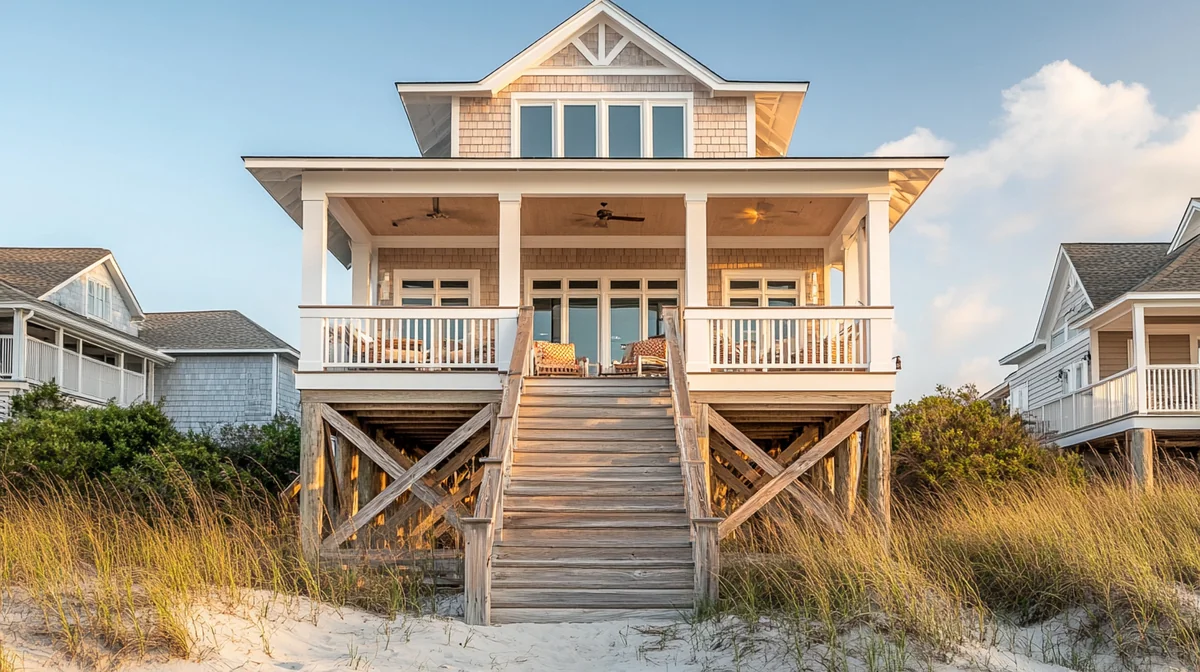

The most common problem I see at the top of the market is the least expected one: the property is extraordinary and almost nobody knows. The architecture, the service, the setting — all of it clears the bar of the best places in the world. And the marketing is a handful of good photos, a booking form, and a listing on a couple of platforms that flatten a once-in-a-lifetime villa into a search result next to a hundred lesser ones. The product is doing its job. The brand isn't yet doing its.
Luxury marketing runs on different rules than everything below it. It's built on desire and scarcity rather than deals, on distribution through the people affluent travelers actually trust, and on restraint — the discipline to say less, show beautifully, and never look like you're chasing. Discounts erode a luxury brand; the wrong channel cheapens it; a stock-looking website undoes a nine-figure property in three seconds. Getting it right means building an editorial-grade brand, placing it where high-net-worth guests and their advisors look, and letting aspiration do the selling.
This is how I'd approach the marketing of a resort or a luxury villa that deserves a global audience — the positioning, the brand system, the website, the distribution through luxury travel advisors, the influencer and press strategy, and the direct, high-value guest relationships that matter most at this level. On anything touching rates, revenue management, or contracts with distribution partners, defer to your commercial team; my lane is the brand and the demand.
Positioning at the top of the market
At the luxury end, positioning is the whole game, because the guest isn't comparing price — they're choosing which extraordinary thing to spend a rare week and a serious sum on. What makes your property the one? The answer has to be specific and true. "Luxury villa with a pool and a view" describes ten thousand places. "The only house on this stretch of coast with private access to the cove, a resident chef, and a design pedigree worth flying for" is a position. The clearer and more particular the promise, the more it commands.
Restraint is part of the positioning. The strongest luxury brands in 2026 lean quiet — confident, understated, letting the property and the experience speak rather than shouting superlatives. Overclaiming reads as insecurity; the market can smell it. Decide precisely who your guest is (the multigenerational family buying a private compound for a milestone, the couple marking an anniversary, the group of friends who charter the whole property) and let everything align to them. Trying to be for everyone at the top of the market makes you memorable to no one with the means to book.
Scarcity is part of what you're selling, so protect it. A property that's always available, always promoted, always a little too eager reads as less special; one that's clearly in demand, selective, and confident reads as worth the wait and the rate. This isn't playing hard to get for its own sake — it's letting genuine desirability show rather than papering over quiet periods with loud promotion. At the top of the market, restraint signals confidence, and confidence sells.
The brand and visual system
A luxury brand is a system, held consistently across every touchpoint — the mark, the palette, the type, the voice, and above all the imagery. The guest experiences the brand before they arrive, in the photographs, the film, the confirmation, the pre-arrival note, and any inconsistency breaks the spell. The identity has to feel designed by people with taste, because your guest has taste and notices instantly.
Imagery is where luxury is won or lost. Not room shots — editorial, cinematic photography and film that capture the light, the materials, the rituals of the place: the table set for dinner on the terrace, the boat waiting, the spa at dawn, the texture of stone and linen. A short, beautifully shot film for the home page does more at this level than any amount of copy, because it lets a guest feel the property. This is exactly the caliber bar we hold on every image we make — the look of the best travel and design publications, never generic stock. It's the difference between a property that looks worth its rate and one that looks like it's hoping.
Consistency is the quiet luxury signal. When the website, the social feed, the press kit, the advisor collateral, and the on-property printed materials all clearly belong to one considered brand, the guest reads competence and care — the same competence and care they're paying for in the stay. When they don't match, the guest wonders what else is inconsistent.
Extend the system to every physical and human touchpoint, not just the digital ones. The printed welcome materials, the staff's language and presentation, the amenities, the scent of the place, the note left at turndown — a guest paying for the best notices when these cohere, and notices uneasily when they don't. The brand is experienced in a thousand small moments, and the luxury of it comes from every one of them clearly belonging to the same considered whole.
Film and the property story
At the top of the market, moving image does what stills can't: it lets a guest feel the property before they arrive. A short, beautifully shot film — the light moving through the day, the walk down to the water, a table being set, the quiet of the spa at dawn — communicates atmosphere, scale, and a sense of arrival that a gallery of photographs only hints at. For a property most guests will never see in person before they commit a serious sum, that vicarious experience is often what turns interest into a booking.
Invest in a proper film the way you invest in the photography, and use it where it earns its keep: the home page, the enquiry follow-up, the advisor collateral, and the social feed cut into shorter pieces. It should feel like a piece of cinema rather than a promotional video — restraint, real moments, and the same editorial quality that governs every other image of the property. A single evocative film, refreshed as the property or the seasons change, becomes one of the hardest-working assets in the whole marketing program.
Motion also carries the property's story, and luxury runs on story. The design pedigree, the setting's history, the ritual of a stay, the people behind it — these are what make an extraordinary property feel meaningful rather than merely expensive, and film is the medium that tells them best. Guests at this level are buying a story they'll retell; give them one worth the telling, shot well enough to do it justice.
Cut the film for where it will be seen. The full cinematic piece belongs on the home page and in the enquiry follow-up; short vertical cuts belong on social; a tighter edit belongs in advisor collateral. Shooting with these outputs in mind means one production feeds every channel at the right length and shape, rather than a single long film that's wrong for most of the places a guest actually encounters the property.
A booking experience that feels like the property
The website is the digital arrival, and at this level it has to feel like walking through the gates, not like filling in a form. Immersive photography and film, generous space, restrained type, and a sense of discovery as you move through it. The property presented like the singular thing it is. And a booking or enquiry path that matches the guest's expectations — for many luxury properties that's a concierge-style "enquire" flow with a real person responding quickly and personally, not just a card-capture checkout, because a guest spending significant sums often wants a conversation before they commit.
The practical layer still matters, done invisibly: fast, flawless on mobile and tablet, multi-currency and ideally multi-language for a global guest, and secure and compliant. But the guiding principle is that nothing about the site should feel cheaper than the property. A stunning villa behind a clunky, dated, or generic website loses guests in seconds — they extrapolate the whole experience from the digital one, and a poor site tells them to worry. The website is often the first and most controllable proof that the property is as good as it claims.
Design the enquiry path for a considered decision, not an impulse. At this level a guest often wants a conversation — questions about the chef, the layout for their group, whether the boat comes with the house — before they commit, so make reaching a real person easy and make that person responsive, knowledgeable, and gracious. The speed and quality of that first human reply is part of the product; a slow or generic response to a serious enquiry tells an affluent guest to look elsewhere.
Distribution: advisors, consortia, and platforms
High-net-worth travelers frequently don't book the way everyone else does — many plan through a trusted luxury travel advisor, and reaching those advisors is one of the most important distribution moves a luxury property can make. Advisor networks and consortia (the likes of Virtuoso and its peers) are where a large share of top-end travel is planned, and being known, well-presented, and well-supported within that world puts your property in front of exactly the right guests through the people they trust. That means proper collateral for advisors, the right partnerships, and the kind of relationship-building that this channel runs on.
Curated luxury platforms and the premium tiers of the booking channels have their place too, chosen carefully — the point is to be present where affluent travelers and their planners actually look, and absent from anywhere that would cheapen the brand. A destination management company or a specialist rental agency in your region can also be part of the mix. The judgment call at every turn is the same: does this channel enhance the brand and reach the right guest, or does it just add volume at the cost of positioning? At the top of the market, the wrong distribution is worse than less of it.
Support the advisor channel properly or don't bother with it. Advisors put their own credibility on the line when they recommend a property, so they reward operators who make them look good — accurate, beautiful collateral, fast and gracious responses, a genuine relationship, and the occasional familiarization stay so they can speak from experience. A property that's present in the advisor world but hard to work with gets quietly dropped; one that's a pleasure to book becomes a default recommendation. The relationship is the product.
Choose channels by the guest, not the volume
A luxury property's distribution isn't about being everywhere — it's about being in the few places its guest and their advisor trust, presented flawlessly, and nowhere that dilutes the brand. Reach through luxury travel advisors and curated channels beats a scattershot presence across every platform. Fewer, better, on-brand.
Influencer and creator strategy
Aspirational content is oxygen for a luxury property, and the right creators produce it in a way advertising can't — by letting an audience live the experience vicariously through someone they trust. But the luxury bar for creator partnerships is high and the downside of getting it wrong is real: the wrong creator, or content that feels like a paid ad, actively cheapens the brand. Fit is everything.
Choose for audience quality and taste, never for follower count. The right partner has a genuinely affluent, design-literate audience, an aesthetic that matches yours, and a track record of content you'd be proud to have represent the property. A few carefully chosen creator stays a year — travel and design voices whose audiences actually book properties like yours — treated as a considered brand investment and given the freedom to make real, beautiful content, generate more durable desire than any number of transactional placements. Favor depth over reach: long-form, film, and genuine storytelling over a quick tagged post.
The same care applies to any celebrity or tastemaker association. A quiet, authentic connection to the right person can define a property's aura for years; a forced or off-brand one undermines it. At this level, who is seen to love your property matters as much as how many people see it.
Measure creator partnerships by the quality of what they leave behind, not by immediate bookings. A luxury property rarely sells out from a single post; the value is the beautiful, credible content and the association with the right taste, accumulating into desire over time. Judge a partnership by whether the content is something you'd proudly feature yourself and whether the creator's audience is genuinely your guest — and be willing to walk away from a large account that fails either test.
Press and awards
Editorial coverage in the luxury travel press and the recognition of the right awards are trust marks that money can't directly buy, and they carry disproportionate weight at the top of the market. A place on a respected hot list, a feature in a title your guest actually reads, an award that the industry respects — each one reassures a guest that the property is genuinely among the best, and each one drives bookings and advisor confidence for a long time.
Earning them works the way all good press works, with the luxury dial turned up: a specific, compelling story, the right relationships with a small number of the right journalists and editors, patience, and impeccable presentation when the moment comes. A specialist luxury travel PR firm is usually worth it at this level, because the relationships and the fluency in that world take years to build. Awards submissions, curated press stays, and a well-maintained press kit all belong in the plan. The goal is to accumulate the credibility markers the top of the market runs on.
Awards deserve a deliberate, ongoing effort rather than a one-off. Track the submissions that matter in your category, enter them properly with strong materials, and treat each recognition as an asset to be used — on the site, in advisor collateral, in the press kit, in the story you tell guests. A single respected award, well-earned and well-deployed, reassures guests and advisors for years, and the cumulative weight of several is a moat a new competitor can't quickly match.
Reviews and reputation at the top end
Even at the very top of the market, where guests arrive through advisors and word of mouth, reputation is the quiet foundation under everything — and a single lapse carries more weight the higher the rate. A guest paying a serious sum expects perfection, and the review or the private word that follows a disappointing stay travels fast in the small, connected world of luxury travel. Protecting the reputation is as much a marketing job as building the brand.
Where the mainstream property chases review volume, the luxury property manages reputation with care and discretion. The public reviews still matter, and they should be excellent and recent, but the private channels matter more: what advisors tell their clients, what a guest says to their circle, what a journalist writes. All of it traces back to a flawless experience and to how gracefully the rare problem is handled. At this level, the recovery from a mistake — immediate, generous, personal — often does more for reputation than a stay where nothing went wrong at all.
Handle feedback the way you handle the guest: personally and with discretion. A thoughtful, private response to a concern, a genuine gesture, a relationship maintained even after a rare misstep — these preserve the reputation that a scaled, transactional approach would erode. The affluent guest notices how they're treated when something goes wrong, and takes that as the truest signal of whether the property is really as good as it claims.
Direct and repeat at the top end
The economics of luxury make the direct, repeat guest extraordinarily valuable — a single returning family or group can represent enormous lifetime value, and at this level the relationship is genuinely personal. The direct channel here isn't just about saving commission (though on high-value bookings that's significant); it's about owning a private-client relationship you can nurture for years.
That means a tasteful, low-frequency, high-touch approach to staying in contact — not a marketing newsletter, but the kind of considered, personal communication a private client expects, remembering their preferences, their occasion, the suite they loved, and reaching out when it's genuinely relevant. A CRM that lets you personalize at this standard, a real person behind the relationship, and the discretion the guest expects. Done right, your best guests become a quiet, loyal base who return, refer within their circles (the most valuable referrals in the world), and anchor the property's revenue. Done as mass marketing, it repels exactly the guest you most want.
Discretion is itself part of the luxury, and it should shape how you hold and use guest data. The affluent guest expects that their information, their preferences, and their stays are handled with care and privacy, and a marketing approach that feels intrusive or careless does real damage at this level. Keep the data secure, use it to serve rather than to sell at, and let the relationship feel like a trusted host who remembers them — never like a database that markets to them.
Reaching a global guest
Luxury demand is global, and the guests for a world-class property come from many countries, plan in different languages, and pay in different currencies. The marketing has to meet them there: a website that works in the languages and currencies of your key source markets, content and distribution tuned to where your guests actually come from, and an awareness that seasonality and travel patterns differ across hemispheres — your quiet season may be another market's peak travel window, and a global strategy fills the calendar year-round by drawing from complementary source markets.
This is also where the brand's consistency has to hold across cultures — the same restraint, quality, and clarity translating cleanly rather than being reinvented market by market. A genuinely global luxury brand feels coherent whether a guest encounters it in New York, London, São Paulo, or Singapore, while still being reachable and relevant in each. Getting the global layer right is often what separates a property that fills a few peak weeks from one that sustains its rate across the year.
Translate the experience, not just the words. A genuinely global property considers how guests from different cultures prefer to communicate, what they expect from service, and how they like to be hosted, and it flexes without losing its identity. That cultural fluency — in the pre-arrival communication, the on-property service, the little courtesies — is what turns a first-time international guest into a returning one, and it's a layer of the marketing that properties competing only in their home market never build.
Filling the year, not just the peak
A world-class property that only fills its peak weeks is leaving most of its potential on the table, and the answer at the luxury level is never to discount the quiet season into oblivion. It's to draw demand from more places and for more reasons, so the calendar fills at a rate that protects the brand. That's a marketing and distribution problem with several levers, and pulling them is what separates a property that sustains its rate all year from one that scrambles outside its season.
The levers: complementary source markets, so that when your home market is out of season another market's peak travel window fills the gap; full-property buyouts and multigenerational bookings, which fill large blocks at premium rates and are worth marketing to directly; events and occasions — weddings, milestone celebrations, creative or executive retreats — that bring high-value stays outside the usual demand; and the advisor and private-client relationships that can be activated for the dates you most need to fill. None of these require cutting the rate; they require reaching the right guest for the right reason at the right time.
Think of the annual calendar as something you shape deliberately rather than something the season hands you. A property with a global audience, strong advisor relationships, and a few well-marketed reasons to visit off-peak can hold its rate across far more of the year than one that waits for its season and discounts when the season ends. Protecting the rate while filling the year is the whole game, and it's won with reach, not with price.
Mistakes I see luxury operators make
A website cheaper than the property. The single most common and most damaging error — an extraordinary villa behind a generic or dated site. Guests extrapolate the whole experience from the digital one. The site has to match the property's caliber.
Discounting to fill dates. Cutting rate to move inventory erodes a luxury brand faster than almost anything. Better to protect the rate and fill through desire, distribution, and value-adds than to train the market to wait for a deal.
Stock-quality imagery. Room shots and stock-looking photos undo a top-tier property instantly. Editorial photography and film at the highest caliber isn't optional at this level; it's the core of the marketing.
Ignoring the advisor channel. Skipping luxury travel advisors means missing a large share of exactly the guests you want, who plan through people they trust. Being present and well-supported in that world is essential.
The wrong influencer. A partner chosen for reach rather than fit, or content that reads as an ad, cheapens the brand. Choose for taste and audience quality, and favor authentic storytelling.
Marketing to the top guest like the mass market. Loud promotion, high-frequency email, and a chase-the-sale tone repel the affluent guest. Restraint, quality, and personal relationship are the luxury playbook.
How Cavmir works with luxury operators
Cavmir is a marketing team you hire — not a management company or a rental agency, and we don't touch operations or take a cut of stays. We build the brand and editorial visual system, the website that feels like the property, the influencer and press strategy, and the distribution approach that reaches high-net-worth guests through the channels they and their advisors trust. This is careful, senior work; luxury marketing punishes the generic, and the whole point is to build a brand as considered as the property.
If your resort or villa is genuinely exceptional and simply under-known, closing the gap between the product and its reputation is exactly what we do.
Frequently Asked Questions
What resort and luxury villa operators ask us most about marketing.
Our property is exceptional but under-known. Where do we start?
With positioning and the visual system, because everything downstream depends on them. Pin down the specific, true reason your property is the one, and then build editorial-grade photography and film and a brand identity that matches the property's caliber. A world-class property represented by generic marketing stays under-known; the first job is to make the brand as good as the product.
Should we discount to fill slow dates?
Discounting erodes a luxury brand faster than almost anything — it trains the market to wait for a deal and signals doubt about the value. Protect the rate and fill through desire, better distribution, complementary source markets, and value-adds rather than price cuts. Scarcity and consistency are assets at the top of the market; visible discounting spends them.
How important are luxury travel advisors?
Very. A large share of top-end travel is planned through trusted advisors and their networks, so being well-presented and well-supported within that world puts your property in front of the right guests through the people they rely on. It takes proper collateral and real relationship-building, and it's one of the highest-value distribution channels a luxury property has.
How do we use influencers without cheapening the brand?
Choose for fit and taste, never follower count. The right partner has a genuinely affluent, design-literate audience and an aesthetic that matches yours, and you give them the freedom to make real, beautiful content rather than an obvious ad. A few carefully chosen stays a year, treated as a brand investment, build far more desire than transactional placements — and the wrong partner does real damage.
How much does the website really matter at this level?
Enormously — it's often the first and most controllable proof of the property's quality. Guests extrapolate the entire experience from the digital one, so a stunning property behind a generic or dated site loses bookings in seconds. The site should feel like the arrival: immersive imagery and film, restraint, a concierge-style enquiry path, flawless on every device, multi-currency and multi-language for a global guest.
Is direct booking worth it when advisors and platforms bring guests?
Yes — the two coexist. Advisors and curated channels are vital for reach, and a direct, private-client relationship with your best guests is vital for lifetime value. On high-value bookings the commission saved is significant, but the bigger prize is owning a personal relationship with guests who return for years and refer within their circles — the most valuable referrals there are. Nurture it tastefully, not as mass marketing.
How do we reach guests in other countries?
Meet them in their language and currency, and tune content and distribution to your real source markets. A global luxury brand feels coherent everywhere while staying relevant in each market, and it fills the calendar year-round by drawing on complementary seasons across hemispheres — your quiet season is another market's peak travel window. The global layer is often what sustains rate across the whole year.
Does Cavmir manage the resort or handle reservations?
No. Cavmir is a marketing partner — we build the brand, the visual system, the website, and the press, influencer, and distribution strategy. We don't run operations, staff the property, handle reservations, or take a cut of stays. Your team runs the resort; we make its brand and reach match its quality.
Do we really need film, or are photos enough?
At the top of the market, film does what stills can't — it lets a guest feel the property before they commit a serious sum they can't preview in person. A short, cinematic film for the home page, the enquiry follow-up, and social, cut from a proper shoot, is one of the hardest-working assets you can own. Treat it like the photography: editorial quality, real moments, refreshed as the property and seasons change.
How do we fill the off-season without discounting?
Draw demand from more places and for more reasons rather than cutting the rate. Complementary source markets fill your quiet season with another market's peak; buyouts, weddings, milestones, and retreats bring high-value stays outside the usual window; and advisor and private-client relationships can be activated for the exact dates you need. Protecting the rate while filling the year is won with reach, not price.
How much does one bad review hurt at this level?
More than at any other, because the guest paying the most expects perfection and the world of luxury travel is small and connected. The public review matters, but the private word to a circle or an advisor matters more. The best protection is a flawless experience and, when the rare problem happens, an immediate, generous, personal recovery — which often does more for reputation than a stay where nothing went wrong.
