The Market
Why Dubrovnik is One of the World's Premier STR Markets
Dubrovnik is a closed market, and understanding exactly how closed is the first thing any owner here needs. The City Council imposed a moratorium on new short-term rental registrations in the historic core in 2023 and has extended it since. Above that sits a citywide ceiling on the total number of short-term rental beds — once it is reached, no new registrations are approved regardless of property type or where in the city it sits — plus minimum-distance rules between rentals near certain heritage sites. Short-term rental penetration inside the walls has been reported above 35%, which is the number that produced all of it. The practical consequence is that an existing, valid registration in Dubrovnik is an asset in its own right, and it should be marketed as one. The costs are the highest in Croatia to match, and they are zoned: the city set its flat-rate income tax on 28 February 2025 at €250 per bed a year in the historic core, €150 in Pile and Ploče, and €100 across Gruž, Lapad, Rijeka dubrovačka, the coastal settlements and the Elafiti islands — payable whether or not the bed is ever sold. On top sits the mandatory property tax every Croatian municipality must now levy on stock that is neither a permanent home nor long-term let, plus tourist tax through eVisitor. One thing to clear up before anything else: despite a rumour that circulated widely in 2026, the Ministry of Tourism and Sport has confirmed there is currently no obligation to hold a rental registration number in Croatia. That requirement arrives in 2027, once the new Hospitality Activity Act is adopted. What you need today is a valid categorisation decision, the blue plaque on the wall and an accurate eVisitor record — and in this city, that decision is close to unrepeatable.
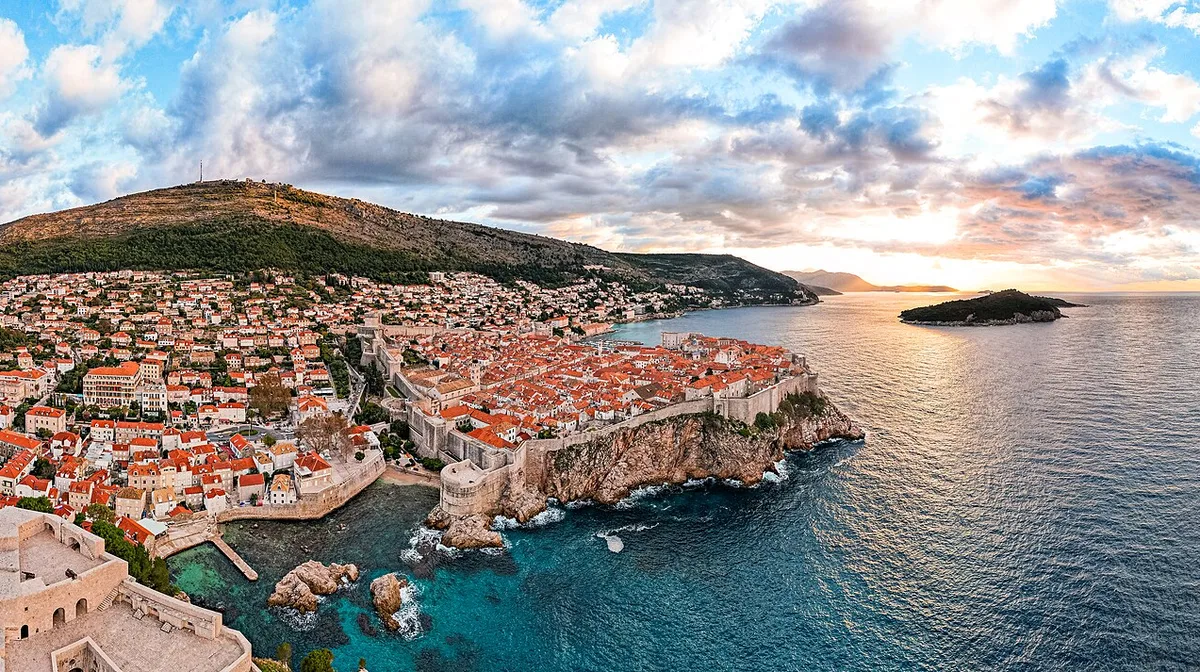
Dubrovnik's headline numbers hide the only thing that matters here, which is the spread. Around 4,675 active listings run at roughly 50.8% occupancy, and the Old Town averages €280 to €320 a night against a broader-market rate closer to €131 — so a single city average is close to meaningless. What you own and where you own it determines almost everything. Inside the walls the product is a UNESCO-inscribed medieval city with 1,940 metres of walkable rampart, a Franciscan pharmacy that has been operating since 1317, a main street polished to a shine by five centuries of feet, and the Game of Thrones association that added a whole demographic. Outside them, Lapad and Babin Kuk are a genuine resort district with beaches and hotels, Ploče carries the view back at the walls, and the Elafiti islands and Cavtat are twenty minutes away. Demand is intensely seasonal and intensely international — cruise calls managed under a limit of roughly two ships and five thousand passengers a day since 2019, plus flight arrivals concentrated between May and October. The licensed hotel sector is substantial, well capitalised and, crucially, not competing for the same registrations that residential apartments are.
Top Attractions & Landmarks
- The city walls, roughly 1,940 metres of walkable rampart
- Stradun, the polished limestone main street of the Old Town
- The Franciscan monastery and its pharmacy, operating since 1317
- The Rector's Palace and Sponza Palace
- The Mount Srđ cable car and the view down over the walls
- Lokrum island, twenty minutes by boat
- Cavtat and the Elafiti islands along the coast
Nearby Markets: Split | Kotor | Zagreb