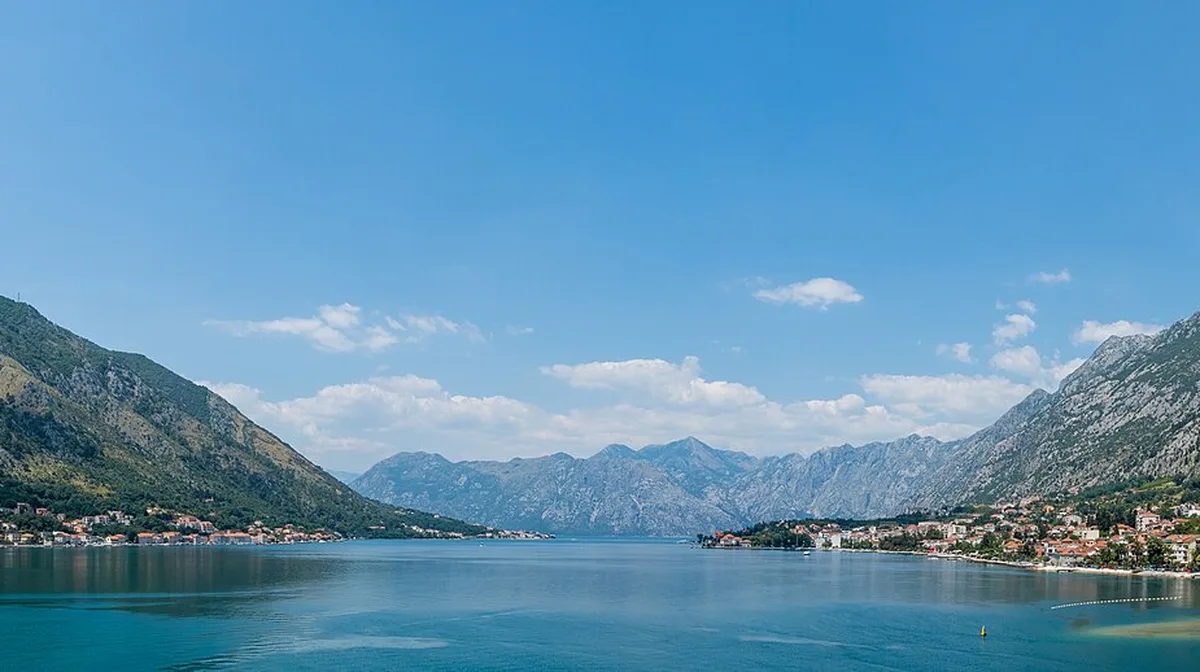
The Bay of Kotor is not a fjord, though it is described as one constantly — it is a drowned river canyon, and the distinction matters because it explains why the mountains rise so abruptly from water that is deep right up to the shore. That geography made Kotor defensible and rich. It was Byzantine, then briefly Serbian, and then for nearly four hundred years Venetian, which is why the Old Town looks the way it does: a compact walled triangle of stone lanes and small squares wedged between the water and a near-vertical cliff, with a fortification wall running improbably up that cliff to St John's Fortress, roughly 1,350 steps above. St Tryphon's Cathedral was consecrated in 1166, which makes it older than most of what surrounds it. Perast, further round the bay, grew rich on Venetian naval service and built a baroque waterfront out of proportion to its size, with two islands offshore — one of them, Our Lady of the Rocks, entirely artificial, built up over centuries by boatmen dropping stones beside a wreck, a tradition still re-enacted every July.
Austria followed Venice, then Yugoslavia, and a devastating earthquake in 1979 damaged much of the bay — which is the same year UNESCO inscribed the whole region, natural and cultural together, rather than just the town. Montenegro became independent from Serbia in 2006, adopted the euro unilaterally without joining the eurozone, and set about turning the coast into a destination. Porto Montenegro at Tivat, built on a former naval base, brought superyachts and a completely different price level to a bay that had been quiet for decades. Cruise calls arrived at Kotor and became a genuine crowding issue in a town this small. The rental economy grew fast on a housing stock of stone bay-front houses and new-build apartments, and it grew without an EU regulatory framework — Montenegro is a candidate rather than a member, so the registration requirements that landed across the Union in May 2026 do not reach here. What governs instead is national law and a local portal.