






The lake
Champlain, facing west
Sunsets over water with the Adirondacks behind. Most listings never show it, which is a mistake.

Expert short-term rental marketing to grow your bookings and nightly rate in Burlington, Vermont, USA.
* Market averages. Properties marketed by Cavmir typically exceed these figures by 25–45%. Data sourced from AirDNA, STR market reports, and Cavmir internal analytics.
Burlington sits on the eastern shore of Lake Champlain looking west at the Adirondacks, which means it gets sunsets over water and mountains at the same time, an arrangement most New England cities would trade a good deal for. It is Vermont's largest city and still only around forty-five thousand people, which tells you something about the state. The University of Vermont and Champlain College sit above the downtown, Church Street Marketplace runs four pedestrianised blocks through the middle of it, and a bike path runs eight miles along the waterfront and then keeps going, out onto a marble causeway built for a railway that carries you three miles into the middle of the lake. The city has an outsized cultural footprint for its size: Ben and Jerry's started here in a converted gas station in 1978, Phish formed at the university, and the place has a long habit of doing things its own way politically. Skiing at Stowe, Smugglers' Notch and Sugarbush is within an hour. For a short-term rental owner, Burlington offers a genuine four-season calendar in a small, walkable, well-liked city. The complication is that this is one of the few places in the country where the lodging tax was designed primarily as a housing programme, and the ownership rules follow from that.
Burlington's short-term rental ordinance passed in the summer of 2022. Registration and tax collection began in September 2022, and the owner-occupancy requirement took effect in May 2023. The core rule is that a short-term rental must be at or on the host's primary residence, with limited exceptions reported for seasonal homes and affordable housing units, and there is one registration per host. Annual registration, monthly tax remittance and compliance with minimum housing standards are all part of the framework. But the tax is the real spine of this market and it is unusually explicit about its purpose. The City of Burlington collects a 9% gross receipts tax on short-term rental revenue, and the money is not treated as general revenue: the substantial majority of it has been directed to the Burlington Housing Trust Fund, with the remainder going to the general fund. Reported total revenue from September 2022 through November 2024 was around $1.93 million. On top of the city charge sits the Vermont meals and rooms tax at 9%, a 1% local option tax that applies in Burlington, and, since 1 August 2024, a 3% state surcharge specific to short-term rentals. Vermont's Department of Health short-term rental registration applies statewide. Confirm all current rates, the exception list and the registration requirements with the City and the Vermont Department of Taxes before you publish anything.
Nearby Markets: Stowe | Woodstock | Lake Placid
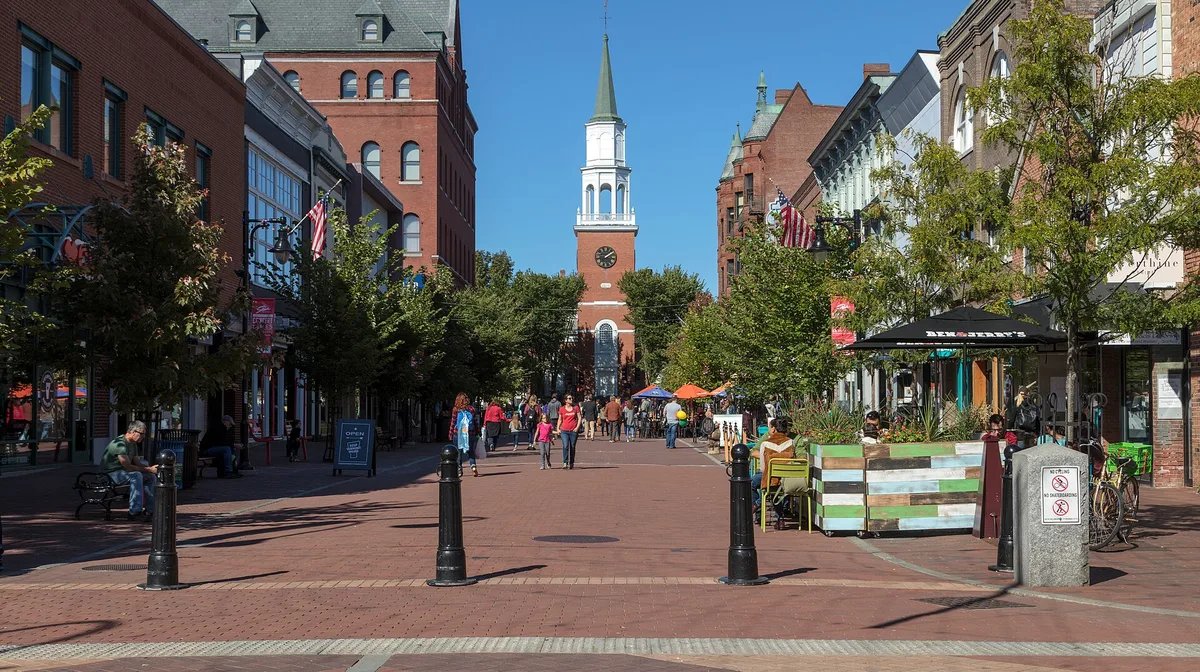
A few of the visual fingerprints we lean into when we shoot, brand and market a Burlington Vermont waterfront property — courtesy of the open Wikimedia Commons archive.
Cavmir markets Burlington properties inside the rule that actually governs them, which here means building around owner-occupancy rather than wishing it away. One registration per host, at your primary residence, is a genuine constraint, and it also means the competition is a finite set of individual owners rather than an unlimited pool of investors. That is a better market to be good in than it looks. We treat the host as part of the product, because a guest booking a registered, owner-occupied property in a small city is buying local knowledge as much as a bed, and the listings that say so convert better than the ones written as though nobody lives there. We photograph the lake, because the water and the Adirondacks across it are the reason Burlington looks the way it does and a surprising number of listings never show them. We write copy that sells the full four seasons: the bike path and the causeway in summer, the foliage in autumn, ski access in winter, and the extraordinary length of the light in June. Then we handle the tax honestly at checkout, because a guest facing city, state, local option and surcharge lines is entitled to understand what they are paying. We build the direct booking site, run local SEO, place ads against the seasons, and hold the guest relationship. We help position and market your property. We never manage it or touch your keys.
Burlington grew rich on lumber before it thought about visitors, then the steamboats taught the lake to carry tourists as the timber trade faded. Cavmir writes the chapter guests book now.
Burlington was chartered in 1763 and grew up around the lake, which was the highway before there were roads worth the name. Lake Champlain connects north to the Richelieu and the St Lawrence and south, by way of a canal built in 1823, to the Hudson and to New York, and for most of the nineteenth century Burlington was a serious port because of it. The trade was lumber. Timber came down from the north and across from the Adirondacks, was milled here, and went south to New York City; by the 1860s Burlington was among the largest lumber ports in the country, which is an odd thing to say now about a city of forty-five thousand. The University of Vermont was chartered in 1791, the same year Vermont became a state, and it is one of the older universities in the country. When the lumber trade declined the city turned to manufacturing and then, slowly, to what it is now: a university town, a regional centre for northern Vermont, and a place with an unusually strong sense of its own character. Some of the more recent history is disproportionately well known. Ben Cohen and Jerry Greenfield opened an ice cream shop in a converted gas station on the corner of St Paul and College Street in 1978, having taken a five-dollar correspondence course in ice cream making. Phish formed at the university in 1983. Bernie Sanders was elected mayor in 1981 by ten votes and served four terms, during which the city bought its waterfront back from the railroad and turned it into the park and bike path that now define it. That last decision is the one an owner should care about, because the waterfront is the city's best asset and it was very nearly a rail yard. In 2014 Burlington became the first city of its size in the country to source all of its electricity from renewable generation. The housing pressure that produced the short-term rental ordinance is the other side of the same story: a small city that a great many people want to live in.
Before the platforms, excursion steamers ran day trips out of the harbor, Battery Park went onto postcards, and the city published an illustrated handbook to bring travelers north by rail and water. The channel changed; the work is identical: presentation, positioning, and the promise of the water. It is the same business Cavmir is in today.
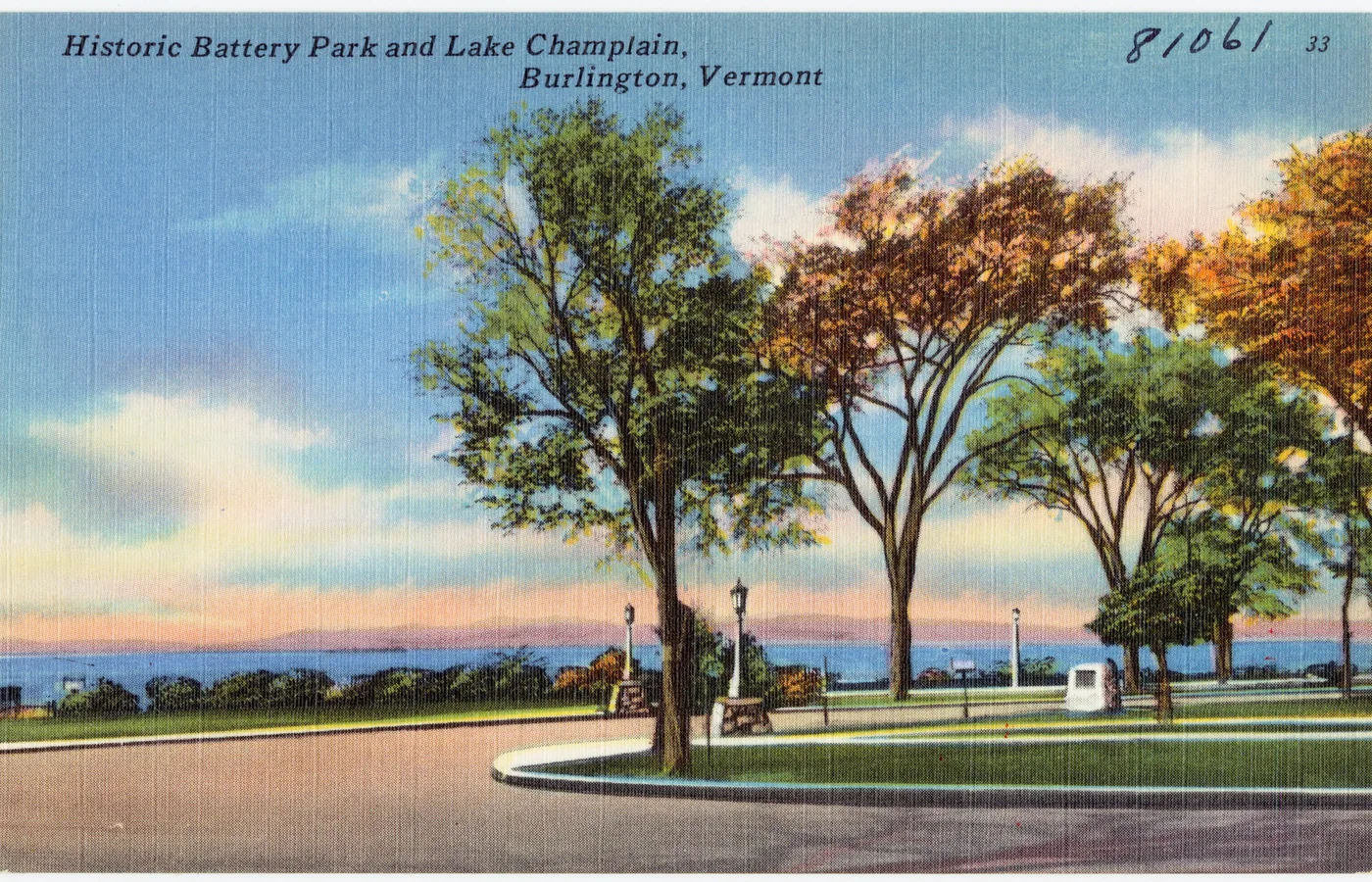
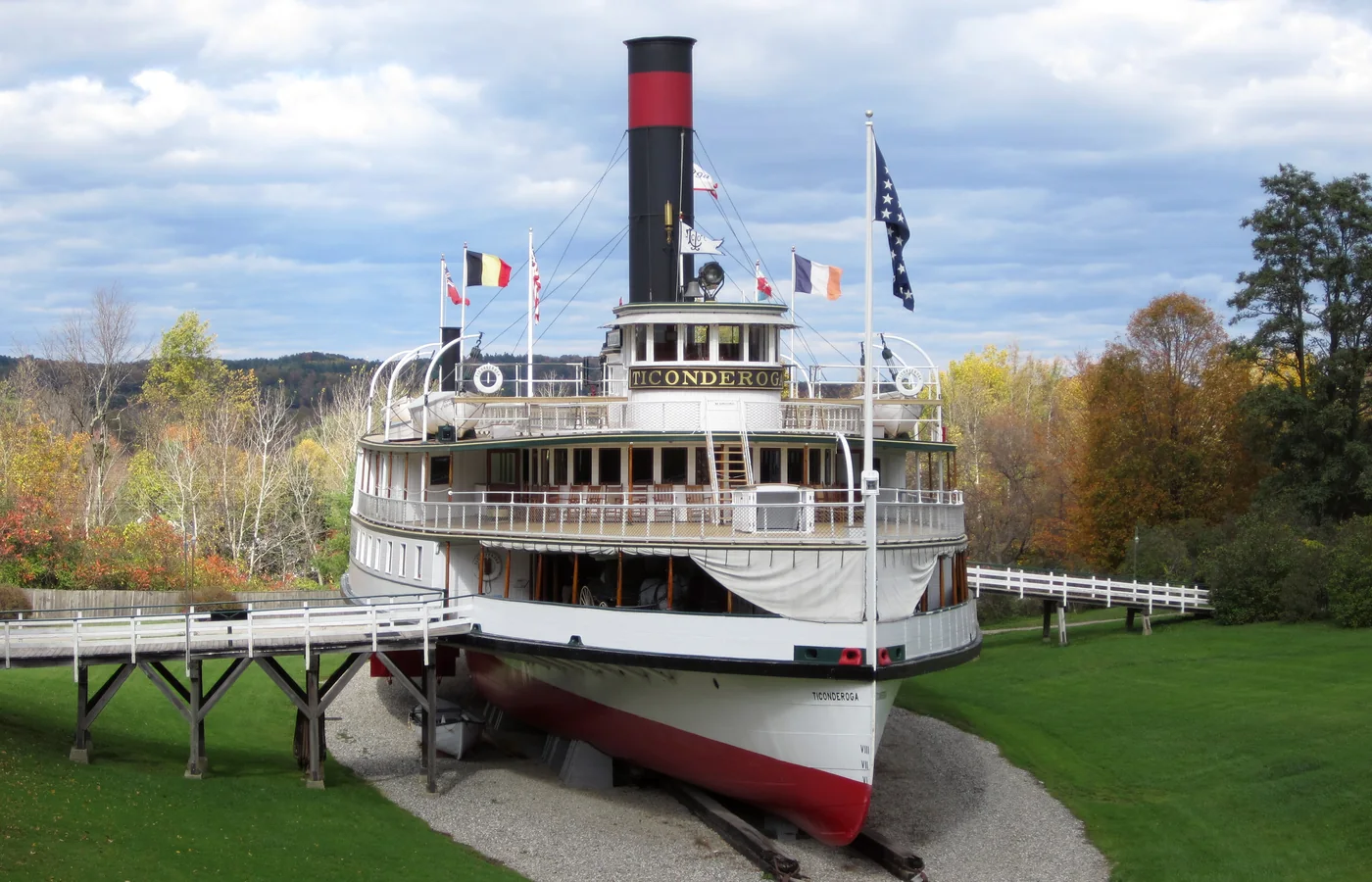
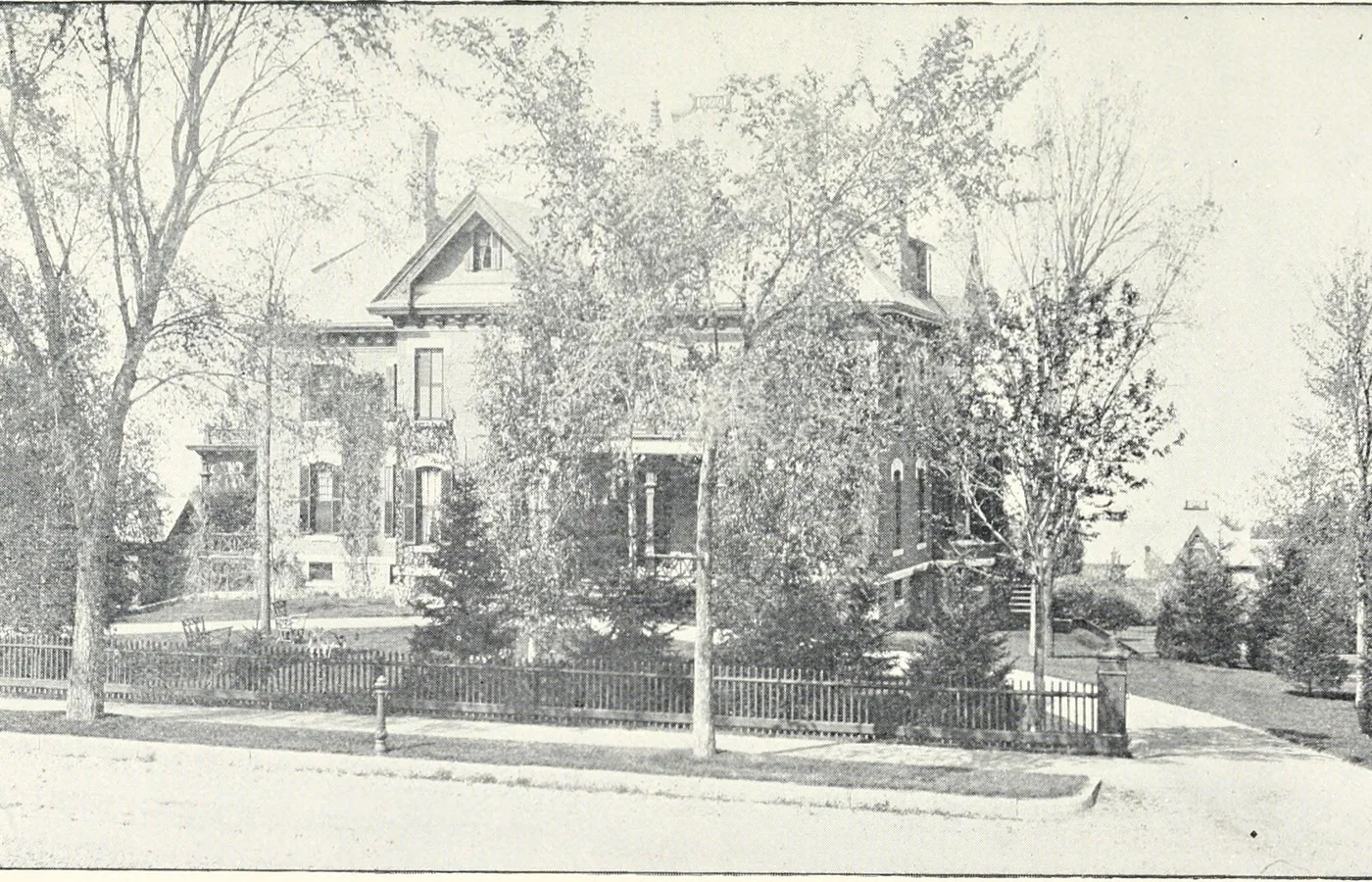
Historical images: public domain and Creative Commons via Wikimedia Commons — Riverside Paper Co. postcards, Internet Archive Book Images, and others.
Burlington runs four genuine seasons and the pricing should reflect all four rather than treating summer as the business and the rest as overflow. Summer is the strongest: the lake, the bike path, the causeway, long northern daylight and a full festival calendar, and it will carry firm rates through July and August. Autumn is the second peak and in some years the stronger one, because Vermont foliage is a national draw and Burlington is a comfortable base for it with better restaurants than the smaller towns; foliage weeks book early and should be priced early. Winter is a real season here rather than a dead one, because Stowe, Smugglers' Notch, Sugarbush and Bolton are all within about an hour, and a city property is a legitimate and cheaper alternative to slopeside lodging for guests who do not mind the drive. Say so explicitly and price it accordingly. Spring is the soft stretch, and mud season is a genuine thing; that is the window for maintenance and reshoots. Two structural points about rate-setting here. First, the university calendar drives significant spikes: graduation, move-in and parents' weekends fill the city and are published far in advance. Second, and importantly, the tax stack is heavy. A guest is paying the city's 9% gross receipts tax, the Vermont meals and rooms tax at 9%, a 1% local option and a 3% short-term rental surcharge, and the gap between your nightly rate and their total is large enough that it should be presented honestly rather than discovered at checkout.
Four working seasons, which is unusual and valuable. Summer is the peak, running late June through August on the lake and the bike path with very long daylight. Autumn is close behind and sometimes ahead, driven by foliage, which draws visitors from across the country and books well in advance. Winter is a real season because the major Vermont ski areas are within about an hour, making a city property a cheaper base than slopeside. Spring is the weak stretch: mud season is not a joke, the lake is cold, the trees are bare and demand drops sharply until graduation. Use April and early May for maintenance, reshoots and any work that needs the property empty.
Burlington's short-term rental framework was passed in the summer of 2022 and phased in deliberately. Registration and tax collection began in September 2022, and the owner-occupancy requirement took effect in May 2023, giving existing operators a period to adjust. The central rule is straightforward and restrictive: a short-term rental must be at or on the host's primary residence. Limited exceptions have been reported, including for certain seasonal homes and affordable housing units, and there is a limit of one registration per host, which forecloses portfolio operation within the city. Registration is annual, tax is remitted monthly, and the property must comply with minimum housing standards, which is the same code framework applied to long-term rental housing rather than a hospitality-specific standard. Vermont's Department of Health short-term rental registration applies statewide, in addition to the city's requirements. What makes Burlington genuinely distinctive is not the ownership rule, which several cities have, but the explicit and public purpose of the tax attached to it. The City collects a 9% gross receipts tax on short-term rental revenue, and this was designed from the outset as a housing measure rather than as general revenue: the substantial majority of the proceeds have been directed to the Burlington Housing Trust Fund, with the balance to the general fund. Reported total collections from September 2022 through November 2024 were approximately $1.93 million. That framing matters for an owner in a practical way. When a lodging tax is a housing programme, the political constituency for maintaining and potentially increasing it is broad and durable, and the likelihood of the framework being relaxed is correspondingly low. Confirm the current exception list, the registration requirements and the rates with the City of Burlington before you buy, apply or advertise, since both the ordinance and the tax position have been adjusted since 2022.
Sell all four seasons, because Burlington is one of the few markets on this map where you genuinely can. Most listings here are written for summer and then hope. Autumn needs its own photography and its own copy, because foliage guests are planning a trip around a two-week window and want to know what they can drive to; winter needs the ski access spelled out in drive times to specific mountains, since a guest comparing a Burlington property with slopeside lodging is doing a cost-versus-convenience calculation and you need to give them the numbers. Second, use the lake properly. Burlington's waterfront was very nearly a rail yard and the city bought it back; the bike path along it runs eight miles and then continues onto a marble causeway three miles out into the water, where a seasonal bike ferry carries you across a gap. That is an extraordinary thing to be able to send a guest to do and hardly any listing mentions it. Third, be honest about mud season. April in Vermont is not attractive, guests who arrive expecting spring are disappointed, and an owner who simply prices April low and says nothing gets the reviews that follow. Better to market April differently or to use it for maintenance. Fourth, make the host visible. With one registration per host and an owner-occupancy requirement, every compliant listing in this city has a real person behind it, and saying who you are is both accurate and a genuine differentiator. Fifth, present the tax clearly, because four separate lines on a checkout page surprise people.
The primary-residence requirement rules out conventional investment purchase, and the one-registration-per-host limit rules out any portfolio approach inside the city. The tax burden is among the heaviest in the country for short-term rentals once the city gross receipts tax, the state meals and rooms tax, the local option and the 3% state surcharge are combined, and it materially widens the gap between your rate and the guest's total. Mud season is a genuine four-to-six-week trough. And the politics are unlikely to move in owners' favour: when the lodging tax funds the housing trust fund, the constituency for keeping and tightening the framework is durable.
Because Burlington requires the short-term rental to be at or on your primary residence, the insurance question here is the home-sharing one rather than the investment-property one, and that is exactly the scenario standard homeowner's policies handle worst. Do not assume your existing cover responds; many policies exclude paid guest occupancy outright, and some treat undisclosed commercial use of a home as grounds to deny a claim or void the policy. What you want is either a home-sharing endorsement added to your homeowner's policy or a dedicated short-term rental product built for hosted operation, arranged in writing with the carrier fully informed. Ask specifically about liability for guests in shared areas, about your own belongings, which are on site in a way they would not be in a pure rental, and about loss of use if a claim makes the property uninhabitable while it is also your home. Vermont winters drive the routine claims: ice dams, roof snow load, and freeze and burst pipes, so confirm how the policy treats each and what it requires of you. If the property is near the lake, ask about flood, which is separately excluded. Platform host protection supplements a policy rather than replacing it.
Burlington has one of the heaviest short-term rental tax stacks in the country and it is worth understanding line by line, because a guest sees all of it. The City of Burlington collects a 9% gross receipts tax on revenue from short-term rental activity, and the design of that charge is explicitly a housing measure: the substantial majority of the proceeds go to the Burlington Housing Trust Fund and the balance to the general fund, with reported collections of about $1.93 million between September 2022 and November 2024. On top of the city charge, Vermont's state meals and rooms tax applies at 9%, a 1% local option tax applies in Burlington, and since 1 August 2024 an additional 3% surcharge has applied specifically to short-term rentals statewide. Registration with the Vermont Department of Taxes is required to collect and remit the state charges, and the Vermont Department of Health short-term rental registration applies separately. Platforms may collect and remit some of these elements and not others, and the introduction of the surcharge in 2024 changed what several platforms were handling, so ask yours explicitly which lines it files now and file the remainder yourself. Confirm every current rate with the City and the Department of Taxes before publishing a total, and ask your accountant how the income is treated given the property is also your home.
Burlington's owner-occupancy requirement means you are financing a home rather than an investment, and that is generally advantageous: owner-occupier mortgages carry better rates and lower deposits than investment products. But it needs handling carefully in two respects. First, read the occupancy and use covenants in the loan agreement, because some mortgages restrict commercial use of a primary residence, and you need short-term letting of your own home permitted by the lender as well as by the city. Raise it explicitly at application rather than discovering a conflict later. Second, be careful about counting short-term rental income in an affordability calculation. The income is real but it is constrained by the ordinance to one registration at your primary residence, and a lender that understands the rule will treat it more conservatively than a straightforward rental yield. DSCR and investor products are largely inapplicable here for the same reason. On the property side, Burlington's housing stock is substantially older, with a lot of nineteenth and early twentieth century construction, so expect scrutiny of heating systems, insulation, knob-and-tube wiring and roofs, and budget for what an old Vermont house actually costs to keep warm and dry.
The direction here is settled and owners should plan accordingly. Burlington built its short-term rental framework as a housing policy, and it funded a housing trust with the proceeds, which creates a durable political constituency for keeping it and for tightening rather than loosening it. The 3% state surcharge added in August 2024 points the same way at state level. Expect the exception list to be scrutinised rather than expanded, and do not build a financial case that assumes the owner-occupancy requirement will be relaxed. What that means practically is that this will remain a market of individual resident hosts rather than investors, which is a genuinely better competitive environment for an owner who is good at it: the supply is capped by the rule itself, so the returns go to whoever markets, photographs and hosts best rather than to whoever can buy the most units. On the demand side, Burlington is in a strong position. The lake, the bike network, the university, the restaurants and the ski access within an hour give it a four-season calendar that most small cities would envy, and Vermont's foliage draw is not going anywhere.
Burlington is a city of forty-five thousand people that behaves like a much larger one and looks like a much smaller one. It sits on Lake Champlain facing west, which means the sun goes down over water with the Adirondacks behind it, and the city had the sense some decades ago to buy its own waterfront back from the railroad and turn it into a park and a bike path instead of a freight yard. That bike path runs eight miles along the lake and then keeps going, out onto a marble causeway built for a railway in 1900 that carries you three miles into open water with the lake on both sides. There is a two-hundred-foot gap near the end, and in summer a small ferry takes cyclists across it. Church Street is four pedestrian blocks that actually work, which is rarer than it should be. Ben and Jerry's started here in a converted gas station in 1978 after a five-dollar correspondence course. Phish formed at the university. Stowe and Smugglers' Notch are within an hour. And the whole city runs on renewable electricity, which it arranged for itself. We like Burlington because it is a small place that has repeatedly made large decisions, including the decision to treat its lodging tax as a housing programme, which is either admirable or inconvenient depending on where you are standing, and is certainly unusual.
A great property in Burlington Vermont waterfront doesn't just want a listing — it wants a point of view, an audience, and a brand the city itself would recognise.
Eight things to know about Burlington before writing listing copy, in a market where you must live in the property and may hold only one registration.
Sunsets over water with the Adirondacks behind. Most listings never show it, which is a mistake.
The centre of the city, restaurants and shops. If you are walkable to it, say how many minutes.
Three miles out into the lake on 1900s marble, with a seasonal bike ferry across the Cut. Extraordinary and rarely mentioned.
Stowe, Smugglers' Notch, Sugarbush and Bolton. Give drive times to each; guests are comparing you with slopeside.
A national draw and the second peak of the year. Book early, price early, photograph it properly.
Genuinely unattractive and genuinely quiet. Use it for maintenance rather than pretending it is spring.
Short-term rentals must be at or on your primary residence, with one registration per host.
City 9% gross receipts, state 9% meals and rooms, 1% local option, and a 3% state STR surcharge since August 2024.
The three examples below are composite and illustrative. They reflect patterns common in owner-occupancy markets with heavy lodging taxes, and they are not accounts of specific businesses or clients.
A well-placed property was photographed and priced entirely for summer on the lake, and sat largely empty from October through April despite major ski areas being within an hour.
We built three additional seasons: a foliage proposition with autumn photography and early pricing, a winter one with drive times to Stowe, Smugglers' Notch and Sugarbush spelled out against slopeside costs, and a spring plan that used mud season for maintenance rather than discounting.
Foliage weeks began selling months ahead at strong rates, winter produced consistent ski-base bookings, and the property's revenue stopped depending on a single summer.
An owner-occupied property was written in the impersonal voice of an investment rental, competing on price against listings that were doing the same, in a city where every compliant operator is by law a resident host.
We rewrote the listing in the first person, made the host and their knowledge of the city a feature rather than a footnote, photographed the shared spaces honestly, and built the welcome material around genuinely local recommendations.
The property stopped competing purely on rate, attracted guests who valued local knowledge, and built a base of returning visitors who booked directly on subsequent trips.
A property with good reviews was accumulating complaints about the final price, because the city gross receipts tax, state meals and rooms tax, local option and the new 3% surcharge together added a substantial and unexplained amount to the nightly rate.
We set out the tax position plainly in the listing and the pre-booking material, explained briefly what the city charge funds, and made sure the direct booking site displayed an all-in figure rather than revealing the additions at the last step.
Price-related complaints and cancellations dropped, and the transparency became a small point of trust rather than a source of friction at the end of the booking process.
Demand in Burlington peaks around June through October and runs quietest around January through March. Here is how the year actually books — and what to do about each stretch of the calendar.
This is one of the few genuinely four-season markets on the map. Summer runs strong on the lake, the bike path and long northern daylight, and autumn is its equal or better because Vermont foliage is a national draw. Foliage weeks book early and should be priced early; a property still at its summer rate in August has already lost the best of October.
Winter is a real season rather than a gap, because Stowe, Smugglers' Notch, Sugarbush and Bolton are all within about an hour and a city property is a legitimate and cheaper alternative to slopeside lodging. Say the drive times to specific mountains rather than claiming to be near skiing, because the guest is doing a cost-versus-convenience calculation.
Spring is the soft stretch and mud season is a genuine thing, roughly four to six weeks when the landscape is at its least appealing. That is the honest window for maintenance, for a reshoot and for anything requiring the property to be empty. Do not try to price your way out of April; market it differently or use it.
Foliage books furthest out, frequently months, and graduation follows. Ski demand is weather-reactive and can arrive within days of a good storm. Summer weekends fill a few weeks ahead and spring is largely last-minute.
Two and three night stays dominate through most of the year, with foliage and ski trips often running longer. University weekends are short but book far ahead. Because the city requires owner occupancy, hosted stays here are the norm rather than the exception.
Because the city requires the rental to be at or on your primary residence, every compliant listing has a real resident host behind it, and saying who you are is both accurate and a genuine differentiator. Walkability to Church Street and the waterfront is the strongest locational asset. Anything with a lake view should lead with it.
Start with photography that shows what a guest actually gets here, then write the listing around a real itinerary rather than a feature list. Build a direct-booking site so returning guests can come back without going through a platform, and keep an email list segmented by season so you can reach last year's visitors before the calendar opens. Local search matters more than people expect in a market this size, because guests search the destination and the attraction rather than the word rental. A marketing agency layer handles the photography, the listing copy, the direct-booking site and the local SEO as one system instead of four disconnected jobs.
This is a rare four-season market. Autumn foliage from late September through October is the strongest stretch and books earliest, summer on the lake is close behind, and winter is a genuine season because several major ski areas sit within about an hour. Spring, and mud season in particular, is the quiet stretch.
Foliage books furthest ahead, often months, with graduation weekends close behind. Ski demand is weather-reactive and can arrive within days of a storm. Summer weekends fill a few weeks out and spring is largely last-minute.
An unusual catchment, because Montreal is closer than Boston and is a major feeder, especially in summer. Boston, Albany and Hartford follow, with a flown-in layer from New York and Washington. Targeting Montreal and Boston with different messages works better than treating the Northeast as one audience.
Parking and somewhere to dry gear matter through the ski season, and bike storage matters all summer for the bike path and the causeway. Beyond that, a full kitchen, laundry and fast wifi carry the longer foliage and university stays.
Run your Airbnb, Vrbo, or website through Cavmir's free grader. It checks the things that decide whether guests book in Burlington — photos, listing copy, page speed, local search — and shows you where bookings leak. Takes about a minute, and there's no sales call attached.
If the report says your booking engine is the weak link, that's fixable: a direct-booking website of your own means repeat guests stop paying platform fees to come back to you. That's the work Cavmir does — see Airbnb website design in Burlington.
Send us the listing and we'll tell you what we'd change. Not a pitch deck — a straight read on your photos, your title, your rates against the Burlington comp set, and whether a direct-booking site would pay for itself.
You'll hear back from a person, usually inside one business day. If we don't think we can move your numbers, we'll say so. Cavmir is a short-term rental marketing agency — we position and market properties, we don't manage them.
Talk to Cavmir today. We'll show you exactly what your Burlington property is leaving on the table — and how fast we can change that.
Book a Free Strategy CallPhotography via Wikimedia Commons (images resized and cropped): The light house in lake Champlain in the dusk as seen from Burlington VT. by Nagaraju.ramanna (CC BY-SA 3.0) · ECHOBurlington by Mfwills (CC BY 3.0) · Church Street Marketplace in autumn by Sdkb (CC BY-SA 4.0) · Fletcher Free Library Burlngton Vermont by Beyond My Ken (CC BY-SA 4.0) · UVM Old Mill building 20040101 by unknown (Wikimedia Commons) (CC BY-SA 2.0).
