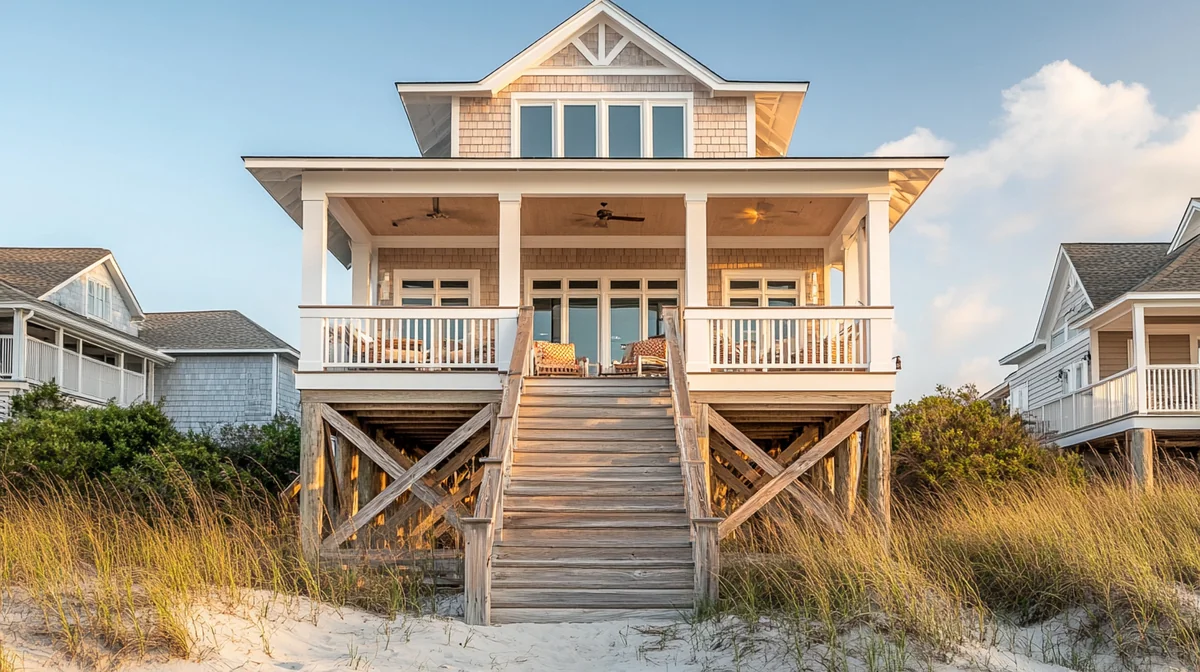



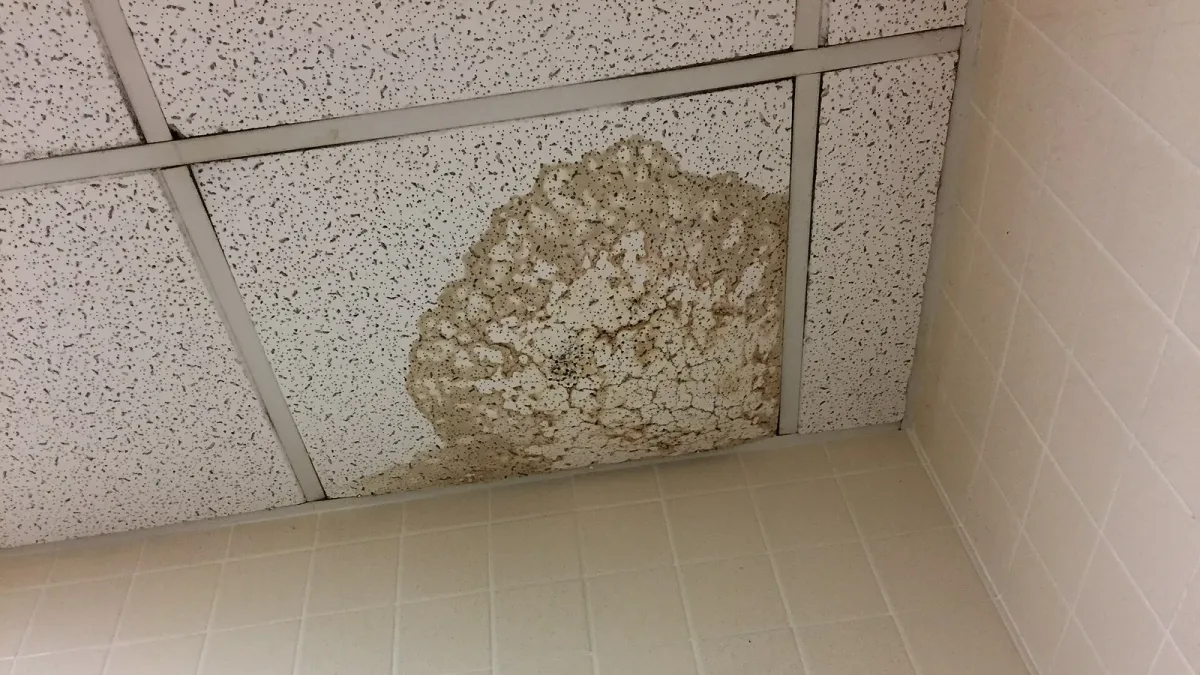
Dana runs a two-bedroom cabin about twenty minutes outside Gatlinburg, Tennessee. In late February, with a family of four checked in for a five-night stay, a pipe in the crawl space let go at two in the morning. By the time the guests woke up, water had traveled along a joist, soaked through the subfloor, and started coming through the kitchen ceiling. Dana got the shutoff valve closed by 3 a.m., booked her guests into a hotel by 7, and called her homeowners insurance company when the office opened at 9.
The adjuster's third question, after her name and policy number: "Was anyone paying to stay in the home at the time of the loss?"
That question is where a lot of hosting stories turn. Dana answered honestly, and what followed was six weeks of back-and-forth about whether her policy covered a home being used as a business. It eventually got resolved — partially — but she spent those six weeks fronting repair costs on a credit card while three future bookings evaporated. The pipe cost her a few thousand dollars. Not understanding her own coverage cost her considerably more, in cash and in sleep.
I build marketing dashboards for short-term rentals, which means I live in spreadsheets full of occupancy rates, nightly rates, and expense lines. And I can tell you which line item hosts understand least: insurance. Most hosts can quote their cleaning fee to the dollar and their ADR to the decimal, and then wave vaguely at "I think Airbnb covers that" when you ask what happens if a guest falls down the stairs. So let's fix that. This is a coverage-literacy guide, not a fear campaign — no scary hypotheticals dressed up as certainties, no invented claim statistics. Just the categories of coverage that exist, the gaps between them, and the questions to bring to a licensed insurance agent, who is the only person who should ever tell you what your specific policy does.
Why your homeowners policy and your Airbnb don't mix
Here is the structural problem, stripped of jargon. A standard homeowners policy is priced and written around one assumption: you live in the house, and the people inside it are your family and your invited social guests. The insurer set your premium based on that risk profile — one household, known occupants, no commerce happening under the roof.
The moment strangers start paying to sleep there, the risk profile changes, and homeowners policies almost universally contain language addressing exactly this. The common phrasing is a "business activity" or "business pursuits" exclusion — the policy carves out losses arising from business conducted on the premises. Renting your home to paying guests, night after night, looks like a business to most insurers, because it is one. Some policies allow occasional short rentals; some require you to notify the insurer; some exclude rental activity outright. The exact treatment varies by carrier, by state, and by policy form, which is precisely why "read your policy and ask your agent" is not a lawyer's dodge here. It is the actual assignment.
The dangerous part is not the exclusion itself. It's the timing of the discovery. Nobody reads the exclusions page the day they list their property. They read it the day the adjuster asks Dana's question — after the pipe, after the fall, after the fire. By then the only thing left to learn is how exposed you were the whole time.
There's a second-order risk worth naming too. If you tell your insurer the home is owner-occupied and it's actually a rental running paying guests most nights, that's a misrepresentation on the application, and misrepresentation is one of the classic grounds insurers cite for denying claims or canceling policies entirely. The quiet strategy of "just don't mention the Airbnb" is not a strategy. It's a bet that nothing will ever go wrong, made with the one financial product whose entire purpose is the day something goes wrong.
Put an actual line in your operating spreadsheet called "coverage review" and give it a date, the same way you track your permit renewal. One hour with a licensed agent, once a year, before renewal. Hosts track fifteen revenue metrics and zero coverage metrics — this is the cheapest rebalancing you'll ever do.
What AirCover for Hosts is — and what it isn't
Airbnb bundles its host protections under the name AirCover for Hosts, and per Airbnb's own help pages it has two main pieces relevant to this conversation: host damage protection, which addresses damage caused by guests to your home and belongings, and host liability insurance, which addresses certain claims when a guest is hurt or their property is damaged during a stay. Both come with the platform at no extra charge, which is genuinely useful and genuinely better than what existed in the early years of home sharing.
Now the part hosts skip. These are platform programs. The damage-protection piece, in particular, is not an insurance policy you hold — it's a program Airbnb administers, with its own terms, its own exclusions, its own documentation requirements, and its own process, all of which Airbnb defines and can update. Claims run through the platform's resolution process, often starting with a request to the guest first. Certain categories of loss sit outside it — Airbnb's own materials describe exclusions and conditions, and those pages, not this article, are the source of truth for what's currently in or out.
Here is the sentence that should reframe the whole thing: Airbnb itself tells hosts that AirCover is not a substitute for homeowners insurance or for personal liability coverage. That's not a critic talking — that's the platform describing its own program. AirCover is best understood as a meaningful backstop layered on top of your own coverage, not the foundation underneath it. It travels with the booking, not with the property: a guest who found you through a direct booking site, or a friend-of-a-friend stay arranged over text, is outside the platform's protections entirely, because there's no Airbnb reservation attached.
A useful mental model from my dashboard world: AirCover is a feature of a channel, the way a payment processor's fraud protection is a feature of a checkout flow. You'd never run a business whose only financial protection was a feature of one sales channel. Same logic here.
One practical note on using the program well, since plenty of hosts will file a damage request eventually: platform claims are documentation-and-deadline exercises. Airbnb's process asks you to report within set timeframes and to show evidence — photos of the damage, proof of what the item was worth, records tied to the specific reservation. Hosts who lose winnable platform claims usually lose them on timing or evidence, not on the merits. That's foreshadowing for the documentation section below, where the same habit serves both the platform process and any insurance claim you ever file.
So the literate host's position is: understand AirCover, document well so you can actually use it when a guest breaks something, be grateful it exists, and carry your own insurance as if it didn't.
The STR policy: insurance that admits you run a business
Because the homeowners-policy problem is so structural, an entire category of insurance grew up to solve it: short-term rental policies. These are policies written with the assumption baked in — paying guests, high turnover, commercial activity in a residential building. Instead of excluding the business, they're priced for it.
What does a policy in this category typically try to address? The property itself, including damage caused by guests. Liability when a guest is injured. Loss of business income when a covered event knocks the property out of commission. Some blend homeowners-style and commercial-style coverage in one form, which matters for hosts who live in the property part-time and rent it the rest of the year — a usage pattern that fits awkwardly into both traditional boxes.
Two names you'll encounter quickly when you research this category are Proper Insurance and Steadily, and there are others. I name them as examples of the category, not as recommendations — I don't sell insurance, I make dashboards, and the right carrier for a beach house in South Carolina is not automatically right for a ski condo in Colorado. What the category's existence tells you is the important part: the industry itself decided that short-term rentals are different enough to need their own product. That's the market confirming everything in the section above.
When you gather quotes — and you should gather more than one — the comparison is rarely apples to apples. Two quotes can differ by hundreds of dollars a year because one includes loss of business income and the other doesn't, or because deductibles differ, or because one treats your hot tub as standard and the other surcharges it. This is exactly the conversation to have with a licensed agent, ideally one who has written short-term rental policies before and doesn't blink when you say "about 200 nights a year."
The minimum I'd put in any host's annual budget process: one quote from your current carrier with your rental use fully disclosed, and two from carriers in the short-term rental category. You can't see a gap with a sample size of one.
Landlord policies and the midterm middle ground
Not every rental night is a two-night weekend stay. Plenty of hosts have shifted part of their calendar toward midterm stays — the traveling nurse on a 13-week contract, the family between houses, the remote worker doing a month in the mountains. If that's your model, or becoming your model, the insurance conversation changes shape again.
Traditional landlord insurance — you'll hear agents call these dwelling or DP policies — was built for the classic long-term rental: a tenant on a lease, staying months or years. These policies expect rental activity, which already puts them ahead of a homeowners policy for any rental use. But they typically expect low turnover and an unfurnished or tenant-furnished unit, which is not what a furnished 30-day stay looks like. A property that hosts a new occupant every month, fully furnished, with hotel-style turnover in between, sits somewhere between the landlord policy's world and the short-term rental policy's world.
Where's the line? There is no universal one — it depends on the carrier's definitions of terms like "short-term" and on how your actual calendar breaks down between 3-night and 30-night stays. Which is why the productive move is not to guess your category but to describe your real booking pattern to an agent and let them place you. Pull the actual numbers from your calendar first: nights rented last year, average length of stay, longest gap, share of stays over 30 days. If you run your operation from another city — common for midterm operators, and covered in our guide to managing an Airbnb remotely — say so, because owner proximity is one of the things underwriters weigh.
Umbrella policies: the layer above the layers
One more concept, because agents will bring it up and it's worth arriving fluent. An umbrella policy is extra liability coverage that sits on top of your underlying policies. If a liability claim exceeds what your base policy handles, the umbrella picks up above that, up to its own limit. For people with assets to protect — and a host who owns even one rental property is by definition a person with assets to protect — umbrellas are a common and relatively economical way to raise the liability ceiling.
But here's the mechanic that trips hosts: an umbrella generally sits on top of underlying coverage. It extends protection that already exists; it doesn't ordinarily create protection where the base layer excludes the activity. If your underlying policy excludes business activity and a guest-injury claim gets denied on those grounds, the umbrella above it may follow the same logic. An umbrella over a coverage gap can behave less like an umbrella and more like a decorative awning.
So the sequencing matters: first get the base layer right — a policy that actually acknowledges your rental activity — and then ask your agent whether an umbrella on top makes sense, and specifically whether the umbrella's own terms address the rental. Two questions, in that order. Umbrella pricing tends to be modest relative to the ceiling it adds, which is why agents like them; just make sure the tower of coverage is standing on a foundation that includes your business.
Five scenarios that make the gaps visible
Abstract coverage categories don't stick. Scenarios do. Walk each of these through the question "which layer would respond, and would it?" — not to answer definitively (that's policy-specific), but to build the instinct for where gaps live. These are the exact scenarios worth bringing, verbatim, to an agent.
The burst pipe, mid-stay
Dana's night. Notice how many distinct costs one pipe generates: the plumbing repair, the ceiling and floor damage, the ruined rug, the hotel for the displaced guests, the refund for the interrupted stay, and the three future bookings canceled during repairs. A homeowners policy — even one that responds — was never designed to think about guest relocation or lost bookings, because in its worldview nobody was paying to be there. Water damage is among the most common categories of home claims across the industry, which is why this is my favorite test scenario: it's boring, it's plausible, and it fans out into five kinds of cost that sit in different coverage buckets.
The slip and fall
A guest misses the last step of the deck stairs at dusk and breaks a wrist. Now you're in liability territory: medical costs, possibly a claim against you, possibly a lawyer. This is the scenario where the platform's host liability coverage may be relevant — and also the scenario where you most want your own liability coverage standing behind it, with an umbrella above that. It's also the scenario that makes prevention spend look cheap: stair lighting, handrails, and a deck inspection cost two digits to three digits. Liability claims are the reason the word "million" appears in insurance conversations.
The party
You said no parties. Twenty people came anyway, and now there's a broken window, a stained sofa, cigarette burns, and a noise citation. Guest-caused damage is the lane AirCover's damage protection was built for, so this is where your documentation (more on that below) earns its keep. But the better math is upstream: parties are largely a screening problem, and screening is nearly free. We wrote a full playbook on guest screening and party prevention, and a companion on handling bad guests professionally when one slips through. Every party you prevent is a claim you never have to document, file, or argue about.
The lost income after a covered event
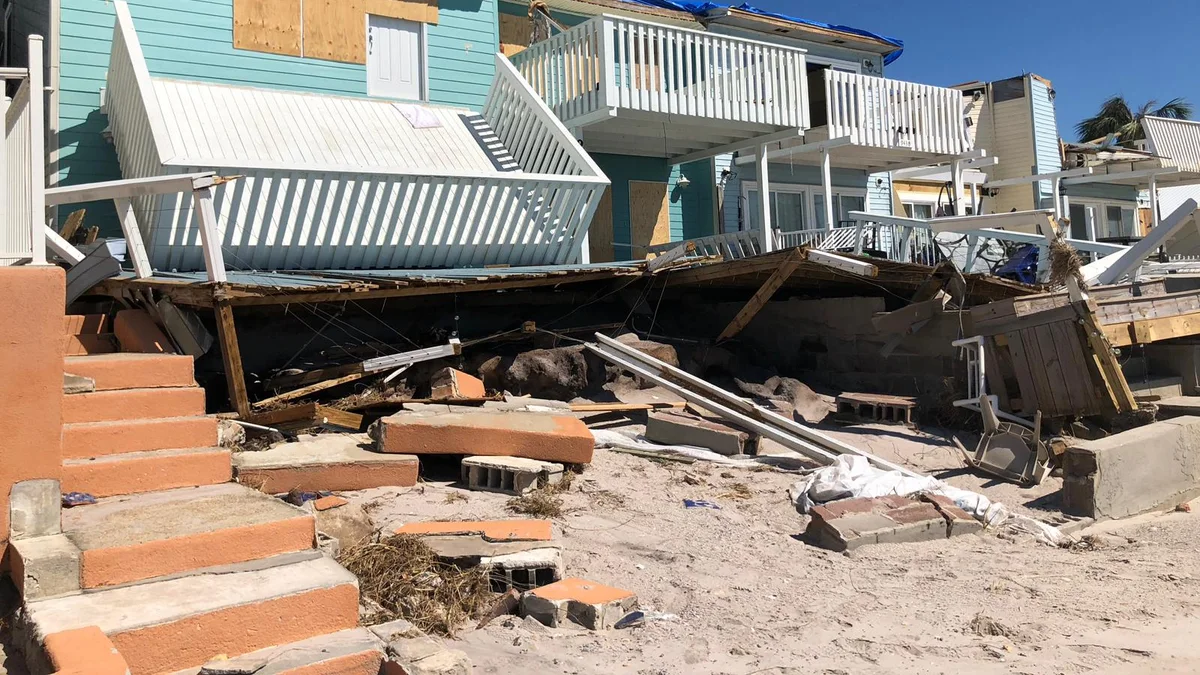
A storm drops a tree through the roof in your peak season. Suppose the roof repair itself is covered — the quieter loss is the eight weeks of bookings that don't happen while contractors are in the house. Coverage for that has a name — loss of business income, sometimes loss of rents — and it only exists if your policy includes it. Homeowners policies generally have no reason to include it. This is one of the clearest single arguments for the short-term rental policy category, because for a well-booked property, the income interruption can rival the repair bill. When you're getting quotes, ask specifically whether business income is included, how it's calculated, and for how long it pays.
The hot tub question
Hot tubs deserve their own line because they sit at the intersection of everything: they're a booking magnet in cabin and desert markets, they're a maintenance obligation, and they're the amenity underwriters ask about by name. Water, heat, electricity, alcohol-adjacent leisure, and slippery surfaces, bundled into one photogenic object. Some carriers surcharge for them, some require specific safety measures like locking covers, and some decline properties that have them. None of that means "don't have a hot tub" — in plenty of markets the revenue case is strong. It means the hot tub belongs in your insurance conversation on day one, disclosed and priced, not discovered by an adjuster in a claim photo. The same applies to pools, fireplaces, wood stoves, saunas, trampolines, and anything else that makes a listing photo pop and an underwriter reach for a checklist.
What a good agent will ask you
You can tell a lot about an agent by their intake questions — an agent who quotes you a short-term rental property without asking most of these is quoting a property they haven't understood. Walk in with the answers prepared and you'll get a faster, more accurate quote. Here's the standard list:
- How many nights a year is it rented? Twenty nights and two hundred nights are different businesses. Pull the real number from your calendar; don't estimate from memory, which in my experience runs low.
- Do you live there? Owner-occupied with a rented guest suite, a primary home rented while you travel, and a dedicated rental you visit twice a year are three different underwriting animals.
- What's the average length of stay? This is the short-term versus midterm sorting question from earlier.
- What amenities are on site? Pool, hot tub, fireplace, wood stove, dock, bunk room, ladder loft, EV charger. Disclose all of it — the surcharge for a hot tub is real money, and smaller than a denied claim.
- Who manages it and who cleans it? Professional management and documented turnover routines are things some underwriters view favorably. Cleaners and contractors on site also raise their own liability questions worth asking about.
- Is it permitted and licensed? Operating legally is its own subject — our permits and licensing guide covers it — but note that questions about legal operation can appear in insurance applications too, and answers on applications matter.
- What's the construction, age, and systems story? Roof age, plumbing, electrical, heating type. Dana's crawl-space pipe lives in this question.
Answer everything straight. The theme of this entire guide is that insurance fails at the intersection of assumption and reality — and the application is where you get to make the assumptions match reality, on purpose, in writing.
Keep a one-page "underwriting fact sheet" in your property folder: nights rented per year, average stay length, amenity list, roof and systems ages, permit numbers, management setup. Update it annually. Every quote, renewal, and refinance asks for the same facts — stop reassembling them from scratch each time.
The documentation habit that makes claims survivable
Every claim — platform or policy — eventually reduces to one question: can you prove it? Prove the sofa wasn't already stained. Prove the TV existed and what it cost. Prove the damage happened during that stay and not last month. Hosts who can answer with timestamps and photos have short, boring claims. Hosts who answer with "I'm pretty sure" have long, expensive ones.
The good news is that the entire documentation habit costs about ten minutes per turnover, and most of it can ride on routines you already have. Three artifacts:
Dated turnover photos. After each cleaning, before each check-in, someone photographs each room plus the known trouble spots — sofa, mattresses, dining table, TV, deck. Phones timestamp automatically; a shared album organizes itself. Your cleaner is already standing in every room; add the photo pass to their checklist. This one habit converts "he said, she said" into "here is the sofa at 2:14 p.m. on the day of check-in."
An inventory list. One spreadsheet tab: every item over some threshold you pick, with purchase date, price, and a receipt link or photo. Building it takes an afternoon once; maintaining it takes a minute whenever you buy something. When an adjuster asks what the espresso machine cost, you paste a row instead of excavating your email.
An incident log. Every time something happens — a guest reports a leak, a neighbor complains, someone slips but says they're fine — write it down with the date, what happened, and what you did. Small incidents are how large claims get contested later; a contemporaneous log is quiet, boring, and persuasive.
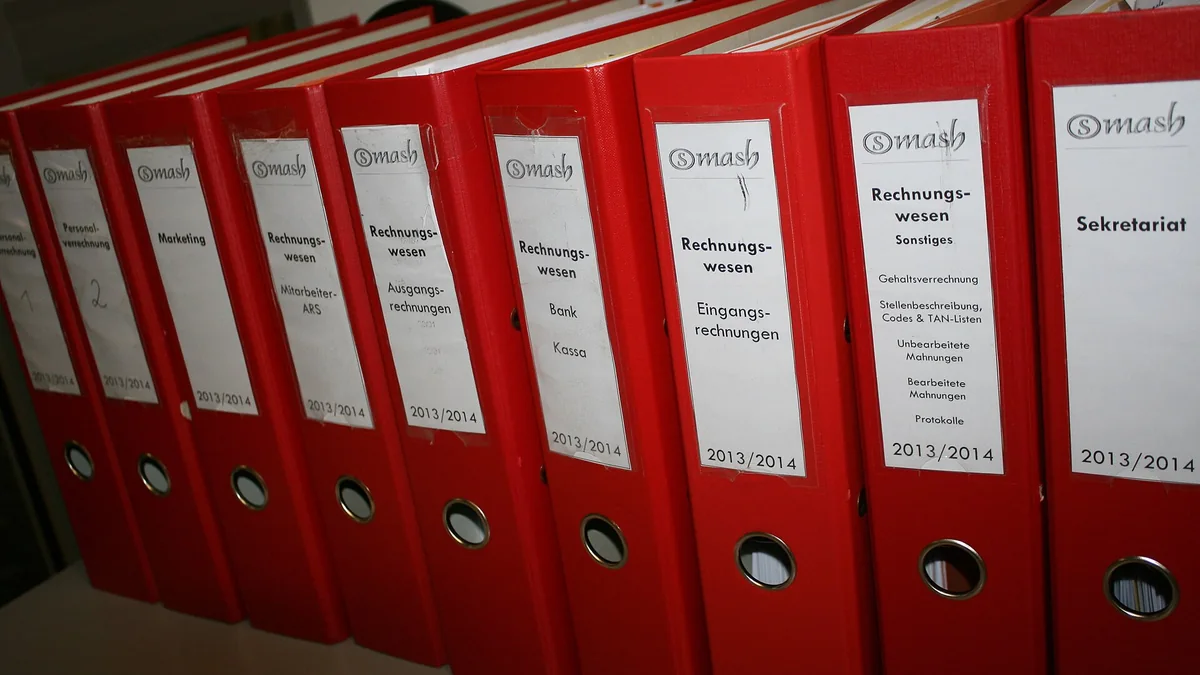
A sample routine, not a survey — sized from my own turnover checklist.
There's a bonus return on this habit that has nothing to do with claims: the same dated records that satisfy an adjuster also build the maintenance and income history that makes a property easy to underwrite, easy to refinance, and — when the day comes — easy to sell. Buyers of operating rentals pay for provable history, a point we develop in the guide to selling an Airbnb property. Documentation is the rare habit that pays at both ends of ownership.
Deductibles, small claims, and when not to file
Now some actual math, because this is the corner of insurance where a spreadsheet earns its keep. Two dials interact on every policy: the premium you pay every year, and the deductible you pay when you claim. Raise the deductible and the premium usually drops; you're telling the insurer you'll absorb the small stuff. Whether that trade is smart depends on a number most hosts never compute: how often you'd actually claim.
Run the sample math. Say the choice is a $1,000 deductible versus a $2,500 deductible, and the higher deductible saves you $300 a year in premium — example figures, yours will differ. The extra exposure is $1,500, but only in years you file a claim large enough to matter. If you'd realistically file one sizable claim every five years, you saved $1,500 in premium across that span against $1,500 in extra deductible — a wash, before you count the second effect below, which breaks the tie. If you'd file once a decade, the higher deductible wins clearly. The instrument panel for this decision is your own incident log: it tells you your real event frequency instead of your imagined one.
The second effect is the one hosts learn late: claims have a cost beyond the deductible. A filed claim goes into your history, and a history with frequent small claims can mean higher premiums or non-renewal — insurers price frequency, not just severity. Which produces the counterintuitive rule seasoned operators follow: insurance is for the losses that would genuinely hurt, and the broken coffee table is an operating expense. Filing a $900 claim against a $500 deductible to recover $400 of value, at the cost of a mark on your claims history, is the kind of trade my dashboards would flag in red.
Sample budget math: a property doing 150 booked nights a year needs to hold back about $25 a night to build a $3,750 annual self-insurance reserve — enough to swallow small damage without filing, and to make a higher-deductible, lower-premium policy comfortable to carry.
That reserve line deserves a real row in your budget, right next to the premium itself. Premium plus reserve is your true annual cost of risk; the two move in opposite directions as you slide the deductible, and seeing them together is how you pick the deductible on purpose instead of by default. Then — the refrain — have the agent confirm what your policy's deductible actually applies to, because some policies carry separate deductibles for wind, hail, or water, and that changes the math.
How to read a quote without glazing over
Quotes arrive as multi-page PDFs engineered to be skimmed, and the skim is where the gaps hide. Here's the five-minute method I use, which is just dashboard thinking applied to an insurance document.
First, find the declarations page. It's usually page one or two: the summary of who's covered, what property, which coverages, what limits, what deductibles, what premium. Ninety percent of quote comparison happens on this single page. Put two declarations pages side by side and the differences announce themselves.
Second, check how the property's use is described. Somewhere the document states what the insurer believes this property is — owner-occupied, seasonal, tenant-occupied, short-term rental. If that description doesn't match your actual calendar, stop. Everything else in the document is built on that line, and a mismatch there is the seed of a claim-time dispute. This is the single most valuable thirty seconds you can spend on any insurance document.
Third, hunt the exclusions and endorsements. Exclusions say what's carved out; endorsements are the bolted-on pages that modify the base policy, and in rental contexts they're often where the actual short-term rental language lives. If an agent says "we've added an endorsement for your rental use," ask to see that page and read it — it's usually one page, and it's the page that matters.
Fourth, compare like with like. Before comparing premiums across quotes, line up the deductibles, the liability limits, and whether loss of business income is included. A quote that looks $400 cheaper and quietly omits income coverage isn't cheaper; it's smaller. Build a four-row comparison in a spreadsheet — premium, deductible, liability limit, income coverage — and the real ranking emerges in about a minute.
Fifth, write your questions down and ask them. "Does this policy know I rent about 180 nights a year?" "What happens if a guest's dog bites another guest?" "Is the hot tub disclosed and covered?" A licensed agent answering direct questions in writing is your best protection against the assumption gap this whole guide is about. Agents, in my experience, respect a client who arrives with a list; the list also becomes part of your paper trail.
The comparison table: four layers side by side
Here's the whole guide compressed into one table. These are coverage categories, not promises — any given policy can differ, which is the entire reason licensed agents have jobs. "Typically" means "commonly true of the category; verify for your policy."
| Coverage question | Homeowners policy | Landlord / DP policy | STR-specific policy | Platform protections (AirCover) |
|---|---|---|---|---|
| Recognizes paying short-term guests | Typically no — business activity commonly excluded | Expects tenants on leases; short stays often outside scope | Yes — built for the activity | Yes — for stays booked on the platform only |
| Structure damage (pipe, fire, storm) | Yes for the home as a residence; rental use can complicate the claim | Typically yes | Typically yes | Not its role — guest-caused damage focus |
| Guest-caused damage to contents | Often disputed under rental use | Contents coverage often limited | Typically addressed | Core purpose of host damage protection, per program terms |
| Liability for guest injury | Business-activity exclusion is the risk | Landlord liability, scoped to tenancy | Typically included for guest activity | Host liability coverage exists, per program terms |
| Loss of rental income after a covered event | Generally not designed for it | Loss-of-rents coverage sometimes available | Commonly available — ask specifically | No |
| Covers direct bookings and off-platform stays | Same exclusion issues regardless of channel | Within its tenancy terms | Typically yes — follows the property | No — platform bookings only |
| Who sets the terms and handles claims | Your insurer, your policy | Your insurer, your policy | Your insurer, your policy | The platform, under its own program terms and process |
Read the table by columns and a shape appears: the platform column is real but narrow and channel-bound; the homeowners column keeps hitting the same exclusion wall; and the further right you go among your own policies, the more the coverage matches what a hosting business actually is. Most working hosts end up with a stack — a policy built for their rental pattern, possibly an umbrella above it, and the platform protections riding along as the bonus layer they were designed to be.
The renewal ritual
Coverage literacy isn't a one-time purchase; properties drift. You add the hot tub in year two, shift toward monthly stays in year three, move two states away in year four — and each drift quietly reopens the gap between what your policy assumes and what your business does. So make it a ritual: once a year, before renewal, pull your real numbers, update the fact sheet, and spend an hour with a licensed agent walking through the scenarios in this guide. Dana did, after the pipe. Her premium went up. Her February did not repeat.
Insurance is the least glamorous line in the spreadsheet and the only one that can save all the others. Treat it like the data problem it is: real inputs, honest disclosures, documented evidence, and a professional to interpret the fine print. If you want a second set of eyes on the whole operating picture — where coverage, pricing, and marketing decisions all pull on the same budget — Cavmir's consulting practice spends its days on exactly that.
Photography via Wikimedia Commons, resized and cropped: hero, Strong and large summer thunderstorm in Sao Paulo, Brazil by Lauro Sirgado (CC BY-SA 4.0); inline, Ceiling water damage by Atomicdragon136 (CC BY 3.0).