

It's 9:40 on a Friday night and your phone lights up. A booking request for tonight. One night. Two guests, supposedly, for your four-bedroom house with the big deck and the fire pit. The guest's profile was created this month, there are no reviews, and the message field says exactly nothing. The profile photo is a sunset.
Here's the thing about that request: it might be completely fine. It might be a couple whose flight got cancelled, or a guy whose kitchen just flooded, or a nurse who finished a brutal shift and cannot face her own commute. Most last-minute bookings are boring in the best possible way. But that specific combination — same-night, one-night, weekend, big house, blank profile, no message — is also the exact shape a party booking takes, and every experienced host has learned to feel a small cold prickle when they see it.
The problem is what hosts do with that prickle. Some ignore it and get a living room full of ninety strangers and a noise citation. Others swing the opposite way and start treating every guest like a suspect — demanding essays, cross-examining families about their dinner plans, declining anyone under thirty. That version doesn't just feel bad. It tanks your acceptance rate, poisons your reviews, and quietly filters out wonderful guests who simply didn't feel like auditioning for a two-night stay.
There's a third way, and it's the one this guide is about: screening as a calm system instead of a mood. A handful of booking settings, a couple of well-worded questions, some hardware that watches decibels instead of people, and a script for the rare night things go sideways anyway. Build the system once and you stop making fear-based judgment calls at 9:40 on a Friday. The system already decided.
Why parties happen (it's a pattern, not a mystery)
Party bookings feel random when they hit you, but they're not. People who want to throw a party in someone else's house face a logistics problem, and logistics problems have predictable solutions. Understanding their checklist is the entire foundation of screening, because your job isn't to read minds — it's to make your listing a bad answer to their problem.
Think about what a party organizer actually needs. Space, first: a whole house, ideally with a yard, a pool, a deck, or an open floor plan, and no shared walls with an on-site owner. Privacy, second: no host living downstairs, no doorman, no neighbors close enough to matter (they think). Short commitment, third: nobody rents a house for a week to throw a Saturday rager. One night is the sweet spot, maybe two. And proximity, fourth: the organizer usually lives nearby, because you don't fly across the country to throw a house party — you drive twenty minutes.
Put those together and you get the classic profile: a local guest booking a one-night weekend stay in a large entire-home listing, often last-minute, often with a guest count that seems oddly small for the size of the house. Two guests in a six-bed place on a Saturday is a question worth asking. Two guests in a six-bed place on a Tuesday in February is somebody who wanted room to sprawl.
Then there's the calendar. Certain dates concentrate risk the way a magnifying glass concentrates sunlight: New Year's Eve, Halloween weekend, July Fourth, prom and graduation season, spring break in college towns, the local university's homecoming, and whatever big game or festival your market hosts. None of these dates are bad on their own — NYE can be your most profitable booking of the year. They're just dates when your booking rules should be doing more of the work, which we'll get to shortly.
One more pattern worth naming: the third-party booking. A perfectly pleasant person with good reviews books the house "for my cousin" or "for my daughter and her friends." Platforms generally prohibit this for exactly the reason you'd guess — the person you screened is not the person showing up. The reviews you trusted belong to somebody who won't be there. Whatever else you flex on, don't flex on this one.
The platform signals worth reading
Every booking request arrives wearing a little jacket of metadata, and most of it is more useful than the profile photo. Here's what actually deserves your thirty seconds of attention, roughly in order of usefulness.
Review history. A guest with a stack of positive reviews from other hosts is the single most reassuring signal that exists, because those reviews were written by people with the same incentives you have. Read a few. "Left the place spotless" and "great communication" are worth more than any badge. And note what's absent: a five-year-old account with zero reviews is stranger than a two-week-old account with zero reviews, because everyone starts somewhere, but almost nobody lurks for five years.
Member-since date. New accounts aren't red flags by themselves — every one of your future favorite guests was new once. But account age interacts with everything else. New account plus thoughtful intro message plus a normal weekday booking: fine. New account plus blank message plus same-night Saturday request for your biggest listing: that's a stack, and stacks are what you screen for. One odd signal is noise. Three odd signals pointing the same direction is a pattern.
The message field. Guests who write "Hi! My husband and I are coming for our anniversary, we saw the hot tub and had to book" have just handed you a trip purpose, a party size, and a tone, all unprompted. Guests who write nothing have handed you a question to ask — not a verdict. Plenty of great guests are terse. The message field matters most when it conflicts with something: a stated romantic weekend for two on a listing whose main feature is sleeping fourteen.
Guest-count honesty. Watch for mismatches between the party size and the booking shape. Two guests in a huge house on a party-adjacent date, as noted. Or the opposite tell: a guest asking detailed questions about parking for multiple cars, the sound system, or "how private is the backyard" while claiming a headcount of three. Curiosity about capacity is the tell, not the headcount itself.
Location, when it surfaces. You often can't see exactly where a guest lives, and you shouldn't play detective trying to find out. But sometimes it surfaces naturally — an area code they mention, a "we're just across town" in their message. A local booking your whole house for one weekend night deserves one friendly clarifying question, which brings us to how you ask.
Score stacks, not signals. Make yourself a private three-item rule: if a request combines a one-night weekend stay, a blank or vague message, and a large-listing mismatch (tiny group, big house), it always gets one clarifying question before you accept. One rule, applied every time, beats twenty vibes applied inconsistently — and it means you're never deciding while annoyed, tired, or excited about the payout.
How to ask questions without interrogating
There's a version of guest vetting that reads like a border crossing, and guests can smell it through the screen. "State the purpose of your visit. List all occupants. Confirm you have read rules 1 through 34." Nobody wants to vacation with that host, including the good guests you were hoping to attract.
The fix isn't to stop asking. It's to ask like an innkeeper instead of an investigator. An innkeeper's questions are warm, they're framed around serving the guest better, and they just happen to produce the exact information you need. Three examples you can steal:
The occasion question. "Thanks so much for the request — we'd love to host you! What brings you to town? If it's a birthday or an anniversary, tell me, because I like to leave a little something." You've asked for trip purpose and made it feel like a perk. A guest planning a quiet getaway answers instantly and warmly. A guest planning a party has to either lie in writing — which matters later — or get cagey, which tells you plenty.
The headcount question. "So I set up the beds right — how many adults and kids should I plan for?" This is the world's least threatening way to ask "who exactly is coming," and it anchors an honest number in the thread. If eleven people later pour out of three cars, the written "just the four of us" is your documentation, not a debate.
The logistics question. "What time are you thinking for check-in? And will you have one car or two? Just want to make sure parking is easy." Arrival time and vehicle count are operationally useful anyway, and a hesitant answer to a question this mundane is informative in a way silence on a big question isn't.
Notice what none of these do: none of them accuse, none of them mention parties, and none of them ask the guest to prove anything. You're not trying to catch people. You're opening a short, friendly conversation, because the conversation itself is the screen. Guests with nothing to hide find these questions charming. Guests with something to hide find them inconvenient — and inconvenienced party planners go book somewhere with a hands-off host and instant everything.
Keep the exchange to two or three messages before you decide. If you're still uneasy after three, that's your answer; more questions won't fix it, and a drawn-out inquisition is worse than a polite decline. If you want ready-to-paste versions of these exchanges, our library of guest communication templates has the full set, tuned for tone.
The booking-rule levers that do the quiet work
Here's the beautiful part: most party prevention doesn't happen in conversation at all. It happens in your settings, silently, while you sleep. A party booking has a narrow shape — remember the checklist from earlier — and your booking rules can simply make that shape impossible to book. No confrontation, no judgment calls, no awkward messages. The calendar just says no.
Weekend minimum stays. This is the heavyweight. A two-night minimum on Friday and Saturday nights removes the one-night Saturday rental, which is the single most common party vehicle, from your inventory entirely. Most platforms let you set day-specific minimums, so weekdays can stay flexible for the one-night business traveler while weekends require commitment. Party organizers rarely pay for a second night they don't want; couples on a weekend trip were staying two nights anyway. The rule filters almost perfectly, and there's a whole strategy conversation about it in our guide to minimum-stay requirements.
Advance-notice windows. Requiring even one day of notice kills the 9:40-Friday-for-tonight request outright. Same-day bookings are where desperation shops, and while some of that desperation is innocent, all of it is unscreenable — there's no time for the friendly questions when check-in is in ninety minutes. If your market genuinely runs on last-minute demand, keep same-day on for weekdays and consider turning it off for Fridays and Saturdays.
Blocking one-night gaps around risk dates. Minimum-stay rules have a known leak: orphan nights. Two bookings land with a single open Saturday between them, and that stranded night becomes bookable on its own no matter what your minimums say. Around ordinary weekends, fine. Around Halloween, NYE, prom season, and graduation weekend, go into your calendar and close those gaps manually, or use gap rules and date-specific minimums where your platform offers them. Ten minutes of calendar hygiene each season, and the highest-risk inventory you own simply never goes on sale.
Raise the price on the dates you can't block. For dates like NYE where you want the booking but not the risk, a date-specific minimum (two or three nights) plus holiday pricing changes who shows up. Someone paying a premium for a three-night New Year's stay is planning a trip. The economics of "cheap crash pad for one big night" stop working.
Local-guest awareness, where platforms allow it. Some platforms restrict certain last-minute or entire-home bookings by guests located close to the listing, especially around party-prone dates, and some give hosts settings or protections along these lines — these tools change often, so check what your platform currently offers rather than assuming. Where no setting exists, your minimum-stay and advance-notice rules do most of the same work, because the local one-night weekend booking is exactly what those rules exclude. What you shouldn't do is announce "no locals" as a blanket policy in your listing copy; it reads as hostile, catches innocent staycationers and people hosting visiting family, and the settings accomplish the goal without the sign.
The theme across all five levers: they're impersonal. No guest ever feels accused by a two-night weekend minimum. The rule was there before they arrived, it applies to everyone, and it will be there after they leave. That's what screening without paranoia actually looks like — the system carries the suspicion so you don't have to.
House rules that deter versus house rules that wallpaper
Every listing has house rules. Most of them are wallpaper — a scroll of boilerplate nobody reads, written to make the host feel protected rather than to change anyone's behavior. "No parties" appears in roughly every listing on earth, and on its own it deters approximately no one, because a party planner isn't reading your rules for guidance. They're reading them for enforcement signals.
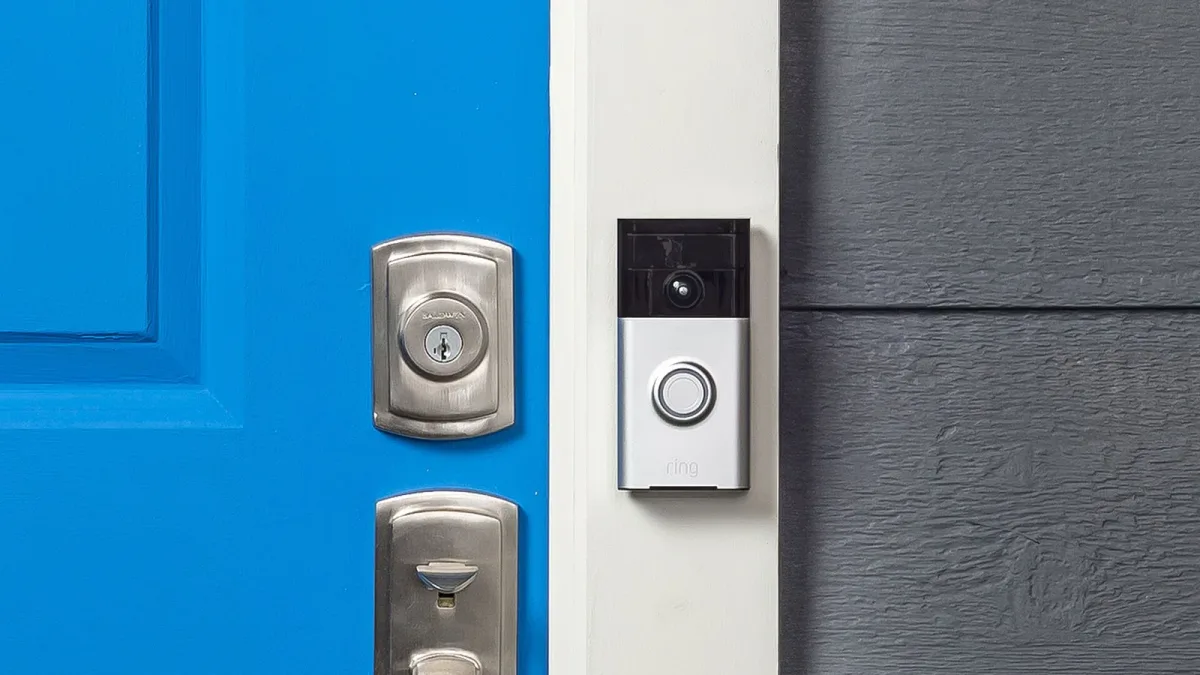
That's the reframe: rules deter when they telegraph that violations get noticed. Compare two versions. Version one: "No parties or events allowed." Version two: "No parties or events. Quiet hours 10pm–8am. The home has a noise-monitoring sensor (measures sound levels only — no cameras or microphones recording audio inside) and an exterior video doorbell at the front entrance. Maximum occupancy is 6 guests, including visitors; unregistered guests aren't permitted." Version one is a wish. Version two is a description of how you'd know — and the reader planning a party understands instantly that this is the wrong house.
A few principles for rules that pull their weight:
Keep the list short and specific. Five rules that matter, stated plainly, beat thirty that blur together. Occupancy cap including daytime visitors, quiet hours with actual times, no parties or events, no smoking, and your monitoring disclosure. Everything past that — where the spare linens live, how the grill works — belongs in the welcome guide, not the rules.
State the occupancy cap as people on the property, not people sleeping over. The classic loophole is "we only had four staying — the other thirty just visited." Close it in writing: maximum guests on the property at any time, visitors included, and additional visitors only with prior approval.
Disclose every device, prominently. This is both an ethics thing and a platform-policy thing, and it doubles as your best deterrent. More on the devices themselves next — but the disclosure lives here, in the rules and the listing description, where a would-be organizer reads it before booking rather than discovering it after.
Say what happens. "Violation of the party or occupancy rules ends the stay without refund, per platform policy" is one sentence, and it converts your rules from a mood board into terms. You'll almost never have to invoke it. Its job is to be read.
Rules written this way also do quiet double duty later: if a stay does go wrong, a short, specific, disclosed set of rules is the backbone of every claim, review dispute, and support conversation that follows. The wallpaper version helps with none of that — a theme that comes up again in our guide to handling bad guests professionally.
Noise monitoring done right (decibels, not surveillance)
If booking rules are the moat, noise monitoring is the smoke detector — the thing that tells you about a problem while it's still small. And it's the part of party prevention most burdened by a misconception worth killing immediately: noise monitoring is not surveillance, and the products built for this category are specifically designed not to be.
Devices like Minut and NoiseAware — the two best-known names in the category — measure sound levels, not sound. They register decibels: a number describing how loud the environment is, with no recording of voices, music, or conversation. Think of them as a thermometer for volume. When the level crosses a threshold you set and stays there, you get an alert on your phone. That's the entire product, and it's the correct amount of information: enough to know something's happening, nothing that intrudes on a guest's private conversation.
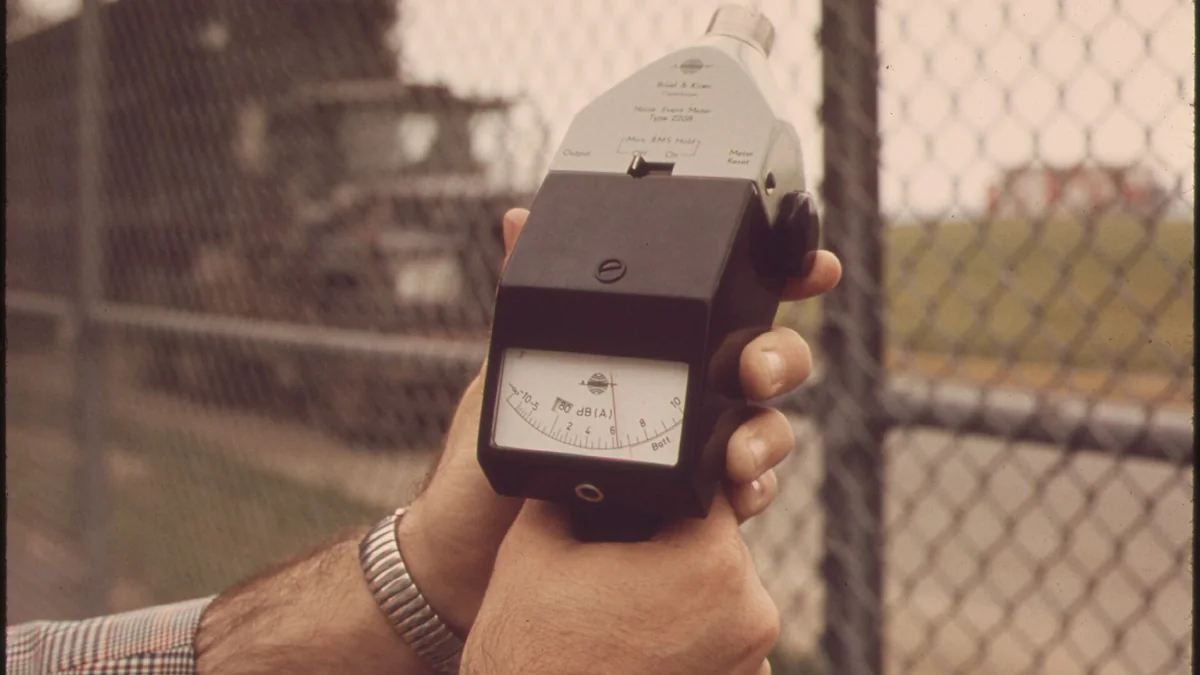
Setting one up well is mostly about placement and thresholds. Put sensors in the rooms where a party would actually live — the main living area, near the back door if there's a deck or pool, the garage if it's finished. Then spend your first few weeks tuning rather than reacting: a threshold set too low will page you every time someone watches an action movie, and a host who's been false-alarmed ten times stops trusting the eleventh alert. You want the setting where a dinner party for six never trips it and a sound system does.
When an alert does fire, the response is a message, not a raid. Something like: "Hi! Just a heads-up that the noise level at the house is running high and our quiet hours start at 10 — the neighbors are close. Thanks so much for keeping it down." In the large majority of cases, that's the end of it: the volume drops, the guests apologize, the stay finishes fine. The alert's real value is that it let you send that message at 10:15pm, when the problem was one loud speaker — instead of finding out at 1am, when it's a crowd.
Now the bright lines, and these are absolute. No indoor cameras. Ever. Anywhere. In any form. Not in the living room "just covering the door," not disguised, not disclosed, not disabled-but-present. Major platforms have banned indoor cameras in listings outright, and they're right to — a rental home is someone's private residence for the duration of their stay. Indoor monitoring is limited to decibel-level sensors of the kind described above, disclosed in the listing. Second line: every exterior device gets disclosed too. The doorbell, the driveway camera, the noise sensors — all of it, listed plainly in your listing's disclosure section and your house rules. Disclosure isn't just the platform requirement and, in many places, the law (recording consent rules vary — check yours). It's also, conveniently, the deterrent: a disclosed sensor prevents the party you'd otherwise be detecting.
Write the disclosure like a feature, not a confession. "We're in a quiet neighborhood and we protect that — the home has a decibel-level noise sensor (no cameras or audio recording inside) and a video doorbell at the front door" tells great guests you run a cared-for home, and tells everyone else the one thing they need to know. The hosts who bury their disclosure get the worst of both worlds: no deterrence before booking, and an angry guest who discovers a doorbell mid-stay.
The doorbell that pays for itself twice
Of all the hardware a host can buy, the exterior video doorbell has the best ratio of cost to problems prevented. It's one device, it's cheap relative to everything else in your budget, guests expect to see one because half the houses on the street have one, and it earns its keep two separate ways.
First, deterrence. A party needs a door that thirty people can walk through unnoticed, and a visible doorbell camera — disclosed in the listing, physically obvious on arrival — removes that door. The organizer knows arrivals are timestamped. The friends-of-friends see the camera as they walk up. It changes the math before anything happens, which is always the cheapest place to change it.
Second, evidence. If a stay does turn into an incident, the question you'll be asked — by platform support, by your insurance contact, sometimes by a claims process — is what actually happened. "The neighbor said it seemed like a lot of people" is an impression. Doorbell footage of two dozen arrivals between 10 and 11pm, when the booking said four guests, is a record. Paired with your written headcount from the pre-booking exchange, it settles in minutes what would otherwise be a he-said, she-said that drags for weeks.
Placement and conduct matter: the camera faces the entrance and public approach, not windows, not the backyard hot tub, not anywhere a guest reasonably expects privacy. It's a door camera, not a guest camera. Check it works before high-risk weekends, keep the app's notifications on for arrival windows, and resist the urge to watch it recreationally — its job is to exist, deter, and testify, not to feed your anxiety. If you find yourself refreshing the feed during a normal stay, close the app and go do literally anything else. The system is working. Let it.
Deposits and damage protection, in plain terms
Money buffers are the least interesting and most misunderstood layer of the stack, so let's do this quickly and honestly.
Most major platforms have moved away from hosts holding traditional cash security deposits, in favor of platform-run damage protection programs — Airbnb's host damage protection is the best-known example — where you file a claim with documentation after an incident rather than holding a guest's money up front. These programs are real and hosts do recover through them, but read the current terms yourself rather than absorbing them by rumor: what's covered, what's excluded, the claim deadlines (they're short), and what documentation is expected. The programs change, and the version in a three-year-old forum post is not the version that applies to you.
Two practical habits make any claim process dramatically easier. First, a documented baseline: photos of every room from your last turnover, so "the wall wasn't like that" is demonstrable rather than asserted. Second, the paper trail you've already been building without noticing — the written guest count from your pre-booking exchange, the disclosed house rules, the noise-alert timestamps, the doorbell record. Claims run on documentation, and a host with the systems from this guide generates documentation as a side effect of just operating.
And a framing note: platform protection is not a substitute for proper short-term-rental insurance, and neither one is a reason to skip screening. A payout after a wrecked weekend still costs you the wreck, the turnover chaos, the cancelled next guest, and the neighbor relationship. Confirm your actual coverage with your insurance agent — homeowner policies and STR activity famously don't mix by default — and treat every dollar-recovery mechanism as the backstop it is. The layers above it exist so you rarely need it.
The decline-gracefully script
Sometimes the stack works exactly as designed and hands you a request you shouldn't accept: the signals conflict, the answers to your friendly questions were evasive, the prickle survived the conversation. Declining is the right move — and how you decline matters more than most hosts think, both for your own standing and because the person on the other end is, occasionally, innocent and just bad at texting.
The rules of a graceful decline: be prompt, be kind, be brief, and don't accuse. You never need to say "I think you're planning a party." An accusation you can't prove buys you an argument, a retaliatory support ticket, or a screenshot of you being hostile. Instead, decline on the neutral ground the situation gives you:
When the fit is genuinely wrong: "Thanks so much for reaching out! I don't think the house is the right fit for this stay, so I'm going to pass — but I really appreciate the interest, and I hope you find a great spot." No reason a stranger can argue with, because "fit" belongs to you.
When your rules do the declining: "Thanks for the request! We keep a two-night minimum on weekends and a strict occupancy cap, so I don't think we'll work for this one. All the best with the trip!" You're not rejecting the person; the policy is. That's what the policy is for.
When it's a third-party booking: "Ah — platform rules actually don't allow bookings on someone else's behalf, so I can't accept this one. If your cousin sets up his own account, he's welcome to send a request!" Accurate, friendly, and it puts the reviews-match-the-guest problem back where it belongs.
Keep every decline on the platform, in writing, and resist the urge to lecture. Two sentences, warm close, done. Note the operational wrinkle that declines interact with your acceptance metrics differently than expirations or pre-approval lapses depending on platform and booking type — one more reason the settings layer matters, because the best decline is the booking request your rules prevented from ever arriving.
Write your two decline messages now, tonight, while nobody's asking. Save them somewhere you can paste from. The worst declines are composed at 10pm under pressure, when politeness is expensive and the payout is whispering. A saved script means your calmest self answers every time — and your calmest self is a much better writer.
The night it happens anyway
Run the whole stack well and party incidents become rare. But rare isn't never, and the difference between a bad night and a disaster is usually whether the host had a plan or improvised one at midnight. So here's the plan, in the order you use it.
Step one: confirm before you escalate. An alert is not a party. Check what you legitimately have — noise sensor readings, the doorbell's arrival count — and separate "movie night got loud" from "the booking said four and the doorbell says thirty." Everything that follows scales to which one it is.
Step two: message the guest, calm and specific. "Hi — the noise sensor is showing sustained high levels and the doorbell shows a lot more people than the booking. Per the house rules, I need the extra guests to leave and the volume down within the hour, and then we're all good." Notice the shape: fact, rule, specific request, deadline, exit ramp. No fury, no threats, no essay. A real percentage of incidents end right here, because a party that knows it's been noticed is a party looking for somewhere else to be. If there's no reply, one follow-up call; document that you tried.
Step three: use the platform's safety channels. The major platforms run urgent safety lines and in-app escalation paths for active incidents — including, around certain high-risk holidays, dedicated anti-party measures. Report the situation while it's happening, not the next morning: a timestamped report during the incident is worth far more, for the stay-ending decision and for any claim, than a recollection after. This is also where the platform, not you, can cancel the stay and handle the guest's removal — which is exactly the job you want off your plate.
Step four: know your lines for neighbors and police. If you got ahead of this — and you should — a trusted neighbor already has your number and uses it before they use anyone else's. That call is your best early-warning system and your best relationship insurance; return the favor with genuine responsiveness and an occasional thank-you that shows up at their door. As for the police: that's the line for safety, not volume. Property destruction in progress, fights, anything that would make you call 911 at your own home. What you don't do is show up in person to face down a house full of strangers at 1am. There is no version of that scene where your presence improves it. You're a host, not a bouncer, and everything you need to do can be done from your phone.
Step five: the morning after. Document everything before cleanup — photos, sensor logs, the message thread, doorbell clips — then file promptly through the platform's claim process and loop in your insurance contact if the damage warrants it. Walk something over to the affected neighbors and tell them what you've changed so it doesn't recur; that conversation, handled well, is the difference between a neighbor who grumbles and a neighbor who campaigns. And expect the possibility of a retaliatory review from the removed guest. Don't panic and don't flame back — there's a whole calm process for disputing and responding, which we've covered in our guide to recovering from a bad review.
A near-miss, caught by one message
Let me tell you about Marcus, who hosts a five-bedroom place with a big fenced backyard about fifteen minutes outside Nashville — the kind of house bachelorette-party groups book months out, which is fine by him, because a booked-ahead group of ten with an itinerary is a completely different animal from what almost got him one October.
The request came in on a Thursday afternoon for that Saturday. One night. Three guests. The profile was a few weeks old, no reviews, and the message said, in full: "Is the backyard private?" Marcus had recently set up his weekend two-night minimum but had a known leak that week — an orphan Saturday stranded between two bookings, exactly the kind of gap he now blocks around Halloween, which was eight days away.
Old Marcus would have stewed, guessed, maybe declined rudely, maybe accepted and worried all weekend. New Marcus ran the system. The stack was obvious — same-week, one-night, weekend, big house, new account, tiny headcount, and a first question about yard privacy rather than beds or check-in. So he sent the occasion message: "Happy to answer! What brings you to town? If it's a special occasion I like to leave a little something." Twenty minutes later: "Just a small get together for my brother, like 10-15 people, nothing crazy, we'd be gone by midnight."
And that was the whole ballgame. The booking said three. The reply said fifteen, in writing, unprompted. Marcus didn't lecture and didn't negotiate the definition of "nothing crazy." He sent his saved script — occupancy cap, events not permitted, "so I'll pass on this one, best of luck with the celebration" — and declined. Then he did the part most hosts skip: he fixed the leak the request had just exposed, blocking the orphan Saturday and every other one-night gap through New Year's, and added the noise-sensor disclosure to his rules that same night.
The whole episode cost him one Saturday's revenue and about six minutes of typing. The counterfactual — fifteen-plus guests, in October, with neighbors he'd spent two years winning over — would have cost him rather more. That's the quiet promise of screening as a system: the disasters it prevents mostly look like this. No drama, no confrontation, no story worth telling at all, except as a reminder that one friendly question, asked every time, is the cheapest security you will ever own.
Calm is the strategy
None of this requires suspicion as a lifestyle. It requires a settings pass you do once a season, two friendly questions you ask every time, hardware that counts decibels and arrivals instead of watching people, a saved script for the rare no, and a plan you'll almost never use. Guests feel the difference between a host with a system and a host with a mood — and so do the people who were never going to be guests at all.
Build the stack, then get back to the part of hosting you actually signed up for. And if you'd like an experienced set of eyes on your listing's rules, settings, and screening setup, Cavmir's consulting team does exactly this kind of review for hosts who'd rather tune the system once than worry every Friday night.
Photography via Wikimedia Commons, resized and cropped: hero, Craftsman bungalows on West Ferry Street, Buffalo, New York - 20200506 by Andre Carrotflower (CC BY-SA 4.0); inline, Ring video doorbell by Ring (CC BY-SA 4.0).