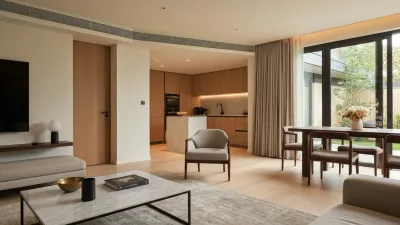



Your Airbnb house rules are the short list of expectations every guest agrees to when they book: how many people can stay, whether parties are allowed, when quiet hours start, what to do about pets, smoking, parking, and the handful of other things that keep a stay from going sideways. They're the terms of the visit, written in plain language, and on Airbnb a guest ticks a box confirming they've read them before the reservation clears. Vacation rental house rules work the same way on every other platform and on your own direct-booking site; only the box moves.
Here's why they matter more than most hosts think. Good house rules do three jobs at once. They protect the property from the wear, crowding, and misuse that quietly turns a profitable listing into a repair list. They set expectations, so a guest already knows the hot tub closes at 10 and the garage is off-limits before they walk in disappointed. And they back you up in a dispute. The moment you report a guest to Airbnb, file a damage claim, or answer a neighbor at the fence, a clear rule the guest agreed to in writing is the difference between a case you win and a his-word-against-yours you don't.
The catch is that the same rules can cost you bookings. A wall of forty cold, all-caps lines reads like a citation waiting to happen, and the calm, respectful guests you actually want are the first to click away to a listing that feels like a welcome instead of a warning. So the job isn't to write more rules. It's to write the right ones, word them like a host rather than a landlord, and wire them into a system with your screening and booking settings so they do their work without chilling the stay. I've spent years on the operations and analytics side of short-term rentals, or STRs, and the pattern is consistent: the best-run listings aren't the ones with the most rules, they're the ones with the clearest. This guide walks the categories one by one, with house rules examples you can adapt, and ends with a step-by-step for building your own set.
What Airbnb house rules are and the double job they do
On Airbnb specifically, your house rules live in a dedicated field on the listing, separate from your description and your house manual. Guests see them on the listing page and again at checkout, and Airbnb records that they agreed. That last part is what gives the rules teeth. A preference you mention in a paragraph is a suggestion. A rule in the house-rules field that a guest accepted at booking is something Airbnb, your insurer, and, if it ever comes to it, a mediator will actually reference.
I called it a double job in the intro, and the honest version is that it's really three, all pulling the same direction. Protection is the obvious one: an occupancy cap keeps twelve people out of a house built for six, a no-smoking rule keeps you from repainting and replacing linens, a pet policy keeps the next allergic guest from a miserable stay. Expectation-setting is quieter but just as valuable, because most guest complaints aren't about a rule, they're about a surprise, and a rule stated up front converts a surprise into a known term. And dispute support is the one hosts forget until they need it, which is exactly when it's too late to add.
It helps to stop thinking of house rules as a list of don'ts and start thinking of them as the operating agreement for a shared arrangement. You're handing a stranger the keys to a place you care about. A short, clear, fair set of terms is how two people who've never met agree on what a good stay looks like. Framed that way, rules aren't the opposite of hospitality. They're part of it. The five-star stays tend to be the ones where nobody was ever guessing, a theme I come back to in the wider guide on building a consistently five-star review system.
House rules versus the house manual, and why they're not the same thing
One of the most common mistakes I see is hosts jamming everything into the house-rules field: the WiFi password, the trash day, where the extra towels live, how to work the thermostat, and somewhere in the middle, buried, the actual rules that matter. Airbnb gives you two separate places for a reason, and using them correctly makes both stronger.
Your house rules are the enforceable terms, the things a guest agrees to and could lose their stay or their deposit over: occupancy, no parties, quiet hours, smoking, pets, check-out time, no unregistered visitors. Short, firm, and few. Your house manual is the hospitality layer, the how-to-enjoy-the-place information you send after booking: the door code, the WiFi, the good coffee shop, which burner runs hot, how to start the hot tub, the recycling schedule. It's warm, detailed, and as long as it needs to be.
Keeping them separate does two things. It keeps your rules readable, seven crisp lines instead of forty, so the ones that matter don't drown in logistics. And it keeps your welcome warm, because nobody wants their first real message from a host to open with a list of prohibitions. The rules protect you; the manual delights the guest. When you mix them, the rules get ignored and the welcome feels cold, which is the worst of both. Keep the rules to what's enforceable and let the manual carry everything else.
Worth naming here: your cancellation policy is a third thing again, a separate term guests agree to that governs money and dates rather than conduct. It doesn't belong in your house rules and it deserves its own deliberate choice rather than whatever default you were handed, which I broke down in the guide on choosing a cancellation policy. Three documents, three jobs: rules govern behavior, the manual serves the guest, the cancellation policy handles the calendar.
The core rule categories, one by one
Not every property needs every rule, but almost every property draws from the same menu. Here's the full menu, with what each one is actually for and how firm to make it. Treat it as the pool you pick from, not a list to copy wholesale. The next section covers how to word them, and the one after that covers which of them actually hold up when you report a guest.
Guest count and occupancy
This is the rule I'd write first on almost any listing. Your occupancy cap is the maximum number of guests allowed to stay, and it exists for three reasons: safety (beds, exits, and septic or water systems have limits), wear (twelve bodies age a house faster than six), and the law (many cities cap STR occupancy directly, often tied to bedroom count). Set the number to how the place genuinely sleeps in comfort, not the absolute maximum you could cram in, and state it as a hard cap. If you allow the occasional daytime visitor, say so and set that limit too, which leads straight to the visitor rule below.
No parties or events
Airbnb currently bans parties and open-invite events across its listings as a matter of platform policy, and most serious hosts reinforce it in their own rules anyway. The reason is simple: parties are where the expensive problems live, from noise citations to property damage to neighbor complaints that put your permit at risk. State it plainly, tie it to your occupancy cap (a party is really an occupancy violation with music), and mean it. If you run a property where small, pre-approved gatherings are part of the offering, and some luxury rentals are booked for exactly that, handle it as a written exception with its own terms rather than a loophole in your no-party rule.
Quiet hours
Quiet hours are the specific window when guests keep noise down, usually something like 10 PM to 8 AM. They protect two things at once: your relationship with the neighbors, and your standing with a city that may pull a permit over noise complaints. Give actual clock times rather than a vague "be respectful," because a number is enforceable and a vibe isn't. If your area has a noise ordinance, and many do, your quiet hours should meet or beat it.
Extra guests and visitors
Separate from your overnight cap, decide whether guests can bring visitors who aren't on the reservation, and say so. The classic party workaround is "only four of us are staying, the other twenty are just visiting," so close it in writing: only registered guests on the property, or visitors by prior approval up to a stated daytime limit. This doubles as a screening tool. A guest who pushes back hard on a reasonable visitor rule is telling you something useful before they book.
Minimum booking age
You can require that the guest who books and stays is at least a certain age, and 25 is common, to reduce the odds of a booking that's really a group of much younger guests after an unsupervised house. Keep it reasonable and apply it evenly; the goal is a responsible adult accountable for the stay, not age discrimination against grown-ups. Pair it with a firm no-third-party-booking stance, since the age rule only works if the person who agreed to it is the person who actually shows up.
Pets
Decide your pet policy on purpose: pets welcome, pets by prior approval, or no pets, plus any limits on size, number, or where they're allowed (off the beds, not left alone, cleaned up after outside). Undisclosed pets are a real problem, since they trigger allergies for the next guest and are a common source of hidden damage. Being pet-friendly with a simple heads-up requirement is often the sweet spot: it opens a large, loyal segment of travelers without giving up control. Just make the requirement explicit, because "ask first" only works if you've written it down.
Smoking
A no-smoking-indoors rule is close to universal for good reason. Smoke damage is expensive, it lingers in soft furnishings, and it can cost you the next several guests before you even notice. Be specific about what's allowed where: many hosts run a smoke-free interior with a designated outdoor spot and an ashtray so guests don't stub out on the deck. Extend the rule to vaping and, increasingly, to cannabis where it's legal, since the residue and smell problems are the same regardless of what's being smoked.
Check-in and check-out times
Your check-in and check-out times aren't just courtesies, they're what makes the turnover possible. A firm 11 AM check-out and a 3 or 4 PM check-in give your cleaner a real window to reset the place. State them clearly, hold the line on same-day turnovers, and if you offer flexibility, make it a request guests ask for rather than a default they assume. Late check-outs granted casually are how a clean, on-time next arrival turns into a scramble.
Pool, hot tub, and outdoor safety
If your property has a pool, hot tub, fire pit, dock, or anything else that can hurt someone, safety rules stop being optional. Spell out the essentials: no diving, children supervised at all times, gates and covers kept latched, hot tub closed during quiet hours, no glass near the water. These rules protect guests first and you second, because clear, disclosed safety terms matter if an incident ever leads to a question about what the guest was told. This is also a place to check your insurance and, honestly, ask a lawyer, because liability around water features varies a lot by location.
Trash, recycling, and check-out tasks
A short list of check-out tasks, like start the dishwasher, take the trash to the bin, load used towels in the tub, keeps your turnover on schedule and your property from filling with the last guest's mess. The key is restraint. A handful of quick, reasonable asks reads as normal; a chore list that feels like you're saving on cleaning reads as insulting, especially when you also charge a cleaning fee. Trash and recycling get their own line because the specifics are genuinely local, from collection days to which bin is which to whether the raccoons demand a latched lid, and a guest can't guess your city's system.
Parking
Parking rules prevent a surprisingly high share of neighbor complaints and guest frustration. Say exactly where guests park, whether that's the driveway, a specific numbered space, a garage with a fob, or street parking with permit rules, and how many vehicles fit. In dense neighborhoods and condo buildings, the wrong car in the wrong spot is how you meet the HOA, short for homeowners association, the hard way. The detailed instructions belong in the house manual, but the rule itself, how many cars and where, belongs in the house rules.
Security cameras and monitoring disclosure
If you have any recording or monitoring device connected to the property, it must be disclosed in your listing and your rules before a guest books. That means an exterior doorbell camera, a driveway camera, or a decibel-level noise sensor. It does not mean indoor cameras, which are a different matter entirely and get their own section below, because the current platform policy on them is a hard line rather than a disclosure question. For now, the rule of thumb: disclose every device, describe exactly what it does, and put it where a guest reads it before paying, not after arriving.
Damage responsibility
Finally, a plain statement that guests are responsible for damage beyond normal wear, and that you'll handle it through the platform's process, sets the tone without threatening anyone. You're not trying to scare a careful guest, you're establishing in writing and in advance that the place is cared for and that accidents get handled like adults. Keep it factual: "Guests are responsible for any damage during the stay; please let us know right away if something breaks so we can sort it out." That single calm line does more for a later claim than a paragraph of legal threats.
When I audit a listing's complaint history, the single rule that correlates most with a quiet, drama-free operation isn't the flashy one, it's the occupancy cap set honestly. The hosts who inflate the sleeps number to win a few more bookings pay for it later in wear, noise, and reviews that mention crowding. Set the cap to how the home actually lives, not the theoretical maximum, and a real share of your other problems never start.
Wording your rules so they read welcoming, not cold
Two hosts can have the exact same rules and get completely different results, because tone does most of the work. The rule "NO PARTIES. VIOLATORS WILL BE CHARGED AND EVICTED." and the rule "We love a good celebration, just not here. No parties or events, so the neighbors stay happy and you get a quiet night's sleep." forbid precisely the same thing. One reads like a threat from someone who's been burned. The other reads like a host who has their act together. Good guests book the second one.
A few principles I use when I write rules for a listing. Lead with the why. "Quiet hours from 10 because the neighbors are close" lands better than a bare "10 PM curfew," because it gives a reason a reasonable person respects. Use we and you. Warm pronouns make it a conversation, not a code. Prefer the positive framing. "This is a smoke-free home, with a comfy spot to sit out back" beats "NO SMOKING." Save the hard consequences for the rules that need them. One firm line about parties ending the stay is powerful precisely because it's the only line like it.
None of this means going soft on the rules that matter. Welcoming wording and firm terms aren't opposites. The whole point is that a well-worded rule is more likely to be read, remembered, and followed than a hostile one, which means it protects you better, not worse. The threat-style listing doesn't actually deter the bad guest, who isn't reading the rules for guidance anyway; it just repels the good one, who is. Warmth is the more protective choice, not the softer one.
| The rule | Why it matters | Guest-friendly wording |
|---|---|---|
| Maximum occupancy | Overcrowding causes wear and safety issues and breaks many local caps | "Our place is set up for up to 6 guests, which keeps everyone comfortable and keeps us within the local rules." |
| No parties or events | Parties drive damage, noise citations, and neighbor complaints; Airbnb bans them | "We love a good celebration, just not here. No parties or events, so the neighbors stay happy and you sleep well." |
| Quiet hours 10 PM to 8 AM | Noise ordinances and neighbor goodwill protect your listing's standing | "Quiet hours run 10 PM to 8 AM. The neighbors are close, so we keep evenings mellow, and they return the favor." |
| No smoking indoors | Smoke damage is costly, lingers, and ruins the next guest's stay | "This is a smoke-free home. Feel free to step out to the patio, there's an ashtray by the back door." |
| Pets by prior approval | Undisclosed pets cause allergies for future guests and hidden damage | "We're happy to host well-behaved pets, just give us a heads-up before you book so we can get the place ready." |
| Check-out by 11 AM | Cleaners need the full window to reset for the next guest | "Check-out is 11 AM so our cleaner has time to get the place perfect for the next guests. A few quick tasks are in the manual." |
| Registered guests only | Unvetted visitors are a liability and a common party workaround | "The folks on the reservation are the ones we're expecting. Hosting a visitor during your stay? Just ask us first." |
Notice the pattern in that right-hand column: every friendly version still states the rule plainly, it just adds a reason and a warm tone. You're not weakening the rule by being kind about it, you're making it more likely to be followed. Rewriting your rules is also a natural moment to check the rest of your listing's tone and structure, which is exactly what a good listing optimization checklist walks you through.
Which rules actually hold up when you report a guest
Here's a distinction that saves hosts a lot of grief: there's a difference between a rule you'd like guests to follow and a rule the platform will back you on. When you report a guest to Airbnb or file a claim, the rules that carry weight are the ones that were written in the house-rules field, agreed to by the guest at booking, and specific enough to be checked against evidence. Everything else is a preference, and preferences don't win disputes.
The rules that tend to hold up are the concrete, agreed ones: occupancy caps ("the booking was for four; the doorbell and photos show fifteen"), no-party and no-event rules, no-smoking rules with the smell and residue to show for it, pet rules, quiet hours tied to a clock, and no-unregistered-guest rules. These work because they're close to binary, a number was exceeded or a banned thing happened, and because the guest checked a box saying they understood. Airbnb's own party ban gives your no-party rule extra force, since it's platform policy and not just your preference.
What tends not to hold up: vague aspirations like "respect the space" or "treat it like your home," rules that live only in your description or a post-booking message rather than the rules field, anything you can't document, and rules that conflict with platform policy or local law. "No refunds under any circumstances" won't override Airbnb's own policies. A rule you never actually disclosed can't be enforced after the fact. And a rule that only exists as a vibe gives a mediator nothing to point at.
Two caveats worth stating plainly. First, Airbnb's policies change. What's enforceable, how claims work, and what documentation they expect all shift over time, so read the current version in Airbnb's Help Center rather than trusting a forum post from three years ago. Second, even the most airtight rule is only as good as your evidence, which is why documentation gets its own section below. A rule proves what was agreed; your records prove what happened.
How house rules work with screening and your booking settings
Rules don't operate alone. They're one layer of a system, and they work best when your screening and your booking settings pull the same direction. Think of it as three filters, one inside the next: your booking settings decide who can book at all, your screening decides who you accept, and your house rules govern how they behave once they're in. A gap in any one puts more load on the others.
Your booking settings can enforce some rules before a guest ever messages you. A weekend minimum-stay knocks out the one-night party booking that your no-party rule would otherwise have to catch after the fact. An advance-notice window kills the same-day request that gives you no time to screen. Age requirements and identity verification put a known, accountable adult on the reservation, the same adult your minimum-age rule depends on. Set these deliberately and your rules have less work to do, because the riskiest bookings never arrive.
Screening is the human layer on top. A couple of warm, well-timed questions before you accept, like what brings you to town, how many are in your group, one car or two, surface the mismatches your rules are designed to prevent while there's still time to decline gracefully. I go deep on this in the guide to screening guests and preventing parties, but the short version is that rules and screening are the same strategy at two different moments: screening filters the booking, rules govern the stay, and each covers what the other can't.
The listings that get burned usually have strong rules and weak settings, or the reverse, and rarely both weak. If you only fix one thing this week, put your weekend minimum-stay and advance-notice windows to work, because a booking your settings never let through is a rule you never have to enforce at 1 AM. Rules are your backstop; settings are your fence. Build the fence first.
Requiring a rule acknowledgement, and why it's worth the extra step
On Airbnb, a guest already agrees to your house rules at booking, that's built in. But there's a difference between a box quietly checked during checkout and a guest who actively confirmed they read the rules that matter. The second one is worth engineering, both because it improves compliance and because it strengthens your hand if anything goes wrong.
The move is simple. In your check-in message, restate your top three or four rules in a friendly line and ask for a quick thumbs-up. Something like: "Quick confirm before your stay, max 6 guests, no parties, quiet hours after 10, and no smoking indoors. Just reply 👍 so I know you've got it, and then let's get you settled in." Most guests reply instantly and think nothing of it. What you've done is create a second, timestamped acknowledgement inside the message thread, in the guest's own words, on top of the booking checkbox.
That acknowledgement does double duty, like the rules themselves. It nudges compliance, because a guest who just typed "got it, no parties" is less likely to throw one than a guest who skimmed a checkbox. And it builds your record: if the stay goes wrong, you have the guest confirming the exact rule they broke, in writing, dated. Keep the whole exchange on the platform, where it's preserved. If you want ready-made wording for this and the rest of your guest messages, the guest communication templates library has versions tuned for tone.
Enforcement and documentation when a rule gets broken
Rules you can't or won't enforce train guests to ignore all your rules, so it's worth being honest about enforcement before a problem arrives. The good news is that enforcement, done right, is rarely a confrontation. It's mostly documentation plus a calm message plus, when it's warranted, the platform's process. You're a host, not a bouncer, and almost everything you need to do can be done from your phone.
Documentation is the backbone, and the trick is to generate it as a side effect of just operating rather than scrambling for it after. Keep a photo baseline of every room from your last turnover, so "that mark wasn't there" is demonstrable rather than asserted. Keep every conversation on the platform, where it's timestamped and preserved. If you run a disclosed exterior doorbell or a decibel-level noise sensor, those logs are part of your record too. Add the booking's stated guest count and your acknowledgement thread, and a host with these habits walks into any dispute with a file instead of a feeling.
When a rule actually gets broken, the response ladder is short. Start with a friendly, specific message built from four parts, fact, rule, request, and an exit ramp: "The noise sensor is showing sustained high levels and quiet hours started at 10, could you bring it down? Thanks so much." A real share of problems end right there. If it doesn't, or if it's a safety issue or a clear party, use Airbnb's urgent safety line and in-app reporting while it's happening, because a timestamped report during the incident is worth far more than a recollection the next morning, and it lets the platform, not you, end the stay. Don't drive over to confront a house full of strangers at midnight; there's no version of that scene that gets better with your arrival.
Afterward, document before you clean up, file promptly through the platform's process, and stay calm even if the guest doesn't. Expect the occasional retaliatory review from a guest you had to correct, and don't fire back, because there's a measured way to handle difficult guests and their reviews without losing your standing, which I laid out in the guide on handling bad guests professionally. The through-line is the same as everything else here: the calm, documented host wins the disputes; the emotional, undocumented one loses them even when they're right.

Rules do their best work before anything goes wrong, read and understood over coffee on the first afternoon, not argued about later.
The balance: too many rules scare good guests, too few leave you exposed
There's a real cost on both ends of this, and finding the middle is most of the skill. Too many rules, a scrolling wall of prohibitions, micro-managed chore lists, a tone that assumes the worst, does measurable damage. It hurts conversion, because a careful guest comparing two similar listings picks the one that feels like a welcome. And it doesn't even buy you protection, because the bad actor you're trying to deter isn't reading the list. You pay the cost, in lost bookings and colder reviews, without getting the benefit.
Too few rules is the opposite failure, and it's quieter until it isn't. No occupancy cap, no quiet hours, no party or visitor rule, nothing in the enforceable field, and the first time a booking goes wrong you've got nothing to point at. Airbnb can't back a rule you never wrote. Your insurer can't reference terms that don't exist. The neighbor's complaint has no policy behind it. Under-ruling feels relaxed and hospitable right up until the stay that makes you wish you'd been clear.
The middle is a short, firm, warmly-worded set: the handful of rules that genuinely protect the property and your standing, stated plainly, with the logistics moved out to the house manual. As a rough test, if a guest can read your entire rule set in under a minute and come away feeling informed rather than warned, you're close. If it takes longer than that, or reads like a lease, start cutting. And if the rules are quietly costing you bookings and you can't tell which ones, that's exactly the kind of thing our listing optimization service is built to diagnose, because the line between protective and off-putting is much easier to see from outside the listing.
Cameras, privacy, and the rules the law writes for you
Some of your rules aren't really yours, they're written by the platform and by your local government, and you don't get to opt out. The clearest example is indoor cameras. As a matter of current Airbnb policy, indoor security cameras are prohibited in listings, anywhere inside the home, whether or not they're disclosed and whether or not they're switched on. This is a hard line, not a disclosure question, and it exists because a rental is someone's private home for the length of their stay. Because platform policies do change, confirm the current rule directly, since Airbnb announces policy updates through its newsroom, but plan around the assumption that anything resembling an indoor camera is off the table.
What you can have, with disclosure, is exterior and non-recording monitoring: a doorbell camera facing the entrance, a driveway camera, and decibel-level noise sensors that measure how loud a room is without recording any audio or video of what's said in it. Every one of those gets disclosed in your listing and your house rules before a guest books, plainly, described for what it does, and positioned where a guest reads it before paying rather than discovers it after arriving. Disclosure is both the platform requirement and, in many places, the law, since recording-consent rules vary widely. This is a genuine check-your-jurisdiction, ask-a-lawyer matter, not a formality.
Local law writes other rules for you too. Many cities cap STR occupancy directly, often by bedroom count, and your house-rule cap needs to sit at or under that legal ceiling. Noise ordinances set the real floor for your quiet hours. Permit and registration systems may require you to post a license number in your listing and rules, cap the number of nights you can host, or restrict who's allowed to host at all. Homeowners associations and leases add another layer on top of the city's. None of this is optional, and none of it is something you should guess at.
So before you finalize your rule set, read your city's short-term-rental ordinance, your HOA covenants or lease if either applies, and your state's recording and liability laws, and where the money or the liability is real, ask a lawyer rather than a forum. Strict-enforcement cities make this non-negotiable: in a market with active STR rules, a clear, compliant rule set is part of how you keep your permit when a neighbor or the city comes asking. Our Austin market guide is a good example of how much local rules can shape the way you operate day to day.
Example rule sets by property type
The right rules depend on the property. A studio in a condo building and a lakeside cabin with a hot tub protect against completely different risks, so their rule sets shouldn't match. Here are four house rules examples, sketched for the property types they fit. Adapt, don't copy, and always run them past your local ordinance first.
The city condo
A condo or apartment lives and dies on its relationship with the building and the neighbors, so the rules lean toward the shared environment. A low, firm occupancy cap. Quiet hours that meet or beat both the city ordinance and the building's own rules. A clear no-parties line, since sound travels through shared walls. Precise parking instructions, the assigned space or garage fob, and where guests absolutely can't leave a car. Common-area etiquette for elevators, hallways, and amenities, because the neighbors see everything. Trash and recycling routed to the building's system. And, where your city requires it, your STR registration number posted right in the rules. The theme: you're not just hosting a guest, you're representing them to a whole building.
The family house with a pool
A suburban house that sleeps a family, with a pool or hot tub, shifts the emphasis to safety and neighbor relations. Pool and spa rules come first: children supervised at all times, no diving, no glass near the water, gates and covers latched, hot tub off during quiet hours. A sensible occupancy cap tied to how the house sleeps, plus a visitor rule so a family reunion doesn't quietly become a block party. Quiet hours for the neighborhood. Grill and fire-pit safety if you have them. Trash and recycling on the right day, since a suburban street notices bins. Pets handled on purpose, because this is exactly the kind of place families travel with a dog. Warm, but clear about the water, which is the line that matters most here.
The mountain cabin
A cabin's rules are shaped by nature and isolation. Fire is the big one: rules for the wood stove or fireplace, the fire pit, and total compliance with any local burn ban, because a wildfire is the one mistake with no undo. No smoking, indoors or out, in fire season. Wildlife and food-storage rules so guests don't feed the bears or leave the trash out. Anything the septic system can't handle, spelled out kindly. Hot tub safety and quiet hours if you have neighbors within earshot. Winter driving and parking notes, from chains to plowing to where to leave the car. Cabins attract guests who want to unplug, so keep the tone easy, but the fire and wildlife rules are non-negotiable and worth stating firmly.
The luxury villa
A high-end villa serves a guest with high expectations and often a real reason to gather, so the rules read more like the terms of a premium service than a list of don'ts. Occupancy and events get handled with nuance: many luxury properties do allow small, pre-approved events, so rather than a flat no-party rule, you set an events-by-written-agreement policy with its own headcount, vendor, and fee terms. Clear damage-responsibility language, since the stakes per stay are higher. Smoking, pool and spa, and quiet-hours rules stated with the same firmness but a more polished tone. Any staff or service access, housekeeping, a concierge, a grounds crew, disclosed so guests know who might be on site and when. The guest is paying for an experience, so the rules should protect the asset while sounding like the concierge, not the landlord.
How to build your rule set, step by step
If you're starting from a blank listing or cleaning up a messy one, here's the order I'd work in. It takes an afternoon, and it's the afternoon that saves you the worst weekends.
- Start with your non-negotiables. Write down the three or four rules you would never bend on for your specific property, usually occupancy, no parties, quiet hours, and no smoking. These anchor everything else.
- Pull the rest from the menu. Go through the core categories, visitors, minimum age, pets, check-in and check-out, pool and safety, trash, parking, damage, camera disclosure, and keep only the ones your property actually needs. A studio doesn't need pool rules; a cabin does.
- Check your local law and your lease or HOA. Read your city's STR ordinance, your recording-consent laws, and any HOA or lease terms, then adjust your rules to sit inside all of them. Where money or liability is real, ask a lawyer. This step can override your preferences, so do it before you fall in love with a rule you can't legally keep.
- Set your occupancy cap on purpose. Choose the number from how the home genuinely sleeps in comfort and what the law allows, not the theoretical maximum. Write it as a hard cap, and add your daytime-visitor limit if you allow one.
- Write each rule twice. First as the plain rule, then as the warm, guest-facing version with a reason attached. The plain version keeps you honest about what it means; the warm version is what the guest actually reads.
- Cut it down. Read the whole set as a guest would. If it takes more than a minute or reads like a lease, move the logistics out to the house manual and keep only what's enforceable and essential. Shorter and clearer beats longer and thorough.
- Put the enforceable rules in the house-rules field. Not the description, not a post-booking message, the actual field Airbnb records the guest agreeing to. That's what gives them teeth in a dispute.
- Wire in your settings and screening. Set the minimum-stay, advance-notice, and age or verification rules that enforce your terms before a booking arrives, so the rules have less to catch after the fact.
- Add the acknowledgement step. Put your top few rules into your check-in message and ask for a quick reply, creating a second timestamped confirmation on top of the booking checkbox.
- Separate the house manual. Move every how-to and where-is out of the rules and into a warm, detailed manual you send after booking. Rules protect; the manual delights.
- Date it and set a reminder to review. Put the date on your rule set and schedule a look every season, because the property, the law, and your own experience all keep changing.
Work through those in order and you'll end up with a set that's short, legal, enforceable, and warm, which is the whole target. The first pass is the hard one. After that it's maintenance.
Reviewing and updating your rules by season
House rules aren't a set-and-forget document, and the hosts who treat them that way slowly drift out of alignment with their property and their market. Seasons change what your rules need to say. A pool rule matters in July and not in January. Fire-pit and burn-ban language tightens in dry season. Holiday weekends, New Year's, the Fourth, graduation, a big local event, are exactly when party pressure spikes and your minimum-stay and gap rules should be doing more work. A quick seasonal pass keeps the rules matched to the risk that's actually in front of you.
Beyond the seasons, review whenever something changes. A new local ordinance or a permit renewal. An Airbnb policy update, since they happen, and the camera, party, and claims rules are the ones to watch. A new feature at the property, like the hot tub you just added or the fence you took down. And, most usefully, your own recent stays: every problem you had is a rule you might be missing, and every rule that caused friction with a good guest is one to soften or cut. Your complaint history is the best editor you have.
Put it on a schedule so it actually happens, on the same quarterly rhythm you'd use for a deep clean. Date your rule set, note what you changed and why, and keep the old version so you can see the drift over time. It's fifteen minutes a season, and it's the difference between rules that fit your property and rules that fit the property you had two years ago.
Tie your rule review to something you already do every quarter, like your deep-clean rotation or your pricing refresh, so it never becomes the task you keep meaning to get to. The hosts whose rules quietly rot are almost never the ones who decided rules didn't matter, they're the ones who never put the review on a calendar. A recurring fifteen-minute reminder beats good intentions every time.
Key Takeaways
- Airbnb house rules do a triple job: they protect the property, set guest expectations, and back you up in a dispute, which is why the clear ones are worth the effort.
- Keep house rules (short, enforceable terms) separate from the house manual (warm, detailed how-to info). Mixing them makes the rules unreadable and the welcome cold.
- Draw from the core categories, occupancy, no parties, quiet hours, visitors, minimum age, pets, smoking, check-in and check-out, pool safety, trash, parking, camera disclosure, damage, but keep only the ones your property needs.
- Tone does most of the work. The same rule worded warmly with a reason attached gets read and followed; worded like a threat, it repels good guests without deterring bad ones.
- The rules that hold up in a dispute are specific, written in the house-rules field, and agreed to at booking. Vibes and preferences don't win claims; documented, agreed rules do.
- Rules work as a system with your booking settings and screening. Settings are your fence, rules are your backstop, so build the fence first.
- Ask for a quick rule acknowledgement in your check-in message to boost compliance and create a second timestamped record.
- Some rules are written for you: Airbnb currently prohibits indoor cameras (verify the latest), all exterior monitoring must be disclosed, and local ordinances set occupancy caps and noise limits. Check your city and ask a lawyer.
- Avoid both extremes: too many rules hurt conversion without adding protection; too few leave you exposed when a stay goes wrong.
- Tailor rules to the property type, and review them every season as the weather, the law, and your own experience change.
None of this requires turning your listing into a rulebook. It's a short afternoon of work: pick the handful of rules your property genuinely needs, word them like the welcoming host you are, put the enforceable ones where they count, back them with your settings and a quick acknowledgement, and glance at the whole thing once a season. Do that and your rules quietly protect you, the property, the neighbors, and your standing on the platform, without ever making a good guest feel unwelcome. That's the entire goal: firm where it matters, warm everywhere else.
If you'd rather have an experienced set of eyes on your rules, your listing, and how the two read to the guests you're trying to attract, that's the kind of thing we do. Cavmir markets short-term rentals and boutique properties, so we're not a property manager, and our angle is always how your listing and its terms come across to a booker. If you want a second read on whether your rules are protecting you or quietly costing you bookings, our consulting team is glad to help, and you can tell us about your place whenever you're ready. No pressure either way. Even if you just take the step-by-step above and run it yourself this weekend, your future self will thank you the first time a stay tries to go sideways.