
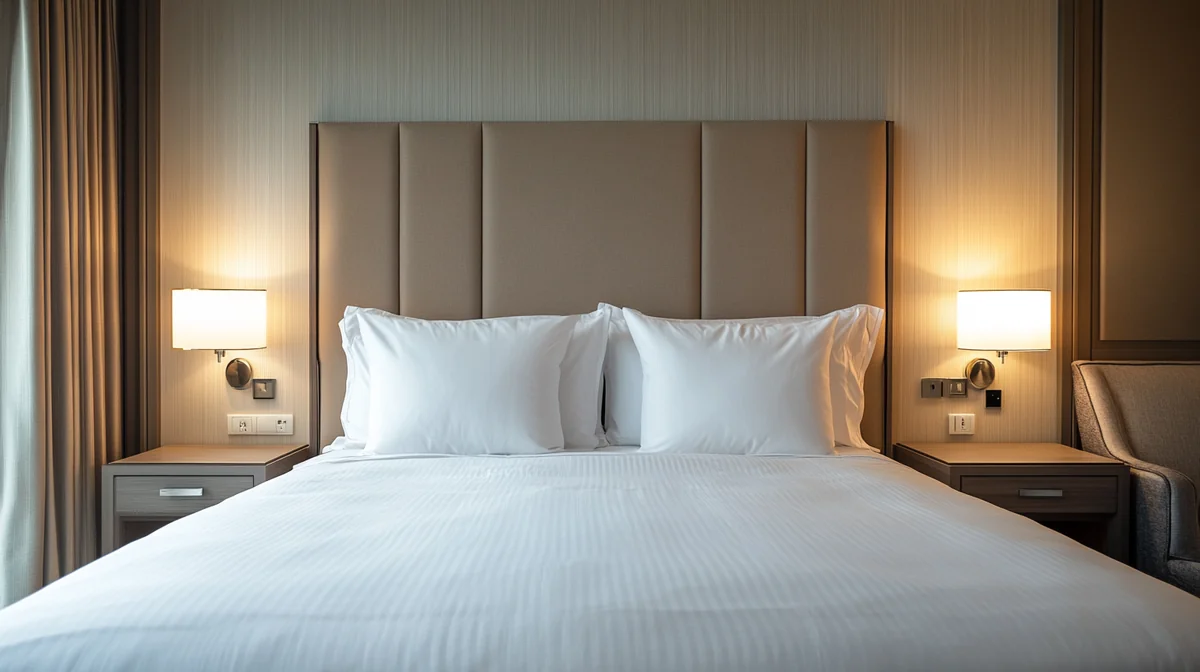

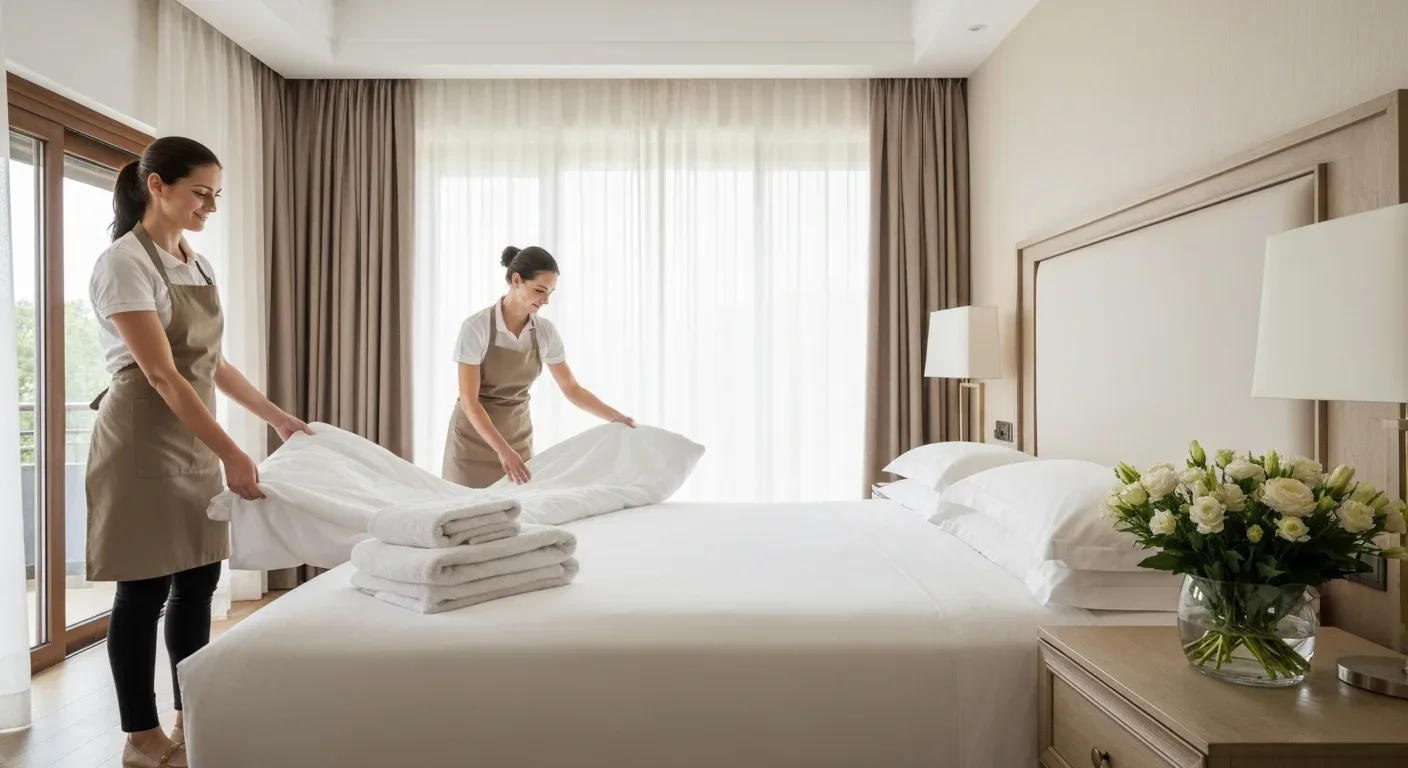
The fastest way to win or lose an Airbnb review is the state of your place the moment a guest walks in. Not the price, not the photos, not even the location. Cleanliness. It's the first thing every guest checks within the first minute, it's its own scored category in the review, and it's the category most likely to drag an otherwise good stay down to four stars. A turnover, meaning the full reset of your rental between one guest checking out and the next checking in, is where that first impression gets earned or thrown away.
Here's the short answer if you're pressed for time. Cleanliness wins reviews when it's consistent, and consistency doesn't come from trying harder or caring more. It comes from a system: a written airbnb cleaning checklist, set par levels for your linens and supplies, a stocked caddy, photo-verified handoffs, and a final inspection before the next guest arrives. Build that cleaning system once and your ratings stop depending on whether anyone happened to be having a good day.
I've spent seven-plus years on the operations and analytics side of short-term rentals, or STRs, and if there's one pattern I'd stake my name on, it's this: the best-reviewed properties aren't the cleanest by luck. They run the same repeatable airbnb turnover the same way every single time, so the result holds whether the owner cleans it, a pro does, or a backup steps in. This guide is that system from start to finish, with a numbered checklist a cleaner can actually follow.
Why cleanliness is the review category that decides your rating
When a guest leaves an Airbnb review, they rate several subcategories, and cleanliness is one of them. It's also the one guests judge before they've judged anything else, because they can see it, smell it, and feel it the second they step inside. A guest might forgive a slightly firm mattress or a confusing coffee maker. They rarely forgive a hair on the pillow or a ring in the toilet, because those tell a story about how much care went into the stay, and that story colors everything that comes after.
The reason this matters so much for your bottom line is the way averages work against you. Ratings sit high, near the top of the five-star scale, for almost every active listing, which means a single low score pulls your average down hard and takes a long run of perfect stays to recover. One turnover where the last guest's crumbs were still on the counter can cost you the rating streak you spent months building, and it can push you under the threshold Airbnb watches for Superhost status. Prevention is worth far more than any recovery you can attempt after the fact.
A cleanliness slip doesn't stop at the star line, either. Guests who arrive to a spotless place relax and read the rest of the stay generously. Guests who find a dirty corner start hunting for other problems, and they find them. The same firm mattress a happy guest never mentions becomes a complaint once trust is broken at the door. Cleanliness sets the mood the rest of your review gets written in, which is why a miss there costs you more than the single category it lands in, and why it quietly shapes your search visibility as those ratings move.
This is why cleanliness is the backbone of the whole review picture, not a side detail. The properties that quietly stack up five-star ratings treat every turnover as the moment the next review gets written, because functionally it is. If you want the wider framework around this, I walked through the full system behind consistently five-star properties in a separate guide, and this cleaning system is the operational heart of it. For brand-new hosts, clean turnovers are also how you earn those crucial first reviews that everything else builds on.
What a turnover system actually is
A turnover system is a written, repeatable process that resets your property to the exact same standard every time, no matter who's doing the work. That last part is the whole point. Left to memory and good intentions, cleaning quality drifts. One person wipes the inside of the microwave and the next assumes someone already did. A system removes the guessing by defining the standard on paper and building in checks that catch the misses before a guest ever sees them.
Every reliable airbnb turnover has the same five parts, and each one exists to close a specific gap:
- A written checklist. The room-by-room definition of what "clean and ready" means for your specific place, so the standard lives on paper instead of in one person's head.
- Par levels. The set quantities of linens, towels, and consumables you always keep stocked, so nobody ever arrives to find they're a bath towel or a roll of paper short.
- A stocked cleaning caddy. One grab-and-go kit with every product and tool the job needs, so the cleaner isn't hunting for glass spray mid-turn or skipping a task because the supply ran out.
- Photo-verified handoffs. A short set of photos of the finished state, submitted at the end of every turn, so quality is proven rather than assumed.
- A final inspection pass. A last set of eyes, whether yours or a lead cleaner's, walking the space the way a guest would before the door is handed over.
None of these is complicated on its own. The strength is in running all five together, every time, so a good result stops being a happy accident. When those five pieces are in place, you've moved from hoping the place is clean to knowing it is, and that shift is what protects your reviews when your calendar is full and the pressure is on.
The cheapest quality-control tool you own is your phone camera. When I set up a new property, I shoot a reference photo of every room in its perfect, guest-ready state and hand those to whoever cleans it. A finished turn should match the photo. It turns a vague instruction like "make it look nice" into a concrete target anyone can hit, and it settles disagreements about the standard before they turn into a bad review.
Building the written airbnb cleaning checklist, room by room
Your airbnb cleaning checklist is the document the whole system rests on. It should read like a recipe: specific, ordered, and complete enough that someone who has never seen your place could hit your standard by following it. Vague checklists like "clean the kitchen" produce vague results. Good ones spell out the tasks, because the difference between a four-star and five-star cleanliness score usually lives in the small items people skip when they're rushing.
Write it out space by space. In the kitchen, that means counters and backsplash wiped, sink and faucet shined, stovetop and any splatters cleaned, the inside of the microwave, the front of every appliance, the fridge checked and cleared of the last guest's food, and dishes washed and put away where they belong. In bathrooms, it's the toilet inside and out, the shower and tub scrubbed, glass and fixtures descaled, a streak-free mirror, fresh towels hung, and paper and soap restocked. In bedrooms, it's fresh unstained linens, beds made tight, surfaces dusted, and a look under the bed and behind the nightstands. In living spaces and the entry, it's surfaces and high-touch points wiped, cushions straightened, and floors done last.
Once the standard is written, give your cleaner the order to work in, because sequence saves time and prevents rework. Cleaning bottom to top means you knock dust onto floors you already did. Here's the flow I hand to every cleaner, and it doubles as the airbnb cleaning checklist a new person can follow on their first turn:
- Walk and document first. Before you touch anything, walk the whole place and photograph anything broken, stained, or left behind. This protects everyone and starts the damage check while the guest's traces are still there.
- Air it out and strip it down. Open a window or two, pull all bed linens and used towels, and bag them for the wash. Getting linens moving first is what keeps the whole turnover on schedule.
- Start the machines. Load the washer or stage the laundry for pickup, and start the dishwasher if there's a load, so those run in the background while you clean.
- Clear all trash and recycling. Empty every bin in the place, including bathrooms and bedrooms, and replace the liners. Nothing reads as "dirty" faster than a guest finding the last person's trash.
- Dust and wipe top to bottom. Work high surfaces first, then shelves and furniture, then lower surfaces, so anything you knock loose lands on floors you haven't done yet.
- Reset the kitchen. Dishes away, counters and backsplash wiped, appliance fronts and the inside of the microwave cleaned, the fridge checked and emptied of leftovers, sink and faucet shined.
- Scrub the bathrooms. Toilet, shower, tub, and sink scrubbed, glass and fixtures descaled, mirror left streak-free, fresh towels hung to par, and paper and soap restocked.
- Hit the high-touch points. Wipe light switches, door handles, remotes, thermostats, and railings. Guests notice these more than you'd think, and they matter for the space feeling genuinely cared for.
- Make the beds. Fresh, unstained linens on every bed, made tight and even, and a check under the bed and behind furniture for anything the last guest missed.
- Restock to par. Bring every consumable back up to its set level: paper products, soap, coffee, trash bags, dishwasher pods, and anything else on your list.
- Do the floors last. Vacuum, then mop, always working out of the room toward the door so you don't walk over what you just finished.
- Final look and handoff. Step back with fresh eyes, do a smell check, set the thermostat, stage any welcome details, then take and submit your handoff photos.
Print this, laminate it, and keep a copy in the property. A checklist that lives in a text thread gets ignored. A checklist stuck to the inside of the supply closet gets used.
Par levels and the stocked cleaning caddy
A par level is the baseline quantity of an item you always keep on hand, borrowed straight from how hotels and restaurants manage stock. For linens and towels, the number that keeps you out of trouble is three full sets per bed and bath: one in use, one clean and ready in the closet, and one in the wash or out at the laundry. Two sets can work if you never run back-to-back bookings, but the third set is what saves a same-day turnover when a load isn't dry or a set comes back stained and has to be pulled.
Consumables get the same treatment. Set a par for toilet paper, paper towels, hand and dish soap, trash bags, dishwasher pods, coffee, and whatever else your guests run through, and restock to that number every turn so you're never caught short. Running out of toilet paper mid-stay is a small failure that generates a genuinely annoyed message and, often, a comment in the review. The amenities you choose to stock are part of your positioning too, and I covered which ones actually move bookings in this breakdown of amenities worth the money.
The caddy is the other half of readiness. It's a single tote your cleaner grabs at the start of every turn holding all-purpose cleaner, glass cleaner, a bathroom and toilet product, a degreaser for the kitchen, microfiber cloths in more than one color to keep bathroom rags away from kitchen surfaces, a scrub sponge, gloves, and a lint roller for the stray-hair patrol. When everything the job needs lives in one place, the cleaner never skips a task because a bottle was empty or buried in a closet across the property.
Set your par at three sets of linens the moment you take on same-day turnovers, not later. The most common turnover failure I see isn't a dirty room, it's a missing clean sheet: a set still damp in the dryer while a guest is at the door. A third set costs a fraction of one bad review, and it converts your tightest turnovers from a gamble into a routine. Keep the spare set folded and visible in the closet so nobody has to ask where it is.
Same-day turnovers and tight timing windows
The hardest turnover is the back-to-back: one guest checks out in the late morning and another checks in a few hours later. A common setup is an 11 a.m. checkout and a 3 or 4 p.m. check-in, which leaves a window of only a few hours to reset the entire place, run laundry, and inspect it. When that window is tight, small problems become emergencies fast. A late checkout, a heavy stay, or a linen set that comes back stained can eat your whole buffer.
You manage the squeeze in a few ways. Set your checkout and check-in times to give the cleaner a real window, and hold that line rather than routinely granting late checkouts on same-day turns. Communicate early with the arriving guest so a slightly later start isn't a crisis. Keep the extra linen par so laundry timing never becomes the bottleneck. And know your true turn time for the property, measured with a stopwatch on a normal day, so you're scheduling against reality instead of hope. Fast-moving markets with short average stays run on this discipline, which is exactly why a tight system matters so much somewhere like a high-turnover market like Orlando where back-to-back bookings are the norm, not the exception.
Have a contingency plan for the turn that can't finish in time, because eventually one won't. Decide in advance what "ready enough" means when you're down to the wire: a clean bathroom, fresh linens, and a spotless kitchen matter more in the first five minutes than a perfectly vacuumed closet. Line up a backup cleaner who can jump in, keep a short honest message ready to send an arriving guest if you need an extra half hour, and know which tasks you'd finish after a late checkout versus which ones can never slip. Guests forgive a small, well-communicated delay far more readily than they forgive walking into a half-cleaned room with no warning.
It helps to see the turnover broken into its parts with a rough sense of who owns each one and how long it takes, so you can plan the window instead of reacting to it. Here's a single-unit turn laid out as a planning tool. Your own numbers will differ by property size and finish, so measure and adjust.
| Turnover step | Who does it | Typical time |
|---|---|---|
| Walk-through and damage or inventory photos | Cleaner | 5–10 min |
| Strip beds, gather towels, bag laundry | Cleaner | 10–15 min |
| Start or hand off laundry | Cleaner or linen service | 5 min handoff |
| Trash and recycling, all rooms | Cleaner | 5–10 min |
| Kitchen reset and dishes | Cleaner | 20–30 min |
| Bathroom scrub and restock | Cleaner | 20–30 min per bath |
| Dust, surfaces, high-touch points | Cleaner | 15–25 min |
| Make beds with fresh linens | Cleaner | 10–15 min per bed |
| Restock consumables to par | Cleaner | 10 min |
| Vacuum and mop floors (last) | Cleaner | 15–25 min |
| Photo-verified handoff | Cleaner uploads | 5 min |
| Final inspection pass | Host or lead cleaner | 15–20 min |
| Stage welcome details | Host or cleaner | 5–10 min |
Add those up and you'll see why a studio and a five-bedroom house are different animals, and why "the cleaner will just handle it in an hour" is how same-day turns go wrong. Build your schedule from your real numbers, then leave a buffer on top for the day something runs late, because eventually something will.
Hiring a cleaner versus doing it yourself
Cleaning your own place makes sense in a narrow set of cases: you have one unit, you live close by, your calendar isn't packed, and your time is genuinely worth less than what a pro would charge. Doing it yourself early also teaches you the property better than anything else, because you learn exactly how long a real turn takes and where the grime hides. That knowledge is what lets you write a standards document later that actually reflects the work.
Most hosts should move to hired help sooner than they do, though. The moment turnovers start colliding with your job, your travel, or your sanity, the quality slips, and slipped quality shows up in reviews. When you hire, be clear on how you pay and how you schedule. A flat rate per turnover is the cleanest arrangement for both sides, because it rewards efficiency and makes your costs predictable, though some cleaners prefer hourly for larger or unpredictable places. Decide up front whether laundry is included or billed separately, and put it in writing.
When you bring someone on, vet them with a paid trial turn against your standards document rather than a conversation. Watch how they handle the details that sink reviews, check their handoff photos against your reference shots, and see whether they catch the problem you quietly left for them or walk right past it. Pay fairly and on time, because a great cleaner is the most valuable person in your operation and the most expensive to replace once trained. The cheapest bid almost never wins here. A cleaner who knows your property, hits your standard without supervision, and answers the phone on a same-day turn is worth paying to keep and worth building your schedule around.
Scheduling should be as close to automatic as you can make it. Give your cleaner calendar access or a reliable feed of bookings so they see turns coming without you sending a message every time, and confirm the tight same-day ones directly. The single most important move here is building a backup bench. Never run single-threaded on one cleaner, because the day they're sick, on vacation, or simply don't show is the day you have a guest arriving in three hours and no one to reset the place. Keep two or three vetted cleaners who know your property and your standard, use your main one for the bulk of turns, and give the backups enough work to stay warm. A reliable bench is also part of how you protect the ratings that feed your Superhost status and the revenue that comes with it.
Quality control and a written standards document
Hiring a cleaner doesn't hand off the standard, it just hands off the labor. The standard stays yours, and you hold it with a written standards document plus two checks: photo-verified handoffs and a final inspection pass. Skip these and quality drifts the way it always does when nobody's watching, slowly enough that you don't notice until a review does it for you.
The standards document is your airbnb cleaning checklist turned into a reference a cleaner can be trained and measured against. Pair the task list with those reference photos of each room in its finished state, and call out the non-negotiables in plain language: no hair anywhere, no stains on linens or towels, streak-free glass, a neutral smell, restock to par. When the standard is written and shown, "I didn't know you wanted that" stops being a valid answer, and onboarding a new cleaner or a backup takes an afternoon instead of a month.
Photo-verified handoffs are the check that scales. At the end of every turn, the cleaner submits a short set of photos of the finished rooms, made beds, and staged details. You spot a missed spot from your phone before a guest walks into it, and just as importantly, the habit of shooting the handoff makes cleaners hold their own standard higher because they know the camera is coming. The final inspection pass is the last layer, ideally an in-person walk by you or a lead cleaner on your tightest or highest-value turns. You can't inspect every turn in person once you're at scale, which is exactly why the photos and the written standard carry the load in between.
The guest-visible details that make or break reviews
Guests don't grade your turnover on the ninety percent that's obviously clean. They grade it on the ten percent that isn't, because a single overlooked detail makes them wonder what else got skipped. These are the specific spots that generate cleanliness complaints far out of proportion to how long they take to handle, so they belong on every checklist as their own line items.
The usual culprits: hair, anywhere at all, which is the number-one tell that a space wasn't truly reset, so a lint roller on beds and a careful pass over bathroom floors and shower corners earns its place in the caddy. Under the beds and behind furniture, where the last guest's sock or a dust drift hides from a quick glance. The inside of the fridge and microwave, where leftover food and splatters lurk behind closed doors. Grout and glass, meaning shower grout, glass doors, mirrors, and sliding doors that show every streak and water spot in the wrong light. And smell, which guests register before they've consciously looked at anything.
On smell specifically, aim for neutral and fresh, not heavily perfumed. A property drowning in artificial fragrance reads as a place hiding something, and it's a real problem for guests with sensitivities. Air the place out, deal with the source of any odor rather than masking it, and let clean smell like clean. The finishes you choose affect how easily all of this comes together, too. Hard, wipeable surfaces, quality grout sealing, and materials that don't trap odor make every turn faster and more forgiving, which is one of the practical reasons a smart interior design and finish plan pays for itself in operations, not just in photos.
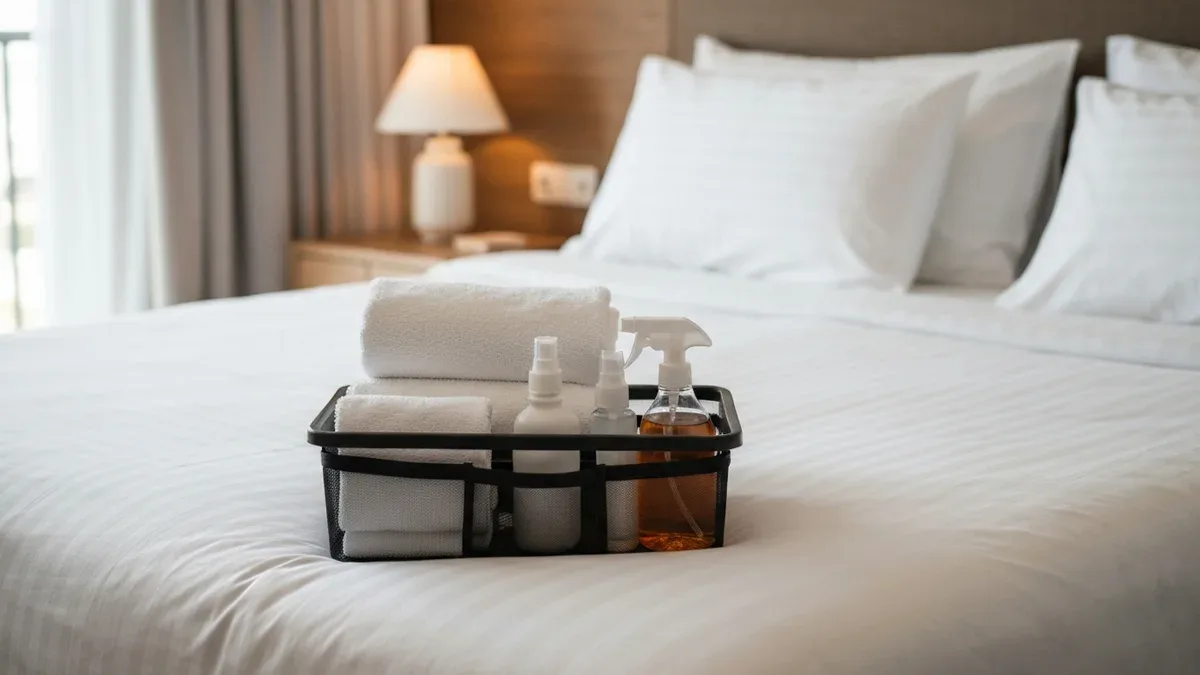
A stocked caddy and set par levels are what turn a good cleaning day into a repeatable standard. When the tools and supplies are always ready, the details stop getting skipped.
Laundry strategy: in-house versus a linen service
Laundry is the hidden bottleneck of the airbnb turnover, and how you handle it shapes your whole timing. You have two broad paths, and plenty of hosts run a blend of both. The in-house path means washing and drying linens on-site with your own machines. It's the lowest cash cost per turn and gives you full control, but it ties up real time inside your window, especially with bulky items like duvet covers and bath sheets that take a full dry cycle, and a single washer becomes a hard limit on how fast you can turn a busy property.
The service path means a linen or laundry service that swaps dirty sets for clean, often hotel-folded ones, sometimes with linens they own and sometimes laundering yours. It costs more per turn and requires holding extra par sets so there's always clean stock on hand, but it buys back the one thing you can't make more of on a same-day turn: time. The cleaner drops the dirty bundle, grabs a fresh one, and keeps moving. For hosts running several units or tight back-to-backs, that speed often pays for itself in protected reviews and turns that don't fall apart.
Whichever path you pick, standardize on white linens. White reads as clean and hotel-grade, it signals nothing is being hidden, and it can all be washed together and bleached back to bright, so you're never matching sets or retiring a whole set over one stain. The move toward hotel-style linen programs among serious short-term rental operators is a real trend, and outlets that cover the lodging industry closely, like the hospitality reporting at Skift, track how the guest expectations set by hotels keep raising the bar for everyone else.
Damage and inventory checks during turnover
Every turnover is also an inspection, and treating it that way protects both your property and your standing on the platform. The walk-through that opens your checklist isn't busywork. It's the window when you catch damage, missing items, and low stock while there's still a clear line to the guest who just left. Photograph anything broken, stained, or gone before cleaning erases the evidence, and note the timestamp, because a documented issue caught at checkout is a very different case than one you notice a week later with no proof.
Keep a simple inventory list of the things that walk off or break: towel and linen counts, kitchenware, remotes, chargers, decor, and any higher-value items. A quick count against that list each turn tells you fast when something's missing and keeps your place from slowly hollowing out over a season of stays. This is also where your restock-to-par step and your damage check overlap, since both come down to knowing what should be there and confirming that it is.
When you do find real damage, the documentation from your turnover is what makes any claim through Airbnb's resolution process credible. Handle it professionally and unemotionally, because how you deal with the rare bad guest affects your reviews as much as the cleaning does. I wrote a full playbook on handling difficult guests without losing your cool or your Superhost status, and clean, timestamped turnover records are the backbone of every one of those conversations.
Mid-stay refreshes, the deep-clean rotation, and seasonal resets
The standard turnover isn't the only cleaning your property needs. Longer stays and long-term wear both call for their own routines, and building them into your calendar keeps small issues from compounding into review problems or expensive repairs.
The mid-stay refresh
For stays past a week or so, offer a mid-stay refresh: a light service partway through where someone swaps fresh towels, empties trash, restocks consumables, and does a quick tidy without a full reset. It keeps a long stay feeling cared for, and it gives you a set of eyes inside the property to catch a problem before checkout. Always schedule it with the guest and respect their space and privacy, framing it as a service rather than a check-up. Make it optional and easy to decline, and put the terms in your listing so nobody's surprised. If you spell these expectations out clearly up front, alongside your other stay policies, everyone knows what to expect.
The deep-clean rotation
A deep-clean rotation covers the jobs a normal turn skips because there isn't time: inside the oven and behind the appliances, descaling the kettle and coffee maker, wiping baseboards and vents, washing windows, laundering or steaming curtains, rotating and protecting mattresses, and scrubbing grout back to its real color. Put these on a schedule, monthly or quarterly depending on how hard the item wears, so the buildup that a quick turn never touches doesn't accumulate into something a guest notices.
Keep a dated log of when each deep-clean task was last done, the same way you'd track oil changes on a car. It's easy to swear you cleaned behind the fridge more recently than you actually did, and a simple log settles it, tells a new cleaner what's due, and gives you a record if a guest ever raises a buildup issue you thought you'd already handled.
Seasonal deep cleans
Then there are the seasonal deep cleans tied to your climate and your booking calendar. Swapping HVAC filters, servicing outdoor and patio spaces before peak, deep-cleaning soft furnishings, and doing a full top-to-bottom reset right before your busy season all keep the property camera-ready when demand and scrutiny are highest. A pre-peak deep clean is one of the highest-return few hours you'll spend all year, because it sets the standard for the stretch when you'll have the most guests writing the most reviews.
Turnover software: what tools like Turno and Breezeway do
Once you're past a single unit or juggling more than one cleaner, spreadsheets and text threads start to crack, and turnover software earns its place. Tools built for this, such as Turno and Breezeway, connect to your booking calendar and schedule the right cleaner automatically as reservations come and go, so nobody has to remember to send an assignment. They carry your checklist inside the app, prompt for the photo verification at the end of a turn, and give cleaners a channel to flag a problem or a low supply the moment they spot it.
Most of these platforms also handle the surrounding admin: paying cleaners, tracking which supplies are running low across your properties, and keeping a record of every completed turn so you can see patterns over time. The value scales with your complexity. For one owner cleaning one place, the software is probably more than you need, and a laminated checklist plus a shared calendar does the job. For a portfolio, or a property with a rotating bench of cleaners, the automatic scheduling and the built-in photo checks are what keep the standard from drifting as the number of moving parts grows.
Pick the tool that matches how you actually operate rather than the one with the longest feature list. The goal isn't software for its own sake, it's a cleaning system that runs the same way whether you're paying attention that week or not. If a simple setup delivers that, keep it simple.
The cleaning-fee debate and total-price optics
How you charge for cleaning is a pricing decision as much as an operational one, because guests now see the full price with fees included before they book. A cleaning fee that looked reasonable in isolation can wreck your conversion on shorter stays, since a flat fee spread over two nights inflates the per-night total a guest actually compares against your neighbors. The fee itself is fine. A fee that makes your all-in price look out of line is the problem.
You've got a few honest ways to handle it. You can keep the cleaning fee modest and fold part of your true cleaning cost into the nightly rate, so the total reads cleaner at a glance. You can set a minimum-stay policy that spreads a necessary fee across enough nights that it stops distorting the per-night math. Or you can charge the fee straight and accept that very short stays aren't your market. The right answer depends on your property and your competition, and it's worth testing rather than guessing. Airbnb publishes its own guidance on how fees display and what guests see, and it's worth reading the current specifics in Airbnb's own help center before you set yours, since the display rules shift over time.
One more note that sits outside the marketing question: how cleaning fees are treated for tax varies by where your property is, and it can differ from how your nightly rate is handled. That's a question for your accountant, not a blog, so bring your specific numbers and location to a professional rather than assuming the fee is treated the same as the rest of your revenue.
Key Takeaways
- Cleanliness is the review category guests judge first and forgive least, and one bad turnover can undo a long run of five-star stays, so prevention beats recovery every time.
- A turnover system has five parts: a written airbnb cleaning checklist, set par levels, a stocked caddy, photo-verified handoffs, and a final inspection pass. Run all five, every turn.
- Write your checklist room by room and give the cleaner an order to work in, top to bottom and back to front, with floors last.
- Hold three sets of linens and towels per bed and bath once you run same-day turns, and restock every consumable to a set par level.
- Measure your true turn time and plan same-day windows against reality, with a buffer for the day something runs late.
- Move to hired cleaners sooner than feels necessary, pay a clear flat rate per turn where you can, and always keep a backup bench of two or three vetted cleaners.
- Hold quality with a written standards document, reference photos of each finished room, photo handoffs, and a final walk on your tightest turns.
- The details that sink reviews are small and specific: hair, under the beds, the fridge and microwave, grout and glass, and smell. Put them on the checklist as their own items.
- Choose a laundry path that fits your pace, standardize on white linens, and build in a mid-stay refresh, a deep-clean rotation, and seasonal resets.
- Set your cleaning fee with total-price optics in mind, and take the tax treatment of that fee to your accountant.
You can build every piece of this yourself, and plenty of hosts do. The system isn't complicated, it's just a set of habits written down and held to: a real checklist, honest par levels, a stocked caddy, a photo at the end of every turn, and one last look before the door opens. Start with the written airbnb cleaning checklist, because everything else hangs off it, and add the other pieces as your calendar gets busier and your turnovers get tighter. Get the cleaning system right and it quietly protects your reviews for as long as you host.
If you'd rather have someone who does this all day help you set the standard, that's what we do. Cavmir markets short-term rentals and boutique properties, and a big part of strong marketing is making sure the guest experience lives up to the listing, turnover after turnover. If you want a second set of eyes on your operation and how it shows up to guests, our consulting work is built for exactly that, and you can tell us about your property whenever you're ready. No pressure either way, and either way, keep that first minute spotless.