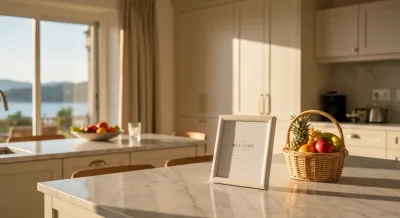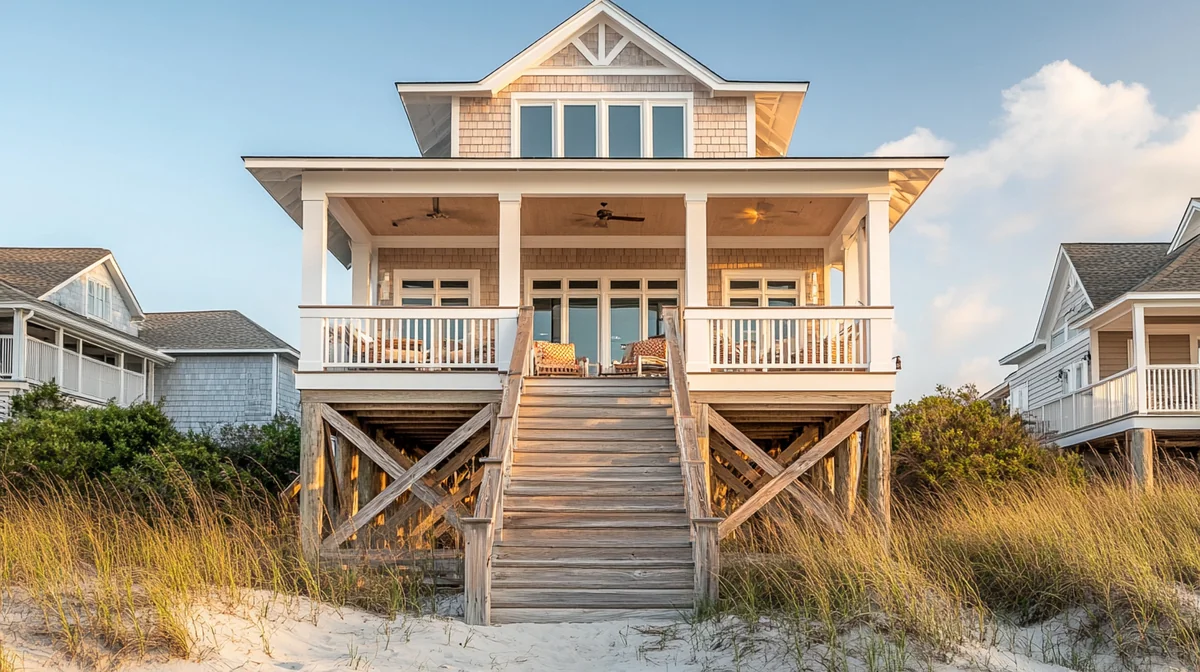
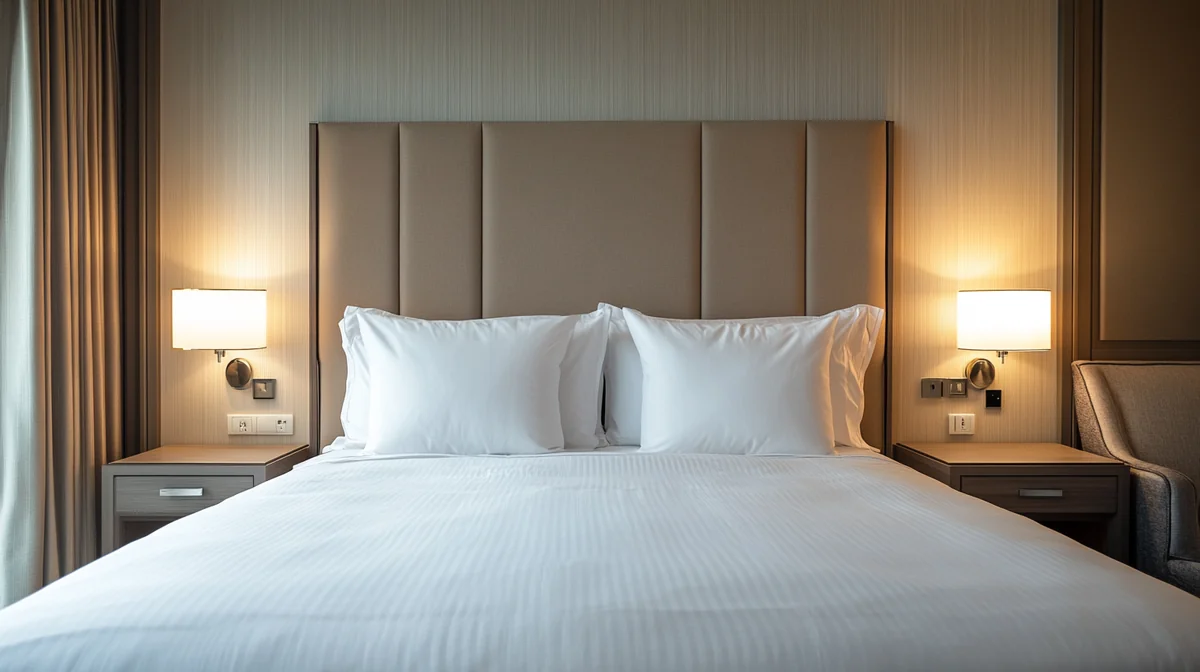
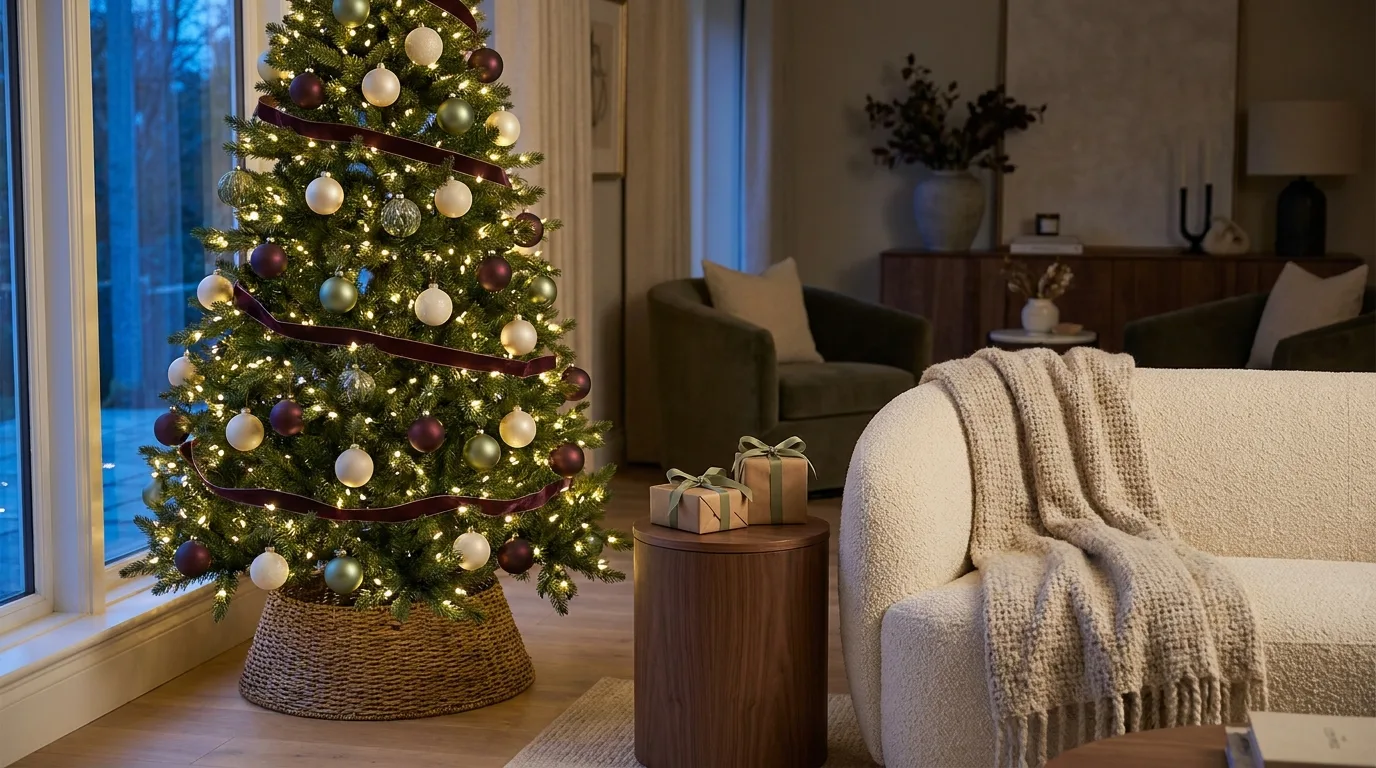


I have spent more than 900 nights as a guest in rentals and hotels, and a good number of them were over the holidays. Here is what I noticed. The grand hotels rarely skip the tree. Walk into any serious hotel lobby in December and there is a big, beautifully lit tree, because the people who run those places know what it does to a guest who is far from home. Then you check into a vacation rental on December 22nd and there is nothing. Clean, well-designed, fully stocked, and not a single sign that it's Christmas.
That is a missed chance, and it's an easy one to fix. At Cavmir we have watched what happens when a rental has a tree over the holidays and when it doesn't. When there is a tree, the guest comments are overwhelmingly favorable. People mention it in their messages and in their reviews. It makes them feel at home. It tells them somebody thought about their trip before they arrived, which is the exact feeling Airbnb was built on, and the feeling a lot of rentals lost somewhere between the lockbox and the checkout chores list.
So this is our take, and I'll say it plainly: put the tree back. If you want to wow guests over the holidays, a well-chosen, safely placed, nicely decorated Christmas tree is one of the cheapest and most effective things you can do. It works anywhere in the USA and in Latin America. In Europe and the rest of the world we're less sure, for reasons I explain below, and I'd rather tell you that than pretend otherwise.
This guide covers the whole job. Why the tree works. Where it works and where to be careful. Real versus artificial, and why a rental is different from your home. Size, placement, anchoring, and the fire-safety basics. How to decorate for guests, including kids and pets. How to update your listing and when to put the tree up and take it down, in the US and across Latin America. The rest of the holiday checklist, from New Year's Eve screening to the roasting pan. What it costs, and how to store it so next year takes an hour. I end with my own checklist, which you can copy.
Why the Tree Works
A holiday trip is a strange thing. People travel at Christmas to be with family, to escape the cold, to ski, or because it's the only week everyone has off. Whatever the reason, they are spending the most traditional days of the year away from their own home, their own decorations, and their own routines. Some of them feel that more than they expect to.
A rental without a tree is a rental like any other week of the year. A rental with a tree says three things before the guest has put down their bags. It says the holiday happens here too. It says somebody prepared for them. And it gives them a place to put the gifts, which sounds small until you are a parent who drove eight hours with presents hidden under the luggage.
The numbers explain why this reaches so many guests in the US. Pew Research Center found that about nine in ten Americans celebrate Christmas, and that about eight in ten non-Christians in the US celebrate it too, most of them as a cultural holiday rather than a religious one. Pew also found that roughly a third of American Jews had a Christmas tree in their home. For most of your US guests, the tree is a family tradition before it is anything else.
And a lot of people are on the road. AAA projected 122.4 million Americans would travel at least 50 miles from home over the year-end holidays in 2025, from December 20 to January 1, a record. Every one of those travelers left their own tree behind for part of the season.
Who is on the road at Christmas
The year-end holidays are the busiest travel period of the American year, and most of it happens by car, which means families bringing gifts, food, and kids to a rental.
Now think about what a guest writes in a review. They write about the things that surprised them. Clean sheets and fast wifi are expected, so they rarely get mentioned unless something is wrong. A tree, lit and waiting when a family walks in on December 23rd, is a surprise. That is why it shows up in the comments, and it's why we tell every client with holiday bookings to do it.
There's a bigger point here too. A lot of guests feel that Airbnb has become more transactional: long checkout lists, extra fees, and homes decorated to look good in photos more than to feel good in person. Guests notice the difference between a place that was set up for them and a place that was set up for the algorithm. A holiday tree is one of the clearest signals of the first kind. It's personal, it's seasonal, and it only exists because a host decided to make the effort.
Don't overthink the tree itself. Guests don't grade it against a hotel lobby. What they react to is that it's there, it's lit when they arrive, and it looks cared for. A good six- or seven-foot tree with warm lights and a simple color scheme gets you ninety percent of the effect.
Where It Works, and Where We're Not Sure
Our experience comes from the US and Latin America, and that is where I'm confident. Outside those, I'll tell you what I know and where the uncertainty is.
The United States
In the US the tree is close to universal. The American Christmas Tree Association's 2025 survey, run by Ipsos in October 2025, found that 83% of households planning to display a Christmas tree would choose an artificial one. The season starts earlier every year. Many families put the tree up on Thanksgiving weekend, which falls on November 26 to 29 in 2026, and take it down in the first days of January. For a rental, that timing lines up with your calendar: the tree is up for the whole run of December bookings and comes down before the January lull.
Latin America
Latin America loves Christmas, and the season often runs longer than in the US. The dates vary by country, so match your setup to the local calendar, and to where your guests come from.
- ●Argentina. The tradition is to put the tree up on December 8, the Day of the Immaculate Conception, and take it down on January 6, Three Kings Day. Argentine newspapers describe it today as a cultural custom more than a religious one.
- ●Mexico. Mexicans call the season the Guadalupe-Reyes, from December 12, the day of the Virgin of Guadalupe, to January 6. The posadas run nightly from December 16 to 24, Nochebuena on the 24th is the big family night, and on January 6 families share the rosca de reyes. Nativity scenes are an important part of the decorations.
- ●Brazil. Christmas falls in summer. The traditional day to put up the tree is the first Sunday of Advent, which is November 29 in 2026, and Brazil's bishops' conference names January 6, Dia de Reis, as the day to take down the tree and the nativity scene. The big nights are the Ceia de Natal on the 24th and Réveillon on New Year's Eve.
- ●The rest of the region. The same broad pattern holds in most of Latin America: a long season, a big meal on Christmas Eve, and decorations that stay up through January 6. Ask your local cleaners or co-host what families in your area do. They will know.
The practical lesson for Latin American rentals is to leave the tree up through January 6. A host who takes it down on December 27 because that's what they would do in the US is taking it away from guests in the middle of their season. In beach markets like Brazil, where the holiday is a summer holiday, the tree still matters. It just shares the room with ceiling fans and open doors to the balcony.
Europe and the rest of the world
Here I'm careful, and I want to be exact about why. It's not that Europeans don't have Christmas trees. The modern Christmas tree grew up in Germany in the 1500s; there are records of a tree in Strasbourg's cathedral in 1539, and it spread to Britain in the 1800s after the royal family's tree was published in the Illustrated London News in 1848. Europe invented this.
What we don't know is how European guests feel about finding one in a rental, because we haven't seen enough of it to have an opinion we'd stand behind. Customs vary a lot: in some countries the tree traditionally goes up on Christmas Eve, and in others the decorating is tied to specific family rituals that a host's tree could feel like it's stepping on. Expectations of what a rental should provide differ too. And in much of Asia, the Middle East, and Africa, Christmas may be a minority holiday, a commercial one, or not observed at all.
If you host outside the US and Latin America, my advice is to test it, keep it neutral and tasteful, and read the reaction. Ask a few guests directly. Watch the reviews. If you host many guests from one country, find out what that country does in December before you decide.
Guests who don't celebrate Christmas
Some of your holiday guests won't celebrate Christmas, even in the US. In 2026, Hanukkah runs from the evening of December 4 to December 12, overlapping the start of the tree season. A few simple habits keep everyone comfortable. Keep the decorations seasonal and warm rather than religious: lights, greenery, winter colors, and no nativity scene unless your market expects one. Mention the tree and the decor in your listing, so guests know before they book. And if a guest asks you to take it down or move it to a corner, say yes. It's their holiday.
Real or Artificial?
At home, real versus artificial is a matter of taste. In a rental it's a matter of who takes care of it, and the answer is usually nobody. That settles it for me.
A real tree is a cut plant that needs water every day to stay fresh. At home, somebody tops up the stand each morning. In a rental, the guests don't know to do it, the cleaners are there once between stays, and there can be days with nobody in the house at all. A real tree in a rental will dry out, and a dry tree is a fire risk.
Christmas tree fires are rare, but they are serious when they happen. The National Fire Protection Association says US fire departments responded to an average of 155 home fires a year that started with a Christmas tree from 2018 to 2022, causing an average of four deaths, seven injuries, and $15 million in direct property damage each year. Electrical distribution or lighting equipment was involved in about two in five of those fires. The NFPA's core advice is to keep the tree at least three feet from any heat source, including fireplaces, radiators, heat vents, and candles; to add water to a real tree's stand every day; to use lights listed by a recognized testing laboratory; to turn the lights off when leaving home or going to bed; and to get rid of a real tree once it's dry.
Look at that list from a host's point of view. Two of those five rules, daily watering and switching off the lights, depend on someone in the house doing a chore every day. You can't count on guests to do either. An artificial pre-lit tree removes the watering problem, and a timer, which I cover in the next chapter, removes the lights problem.
When you buy an artificial tree, the U.S. Consumer Product Safety Commission recommends looking for the "Fire Resistant" label. It doesn't mean the tree can't burn; it means it resists catching fire. For a pre-lit tree, look for a certification mark from a testing lab such as UL or ETL on the lights and the power supply. And choose LED lights, which run much cooler than old incandescent strings.
| Real tree | Artificial pre-lit tree | |
|---|---|---|
| Daily care | Water every day, or it dries out | None |
| Fire risk in a rental | Rises as it dries between turnovers | Lower, with a fire-resistant label and certified LED lights |
| Mess | Needles, sap, tree water | Minimal |
| Pets | Tree water can make pets sick (ASPCA) | No water to drink |
| Cost | Every year; the average real tree was estimated at about $84 in 2025 | Once, reused for years |
| Setup and teardown | Buy, haul, set up, dispose | Unpack and fluff; pack away |
| Scent | The real thing | None, unless you add it |
The one thing an artificial tree doesn't give you is the smell. Guests who love that fir scent will notice. You can get close with a few fresh fir or cedar branches in a vase away from any heat, or a subtle fir-scented diffuser, but keep the scent light. A lot of guests are sensitive to strong fragrance, and a heavy one bothers more people than it pleases.
If you still want a real tree, and some markets expect one, set it up properly. Buy it fresh. Make a fresh cut on the base before it goes into a stand with a large water reservoir. Make watering part of the cleaner's checklist at every visit, and add a line to your welcome message asking guests to top it up. Keep it well away from heat. And take it out the moment the needles start dropping or snapping, whatever the date.
Spend the money on a good artificial tree once. The cheap ones look cheap in photos, and your holiday listing photos are where this tree earns its keep. A full, realistic tree with warm-white LEDs will last many seasons and pay for itself in the first December.
Size, Placement, and Safety
Once you've chosen the tree, where it goes and how it's secured matter more than how it's decorated. This is the part guests never see and the part that protects your property.
Choose the spot
Start with your listing photos. The tree should sit where it will appear in the main living-room shot, because that photo is what sells your December nights. Usually that means a corner of the living room visible from the seating area, or beside a window where it can be seen from outside at night.
Then check the spot against three rules. It must be at least three feet from anything that produces heat: a fireplace, a wood stove, a radiator, a baseboard heater, a heat vent, or a space heater. It must not block a door, a hallway, a staircase, or any route out of the house. And it must be near an outlet, so no extension cord runs across a walkway where someone can trip on it at night. If the only spot that looks good in photos breaks one of those rules, choose a different spot. A rental with a fireplace is exactly where hosts get tempted to put the tree beside the hearth for the photo. Don't.
Choose the size
For most living rooms with standard eight-foot ceilings, a six-and-a-half to seven-and-a-half-foot tree is right. Leave room at the top for a tree topper without it touching the ceiling. In a room with high ceilings, a taller tree makes a big impression, but it's also heavier to store and harder for one person to set up, which matters when your cleaner or handyman is the one doing it. For small apartments, a slim or "pencil" tree gives height without eating the floor. For a studio or a small condo, a good tabletop tree on a console is enough to make the point.
Anchor it
Families with small children and guests with dogs and cats are a big share of holiday bookings. Children pull on branches. Cats climb. Big dogs with happy tails knock things over. The ASPCA's advice for pet owners is to secure the tree so there's no chance it can tip over and hurt an animal, and the same logic applies to children.
Use a heavy, wide stand rated for the tree's size, then tie the tree back to the wall. A small screw eye or a removable adhesive hook near the top of the tree, with a length of clear fishing line or thin wire around the trunk, is enough, and nobody notices it. If your walls are plaster or you can't make holes, anchor it to a heavy piece of furniture behind it instead.
Lights, outlets, and timers
The CPSC's advice is never to string together more than three sets of incandescent lights and never to overload outlets. With a pre-lit LED tree, the lights are built in and draw far less power, but the rule about outlets still applies: plug the tree into a wall outlet, not into a chain of power strips, and don't share that outlet with a space heater.
Then put the tree on a smart plug or a simple timer. This solves the NFPA's "turn off the lights when you leave or go to bed" rule without relying on guests. Set it to come on in the late afternoon, so the tree is glowing when guests arrive and when they come back from dinner, and to switch off around midnight. With a smart plug, you can also switch it on remotely right before a check-in, so the first thing a family sees when they open the door is a lit tree. That moment is worth the $15 the plug costs.
- Stand: heavy, wide, and rated for the tree's height.
- Anchor: clear line from the upper trunk to a hook in the wall or a heavy piece of furniture.
- Clearance: three feet from any heat source; no blocked doors, halls, or stairs.
- Power: directly into a wall outlet; no cords across walkways; no shared outlet with a heater.
- Timer: smart plug or timer set to switch the lights off at night.
- Extinguisher: a working fire extinguisher in the kitchen, and working smoke alarms, which you should have anyway.
No real candles on or near the tree, and no candles left for guests in the living room during the holidays. The CPSC recommends flameless candles, and in a rental they are the only kind that belongs anywhere near the decorations.
Decorating for Guests
Decorating a rental tree is different from decorating your own. At home, the tree holds forty years of family ornaments. In a rental, it has to look good in photos, survive toddlers and pets, get packed away by someone who isn't you, and please guests with very different tastes. That points to a clear approach.
Match the tree to the house
Choose two or three colors that belong in the room. A coastal rental in whites and blues looks right with ivory, silver, and pale blue ornaments. A mountain cabin in wood and leather looks right with deep red, forest green, and natural wood. A modern home in neutrals looks right with sage, cream, and a single deep accent like plum or rust. The goal is a tree that looks like it belongs to the house, so it photographs as part of the design instead of an afterthought.
Warm-white lights look good in almost every room and every photo. Multicolor lights have a nostalgic charm, and some families prefer them, but they fight with most interiors and photograph less well. If you want the nostalgic feel, get it from the ornaments instead.
Make it safe for kids and pets
- ●Shatterproof ornaments only. Plastic, wood, felt, or fabric. The ASPCA warns that broken ornament shards can injure a pet's mouth and digestive tract, and glass on a rental tree will break sooner or later.
- ●No tinsel. The ASPCA says cats find it irresistible and that swallowing even a small amount can cause vomiting, dehydration, or an intestinal blockage that may need surgery.
- ●Simple lower branches. Keep the bottom foot or two of the tree lighter, with bigger ornaments that aren't small enough to swallow and aren't hung on sharp metal hooks. Use ribbon loops or plastic hooks instead.
- ●No edible decorations. Popcorn strings and candy canes invite dogs into the tree.
- ●Tidy cords. Run cords behind the tree and along the baseboard, and use a cord cover where a pet might chew.
The finishing touches
A tree skirt or a woven tree collar hides the stand and gives gifts a place to sit. A simple topper, like a star or a bow, finishes it. And a few wrapped "gifts" under the tree, boxes wrapped in paper that matches your color scheme, make the photo and the arrival feel complete. Make sure guests know they're decorative, so no child is disappointed; a small card or a line in your welcome message covers it.
One idea we like: leave a small box of plain, unpainted wooden or felt ornaments and a couple of markers, and invite guests to make one of their own to hang on the tree and take home. It costs almost nothing, it gives kids something to do on the first evening, and a family leaves with a small reminder of the trip. If you do it, include it in your welcome message so guests know it's for them.
Stockings and the rest of the house
A tree is enough, but a few more touches tie the house together. Stockings hung on hooks (never on a mantel above a fire that guests will light), a wreath on the front door, a garland on the stair rail if it's safely secured, and a bowl of pinecones or clementines on the dining table. Keep it restrained. The house should feel festive and still look like itself.
Photograph the finished tree from two angles before the first guest arrives, and put the photos in your cleaner's app or checklist. When a toddler rearranges every ornament at knee height, your cleaner can put it back the way it was in five minutes instead of guessing.
Photos, Listing, and Timing
The tree only helps your bookings if guests know it's there before they book. That means photos and a line in the listing, and it means getting the timing right.
Update the listing for the season
Shoot the tree lit, at dusk, when the room's lamps are on and there is still some blue in the windows. That light makes a tree look its best, and it's the shot that stops people scrolling in November. Add it as one of your first few photos for the season, with a caption that says what it is: "Living room with Christmas tree, set up from late November through early January."
Add one line to your description or your listing's seasonal notes: when the tree is up, and that the house is decorated for the holidays. Guests who want a Christmas trip will book you for it. Guests who don't celebrate will know before they arrive, which avoids surprises.
Then take it all down on schedule. Listing photos should show what a guest will find. A guest who books in January because of a tree photo from December has a fair complaint when there's no tree. Put a reminder in your calendar for the day the tree comes down to remove the holiday photo and the holiday line.
When to put it up and take it down
| Market | Tree up | Tree down |
|---|---|---|
| United States | By Thanksgiving weekend (Nov 26 to 29, 2026) | First days of January, after New Year's guests check out |
| Argentina | By December 8 | After January 6, Three Kings Day |
| Mexico | By early December, ahead of December 12 | After January 6; nativity scenes often stay until February 2 |
| Brazil | By the first Sunday of Advent (Nov 29, 2026) | After January 6, Dia de Reis |
| Rest of Latin America | Early December | After January 6, unless local custom says otherwise |
Plan the setup around your bookings. The best time is a gap between stays in the last week of November, with enough time to shoot the photos before you update the listing. The teardown goes into the first gap after the season ends. If there is no gap, the tree can be packed during a normal turnover, but it adds an hour or more to the clean, so pay your cleaner for it and plan the timing.
Book the help early
Your cleaners and handymen are busy in December and many of them take time off at the end of the month. Book the setup, the teardown, and any extra turnover time in October. Agree on who does what: who unpacks, who decorates, who photographs, who reports broken lights. Pay for the extra time. A cleaner who has to squeeze tree assembly into an already tight turnover on December 20th will not do their best work, and your guests will see it.
The Rest of the Holiday Checklist
The tree is the part guests remember. These are the parts that make the stay work. Most of them should be done by early November.
Pricing and minimum stays
Christmas week and New Year's are peak dates in most US markets and in nearly all of Latin America's beach and mountain destinations. Set them as peak in your pricing tool well in advance, and look at when your market's holiday bookings arrived last year. Families plan these trips early, and a calendar that is still wide open in November at normal prices usually means the prices were too low in the summer, not that demand isn't there. Our dynamic pricing guide goes through how to set event and holiday dates.
Minimum stays matter as much as price. Families traveling for Christmas usually stay several nights, and a minimum of three to five nights over December 23 to 27 protects you from short stays that block the week. New Year's is a different problem: short stays around December 31 carry the highest party risk of the year. Many hosts set a higher minimum across New Year's for that reason alone. Our guide to minimum-stay strategy covers the trade-offs.
New Year's Eve screening
Airbnb runs anti-party technology every New Year's Eve. For the 2025 holiday it activated heightened screening in the US, including Puerto Rico, Canada, the UK, France, Spain, and Australia. Airbnb says the system uses machine learning to assess hundreds of signals, then either blocks a booking it sees as higher risk or points the guest to a private room or a hotel room instead. Local news coverage described the targets as certain one- to three-night entire-home stays. Airbnb said that the previous New Year's Eve, similar measures stopped more than 20,000 people in the US and more than 3,000 in Canada from booking an entire home.
That covers Airbnb bookings. For bookings on your own website or other platforms, you are the screening. Use a real rental agreement, a security deposit, ID verification, and a clear no-parties rule, and look hard at local, last-minute, one-night requests for large homes on December 31. A noise monitor that measures decibels without recording audio is a good addition where it's legal and disclosed. Indoor cameras are not: Airbnb banned indoor security cameras in listings in 2024. Our guest screening guide covers this in detail.
The kitchen and the table
Holiday guests cook. The family that eats out every night in July makes a full Christmas dinner in December, and in Latin America the big family meal is on Christmas Eve. Check that your kitchen can handle it.
- ●Big-meal cookware. A large roasting pan with a rack, a big stockpot, two or three baking sheets, a large casserole dish, and a meat thermometer.
- ●Enough place settings. Plates, glasses, and cutlery for the full occupancy, plus a few extra for visiting family.
- ●Serving pieces. Platters, serving bowls, a carving board and knife, and a gravy boat.
- ●Seating. Enough chairs at the table for everyone the house sleeps. If the table has a leaf, make sure guests can find it.
- ●The basics. Foil, plastic wrap, storage containers, extra trash bags, and paper towels. Holiday cooking uses a lot of all of them.
Winter preparation
In cold markets, have the heating serviced in the fall, check that pipes in exposed walls and crawl spaces are protected, and book snow removal for the driveway and walkways before the first storm. Leave a clear note on how the thermostat works and what temperature to keep the house at if guests go out for the day. Stock extra blankets. If you have a fireplace guests can use, have the chimney inspected, leave clear instructions, and keep the tree well away from it.
The guidebook and the welcome
Update your guidebook for the holidays. Grocery stores, pharmacies, and restaurants often change their hours on December 24, 25, and 31 and on January 1, and guests who arrive on Christmas Eve need to know what's open. Add holiday events in your area: light displays, markets, concerts, New Year's fireworks and the best place to watch them. Add places of worship with their holiday service times for guests who want them.
A small welcome gift goes a long way at this time of year: hot chocolate and marshmallows, a box of local cookies, or a panettone, which is a Christmas staple in Brazil and Peru and loved across Latin America. Send a warm message a day or two before arrival that mentions the tree, the timer on the lights, and anything seasonal about the house.
Put the holiday checklist in your calendar for the first week of October, not December. Almost everything on it, from the cleaner's schedule to the snow contractor to the pricing, is easy in October and expensive or impossible in the middle of December.
What It Costs and How to Store It
The cost of doing this well is small compared with a single December night in most rentals, and most of it is a one-time purchase. Prices vary a lot by quality, size, and where you buy, so treat these as the categories to budget for rather than exact numbers.
| Item | One-time or yearly | What to look for |
|---|---|---|
| Artificial pre-lit tree | One-time, reused for years | Full and realistic, warm-white LEDs, "Fire Resistant" label, lab-certified lights |
| Ornaments and ribbon | One-time, with some replacements | Shatterproof, two or three colors, a few larger pieces for the lower branches |
| Stand, collar or skirt, anchor | One-time | Heavy stand, woven collar, clear line and a wall hook |
| Smart plug or timer | One-time | Scheduling, and remote control if you want to light it before check-in |
| Storage | One-time | A zippered tree bag, ornament boxes with dividers, cards or reels for any loose lights |
| Labor | Every year | Setup, teardown, and extra time on turnovers; paid at your cleaner's normal rate or better |
| Real tree (if you choose one) | Every year | About $84 on average in 2025, plus delivery, disposal, and daily watering |
I won't promise you a number of extra bookings from a tree. It doesn't work that way, and anyone who tells you it does is guessing. What we see is that it improves the stay, the stay improves the review, and good holiday reviews and holiday photos help the next December. For the price of a small fraction of one peak night, that's a good trade.
Storing it so next year is easy
Most of the pain of a rental tree happens in January, when it gets packed in a hurry, and shows up the next November, when half the lights are tangled and nobody can find the stand. Avoid that with a simple system.
- One place. Everything lives in one locked owner's closet or storage area in the property, not spread across three.
- One bag for the tree. A zippered tree storage bag keeps sections together and dust off the lights.
- Divided boxes for ornaments. Ornament boxes with dividers stop breakage and make it obvious when something is missing.
- A photo inside the lid. Tape a printed photo of the finished tree inside the ornament box, so whoever sets it up next year can copy it.
- A test before storage. Plug in the pre-lit tree before it's packed and note any dead sections, so you can fix or replace them in the fall, not on November 27th.
Dan's Holiday Tree Checklist
Here is the whole job in one list. Tick through it this fall and your guests will walk into a house that feels like the holidays.
- In October
- Setting up
- Telling guests
- After the season
That's our take, and it's based on what we've seen: when there's a tree, guests say so, and what they say is overwhelmingly good. It makes them feel at home. It shows them someone cared about their trip. And it's one of the few things you can add to a rental that costs little, lasts for years, and changes how the whole stay feels.
If you want help getting your listing and your own website ready for the holidays, from the seasonal photos to the pricing to the guest messages, talk to us at Cavmir. And if you're thinking about the rest of the house too, my guide to interior design trends for 2027 is a good place to start.