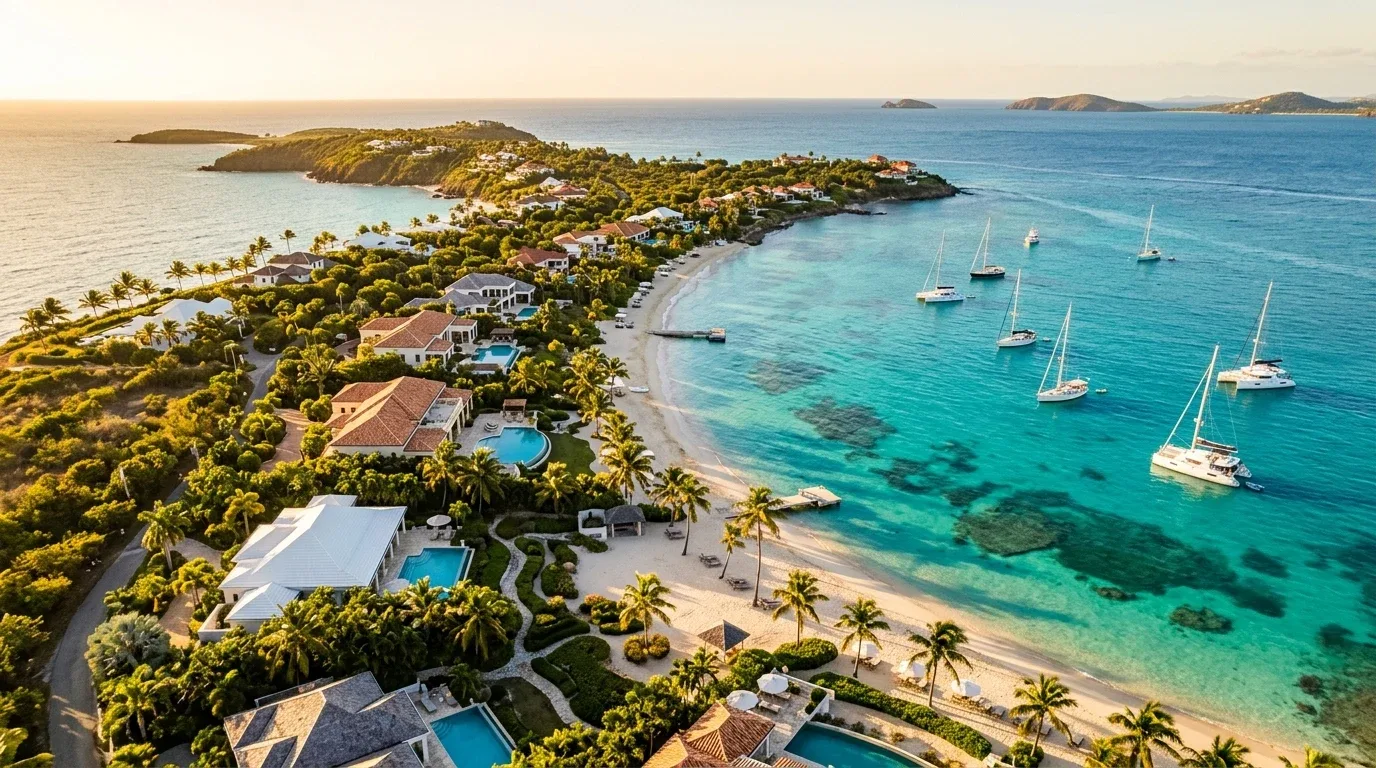
Here's the strange thing about picking a country to buy an Airbnb in for 2027: the demand side of the question has almost stopped mattering. UN Tourism counted an estimated 1.52 billion international arrivals in 2025 — up 4 percent, roughly 60 million more travelers than the year before, and an all-time record. Airbnb's own Q2 2026 numbers showed nights and seats booked up 10 percent year over year to 148.3 million. Travelers are everywhere, in numbers the industry has never seen. If demand were the deciding factor, the answer would be "buy anywhere."
It isn't, because the thing that actually separates a good country from a bad one in 2027 is what happened while demand was booming: governments noticed. Spain fined Airbnb €64 million and ordered tens of thousands of listings removed. Barcelona's plan to extinguish every tourist license by the end of 2028 survived its constitutional challenge. Athens froze new registrations in its central districts. Brazil's highest court handed condo associations a veto. Meanwhile the Dominican Republic was busy doing the opposite — courting foreign buyers with 15-year tax exemptions — and Dubai kept issuing holiday-home permits over the counter in a matter of days.
So the 2027 country question is really a regulation question, an ownership-structure question, and an exit question, in that order. This guide works through the countries where the answers line up, the ones where they line up with conditions, and the ones where we'd keep our wallet in our pocket — with sources named as we go, because a guide like this is worthless if the numbers are decorative. One disclaimer before the tour: I'm a content strategist at a marketing agency, not a lawyer, accountant, or financial advisor. Treat everything below as a well-researched starting map, and put a cross-border attorney and a local accountant between you and any wire transfer.
The four questions that pick a country
Every country on this list got run through the same four questions, and you should run any country someone pitches you through them too.
First: is demand real and growing, and can you source that claim? Not "my broker says it's booming" — actual arrivals data from a statistics agency or tourism ministry. Every country below has it cited.
Second: can you actually own the thing? This is where more foreign Airbnb dreams die than anywhere else. Some countries hand foreigners full freehold title with no conditions. Others make you hold coastal property through a bank trust. A few never let you own the land at all — you're buying a lease with a countdown clock, which changes the math completely and is routinely glossed over by people selling villas.
Third: which direction is regulation moving? A country that allows short-term rentals today but is visibly tightening is a very different bet from one that's formalizing — writing registration rules so the industry can grow inside a framework. Formalization is usually good news for owners who follow the rules; it clears out grey-market competition. Restriction is not.
Fourth: how do you get out? A property you can't resell to a deep pool of buyers, in a currency that's been sliding for a decade, isn't an investment so much as a very illiquid souvenir. Exit liquidity separates the frontier plays from the core plays below.
Dominican Republic: the strongest all-around case
If 2027 has a consensus pick, this is it. The Dominican Republic crossed 10 million visitors by November of 2025 — Caribbean Journal reported 10.28 million through eleven months, with air arrivals up 35 percent versus 2019 — and the tourism ministry projected roughly 11.7 million for the full year, a historic high. January 2026 opened at record pace again. This is the most-visited country in the Caribbean, and the gap is widening.
The ownership answer is as clean as it gets: foreigners buy freehold with the same rights as Dominican citizens, no residency required, no trust structures. And the government actively sweetens the deal — the CONFOTUR program (Law 158-01) gives buyers in approved tourism developments a 15-year exemption from the annual property tax plus a waiver of the 3 percent transfer tax, and the benefit transfers to the next buyer when you sell. Very few countries pay you to show up.
Regulation is moving toward formalization, not restriction. The tourism ministry circulated draft short-term-rental rules in 2026 — property registration, safety standards, platform delisting for unregistered units — and the 2025 rental law explicitly recognized vacation rentals as a legitimate use in resort communities. That's a government building a framework for the industry, which is exactly the direction you want.
The honest caveats: Punta Cana has absorbed a lot of new condo supply, and it shows in the data — AirDNA-derived figures put median occupancy in the upper-40s percent range there, with median annual revenue around the low twenty-thousands of dollars. That's a market where the average listing does okay and a well-run, well-marketed one does far better, which is a marketing problem more than a market problem. Consider Las Terrenas on the Samaná peninsula and Santo Domingo's Colonial Zone as less crowded alternatives, budget properly for hurricane insurance, and remember the peso has drifted against the dollar over long horizons.
Mexico: enormous demand, city-by-city rules
Mexico's 2025 was the biggest year in its tourism history — 98.2 million international visitors, up 13.6 percent, with 47.8 million of those staying overnight and tourism earnings of roughly 35 billion dollars, per the tourism ministry's year-end figures. The 2026 World Cup, co-hosted with the US and Canada, poured fuel on demand in host cities. The travelers are not the question.
Ownership needs one structure explained honestly. Outside the "restricted zone," foreigners hold direct freehold. Within 50 kilometers of the coast or 100 kilometers of a border — which covers every beach market you're thinking of — foreigners buy through a fideicomiso, a renewable 50-year bank trust that leaves you with full beneficial ownership: you can sell, rent, renovate, and will the property to heirs. It costs a couple of thousand dollars to establish and several hundred a year to maintain. It is a routine, settled mechanism used by hundreds of thousands of foreign owners, and anyone who tells you it's a loophole about to close is selling fear.
The regulatory map is the thing to respect. Mexico City approved a cap of roughly 180 rented nights per year per listing and launched a mandatory host registry in May 2026 — though the night cap is tangled in hundreds of legal challenges and enforcement is uneven. The beach states — Quintana Roo, Baja California Sur, Nayarit — remain permissive, collecting lodging taxes rather than writing caps. So the practical read for 2027: Riviera Maya, Puerto Vallarta, and Los Cabos are open for business; Mexico City is for buyers who enjoy reading court filings. On tax, know one number before you model anything: Mexico withholds 25 percent of gross rental income from non-residents with no deductions under the default regime, and platforms withhold extra from hosts with no Mexican tax ID — the difference between structuring this properly and ignoring it is enormous, so this is the "call a cross-border accountant" moment.
Tulum deserves its own sentence: it's the market everyone asks about and the one carrying the heaviest oversupply narrative. Our Tulum market guide covers how to position there if you go anyway.
Dubai: the jurisdiction that wants you to do this
Dubai is what it looks like when a government decides short-term rentals are an industry to grow rather than a problem to manage. The holiday-home regime is fully codified: a permit per unit from the tourism department (about AED 1,520 a year for an apartment), a small per-night tourism fee, monthly reporting, done. Licensing is open, fast, and enforced against the unlicensed — formalization in its purest form. Foreigners have held full freehold in designated zones — the Marina, Downtown, Palm Jumeirah, and dozens more — since 2002, and there is no personal income tax on rental income for individual landlords.
Demand is deep: 18.72 million international overnight visitors in 2024, nearly 14 million through the first nine months of 2025 (up 5 percent), and hotel occupancy running at 81 percent in the first half of 2025 per tourism-department data. Agency analyses regularly put well-run short-stay units in the Marina at materially higher gross yields than long-term leases, though those are broker numbers rather than audited ones, so treat them as directional.
The risk in Dubai is never regulation; it's supply. A record pipeline of off-plan towers delivers through 2026 and 2027, and this market has a documented boom-bust history. The way to underwrite Dubai is to assume nightly rates compress as the pipeline lands, buy in locations with moats (waterfront, metro-adjacent, view stock), and account for the service charges that quietly eat several points of yield. Our Dubai market guide goes deeper on where within the city the math works.
Japan: record tourism, a weak yen, and a 180-night ceiling
Japan welcomed 42.7 million foreign visitors in 2025 — an all-time record that smashed the government's own target — and the weak yen means dollar and euro buyers are shopping with a 20-to-30 percent purchasing-power advantage versus a few years ago. Ownership is a genuine bright spot: Japan places zero nationality restrictions on real estate. Foreigners own land and buildings freehold, no residency, no trust, no local partner.
Then comes the number that breaks naive spreadsheets: licensed home-sharing under the national minpaku law is capped at 180 nights per year, and municipalities are only allowed to tighten that, which cities like Kyoto do with seasonal and zone restrictions. There are two lawful ways around the ceiling — buying in a National Strategic Special Zone where 365-day operation is allowed with two-night minimums, or acquiring property with full hotel/ryokan licensing — but the workaround map is shifting: Osaka suspended new special-zone applications in October 2025, and most of its surrounding municipalities followed.
So model Japan at 180 nights unless the property's zoning says otherwise, and suddenly the plays that still work become obvious: resort markets like Niseko and Hakuba where the season is short but the nightly rates are ferocious, hotel-zoned buildings in Tokyo and Kyoto, and special-zone wards like Tokyo's Ota. One more structural note: outside the major metros, Japan's population decline means thin resale markets and flat-to-falling values. Buy where the tourists and the Japanese themselves want to be, or the exit question has no good answer.
Portugal: the comeback, with a map you must read
Portugal spent 2023 scaring investors and 2024 apologizing. The Mais Habitação crackdown was largely reversed by decree in late 2024: alojamento local (AL) licenses are now perpetual rather than renewable, they transfer with the property when you sell, and the national freeze on new licenses was revoked. That last part comes with a decisive asterisk — municipalities control "containment zones," and Lisbon passed sweeping containment rules in December 2025 that effectively closed central Lisbon to new licenses, with central Porto similar.
Which means Portugal in 2027 is really two markets. In the Algarve — Albufeira, Lagos, the holiday-zoned coast — and in Madeira, new licenses remain obtainable and tourism keeps setting records: 34.8 million guests and nearly 90 million overnight stays across the country in 2025 per INE, the national statistics institute. In Lisbon and Porto proper, the trade is the resale with an existing AL license attached — and because licenses are now perpetual and transferable, a licensed flat carries a real, durable premium over the identical unlicensed one next door. That's the cleanest version of the license-in-hand rule we'll come back to later.
The tax treatment is one of Europe's friendlier ones for this asset class: non-resident AL income is taxed under a simplified regime that works out to roughly 8.75 percent effective on gross revenue — a flat rate applied to 35 percent of income, with the rest deemed to be costs. Verify your own situation with a Portuguese accountant, obviously, but as a headline number it explains a lot of German and French license shopping in the Algarve. Ownership is unrestricted freehold for any nationality. The risk to price in: this is a country that changed the rules in 2023 and changed them back in 2024, so the political pendulum is real even when it's currently swinging your way.
International tourist arrivals in 2025, per UN Tourism's January 2026 barometer — an all-time record, up about 60 million on the prior year. Demand is not the constraint anymore. Regulation and ownership structure are, and they now decide which countries reward a short-term-rental investment.
The value frontier: Albania, Montenegro, Georgia
Three small markets share one profile: cheap entry, fast-growing demand, light regulation, and risks that are about depth rather than rules.
Albania is the growth story of European tourism — 12.47 million foreign visitors in 2025 per INSTAT, up from about 2.8 million a decade ago, making it one of the fastest-growing destinations on the continent. Foreigners buy apartments and houses freehold with the same rights as citizens (agricultural land requires a local company), and the short-term-rental regime is among Europe's lightest: from January 2026, individual hosts simply declare rental income annually and pay a flat 15 percent, no business registration required. The catches are frontier-market catches: title histories on parts of the coast need careful legal review, the Riviera season is brutally short — winter occupancy nationally runs around 20 percent — and the resale market is shallow. Saranda and Ksamil for the beach play; Tirana for year-round urban demand.
Montenegro is the tidier, smaller version: roughly 2.8 million tourists a year against a population of 620,000, unrestricted foreign ownership of apartments and urban property, a 15 percent flat tax on rental income, and a regime that lets individuals host up to seven rooms without forming a company. It's euro-denominated, which removes currency risk for European buyers, and it's an EU accession frontrunner — treat that as upside, not a promise. Kotor Bay is the premium play, Budva the volume one. The main risk is simply that the whole market is tiny; selling in a hurry is not a thing Montenegro offers.
Georgia has the highest paper yields of the three and the highest political beta. Tbilisi's Airbnb demand grew about 24 percent year over year in booked nights in early 2026, there is essentially no short-term-rental regulation, and foreigners buy residential property freehold. But Batumi — the Black Sea boomtown — is showing what oversupply looks like, with average daily rates falling as thousands of near-identical new units land, and the country's EU-accession freeze and street-protest cycle since late 2024 are genuine headline risks to both tourism and exit liquidity. This is a market for money you can afford to park through a storm.
Morocco: the 2030 play
Morocco quietly became Africa's most-visited country and had a monster 2025: a record 19.8 million tourists, up 14 percent, with tourism receipts up 19 percent through November. The structural story is even better than the cyclical one — Morocco co-hosts the 2030 World Cup with Spain and Portugal, and the government is targeting 26 million visitors by then, with airports, rail, and stadium infrastructure being built to match. Foreigners own property freehold with the exception of agricultural land, and the short-term-rental framework is in the middle of formalizing, with licensing rules rolling out under Law 80-14 — municipal and uneven for now, which is normal for this stage.
The classic play is a renovated riad in the Marrakech medina; the emerging one is the Atlantic surf coast around Taghazout and Agadir, where the government has poured resort investment. Go in knowing riad renovations are their own adventure, the dirham is a managed currency, and guest-registration rules with local police apply. As a five-year hold timed to 2030, it's one of the more interesting asymmetric bets on this list.
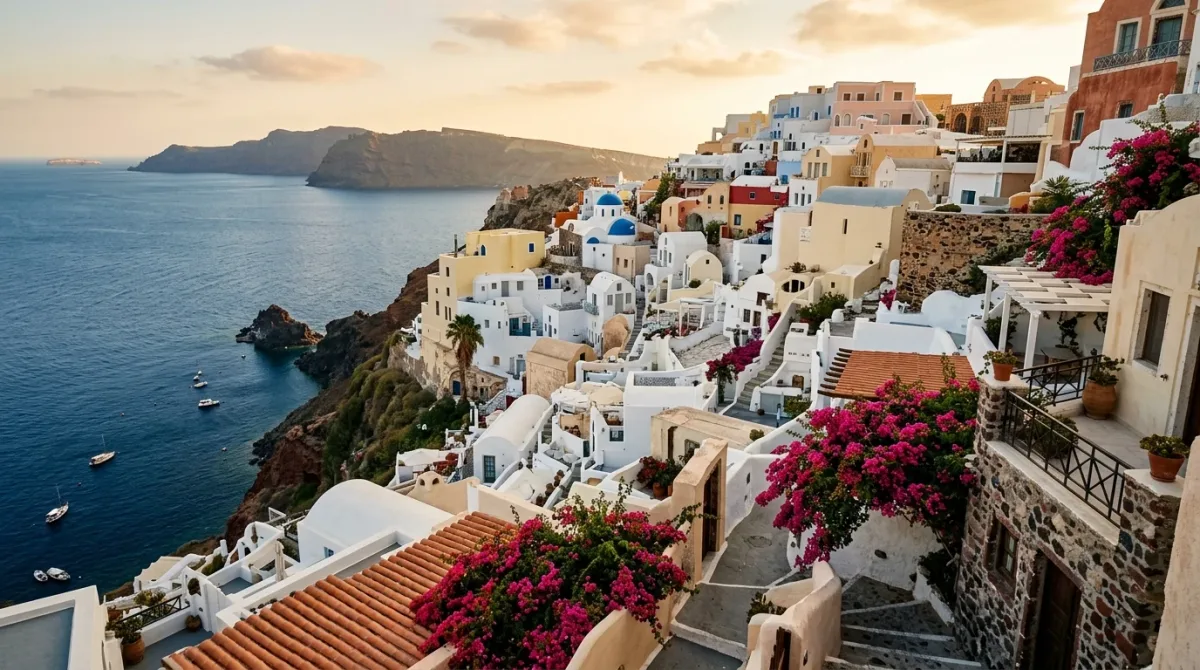
The caution list: Spain, Italy, Greece
These three have some of the best tourism numbers on Earth and some of the least friendly regulatory trajectories, which is not a coincidence. They're not no-go markets; they're license-in-hand markets where the rules decide everything.
Spain hosted 96.8 million foreign tourists in 2025 — second most on the planet — who spent €134.7 billion, per the national statistics institute. And Spain is where the crackdown is most serious: a national rental registry came fully into force in mid-2025, the consumer ministry ordered more than 65,000 non-compliant listings removed, Airbnb was fined €64 million in December 2025 for advertising unlicensed rentals, and Barcelona's plan to phase out every tourist license by November 2028 was upheld in court. Barcelona's lesson deserves italics it won't get: a license there turned out to be a revocable permission, not a property right. If you buy in Spain for 2027, buy a license-in-hand resale in a region with stable rules — the Costa del Sol outside city caps, Costa Blanca, the Canaries with island-by-island verification — and underwrite the possibility that the license is the most fragile part of the asset. Our Barcelona guide covers the phase-out in detail.
Italy posted a record year for overnight stays in 2025 with foreign arrivals up strongly, per Istat, and remains entirely open to foreign freehold ownership. The regulatory direction is friction rather than prohibition: a national registration code (CIN) is now mandatory on every listing, and the self-check-in era is over — Italy's Council of State confirmed in November 2025 that in-person or real-time video identity verification is required, and Milan banned public key boxes from January 2026, with Florence and Rome moving similarly. Florence has stopped new short-term rentals in its historic center. What this actually means: Italy now favors professionally operated properties over remote-managed lockbox units, which is fine — good, even — for an owner who budgets for a local co-host. Puglia and Sicily offer the best value-to-demand ratio; Lake Como and the Amalfi Coast play a different, ultra-premium game we've covered in our Italian villa market guide.
Greece earned a record €23.6 billion in travel receipts in 2025 on roughly 38 million arrivals, per the Bank of Greece, and the season is visibly lengthening. The rules: every rental needs a registration number, new registrations are frozen in central Athens through at least the end of 2026 (Thessaloniki's center followed in March 2026), and rental income is taxed on a ladder that starts at 15 percent and climbs steeply for larger operators. And one trap worth a flashing sign: Greece's golden-visa rules prohibit short-term rental of the qualifying property. Buyers regularly discover this after closing. The residency flat and the Airbnb flat have to be different flats — ask your lawyer to put it in writing. Where the math still works: the Athens Riviera and non-frozen districts, Halkidiki, and Crete, which has the longest season in the country.
Colombia and Brazil: yield with asterisks
Colombia's demand story is intact — roughly 7 million non-resident visitors in 2024, up double digits, with the government targeting 7.5 million-plus as air connectivity grows. Foreigners buy freehold with no restrictions. The asterisk is enforcement: Medellín ran a genuine crackdown through 2025 and 2026, cancelling around 2,000 tourism registrations, and — this is the part that matters when you're shopping — under Colombian condo law, a building's own bylaws can ban short-term rentals outright. Due diligence in Colombia is condo-by-condo, not city-by-city. Read the building's reglamento before you fall in love with the view. Laureles has better fundamentals than saturated El Poblado, and Cartagena's tourism-zoned old city is the other serious option; our Medellín guide has the street-level view.
Brazil got its own structural surprise in May 2026, when the superior court of justice ruled that recurring, professional-style Airbnb operation in a residential condominium requires approval by two-thirds of unit owners. Short-term rentals remain fully legal — the ruling reshapes where they can live. Single-family houses are untouched, and buildings whose conventions explicitly allow short stays became instantly more valuable, which is the Brazilian version of the license-in-hand rule. Rio remains one of the world's great rental cities when the structure is right — see our Rio market guide — but every condo purchase there now starts with reading the convention, and the real, the currency, adds a swing factor that has cut both ways historically.
Where we'd wait: Thailand, Costa Rica, Panama
Thailand looks like an obvious yes — huge tourism economy, famous beaches, liquid condo market with foreigners allowed freehold within a 49 percent per-building quota. The problem is a 2004 law: rentals under 30 days without a hotel license are illegal, the practical licensing path barely exists for foreign individual owners, and enforcement stepped up in 2025 while condo boards increasingly ban sub-30-day stays themselves. There is a big grey market. Building an investment on a grey market that the government is actively investigating is not a plan. The lawful versions of Thailand — 30-day-plus stays for nomads, or licensed condotel programs in Phuket — are real, but they're different businesses than the one most Airbnb buyers think they're buying. Worth noting too that arrivals actually fell 7 percent in 2025 on the Chinese-market collapse.
Costa Rica isn't a rules problem; it's a momentum problem. Arrivals declined through late 2024 and the first half of 2025, and a very strong colón has made the country expensive relative to the Dominican Republic and Colombia. Wonderful lifestyle purchase. As an investment, we'd wait for arrivals to turn back up. Panama, meanwhile, bans rentals under 45 days in Panama City outside licensed tourist-zoned buildings, with a national framework bill still pending — a watch-list market until that resolves.
The whole map on one page
Before the practical sections, here's the entire guide compressed into the three-bucket sort we actually use when a client asks "where should I even be looking?"
Green — open and formalizing, where the government is building a framework for the industry rather than a fence around it: the Dominican Republic, Dubai, Albania, Montenegro, Georgia, and Morocco. These are the countries where a new buyer can still enter through the front door, and where following the registration rules puts you ahead of the grey market rather than behind an incumbent class.
Yellow — allowed, but capped or zoned, where the rules are the strategy: Portugal, Japan, Mexico, Italy, Greece, Colombia, and Brazil. In every one of these, the difference between a great investment and a stranded one is a specific document — an AL license, a special-zone designation, a fideicomiso, a CIN code, an AMA number, a tourism registration, a condo convention. The countries are excellent; the diligence is everything.
Red — hostile or structurally blocked for the classic short-term rental model: Barcelona and Spain's tightening cities for new entrants, Thailand's sub-30-day condo market, central Athens and central Lisbon without an existing license, and Panama City under the 45-day rule. Red never means "never" — it means the only viable trades are grandfathered assets and different rental models, and the burden of proof flips against the purchase.
One more layer worth overlaying on that map: the European Union's short-term rental regulation takes effect across all member states from May 2026, harmonizing registration and requiring platforms to share booking data with authorities — and to delist unregistered properties. For compliant owners this is quietly excellent news, because enforcement stops being theoretical for the unregistered competition down the street. Across the EU portion of this list, assume that operating legally is about to become the only way to operate at all, and price the paperwork into your plans rather than treating it as optional.
The license-in-hand rule
Across every restricted market above, one pattern repeats, so let's name it. When a jurisdiction stops issuing new short-term-rental permissions but honors existing ones, the existing ones become the asset. Portugal made AL licenses perpetual and transferable, so a licensed Lisbon flat trades at a premium to its unlicensed twin. Brazilian condos that permit short stays outvalue those that don't. Spanish coastal apartments with tourist licenses attached are a distinct product from apartments without. Even Greece's frozen central Athens grandfathers existing registrations.
Three practical consequences. First, in any capped market, shop resales with the permission attached, and make the license's valid transfer an explicit closing condition your lawyer verifies. Second, price the permission's fragility: Barcelona proved a license can be legislated out of existence, so the premium you pay for one should reflect the jurisdiction's politics, not just its current rules. Third, the flip side is opportunity — buying just outside a containment boundary, where licenses are still issued freely and the frozen zone's demand spills over, is quietly one of the better trades in Europe right now.
Running the numbers before you wire anything
A quick word on process, because country selection is only the first filter. Model any specific property with the same discipline you'd use at home: sourced comparable revenue (AirDNA data or actual booking histories, never a listing agent's projection), occupancy assumptions below the market median for your first year, every fee and tax in the stack, a currency haircut, and a real number for local management — remote international hosting without a great local operator is how five-star markets produce one-star reviews. Our STR ROI framework walks through the full analysis, and the companion guide to buying property abroad for Airbnb covers the legal and logistical mechanics this article deliberately skims — escrow, title insurance, power of attorney, tax treaties.
And remember the supply-side context working in your favor: AirDNA's outlook heading into 2026 flagged slowing new supply with steady demand — its December 2025 report called 2026 the best year to invest in short-term rentals since 2021, with demand growth expected to strengthen again in 2027. Buying into a cycle where fewer new competitors are landing is a tailwind most buyers of the 2021 vintage never had.
Common questions
Can I get a mortgage to buy an Airbnb abroad?
Sometimes, and the answer shapes the whole strategy. Local financing for foreign buyers exists in Portugal, Spain, and Dubai at meaningful loan-to-value ratios; it's thin to nonexistent for foreigners in Albania, Georgia, and much of the Caribbean, where deals are predominantly cash. Many US buyers fund international purchases by borrowing against home-country assets instead — a HELOC or portfolio loan — which keeps the foreign purchase clean but concentrates the risk on your side of the ocean. Model the financing before falling for the country, because a 9 percent gross yield bought with expensive money is a 2 percent story.
What's the easiest country for an American to buy an Airbnb in?
The Dominican Republic, and it isn't close. Full freehold ownership with no residency requirement, English-friendly closing infrastructure, CONFOTUR tax exemptions on approved developments, short flights from the East Coast, and a government formalizing rather than restricting short-term rentals. Mexico is second — the fideicomiso adds a step for coastal property, but it's a routine one.
Which countries should Airbnb investors avoid in 2027?
Avoid buying for classic short-term rental in Thailand condos (sub-30-day rentals without a hotel license are illegal), Barcelona (all tourist licenses phase out by late 2028), and central Athens or central Lisbon without an existing license attached. None of these are bad places to own property; they're bad places to assume you can Airbnb it.
Which country has the highest Airbnb yields?
On paper, frontier markets like Georgia and Albania post the highest gross yields, because entry prices are low and there's little regulation. But paper yield ignores seasonality, currency, and exit liquidity — the things that actually determine what you keep. Risk-adjusted, the Dominican Republic and Dubai offer the best balance of yield, legal clarity, and resale depth heading into 2027.
Can I rent out a golden-visa property on Airbnb?
In Greece, no — the post-2024 golden-visa rules explicitly prohibit short-term rental of the qualifying property. Portugal's golden visa no longer runs through residential real estate at all. If a visa is part of your plan, have an immigration lawyer confirm what the qualifying property can and cannot do before you structure the purchase, because getting it wrong can cost the visa.
How much does currency risk actually matter?
Over a one-year horizon, barely; over a ten-year hold, it can be the difference between your best investment and your worst. The Colombian peso and Brazilian real have swung double digits against the dollar within single years, while the Turks and Caicos dollar peg and Montenegro's euro remove the question entirely. The practical rule: in volatile-currency countries, insist on yields high enough to absorb a meaningful currency slide, and remember that a weak local currency at purchase is a discount while a weak one at sale is a haircut.
Is buying ahead of a World Cup a real strategy?
It's a real demand catalyst with a real expiration date. The 2026 tournament lifted Mexican host cities; the 2030 edition across Morocco, Spain, and Portugal is already driving infrastructure spending. The mistake is underwriting the tournament month instead of the infrastructure it leaves behind — buy markets where the airports, rail, and hotel demand outlast the final whistle, and treat the event itself as a bonus.
The bottom line
Demand set records everywhere in 2025, which means the 2027 country decision comes down to the boring layers: whether you can own cleanly, whether the rules are opening or closing, and whether someone will buy the property back from you. On those tests, the Dominican Republic, Dubai, and coastal Portugal lead; Japan, Mexico's beach states, and Morocco reward buyers who respect their specific structures; Albania, Montenegro, and Georgia pay frontier premiums for frontier risks; and Spain, Italy, Greece, Colombia, and Brazil work strictly for license-in-hand, read-the-bylaws buyers. Thailand and Costa Rica can wait.
Whichever flag you pick, the property still has to win its own street fight — against every other listing in its market, most of which are marketed badly. That part is a solvable problem, and it's the one Cavmir works on all day: positioning, photography direction, direct booking sites, and pricing strategy for hosts in more than 200 markets. Buy the country with your head; then market the property like it matters, because it does.