
There's a version of Airbnb investing that had its moment and won't be getting it back: buy anything with a roof in a hot market, list it with phone photos, and let 20 percent annual supply growth and 3 percent mortgages carry you. That era produced a generation of hosts who mistook a bull market for skill. The 2027 era is different, and the data says exactly how different. AirDNA's 2026 outlook projected available-listing growth of just 4.6 percent — down from roughly 20 percent at the 2021-2022 peak — and its midyear update tightened that further, with supply and demand each growing around 2.7 percent and revenue per available rental climbing on rate rather than volume. Meanwhile the 30-year mortgage sat at 6.65 percent in late August 2026 per Freddie Mac, and Fannie Mae's forecast keeps it near 6.8 percent through 2027.
Put those two facts together and the strategy writes itself. Cheap leverage isn't coming back to inflate a mediocre purchase, and a flood of new competitors isn't coming to crush a good one. Returns in 2027 have to be forced — through renovation, amenities, and marketing that move a property from the middle of its market to the top of it. Investors call this value-add, and it's the whole thesis of this guide: markets where you can buy at a reasonable basis and manufacture the upside yourself, rather than paying luxury-market prices for upside somebody else already built.
Every number below is a market average or median from a named source with its data window noted, because market averages are averages of great listings and terrible ones — they tell you what the market does, never what your property will do. And the usual disclaimer applies double for an investing piece: I'm a content strategist, not a financial advisor or accountant. Run your own underwriting, and put professionals between you and any closing.
The amenity math, so we only have to say it once
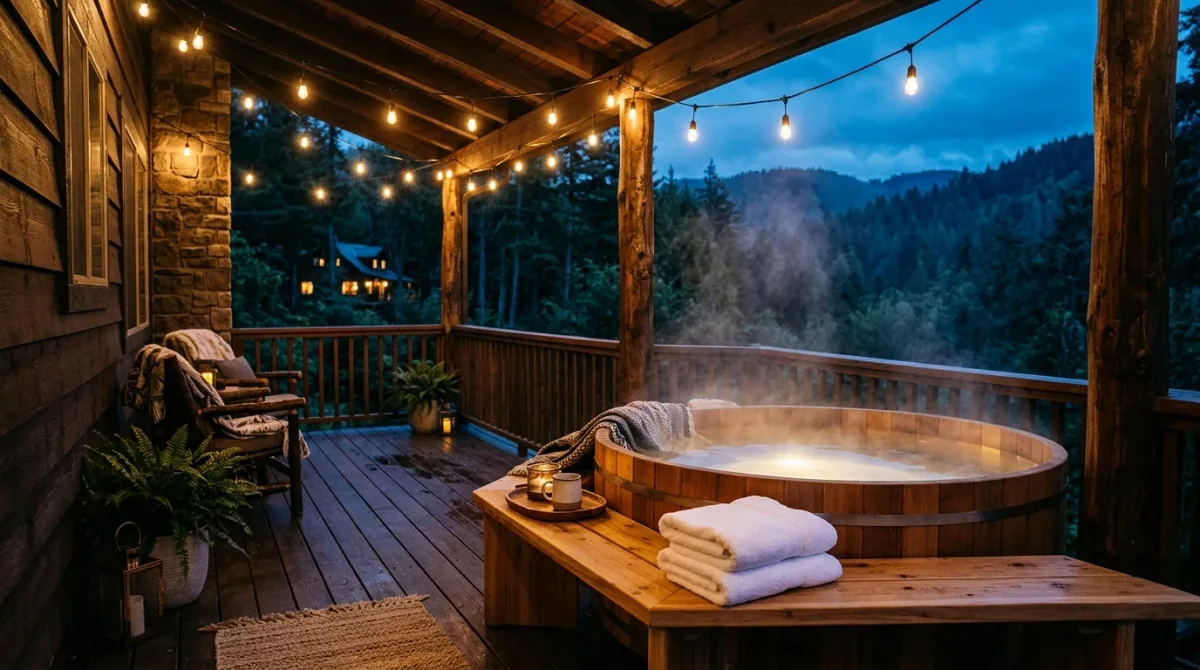
Value-add lives or dies on a simple question: which upgrades actually move revenue? Fortunately this has been measured. AirDNA's amenity research found hot tubs boost revenue by about 34 percent in mountain-destination markets — the single biggest lever in the dataset — with washer/dryers around 24 percent and pools around 20 percent. Across all market types, AirDNA's amenity data shows hot tubs adding roughly 14 percent to nightly rates overall, rising to around 22 percent in rural and small-town markets. Pools average a 9 to 10 percent rate lift overall but run much hotter in warm family markets. Going pet-friendly adds roughly 9 percent to nightly rates per Key Data's analysis, and pet travelers stay longer and book the shoulder seasons everyone else skips — it's the cheapest "amenity" on the list, being mostly a policy change and a fence. Game rooms add 5 to 10 percent for family-oriented properties per AirROI's 2026 amenity study, ranking second only to hot tubs in mountain markets.
So the hierarchy, roughly: hot tub first almost everywhere, pool in warm family markets, game room where families travel, pet-friendly nearly always. Keep that in your pocket — every market below has a specific version of this play, and we've covered the broader list in our guide to amenities that actually move bookings.
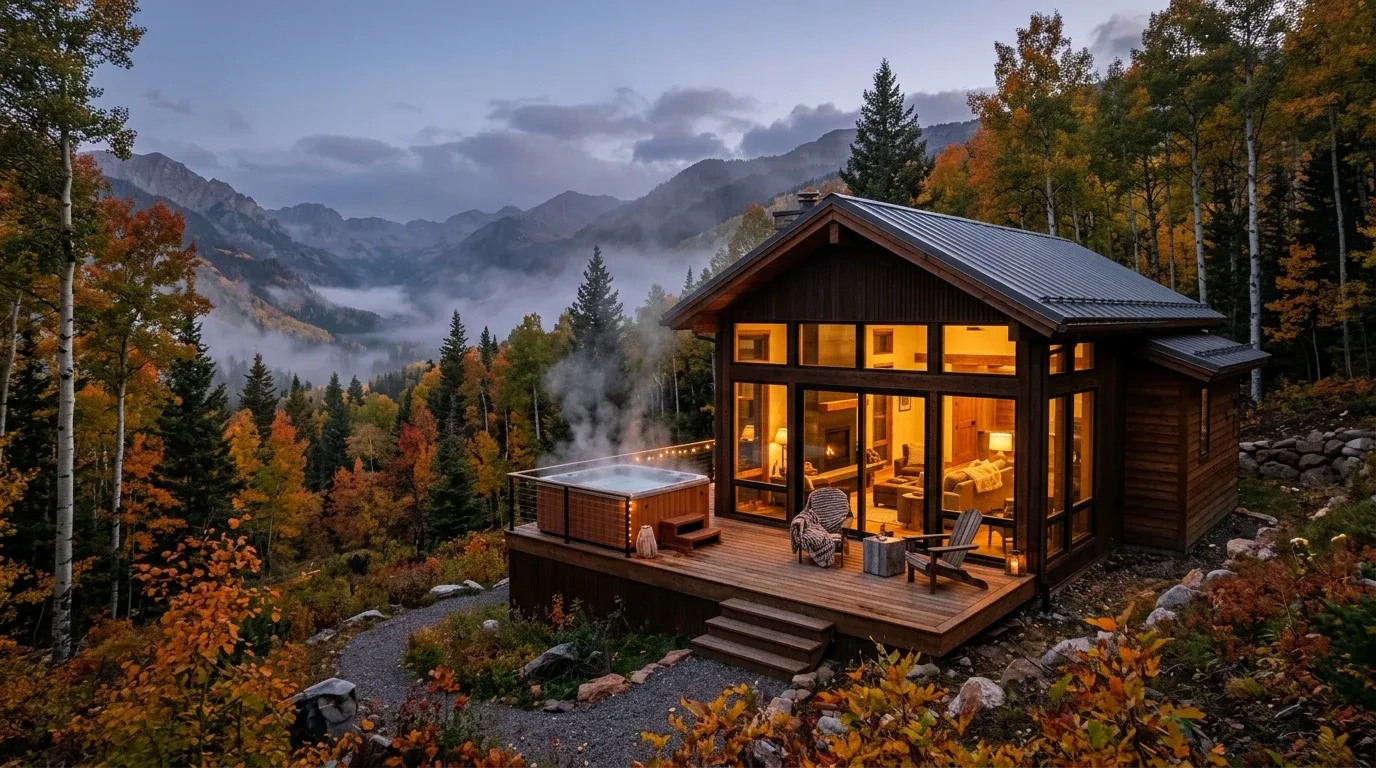
The revenue lift AirDNA's amenity research measured for hot tubs in mountain-destination markets — the single most reliable value-add in short-term rentals. Washer/dryers came in around +24% and pools around +20%. In a year when supply growth has slowed to a crawl, upgrades like these are how returns get made.
Where the raw-yield frontier went, and why we're not following it
One more piece of context before the markets, because it explains what this list deliberately is and isn't. AirDNA's 2026 "Best Places to Invest" ranking — published January 2026 — had a top ten averaging just $296,000 in home price against $40,500 in annual revenue potential, yields near 14 percent. But look at who topped it: Port Arthur, Texas at number one and Abilene, Texas at number two, with 77 percent occupancy in Abilene's case. Those are workforce markets — refinery contractors, traveling crews, mid-week corporate stays — where demand comes from people who have to be there rather than people who chose to vacation there. The raw-yield frontier has migrated to cheap secondary cities, and that's a legitimate strategy with its own playbook.
It just isn't this one. In workforce markets, the product is a clean bed near the job site and the amenity hierarchy barely applies — nobody's booking Port Arthur for the hot tub. This guide stays in vacation markets on purpose, because vacation markets are where value-add compounds: the guest is choosing between listings on desire rather than proximity, which means design, amenities, and marketing can move revenue 20 to 40 percent in ways a workforce market structurally can't reward. AirDNA's own outlook notes the strongest supply growth is coming in exactly those affordable small-city markets, too — the yield frontier is getting crowded fast. In the leisure markets below, the moat you build is the product itself.
Hocking Hills, Ohio
The Midwest's cabin benchmark, and a case study in why the amenity gap is real money. Around Logan, Ohio — gateway to Hocking Hills State Park — the typical home trades around $225,000, while AirROI's data through mid-2026 shows market-average annual revenue near $55,600 across roughly 700 listings. Local operator data sharpens the point: cabins with hot tubs and fire pits average closer to $68,000, and the big 6-bedroom lodges average around $170,000 a year. The spread between the market average and the amenitized average is the value-add case, printed in public data.
The demand engine is a three-hour drive radius that covers Columbus, Cincinnati, Cleveland, and Pittsburgh, with real fall and winter seasons. Regulation is formalizing gently: Logan licensed STRs under a 2023 ordinance, and Hocking County posted a draft countywide ordinance in January 2026 — annual permits and safety standards, a registration regime rather than a ban, but budget for permit and inspection costs and recheck its status before you buy. One warning worth respecting: local reporting in late 2025 noted officials wondering aloud whether the region has more cabins than demand can absorb. Supply ran hard from 2020 to 2023. Buy the A-plus site — the view, the creek, the dark-sky clearing — because the commodity cabin in a so-so location is the thing that's oversupplied. Differentiators that still stand out here: saunas, cold plunges, and stargazing decks.
Broken Bow, Oklahoma
Broken Bow is the value-add market that graduated. This is no longer a cheap entry — purpose-built luxury cabins around Hochatown listed at a median near $675,000 in mid-2026 per local brokerage data, though older and smaller stock trades well below that — but the revenue side explains the prices: AirROI shows a $459 average nightly rate, among the highest of any non-coastal leisure market, with market-average revenue around $53,800 on roughly 37 percent occupancy.
Read those numbers the way an operator would. A $459 rate on 37 percent occupancy means the market has pricing power and empty nights — so the play here is occupancy capture, and occupancy in Broken Bow is won with amenities and marketing. Hot tubs are table stakes; the current winners add game rooms, indoor swim spas, pickleball courts, and genuinely distinctive design, then back it with photography and a direct booking channel. The demand base is the Dallas-Fort Worth drive market three hours south, plus Oklahoma City and Shreveport, with the Choctaw casino resort that opened in 2024 adding a new year-round demand stream. Regulation is minimal — Hochatown requires a municipal license, and Oklahoma's broader environment is property-rights friendly. The risk is the flip side of the boom: Rabbu logged supply growth of 31.4 percent in a single year, one of the fastest expansions of any US leisure market. Revenue and rates kept climbing anyway, which says demand is keeping pace — for now. Underwrite like the party could quiet down.
Branson, Missouri
Branson is the marketing-quality market par excellence. Entry is genuinely affordable — a citywide median around $250,000, with condos near $170,000 — against a median short-term-rental revenue of about $35,000 per AirDNA's data for the year through January 2026. But the source dispersion here is the real story: depending on the dataset and window, reported average occupancy ranges from the high teens to nearly 60 percent. A spread that wide means one thing — the median Branson listing is mediocre, and the gap between mediocre and good is worth tens of thousands a year.
The demand is enormous and family-shaped: some ten million annual visitors for the theaters, Silver Dollar City, and Table Rock Lake, overwhelmingly drive-to and overwhelmingly traveling with kids. Which makes Branson the purest game-room-and-theming market on this list. A $170,000 condo renovated into a themed family suite — arcade wall, bunk room, movie corner — is one of the best dollars-to-revenue conversions in the country right now, and AirROI's 5-to-10 percent family-property figure is conservative for a market where theming is the entire visibility game. Regulation is straightforward: a $150 city permit with a fire-safety inspection, plus a 4 percent city tourism tax the platforms do not remit for you — put it in the model. Good-neighbor rules apply, including a 24/7 local contact.
The Poconos, Pennsylvania
Two hours from both New York City and Philadelphia, the Poconos are the value-add renovation market of the Northeast: a huge stock of 1970s and 80s A-frames and chalets at low basis, feeding a four-season demand engine of lakes, ski hills, and fall color. Monroe County's median sale price reached about $370,000 in spring 2026 per the local realtors' association — up 20 percent in a year, so the easy basis is going — but sub-markets like Mount Pocono still show typical values around $247,000 per Zillow. On the revenue side, STR Profit Map's data for Pocono Lake shows a median around $41,100 at a $336 average rate, with the top quartile clearing $65,000.
The rulebook is a township-by-township patchwork, and it decides your underwriting. Tobyhanna Township permits rentals in all residential districts at $600 for a first permit — but caps occupancy at two per bedroom plus two, verified against the septic permit. That septic-based cap is the constraint that kills naive big-group-house math in the Poconos, so read the township code before the offer, every time. The value-add sequence: winterize properly, add the hot tub (the rural-market rate lift of around 22 percent applies squarely here), build the game room, and market the ski season hard — Camelback and Jack Frost fill winters that lake-only cottages sleep through.
The Finger Lakes, New York
The yield sleeper of the Northeast. AirDNA data reported by Quartz in 2026 put the average home price across 23 Finger Lakes submarkets around $184,000 against average annual revenue potential near $36,000 — a ratio that embarrasses most famous vacation markets — with peak-season occupancy around 70 percent from June through August. Town-level figures from Revedy put Canandaigua, Geneva, and Penn Yan each in the high-$20,000s on average. Wine trails on Seneca, Cayuga, and Keuka, the lakes themselves, Cornell and Ithaca traffic, and fall foliage make up the demand stack.
The reason the ratio is so good is also the value-add opportunity: a large share of the housing stock is seasonal cottages that physically can't host in winter, so the market's off-season occupancy collapses with the thermometer. Winterizing a lake cottage — insulation, heat, plumbing that survives January — converts a 100-day asset into a 365-day one, which is the largest single revenue add available anywhere on this list. Add a sauna and a hot tub for the shoulder-season wine-trail crowd (the Nordic angle genuinely fits the region) and you've built a listing the market average can't touch. Regulation is town-by-town and mostly light — registration and lodging tax, no city-style caps per Awning's New York guide — but ordinances are spreading around the lakes and septic capacity is the recurring constraint, so verify the specific town before you close.
Gulf Shores and Orange Beach, Alabama
The Southeast's drive-to beach, with one of the friendliest rulebooks in the country: a $45-a-year rental license with non-owner-occupied rentals explicitly allowed. Zillow's home value index for Gulf Shores sat around $452,000 in 2026 — down 2 percent year over year, a softening basis — while AirDNA's market page showed roughly $45,800 in average revenue at a $427 average rate across nearly 10,000 listings.
Honesty requires the trend line too: AirDNA logged market revenue down 11.5 percent year over year through June 2026 while Rabbu counted supply up 25 percent, so this market just absorbed a supply surge and the average listing felt it. That's exactly the environment where value-add separates. The Gulf Shores hierarchy: a private pool (this is the kind of warm family market where pool lifts run well past the national average), a golf cart included with the house, and pet-friendly positioning — beach travelers with dogs are chronically underserved and pay the roughly 9 percent premium happily. The house-with-pool tier outearns the commodity condo stock by a wide margin, which is the arbitrage. Budget properly for wind and flood insurance; it's the line item that breaks lazy Gulf Coast underwriting.
Blue Ridge, Georgia
Ninety minutes from Atlanta, Blue Ridge runs the classic mountain-market playbook at a friendlier basis than the Smokies. Entry cabins run $250,000 to $450,000 per The Short Term Shop's 2026 analysis, against an AirDNA market average around $42,400 at a $353 rate — and the tier structure is where it gets interesting: the median 3-bedroom cabin does about $58,700 while the median 2-bedroom does $41,600. That $17,000 jump between tiers is the clearest single argument on this list for buying one bedroom bigger than the commodity.
The 2-bedroom log cabin with no view is the saturated product here — roughly 2,250 listings and climbing in a small county. What still works: the 3-bedroom-plus tier, hot tub fitted (this is squarely in the +34 percent mountain-market benchmark), game room built, and — the underrated one — a design refresh. A great deal of Blue Ridge stock is dated 1990s log interiors that photograph like a time capsule; a modern-cabin renovation photographs like a magazine, and this market rewards photography disproportionately. Regulation is a registration regime in both jurisdictions: a city permit inside Blue Ridge proper, and Fannin County's revised 2025 ordinance with a $225 application fee and lodging-tax registration. No caps as of 2026.
Kissimmee and Davenport, Florida
The largest vacation-rental demand pool in America, and the market where theming was industrialized. AirDNA's data for the year through January 2026 put Kissimmee's median revenue around $52,000 at 69 percent occupancy (Rabbu's broader sample reads lower, around $36,800 — the dispersion itself tells you how much listing quality matters here). Zillow put Kissimmee's typical home value near $359,000, and it fell about 5 percent year over year while revenue held — entry math moving in the buyer's favor. Next door, Davenport shows a $27,500 average at a $255 rate, and its active listings shrank nearly 15 percent year over year, which is quiet good news for whoever stays.
Two rules decide everything in this metro. First, zoning: Osceola County confines short-term rentals to designated overlay districts and qualifying resort zones — standard residential zones are not eligible — plus a state license and local business tax receipt. Buy inside the overlay or inside a zoned resort community, full stop. Second, differentiation: with well over 25,000 listings in the metro, an unthemed house with a pool is wallpaper. The value-add play is total: private pool (non-negotiable), pool heater (it wins the winter), and themed spaces — kids' suites, arcade rooms, movie rooms — which in this market function as the marketing, the differentiation, and the review engine at once. Epic Universe's 2025 opening added a second gravitational center to the demand map; the east-side overlay suddenly matters more than it used to.
Port Aransas, Texas
Texas's beach island, fed by San Antonio, Austin, Houston, and DFW. Airbtics data for the year through October 2025 put average annual revenue around $60,000 against typical prices near $350,000 — one of the better gross ratios of any US beach market — with Rabbu showing a $489 average rate. The rulebook has a sharp edge that creates a moat: Port Aransas itself is low-regulation (permit and hotel-tax registration, no caps as of 2026), but Corpus Christi proper capped non-owner-occupied rentals at 15 percent per block face and banned new single-family STR permits on its stretches of Padre and Mustang Island. Existing permitted properties on the Corpus side became scarcer assets overnight; on the Port A side, the door is still open.
The value-add here is charmingly specific: a golf cart with the house (island transport culture — listings advertise it in the title), a pool, pet-friendly beach positioning, and fishing infrastructure — a fish-cleaning station and boat parking cost little and convert a whole guest segment. The insurance caveat is real: Texas windstorm coverage is expensive and hurricane exposure is the tail risk, so model it honestly.
Lake of the Ozarks, Missouri
Eleven hundred miles of shoreline, the Midwest's boating capital, and market-average numbers that look terrible in a way that should interest you: roughly $20,600 to $24,300 average annual revenue at 31 to 40 percent occupancy per Rabbu and AirROI. Those averages are dragged down by a fleet of seasonal-only cottages that go dark from October to April. Waterfront medians run around $625,000 with the broader area near $325,000 per local market data.
The play is the off-season, same as the Finger Lakes: a winterized, hot-tubbed, fireplace-and-game-room house near Osage Beach operates in a completely different league than the market average, because most of its competition is closed. Dock upgrades — a lift, a swim platform — directly monetize the boating demand that defines the lake. Regulation is currently light, with the City of Lake Ozark weighing a registration ordinance; no bans in the county patchwork. This is a market where operator skill is most of the return, which also makes it one where marketing budget goes furthest.
South Haven, Michigan
The highest revenue-per-listing figure on this entire list belongs to a town most investors have never considered: Rabbu's 2026 data shows South Haven averaging about $72,000 a year across just 272 active listings, with July alone averaging $17,500 per listing, against a typical home value around $361,000. Two hours from Chicago, Lake Michigan beaches, wineries — and the reason for the huge per-listing number is the ordinance: South Haven licenses rentals by class, caps non-owner-occupied Class I licenses by zone, limits stay frequency, and confines the second license class to 28 days a year. Supply is constrained by law, so the licensed properties feast.
That makes South Haven the clearest license-moat market in the Midwest. The entire acquisition question is the license: whether the property holds a Class I, whether it transfers, and what zone it sits in — verify all three with the city before anything else, because an unlicensed house here is just a house. Value-add follows the Midwest-lakes pattern: winterize, add the sauna (culturally native this far north) and hot tub, and market the off-season. The stay-frequency rules constrain revenue engineering, so model around them rather than against them. Traverse City, the more famous Michigan name, pencils worse — roughly $42,300 average revenue against a $740,000 typical value and restrictive city zoning.
Twentynine Palms, California
Joshua Tree's value entrance. The famous namesake town posts about $51,900 average revenue per AirDNA, but its prices got famous too; Twentynine Palms, at the park's east entrance, shows around $35,000 average revenue per Airbtics at a materially lower buy-in — the cheap end of the desert corridor. The demand is the same national park (America's most design-obsessed weekend destination) and the same LA drive market.
Here the value-add and the regulation are the same story. Twentynine Palms capped vacation-rental permits at 500 citywide — roughly 264 active and over 120 pending at the city's latest count — so the window is open and visibly closing. Getting permitted is itself the investment; when the cap binds, permits become the moat that South Haven and Palm Springs already demonstrate. On the product side, this is the most design-sensitive market in America: the gap between a stock ranch house and a designed one — cowboy pool, stargazing deck, hot tub, architectural photography — is the entire Joshua Tree business model, and it ports east intact. The corridor was the poster child for the 2022-23 revenue crash, and the cap regime is what throttled the supply flood; buy only with permit certainty. Our Joshua Tree market guide covers the design playbook in depth.
Northwest Arkansas
The oddest double-engine on the list. Eureka Springs is a Victorian spa town in the Ozarks with medians around $235,000 and modest average revenue near $24,500 per AirROI — a low-basis, low-gross market where the ratio is the story and historic-renovation charm is the product. Forty minutes east, Bentonville is something else entirely: the self-declared mountain-biking capital of the world, plus Crystal Bridges, plus the permanent corporate-travel engine of Walmart's vendor economy — leisure and workforce demand in one town, which is precisely the demand blend AirDNA's 2026 research says is the yield frontier. Bentonville has no distinct STR ordinance as of 2026 — zoning and lodging tax only, one of the lightest rulebooks in the state (Fayetteville is the local exception, with owner-occupancy rules; steer around it).
The Bentonville value-add is delightfully cheap: a secure bike garage, a wash station, and trailhead-proximity marketing convert the highest-intent guests in town at near-zero cost. In Eureka Springs, it's a hot tub behind a lovingly restored Victorian. Neither market makes you rich on gross revenue; both can pencil on ratio and steadiness.
The cautionary benchmark: the Smokies
Sevierville, Pigeon Forge, and Gatlinburg still anchor one of the highest-grossing STR regions in America — Sevierville averages around $50,700 across a staggering 13,700 listings per AirDNA — and the Smokies are where the value-add playbook was invented. They're in this guide as the control group. Supply has grown more than fivefold since 2015 per IMEG's analysis, Gatlinburg's revenue slipped 2.7 percent year over year through June 2026, and the amenity arms race has escalated to indoor pools and theater rooms — meaning the hot tub that adds 34 percent in a younger mountain market merely keeps you at par here. Sevier County now requires a $250 annual permit with a life-safety inspection for unincorporated parcels, with three-strikes revocation.
The lesson to carry to every market above: value-add works best where it hasn't become the standard yet. Buy the Smokies for A-plus locations and accept mature-market yields, or take the playbook somewhere younger. Our Gatlinburg market guide has the full picture if you go anyway.
The Smokies' quiet side: Bryson City and Maggie Valley, North Carolina
While the Tennessee side of the Smokies ran its supply experiment, the North Carolina side stayed small — and that's the pitch. Bryson City averages about $31,000 in annual revenue across just 561 listings and Maggie Valley about $28,800 across 309 per Rabbu's 2026 data, with home medians around $287,000 and the high-$360,000s respectively per Redfin and Zillow. Same national park, a fraction of the competition: Sevierville alone carries more than twenty times Bryson City's listing count.
The catch that creates the opportunity sits an hour east: Asheville effectively prohibits whole-home short-term rentals in its residential zones and actively enforces it, which pushes the region's substantial visitor demand outward into the towns and unincorporated county land that welcome it. Unincorporated Haywood and Swain counties are permissive while individual town limits vary — so, as with Port Aransas, the parcel's jurisdiction line is part of the underwriting. The value-add playbook here is the young-mountain-market standard that no longer differentiates in Gatlinburg: hot tub (+34 percent benchmark territory), game room, modern-cabin design refresh, and real photography, applied to a market where most of the competition hasn't done any of it. Add North Carolina's occupancy taxes to the model and go.
Markets we looked at and cut
Two research candidates didn't survive contact with their own rulebooks, and one was too small to profile — worth saying so. Door County, Wisconsin has real demand and a fatal ordinance stack for this strategy: county zoning confines rentals to certain districts with a seven-day minimum stay, layered under state licensing and tourism-zone permits — the minimum-stay rule alone caps the revenue engineering that value-add depends on. Cache Valley, Utah failed the sourcing bar: no reliable third-party revenue dataset surfaced for 2025-26, and Utah's municipal enforcement patchwork made verification impossible, so it was dropped rather than guessed at. And Terlingua, Texas, the Big Bend wildcard, is a genuine micro-market (inverted winter season, roughly $27,900 average revenue per AirDNA) best left to glamping and architectural builds rather than conventional value-add.
The 2027 value-add sequence
Across thirteen markets, the same sequence keeps winning, so here it is in order. Buy the location the market undersupplies — the view lot, the water frontage, the walk-to-trailhead — because no amenity fixes a bad site. Secure the permit before anything else in any market with a cap or a pending ordinance; in three markets above, the permit is worth more than the renovation. Winterize wherever the season collapses in cold months — it's the biggest revenue add in the northern half of this list. Then run the amenity hierarchy for your market type: hot tub, then pool or game room by climate and guest mix, then pet-friendly almost regardless. Renovate for the camera, since design is the only amenity guests can see before they book — our piece on the $5,000 design upgrade covers what moves rates versus what just costs money.
And then market it like it matters, because the dispersion data says that's where the money hides. In Branson, Lake of the Ozarks, and Broken Bow, reported occupancy varies by 20 to 40 points across sources and listings — the same market, the same demand, wildly different outcomes. Photography, listing optimization, pricing strategy, and a direct booking channel are how a property claims the top of that dispersion instead of the middle. That's the last mile of value-add, and it's the mile Cavmir builds for a living.
Common questions
What's the best US market to buy an Airbnb in for 2027?
For pure ratio at a low basis, the Finger Lakes region — roughly $184,000 average prices against $36,000 average revenue potential per AirDNA data — is hard to beat, provided you winterize. For the biggest absolute revenue with amenity headroom, Broken Bow and Hocking Hills lead. If forced to one answer for a first-time value-add investor, Blue Ridge, Georgia offers the best mix of basis, demand, rulebook, and unexhausted amenity upside.
How much does a value-add renovation typically cost?
The core stack is more modest than most people assume: a quality hot tub installed runs low five figures, a game-room conversion can be done for the price of a used car, winterization varies widely with the building, and pet-friendly is nearly free. The expensive items are pools and structural renovation. The discipline is sequencing — install the proven revenue-movers first and let their income fund the rest.
How do I know if a market is too saturated?
Watch three signals: supply growth far outpacing revenue growth (Broken Bow's +31 percent supply year is the current test case), falling market-wide ADR despite stable demand, and an amenity arms race where yesterday's differentiator is today's baseline — the Smokies' progression from hot tubs to indoor pools is the canonical example. Our guide to competing when supply surges covers the diagnostics.
Which of these markets has the biggest regulation risk?
None of the thirteen has a ban on the table, but three have hard caps that cut both ways — Twentynine Palms (500 permits citywide), South Haven (license classes by zone), and the Corpus Christi island parcels near Port Aransas. In capped markets, a permit in hand is a moat and a missing permit is a dealbreaker. Everywhere else, expect registration regimes to keep spreading; budget for permits and inspections as a normal cost of doing business, and check the STR permit data hub before you offer.
How do investors finance value-add STR purchases at 2027 rates?
Mostly the same three ways, chosen by situation: conventional investment-property loans (expect rates above the headline 30-year figure), DSCR loans underwritten on the property's projected rental income rather than personal income, and — for the renovation-heavy plays — buying with cash or short-term financing, forcing the value, then refinancing on the improved numbers. At Freddie Mac's 6.65 percent baseline, the modeling discipline is simple: if the deal only works at the rate you're hoping for after a refinance, it doesn't work. Ask your lender about prepayment penalties on DSCR products before you plan the refi, and ask your accountant about everything else.
Is value-add better than buying in a luxury market?
They're different return engines. Value-add manufactures yield at a modest basis; luxury markets mostly deliver appreciation and rate power at a high basis. In a near-7-percent mortgage world, value-add is the more capital-efficient path for most investors — and if the luxury path interests you, our companion guide to the best-ROI luxury markets for 2027 runs that math side by side.
The bottom line
2027 belongs to the operator, and the numbers explaining why fit in one sentence: supply growth has fallen to a fraction of its boom-era pace, mortgages will stay expensive, and the documented gap between an average listing and an amenitized, well-marketed one is worth 20 to 40 percent in revenue. Buy a defensible location in a market with headroom — the Finger Lakes, Blue Ridge, Hocking Hills, Port Aransas, the licensed lakefronts of Michigan — secure the permit, run the amenity sequence, and then market the property like the asset it just became. The era that rewarded showing up is over. The one that rewards doing the work is better.