
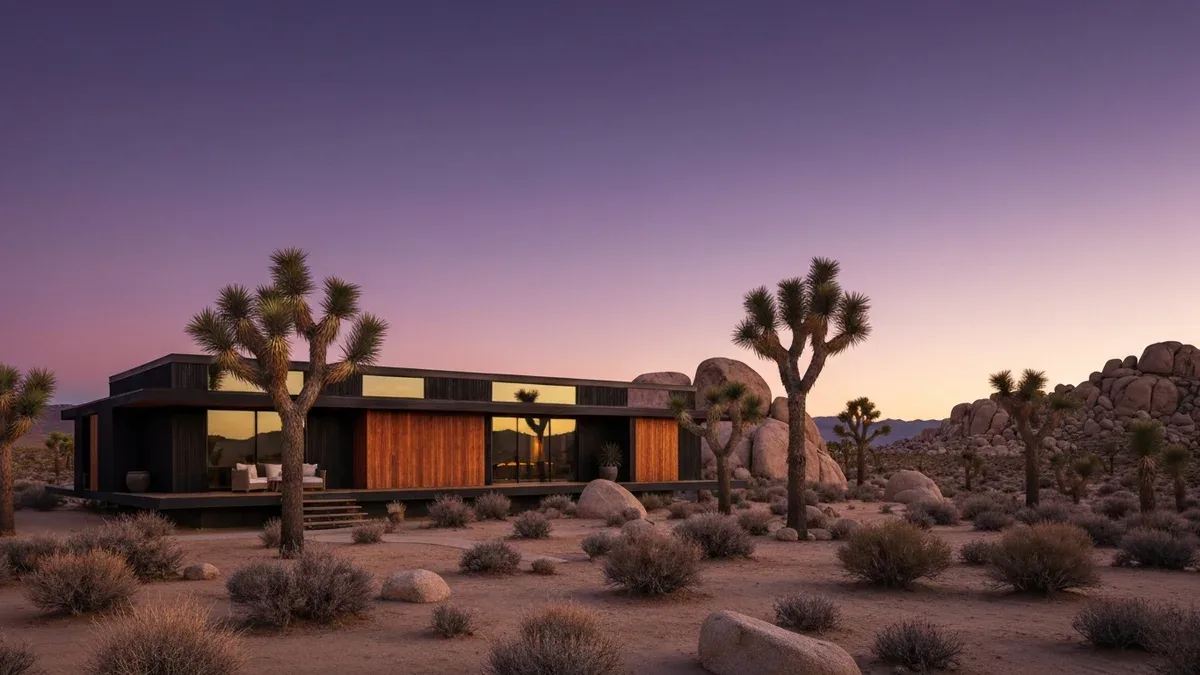
The joshua tree airbnb market doesn't behave like a beach town or a ski resort. Nobody drives three hours into the high desert for a lazy river or a chairlift. They come for a specific feeling, and increasingly they come for a specific look: a low-slung cabin with a plunge pool, a firepit under an enormous sky, and a bedroom window framing a boulder pile that could be on the surface of another planet. If you own or want to own a rental here, that distinction is the whole ballgame. This is a design market, an Instagram market, and an experience market. It rewards taste and punishes the generic, and it does that harder than almost any other STR destination in the country.
That's both the opportunity and the warning. A thoughtfully designed cabin outbooks a bland one at the same price by a wide margin, so the money follows the aesthetic. But the towns of the Morongo Basin have also spent the last few years wrestling with saturation, tightening permits, and community pushback, and the days of "buy anything, list it, print money" are over. If you're going to host here in 2026, you need to understand three things at once: why guests come, how the local rules actually work, and what it takes to stand out in a field that's gotten crowded and choosy.
This guide walks through all of it, town by town, so you can decide where and how to play. Nothing here is legal or tax advice, and rules change fast in this region, so treat the specifics as a starting point and confirm the current San Bernardino County STR rules and each town's ordinance before you commit a dollar.
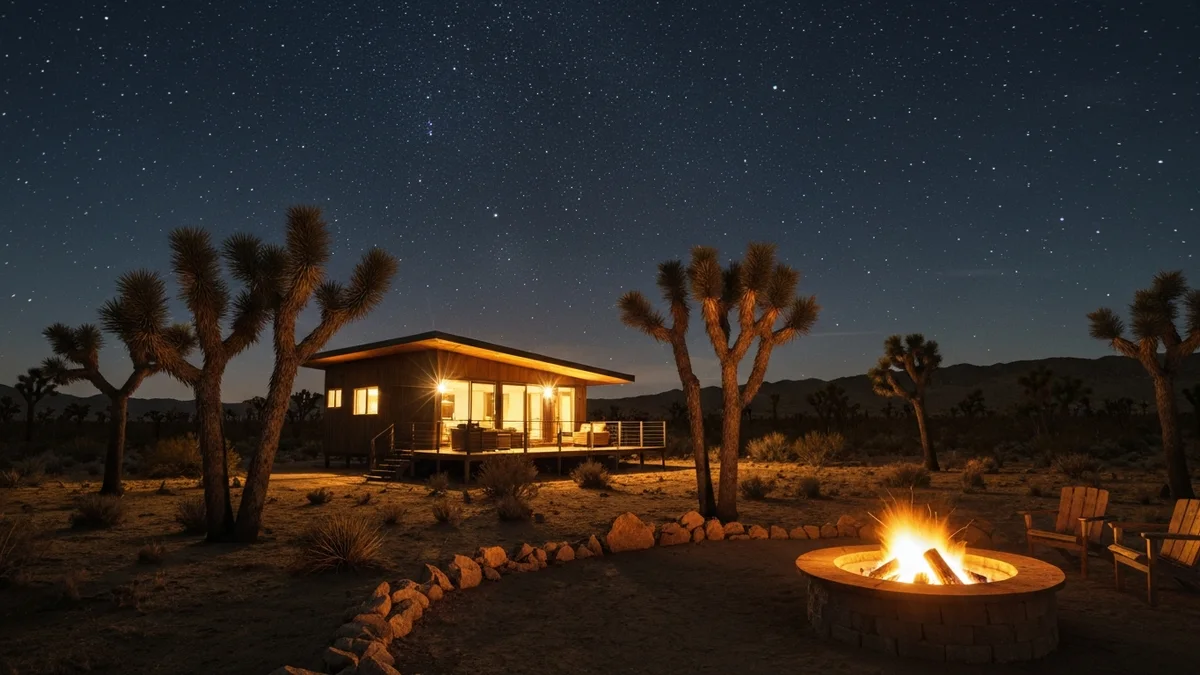
Why the Joshua Tree Airbnb market is a design market, not a beach or ski market
Most vacation-rental destinations sell an obvious, physical draw. You book beachfront for the beach. You book a ski cabin for the mountain. The property is a container for the activity. Joshua Tree flips that. The desert is beautiful, but it's spare, quiet, and hot half the year, and there's no single blockbuster activity that fills a calendar. So the property itself becomes the reason people book. The cabin is the destination.
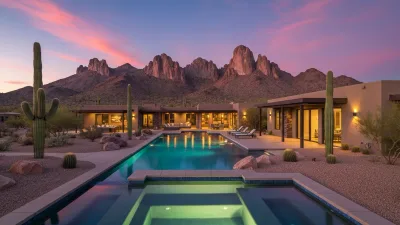
Look at what actually gets shared and saved: outdoor showers, cowboy pools, sunken conversation pits, mid-century-adjacent interiors, adobe and breeze-block, saguaro-lined firepits, and a stargazing deck angled at the Milky Way. AirDNA's Joshua Tree market data tracks well over a thousand active listings, and the pattern is consistent across the analytics providers who cover the area: distinctive, design-forward properties command materially higher nightly rates and stronger occupancy than plain three-bedroom houses at the same size. The guest here is often coming from Los Angeles, Orange County, or San Diego, is design-literate, and is choosing the trip partly to photograph it. That changes what you build and how you market it.
The practical takeaway: in this market, you're not really renting square footage. You're renting a mood and a set of pictures. Owners who understand that spend their renovation budget on the things that photograph and feel special, and their marketing budget on making those things visible. Owners who don't tend to compete on price, which is a losing game here because the ceiling on a generic cabin is low no matter how you discount it.
Before you buy or renovate, open Airbnb and sort the top-rated Joshua Tree cabins by what makes you stop scrolling. Write down the five design details that recur. That short list is your build brief. In this market, the cabin has to be the photo, not just the place the photo was taken.
The park, the dark sky, and the LA drive market
The demand engine underneath all of this is Joshua Tree National Park. It's one of the most-visited national parks in the country, drawing roughly three million visitors a year, and it sits within a two- to three-hour drive of the largest metro area in the western United States. That combination is what makes the high desert work as a rental market at all: a huge, affluent, design-conscious population within easy weekend reach of a genuinely otherworldly landscape.
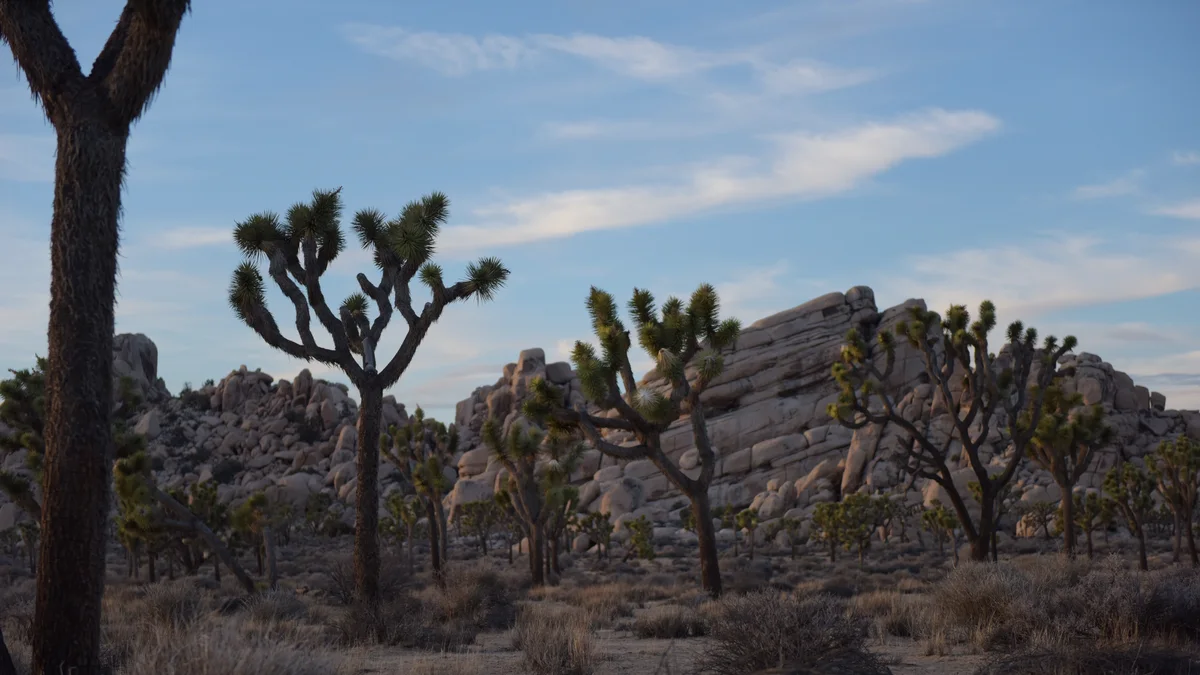
The park is also an International Dark Sky Park, and that matters more than a casual visitor might guess. Stargazing is one of the few "activities" that reliably fills desert evenings, and it's a booking driver in its own right. A cabin marketed and equipped for the night sky, with an unobstructed deck, a telescope, string-light-free dark corners, and honest guidance on moon phases, taps a real and specific demand. The Milky Way is easiest to see around the new moon in the warmer months, and guests plan trips around it. If your listing speaks to that, you catch searches a generic listing never sees.
Two more things about the drive market shape strategy. First, because most guests arrive by car from Southern California, weekends dominate. Friday-and-Saturday demand is strong; midweek is soft, especially in the shoulder and off seasons. Second, the drive market is price-elastic and mood-driven. A great deal on a boring cabin doesn't move these guests; a distinctive cabin at a fair price does. You're competing for attention on a phone screen against hundreds of other high-desert listings, which is exactly why marketing quality, not just property quality, decides who wins.
The towns compared: Joshua Tree, Yucca Valley, Twentynine Palms, Landers and Pioneertown
People say "Joshua Tree" as shorthand for the whole region, but the Morongo Basin is several distinct communities, each with its own vibe, price point, and, importantly, its own rulebook. Where you buy determines both your guest and your regulatory reality.
Joshua Tree
The brand-name town. The unincorporated community of Joshua Tree sits right at the park's west entrance and carries the most cultural cachet. It's the most searched, the most photographed, and generally the most expensive to buy into. Because it's unincorporated, it falls under San Bernardino County's STR ordinance, not a town of its own. Demand is strongest here, but so is competition and scrutiny.
Yucca Valley
The incorporated town with its own cap. Yucca Valley is a bigger, more services-oriented town a bit farther from the park. It has adopted its own short-term rental regulations, including a density cap limiting vacation rentals to roughly ten percent of the town's housing stock, an eight-guest limit on most homes, and a fast complaint-response requirement. If the cap is full, new permits may not be available, so this is a place where you confirm availability before you buy, not after.
Twentynine Palms
The value entry point with a hard permit ceiling. "29 Palms" is at the park's north entrance, near the Marine base, and has historically been the most affordable of the three main towns. It's an incorporated city with its own vacation-home-rental ordinance, a transient occupancy tax around nine percent plus a small tourism assessment, and a cap that the city has said will not exceed 500 STR permits. Occupancy is set at two persons per bedroom plus two. Lower buy-in, real rules, and a ceiling on how many rentals can exist.
Landers and Pioneertown
The character outposts. Landers is remote high desert, home to the Integratron, and appeals to guests who want isolation and true dark skies. Pioneertown, a former movie set turned tiny community, carries outsized charm and the pull of Pappy & Harriet's, a music venue that draws people on its own. Both are small, both are unincorporated county land, and both reward a strong, specific concept over a generic build. Remoteness is the selling point and the operational challenge at once.
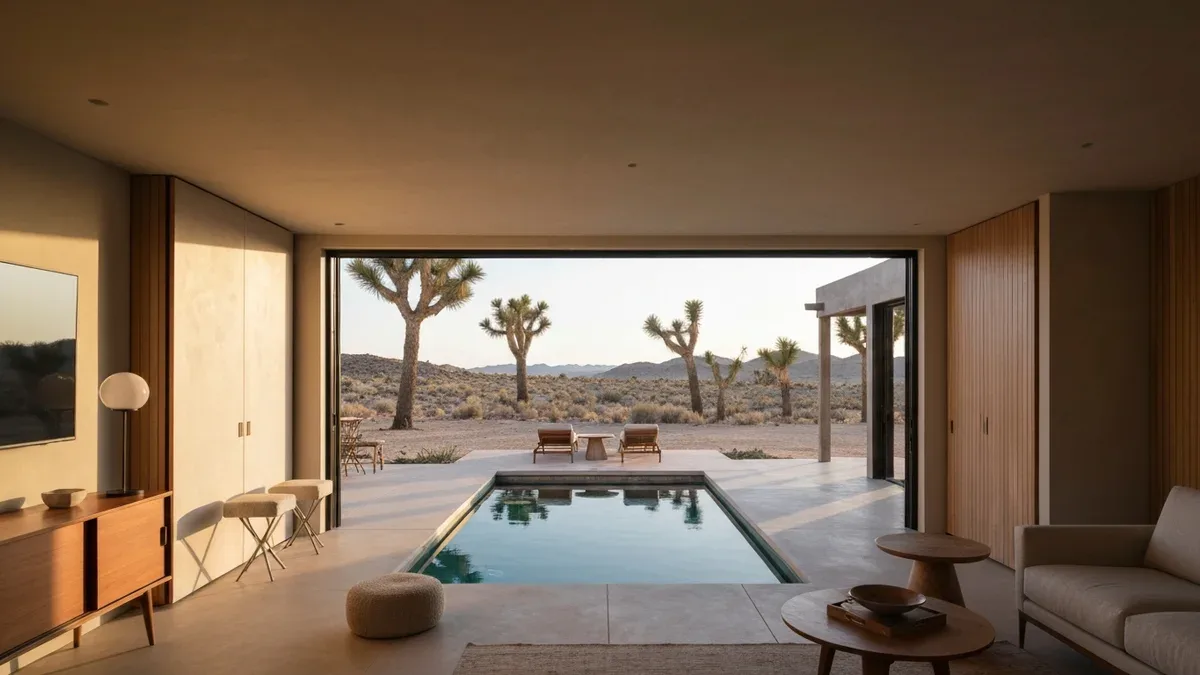
The through-line: incorporated towns (Yucca Valley, Twentynine Palms) set their own permits, taxes, and caps, while the unincorporated communities (Joshua Tree, Landers, Pioneertown) run under San Bernardino County. Two different systems, two different sets of paperwork. Know which one governs your parcel before anything else.
How the towns actually differ for a buyer
It helps to think about the choice on three axes at once: how much the cabin costs to buy, how hard it is to get permitted, and what kind of guest each place attracts. Joshua Tree is high cost, high demand, high scrutiny, and the guest is often a design-first traveler who specifically wanted the brand-name town. Yucca Valley is more moderate on price and has the widest range of housing, but the density cap means the permit question can override everything else. Twentynine Palms trades a longer drive for lower buy-in and the north-entrance quiet, and it draws budget-conscious park visitors and Marine-base-adjacent traffic, but the 500-permit ceiling is a real limit on new inventory. Landers and Pioneertown are the smallest bets: cheap land, true dark skies, and guests who are specifically chasing isolation and character rather than convenience. There's no single "best" town. There's the town that fits your budget, your risk tolerance, and the guest you actually want to host, and the only way to match those up is to price out permits and comparable listings in each before you fall in love with a specific cabin.
Permits, caps, and the saturation reality
Here's the part that's changed the most. For a stretch, the high desert was a gold rush, and the community noticed. Listings multiplied, neighbors complained about noise and water use and investor-owned party houses, and local government responded. The frictionless era is over, and that's the single most important thing a new host needs to internalize. If you take one thing away about the joshua tree airbnb market in 2026, make it this: whether you can legally rent a given property depends on rules that have tightened repeatedly, so eligibility should be your first question, not your last.
On the county side, San Bernardino requires a Short-Term Rental Permit to advertise or operate in the unincorporated mountain and desert areas, including Joshua Tree, Landers, and Pioneertown. The county has tightened the rules in recent cycles, including limits on how many permits a single parcel can hold, roughly one STR on parcels under two acres and up to two on larger parcels, and it updated its fee schedule in 2025. The county has also at times paused new permits in second-home markets to study the issue. Because this is exactly the kind of rule that moves, confirm the current San Bernardino County STR rules directly on the official page before you rely on any figure here: str.sbcounty.gov.
On the town side, the caps are the headline. Yucca Valley's ten-percent density cap and Twentynine Palms' 500-permit ceiling both mean the same thing for a buyer: there may simply be no room. A property that looks like a perfect rental is worthless as an STR if you can't get a permit for it. This has flipped due diligence on its head. It used to be "can this cabin cash-flow?" Now the first question is "can this parcel even be permitted, today, under the current cap?"
Make permit eligibility a written contingency in any offer, and verify it with the county or town directly, not with the listing agent or the seller. Get the answer in writing before your earnest money is at risk. A cabin you can't legally list is just an expensive second home.
Transient occupancy tax and the money side
Every guest night in this region carries a transient occupancy tax, and the rate depends on which jurisdiction you're in. Unincorporated county areas like Joshua Tree run a TOT in the single digits, while incorporated towns set their own, with Twentynine Palms around nine percent plus a small tourism business improvement assessment. You'll also need the county or town's occupancy registration certificate on top of your STR permit, and even when Airbnb or Vrbo collects and remits the tax for you, several jurisdictions still require you to file periodic reports yourself.
None of this is optional, and none of it should be guessed at. Rates and reporting rules differ by a few miles across town lines, and the penalties for operating without a permit or without remitting tax are steep, running into four figures per violation per day in the county. I'm a content strategist, not an accountant, so treat every number in this section as "confirm with the county and your accountant." What I can tell you plainly is that the tax and permit math should be settled before you buy, because it changes your real return, and because a compliance problem here can shut a listing down entirely.
What to nail down before closing
- The permit: Can this specific parcel be permitted right now, under the current cap, and what does the application actually cost?
- The tax: What's the exact TOT rate for this jurisdiction, and who files the returns, you or the platform?
- The occupancy limit: How many guests can you legally host, and does that support your revenue assumptions?
- The response rule: Do you or a local agent have to answer complaints within a set number of minutes, and do you have someone who can?
The LA guest and festival demand
Your typical guest is a small group, often two to six people, coming from Southern California for a Friday-to-Sunday reset. They're not price shoppers so much as vibe shoppers. They've usually already decided the trip should look and feel a certain way, and they're choosing between cabins that all cost roughly the same. That's a marketing fight, and it's won on photography, styling, and the story your listing tells.
Festival season is worth understanding honestly, without overselling it. Coachella and Stagecoach happen in April at the Empire Polo Club in Indio, down in the Coachella Valley, and they pull tens of thousands of people to the desert. The towns closest to Indio see the biggest lift. Joshua Tree and the Morongo Basin are farther north and over the pass, so the spillover is real but softer than a lot of hosts assume. Festival weekends can help your April, but I wouldn't build a whole investment thesis on them. Treat festival demand as a seasonal bonus, not the foundation, and be careful about pricing yourself out of your reliable park-and-design guest chasing a festival premium that may not fully materialize this far out.
Real seasonality: spring and fall peak, summer heat
The desert has a hard, honest seasonal shape, and pretending otherwise is how new hosts blow their first year. Spring, roughly March through May, and fall, roughly October through November, are the peak stretches. The weather is comfortable, wildflowers and clear skies bring people out, and rates and occupancy are at their best. March tends to be the strongest month of the year.
Summer is brutal. Daytime highs regularly clear 100 degrees, often well past it, and demand softens accordingly. Late summer, especially September, tends to be the softest patch on the calendar. Winter is cooler and quieter but still draws stargazers and people who like the desert cold and empty. This isn't a flaw to hide; it's a rhythm to plan around.
Working with the seasons instead of against them
- Price dynamically and honestly. Charge peak-season rates when demand is real, and don't stubbornly hold spring prices into a 108-degree August.
- Make summer bookable anyway. A plunge pool, real shade, a misting setup, and blackout-cool bedrooms turn "too hot" into "resort in the heat" and keep summer occupancy alive.
- Lean into the dark sky in the off months. Stargazing and desert quiet sell winter and shoulder nights that the park crowds don't fill.
- Plan maintenance for the trough. Do your refresh and re-shoot in late summer so you're camera-ready for the fall peak.
The amenities that actually move the needle
Because this is an experience market, a short list of amenities does most of the heavy lifting. These are the features that show up again and again in the listings that book out, and they're where your renovation budget earns its keep.
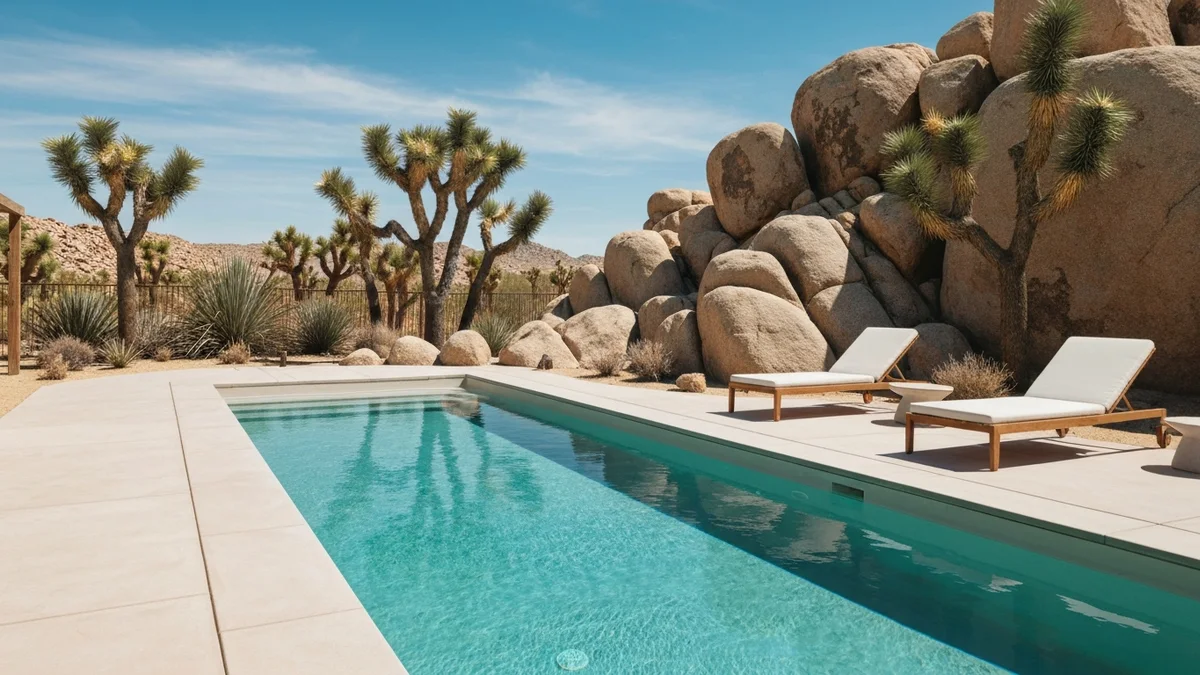
- A plunge pool or cowboy pool. Water is the single biggest summer-demand lever and a year-round photo magnet. In a market this hot, a pool isn't a luxury, it's often the difference between a listing that works in July and one that goes dark.
- A hot tub. Perfect for cool desert nights and shoulder-season evenings under the stars, and one of the most-searched amenities in the region.
- A stargazing deck. An intentional dark-sky viewing spot, ideally with loungers and a telescope, ties your cabin directly to the park's biggest nighttime draw.
- Architecture and interiors with a point of view. Mid-century lines, adobe, breeze-block, a sunken lounge, an outdoor shower. The design isn't decoration here; it's the product.
- A real firepit and outdoor living. Desert evenings are the best part of the trip. Outdoor space that's genuinely usable and beautiful often matters more than a fourth bedroom.
Notice what's not on the list: sheer size, generic upgrades, and anything that doesn't photograph. In the high desert, a distinctive two-bedroom with a pool and a great deck routinely outperforms a plain four-bedroom, because guests are booking a feeling, not a floor plan. If you're weighing where to spend, this is the guidance I'd give any owner here: design and staging that gives the cabin a genuine identity is the highest-return money in this market.
Photography, Instagram, and influencer marketing
If the property is the product, the photos are the packaging, and in Joshua Tree the packaging is unusually decisive. This is one of the most visually driven rental markets in the country. Guests find these cabins by scrolling, saving, and sharing, which means your listing lives or dies on the strength of its images and its social presence far more than in an average market.
Great photography here isn't just "well-lit rooms." It's golden-hour exteriors with the boulders and Joshua trees in frame, the pool glowing at dusk, the interior styled like an editorial shoot, and at least a few genuinely dark-sky night images that most listings never bother to capture. Those night shots alone can set you apart, because they promise the exact experience the guest is coming for. If you want a concrete standard to build toward, our Airbnb photography guide breaks down the shots that actually drive bookings.
Beyond the listing, this market rewards an active social presence in a way most don't. Short-form video, reels of the drive in, the pool at sunset, the Milky Way over the deck, travels well because the desert is inherently cinematic. A steady social feed and the occasional well-chosen influencer stay can put a design cabin in front of exactly the LA and OC audience that books it, often more efficiently than paid ads. Cavmir helps hosts turn a beautiful cabin into a beautiful feed, and turn that feed into direct demand.
Shoot your cabin at three times of day: golden hour, blue hour, and true night. Most Joshua Tree listings only have flat midday interiors. The dusk pool shot and the Milky Way deck shot are the two images that make a design-market guest stop scrolling and book. If you get nothing else right, get those two.
The pitfalls: heat, water, remoteness and saturation
The desert is unforgiving to owners who romanticize it. Four realities catch new hosts off guard, and every one of them is manageable if you plan for it and expensive if you don't.
- Heat. Summers are severe, and a cabin without a pool, real shade, and serious cooling will sit empty for months and collect one-star reviews when it does book. Plan for the heat as a design requirement, not an afterthought.
- Water. This is a genuinely water-scarce region, and pools, landscaping, and guest use all draw on a limited supply. It's an operating cost, an environmental responsibility, and increasingly a community and regulatory sensitivity. Efficient systems and honest water messaging matter here.
- Remoteness. Cell service is patchy, deliveries are slow, contractors are stretched thin, and the nearest hardware store can be a long drive. You need reliable local help, because a broken AC in August is an emergency, not an inconvenience.
- Saturation. There are a lot of cabins competing for the same weekends, inventory has climbed sharply, and homes have been sitting longer on the sales market than they did at the peak. A mediocre listing gets lost. Standing out is no longer optional; it's the entire strategy.
None of this means the market is bad. It means it's mature. The owners doing well here are the ones who treat it as a real business with real constraints, build something distinctive, market it seriously, and stay compliant. The ones who struggle are the ones who bought a plain house expecting the park to do their marketing for them.
A practical plan for getting in
If you've read this far and you're still interested, here's the order of operations that keeps owners out of trouble in this market. It's deliberately unglamorous, because the expensive mistakes here happen at the paperwork stage, not the decorating stage.
- Pick your jurisdiction first, then the cabin. Decide which town or unincorporated area fits your budget and your appetite for rules, and confirm that permits are actually available there right now. In a capped town, this is the whole game.
- Run the permit and tax math before you offer. Get the current application cost, the TOT rate, the occupancy limit, and the complaint-response rule in writing from the county or town. Then check them against your numbers with your accountant.
- Buy for design potential, not just size. A smaller cabin with good bones, a buildable pool spot, and a real view will out-earn a big plain house. Budget realistically for staging and a pool if there isn't one.
- Build the aesthetic, then shoot it properly. Give the cabin a genuine point of view, then invest in photography that captures it at golden hour, dusk, and night.
- Market it like the product it is. Optimize the listing for the searches your competitors miss, and build a social presence that puts the cabin in front of the LA and OC audience that books it.
Do those five things in that order and you've sidestepped the failure modes that trip up most new high-desert hosts: the un-permittable parcel, the surprise tax bill, the plain house nobody saves, and the beautiful cabin nobody ever sees. The desert is a real market with real rewards. It just asks you to earn them on purpose. If you want a fuller sense of how much a considered interior can change a cabin's economics, our breakdown on how an interior design upgrade lifts an Airbnb rate is a good next read, and if reels are where you want to start, our Instagram reels strategy for STR marketing covers the format this market rewards most.
Frequently asked questions
Is the Joshua Tree Airbnb market still worth entering in 2026?
Yes, but selectively. The easy money is gone and the market is saturated at the generic end, so a plain cabin is a hard business now. A distinctive, well-designed, well-marketed property in a jurisdiction where you can actually get a permit still performs. The bar is higher, and that's exactly why design and marketing quality are the deciding factors.
Do I need a permit to run a short-term rental in Joshua Tree?
Almost certainly, yes. Unincorporated communities like Joshua Tree, Landers, and Pioneertown fall under San Bernardino County's STR permit system, and incorporated towns like Yucca Valley and Twentynine Palms have their own. Confirm the current San Bernardino County STR rules and the relevant town ordinance before you buy, and make permit eligibility a written contingency in any offer.
Which town should I buy in?
It depends on your budget and how much regulatory friction you can accept. Joshua Tree has the strongest brand and the highest buy-in. Yucca Valley has more services but a density cap that may be full. Twentynine Palms is the value entry point with a hard 500-permit ceiling. Landers and Pioneertown reward a strong, specific concept and guests who want true isolation. Check permit availability in your target town first, because a cabin you can't permit is a non-starter.
When is the best season to host?
Spring (March through May) and fall (October through November) are the peaks, with March often the strongest month. Summer is very hot and demand softens, especially around September, though a pool and strong cooling keep summer viable. Winter is quieter but still draws stargazers and desert lovers.
How much does design really matter?
More than almost anywhere else. This is an aesthetic-driven, Instagram-driven market where the cabin itself is the reason people book. A distinctive design cabin consistently outperforms a plain house of the same size at the same price. If you invest anywhere, invest in a property with a genuine point of view and in the photography and social presence that make it visible.
Where Cavmir fits
Cavmir is a short-term-rental marketing agency, not a property manager. We don't take over your calendar or your keys. What we do is help high-desert hosts make a cabin unmistakable and put it in front of the right people: design and staging that give the property a real identity, photography built to the standard this market demands, listing copy and optimization that catches the searches your competitors miss, and the social and influencer work that turns a beautiful cabin into steady, direct demand. If you own or are buying a Joshua Tree, Yucca Valley, or Twentynine Palms rental and you want it to stand out in a crowded field, take a look at our listing optimization work and our high-desert Joshua Tree pages, or explore nearby markets like Palm Springs and Big Bear Lake. When you're ready, tell us about your cabin and we'll tell you honestly where the upside is.