



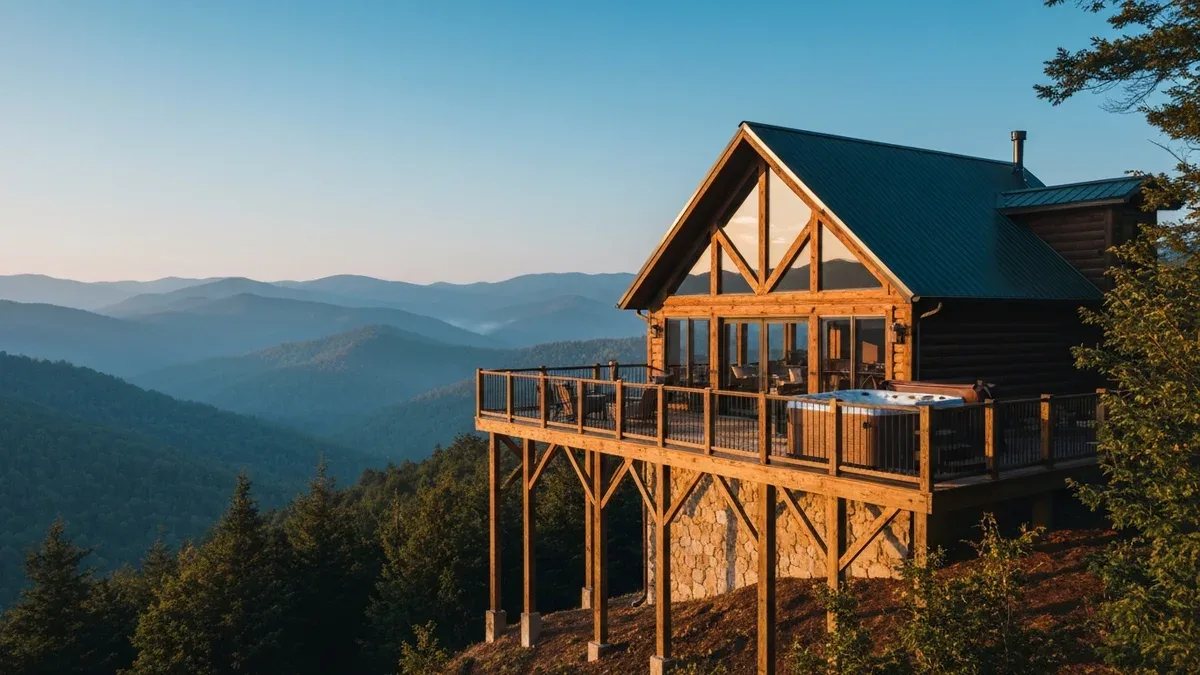
The Smoky Mountains draw more visitors than any other national park in the country, and the towns at the park's doorstep have turned that steady flow of people into one of the busiest cabin-rental economies in the United States. If you own a cabin here, or you're thinking about buying one, you're not competing in a sleepy vacation town. You're operating inside a dense, mature market with thousands of listings, real permit rules, and guests who've already stayed in a dozen cabins and know exactly what a good one looks like. Understanding the gatlinburg cabin airbnb market means understanding the rhythm of the seasons, the difference between the towns, and the amenities that actually move the needle.
This guide is written for hosts and owners in Gatlinburg, Pigeon Forge, Sevierville, and the valleys around them. It's a market read, not a legal brief. We'll cover what drives demand, how the calendar breaks down, where the rules stand, which areas suit which guests, and the marketing decisions that separate a cabin that stays booked from one that sits empty on a shoulder-season Tuesday. Where a regulation could have shifted, we'll tell you to confirm the current City of Gatlinburg or Sevier County rules with the source, because those change and you shouldn't take a blog post's word for something the city will fine you over.
Cavmir is a short-term-rental marketing agency. We help cabin hosts market and optimize their listings and direct-booking sites. We don't run properties, and nothing here is tax or legal advice. Treat the numbers as directional and the rules as things to verify.
Why the Smokies stay busy year-round
Most vacation markets have a season and an off-season. The Smokies have a season and a slower season, which is a meaningfully different thing when you're trying to keep a cabin booked. The anchor is the Great Smoky Mountains National Park. According to the National Park Service, the park drew roughly 12.2 million recreational visits in 2024, and it has held its spot as the most-visited national park in the system for years running. That's not a number that swings on a trend. People come for the ridgelines, the hiking, the wildlife, and the free admission, and they come in every month of the year.
Layered on top of the park is a stack of built attractions that give people a reason to stay when the weather's cold or the trails are muddy. Dollywood, in Pigeon Forge, hosts close to three million guests across a season that now runs from spring into the Christmas holidays, and it's the most-visited commercial attraction in Tennessee. The park and Dollywood together mean your cabin isn't dependent on any one draw. A family might book for the theme park, a couple for the fall colors, a group for a wedding, and a set of hikers for a long weekend on the trails, all in the same month.
What this means for you as a host is that demand in the gatlinburg cabin airbnb market is broad and fairly resilient, but it's also crowded. A resilient market attracts a lot of supply, and the Smokies have thousands of active cabin listings across the three towns. Steady demand doesn't guarantee your cabin gets booked. It guarantees that a well-marketed cabin has a shot at strong occupancy and a poorly marketed one gets buried. That's the tension that runs through the rest of this guide.
The gatlinburg cabin airbnb market by season
If you only learn one thing about this market, learn the calendar. The Smokies don't have a flat demand curve, and pricing your cabin the same in February as in October leaves real money on the table both ways. Here's how the year actually breaks down.
Fall (late September through early November) — the peak
Autumn is the top of the market. Fall color at the lower elevations typically peaks from mid-to-late October, and the leaf season pulls in enormous crowds. The first full week of October, around Gatlinburg's Fall Foliage events, is usually the single busiest and most expensive stretch of the whole year. The Parkway clogs, cabins with mountain views book out, and nightly rates climb well above the annual average. If you have a view cabin, this is the window it earns its keep.
Summer (June through August) — family season
Summer is the long, dependable stretch. School's out, families road-trip in from the Southeast and Midwest, and Dollywood and the water parks run at full tilt. Occupancy is high and steady, though nightly rates usually sit below the October peak. Larger group and family cabins do especially well here because the guest mix skews toward multi-generational trips and reunions.
Winter (Thanksgiving through New Year's, then a lull) — two different stories
Winter splits in two. The holidays are strong. Pigeon Forge's Winterfest drapes the area in more than five million lights, and Thanksgiving week, Christmas week, and New Year's all run busy. A cabin with a hot tub and a fireplace sells the cozy-mountain-Christmas fantasy, and it sells well. Then January and much of February go quiet. That deep-winter lull is the real off-season, and it's where a lot of hosts lose money by holding out for rates the market won't pay.
Spring (March through May) — the ramp
Spring builds back up. Dollywood reopens, wildflowers bring hikers, and spring break drives a burst of family travel in March. Rates and occupancy climb through the season toward the summer plateau. Spring also tends to be gentler on the weather than deep winter, which helps outdoor-focused cabins.
Weekdays and weekends aren't the same market
Layered under the seasonal curve is a weekly one that's easy to overlook. Weekends book first and book at higher rates almost year-round, driven by couples and short-trip guests who can only get away Friday through Sunday. Weekday nights, especially Sunday through Thursday, are softer and are where a lot of Smokies calendars go empty even in strong months. The guests who fill weekdays are usually the group and multi-family bookings, retirees, and remote workers who aren't tied to a school schedule. If your midweek occupancy is weak, that's a marketing and pricing problem more than a demand problem, and it's fixable. Discounted midweek rates, longer-stay incentives, and copy that speaks to groups who can travel Tuesday to Thursday all help pull those nights off the empty pile.
Don't fight the January-February lull with stubborn pricing. A cabin booked at a soft midweek rate covers its cleaning, its utilities, and part of its mortgage. A cabin sitting empty covers nothing and still costs you. Set a real off-season floor, lean on longer minimum-stay discounts, and let the shoulder months carry weight instead of waiting for a peak-season guest who isn't coming in February.
Permits, registration, and taxes
This is the part where you have to do your own homework, because the rules are specific, they're enforced, and they differ depending on whether your cabin sits inside a city limit or out in the county. What follows is accurate to what the cities and county published as of mid-2026, but treat it as a starting map, not the final word. Confirm the current City of Gatlinburg and Sevier County rules with the official pages before you rely on anything here.
Inside Gatlinburg city limits
- Tourist Residency Permit. The City of Gatlinburg requires a Tourist Residency Permit to operate a short-term rental, which the city defines as a stay of 89 days or fewer. The permit isn't transferable when a property sells, so a buyer applies fresh. Check the requirements on the City of Gatlinburg's permit page.
- Fire and safety inspection. The city ties the permit to a fire and building inspection covering smoke detectors, carbon monoxide detectors, fire extinguishers, and clear escape routes, with annual re-inspection. Budget time for this, not just money.
- Zoning. Gatlinburg restricts short-term rentals in certain residential zones. If you're buying, confirm the parcel's zoning allows an STR before you close, not after.
Out in Sevier County (outside city limits)
- County STR permit program. Since January 1, 2024, short-term rental units in unincorporated Sevier County have needed an annual permit and a yearly inspection through the county's Short-Term Rental Unit Permit Program. Many, maybe most, of the cabins people picture when they think "Smoky Mountain cabin" are in the county, not a city, so this likely applies to you.
- Lodging and sales tax. Sevier County collects a lodging tax on short-term stays, remitted to the county trustee, and the state requires you to register and remit sales tax as well. The exact rates and filing cadence are the kind of thing that changes, so confirm with the Sevier County STR permit program page and your accountant rather than a rate you saw quoted somewhere.
- Business licenses. Expect to need city and/or county business licenses alongside the permit. The pieces stack, and missing one is the kind of gap that surfaces at renewal.
The through-line: permits, inspections, and taxes here are real and actively administered. Operating without them can bring daily fines, and repeated violations can put your right to rent the property at risk. This isn't a market where you quietly list and hope nobody notices. Get compliant first, then market hard. If you want a broader sense of how STR rules are tightening across the country, our overview of short-term rental regulations in US cities for 2026 puts the Smokies in context. And confirm your specific situation with the city, the county, and your accountant. We're marketers, not your CPA or your attorney.
Gatlinburg vs. Pigeon Forge vs. Sevierville vs. the valleys
People treat "the Smokies" as one place, but the towns pull different guests and price differently. Where your cabin sits shapes who books it and what they'll pay, so this matters whether you're marketing a cabin you already own or shopping for one.
Gatlinburg
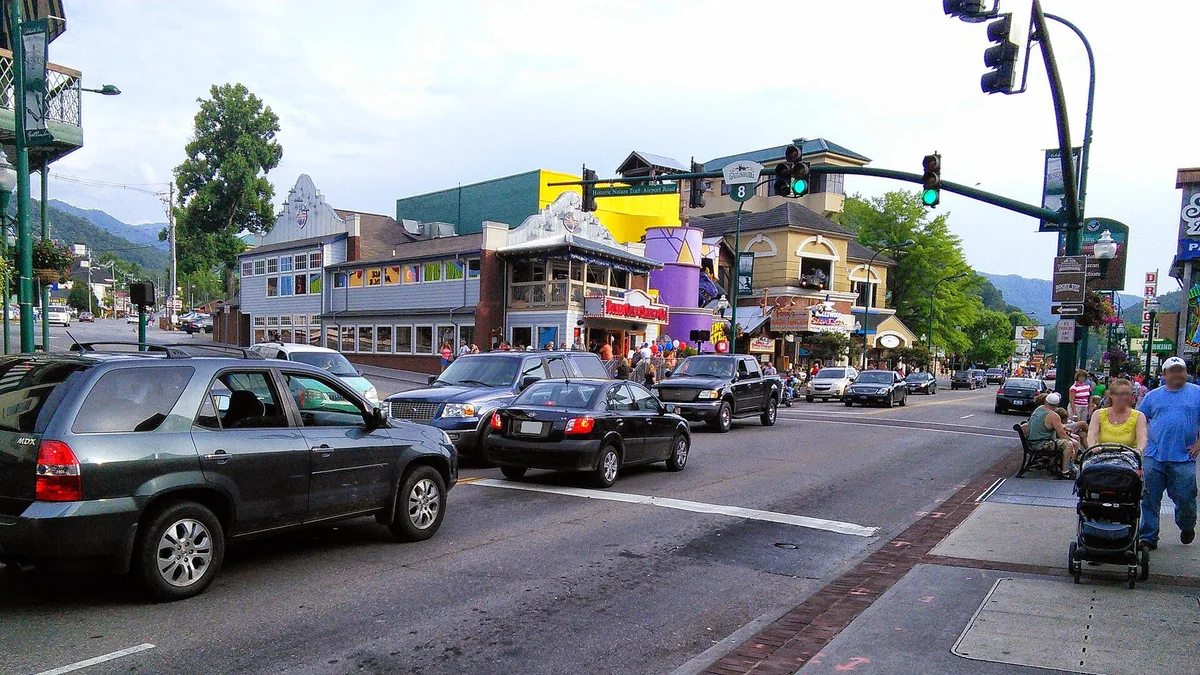
Gatlinburg is the town pressed right up against the national park entrance, and it draws the nature-first guest. Hikers, couples, leaf-peepers, and people who want to walk the downtown strip and be at a trailhead in ten minutes. Cabins on the ridges above town can command premium rates in fall because the views are the product. The trade-off is that Gatlinburg's terrain is steep, some access roads are genuinely tight, and the city permit process adds a layer. If your cabin is here, market the park proximity and the views relentlessly. Our Gatlinburg market page goes deeper on the local landscape.
Pigeon Forge
Pigeon Forge is the family-entertainment engine. Dollywood, dinner shows, go-karts, mini golf, outlet shopping. Guests here are more often families and groups who want the cabin as a comfortable basecamp between attractions rather than a nature retreat. That guest wants space, a game room, bunk beds, and easy parking more than they want a remote ridgeline. If your cabin is in or near Pigeon Forge, sell the group experience and the convenience. See the Pigeon Forge market page for more.
Sevierville
Sevierville sits a little farther from the strip and the park, which usually means somewhat lower land costs and rates but also more space and calmer surroundings. It's a solid middle ground for larger cabins that want acreage and views without downtown-Gatlinburg pricing. Guests here trade a few minutes of drive time for quiet and value.
Wears Valley and the quieter pockets
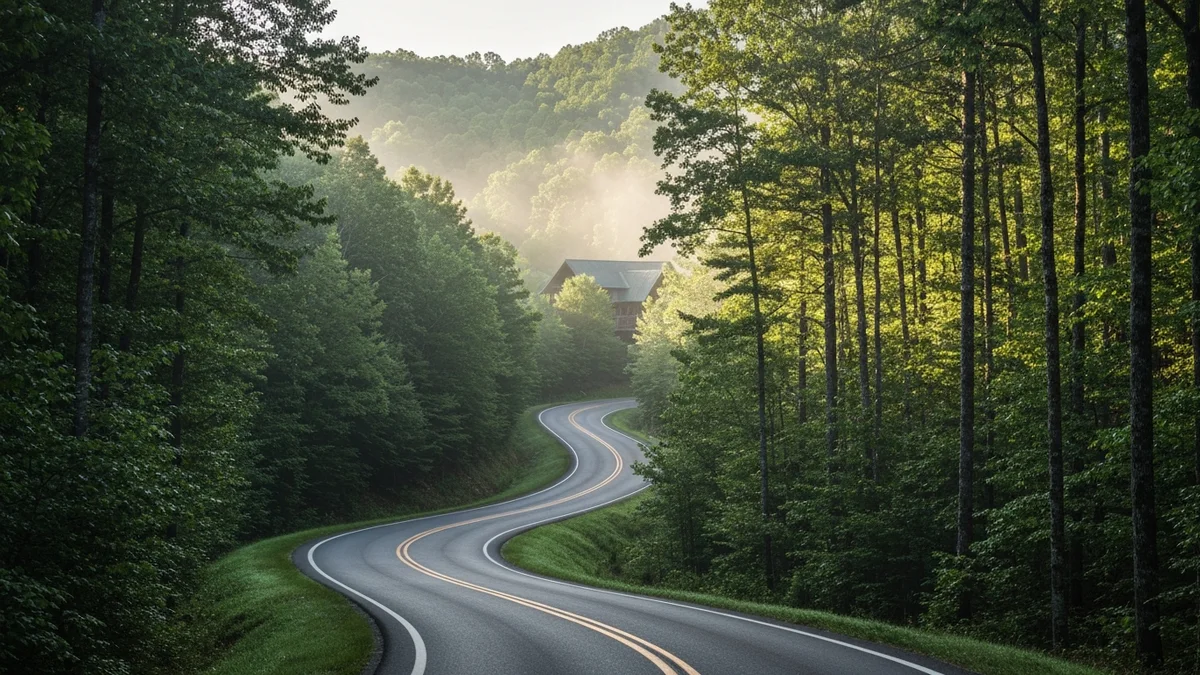
Wears Valley gets called the peaceful side of the Smokies, and that's the honest pitch. Panoramic ridges, meadows, streams, and a quick drive into the park, at generally lower prices than downtown Gatlinburg. It draws couples and small groups who want seclusion and views over walkable nightlife. If your cabin is here, don't apologize for the distance from the strip. Sell the quiet, because the guests who search for Wears Valley are looking for exactly that.
Who your guest actually is
Good marketing starts with knowing who you're talking to, and the Smokies have a few clear guest archetypes. Most cabins do best when they pick one or two and speak to them directly instead of trying to be everything.
- The family road trip. Drives in from Atlanta, Nashville, Charlotte, Cincinnati, or Louisville. Wants a big cabin, a game room, bunk space, a hot tub the kids can use in daylight, and easy access to Dollywood. Books summer and spring break. Values space and value over luxury finishes.
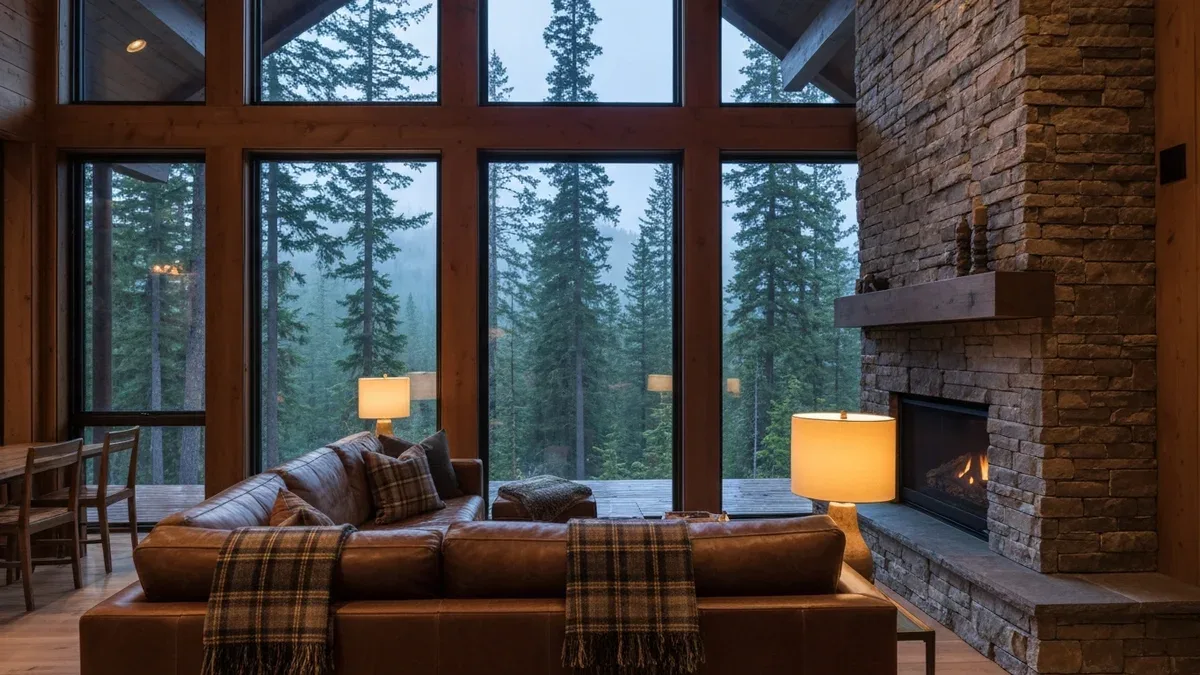
- The couple's getaway. Wants a smaller one- or two-bedroom cabin, a private hot tub, a mountain view, a fireplace, and privacy. Books fall and the holidays heavily. Will pay a premium for a view and a sense of seclusion, and is very sensitive to photos that either deliver or don't.
- The multi-family or group trip. Reunions, friend groups, small retreats, wedding parties. Wants a large cabin that sleeps eight to sixteen-plus, multiple bathrooms, big common spaces, and parking that actually fits everyone's cars. Books year-round and often mid-week, which is gold for filling the calendar.
- The leaf-peeper and outdoors traveler. Comes specifically for fall color or hiking. Concentrated in October. Prioritizes park proximity and views above almost everything else.
Your cabin's size, location, and layout already point toward one or two of these. The mistake is writing a listing that vaguely gestures at all four. A three-bedroom with a hot tub and a ridgeline view should lead hard on the couple's-getaway and small-group angle. A ten-bedroom near Pigeon Forge should lead on groups and families. Match the message to the guest who's actually going to book, and the listing works harder.
It's also worth knowing where these guests come from, because it shapes your booking window and your marketing timing. The Smokies pull heavily from a drive-market radius: metro Atlanta, Nashville, Charlotte, Knoxville, and up through the Ohio Valley into Cincinnati, Columbus, and Louisville. That's a car-trip audience, not a fly-in one, which means bookings can come closer to the travel date than in fly-to destinations, and it means gas prices and long-weekend calendars nudge demand. A three-day weekend that lines up with a school break in Georgia or Ohio can fill your calendar faster than a random week in the same month. Knowing your feeder cities helps you anticipate the surges instead of reacting to them.
The amenities that actually book
In a market this saturated, amenities are how you get shortlisted. The good news is the list of what matters is short and well understood. The catch is that some of these have become table stakes, so having them keeps you in the running while missing them takes you out of it.
The non-negotiables
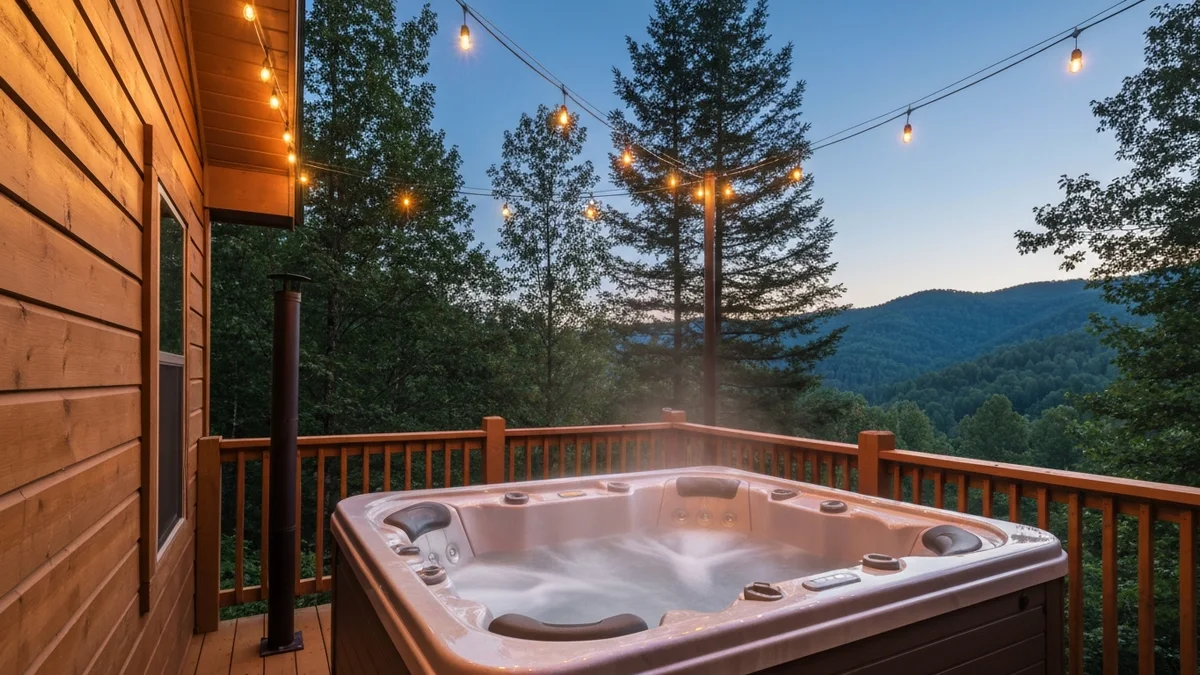
- A private hot tub. In the Smokies, a hot tub isn't a luxury add-on, it's an expectation. So many cabins have one that a cabin without one is filtering itself out of a huge share of searches. AirDNA's market data shows hot tubs are nearly ubiquitous in this area's listings. If you have one, feature it in your first three photos. If you don't, seriously price out adding one.
- A real mountain view. View cabins consistently outperform tree-boxed ones, especially in fall. An unobstructed ridgeline view is one of the few things in this market that genuinely commands a premium and holds occupancy. If you have it, it should be the star of your listing.
- Reliable, fast WiFi. Remote-work travelers and families both expect it, and slow internet shows up in reviews fast. This is cheap insurance.
- A full kitchen and enough parking. Groups cook, and groups arrive in multiple vehicles. Both are near-universal in the market's listings, and falling short on either generates complaints.
The differentiators
Once the basics are covered, one or two standout features do more than a scattershot of small upgrades. In this market, an indoor heated pool, a genuinely impressive theater room, a well-designed game room, or a thoughtfully built outdoor space with the hot tub integrated into a real deck or view setting are the kinds of things that let you reposition your price rather than just match the field. The pattern among strong performers is focus: invest in one transformative feature that changes the cabin's story, not five modest ones that don't.
Before you spend on a new amenity, read your own reviews and your competitors' reviews in the same size and price band. Guests tell you exactly what's missing and what delighted them. If three of your neighbors' reviews rave about a theater room and yours doesn't have one, that's a data point worth more than any general "top amenities" list. Let the reviews in your specific micro-market set your upgrade priorities.
Marketing and distribution that works here
You can own a great cabin in a great location and still underperform if the marketing is soft. In a market with thousands of listings, presentation is not a finishing touch, it's most of the battle. Here's where the effort pays off.
Photography is the whole game
Guests decide in seconds from a thumbnail. In the Smokies, that means your lead photo has to sell the two things people came for: the view and the hot tub, ideally in the same frame at dusk with the deck lit. Dim, cluttered, or phone-shot photos bury even a beautiful cabin under better-marketed neighbors. Professional photos, shot in good light, sequenced to tell a story from the drive-up to the view deck, are the single highest-return thing most hosts can do. We break down exactly what that looks like in our Airbnb photography guide, and it's the kind of work our listing optimization service is built around.
Price to the calendar, not to a flat number
Given how sharply this market swings between October peaks and February lulls, static pricing is a slow leak. Rates should move with the season, with local events, with day of week, and with how far out the booking is. Getting dynamic pricing right is a real skill, and it's worth learning. Our complete guide to dynamic pricing walks through the approach, and our shoulder-season revenue guide is specifically about squeezing more out of the slow months, which is exactly where Smokies cabins tend to leak.
Build a direct-booking channel
The big platforms bring you guests, and they take a cut on every stay and own the relationship. In a repeat-visit market like the Smokies, where families come back year after year and couples make it a tradition, a direct-booking website that captures returning guests is a genuine asset. It's not about abandoning Airbnb and Vrbo, it's about not being trapped on them. See our thinking on getting more direct bookings, and our direct-booking website service and SEO service exist to make that channel actually produce.
Reviews compound
In a crowded market, your review count and rating are a ranking signal and a trust signal at once. Early bookings are worth chasing even at a modest rate just to build a review base, and consistent five-star operations, fast responses, spotless cleaning, accurate listings, snowball into better placement and higher rates over time. Reviews are slow to build and fast to lose, so protect them.
Write the listing for the search, not just the guest
The words in your title and description do double duty. A guest reads them, but so does the platform's search algorithm, and increasingly so do the AI tools people now use to plan trips. A title that buries "mountain view" and "hot tub" behind a cabin's cute name is missing the terms guests actually search. Lead with the concrete, searchable features: the view, the hot tub, the sleeps-count, the proximity to the park or Dollywood, the game room. Then let the personality come through in the body. The same discipline applies to your direct-booking site, where clear, honest, keyword-aware copy is what gets you found in a plain web search instead of only inside a platform's walls. This is where SEO and listing copy stop being separate jobs and start being the same job.
Read your listing on your phone, at arm's length, the way a guest scrolling in bed at 11 p.m. actually reads it. If the view, the hot tub, and who the cabin sleeps aren't obvious in the first screen without expanding anything, rewrite the top. Most guests never tap "show more." The decision happens above the fold, on a small screen, in a few seconds, and your listing has to win it there.
Common pitfalls that cost hosts money
Most underperforming cabins here aren't bad cabins. They're good cabins undermined by a handful of avoidable mistakes. Watch for these.
- Skipping the permit or misreading the rules. Assuming a county cabin doesn't need a permit, or that a Gatlinburg parcel's zoning allows an STR, is an expensive assumption. Verify before you buy and before you list. Confirm the current City of Gatlinburg and Sevier County rules with the official sources.
- Flat, off-season pricing. Holding peak-adjacent rates through January guarantees empty nights. Set a real off-season floor.
- Weak photos. The most common self-inflicted wound in this market. If your view and hot tub aren't obvious in the first two images, you're losing bookings you already earned by owning the cabin.
- Chasing every amenity trend at once. Spreading a renovation budget thin across many small upgrades rarely repositions your price. One strong feature usually does more.
- Ignoring the group-and-family guest's practical needs. Not enough parking, not enough bathrooms, no game room in a big cabin. These show up in reviews and in your occupancy.
- Slow response times. Guests here often book close-in and message with quick questions. A host who answers in minutes converts more than one who answers in a day.
Looking beyond the core towns
The three Smokies towns are the heart of this market, but the region connects to a wider Tennessee travel economy, and that matters for how you think about seasonality and demand overlap. Chattanooga, a couple of hours southwest, pulls its own steady stream of visitors for the aquarium, Lookout Mountain, and river tourism, and travelers sometimes pair the two on a longer Tennessee trip. If you're thinking about the state's rental landscape more broadly, our Chattanooga market page is a useful companion read.
The practical point for a Smokies host is that you're operating in a well-known, well-trafficked corner of a state that markets itself hard to travelers. That's a tailwind. It also means you're never the only game in town, which loops back to the same conclusion this whole guide keeps landing on: in a strong market with heavy supply, the marketing is the edge.
Smoky Mountain cabin host FAQ
Do I need a permit to rent my cabin?
Almost certainly, yes, but which one depends on where the cabin sits. Inside Gatlinburg city limits, that's a Tourist Residency Permit tied to a fire inspection. In unincorporated Sevier County, it's the county's Short-Term Rental Unit Permit with an annual inspection. Pigeon Forge and Sevierville city limits have their own requirements. Confirm the current rules with the specific jurisdiction your parcel falls in.
When is the busiest season?
Fall, and specifically the October leaf-peak, is the top of the market, with the first week of October usually the busiest and priciest of the year. Summer is a long, strong family season, and the Thanksgiving-through-New-Year's holiday stretch runs busy on the back of Winterfest. January and February are the real lull.
Is a hot tub really necessary?
In this market, close to it. Hot tubs are so common in Smokies listings that not having one filters you out of a large share of searches. If you can add one, it's usually worth the analysis.
Which town should I buy in?
It depends on the guest you want. Gatlinburg for park-and-view seekers, Pigeon Forge for families and groups chasing attractions, Sevierville and Wears Valley for space, value, and quiet. There's no single best answer, only the best fit for your budget and the guest you can serve well.
What's the single highest-return thing I can do?
For most hosts, professional photography and season-aware pricing, in that order. A great cabin with weak photos and flat pricing underperforms a decent cabin with sharp marketing almost every time.
Where Cavmir fits
If you own a cabin in the Smokies and you're staring at a listing that isn't pulling its weight, the fix is usually not a bigger renovation. It's sharper photos, pricing that tracks the season, a direct-booking channel that keeps your repeat guests off the platforms' meters, and copy that speaks to the one guest most likely to book. That's the work Cavmir does. We help Smoky Mountain cabin hosts market and optimize what they already own, from listing optimization to a direct-booking website to interior design guidance that makes a cabin photograph and review better. If you'd like a straight read on where your listing is leaving money on the table, that's a conversation worth having.
Frequently Asked Questions
Real questions from hosts, answered with 2026 context.
Is it still worth starting an Airbnb in Gatlinburg in 2026?
Yes, if you bring the right positioning. Gatlinburg's short-term rental market in 2026 rewards hosts who invest in branding, photography, and a clearly defined guest experience. The generic "nice apartment" listing is oversupplied — the specific, well-presented one still has room to grow rates.
What's the biggest mistake new hosts make in Gatlinburg?
Trying to compete on price alone. Gatlinburg has plenty of cheap listings. What wins in 2026 is a listing that communicates a specific guest experience — a neighborhood story, a design point of view, and photos that stop the scroll. Lower your price by 20% and you still won't beat a professionally-presented competitor at full price.
How long before a new Airbnb in Gatlinburg pays itself back?
It varies wildly based on purchase price, renovation scope, and marketing investment. A well-located, well-marketed property in Gatlinburg can hit positive cashflow in year one, with full payback over 5–8 years for most markets. Rushed launches with underwhelming photography typically push payback past 10 years — the marketing investment up front compounds.
Is Gatlinburg saturated for Airbnb in 2026?
The bottom of the market is saturated — generic listings competing on price. The top of the market — branded, well-photographed, distinctly positioned properties — has plenty of room. Saturation isn't a market condition, it's a quality-of-listing condition.
What should I charge per night in Gatlinburg?
Check AirDNA or the Airbnb market insights in your host dashboard for real-time benchmarks, then position 10–20% above market median if your listing has professional photography, a brand identity, and a clear niche. Pricing equal to median means you're competing on availability, not value.
How important is professional photography in Gatlinburg?
It's the single highest-ROI investment a new host in Gatlinburg can make. Guests decide to click your listing in under two seconds based on the first photo. In 2026, phone photography is a liability — professional photos routinely lift conversion rates 30–50% on otherwise identical listings.
What's the minimum stay I should set in Gatlinburg?
Depends on season and property type. A 2-night minimum during low season, 3-night during shoulder, and 5–7 night during peak is a common framework. Set it too short and your cleaning-cost-to-revenue ratio suffers; too long and you miss Friday/Saturday high-rate bookings.
Was this article helpful?
Thanks for your feedback!
Get the Direct Booking Playbook
The checklist we run on client properties before we spend a dollar on marketing — the fee math on platform-only selling, the five jobs of a direct-booking website, photo standards that book, AI search, and a 30-day action list. One email with the guide, three short follow-ups worth reading, unsubscribe anytime.


Ready to grow your revenue?
Book a Free Call