If you're weighing a short-term rental in Music City, the first thing you need to understand is that the Nashville short-term rental market rewards people who read the rules before they buy, not after. This isn't a place where you pick a cute bungalow in East Nashville, throw it on Airbnb, and start collecting bachelorette weekends. Metro Nashville and Davidson County have spent years tightening who can operate, where, and how — and the gap between what's allowed and what people assume is allowed has cost plenty of owners real money.
The good news is that the demand here is genuine and it's diverse. You've got a walkable downtown, a country-music tourism engine that runs every weekend, a convention calendar, three pro sports teams, and a bachelorette-party reputation that fuels a nonstop stream of Instagram and TikTok content. That combination keeps beds full more months of the year than most markets can manage. The catch is that the permit system decides whether you even get to compete for that demand.
This guide walks you through the permit reality, the taxes, the neighborhoods that actually work, the seasonality, and the marketing that separates a listing that books out from one that sits empty. It's written for hosts and owners, not lawyers — so treat every regulation and tax figure here as a starting point and confirm the current Metro Nashville STRP rules and your own numbers with the city and your accountant before you commit.
The two permit types, and why the difference decides everything
Metro Nashville issues two kinds of short-term rental property (STRP) permits, and the distinction between them is the single most important thing on this page. Get this wrong and you can buy a property you're not legally allowed to rent.
Owner-occupied permits
An owner-occupied STRP is for a home where you, the owner, permanently live. The city is strict about what that means. According to Metro Nashville's permit-types page, the owner has to be a natural person — not an LLC, a corporation, or a trust — and you have to permanently reside at the property. You can rent up to four sleeping rooms to a single party of guests. In single-family and two-family zones, you get one permit per lot.
This is the door most residential neighborhoods leave open. If you live in the house, you can generally run it as a short-term rental, subject to the usual application and inspection steps. That's why a lot of Nashville hosts are people renting a spare room, a basement suite, or the whole house when they travel — not out-of-state investors.
Non-owner-occupied permits
A non-owner-occupied (sometimes written NOO or NOOSTR) permit is what most investors actually want — a property you don't live in, run purely as a rental. And this is where Nashville has drawn a hard line. New non-owner-occupied permits are no longer issued in the city's core residential zoning districts. Specifically, the city does not issue new NOO permits in AR2A, R, RS, or RM zoned properties.
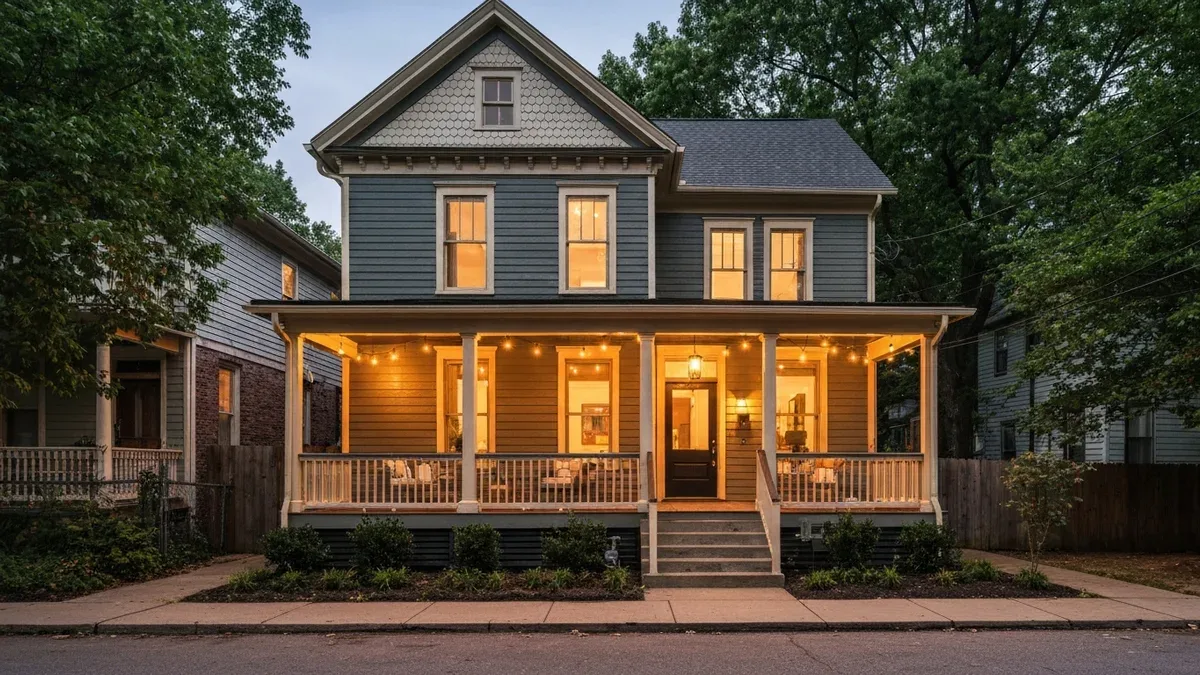
Read that again, because it's the part people skip. Most of the neighborhoods you're picturing — the streets in East Nashville, Germantown, Sylvan Park, 12 South, The Nations — are residentially zoned. If you buy a typical house in one of those areas hoping to run it as a pure investment short-term rental, you very likely cannot get a new non-owner-occupied permit for it.
Where new NOO permits can still be issued is a specific list of commercial and mixed-use districts: MUN, MUL, MUG, MUI, OG, the OR20 through OR40-A range, ORI, CN, CL, CS, CA, CF, the Downtown Code (DTC) districts, and the SCN, SCC, and SCR zones. These are generally areas built for or near commercial activity, not quiet residential blocks.
Before you make an offer on any Nashville property with STR income in mind, pull the exact zoning designation for that parcel and confirm it against the current NOO-eligible list. A property two blocks from a permitted one can be zoned R and completely off-limits for a new non-owner-occupied permit. Don't take a listing agent's word for it — verify the zoning yourself and confirm the current Metro Nashville STRP rules.
The grandfathering trap
You'll hear about "grandfathered" permits, and it's worth understanding exactly what that does and doesn't buy you. Existing NOO permit holders in the restricted residential zones may be able to renew their permits. But those permits are not transferable when the property sells or changes hands. So if you buy a residentially-zoned house that already has an active NOO permit, that permit does not come with the house — it retires with the seller, and you can't get a new one in that zone.
This turns "it's already an Airbnb, so I can keep running it" into one of the most expensive assumptions in this market. The listing may be live today and dead the day you close. If a property's whole pitch is its existing short-term rental income, that's a signal to slow down and verify, not to move fast.
The entity problem
There's a wrinkle that trips up a lot of investors coming from other markets. Owner-occupied permits require the owner to be a natural person — a real human being on the deed, not an LLC, corporation, or trust. Plenty of investors are used to holding property inside an entity for liability and tax reasons, and in Nashville that structure closes the owner-occupied door entirely. If you want the owner-occupied path, the property has to be in your personal name and you have to actually live there.
Non-owner-occupied permits, by contrast, require the ownership to match the deed recorded with the Davidson County Clerk. So whatever ownership structure you choose, it has to be consistent between the deed, the permit application, and how you actually operate. Don't try to reverse-engineer this after closing. Decide the ownership structure and the permit path together, before you buy, and confirm the current requirements with Metro Nashville — because the interplay between how you hold title and which permit you qualify for is exactly the kind of detail that changes.
The bedroom cap
Both permit types are capped at four sleeping rooms. A home with five or more bedrooms can't be permitted as a short-term rental at all under the standard rules. That matters if you're eyeing a big group-friendly house for bachelorette parties — the math on a large property assumes a headcount the permit won't support. Design your acquisition around four sleeping rooms or fewer.
What the Nashville short-term rental market owes in taxes
Taxes here aren't optional and they aren't small, so build them into your numbers from day one. There are two layers to know: the local occupancy tax and sales tax.
- Hotel occupancy privilege tax. Metro Nashville levies a local occupancy tax on short-term stays. Following changes that took effect in 2023, the local occupancy levy is 7%, plus a flat nightly fee of $2.50 per night. You can see the city's own occupancy-tax pages through Metro Nashville Finance.
- Sales tax. On top of that, short-term stays are subject to Tennessee's state sales tax plus the local sales tax, which together run in the low-9% range in Davidson County.
- The nightly flat fee. The $2.50-per-night charge is separate from the percentage taxes and applies per room-night. On short bookings it's a rounding error; on a busy year it adds up.
Add it up and a Nashville guest is typically paying something in the neighborhood of 16% in combined taxes plus the nightly fee on top of your rate. Some of this gets collected and remitted by the marketplace — Airbnb and Vrbo handle certain occupancy taxes on your behalf — but not always all of it, and the responsibility to be compliant is still yours. Returns to the city's Collections Office are generally due by the 20th of the following month.
Why does this matter to your numbers? Because it changes what a guest is willing to pay for your base rate. A guest comparing two similar houses sees the all-in price, not your nightly number. If your rate plus taxes plus cleaning fee lands well above a comparable listing, you lose the booking — even if your "rate" looked competitive on its own. The tax load is fixed and out of your control, so the levers you actually have are your base rate, your cleaning fee, and the perceived value of the stay. That's another reason marketing and presentation matter more here than in a lower-tax market: you're fighting for the same guest at a higher sticker price, so the listing has to justify it.
Keep clean records from night one
Whatever the platform remits, keep your own records of every booking, every tax collected, and every remittance. If the city or state ever questions a filing, "Airbnb handled it" is not a substitute for your own paper trail. Set up your bookkeeping before your first guest, not after your first tax notice. This is genuinely a place to spend a couple of hours with an accountant who has Nashville STR clients — the cost of that conversation is trivial next to the cost of a compliance problem, and the rules around what the marketplace collects versus what you file directly do shift over time.
None of this is tax advice, and the split between what the platform remits and what you remit changes over time. Confirm exactly which taxes your marketplace collects, which ones you're responsible for filing directly, and your remittance deadlines with Metro Nashville and your accountant. Getting a notice for back taxes you assumed were handled is a bad way to learn the difference.

The demand engine: why beds stay full
Here's what makes people want in despite the permit hurdles. Nashville pulls a very large volume of visitors to the metro each year, and — unlike a beach or ski town — the demand isn't stacked into one season. It's spread across a calendar of overlapping reasons to come.
The bachelorette machine
Nashville is, for better or worse, the bachelorette-party capital of the country. Lower Broadway's pedal taverns, rooftop bars, live-music honky-tonks, and photo-ready storefronts create a self-reinforcing content loop — every group that comes posts, and every post recruits the next group. That makes most Friday-through-Sunday windows from roughly April through October a soft peak. Group-friendly houses within an easy ride of Broadway are the properties chasing this crowd.
Country music and Lower Broadway
The honky-tonks run year-round, and country-music tourism is a constant baseline under everything else. Then the calendar spikes: CMA Fest takes over downtown for four days in early June 2026, with more than a hundred artists and a citywide surge in arrivals. Festival weekends like that are when nightly rates jump and short-notice bookings pour in.
Sports and conventions
- Football. Titans home weekends bring regional drive-in traffic on top of whatever else is happening.
- Hockey. The Predators' NHL season runs October through April, and home dates add weeknight demand around Bridgestone Arena downtown.
- Soccer. Nashville SC's MLS season layers in more spring-through-fall weekends.
- Conventions and corporate groups. The convention business and Nashville's growing status as a healthcare and tech hub feed steadier, midweek, less party-driven demand — the kind that fills the shoulder nights bachelorette groups don't.
That mix is the real story of the Nashville short-term rental market: no single event carries the year, but there's almost always something driving arrivals. It's why occupancy holds up across more of the calendar here than in markets that live and die on one season.
The two-track demand you're serving
It helps to think of Nashville demand as two distinct tracks, because they book differently and they want different things. The first is the celebration track — bachelorette and bachelor parties, girls' trips, birthday weekends, wedding guests. They come in groups, they book weekends, they plan around content and nightlife, and they're the highest-paying nights on the calendar. The second is the everyday track — convention attendees, business travelers, relocating families touring the city, sports fans, couples on a long weekend. They fill the weeknights and shoulder seasons the celebration crowd skips.
A listing that only chases the celebration track sits empty Monday through Thursday and in January. A listing that only serves quiet business travelers leaves the premium weekend money on the table. The strongest Nashville operators design for both — a property and a listing that reads as fun and photogenic to the group crowd but also clean, comfortable, and well-run to the business and couples crowd. That dual appeal is what keeps a calendar full across the wide seasonal spread this market has.
Map your pricing calendar to Nashville's event schedule at least a year out — CMA Fest, Titans and Predators home dates, big conventions, and marathon weekends. These are the nights where the difference between a lazy flat rate and event-aware pricing is enormous. If you want the mechanics of doing this well, our guide to dynamic pricing for Airbnb breaks down how to price around demand spikes without leaving money on the table.
Neighborhoods that actually work
Assuming you've cleared the permit question, location still decides your rate and your occupancy. Here's how Nashville's most-searched areas stack up for a short-term rental — with the reminder that in the residentially-zoned ones, a new pure-investment NOO permit generally isn't on the table, so these matter most for owner-occupied setups or for parcels that happen to sit in eligible zoning.
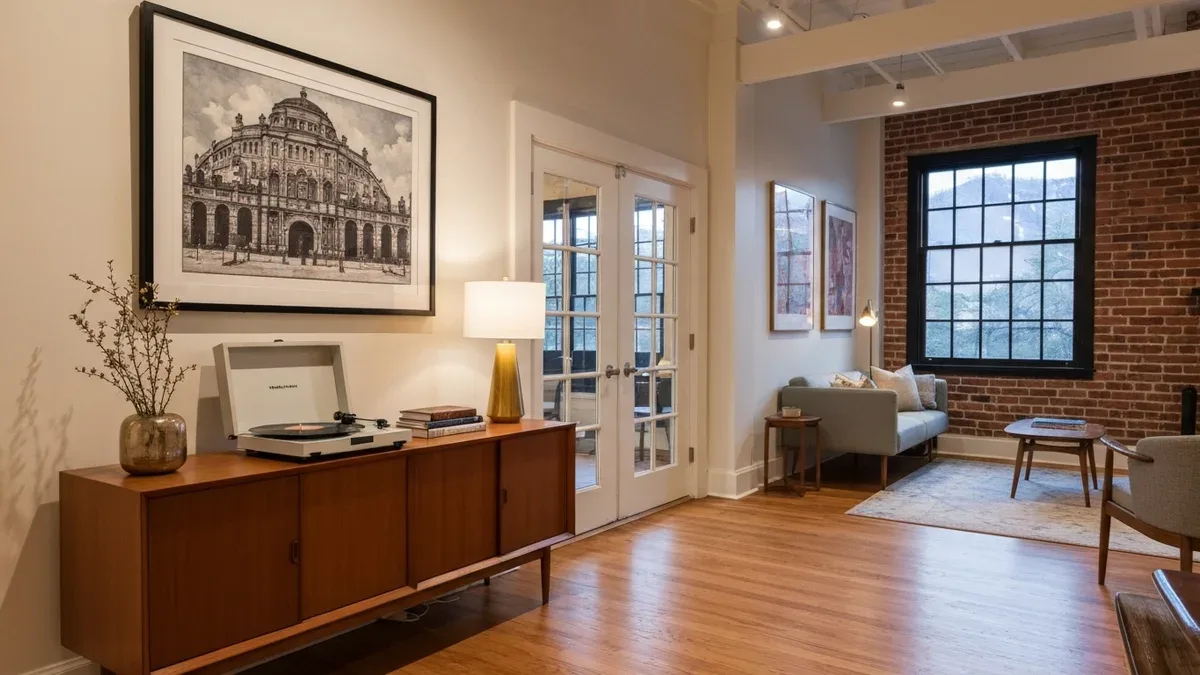
East Nashville
Trendy, creative, and hugely popular with travelers who want the local, artsy version of Nashville rather than the Broadway circus. Great restaurants, a strong music scene, walkable pockets like Five Points. Guests love it — but it's largely residential zoning, so watch the permit path carefully.
Germantown
Historic, walkable, packed with renovated warehouses, well-regarded restaurants, and boutiques, and close enough to walk downtown. It reads as upscale and photographs beautifully, which helps your listing stand out. Consistently named among the better areas to own a Nashville rental.
The Gulch
An up-and-coming, high-density area of trendy boutiques, restaurants, and rooftop bars, right next to downtown and Music Row. The South Gulch in particular shows up on lists of the best areas to buy, partly because more of it sits in the kind of zoning that keeps STR options open.
12 South
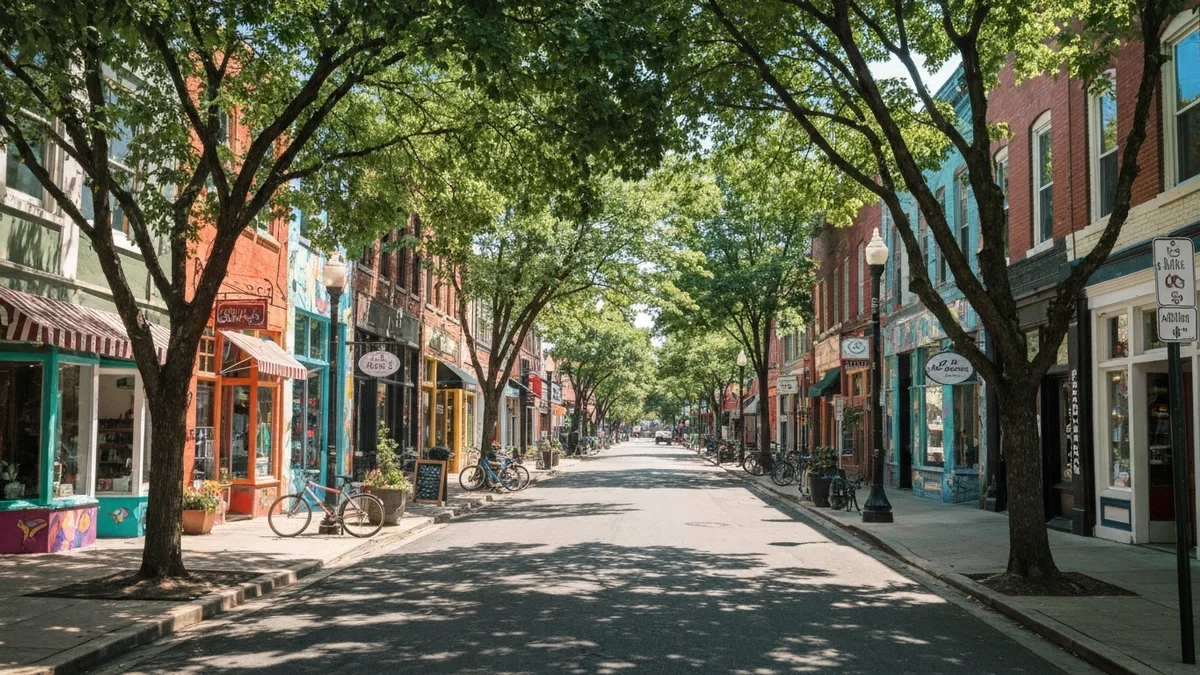
Tree-lined streets, historic homes, boutique shopping, and some of the city's best coffee and restaurants. It's charming and very Instagram-driven, which suits the bachelorette and girls'-trip crowd. Residential character, so again — verify zoning before you count on rental income.
Music Row and Wedgewood-Houston
Music Row keeps you close to the industry mythology and within reach of Broadway, and it shows up repeatedly among the top areas to buy for 2026. Wedgewood-Houston (WeHo) has become a magnet for breweries, distilleries, and galleries, minutes from The Gulch and 12 South — a neighborhood on the way up that appeals to guests who want character without being on top of the honky-tonks.
How to choose
- Zoning first, charm second. A gorgeous 12 South bungalow you can't legally rent is worth nothing as an STR. Start every search from the eligible-zoning list, then filter for the neighborhoods you like.
- Walkability to a demand anchor. Proximity to Broadway, a stadium, or a walkable food-and-drink strip directly drives your rate and your reviews.
- Match the property to the guest. A four-bedroom near Broadway is a bachelorette machine; a stylish two-bedroom in Germantown is a couples-and-conventions play. Different pricing, different photos, different marketing.
Rates and seasonality
Nashville has real seasonality, and understanding it keeps you from panicking in January and coasting in October. Market data platforms like AirDNA consistently describe a market where fall is the strongest stretch and the dead of winter is the softest.
- Peak. October tends to be the strongest month, with spring — around March and April — close behind. Fall events, comfortable weather, and steady sports and convention demand stack up.
- Trough. January is the clear low point. Cold, post-holiday, and light on events. Expect your softest occupancy and rates here.
- The spread is wide. The gap between a strong October and a weak January is dramatic in this market, which is exactly why flat pricing leaves so much on the table.
Performance also varies enormously by how well a property is run. The published market data shows a huge distance between the top tier of listings and the bottom — best-in-class properties post occupancy and nightly rates several times higher than entry-level listings in the same city. That gap isn't luck. It's photography, pricing, reviews, amenities, and responsiveness. In other words, it's marketing and operations, which is the part you actually control.
Run your own pro-forma against current, sourced numbers rather than the averages you see in a headline — and remember that supply keeps growing in Nashville, so the returns aren't automatic. Confirm today's occupancy and rate data for your specific submarket before you buy.
Amenities guests here reward
Nashville guests, especially the group and celebration crowd, book on a fairly predictable set of features. If you're competing for the higher-rate nights, these move the needle:
- Sleeping capacity within the four-room cap. Comfortable, real beds for a full group — not air mattresses in the living room. The cap is four sleeping rooms, so make each one count.
- A photogenic common space. Groups plan their content around the house. A great kitchen island, a mural wall, a rooftop or porch — these show up in the photos that sell your listing to the next group.
- Parking and ride-share ease. Downtown parking is a headache. On-site parking, or a clearly easy ride-share situation, is a genuine selling point.
- Proximity you can prove. "Walk to Broadway" or "five minutes to the stadium" belongs in your title and your first photo caption, not buried in paragraph three.
- Clear house rules. Given the party reputation, guests who want a calm stay actively look for well-run, respectful listings, and guests who want to party need to know your limits up front.
The single cheapest upgrade to a Nashville listing is better photography and a rewritten first three photos. The lead image and the first two after it decide whether a guest keeps scrolling. If your listing looks like every other beige rental, you're competing on price alone — and in a market with growing supply, that's a losing game. Our listing optimization work exists for exactly this.
The party-house risk you have to manage
The bachelorette demand is a gift and a liability at the same time. Nashville's reputation for group celebrations means noise, occupancy, and neighbor complaints are live issues, and the city and neighborhoods pay attention. A few complaints can put your permit — and your listing — at real risk.
Protect yourself deliberately:
- Cap occupancy honestly and enforce it. Don't quietly allow 14 people into a house rated for 8. Overcrowding is exactly what draws complaints.
- Use noise monitoring. Decibel monitors that alert you (without recording audio) let you catch a party before a neighbor calls the city.
- Screen and set expectations. Be explicit in your listing and your booking messages about what kind of stay you host. Attracting the right guest is easier than policing the wrong one.
- Be a good neighbor. The hosts who last in this market are the ones neighbors don't dread. That's not just goodwill — it's permit survival.
Regulations around events and party houses evolve, and Nashville has shown it will tighten when problems mount. Keep an eye on the rules and confirm the current Metro Nashville STRP requirements each renewal cycle rather than assuming last year's terms still hold.
Marketing and distribution
Here's the part hosts underinvest in, and it's the part that actually separates the top tier from the bottom. In a market with rising supply and a permit system that limits how many players there are, the winners aren't the people with the most properties — they're the people whose listings convert.
Don't live and die on one platform
Airbnb and Vrbo are the front door for most Nashville guests, but leaning entirely on them means paying their fees on every booking and living at the mercy of their algorithm. The strongest operators build a second channel: a direct booking website where repeat guests and referrals can book you without the platform in the middle. In a group-travel market where one bachelorette guest becomes next year's bride's-friend booking, direct relationships compound.
Show up where the guests already are
The Nashville guest — especially the celebration traveler — lives on Instagram and TikTok. A property that photographs and films well can market itself if you feed it. Short vertical video of the space, the neighborhood, and the walk to Broadway does more for a Nashville listing than almost any paid ad. If you want a playbook, our guide to Instagram Reels for short-term rental marketing lays out how hosts turn a phone camera into bookings, and our social media work handles it for owners who'd rather not.
Get found in search
Plenty of guests still start with a search — "Nashville bachelorette house," "Germantown Airbnb near Broadway." A direct site with real content around those searches earns bookings that never touch a platform fee. That's where SEO for a rental site pays for itself over time.
Looking beyond Nashville
If Nashville's permit reality closes more doors than you'd like, it's worth knowing the rest of Tennessee runs on different rules and different demand. We cover the wider picture in our overview of short-term rental regulations across US cities in 2026, and Cavmir helps hosts market and optimize rentals in markets around the region.
- Chattanooga. A growing outdoor-and-riverfront destination with its own rules and a different guest profile. See our market page for Chattanooga, Tennessee.
- Gatlinburg. The Smokies cabin market — a completely different animal, driven by nature tourism and large group cabins rather than downtown nightlife. See Gatlinburg, Tennessee.
- Nashville itself. For hosts already in Music City who want to sharpen their marketing, start at our Nashville, Tennessee page.
Different markets, different rules, same principle: the operators who win are the ones who verify the regulations first and market the property properly second.
Nashville STR FAQ
Can I buy a house in East Nashville just to run it as an Airbnb?
Probably not as a pure investment. Most of East Nashville is residentially zoned, and the city no longer issues new non-owner-occupied permits in R, RS, RM, and AR2A zones. If you live in the home, an owner-occupied permit is generally possible. If you don't, you're looking at eligible commercial or mixed-use zoning instead. Confirm the specific parcel's zoning and the current Metro Nashville STRP rules before you buy.
Does an existing Airbnb come with its permit when I buy the property?
No. Non-owner-occupied permits in the restricted residential zones are not transferable when the property sells. An existing permit retires with the seller, and you can't get a new one in that zone. Never pay a premium for "existing STR income" without verifying the permit will survive the sale.
How many bedrooms can I rent?
Both permit types cap at four sleeping rooms. A five-plus-bedroom house can't be permitted as a standard short-term rental, which matters if you're chasing large groups.
What taxes will my guests pay?
Expect a local hotel occupancy tax (7% plus a $2.50-per-night flat fee following 2023 changes) on top of state and local sales tax in the low-9% range — roughly 16% combined plus the nightly fee. Some is collected by the booking platform; some may be your responsibility to remit by the 20th of the following month. Confirm the exact split and your filing obligations with Metro Nashville and your accountant.
When is the best time to charge more?
October is typically the strongest month, with spring close behind, and January the softest. Layer event-based pricing on top — CMA Fest, sports home dates, big conventions — and you'll capture the nights flat pricing misses.
Is Nashville still a good STR market in 2026?
Demand is real and diverse, but supply keeps growing and the permit system limits where you can operate. It rewards operators who buy in eligible zoning and market well, and punishes people who assume they can rent anything anywhere. Run current, sourced numbers for your specific submarket.
Where Cavmir fits
Cavmir isn't a property manager and doesn't run rentals — we help Nashville hosts market and optimize them. If you've done the permit homework and you've got a property that's eligible to operate, the next question is whether it's actually earning what it should. That's usually a marketing problem, not a market problem. Better photos, sharper pricing, a direct booking channel, and social content that reaches the guests already searching for Nashville can move a listing from the middle of the pack toward the top tier.
If you'd like a straightforward look at where your Nashville listing is leaving money on the table, take a look at our listing optimization work — or start with the Nashville market page and tell us about your property. No pressure, and no jargon.