Walnut Street Bridge
Walk it early, when it's runners and river fog instead of crowds. One of the longest pedestrian bridges in the world, connecting downtown to North Shore — and if your listing is walkable to it, that walk is your opening photo.
Expert short-term rental marketing to grow your bookings and nightly rate in Chattanooga, Tennessee, USA.
* Market averages. Cavmir-managed properties typically exceed these figures by 25–45%. Data sourced from AirDNA, STR market reports, and Cavmir internal analytics.
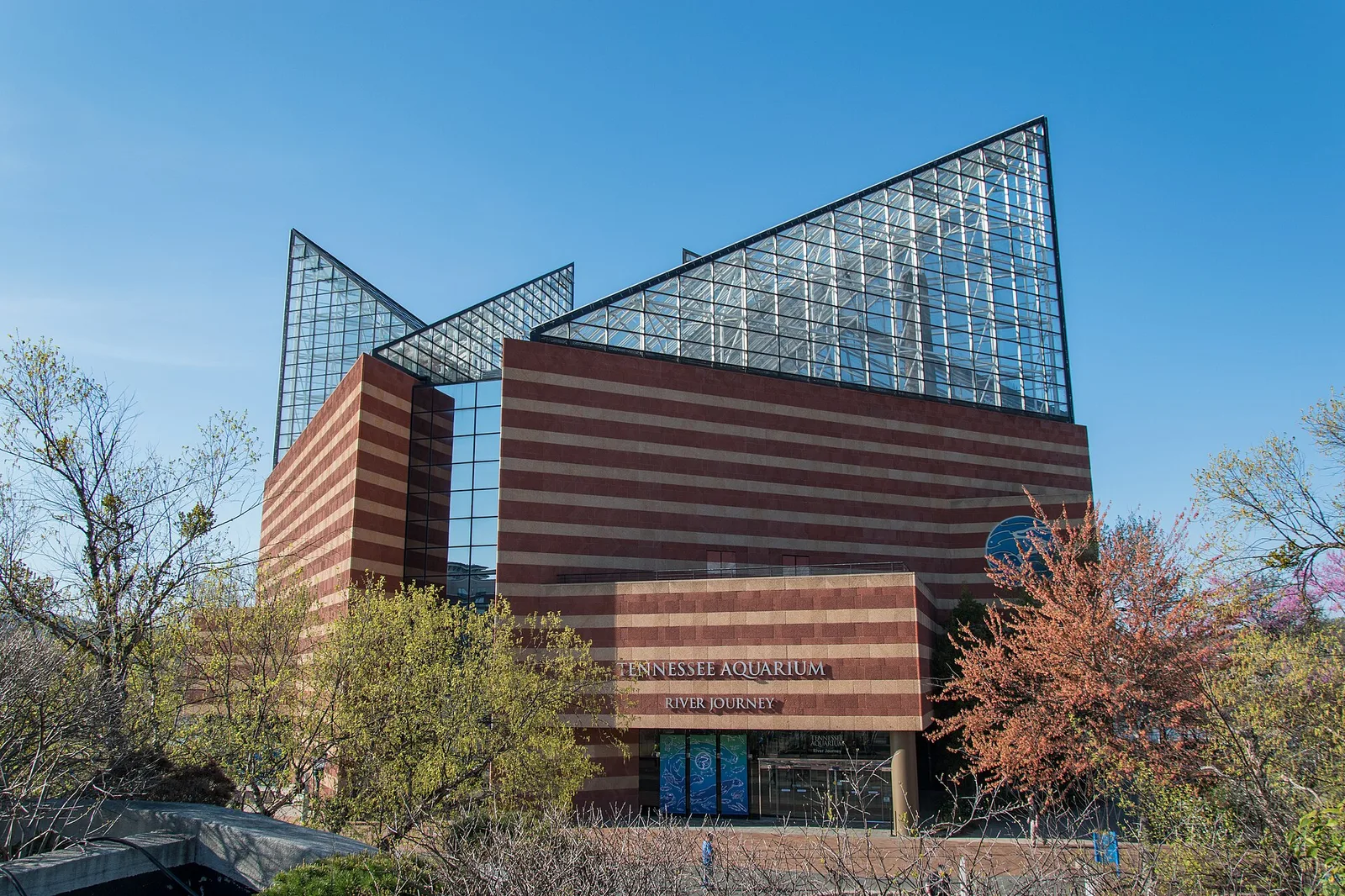
Chattanooga sits in a bend of the Tennessee River between Lookout Mountain and Signal Mountain, and it's quietly become one of the better small-city short-term-rental markets in the Southeast. The riverfront has the Tennessee Aquarium and the Walnut Street Bridge — one of the longest pedestrian bridges in the world — the Southside has the Chattanooga Choo Choo and a real restaurant scene, and the outdoors are the actual product: hang gliding off Lookout, climbing at Sunset Rock, mountain biking on Raccoon Mountain. Guests are weekenders from Atlanta and Nashville, both about two hours away. The catch is that Chattanooga regulates hard: where your property sits on the zoning map decides whether you can operate at all.
Chattanooga runs around $185 a night at mid-50s occupancy — modest numbers next to the cabin markets, but with a lower cost of entry and steadier midweek business from the city's events and business travel. October is the strongest month, driven by fall color on the mountains and a packed event calendar; January is the softest. The guest mix is broad: couples doing a food-and-outdoors weekend, families visiting the Aquarium and Rock City, Ironman athletes and their families in September, and rowing crowds for the Head of the Hooch regatta in November. Neighborhood matters enormously — North Shore, Southside and St. Elmo walkable listings outperform car-dependent ones by a wide margin.
Nearby Markets: Gatlinburg | Blue Ridge | Nashville

A few of the visual fingerprints we lean into when we shoot, brand and market a Chattanooga property — courtesy of the open Wikimedia Commons archive.
Cavmir wins in Chattanooga because the supply that's allowed to exist here is limited, and the owners who hold a valid certificate are sitting on scarcity most of them don't market. We shoot the listing so the bridge, the mountains and the neighborhood do the selling, write copy around the specific weekend a guest is actually planning, and build a direct-booking website so your repeat Atlanta and Nashville guests skip the platform fee the second time. Vacation rental marketing here is about earning the weekend booking before your competitor does. We help position and market your property. We never manage it or touch your keys.
Chattanooga grew where the Tennessee River cuts through the Appalachians — a natural crossroads the Cherokee knew long before the town took its name, likely from a Creek word for Lookout Mountain. The railroads made it a strategic prize; in 1863 the battles of Lookout Mountain and Missionary Ridge broke the Confederate hold on the city and opened the Deep South to Sherman. After the war the rails made it an industrial power — the 1941 Glenn Miller song 'Chattanooga Choo Choo' was about a real route into a real terminal, and in 1899 two local lawyers bought the rights to bottle Coca-Cola here, launching the franchise system that carried the drink around the world.
By 1969 the industry had a cost: federal officials called Chattanooga's air the dirtiest in America. The city spent the next four decades on one of the country's most complete downtown turnarounds — the Tennessee Aquarium opened on the riverfront in 1992, the Walnut Street Bridge was saved from demolition and reopened as one of the world's longest pedestrian bridges, and in 2010 the municipal utility made Chattanooga the first US city with citywide gigabit internet, earning it the 'Gig City' name and a wave of remote workers. Today's short-term-rental inventory maps onto that revival: renovated bungalows in North Shore and St. Elmo, converted lofts on the Southside, and view homes up Lookout and Signal Mountains, owned by a mix of local hosts and small investors — operating under some of the tightest zoning rules in Tennessee, which keeps professional supply scarcer than demand would suggest.
Chattanooga runs around $185 a night blended at occupancy in the mid-50s — an accessible price of entry by cabin-market standards. North Shore and the Southside command the premiums: walkable, restaurant-dense, and exactly what a weekending Atlanta couple wants. St. Elmo, at the foot of Lookout Mountain by the Incline Railway, is the character pick and books strongly with outdoors guests. Lookout and Signal Mountain homes trade walkability for views and win larger family groups. Well-run two- and three-bedroom listings in the walkable neighborhoods meaningfully outperform the blended average, especially across October's event calendar; car-dependent listings on the fringes are the ones that struggle to hold rate.
October is the strongest month — fall color on the mountains, festival weekends and near-perfect hiking weather stack demand deep. The season really runs April through November, with summer families around the Aquarium and a heavy fall event calendar. January and February are the soft floor. The overlooked play is midweek: the Gig City's business and remote-work traffic gives well-located listings a weekday base that pure vacation markets never see, and almost nobody markets to it deliberately.
Chattanooga is the heavy-regulation story of this batch — the city decides by zoning map who gets to operate at all. Every short-term rental needs a Short-Term Vacation Rental (STVR) certificate from the city, and the rules split sharply by type. Homestay rentals (owner-occupied) are broadly permitted in residential zones with a roughly $250 application. Absentee rentals (non-owner-occupied — the standard investor model) carry a roughly $500 application and are only allowed in specific commercial and mixed-use zones that permit hotels; they are effectively excluded from ordinary residential neighborhoods.
Applications go through the city's online portal with proof of ownership, insurance, a City business license, floor and site plans and an emergency escape plan, and certificates renew annually. As of January 1, 2026, the city also requires the STVR certificate to be physically posted inside the unit, with a photo submitted at renewal. Life-safety requirements — smoke and CO detectors, posted owner contact — apply to everyone.
Two practical consequences. First, verify zoning before you buy anything: a house two streets outside an eligible zone is not a rental, and no amount of marketing fixes that. Second, existing certificates in eligible locations are genuinely scarce assets. Rules like these change and get litigated — Tennessee courts have shaped STR law before — so confirm the current ordinance and your parcel's eligibility with the city in writing before committing money.
The Chattanooga strategic tip: if you hold a valid certificate in an eligible zone, you own something scarce — market it like you know that. The zoning rules cap professional supply well below what demand supports, which means the compliant operator's real competition is a smaller pool than the map suggests. Most of that pool is under-marketed.
Tactically: first, sell the neighborhood, not just the house. A North Shore listing that opens with the Walnut Street Bridge two blocks away, or a St. Elmo listing built around the Incline Railway and the trailheads, converts far better than interior shots alone — Chattanooga guests are buying a weekend, and the weekend happens outside. Second, build your calendar around the event spikes: Ironman week, Head of the Hooch, October's festival weekends all deserve their own pricing set months out. Third, chase the midweek base. Remote workers and business travelers keep this market breathing Monday to Thursday; fast wifi, a real desk and photos that prove both are cheap upgrades with an outsized return. Fourth, put a direct-booking website in place early — Atlanta and Nashville weekenders repeat often, and at Chattanooga's price point the platform fee is a big slice of a modest nightly rate. Fifth, keep your compliance visible: post the certificate, mention it in the listing, and let the guest see a professionally run operation. In a strictly regulated city, looking legitimate is a conversion advantage, not just a legal one.
The obvious one: zoning. The absentee model is locked out of residential neighborhoods, which removes most conventional investment inventory from play — and rules here have shifted before, so regulatory risk never fully goes away. Rates are modest, so thin-margin operators feel every soft month. January and February are genuinely slow. And the walkable core is small: buy outside it and you're marketing against the very thing guests came for.
Skip the assumption that a homeowner's policy has you covered — commercial short-term renting needs a short-term-rental or landlord policy with proper liability limits, and Chattanooga's STVR application requires proof of insurance anyway. Ask about liability riders for any hot tub or balcony, loss-of-income coverage, and — for mountain and creekside properties — where wind, tree-fall and water damage actually sit in the policy. A local agent who writes Hamilton County rentals will get this right faster than a call center.
Short-term rentals in Chattanooga are taxed like lodging. Plan on combined Tennessee state and local sales tax of about 9.25%, plus a Hamilton County hotel/occupancy tax of roughly 4% on top. The platforms collect some of this automatically; you remain responsible for the remainder and for every tax on direct bookings. Tennessee has no state income tax on wages, which helps the net picture. Rates and filing rules shift, so confirm the current stack with your accountant before you set prices.
At Chattanooga's price point, conventional investment loans with 15-25% down are the standard path, and DSCR loans work well for properties with documented rental history. The zoning rules add a lender wrinkle worth knowing: financing depends on the property's permitted use, so an absentee-eligible property in a commercial zone may underwrite differently than a house. Get the STVR eligibility question answered in writing before the loan application, and work with a lender who has closed short-term-rental deals in Hamilton County before.
Chattanooga's trajectory looks steady rather than explosive, and for a compliant owner that's the good version. The city keeps investing in the riverfront and the outdoor economy, the Gig City remote-work pipeline keeps midweek demand alive, and Atlanta and Nashville keep growing two hours away in either direction. Meanwhile the zoning regime acts as a permanent cap on professional supply — new absentee competitors can't simply appear on your street. The likely regulatory direction is more enforcement polish, not liberalization, which favors established certificate holders. The five-year play is owning an eligible, well-located property, running it visibly by the book, and building the direct repeat-guest base that a drive-to weekend market naturally feeds. Scarcity plus presentation is a durable combination here.
Chattanooga is one of those cities that's better than its search results. The material is genuinely good — a river through the middle of downtown, a mile-long pedestrian bridge, two mountains with trailheads twenty minutes from the coffee shops, and a comeback story from 'dirtiest air in America' to Gig City that locals will tell you unprompted. But most listings here sell a bed near an aquarium. The gap between what the city offers and what the average listing says is exactly the kind of gap we like working in.
We also love what the zoning rules do for a well-run operator. Chattanooga made the absentee model scarce on purpose, which means the owners who hold valid certificates in the right zones are protected from the supply floods drowning other markets — and most of them are sitting on that advantage without marketing it. Give us a certificate holder in North Shore or St. Elmo and a weekend's shoot on the bridge and the mountain, and we've got a listing that owns its street. Scarcity plus story is the best combination in this business, and Chattanooga hands you both.
A great property in Chattanooga doesn't just want a listing — it wants a point of view, an audience, and a brand the city itself would recognise.
Honest picks from Chattanooga — the specifics that make a listing and a guest guide read like a local wrote them. Real places, no filler.
Walk it early, when it's runners and river fog instead of crowds. One of the longest pedestrian bridges in the world, connecting downtown to North Shore — and if your listing is walkable to it, that walk is your opening photo.
The name isn't marketing — the short trail off Lookout's west brow ends at a ledge with the valley glowing below. It's the shot guests hike for, and the reason an evening arrival day should be in your guest guide.
Victorian houses at the foot of Lookout Mountain, the historic Incline Railway station, and a strip of restaurants and breweries at the trailheads. A listing here should sell the neighborhood as hard as the house.
A small bluff-top district above the river with restaurants, a sculpture garden and views across to the bridge. Dinner up here at dusk is the anniversary shot — and the aspirational image a couples-focused listing should lead with.
The MoonPie was born at Chattanooga Bakery around 1917, allegedly sized to a miner's request for a snack 'as big as the moon.' There's a MoonPie General Store downtown. Stock a few in the welcome basket — it's a two-dollar detail guests mention in five-star reviews.
One of the world's largest rowing regattas fills the riverfront with crews and their families just as leaf season ends. It's a demand spike in a quiet month that most hosts never price for.
The TVA's pumped-storage reservoir on top of the mountain is ringed with some of the Southeast's best mountain-bike trails and overlooks of the Tennessee River Gorge. The outdoors crowd books Chattanooga for exactly this — name it in your listing.
The Lookout Mountain trio — the See Rock City barns did their job for ninety years and guests arrive already sold. Your guide should answer the real questions: combo tickets, drive times, and when the Incline queue is shortest.
A few composite engagements drawn from how Cavmir typically works in Chattanooga. The situations are illustrative and consistent with this market, not pulled from a single named client.
A certified two-bedroom a short walk from Coolidge Park was presented like generic inventory — interior shots only, no neighborhood story — and losing weekend bookings to listings closer to nothing but photographed better.
Cavmir reshot the listing to open with the walk: the bridge, the park, the coffee shops, then the house. Copy was rebuilt around the car-free weekend, the certificate and license were made visible in the listing, and event weekends got their own pricing calendar.
Weekend occupancy firmed up ahead of comparable listings, October and event weeks began selling out early at stronger rates, and guest messages shifted from price questions to logistics questions — the sign the listing was selling the right thing.
A four-bedroom with a genuine brow view sat half-empty on weekdays and marketed itself only as a family getaway, missing the midweek remote-work and business traffic that keeps Chattanooga listings breathing Monday through Thursday.
Cavmir added a second listing narrative for the midweek guest — verified fast wifi, a real workspace shot properly, quiet and the view — alongside the weekend family story, and adjusted midweek pricing and minimum stays to match how that guest actually books.
Midweek nights that had gone dark started filling with two- and three-night work stays, blended occupancy rose without touching weekend rates, and the calendar stopped living and dying on Fridays.
A converted loft near the Choo Choo depended entirely on platform traffic in a neighborhood full of similar conversions, with no direct channel and no way to keep the Atlanta couples who came back two or three times a year.
Cavmir built the loft a direct-booking website with neighborhood-forward photography, set up email capture and a simple repeat-guest offer, and timed campaigns to past guests ahead of Ironman week, the Hooch and October's calendar.
Repeat guests began booking direct instead of re-finding the listing through a platform, event weeks filled earlier each cycle, and the owner gained a channel that didn't reset to zero every time the search algorithm shifted.
Talk to Cavmir today. We'll show you exactly what your Chattanooga property is leaving on the table — and how fast we can change that.
Book a Free Strategy Call