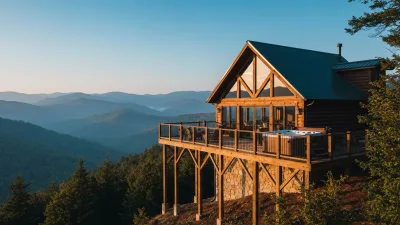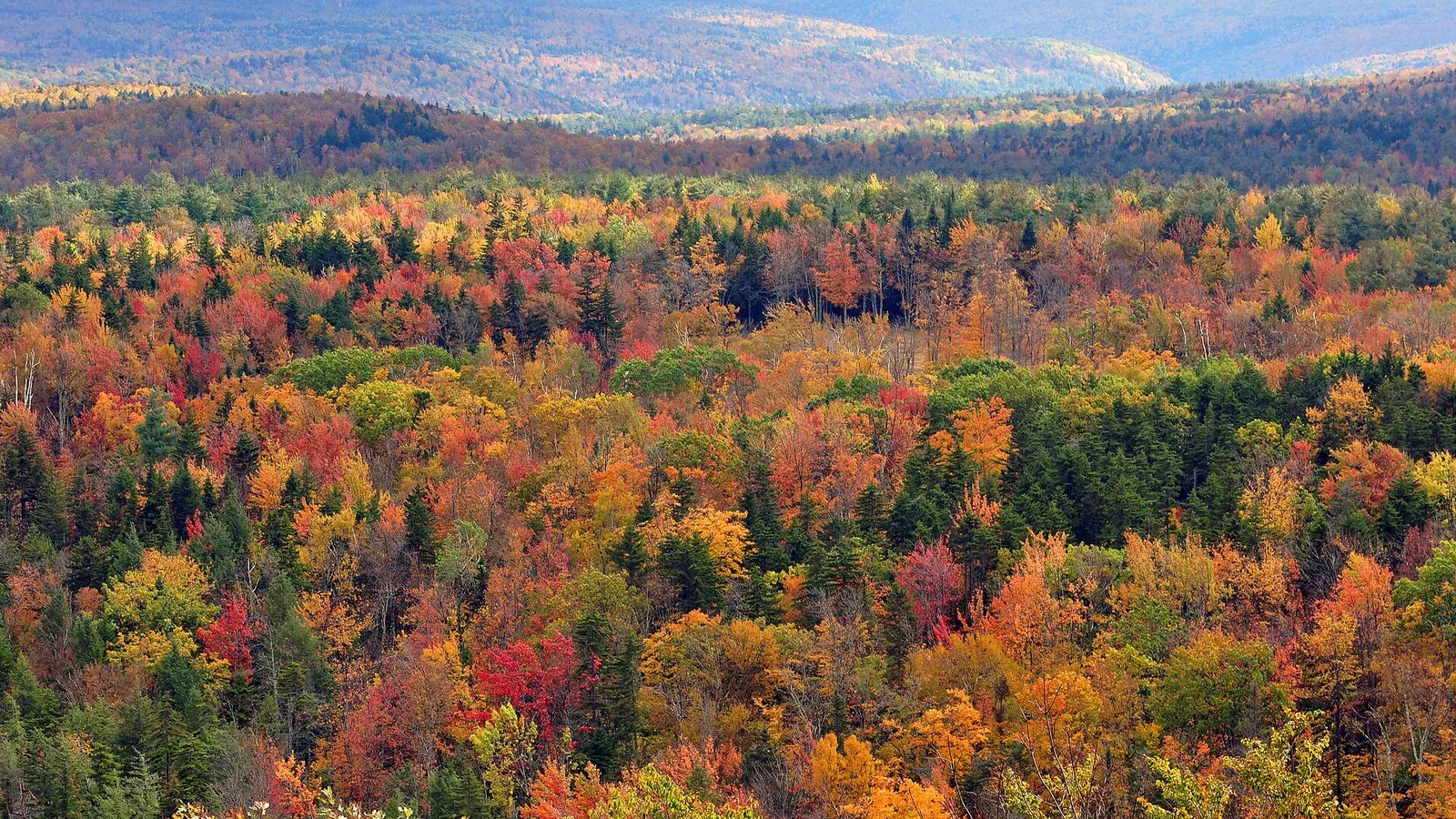
Marianne runs a three-bedroom farmhouse rental in Waterbury, Vermont, ten minutes from the Stowe turnoff, and every July her inbox does the same strange thing. While her neighbors with lake cottages are drowning in last-minute August requests, she's fielding inquiries for the first two weekends of October. From Texas. From Florida. From a couple in Phoenix who told her, in the inquiry message, that they'd been planning this trip since February and had a spreadsheet.
The first year she hosted, those messages confused her. It was ninety degrees outside. Who books a fall weekend before the corn is even tall? By her third year she understood: those October weekends aren't a booking, they're a pilgrimage. People plan leaf trips the way they plan anniversary dinners — early, deliberately, and with almost no price sensitivity. And she'd been renting those weekends out at her regular autumn rate, which she'd set by knocking a little off her summer number because, well, summer was the peak. Wasn't it?
Not in Waterbury. Not in Stowe, not in the White Mountains, not along the Blue Ridge Parkway, not in Door County. In America's leaf country, the peak of the year is a six-to-eight-week window when the hillsides catch fire in red and orange, every scenic byway turns into a slow-motion parade, and travelers who spend the other ten months being sensible about money decide that seeing it in person is non-negotiable.
Here's the thing you need to hear in July, while you're still thinking about pool toys: your fall calendar is being booked right now. This guide is about making sure the right guests, at the right rates, with the right minimum stays, are the ones filling it.
Six weeks that can pay like twelve
Most hosts price their year with a simple mental model: summer is the peak, winter is the trough (or the peak, if you're a ski market), and spring and fall are the shoulders. It's tidy. It's also wrong for an enormous swath of the country, and the error costs real money.
Fall foliage demand doesn't behave like shoulder-season demand. It behaves like event demand. Think of it less like "September" and more like a festival that happens to last six weeks and takes place across an entire mountain range. The audience is national — international, even, since leaf tourism draws visitors from countries that don't get this kind of color. The window is fixed by biology, not by school calendars, so guests can't shift their trip to a cheaper week the way a summer family can. If they want peak color in Stowe, they need one of maybe three weekends, and every other leaf-peeper in America wants the same three.
Compressed demand plus inflexible timing is the exact recipe that makes ski weeks and eclipse weekends expensive. Foliage has the same structure, and the hosts who treat it that way — event pricing, event minimums, event-level preparation — routinely find that late September through mid-October outearns any comparable stretch of their summer. Meanwhile the hosts who price it as "fall, so, slightly less than summer" are handing a discount to the least price-sensitive guests they'll host all year.
The mispricing persists because of a calendar illusion. In July, when smart hosts are reviewing their fall rates, the leaves are green and the demand is invisible. There's no line out the door to remind you. The demand lives in spreadsheets in Phoenix, in anniversary plans, in bus-tour itineraries locked months ago. By the time it becomes visible — when your October Saturdays start booking solid in August — the cheap rates are already locked in and you're watching your best weekends sell out at your worst prices. If you've read our summer peak-season booking playbook, the logic will feel familiar: the peak rewards whoever prepared before it arrived. Foliage just runs the whole play in fast-forward.
So the first move is a mindset move. Stop calling it fall. Start calling it leaf season, and treat it with the respect you'd give any six-week event that fills every hotel within fifty miles of a scenic overlook.
Vermont: the gold standard
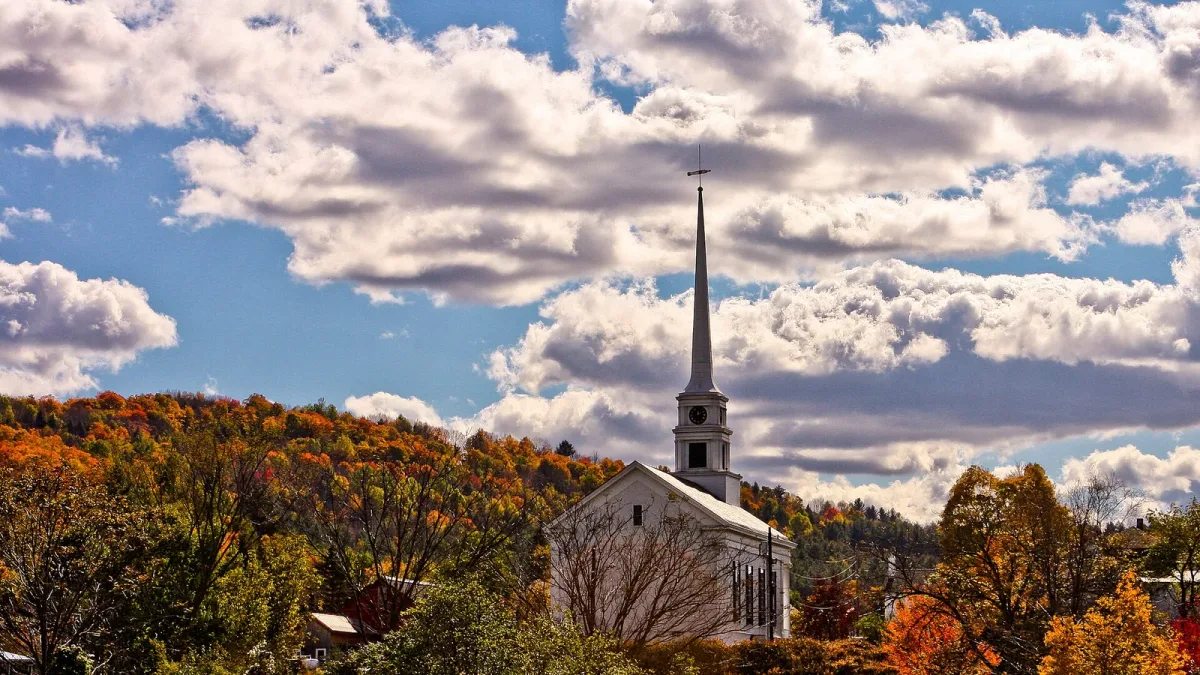
If leaf season has a capital, it's Vermont, and if Vermont has a main street, it's Route 100. The road runs north-south down the spine of the Green Mountains, stitching together the villages that appear on calendars and jigsaw puzzles: Stowe with its white church steeple against Mount Mansfield, Waterbury and its cider mills, Waitsfield and Warren in the Mad River Valley, and on south toward Weston and its country store. In late September and early October, Route 100 is less a road than a procession — rental cars from three time zones away, motorcoach tours, photographers pulled onto every gravel shoulder.
Stowe is the marquee name and prices like it. The village has spent a century building itself into a four-season resort town, which means restaurants that take reservations, a recreation path that runs through the color, and a gondola at the resort that carries leaf-peepers up Mansfield for the view from above. Woodstock, over in the Ottauquechee Valley, is the other postcard: the green, the covered bridge in the middle of town, Sleepy Hollow Farm just up Cloudland Road drawing so many photographers that the town has had to manage access during peak weeks. That last detail should tell you something about demand.
What makes Vermont special for hosts isn't just the color — northern hardwood forest, heavy on sugar maple, which turns the loudest reds and oranges in North America. It's the infrastructure of charm around the color: general stores, sugarhouses, farm stands with actual pumpkins, inns that have been photographing well since before photography. Guests don't come to Vermont to see leaves in the abstract. They come to drive slowly through a village, buy cider donuts, and feel like they're inside the calendar photo. A rental that understands this — woodsmoke, plaid blankets, a porch with a view of a hillside — isn't selling lodging. It's selling the scene.
Marianne's farmhouse books its two peak October weekends by early August in a normal year, and the guests who book them are the most organized people she hosts. They ask about restaurant reservations in their first message. They ask which weekend she thinks the color will peak — a question we'll teach you to answer properly later in this guide — and they never, ever ask for a discount.
New Hampshire's White Mountains and the Kancamagus
Cross the Connecticut River and the terrain gets bigger. New Hampshire's White Mountains trade Vermont's pastoral valleys for granite drama — Franconia Notch, Crawford Notch, Mount Washington brooding over everything — and the foliage drapes itself over all of it. The signature drive is the Kancamagus Highway, thirty-four and a half miles of Route 112 between Lincoln and Conway with no gas stations, no billboards, and, during peak color, some of the most contested overlook parking in America. People fly across the country to drive the Kanc in October. Locals know to drive it at seven in the morning.
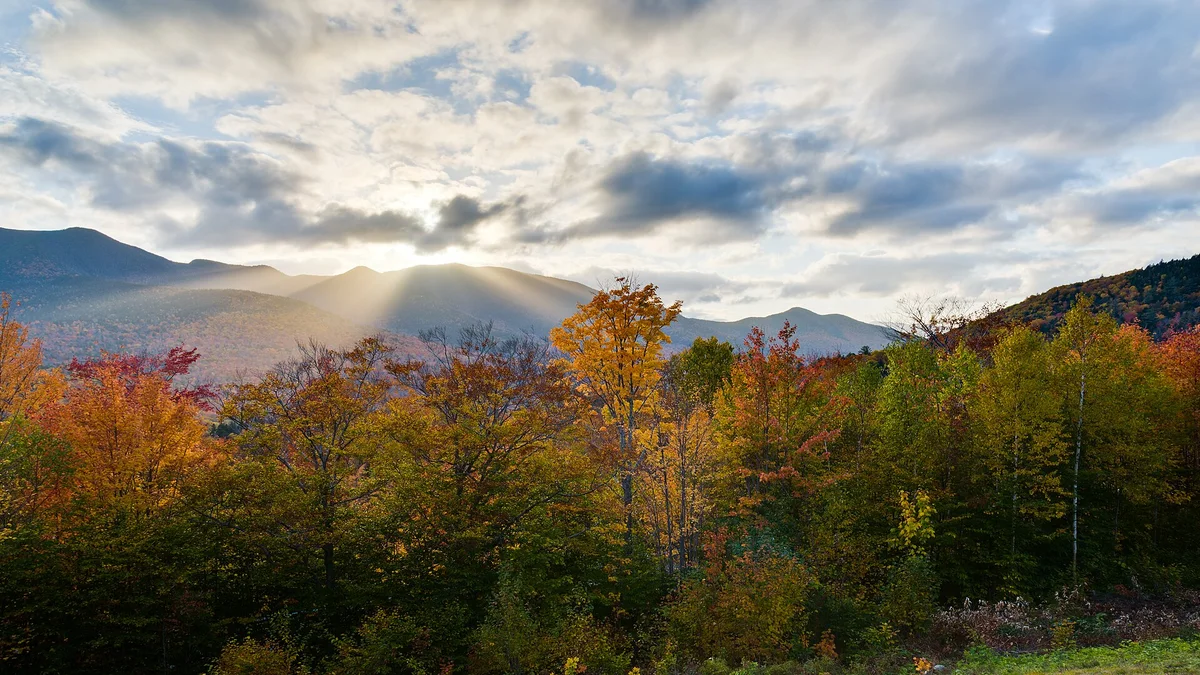
For hosts, the White Mountains market has a shape worth understanding. The gateway towns — Lincoln, North Woodstock, North Conway, Jackson, Bartlett — absorb most of the demand, and they're also ski towns, which means many rentals there already think in terms of peak pricing. But plenty of them aim their peak pricing at February and treat October as a pleasant surprise, which is the same underpricing mistake wearing a parka. If your cabin sits within striking distance of the Kanc, Franconia Notch State Park, or the Mount Washington Auto Road, your October Saturdays deserve the same pricing posture as your President's Day week.
New Hampshire also gives you a longer runway than you might think. Color starts in the far north — the Great North Woods around Pittsburg — in mid-to-late September, then rolls south through the notches and down toward the Lakes Region into mid-October. A host who understands that progression can honestly market three distinct windows: early color up high, peak in the notches, late color at lower elevations. That's not spin. That's geography, and it's a legitimate way to sell the weekends on either side of the obvious ones.
One more White Mountains note: this is bus-tour country, and bus tourists fill the hotels first. When the coach tours and the inns hit capacity on peak weekends — and they do — the overflow goes looking for exactly what you're offering. Your listing should be findable and photogenic well before that overflow starts searching, which is another argument for getting your fall act together in July.
The Smokies and the Blue Ridge Parkway
Now go south, where leaf season plays in a different key. The Great Smoky Mountains straddling Tennessee and North Carolina hold one of the most diverse forests in North America, and that diversity is a scheduling gift: with so many tree species turning at different times across five thousand feet of elevation change, the Smokies don't have a peak weekend so much as a peak month and a half. Color starts on the high ridges in late September and works its way downslope into early November. It's the longest foliage season of any major American leaf market, and it belongs to the most visited national park in the country.
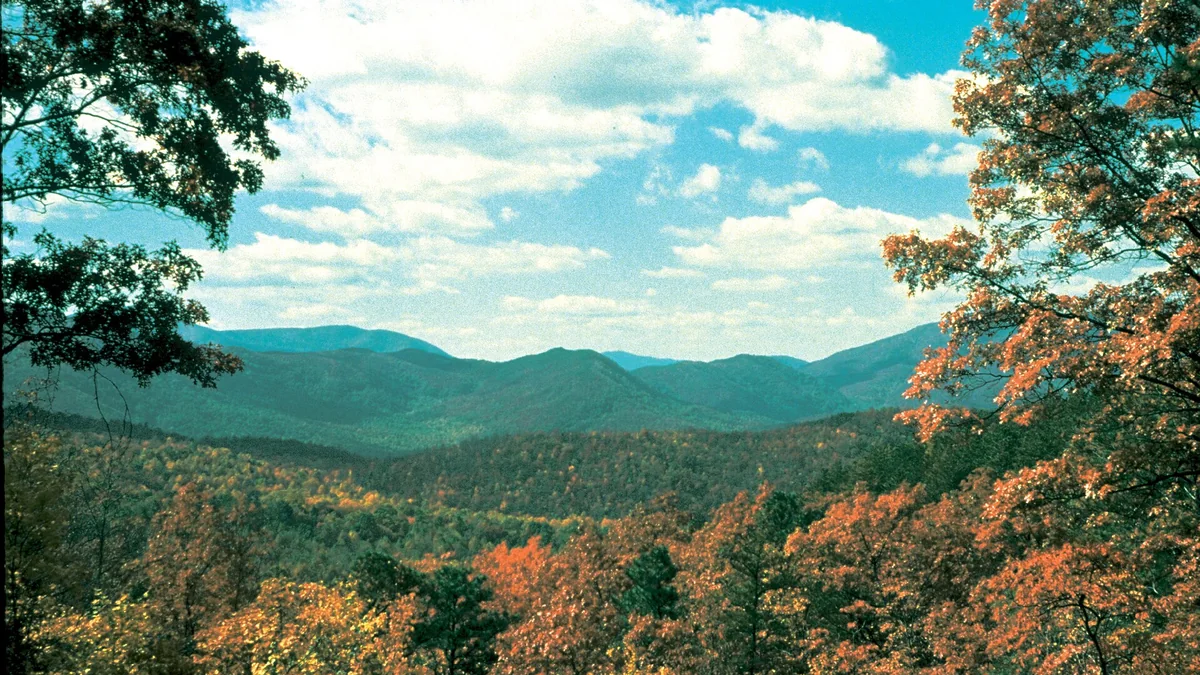
The host markets here are the big cabin economies: Gatlinburg, Pigeon Forge, and Sevierville on the Tennessee side; Bryson City, Cherokee, and Maggie Valley in North Carolina; Asheville playing the sophisticated anchor to the east. These markets live and die on cabins with views, and in October the view is the amenity. A deck that looks across layered ridgelines in full color will carry a listing harder than any hot tub. If your cabin has that view, October is when your photography either earns its keep or embarrasses you.
Then there's the Blue Ridge Parkway, four hundred sixty-nine miles of ridgetop road running from Shenandoah National Park in Virginia down to the Smokies, engineered from the start to be looked at. October is its Christmas. Every milepost town along it — Boone and Blowing Rock in North Carolina's High Country, Floyd and Roanoke in Virginia, little Linville with its gorge — inherits parkway demand it could never generate alone. Hosts near an iconic stretch (Linn Cove Viaduct, Craggy Gardens, Mabry Mill) should name the milepost distance in their listing, because parkway travelers plan by milepost the way subway riders plan by stop.
The southern markets also draw a different mix of guests than New England: more driving distance from Atlanta, Charlotte, Nashville, and Florida, more multigenerational groups, more week-long stays built around the park rather than a single scenic weekend. The pricing pressure is gentler but wider — instead of two ferocious weekends, you get five or six strong ones. Your calendar strategy should look correspondingly different, which is exactly why we keep saying to price your own market rather than copying a Vermont playbook.
The rest of the leaf map
New England and the southern Appalachians are the headliners, but the leaf economy is bigger than that, and some of the best host opportunities are in the markets travelers haven't fully priced in yet.
Catskills and Hudson Valley
Two to three hours from New York City sits some of the most accessible serious foliage in the country. The Catskills — Phoenicia, Woodstock (the New York one), Tannersville around Kaaterskill Falls — turn hard in early-to-mid October, and the Hudson Valley below them pairs color with a full weekend economy: Storm King's sculptures against the hillsides, the walkways and bridges over the Hudson, farm markets, cideries, and a restaurant scene that gives Brooklyn a run. The guest here is often car-light and spontaneity-heavy — a city couple who decided on Wednesday to leave on Friday. That means the Catskills reward hosts who keep some late availability at strong rates, a genuinely different strategy than Vermont's book-it-in-July dynamic.
The New England coast
Foliage plus salt water is an underrated combination. Coastal Maine — Camden with its harbor-and-hills view from Mount Battie, the Blue Hill peninsula, Acadia's carriage roads in color — peaks later than the interior mountains, often into mid-October, and pairs the leaves with lobster boats and lighthouse light. The Massachusetts and Rhode Island coasts run later still. A waterfront rental's marketing playbook usually obsesses over summer, but a coastal place that photographs its foliage-over-harbor view earns itself a second, quieter peak most of its competitors never bother to sell.
The Upper Midwest
Door County, Wisconsin — the limestone peninsula between Green Bay and Lake Michigan — does a full New England impression every October: orchards, lighthouses, fish boils, a two-lane highway strung with villages. Michigan's Upper Peninsula plays the wilder cousin, with the Porcupine Mountains, Pictured Rocks from the water, and Bond Falls framed in maple color, drawing leaf traffic from Chicago, Milwaukee, Minneapolis, and Detroit. These markets have real foliage demand at friendlier property prices than Vermont, and many local hosts still price October like ordinary autumn. If you host there, you're reading this before your competition does.
Colorado's gold rush
Aspens don't do red. They do gold — whole mountainsides of it, shimmering against dark evergreen and blue sky, and they do it early: mid-September to early October in most high-country years, ahead of nearly all the eastern markets. Kebler Pass near Crested Butte runs through one of the largest aspen groves anywhere; Maroon Bells outside Aspen is so photographed at sunrise that access requires planning; the San Juan Skyway around Telluride, Ouray, and Silverton might be the most dramatic fall drive in the country. For Colorado hosts the message is timing: your leaf peak lands in what ski-country calendars call the dead shoulder, weeks before opening day. Gold season is a bonus peak hiding inside your off-season, and your winter marketing plan should treat it as the opening act.
Reading the leaf reports like your guests do
Here's something most hosts don't realize: your leaf-season guests are following foliage forecasts the way surfers follow swell reports. There's a whole seasonal media ecosystem — state tourism foliage trackers in Vermont, New Hampshire, and Maine that update weekly with region-by-region color reports; the widely shared national prediction map from SmokyMountains.com that turns county-level timing into a slider people screenshot at each other; park service updates; local news segments; and an entire genre of foliage influencers posting drone shots with location tags. Your guests are consuming all of it. You should be too.
Why? Because peak timing drifts, and the drift is the drama of the season. Color timing depends on the weather the forest actually got — a droughty summer can push color early and mute it, a warm wet September can delay it by a week or more, and one hard windstorm at the wrong moment can end a hillside's season overnight. Two identical calendars in different years can produce peak color ten days apart. The travelers know this, which is why the number-one question in every foliage-market inbox from August onward is some version of: "Which weekend should we book?"
That question is a gift. Most hosts answer it with a shrug — "hard to say, it changes every year!" — which is true, useless, and a wasted conversion moment. The better answer sounds like a local: "In a typical year our valley peaks in the first week of October, the ridge behind the house goes a few days earlier, and I send my guests the state foliage report link once it starts updating in September so you can watch it roll in." That answer books the reservation. It signals that you live here, you've seen many autumns, and staying with you comes with an insider channel.
Write your "which weekend?" answer once, in August, as a saved reply — typical peak window for your specific valley or ridge, which nearby elevations turn early or late, and the one leaf-report link you actually trust. You'll send it forty times, and it converts better than any discount you could offer.
One caution on honesty: never guarantee color. Not in your listing, not in messages, not in the September newsletter. Forecast confidence and promised outcomes are different things, and the difference is a review that begins "the host told us the leaves would be perfect." Talk in typical windows and live reports, and let the forest keep its own promises.
The two-tier pricing reality
Now the money section. In nearly every leaf market, the season splits into two tiers, and pricing them identically is the single most expensive mistake foliage hosts make.
Tier one is the peak: usually two weekends, sometimes three, when your specific area is at or near full color and demand goes vertical. In northern Vermont that's typically the very end of September through the first days of October; in the White Mountains, the first half of October; in the Smokies and along the Blue Ridge, mid-to-late October; in Colorado's high country, the last two weeks of September. These weekends are your Super Bowl. They should be priced like a holiday — because functionally, for your market, that's what they are. Every hotel in your region will be full at rates that would make July blush, and your comparable set on those nights isn't "cabins in my town" — it's "anywhere at all within an hour of the color."
Tier two is the shoulder around the peak: the two or three weeks on either side, when the color is building or fading, the crowds are thinner, and the light is still ridiculous. This is where the persuadable travelers live — retirees who can come midweek, photographers who actually prefer early color and morning fog, budget-conscious couples who'll trade full peak for sixty percent of the spectacle at a gentler rate. Shoulder-tier pricing should sit clearly above your ordinary autumn rate but clearly below peak, and your marketing should sell it honestly: fewer crowds, easier restaurant reservations, first color on the high ridges. The general craft of making off-peak weeks earn their keep is one we've covered in depth in our shoulder-season revenue guide; leaf country just happens to have the most photogenic shoulder in the business.
The failure mode, again, is flatness: one "fall rate" spread across six weeks, set sometime in June by feel. Flat pricing in a two-tier season means your peak weekends are underpriced (they'll book instantly, months out, to the least price-sensitive guests of your year) and your shoulder weeks are arguably overpriced relative to the demand they actually draw. You end up with a calendar that looks healthy in August and a payout report in November that quietly gave away four figures.
Minimum stays on peak weekends
Peak-weekend minimums deserve their own decision, made deliberately. A two-night minimum on peak October weekends is standard almost everywhere in leaf country, and a three-night minimum is defensible in the marquee markets — Stowe, North Conway, Gatlinburg during peak — where demand can absorb it. The math to check is orphan risk: a three-night minimum that books Thursday-through-Saturday is a triumph; one that leaves you a stranded, unbookable Sunday is a self-inflicted vacancy. Look at how your own peak weekends actually booked last year before you decide. And if you do hold a hard minimum, hold it early — the guests booking in July and August are precisely the ones planning long enough trips to meet it. If a peak Saturday is somehow still open ten days out, relaxing the minimum for that gap is a fine tactical retreat, not a failure of nerve.
Set your peak-tier rates and minimums before the end of July, then leave them alone. The bookings that arrive in August will tell you whether you priced right — if both peak weekends are gone by Labor Day at rates that didn't make you slightly nervous, you priced low, and that's your calibration note for next year.
Shoot the photos this fall — for next fall
Open your listing right now and count the photos with fall color in them. For most hosts in leaf country the answer is zero, and the reason is a scheduling trap: by the time the leaves turn, this year's leaf guests booked months ago, so there's never a moment when foliage photography feels urgent. Then the leaves fall, and you forget about it for eleven months, and next July your listing is once again showing green summer trees to people planning October pilgrimages.
Break the loop this year. Put two dates on your calendar right now — your area's typical early-color window and its typical peak — and treat them as unmissable shoot days. You're not staging a full listing reshoot; you're capturing the seasonal versions of your money shots. The exterior with the flaming sugar maple. The view from the deck when the far ridge goes red. The porch with two mugs, a plaid throw, and a hillside behind it doing something outrageous. The bedroom window framing color instead of green. Golden-hour light in October is embarrassingly flattering; even a recent phone camera, held steady, will get you photos that outperform professional summer shots for fall-planning guests.
Then deploy them on a calendar. From roughly January onward — yes, January; remember the Phoenix spreadsheet couple — your listing should show at least three or four foliage-forward images near the front of the photo order, because that's when next fall's planners start browsing. You can rotate the full summer set back to the front in spring for the summer-planning wave, then push foliage forward again in early summer. Listing photos are merchandising, not decoration, and merchandising follows the shopper's calendar, not the current weather. The broader craft of sequencing and shooting images that convert is its own discipline — our guide to listing photos that book goes deep on it — but the foliage-specific rule fits in one line: sell October with October, and shoot October the only time you can.
If your property photographs spectacularly in color, go one step further and let the photos work beyond the listing: your direct-booking site, your social accounts, your September email to past guests. One genuinely great shot of your view at peak, posted the week it happens with the town name on it, will travel further than anything else you post all year.
Fall packages that cost almost nothing
Leaf-season guests are buying an atmosphere, which is wonderful news for your budget, because atmosphere is cheap. You don't need to renovate for fall. You need maybe a hundred dollars and an afternoon.
Start with the arrival moment. A half-gallon of local cider in the fridge with a note naming the orchard it came from. A basket of apples on the counter. A bag of locally made cider donuts if your area does them — and if you're anywhere near a sugarhouse or orchard with a farm stand, a card telling guests exactly where to go get more. The note matters as much as the item: "This is from Hackett's, eight minutes north, go Saturday morning before ten" turns a two-dollar gesture into insider access.
Then the evening infrastructure. A fire pit with split, dry wood actually stacked and ready — not a damp pile and a shrug — is arguably the single highest-converting fall amenity a leaf-country rental can have, and it shows up in reviews with startling reliability. Flannel or wool throws on the porch chairs and the couch. Marshmallow-roasting sticks. If the evenings run cold in your market by October, make sure the heating story is obvious and pre-explained, because nothing dents a cozy-weekend review like a couple shivering at a thermostat they can't decode.
Finally, the local intelligence, which costs only your knowledge. A one-page fall guide in the house and in your pre-arrival message: your three favorite short hikes ranked by effort, with which one has the view; the scenic drive locals take instead of the jammed one; where to actually park for the famous overlook; which restaurants need reservations in October and how far ahead; what time the light gets good on the ridge. Trail maps in a basket by the door. This page does double duty — it delights the guests who use it, and mentioning it in your listing converts the ones still deciding.
Photograph the package. The cider and donuts on the counter, the throws on the porch, the fire pit lit at dusk — shoot each one once, this October, and add them to the listing. A fall package no one can see before booking is a nice gesture; a fall package in photo six is a conversion tool.
Know your leaf-peeper
The leaf-season guest is a distinct persona, and hosting them well starts with noticing how different they are from your July guest. Skew older, though far from exclusively — this is prime territory for retirees, empty nesters, and anniversary couples, salted with photographers, motorcyclists on color runs, and small groups of friends doing an annual trip. They're quieter. They keep earlier hours. Nobody is throwing a party; the wildest thing that happens at a leaf-peeper rental on a Saturday night is a second bottle of local wine and a debate about tomorrow's hike order.
They are, however, demanding in their own specific ways, and the demands are predictable. They're dinner-reservation-oriented: in peak weeks, the good restaurants in Stowe, Woodstock, North Conway, and Asheville book out days or weeks ahead, and a guest who discovers this Friday at six will remember the evening as a failure that happened on your watch. Your pre-arrival message in October should say, plainly: book dinners now, here are four places worth it, here's the one that takes walk-ins. That one paragraph prevents the most common bad night in leaf-country hosting.
They plan mornings around light and traffic, so they appreciate early coffee more than late checkout — though offering a relaxed checkout on a Sunday when your calendar allows it lands beautifully with this crowd. They read every word of your guidebook, which younger summer guests often don't. They notice comfort details: good reading lamps, a kettle, firm mattresses, a porch chair that's actually pleasant to sit in for an hour. And they write long, thoughtful, specific reviews, which makes them the best review-equity investment on your calendar — the paragraphs an October couple writes about the view and the cider will sell your peak weekends for years.
One operational note: because this cohort skews older, the practical accessibility basics — decent lighting on the path in, a railing on the porch stairs, a bedroom and bath reachable without a climb if your layout allows — get noticed and rewarded here more than in almost any other season. None of that is a renovation; most of it is a hardware-store weekend, and it widens the pool of guests who can say yes to you.
When the season runs late (or early, or weird)
Sooner or later — probably sooner — you'll hit the nightmare scenario: it's October third, your peak-priced weekend guests arrive tomorrow, and the hillside behind your house is still stubbornly half-green because September stayed warm. Or the opposite: an early frost and a windstorm took the show down a week before the guests who booked "peak" arrive. The forest didn't read your pricing calendar. Now what?
The answer is communication that starts before disappointment does. From mid-September on, get ahead of every arriving guest with a short color report a few days out: what the hillside looks like right now, what the state tracker is saying, and — this is the crucial part — where the best color currently is, even if it isn't your backyard. "We're a touch behind this year at the house, but twenty minutes up in the notch it's peak right now, and here's the drive I'd do Saturday morning" transforms you from the host whose leaves failed into the guide who saved the trip. Elevation is your friend here: in almost every leaf market, driving up or down a thousand feet moves the calendar a week, and knowing which direction to send people is exactly the local expertise your guests believe they booked.
Manage the expectation in writing, too. Your October listing description and your booking-confirmation message should carry one graceful sentence acknowledging that nature schedules the show — something like: "Peak color in our valley typically lands in early October, but every autumn writes its own calendar; either side of peak, the hikes, orchards, and light are still the best of the year." That sentence does quiet, important work. It frames variability as part of the romance rather than a defect, and it takes "the host promised" off the table before anyone can put it there.
And when a season genuinely misses — it happens; droughts mute color, storms strip it — double down on everything that isn't leaves. The fire pit, the cider mill, the misty-morning hike, the restaurant you got them into. Hosts consistently find that guests whose weekend got rescued by a good itinerary review the stay as warmly as guests who got the postcard. What sours a review isn't green leaves. It's a host who went silent about them.
One more porch, one more October
Back in Waterbury, Marianne now runs leaf season like a small, cheerful campaign. Rates and minimums set in July. The saved which-weekend reply. Cider in the fridge, wood by the pit, the restaurant paragraph in every confirmation. Two shoot days on the calendar so next year's listing sells October in January. Her two peak weekends fund a real slice of her winter, and the Phoenix couple with the spreadsheet has rebooked twice.
None of it was complicated. It was just a host deciding, in the middle of summer, to take autumn seriously — to see the six loudest weeks on her hillside as the event they've always been. The leaves will do their part this year whether you prepare or not. The only question is whose calendar fills at whose price while they do.
If you'd like a second set of eyes on how your listing sells its seasons — the photo order, the description, the calendar strategy — Cavmir's listing optimization service does exactly that, quietly and without the confetti.
Photography via Wikimedia Commons, resized and cropped: hero, Vermont fall foliage hogback mountain by chensiyuan (CC BY-SA 4.0); inline, Church in Newfane, Vermont fall 2009 by chensiyuan (CC BY-SA 4.0).