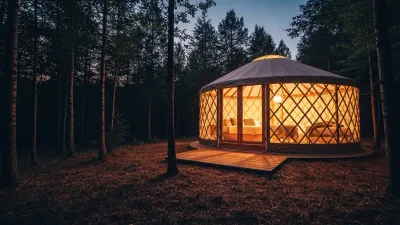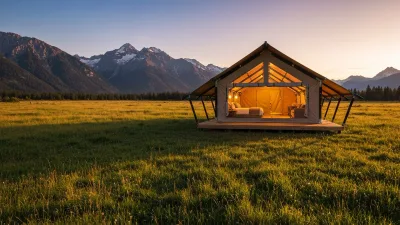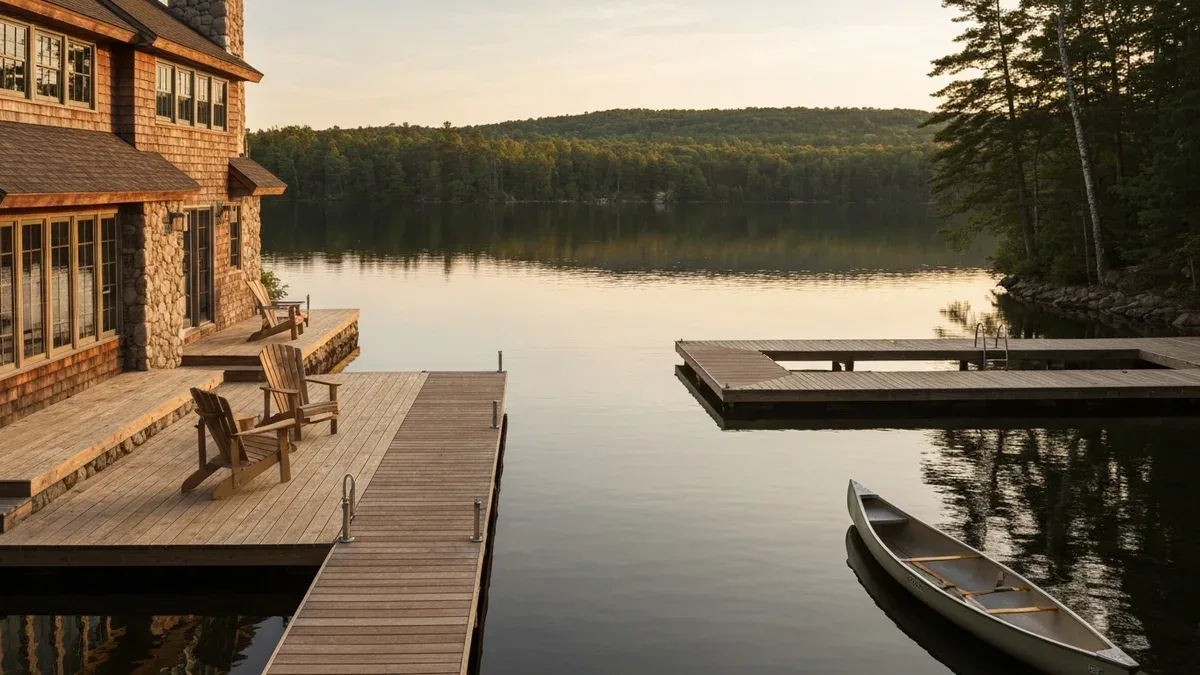
A lake house sells a feeling before it sells a floor plan. Morning coffee on the dock, kids launching off the swim ladder, somebody frying the fish they caught an hour ago. That's the product. Your job as a host is to put that feeling in front of the right people at the right moment, and that's what lake house vacation rental marketing actually is: matching what your water offers to what a family is already dreaming about, then removing every reason for them to hesitate. Do that well and your calendar fills before your neighbors even lower their prices.
This guide is built for US lakefront and lake-access hosts, wherever your water sits. The examples pull from strong American lake markets, but the playbook travels. Whether you own a cabin on Table Rock, a cottage in the Finger Lakes, or a place with a shared community dock, the moves are the same. You'll learn how lake guests search, how to describe your water honestly, how to photograph it so people can feel the temperature, and how to keep bookings coming when the leaves turn and the summer crowd goes home.
None of this requires a big budget. It requires knowing your guest, telling the truth well, and being organized about it. Let's get into it.
Lake house vacation rental marketing starts with what guests search for
Good lake house vacation rental marketing begins with the search bar. People don't book "a house near water." They book a specific version of a trip, and the words they type reflect it. A dad planning a July week is searching different things than a couple chasing fall color or a group of anglers looking for a dawn launch. If you know those intents, you can write a listing that answers them before a guest has to ask.
Here's what shows up again and again in how lake travelers describe what they want:
- Water they can actually use. A private dock, a boat slip, swimmable frontage, a gentle shoreline for little kids. "Near the lake" is a red flag to a savvy guest; "steps from your own dock" is a green light.
- Gear that's already there. Kayaks, paddleboards, a canoe, life jackets in a range of sizes. Listings that include watercraft consistently earn attention because they save families a rental trip and a haul.
- Room for the group. Lake trips skew toward families and reunions. Bed counts, bathroom counts, and honest sleeping arrangements matter more here than in a downtown studio.
- An evening plan. A fire pit, a grill, a big table, room for yard games. The lake is the daytime draw; the fire pit is what people remember at night.
- The view, and when it's best. Sunrise or sunset over the water is a real selling point. If your dock faces west, say so, because a sunset dock is a booking machine.
Notice how concrete all of that is. Vague amenities lists lose to specific ones every time. When you know these are the things guests weigh, your listing writes itself around them instead of burying them in a wall of text.
Read the last twenty reviews of the three best-booked lake rentals near you. Guests tell you in plain language what they cared about. The words they use for the dock, the water temperature, the "we didn't want to leave" moments are the exact words you should be using in your own listing.
Lakefront vs lake view vs lake access: tell the truth and win
This is the fastest way to build trust or destroy it, so get it right. These three phrases are not interchangeable, and guests who arrive expecting one and find another leave the review that sinks your ranking. Real estate professionals define them cleanly, and you should borrow those definitions word for word.
- Lakefront (waterfront). Your property touches the shoreline. There's a real property line running to the water and, usually, riparian rights that let you have a dock. This is the strongest claim and the one guests pay the most for. Use it only if it's literally true.
- Lake view. You can see the water, but the property doesn't include shoreline and there's no legal right to reach the lake from your lot. A lake view is a genuine amenity. It is not the same as being on the water, and calling it "lakefront" is the mistake that generates angry reviews.
- Lake access. You don't own shoreline, but you have a recorded right to use the water, often through a shared community beach, a boat launch, or a shared dock. Deeded lake access is a real perk at a friendlier price point. Spell out exactly what the access is and how far it is from the door.
The honest version always beats the inflated one over a season. A guest who books a "lake access" cabin knowing there's a five-minute walk to a shared dock is a happy guest. A guest who books "lakefront" and finds a road between the house and the water is a one-star waiting to happen. Match your headline to your deed, describe the walk or the frontage in feet, and your reviews will do your marketing for you.
For a plain-English breakdown you can point skeptical co-owners to, Lake Homes Realty's guide to lakefront versus lake access lays out the distinctions the way the real estate world uses them.
Strong US lake markets and what each one teaches you
You don't need to own in a famous market to market well, but it helps to see how the strong ones behave, because they show you which guest you're really chasing. A few examples that show up repeatedly in host and investor conversations:
- Lake of the Ozarks, Missouri. Over 1,100 miles of shoreline and dozens of lake towns make this a family-travel powerhouse with a long, busy summer. The lesson: in a big, boat-heavy market, your dock and your proximity to the action (restaurants, the strip, marinas) carry the listing. See how a market like this reads on a location page such as our Lake of the Ozarks overview.
- Smith Mountain Lake, Virginia. Strong summer demand, fishing, water sports, and a wine-country angle mean the guest mix is broad. The lesson: when a market pulls both anglers and couples, you segment your marketing rather than picking one crowd.
- Table Rock Lake, Missouri. Affordable, beautiful, close to Branson, and beloved by boating and fishing travelers from across the Midwest. The lesson: proximity to a nearby attraction can extend your season and widen your audience beyond pure lake-lovers.
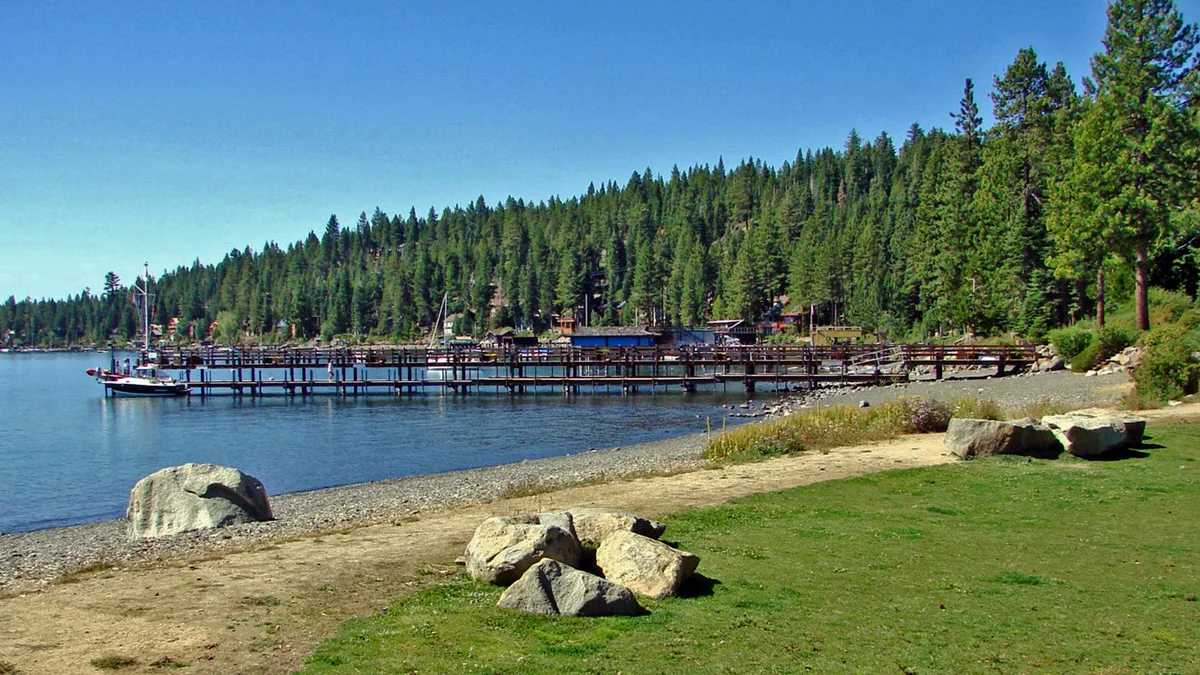
- Lake Tahoe, California and Nevada. A true four-season market where winter is its own peak. The lesson: some lakes aren't summer-only, and your marketing should sell the whole calendar. Our Lake Tahoe market page shows how a year-round story reads.
- Lake Geneva, Wisconsin. A polished, drive-market getaway from Chicago with strict STR rules. The lesson: in regulated markets, compliance is part of the brand, and being buttoned-up is a selling point to nervous guests. See our Lake Geneva overview.
- Finger Lakes, New York. Wine trails, waterfalls, and fall foliage layered on top of the water. The lesson: the lake plus a regional draw (wine, leaf-peeping) is a stronger story than the lake alone. Our Finger Lakes page leans into exactly that.
The common thread is that no two lakes sell the same trip. Ozarks families want boats and space. Tahoe wants a four-season story. Finger Lakes wants the wine-and-water combo. Your lake house vacation rental marketing gets sharper the moment you decide which of these your water most resembles and write to that guest instead of everyone.
One more habit worth building here: watch the market data instead of guessing. Platforms like AirDNA publish demand and seasonality signals by market, and reading them qualitatively (which months run hot, how sharp the summer spike is, how deep the off-season dips) tells you where to push your rate and where to loosen your minimum stay. You don't need to buy an expensive report to benefit; even the free market summaries give you a sense of whether your lake behaves like a summer-only market or a year-round one, and that single read changes how you price and how you write.
Photography that books lake houses
On a lake listing, the photos do most of the selling, and the water is your best asset, so shoot it like one. Guests scroll fast. Your first five images decide whether they stop.
Lead with the water, not the living room
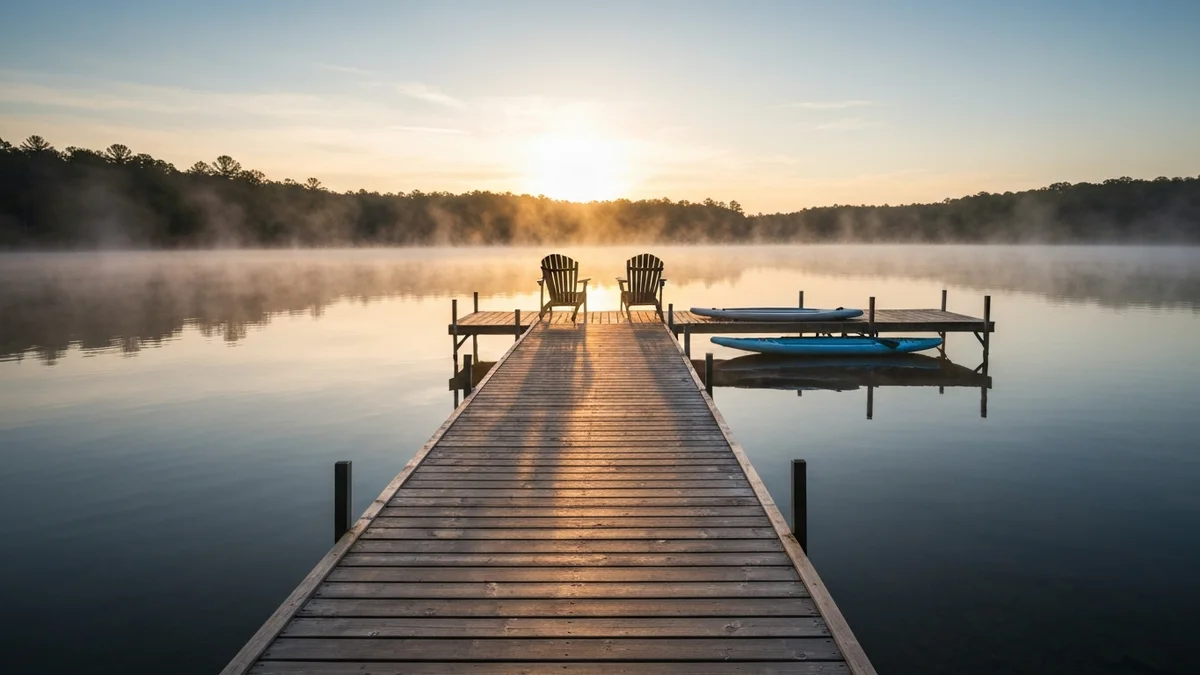
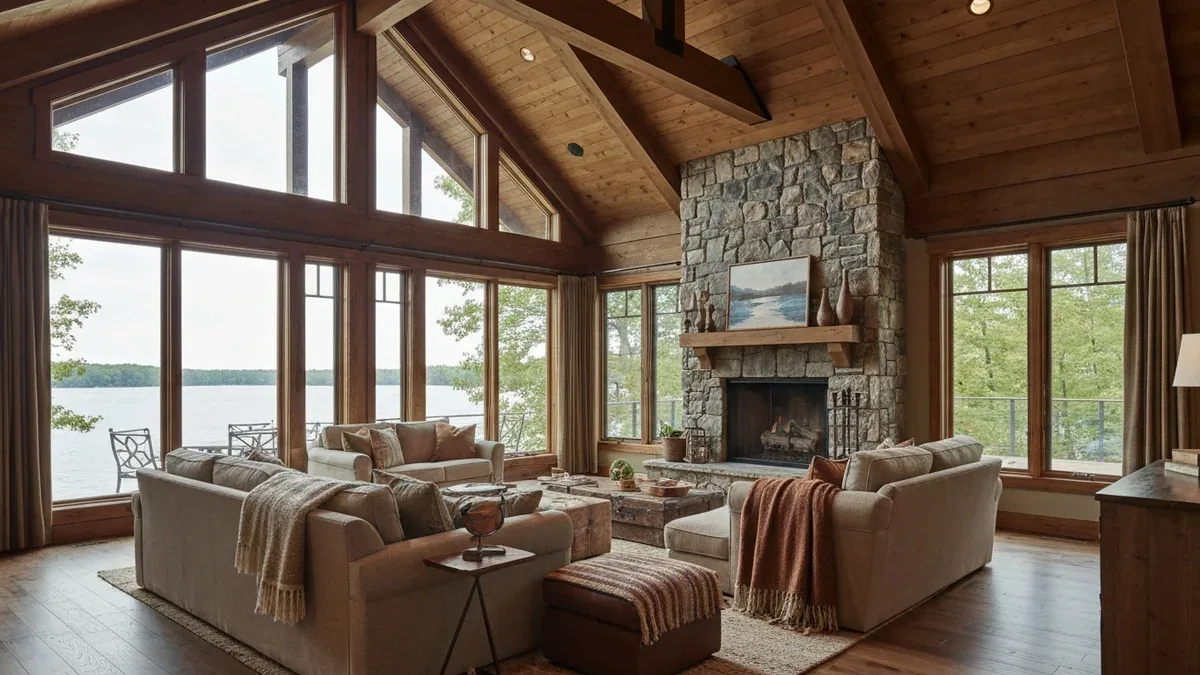
Your cover photo should be the view or the dock, shot at golden hour when the light is warm and the water goes glassy. A living-room shot as your first image on a lake house wastes your single biggest advantage. Put the reason people came right up front.
Shoot the whole experience, in order
- The approach to the water. The path or steps from the house to the dock, so guests understand how close the lake really is. This quietly answers the "how far to the water?" question that kills conversions.
- The dock in use. Chairs on the dock, towels, a paddleboard leaning against the rail. Staged-but-real beats empty and sterile.
- Sunrise or sunset over the water. One golden-hour hero shot earns its place near the top of your gallery. If your dock faces the sunset, that photo alone can carry the listing.
- The gear. A clear shot of the kayaks and paddleboards lined up. If it's included, prove it.
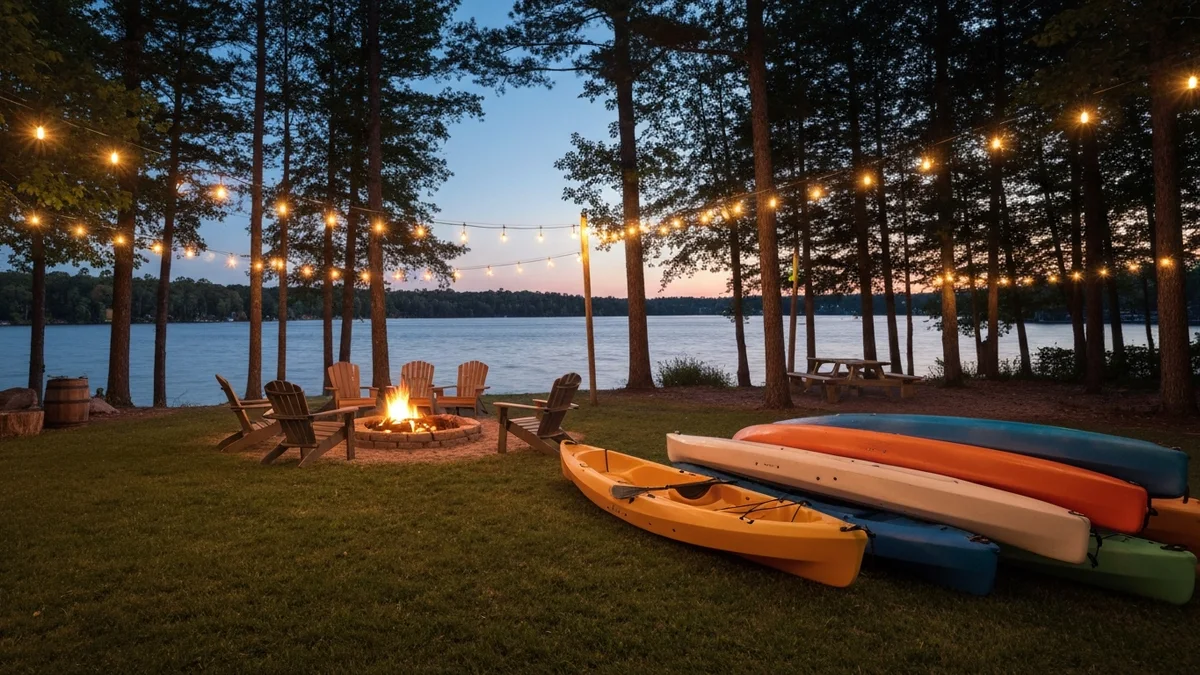
- The evening. The fire pit lit at dusk, the grill, the big table set for a group. Sell the night, not just the day.
Use drone and elevation honestly
An aerial shot showing the house, the shoreline, and the water in one frame is genuinely useful on a lake listing because it answers the frontage question no ground photo can. Just keep it honest. A drone shot that makes a lake-access lot look lakefront is the same lie as the headline version, and it lands the same review.
If you want a full walkthrough of what "book-me" photos look like, our Airbnb photography guide covers the shot list and the mistakes to avoid. And if the house looks tired next to the water, that's a design problem, not a photo problem, and our interior styling help is built for exactly that gap.
Reshoot your lake in two seasons, not one. A gallery with a summer swim shot and a fall-foliage shot over the same water tells a guest, without a word, that your place is worth booking in October too. One seasonal photo can open a whole shoulder-season audience.
Writing titles and descriptions that convert
Your title is a headline, not a filing label. It has a handful of words to earn a click, so spend them on what makes your place a lake place, not on the street name.
A title formula that works
Try this shape: the water claim + the standout amenity + the guest it fits. For example, "Lakefront Cabin with Private Dock & Kayaks, Sleeps 10" tells a family everything in one line. Compare that to "Cozy 3BR Home in Smithville," which could be anywhere. Lead with the dock, the frontage, or the sunset, because those are the words people are already searching.
Structure the description so people can skim
- Open with the water. First two lines: the frontage, the dock, the view, the swim access. Answer the lake question immediately.
- List the gear and the group fit. Watercraft, sleeping capacity, the fire pit, the grill, room for a reunion. Bullet it so it's scannable.
- Be honest about the walk and the water. Distance to the dock in feet, depth at the shoreline, whether the frontage is swimmable or rocky. Precision here prevents bad reviews.
- Cover the practical stuff. Parking for boat trailers, life jackets, the nearest boat ramp, grocery distance. Lake trips have logistics; solve them on the page.
- Close with the feeling. One or two plain sentences about coffee on the dock or the fire at night. Sell the memory you want them to book.
Write it in second person, keep the sentences short, and cut every empty adjective. "Stunning" and "luxurious" do nothing. "You can dive off the dock into deep, clean water" does everything.
Guest segments: know who you're really selling to
A lake house isn't one product; it's several, depending on who's booking. The same house markets differently to each group, and the smart move is to write your listing so more than one segment sees themselves in it.
- Families. The biggest lake audience. They want a gentle shoreline for small kids, enough beds, a fenced or safe yard, and gear that saves them a rental run. Emphasize safety and space.
- Anglers and fishing groups. They care about the dawn launch, the boat slip, a place to clean fish, and how the fishing actually is. If your water fishes well, say what people catch and when.
- Reunions and big groups. Multi-generational bookings that fill your calendar with long stays. They need real capacity, multiple bathrooms, a big table, and yard space. This is where a large house earns its premium.
- Couples and small getaways. Off-peak and shoulder-season bread and butter. They want the view, the fire pit, and quiet. A smaller booking, but the one that keeps you busy when the families go home.
- Weddings and events. Higher-value, higher-effort. Only pursue this if your zoning and neighbors allow it, and be explicit in the listing about whether events are welcome, because the wrong assumption here creates real problems.
You don't have to chase all five. Pick the two or three your house genuinely serves and speak to them clearly. Trying to be everything reads as being nothing.
Dock, gear, and amenity marketing
The dock is the heart of a lake listing, so treat it like the hero amenity it is, not a footnote in a bullet list. Guests consistently single out the dock, the included watercraft, and the fire pit as the things that made a lake trip feel like a lake trip.
Make the dock a whole section
Give the dock its own paragraph and its own photos. Is it covered? Does it have a boat lift or a slip a guest can use? Can they tie up their own boat, or rent one nearby? Is there a swim ladder, deep water off the end, seating for morning coffee? The more specific you are, the more a guest can picture their trip, and picturing the trip is what triggers the booking.
Prove the gear is included
- Count it. "Two kayaks and a paddleboard" beats "water sports equipment." Numbers read as real.
- Size it. Life jackets in adult and kid sizes signals you've thought about families. That detail alone wins bookings.
- Photograph it. A shot of the gear lined up on the dock is proof, and proof converts.
Don't forget the land amenities
The fire pit, the grill, the big lawn for cornhole and badminton, the screened porch for buggy evenings. Lake trips happen on the water by day and around the fire at night, so market both halves. A house that only sells the water leaves the whole evening experience on the table.
Put a one-page "your first hour" note in the listing photos or the welcome guide: where the life jackets live, how the boat lift works, where the nearest ramp is, which shoreline is best for little kids. Guests who feel oriented before they book feel safe booking, and safe-feeling guests convert.
Fighting seasonality: filling the shoulder and off-season
Most lakes have a loud summer and a quiet everything-else, and the hosts who win are the ones who refuse to accept that the calendar goes dark in October. AirDNA tracks this directly through a seasonality score, and the practical takeaway is that off-peak revenue is there if you go get it. You just have to sell a different trip.
Sell the seasons the summer crowd forgets
- Fall foliage. In leaf-peeping regions like the Finger Lakes, autumn can rival summer. A lake framed by fall color is a premium photo and a premium week. Market it as its own season, not a summer leftover.
- Winter and ice. In colder markets, ice fishing, a cozy fire, and a snow-quiet lake are a real draw. In a four-season market like Tahoe, winter is a peak in its own right.
- Spring shoulder. Early-season anglers, birders, and couples chasing a quiet, cheaper getaway. Lower your minimum stay and your rate, and this crowd shows up.
Use rate and minimum-stay levers
Off-season, the two dials that actually move bookings are price and minimum stay. Drop your minimum from a week to two or three nights and you open the door to the couples and short-getaway crowd who can't take a full week. Ease your rate to the season and you stay booked while the rigid hosts sit empty. This isn't giving your house away; it's matching the offer to the traveler who's actually shopping in November.
Tie into local events
Wine festivals, fishing tournaments, foliage weekends, holiday markets in the nearest town. Each is a reason for someone to book your lake in the off-season, and each is a keyword you can put in your listing and your posts. Our deeper shoulder-season revenue guide walks through the calendar move by move.
Pricing and minimum stays for lake rentals
Lake pricing swings harder than city pricing because demand swings harder, so a flat year-round rate leaves money on the table in July and empties your calendar in April. Price the seasons, not the year.
- Peak summer. This is where the season is made. Hold firm on rate, run a longer minimum stay (a week is common in busy lake markets), and let the boat-and-swim crowd fill your calendar early.
- Shoulder seasons. Spring and fall. Trim the minimum stay, ease the rate, and lean on foliage, fishing, and events to draw the weekenders who can't do a full week.
- Off-season. Short minimums, honest rates, and a cozy story. Some hosts pause entirely to save on maintenance, but many keep earning by simply lowering the barrier for the couples and small groups still traveling.
- Boat-trailer and holiday weekends. Watch the local calendar. Fishing tournaments and holiday weekends spike demand; your rate should notice.
Set these tiers before the season, not in a panic mid-summer. A pricing plan you decided calmly in the winter always beats a scramble in July.
Safety and liability messaging done right
Water raises the stakes, and how you talk about safety is part of your marketing, because it tells a nervous parent you've thought about their kids. Handled well, it builds trust. Handled poorly, it either scares guests off or leaves you exposed.
- Be clear about who's responsible. Life jackets, swim-at-your-own-risk language, adult supervision for children near the water. State it plainly in the listing and the house rules.
- Describe the shoreline honestly. Depth at the dock, whether the bottom is sandy or rocky, current or drop-offs. A parent who knows what to expect trusts you more, not less.
- Provide the gear and say so. Life jackets in a range of sizes, a throw ring on the dock, a first-aid kit. Listing these is both a safety measure and a selling point.
- Carry the right coverage. Short-term rental insurance for a lake house is its own category. This is a "confirm it locally" item, not something to guess at.
On permits and taxes, the honest answer is that rules vary by state and county, so confirm locally before you list. Lake Tahoe jurisdictions run permit caps and waiting periods. Lake Geneva licenses STRs, sets minimum stays, and actively monitors platforms for compliance. Finger Lakes towns range from simple registration to full inspections. None of that is legal advice; it's a reminder that your first call should be to your local jurisdiction, not to a forum. A compliant, well-insured listing is also a more trustworthy one, and that trust shows up in bookings.
Direct booking and repeat guests
Lake guests are the most loyal guests you'll ever have, which makes them the best direct-booking audience in short-term rentals. Families come back to the same lake year after year, often the same week. If you can move that repeat guest off the platform and onto your own booking channel, you keep the fee and you own the relationship.
- Capture the guest. Every stay is a chance to collect an email with permission. A simple welcome-book note or a follow-up thank-you opens the door.
- Give them a reason to rebook direct. First look at next summer's calendar, a returning-guest rate, or a small perk for booking straight with you. Loyal lake families respond to being treated like regulars.
- Own a booking site. A clean direct-booking website turns your loyal audience into repeat revenue you don't pay a platform for. Our direct booking website service is built for exactly this, and our guide to more direct bookings shows the playbook.
- Stay in front of them off-season. A short fall email with a foliage photo and next-year dates keeps you top of mind while the competition goes quiet.
The math is simple. A repeat guest costs you almost nothing to win and pays no platform fee if they book direct. On a lake, where loyalty runs deep, this is the single highest-return lake house vacation rental marketing you can do. If your place also welcomes dogs, you're sitting on another loyal, underserved audience, and our pet-friendly rental guide shows how to market to it without much extra work.
Social media that suits a lake house
A lake house is one of the easiest properties in the world to make look good on social, because the content is the water itself. You don't need a production budget; you need a phone and a habit.
- Post the golden hour. Sunset over the dock, mist on the morning water, the fire pit at dusk. These stop the scroll on their own.
- Show the seasons. A fall-foliage reel or an ice-quiet winter shot tells your audience the lake is a year-round destination, which quietly sells your slow months.
- Feature the trip, not the house. Kids off the dock, a paddleboard at sunrise, a fish held up on the deck. People book the experience, so show the experience.
- Use real local tags. The lake's name, the nearest town, the events. That's how nearby travelers in your drive market actually find you.
If keeping a feed alive on top of hosting is more than you want to take on, that's a normal place to get help; our social media service keeps the water in front of the right audience so you don't have to think about it.
A simple marketing checklist to run this season
Pulling it together, here's the short version you can act on this week without hiring anyone:
- Fix your water claim. Make sure your title and headline say lakefront, lake view, or lake access exactly as your deed does. This is the highest-leverage fix and it's free.
- Reshoot the water at golden hour. Lead with the dock or the sunset, prove the included gear, and add one off-season photo.
- Rewrite the title. Water claim plus standout amenity plus who it fits, in one clear line.
- Give the dock its own section. Photos, specifics, and honest distances.
- Set seasonal pricing and minimum stays. Decide your peak, shoulder, and off-season tiers now, not in July.
- Build one off-season story. Foliage, ice fishing, or a local event, with a photo to match.
- Start capturing repeat guests. Collect emails with permission and give loyal families a reason to book direct.
You can do all seven yourself. Most hosts do the first three, run out of time, and leave the rest on the table, which is exactly where the growth is hiding.
Lake house marketing FAQ
How do I describe my property if the lake is a short walk away?
Call it lake access, not lakefront, and state the walk in feet or minutes. "Deeded lake access, a two-minute walk to the shared dock" is honest, appealing, and review-proof. Overstating the water is the single most common mistake that generates one-star reviews.
Do I need a permit to run a lake house rental?
Often, yes, and the rules vary a lot by state and county. Some lake markets cap permits, set minimum stays, or actively monitor platforms for compliance. Confirm with your local jurisdiction before you list. This isn't legal advice; it's the one call you shouldn't skip.
What amenities matter most to lake guests?
A usable dock, included watercraft like kayaks and paddleboards, swimmable frontage, a fire pit, and enough space for a family or a group. Those are the features guests single out in reviews, so they're the ones to lead with in your listing.
How do I stay booked in the off-season?
Sell a different trip. Market fall foliage, ice fishing, or local events; lower your minimum stay so weekenders can book; and ease your rate to the season. The off-season demand is there if you make the offer fit the traveler who's actually shopping.
Is it worth building a direct-booking website?
For a lake house, yes, because lake guests are unusually loyal and often rebook the same week every year. A direct-booking site lets you keep that repeat revenue without paying a platform fee, and the relationship is yours to keep.
Where Cavmir fits
Everything here is doable on your own, and plenty of hosts run a great lake listing solo. But if you'd rather spend your summer on the dock than in your listing dashboard, that's the gap we fill. Cavmir helps lakefront hosts market and optimize their rentals, from honest, book-me listing copy and golden-hour photography direction to a direct-booking website that turns loyal lake families into repeat guests. If you want a second set of eyes on your listing, our listing optimization service is a straightforward place to start. No pressure, no long pitch. Just help getting your water in front of the people already looking for it.