


It's 7:40 on a Saturday morning in late October, and Colleen is standing on her porch on Ann Arbor's Old West Side watching a river of maize and blue flow past her house. Strangers in matching jerseys. Grandfathers in letterman jackets that still fit if nobody asks questions. A golden retriever wearing a Michigan bandana with the resigned dignity of a dog who has done this many times before. Kickoff is at noon. The town has been awake since six.
Colleen's three-bedroom bungalow, a ten-minute walk from Michigan Stadium, is booked this weekend at roughly three times her normal Tuesday rate, with a two-night minimum, and the guests — a family of four from Cincinnati whose daughter is a sophomore — booked it in February. Not last month. February. Nine months out, before the football schedule was even fully confirmed, because they've done this before and they know how this works.
Here's what most new hosts in college towns get wrong: they price and plan like they're running a vacation rental. They're not. A college town Airbnb isn't a beach house with a lazy summer curve and a dead January. It's a business built on an academic calendar — a strange, spiky, wonderfully predictable rhythm of football Saturdays, graduation weekends, move-in chaos, parents' weekends, admitted-student days, reunions, and conferences. Roughly forty weekends a year carry real demand, and maybe eight of them carry extraordinary demand, and the rest of the time you're playing a completely different game.
This is the playbook for that game. It's the one Colleen runs, and it works in Ann Arbor, Athens, Chapel Hill, Madison, Oxford, Charlottesville, Tuscaloosa, and every other town where the university is the weather.
The Calendar That Runs the Whole Town
In a beach market, demand follows the sun. In a ski market, it follows the snow. In a college town, it follows a PDF published by the registrar's office — and that's the single biggest strategic advantage you have as a host, because unlike the sun and the snow, the registrar publishes the schedule a year or more in advance.
Think about what actually drives someone to book a short-term rental in a town of 120,000 people that most of the country couldn't find on a map. Almost none of it is tourism in the traditional sense. It's the university, generating demand in waves that repeat with astonishing reliability:
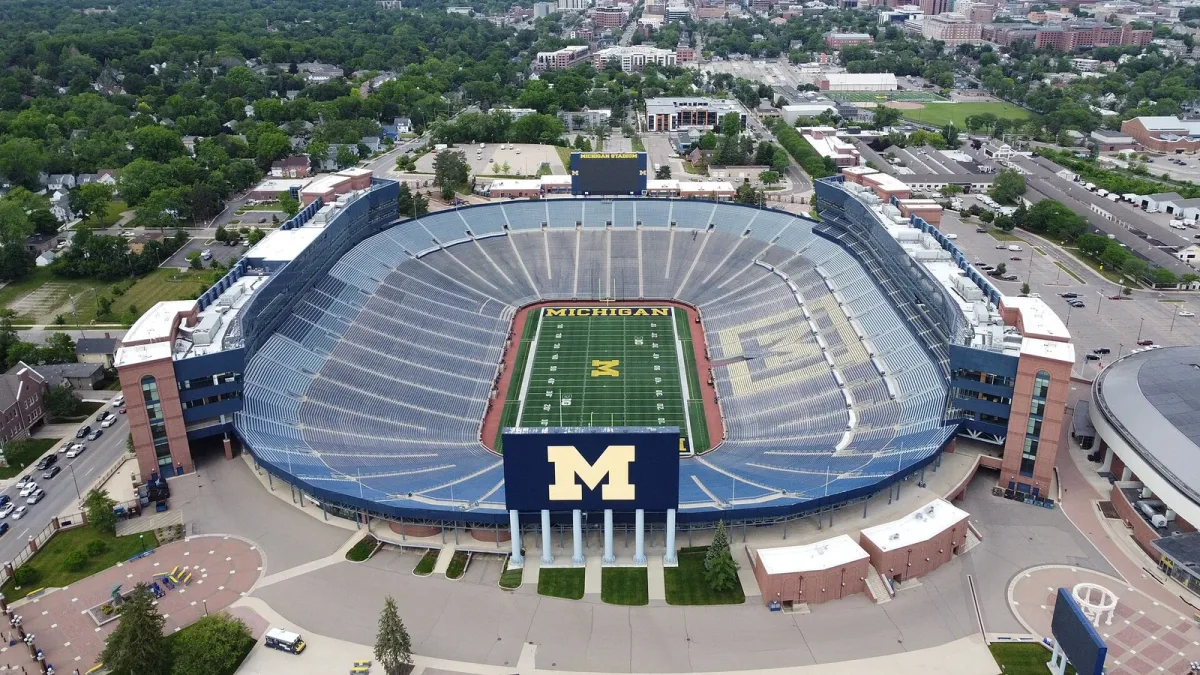
- Football weekends. Six to eight home games a season in a big-program town, each one a small hurricane of demand. In Ann Arbor, more than 107,000 people fill Michigan Stadium on a home Saturday — in a city whose entire population is smaller than that. The math of where those people sleep is your business model.
- Graduation. The single highest-demand weekend of the year in most college towns, and the one that books furthest in advance. Families don't gamble on this one. More on it later, because it deserves its own section.
- Move-in and move-out. Parents hauling futons in August need somewhere to sleep for two or three nights. So do the parents hauling those same futons back out in May, usually looking more tired.
- Parents' and family weekends. A university-scheduled surge, published on the academic calendar, that fills hotels months out.
- Admitted-student days and campus visits. Spring weekends when high-school seniors and their parents descend on campus to kick the tires. Smaller spikes, but real ones, and they repeat every year.
- Reunions and homecoming. Alumni with disposable income and strong feelings about their old neighborhood, back in town for a weekend of nostalgia and moderately priced beer.
- Academic conferences, guest lectures, and recruiting visits. The quiet, midweek demand layer most hosts never notice: visiting faculty, PhD candidates interviewing, researchers collaborating for a week, medical residents rotating through the university hospital.
Every one of those is scheduled, published, and repeatable. The tourist doesn't know when they'll want a beach house next year. The University of Michigan knows exactly when it's holding commencement, and it tells everyone. Your entire pricing strategy should be built on that asymmetry.
Mapping Your School's Year Into a Pricing Calendar
Colleen does this every year in one two-hour sitting, usually in June, cold drink in hand. You should steal the ritual. Here's the process.
Step one: collect the source documents. You need four things — the academic calendar from the registrar (semester start and end dates, breaks, commencement), the football schedule from the athletic department (published in the spring, with the home games marked), the university events calendar (family weekend, homecoming, admitted-student days), and the alumni association's reunion schedule. All four are public and free. Most of your competition never looks at any of them.
Step two: build a tiered year. Go through your calendar weekend by weekend and assign every one of them a tier. Colleen uses four:
- Tier 1 — the crown jewels. Graduation weekend, the two or three biggest home football games (the rivalry game, the marquee conference matchup, homecoming). These get her highest rates, her longest minimum stays, and they open for booking the moment the dates are confirmed.
- Tier 2 — strong surges. Every other home football weekend, move-in weekend, family weekend, admitted-student days. Elevated rates, two-night minimums.
- Tier 3 — steady demand. Ordinary in-semester weekends and the midweek academic traffic. Normal rates, flexible minimums, the bread-and-butter nights.
- Tier 4 — the troughs. Winter break, spring break, and the long summer stretch. This is where strategy matters most, and we'll spend a whole section on it.
Step three: price each tier deliberately, not reactively. Here's a worked example — sample numbers, your market will differ. Say Colleen's baseline Tier 3 rate for the bungalow is $165 a night. Her Tier 2 football weekends run around $350 to $400 a night with a two-night minimum. Her Tier 1 weekends — the Ohio State game, graduation — run $500 and up with a three-night minimum. Her Tier 4 summer midweeks might dip to $120, or get folded into a monthly rate entirely. Over a year, the shape of that curve matters far more than any single night's price. A dynamic pricing tool can handle the daily wobble — we've written a complete guide to dynamic pricing — but no algorithm knows your school's calendar the way you do after two hours with the registrar's PDF. Set the tier floors and ceilings yourself, then let the software fine-tune inside them.
Step four: open the calendar early. This is the step that separates the pros. Most hosts leave their calendar open twelve months out on default pricing and get sniped — some parent in Cincinnati books graduation weekend eleven months early at your Tuesday rate, and there's nothing you can do about it. Colleen blocks all Tier 1 and Tier 2 dates the day her new calendar year opens, prices them properly, then unblocks. Ten minutes of work that protects the eight most valuable weekends of her year.
Set a recurring reminder for the week your school's football schedule drops — usually late winter or early spring for the fall season. The hosts who reprice within days of the schedule release capture the early-bird alumni bookings at strong rates. The hosts who notice in July capture whatever's left.
The 40-Weekend Year
Let's talk about the shape of the whole year, because it's genuinely different from any other market type, and understanding the shape changes how you think about every individual booking.
A typical leisure market has a season: maybe fourteen fat summer weeks, shoulder months on either side, and a long tail of quiet. A college town flips that. The academic year runs roughly late August through early May — call it 36 weeks — and nearly every weekend inside it has a reason for someone to visit. Add graduation, move-in, and a handful of summer events, and you're looking at something like forty weekends a year with real demand. What you don't have is weekday tourist traffic or a fat continuous season. Your revenue arrives in weekend-sized packets, with a few enormous packets scattered through the fall and one in May.
Here's why that shape is a gift. Run the sample math on Colleen's year. Suppose she clears an average of $700 per booked weekend across her Tier 3 weekends, $800 per Tier 2 weekend, and $1,600 per Tier 1 weekend. Eight Tier 1 and Tier 2 football-and-graduation weekends might produce as much revenue as twenty ordinary ones. That concentration means two things. First, protecting the big weekends — right dates, right price, right minimum stay — is worth more than almost anything else you can do. Second, an empty big weekend is a wound that the rest of the year can't fully heal. If the rivalry game weekend sits vacant because you priced it 40 percent above what the market would bear, you didn't lose one booking; you lost the equivalent of a month of Tuesdays.
The other thing the 40-weekend shape does is change your competition. On an ordinary Tier 3 weekend, you're competing with the local hotels on comfort and price — worth reading our piece on how Airbnbs actually compete with hotels on pricing, because the logic applies double here. But on a Tier 1 weekend, the hotels sell out entirely, often months ahead, and the competitive landscape inverts: you're no longer competing with the Hampton Inn, you're competing with the other three-bedroom houses within walking distance of the stadium, and the walkable ones win. If your place is a fifteen-minute drive from campus, your big-weekend premium is real but modest. If your guests can walk to the game and walk home after, you are selling something the hotel by the highway physically cannot offer, and your pricing should reflect that confidence.
One more note on the shape: weekday demand exists, it's just quieter and different. The visiting-faculty and hospital-rotation crowd books Tuesday through Thursday, values fast Wi-Fi and a real desk over a hot tub, and leaves the place immaculate. A listing that speaks to them — desk photographed, workspace called out, self-check-in emphasized — picks up a steady midweek layer that most game-day-focused hosts leave on the table.
Pricing the Spikes Without the Gouging Optics
Every fall, in every college town, the same local news story runs: rental prices around the big game are through the roof, cue outraged quotes. And every fall, some hosts handle it gracefully and some hosts end up as the screenshot in the story. Let's make sure you're in the first group.
Start with the honest framing: charging more when demand is higher isn't gouging, it's how every hotel, airline, and concert venue on earth operates. The hotels in your town are doing exactly the same thing on game weekends, usually with less charm. Surge pricing on scheduled, predictable, celebratory demand — a football game, a graduation — is categorically different from jacking up prices during an emergency, which is both wrong and, in many places, illegal. You're not doing that. You're pricing a party.
But optics are real, and in a college town they're personal, because your market is small and your guests come back. The family who pays your rate this year will see your rate next year. Alumni talk. So here's how to charge a strong premium and keep your reputation intact:
- Anchor to the hotel market, not to your own Tuesday. A guest who sees your $450 game-Saturday rate next to a sold-out hotel market where the last airport-adjacent king room went for $389 reads you as fairly priced. The comparison that stings is your own calendar — $450 Saturday next to $150 the following Tuesday looks arbitrary if you've done nothing to explain it. Which brings us to:
- Name the premium. Colleen's listing says, plainly: "Rates are higher on home football weekends and graduation — you're a ten-minute walk from the stadium, and those weekends include early check-in when possible, a stocked fridge shelf, and a game-day parking spot in the driveway." Nobody reads that and feels gouged. They read it and feel like they're buying a game-weekend package, because they are.
- Add value on the spike weekends, not just price. The parking spot alone is worth real money on a game day within a mile of any major stadium. A printed one-page guide to tailgate lots, the fastest walking route, and which bars to avoid at 4 p.m. costs you nothing and reads as hospitality rather than extraction.
- Round like a professional. $495 reads considered. $487 reads like an algorithm left unsupervised. And resist squeezing the last dollar out of a Tier 1 weekend — landing just under the peak banks the goodwill that becomes the five-star review propping up your whole next season.
- Never reprice a confirmed booking, and never cancel to rebook higher. This should go without saying, but every big game weekend produces a story of a host who canceled a months-old reservation to relist at triple the rate. That host's review page never recovers, and in a town this size, neither does their name.
The underlying principle: in a college town you're not a faceless unit in a resort market, you're a neighbor with a spare house. Price like the demand is real — it is — and behave like everyone's watching, because they are.
Minimum-Stay Strategy on Game Weekends
If pricing is the loudest lever on a big weekend, minimum stays are the smartest one, and most hosts set them badly in both directions.
Here's the core problem a game weekend creates. The game is Saturday. Everyone wants Friday and Saturday nights. If you allow one-night bookings, someone books Saturday only, and now your Friday night — a night that was worth full surge rate as part of a weekend package — is an awkward orphan that nobody wants alone. You've sold the middle out of your own sandwich.
The standard fix is a two-night minimum across every football weekend, and it should be your default the moment the schedule drops. Guests traveling for a noon kickoff overwhelmingly want Friday night anyway — nobody wants to drive in from Cincinnati at dawn — so the two-night floor costs you almost no demand while doubling the value of every booking. For the Tier 1 weekends, Colleen goes to three nights: Friday, Saturday, Sunday. The Ohio State game supports it easily; families make a full weekend of it, and Sunday-morning departures after a night game are miserable anyway. For a marquee matchup, that third night is close to free money.
But — and this is where the nuance lives — minimum stays are a dial, not a switch, and the dial should move as the date approaches. A three-night minimum that made sense in March is costing you money if the weekend is still unbooked ten days out. The play Colleen runs: Tier 1 weekends open at three nights, drop to two nights at two weeks out if unbooked, and open to single nights in the final few days, priced high. A last-minute one-night Saturday booking at surge rate beats an empty house every single time. The mistake is starting loose, not ending loose.
Two more game-weekend specifics worth stealing. First, watch your check-in and checkout times like they're part of the product, because on game day they are. A noon kickoff with an 11 a.m. checkout means your departing guests and the day's chaos collide; Colleen sets game-day checkout at 10 a.m., cleans immediately, and offers incoming guests a 2 p.m. early check-in as a named perk. Second, mind the night-game trap: a 7:30 kickoff means guests want to stay Saturday night after the game, not before it, so your two-night window might be Saturday–Sunday rather than Friday–Saturday. Check kickoff times when they're announced — usually only a week or two ahead for TV reasons — and adjust.
Minimum-stay strategy goes a lot deeper than one weekend type — orphan-night management, gap rules, seasonal floors — and we've covered the whole system in our guide to minimum-stay requirements and strategy. For a college town host, though, the game-weekend version above covers most of the money.
Away games matter too — in reverse. When the team plays its biggest rival on the road, a chunk of the town travels and local demand softens. Colleen drops her minimums and trims rates on the two or three biggest away weekends. The registrar's calendar tells you when demand arrives; the away schedule tells you when it leaves.
Who Actually Books (Hint: Not Students)
New college-town hosts consistently misjudge their guest, and the misjudgment costs them money in both directions — they under-invest in what their real guests want and over-fortify against a guest who mostly isn't coming.
The fear is students: house parties, noise complaints, a security deposit that dies for a cause. And sure, screen sensibly. But students have apartments. They live there. A 20-year-old with a lease two blocks from campus has no reason to book your bungalow. Your actual guest list, weekend after weekend, looks like this:
- Parents. The single biggest segment. Parents of current students visiting for a game or a family weekend, parents of admitted students touring in April, parents hauling boxes in August and May. They book early, communicate clearly, spend on comfort, and write generous reviews. They want beds that don't creak, coffee that isn't an afterthought, and parking. Especially parking.
- Alumni. Back for homecoming, reunions, and the games that matter. Often traveling in packs of four to eight, often nostalgic for a specific neighborhood, often the least price-sensitive guests you'll ever host. An alumni group that had a great weekend becomes a repeat booking with a five-year horizon — reunion classes come back on a schedule.
- Visiting academics and professionals. The midweek layer: faculty candidates interviewing, conference speakers, researchers on short collaborations, medical staff rotating through the university hospital, consultants and contractors working with the university. Quiet, tidy, Wi-Fi-obsessed, and frequently booked by a department administrator who will remember which listing made her life easy.
- Wedding and event guests. College towns host an outsized number of weddings — alumni couples come back to marry where they met — plus recitals, tournaments, and the long tail of campus events.
Notice what that list has in common: adults, with money, on a schedule, emotionally connected to the town. Write your listing for them. That means the photo set leads with the walk-to-campus map and the driveway, the description names the neighborhood and the walking time to the stadium and the quad, the house manual includes a local's guide to breakfast spots that don't have a 90-minute game-day wait, and the third bedroom is staged as a bedroom-plus-desk because half your midweek guests are traveling for work.
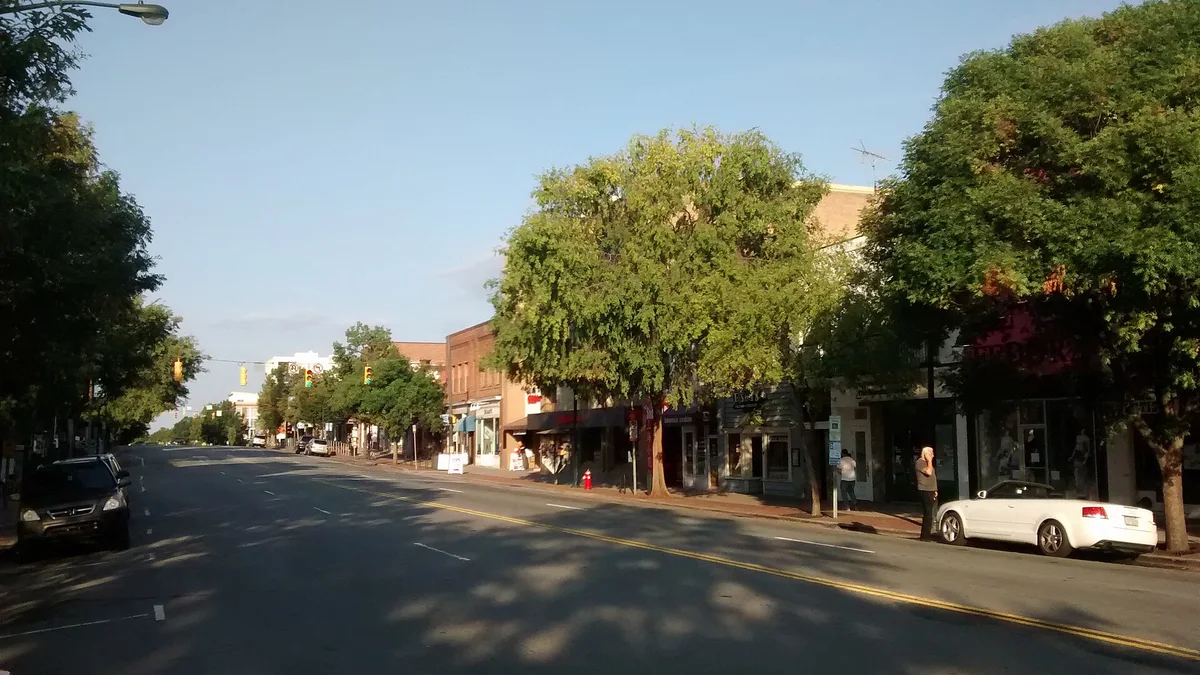
And the neighborhood itself is part of the product in a way that's more literal than in most markets. In Chapel Hill, guests want to walk to Franklin Street. In Ann Arbor, they want Main Street and the Diag. In Athens, it's the strip downtown. Your listing isn't just selling a house; it's selling a specific relationship to a specific campus geography that your guest may have been dreaming about since their own sophomore year. Name the streets. The alumni reading your listing will feel it, and the parents will trust it.
Tailgates, House Rules, and the Art of the Gracious Yes
Sooner or later, a guest is going to ask the question: "Can we tailgate at the house?" And your answer is going to shape your reviews, your neighbor relationships, and possibly your standing with the city. So let's think it through instead of panicking in the message thread.
First, understand what's actually being asked. A family tailgate — a grill, a cooler, a cornhole set, eight people in the driveway from ten to noon — is not a party. It's the single most normal social activity in a college town on a fall Saturday, and your guests' alternative is paying for a spot in a crowded lot. A blanket "no gatherings of any kind" rule reads as hostile to the exact guests you want, and worse, it pushes the activity underground where you can't set terms.
The move is the gracious yes with a visible frame. Colleen's house rules say something like: "Game-day gatherings in the driveway and backyard are welcome for registered guests and a handful of friends — grill's yours, cornhole's in the garage. Music at conversation level, everything wrapped up by kickoff or by 9 p.m., and please don't let anyone park on the lawn." Read what that does. It says yes to the thing everyone was going to do anyway, it caps the scale, it sets an end time tied to the rhythm of the day, and it protects the two things that actually get hosts in trouble: noise and parking.
Because here's the truth about game-day risk — it's almost never property damage. It's your neighbors. In a college town, the people on either side of your rental have opinions about short-term rentals, they know the city's complaint line by heart, and their goodwill is a business asset worth more than any single booking. Colleen introduced herself to both neighbors the month she started hosting, gave them her cell number, and told them to call her before they call anyone else. Seven years in, that arrangement has defused every issue before it became a complaint on file. On the biggest weekends she also drops off a pie on Friday with a note: "Big game weekend — call me if my guests are anything less than lovely." Trivial cost, priceless goodwill.
A few more game-day house-management specifics that earn their keep: a posted quiet-hours time that matches your city's noise ordinance, so the rule carries authority beyond your preference; a garbage plan, because a game weekend produces roughly triple the trash and an overflowing bin on Sunday is what neighbors photograph; a "no guests of guests overnight" line to keep the Saturday gathering from becoming a Saturday sleepover; and outdoor lighting and a doormat that can handle a hundred thousand people's worth of stadium mud. None of this is glamorous. All of it shows up in reviews as "the house was perfect for game day," which in a college town is the phrase that fills next season.
Graduation: The Weekend That Books a Year Out
If football weekends are your season, graduation is your Super Bowl, and it plays by rules all its own.
Start with the demand physics. A big state university confers degrees on thousands of students at once, and every single one of them is the reason for a traveling party — parents, stepparents, grandparents, siblings, the aunt who never misses anything. Unlike a football game, attendance isn't optional or weather-dependent, and unlike a football game, the guests need space to gather: they're hosting a family lunch, staging photos, wrapping gifts. Hotels can't offer a dining table that seats ten. You can. This is the weekend a whole house near campus is at its maximum possible value.
And they book absurdly early, which is the part that catches new hosts off guard. Families know the date the moment their student starts senior year — commencement dates are published years ahead — and the savviest ones book accommodation eleven to twelve months out. Colleen's graduation weekend is routinely her first booking of any new calendar year, often within days of the dates opening. Which means the pricing mistake is almost always underpricing: the host who leaves next May at default rates isn't discovering demand, they're donating it. Price graduation as your Tier 1 ceiling from the first day the date is bookable, with a three-night minimum — the ceremony sprawls across a weekend, with school-level ceremonies, department receptions, and the main event, and families genuinely need Friday through Sunday, often Thursday too.
Now the hosting side, because graduation guests are different in kind. This is not a fun weekend for your guests; it's a meaningful one. Someone in that house is the first person in their family to finish college. Someone flew in from another country. The emotional temperature is high, the schedule is rigid, and small failures land harder than usual. Colleen's graduation-weekend routine: she confirms the ceremony schedule with guests two weeks out and shares realistic parking-and-traffic guidance, because commencement-morning traffic in a college town is its own weather event; she stocks the house for a family breakfast, since nobody's getting a restaurant table at 8 a.m. that Saturday; she leaves a card congratulating the graduate by name, which takes ninety seconds and shows up in more reviews than the hot tub ever did; and she offers the latest checkout she can honestly deliver, because Sunday goodbyes after graduation run long.
One warning, learned the hard way across every college town: never, ever overbook or cancel a graduation reservation. Rebooking a canceled football weekend is an inconvenience; a family that loses its graduation house eleven months out, when everything else is gone, has been genuinely harmed, and they will say so everywhere, accurately, forever. Treat confirmed graduation bookings as untouchable.
Surviving (and Monetizing) the Summer Trough
Then the students leave, and the town exhales, and your calendar goes quiet. May's second half through mid-August is the college-town host's winter, and how you play it is the difference between a good year and a great one.
First, adjust expectations rather than fighting physics. Your summer is not going to look like October, and pricing it like October just produces an empty house at an impressive rate. The trough game is played on occupancy and cost, not peak rates — the same shoulder-season logic we laid out in our off-season and shoulder-months revenue guide, tuned for a campus. Here's where the summer demand actually hides:
- Orientation sessions. Most big universities run new-student orientation in waves across June and July, each wave bringing families to town for a night or two. It's published on — you guessed it — the university calendar. Small spikes, but they're free to capture if your rates and minimums are summer-appropriate.
- Camps and tournaments. Sports camps, band camps, debate institutes, youth tournaments on university facilities. Parents dropping off and picking up, sometimes staying the week. Your local parks department and the athletic department's camp pages tell you the dates.
- Visiting researchers and summer faculty. The academic world doesn't fully stop; it slows and lengthens. Summer brings visiting scholars, research collaborations, and grad students needing a month near the lab. This is where the monthly-stay play shines: a 28-plus-day booking at a discounted monthly rate turns your worst season into guaranteed baseline revenue, often with a single immaculate guest. Colleen aims to have June locked as one monthly stay by April — a visiting researcher or a family between houses — then plays July and August shorter.
- The town's own summer events. Every college town has a few. Ann Arbor's art fair takes over downtown for several days each July and fills every bed in the city — a genuine Tier 2 spike in the middle of the trough. Find your town's equivalents: festivals, fairs, concert series, the county's big tournament. Mark them in the June calendar-mapping session with everything else.
- Hospital and university-adjacent work travel. Campus construction season is summer, along with every project that can't happen while 40,000 students are in the way. Those contractors and project teams need mid-length stays.
The tactical package for the trough: drop your minimum stays to one night, open a meaningful weekly discount and a serious monthly discount, refresh your listing photos with green-season shots so you're not showing snow in July, and rewrite your listing's first line for the summer guest — "quiet summer base near campus and the hospital, fast Wi-Fi, full kitchen, monthly stays welcome" sells a completely different product than "walk to the stadium," and it should.
Summer is also when you spend your maintenance budget. Every repaint, deep clean, mattress upgrade, and photo shoot should land in the trough, when a blocked week costs you the least. Colleen blocks the same late-May week every year for the annual refresh — right after graduation, when the house has earned it.
Town-Gown Rules: The Regulation Quirks
Here's the section that isn't fun but might matter more than all the fun ones combined: college towns have some of the most restrictive and idiosyncratic short-term rental rules in the country, and the reasons are baked into the town's history long before you arrived.
Think about the politics from the city council's chair. A college town has spent decades managing tension between permanent residents and the rental economy that serves the university — absentee landlords, student housing disputes, noise wars in the neighborhoods that ring campus. Many of these towns wrote strict rental licensing, occupancy, and zoning rules a generation before Airbnb existed. When short-term rentals arrived, those towns didn't start from a blank page; they started from a thick rulebook and an organized set of neighborhood associations with strong feelings. The result is a patchwork of local rules that varies enormously from one college town to the next — and sometimes from one street to the next.
The recurring patterns to check for in your town:
- Owner-occupancy requirements. A number of college towns distinguish sharply between renting rooms in the home you live in and operating a whole-home rental you don't live in, with the second category limited, capped, zoned, or in some places not permitted in residential neighborhoods at all.
- Licensing and inspections. Towns with legacy rental-licensing regimes often fold short-term rentals into them: registration, inspection, a license number displayed on your listing.
- Zoning boundaries. Where STRs are allowed can follow zoning lines that snake through near-campus neighborhoods in unintuitive ways. Two houses a block apart can have different legal statuses.
- Occupancy caps and unrelated-person rules. Some college towns limit how many unrelated people may occupy a dwelling — rules originally written for student houses that can bind an eight-person alumni group booking too.
- Lodging and local taxes. Hotel or accommodation taxes may apply, sometimes collected by the platform, sometimes your responsibility.
I'm deliberately not telling you what any specific town's rule is, because these rules change — councils in college towns revisit STR ordinances often, and anything printed here could be outdated by the time you read it. What you should actually do: search your city's official website for its current short-term rental ordinance, call the planning or zoning office and ask directly, and check our state permit data hub for the state-level layer. Do it before you buy, before you furnish, and before you list — the saddest email we get is from someone who furnished a whole-home rental in a neighborhood where whole-home rentals turned out not to be allowed.
And once you're licensed and legal, be the operator the ordinance was written to encourage. Post your license number where required, keep occupancy inside the limits, honor quiet hours, answer neighbor calls. College towns are small; the city, the university, and the neighborhood associations all talk. The hosts who thrive for a decade in these markets aren't the ones who found a loophole. They're the ones the neighbors would vouch for at a council meeting.
The Long Game
Back to Colleen's porch, because the ending of her October Saturday is the real point. The family from Cincinnati comes back Sunday morning for a slow breakfast before the drive home, and the mother mentions, almost in passing, that their daughter's graduation is in two Mays. Could they hold the house now?
That's the college-town business in one sentence. The academic calendar doesn't just make demand predictable — it makes relationships compounding. The admitted-student family becomes the move-in family becomes the football-weekend regulars becomes the graduation booking becomes, ten years later, the reunion group. No beach market gives you that. Your guests are tied to this town by something much stronger than weather, and every good weekend you host makes the next one more likely.
So map the calendar, tier the year, protect the big weekends, say the gracious yes on game day, and treat the graduation families like the occasion deserves. The registrar has already published your revenue forecast; all you have to do is read it.
And if you'd like a second set of eyes on how your listing reads to a parent in Cincinnati planning next fall, that's the kind of thing Cavmir's listing optimization work is for.
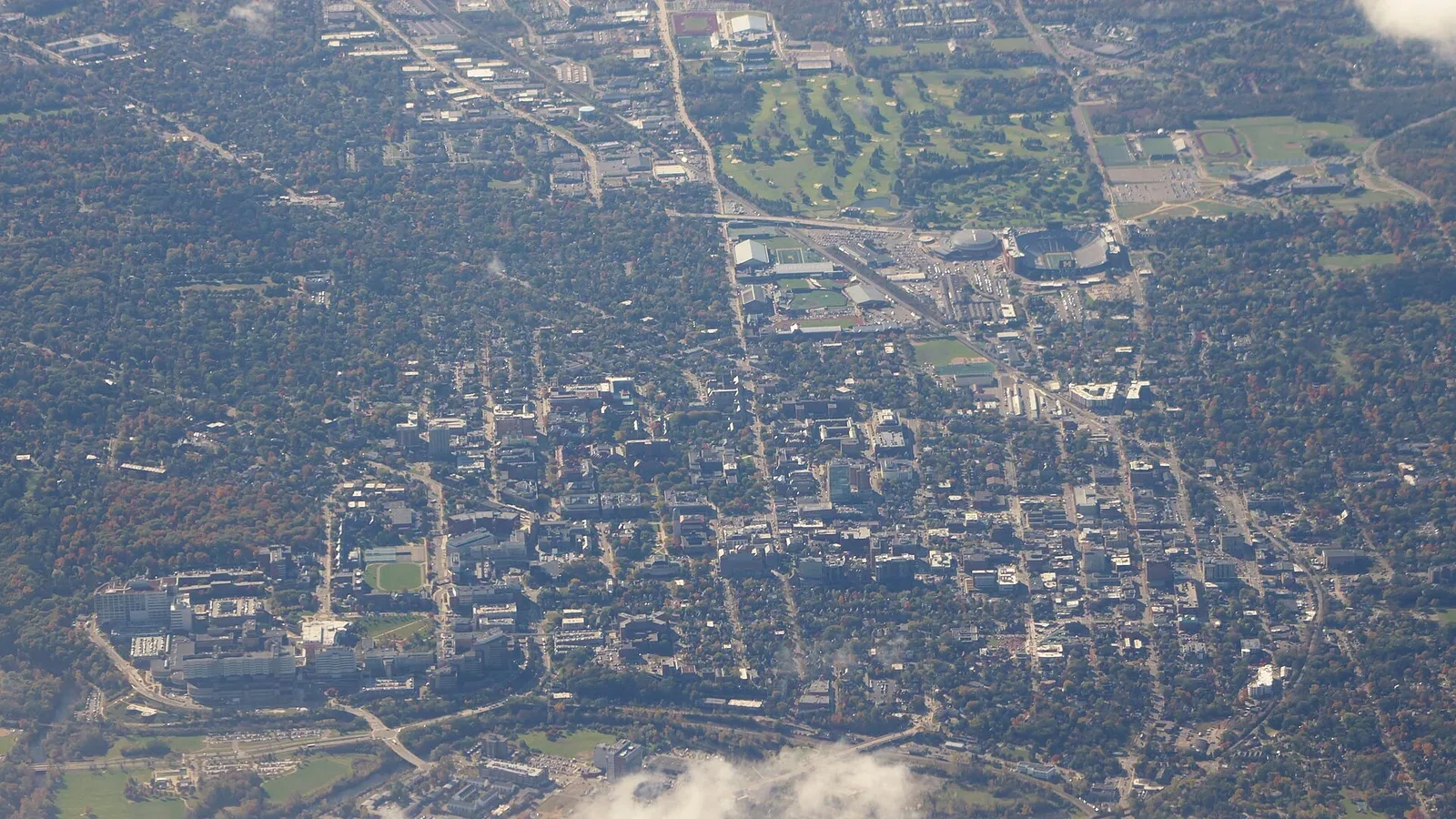
Photography via Wikimedia Commons, resized and cropped: hero, Aerial view of Ann Arbor, Michigan (2018) by SounderBruce (CC BY-SA 4.0); inline, Michigan Stadium Aerial by Lectrician2 (CC BY-SA 4.0).




.jpg)
