€76
Avg. Nightly Rate
62%
Avg. Occupancy Rate
€1,430
Avg. Monthly Revenue
6-9%
Est. Cash-on-Cash ROI
MEDIUM
Seasonality
VERY HIGH
Regulatory Burden

* Market averages. Properties marketed by Cavmir typically exceed these figures by 25–45%. Data sourced from AirDNA, STR market reports, and Cavmir internal analytics.

The Market

Why Budapest is One of the World's Premier STR Markets

Budapest is the most restricted market on this list, and any advice written before 2025 is now actively misleading. Three things happened in eighteen months. Hungary imposed a national moratorium on new short-term rental registrations running from 1 January 2025 to 31 December 2026 — nowhere in the country can a new one be registered, though existing lawful registrations continue. The annual flat tax per room rose from HUF 38,400 to HUF 150,000, roughly a fourfold increase. And District VI, Terézváros, became a zero-day district on 1 January 2026 after a binding local referendum passed 54% to 46%, with municipal Decree 26/2024 setting permitted short-term rental days to zero and Hungary's Kúria clearing it on 11 November 2025; roughly 2,700 listings were affected, and penalties run to HUF 200,000 for individuals, up to HUF 2,000,000 for companies, and closure of the property for as long as 45 days. District VII went a different route: Decree 33/2025, in force from 25 September 2025, caps commercial accommodation at 10% of a building's residential floor area and requires new accommodation services to sit on the ground floor. None of this makes Budapest a bad market. Around 11,178 listings still operate at roughly 62% occupancy. It makes it a market where what you already hold, and whether it is properly licensed, is worth considerably more than it was two years ago.

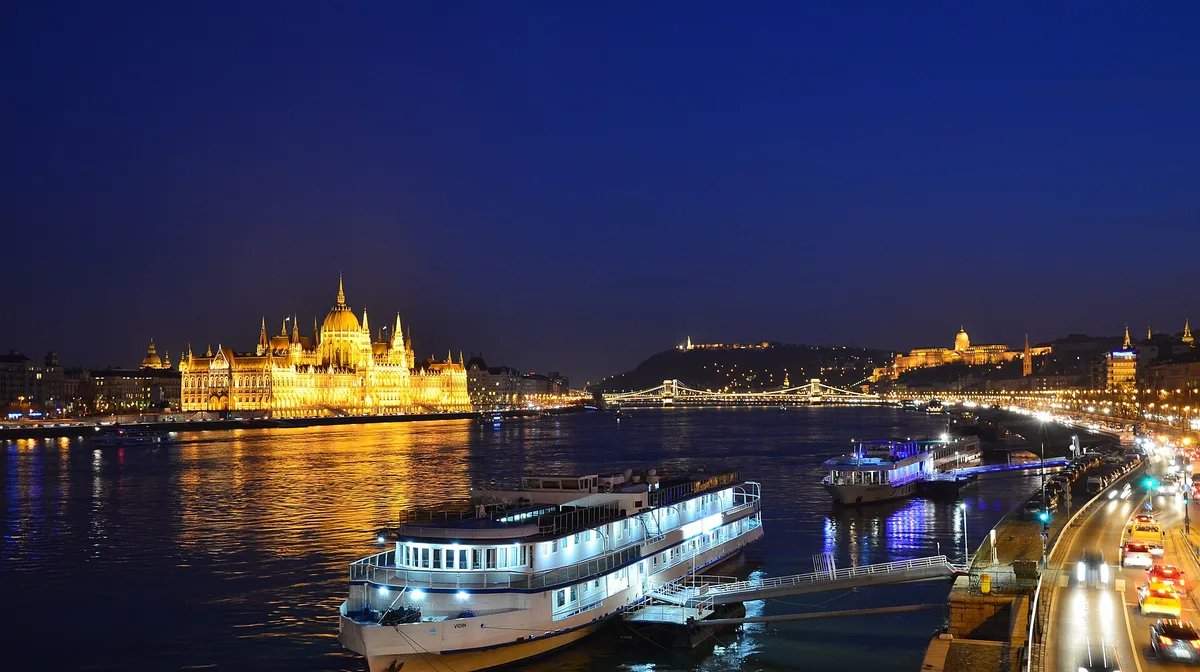
Budapest's demand never softened; only its supply did. The city sells thermal baths that have been in use since the Ottomans, a parliament building on the Danube that is the most photographed structure in Central Europe, a castle district on one bank and a flat commercial grid on the other, and a nightlife economy in the old Jewish Quarter that draws a very specific and very large weekend market. Blended rates run near €76 a night at around 62% occupancy across roughly 11,178 listings — cheaper than Prague, cheaper than Warsaw's centre, and with genuine volume behind it. The saturated districts are VII, the Jewish Quarter and party zone, V, the downtown core, I, the Castle District, and — until it closed — VI. The commercial consequence of the restrictions is that demand is being pushed toward the licensed sector: hotels, aparthotels, pensions and panziók, and the apartments in districts that remain open with valid existing registrations. Guest mix runs from British, Irish and German weekend groups, through European and North American culture and spa travellers, to a substantial conference base and the two enormous annual spikes of the Hungarian Grand Prix in late July and Sziget in August. For a licensed operator, this is a market with more demand chasing less legal supply than at any point in fifteen years.

Top Attractions & Landmarks

  • The Hungarian Parliament Building on the Danube embankment
  • Széchenyi and Gellért thermal baths
  • Buda Castle, the Castle District and the Fisherman's Bastion
  • St Stephen's Basilica
  • The Great Market Hall on Fővám tér
  • Margaret Island and its running track and gardens
  • Andrássy Avenue and the Millennium Underground

Nearby Markets: Bratislava  |  Prague  |  Zagreb

Airbnb marketing services in Budapest, Hungary, Europe
Why Cavmir

The Cavmir Advantage
in Budapest

Cavmir wins in Budapest by marketing what is legal, clearly, at a moment when a great deal of the competition is not. That starts with saying plainly what most listings and most guides still avoid: which district a property is in, whether it holds a registration that predates the moratorium, and what that means for a guest booking with confidence. For hotels, aparthotels, pensions and panziók — which are now the primary audience in this city — we build direct-booking websites with real photography, published best-rate guarantees and packages built around the demand this city actually has: the Grand Prix weekend from 24 to 26 July 2026, Sziget from 11 to 18 August, the thermal-bath winter season and the Christmas markets. For apartment owners with valid pre-moratorium registrations, we make that status visible and reposition away from the party-zone product that is causing the restrictions in the first place. We write the geography honestly — Buda hill or Pest grid, which metro line, how far to the baths, and what the street does at two in the morning — because the guest who books a quiet Danube-side flat expecting quiet and gets District VII on a Saturday writes the review that costs you a season. And we build the IFA and registration answers into the booking flow rather than leaving them as an unpleasant surprise at check-in. We help position and market your property. We never manage it or touch your keys.

State of the Industry · History

The Budapest STR Market — Past & Present

Budapest is three cities that were only combined in 1873 — Buda on the hills, Óbuda beside it, and Pest on the flat eastern bank — and the seam is still the most obvious thing about the place. The Romans built Aquincum here because of the thermal springs, the Ottomans built bathhouses on the same water during a century and a half of occupation, and the Habsburgs turned the whole thing into the second capital of a dual monarchy. The building boom that produced the city you see was compressed into about forty years around the 1896 millennium celebrations: the Parliament, Andrássy Avenue, the Millennium Underground — the first electrified underground railway in continental Europe — the Great Market Hall, the Fisherman's Bastion, and block after block of grand apartment buildings built around interior courtyards, which is the housing type that would eventually become the short-term rental stock.

The twentieth century was brutal and the twenty-first was fast. After 1989 the city opened up, the courtyard buildings of the old Jewish Quarter in District VII — long neglected, many semi-derelict — became first the ruin-bar district and then the densest concentration of short-term rentals in Central Europe. The thermal baths were restored and became a genuine year-round draw rather than a curiosity. Budget airlines arrived, and with them the stag economy that District VII in particular came to be defined by. By the early 2020s the pressure had become the central housing-political question in the inner districts, and the response, when it came, was unusually decisive. Terézváros held a binding referendum in 2024, voted to end short-term letting entirely, and — after the Kúria upheld it on 11 November 2025 — became a zero-day district on 1 January 2026. Erzsébetváros took a different approach two months earlier, capping commercial accommodation at 10% of a building's residential floor area. And above both of those the national government imposed a two-year moratorium on any new registration anywhere in Hungary. In eighteen months, one of Europe's freest short-term rental markets became one of its most controlled.

Pricing Strategy & Seasonality

Pricing, Seasonality & When to Capture ROI

Pricing Strategy

Budapest's rate map has been redrawn by regulation, and the old map is now misleading. District V, the downtown core, holds the top rates and the strongest year-round demand — Parliament, the basilica, the Danube promenade — and remains open to properly registered operators. District I, the Castle District on the Buda side, sells the view and the quiet, prices at a premium and attracts an older, higher-spending guest. District VII, the Jewish Quarter, still carries the largest concentration of supply and the strongest weekend rates, but new commercial accommodation is now capped at 10% of a building's residential floor area and must be on the ground floor, so the existing registered stock has become materially more valuable. District VI, Terézváros, is closed: zero permitted days since 1 January 2026, with penalties up to HUF 2,000,000 for companies and closure for up to 45 days, and roughly 2,700 listings displaced. Districts XIII, IX and II — Újlipótváros, the Palace Quarter and the Buda hills — are where the displaced demand and the remaining growth are going, at lower rates and with a longer-staying, quieter guest. Blended, the city runs near €76 a night at roughly 62% occupancy.

Seasonality & ROI Windows

Budapest holds its year better than most Central European capitals because the thermal baths give it a genuine winter product. Spring is strong from April, with the city at its best in May and June before the heat arrives. July and August are the volume peak and carry the two enormous spikes — the Hungarian Grand Prix from 24 to 26 July 2026 and Sziget from 11 to 18 August — though August in the city itself is genuinely hot and some leisure demand moves out to Lake Balaton. September and October are the best-balanced months of the year, with the conference calendar back and the weather ideal. November is soft. December rebuilds around the Christmas markets on Vörösmarty tér and outside the basilica. January and February are quiet but never empty, because the baths, the concert halls and the spa-and-city-break market do not care about the weather.

Regulation & Licensing · 2026

What the Law Requires in Budapest

Budapest requires an unusually careful reading, because the position changed three times in eighteen months and most published guidance predates it.

Nationally, Hungary imposed a moratorium on new short-term rental registrations running from 1 January 2025 to 31 December 2026. No new private or short-term accommodation can be registered anywhere in the country during that window. Existing lawful registrations continue provided they stay compliant, which is why a valid pre-moratorium registration is now an asset in its own right. Alongside it, the annual flat tax per room rose from HUF 38,400 to HUF 150,000 — close to a fourfold increase and, for small operators, the change that actually determined whether the business still worked.

At district level the rules diverge sharply and you must know which district a property sits in. District VI, Terézváros, is closed: a binding local referendum in 2024 passed 54% to 46% on 6,083 votes, municipal Decree 26/2024 set permitted short-term rental days to zero from 1 January 2026, and Hungary's Kúria upheld it on 11 November 2025. Roughly 2,700 listings were affected. Reported penalties are HUF 200,000 for an individual, up to HUF 2,000,000 for a company, and closure of the property for up to 45 days. District VII, Erzsébetváros, took a structural rather than an outright approach: Decree 33/2025, in force from 25 September 2025, limits commercial accommodation to 10% of a building's residential floor area and requires newly established accommodation services to be on the ground floor, which makes opening a new one in a residential building close to impossible. Existing registered accommodation may continue.

Alongside all of it sits Regulation (EU) 2024/1028, applying since 20 May 2026, which harmonises the registration schemes Member States choose to operate rather than creating a European number. Hungary runs one: NTAK, the National Tourism Data Supply Centre, requires registration and real-time guest data reporting, with the registration number shown on listings. Verify the district, verify the registration date, and get the building's position in writing before you commit to anything here.

Market-Specific Tips & Challenges

Local Tips & Unique Market Challenges

Tips That Actually Move Revenue in Budapest

Know your district before anything else, and put it in the listing. In a city where one district is closed outright, another caps accommodation at 10% of a building's floor area, and no new registration can be created at all until at least the end of 2026, a guest booking a Budapest apartment has a reasonable question about whether it is legal — and an operator who answers it plainly converts better than one who does not. If you hold a valid pre-moratorium registration, treat it as the asset it is: market the compliance, and stop competing on price with inventory that may not survive the year. If you run a hotel, aparthotel or pension, this is the moment to take share — build the direct-booking route, publish a best-rate guarantee, and package the Grand Prix weekend and Sziget week rather than waiting for platforms to sell them for you. Price the Grand Prix in the spring with a three-night minimum. Build a real winter product around the thermal baths instead of discounting January. And write what the street does at two in the morning, because in District VII the difference between a quiet courtyard flat and a loud one is the difference between a five-star review and a refund.

Unique Budapest Challenges

The regulatory position is the challenge, and it is not a temporary one. No new registration can be created anywhere in Hungary until at least 31 December 2026. District VI is closed entirely with fines to HUF 2,000,000 and closure for up to 45 days. District VII allows no new commercial accommodation above 10% of a building's residential floor area and requires ground-floor siting. The flat tax per room quadrupled. Any one of those would reshape a market; together they have removed the entry route for new operators and put a scarcity premium on existing registrations that will hold only as long as the moratorium does. Beyond regulation, the party-zone reputation of District VII is a double-edged asset — it generates the weekend rates and it generated the restrictions. Condominiums in nineteenth-century courtyard buildings are increasingly hostile. And August in Budapest is genuinely hot, which pushes some leisure demand out to Balaton in the middle of what should be the peak.

The Oldest Underground On The Continent
The yellow M1 line running under Andrássy Avenue opened in 1896 for the Hungarian millennium celebrations, making it the first electrified underground railway in continental Europe and the second in the world after London's. It was built shallow, by cut-and-cover, so the stations are barely below street level and still have their original tiled walls and wooden carriages' worth of charm. It carries commuters every day and is UNESCO-inscribed as part of the Andrássy Avenue listing. Guests are routinely astonished that it is simply a working metro line.
Finance Essentials — Budapest
🛡️

Insurance

Standard Hungarian homeowner cover does not contemplate paying guests, and in Budapest the specific exposure is the building type. The classic inner-district property is a nineteenth-century block built around a courtyard, with shared stairwells, original risers and a condominium that has strong views about what happens in it — so water escape into a neighbouring flat is the most common expensive claim, and public liability on communal stairs is a genuine risk rather than a formality. Ask for accommodation cover rather than residential cover, confirm the position on the shared parts, and check that the policy is not voided by an operating status that has changed under the district decrees.

🧾

Property & Income Tax

The flat tax per room is the number that reshaped this market: it rose from HUF 38,400 to HUF 150,000 a year, roughly fourfold, and for an operator with two or three rooms that alone changed the arithmetic. On top of it, Budapest applies IFA — the tourism tax — at 4% of the accommodation price, borne by the guest but collected, remitted and recorded by you, with under-18s exempt nationwide based on their actual age at check-in. VAT and the general Hungarian business tax regime apply according to how the activity is structured, and the answer differs materially between a private individual with one registered flat and a company running an aparthotel. Ask a Hungarian accountant to model both before you decide which you are, because the room tax makes the wrong structure expensive quickly.

🏦

Mortgages & Financing

Hungarian lenders assess short-term rental income conservatively, and the moratorium has changed what a lender is actually underwriting: a property with a valid pre-2025 registration and one without are now materially different assets, and that difference should appear in both the price and the loan discussion. Foreign buyers face permit requirements that vary by nationality and property type and are worth checking early rather than late. The practical rule for a new buyer is that the district and the registration status matter more than the building — a beautiful flat in Terézváros cannot legally be let short-term at all, and no amount of financing changes that.

Future Outlook · 2027 & Beyond

Where Budapest is Headed Next

The moratorium is scheduled to end on 31 December 2026, and what happens next is the whole question for this market. If it simply lapses, supply reopens and the current scarcity premium on registered properties compresses. If it is extended — and there is no shortage of political appetite for that — the value of an existing registration keeps rising. If instead the national moratorium ends but more districts follow Terézváros and Erzsébetváros, Budapest ends up with a patchwork where the legal position changes street by street, which is the outcome an operator should probably plan for because it is already half true. The demand side is not in doubt: the thermal baths, the Grand Prix, Sziget, the congress calendar and a European short-break market that finds Budapest cheaper than Prague are all durable. What has changed permanently is who captures that demand. Hotels, aparthotels, pensions and panziók are the structural winners, because they were never touched by a residential moratorium and their supply can still grow. For anyone operating on the licensed side of this line, the next two years are the most favourable competitive conditions Budapest has offered in a decade.

From the Desk of Sofie Sinag

Why We Love Marketing in Budapest

We love Budapest because it is a grand imperial capital that never learned to be precious about itself. The Parliament is one of the most extravagant buildings in Europe and there is a market hall two stops away where people buy paprika by the kilo. The thermal water that the Romans and then the Ottomans built on is still there, still hot, and on a February morning at Széchenyi there are old men playing chess in it with snow on the ground. The courtyard buildings of the inner districts are magnificent and half of them are still peeling. That combination — imperial scale, no pretension — is what makes it such a good city to write about honestly, because you never have to inflate anything. What is genuinely difficult, and worth saying, is that this is also the market where the rules have moved fastest and hardest of anywhere we work. A district voted to end short-term letting and did it. That is not a reason to avoid Budapest; it is a reason to be extremely precise here, and precision happens to be the thing we are for. The operators who will do well over the next three years are the ones who know exactly what they hold and can prove it.

Cavmir's Budapest Cheat Sheet

The Picks We Recommend for Your Welcome Book

The picks we send Budapest guests — the version that is not District VII on a Saturday night, with the practical detail that decides whether a first visit works.

Coffee & First Light

A proper coffee house, before the city warms up

Budapest's café tradition is a genuine one rather than a revival — high ceilings, marble tables, newspapers on sticks — and the good rooms are calm at eight in the morning and full by eleven. Send guests early, before the heat in summer or the queues in December, and they will understand the city faster.

The Splurge Table

A serious Hungarian kitchen in District V or XIII

Modern Hungarian cooking has moved a long way past goulash for tourists — Mangalica pork, Tokaji taken seriously as a dry wine as well as a sweet one, freshwater fish from the Danube and the Balaton. Book two or three weeks ahead, and much further for Grand Prix weekend.

Local Obsession

The thermal baths, used properly

Széchenyi in the open air in winter is the postcard, but Gellért and the smaller Ottoman-era baths are the better experience and far less crowded. Tell guests the practical things nobody puts in a listing: bring flip-flops, go on a weekday morning, and the outdoor pools are the point in January rather than in July.

Shoulder Season Secret

Margaret Island in late September

A long green island in the middle of the Danube with a running track around its edge, a musical fountain, ruins and no cars. Fifteen minutes from downtown, free, and at its best in the warm weeks after the summer crowds have gone. The best photograph in Budapest that is not of the Parliament.

Weekend Escape

Szentendre, up the Danube Bend

A small baroque riverside town about forty minutes north on the HÉV suburban rail, with galleries, cobbled lanes and a Serbian Orthodox history. Half a day, no car needed, and the right answer for a guest who has already done the castle and the baths and wants something that is not a crowd.

What Guests Ask For

Which district, how loud, and is it legal

Budapest enquiries now include a question that did not exist three years ago. Answer all of them in the listing — the district by number, what the street does after midnight, and your registration status — and you will convert better than every competitor still hoping nobody asks.

Local Work · Composite Case Vignettes

What Cavmir Has Done for Budapest Properties

A few composite engagements drawn from how Cavmir typically works in this market. The details are illustrative and consistent with Budapest, not pulled from a single named client.

40-room aparthotel · District XIII
The Brief

A licensed aparthotel just north of the centre took the overwhelming majority of its bookings through platforms, had never packaged the Grand Prix or Sziget weeks, and was not capturing any of the demand displaced when District VI closed to short-term letting.

What We Did

Cavmir built a direct-booking website with a published best-rate guarantee, packaged the Grand Prix weekend and Sziget week with minimum stays set months ahead, wrote a thermal-bath winter offer to replace January discounting, and positioned the property explicitly on being fully licensed at a moment when guests had started asking.

The Result

The two summer event weeks sold out earlier and at materially better rates than the previous year, January stopped being a discount month and became a spa product, and direct bookings took a meaningful share off the commission line.

Two-bedroom apartment · District VII
The Brief

A courtyard flat with a valid pre-moratorium registration was competing on price against listings of uncertain status, marketed itself around the ruin bars, and collected noise complaints from a condominium that was becoming actively hostile to short letting.

What We Did

Cavmir repositioned it away from the party product toward couples and longer-staying culture travellers, put the registration status plainly in the listing, photographed the quiet courtyard rather than the nightlife, set a two-night minimum with a stated house policy, and priced against registered inventory rather than the whole market.

The Result

The guest mix shifted materially quieter, the relationship with the condominium improved at exactly the moment building consent became decisive, and the property stopped discounting against competitors whose legal position was not comparable to its own.

18-room pension · District I, Castle District
The Brief

A family-run pension on the Buda side had a website that predated the current owners, no direct booking, no English-language conference offer, and no answer for the autumn congress season that was filling hotels a bridge away in Pest.

What We Did

Cavmir built a direct-booking website with proper photography and a best-rate guarantee, added a conference and long-stay page aimed at the autumn congress calendar, packaged Christmas market stays, and wrote the walk to the funicular, the metro and the river into the room pages rather than assuming guests knew the geography.

The Result

Autumn midweek occupancy improved because the pension was finally visible to conference travellers, the Christmas weeks filled earlier, and the owners had a direct guest list and a margin they controlled for the first time in the property's history.

Ready to Grow in Budapest?

Let's Put Your Budapest
Property on the Map

Talk to Cavmir today. We'll show you exactly what your Budapest property is leaving on the table — and how fast we can change that.

Book a Free Strategy Call