The Market
Why Tallinn is One of the World's Premier STR Markets
Tallinn is the lightest-regulated capital city market in this part of Europe, and it is worth saying plainly because so few markets can claim it. Estonia has no tourist tax at all and no short-term-rental statute — the Ministry of Economic Affairs is drafting amendments to the Tourism Act, with the minister confirming the plan on 25 June 2026, but the expectation is that they take effect in 2027 or 2028 rather than now. What has not arrived, despite what a number of guides claim, is a registration requirement: Regulation (EU) 2024/1028 has applied since 20 May 2026 but harmonises the schemes Member States choose to run rather than creating one, and Estonia operates no short-term rental register. That is the whole compliance picture, which in a region full of caps, moratoria and zero-day districts is genuinely unusual. The market underneath it is growing fast. Supply rose about 23.7% in a year while both revenue and nightly rates still trended upward, which means demand is absorbing new inventory rather than being diluted by it. Depending on which listing universe you count, Tallinn runs somewhere between 3,558 listings at 56% occupancy and around €93 a night, and a narrower count at lower occupancy and a higher rate. Old Town commands €100 to €145. That combination — light rules, rising supply, holding rates — is a window, and windows close.
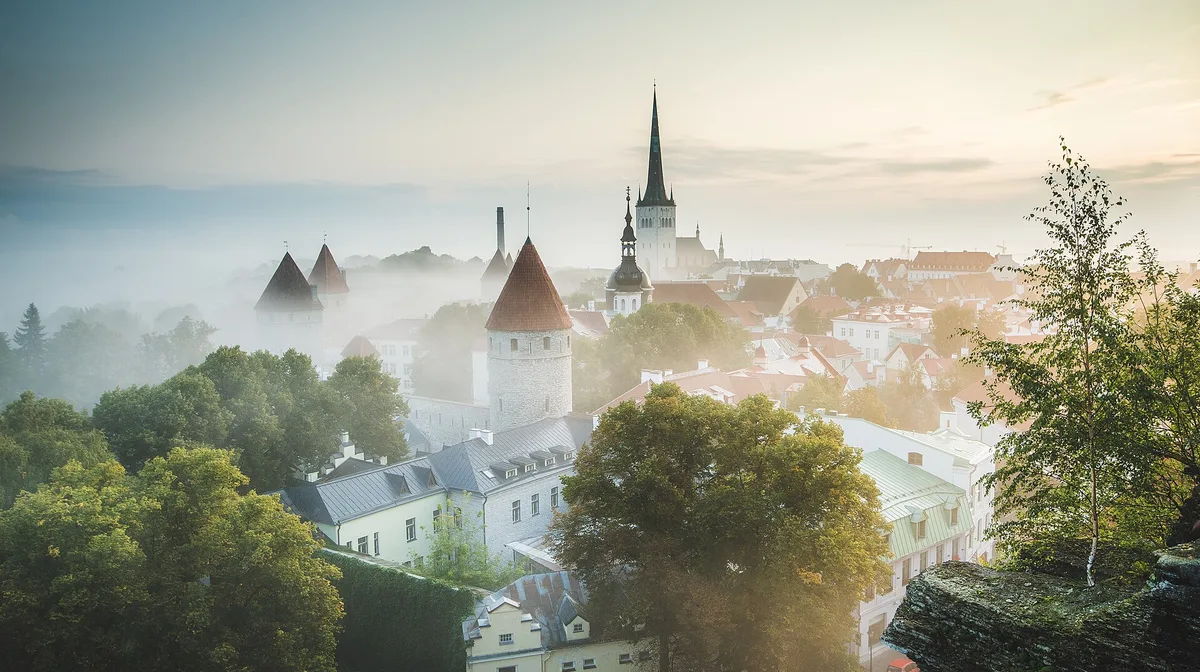
Tallinn's demand rests on something no other capital on this list has: a two-hour ferry to Helsinki. Finnish visitors are the single largest inbound market, arriving in volume for weekends, food, and prices well below home, and they come regardless of season because the crossing does not care. On top of that sits a European city-break market drawn by a medieval core that UNESCO inscribed in 1997 and that is, genuinely, one of the best-preserved in northern Europe — walls, towers, a working pharmacy on the town hall square that has been open since 1422, and a hill with a Russian Orthodox cathedral facing the Estonian parliament. Then there is the part most listings ignore entirely: Estonia is one of the most digitally advanced states in the world, home to e-Residency and to the founding of Skype, Wise and Bolt, and it produces a steady flow of business, conference and remote-working travel that behaves nothing like the weekend market. Blended rates sit near €95 at around 54% occupancy. Old Town takes €100 to €145 a night; Kalamaja's wooden houses and Telliskivi's creative quarter take a younger, longer-staying guest at lower rates and far less competition. Small boutique hotels and guest houses in restored merchant houses compete for the same visitor.
Top Attractions & Landmarks
- The medieval Old Town, UNESCO-inscribed in 1997
- Toompea hill, its castle and the Kohtuotsa viewing platform
- Raekoja plats and the Town Hall Pharmacy, open since 1422
- Alexander Nevsky Cathedral on Toompea
- Kalamaja's wooden houses and the Telliskivi Creative City
- Kadriorg Palace, its park and the KUMU art museum
- The Rotermann Quarter between the Old Town and the port
Nearby Markets: Riga | Vilnius | Warsaw