€72
Avg. Nightly Rate
54%
Avg. Occupancy Rate
€1,180
Avg. Monthly Revenue
6-9%
Est. Cash-on-Cash ROI
MEDIUM
Seasonality
LOW
Regulatory Burden

* Market averages. Properties marketed by Cavmir typically exceed these figures by 25–45%. Data sourced from AirDNA, STR market reports, and Cavmir internal analytics.

The Market

Why Vilnius is One of the World's Premier STR Markets

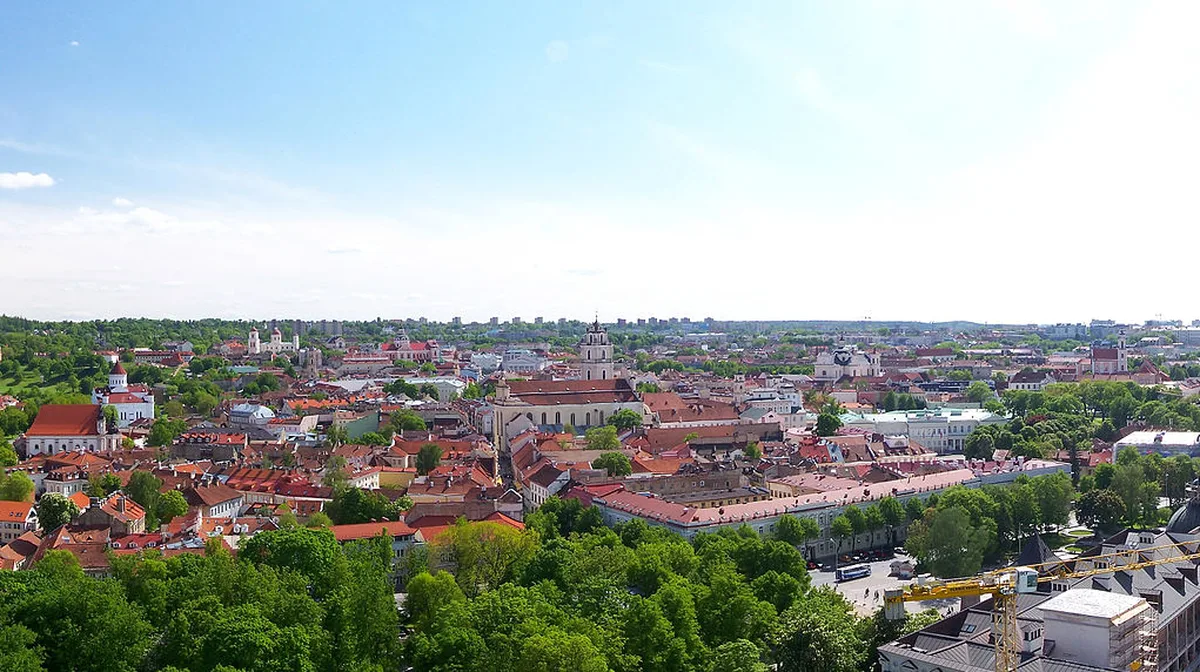
Vilnius is the cheapest capital on this list to enter and one of the least regulated, and it has a piece of geography most owners here never use commercially. The Old Town, UNESCO-inscribed in 1994, runs to roughly 360 hectares — among the largest surviving medieval old towns in Northern Europe — which means "Old Town" covers an enormous and wildly varied area, and a listing that says only that has told a guest almost nothing. The properties that actually earn are the ones that name where inside it they sit, because Old Town and Užupis addresses command 20% to 40% above the city average. The market runs around 2,800 active listings at about 54% occupancy and €72 a night. Regulation is light: there is no nights cap, no short-term rental licence and no moratorium. What Lithuania does ask is that you register your service type with the State Consumer Rights Protection Authority, VVTAT, and report guests through the national tourism system, NTIS, under the Law on Tourism, which treats anyone offering paid short-term accommodation as an accommodation service provider. The tourist tax is already €2 a night here, unlike Riga's, which doubles only in 2027. For an operator, Vilnius is a low-cost, low-friction market where the entire advantage is in being specific.

Vilnius sells baroque, and it sells it at a density that surprises people who have not been. The Old Town is a genuine architectural set piece — Vilnius University's courtyards running back from 1579, St Anne's brickwork, the Gates of Dawn, Cathedral Square under Gediminas Tower — and it is large enough that a visitor can spend three days inside it without repeating a street. Užupis, across a small river at the edge of it, declared itself a republic on 1 April 1997 and put its constitution on mirrored plaques in dozens of languages; it is now the city's most distinctive address and prices accordingly. Demand comes from European city breaks, a growing Nordic and German weekend market, business travel into a capital that has built a substantial financial-technology sector, and a domestic and regional flow around events. Rates blend near €72 at about 54% occupancy — the lowest nightly rate of the three Baltic capitals and the middle occupancy — with Old Town and Užupis running 20% to 40% higher. Small guest houses and boutique hotels in converted baroque houses compete for the same guest, and several of them market the architecture far better than the apartments do.

Top Attractions & Landmarks

  • The UNESCO-inscribed Old Town, among the largest in Northern Europe
  • Cathedral Square and Gediminas Tower on its hill
  • Vilnius University and its interconnected courtyards, founded 1579
  • St Anne's Church and the Bernardine ensemble
  • The Gates of Dawn and its chapel
  • Užupis, its constitution plaques and the river bank
  • Trakai Island Castle on Lake Galvė, 28km west

Nearby Markets: Riga  |  Tallinn  |  Warsaw

Airbnb marketing services in Vilnius, Lithuania, Europe
Why Cavmir

The Cavmir Advantage
in Vilnius

Cavmir wins in Vilnius by making "Old Town" mean something. In a medieval core of roughly 360 hectares, that phrase is not a location — it covers everything from Cathedral Square to the quiet lanes behind the university to the edge of Užupis, and guests booking blind end up disappointed or in the wrong part of it. We name the street, the square, the courtyard and the walk, because Old Town and Užupis addresses earn 20% to 40% above the city average and only a specific listing captures that. We build the second demand engine nobody writes for: Vilnius has a serious financial-technology and business-services sector producing Monday-to-Thursday travel into a market that markets itself entirely as a weekend break, and a desk with a stated connection speed is most of what that guest needs. We price the calendar the city actually runs — Kaziuko mugė on the first weekend of March, which has been going since 1604 and fills the Old Town completely; Culture Night in June; the Christmas tree that gets international coverage every December — rather than reacting to it. We photograph baroque in evening light and Užupis in its own terms. And for the guest houses and boutique hotels in the centre we build direct-booking websites and repeat-guest programmes, because at €72 a night the commission line is a large share of a thin margin. We help position and market your property. We never manage it or touch your keys.

State of the Industry · History

The Vilnius STR Market — Past & Present

Vilnius enters the record in 1323, when Grand Duke Gediminas wrote to the merchants and craftsmen of western Europe inviting them to come and settle in his city — a founding document that is essentially a recruitment advertisement, and the reason the city marked its 700th anniversary in 2023. What grew was the capital of the Grand Duchy of Lithuania, which at its height was the largest state in Europe, and then of the Polish–Lithuanian Commonwealth. The university opened in 1579, one of the oldest in Eastern Europe, and its courtyards still run back off Universiteto street in a sequence that feels more like a small town than a campus. The architecture that followed was overwhelmingly baroque, and Vilnius acquired it in such quantity that the Old Town — inscribed by UNESCO in 1994 and covering roughly 360 hectares — is among the largest surviving medieval and baroque cores in Northern Europe.

The city was, for centuries, several cities at once: Lithuanian, Polish, Jewish, Belarusian and Russian, with the Jewish community so central to European Jewish scholarship that Vilnius was known as the Jerusalem of the North. The twentieth century was catastrophic for that plurality. Vilnius was Polish between the wars, then occupied, then Soviet, and the population that emerged in 1991 was almost entirely different from the one that had existed fifty years earlier. Independence brought a rapid rebuild: Lithuania joined the European Union in 2004 and the euro in 2015, and Vilnius developed a financial-technology and business-services sector large enough to reshape its economy and its travel patterns. Užupis, the run-down riverside district by the Vilnia, declared itself a republic on 1 April 1997 with its own constitution — thirty-odd articles including the right of a dog to be a dog, and a cat's freedom not to love its owner — and became the city's cultural quarter. Tourism arrived with the budget airlines and the rental economy grew with almost no local regulation, which remains the position today.

Pricing Strategy & Seasonality

Pricing, Seasonality & When to Capture ROI

Pricing Strategy

Vilnius's rate map is genuinely misunderstood, because the Old Town is far too large to function as a single price zone. Cathedral Square, Pilies street and the university quarter are the core, taking the top rates and filling first, and this is where the 20% to 40% premium over the city average actually sits. Užupis is the distinctive tier: over the small river at the edge of the Old Town, with the constitution plaques, studios and riverside bars, and a guest who has chosen it specifically rather than settled for it. The southern and western reaches of the Old Town — the quiet lanes toward the Gates of Dawn and behind the university — are the arbitrage: still inside the UNESCO boundary, still a ten-minute walk to Cathedral Square, and materially cheaper because the listings there say "Old Town" and nothing more. Naujamiestis and the streets around the station are the value tier, well connected and considerably cheaper to buy into. Šnipiškės and the business district across the river is where corporate midweek demand actually wants to be and is priced as though it were nowhere. Blended, the city runs near €72 a night at roughly 54% occupancy.

Seasonality & ROI Windows

Vilnius has a moderate year with two distinct peaks and a long cold trough. Spring arrives late but strongly: Kaziuko mugė on the first weekend of March is a genuine anomaly, filling the Old Town completely in a month that is otherwise dead, and May and June build steadily with Culture Night and the university calendar. July and August are the volume peak, warm and busy, with the Old Town terraces full and the city noticeably emptier of locals. September is the best-balanced month, with the weather holding and the business calendar back. October and November are soft. December rebuilds around the Christmas market on Cathedral Square and a Christmas tree that reliably gets international coverage. January and February are cold, dark and the softest months, held up by business travel.

Regulation & Licensing · 2026

What the Law Requires in Vilnius

Vilnius has one of the lightest regulatory positions of any capital on this slate, and unlike Slovenia or Hungary there is no announced restriction waiting on a date.

There is no Vilnius short-term rental licence, no city register beyond ordinary business requirements, no nights cap and no zoning restriction aimed at short letting. Regulation (EU) 2024/1028 has applied since 20 May 2026 and is the most widely misdescribed rule in this industry. It works on an opt-in basis: it sets common standards for the registration procedures Member States choose to operate, and it creates no European registration number, obliges no Member State to introduce a scheme, and does not by itself require any host to register. Lithuania's own framework is the Law on Tourism: register the service type with VVTAT, the State Consumer Rights Protection Authority, and report guest information through the national tourism system, NTIS. It caps nothing and restricts nothing about how you operate. It makes the market visible, which in a country where the policy conversation is about formalisation rather than supply is likely to be the extent of it for some time.

The tourist tax is already in force here at €2 per night in Vilnius, as in Kaunas and Palanga — worth noting because Latvia's equivalent only reaches that level in 2027, so a like-for-like comparison of the two capitals should account for it. It is a collection duty rather than a cost: charged to the guest, remitted by you, with records kept.

Beyond that, the ordinary obligations of running an accommodation business in Lithuania apply — business registration, income and VAT treatment above the threshold, guest registration, and the fire and sanitary expectations that come with providing accommodation as a service rather than letting a home. Building-level rules are the layer most likely to affect you in practice: an apartment association can restrict short letting through its own statutes, and in Old Town buildings that is increasingly common. Verify it before you buy, along with any heritage constraint attaching to a property inside the UNESCO boundary.

Market-Specific Tips & Challenges

Local Tips & Unique Market Challenges

Tips That Actually Move Revenue in Vilnius

Stop saying "Old Town" and start saying which part. The UNESCO area runs to roughly 360 hectares, so the phrase covers everything from Cathedral Square to lanes fifteen minutes' walk away, and guests booking on it alone regularly end up somewhere they did not expect. Name the street, the square, the courtyard and the walking time — the Old Town and Užupis premium of 20% to 40% over the city average only goes to listings specific enough to claim it. Write for the business traveller: Vilnius has a substantial financial-technology and business-services sector generating Monday-to-Thursday demand, and a desk with a stated connection speed is most of what that guest is looking for in a market that offers it almost nowhere. Price the first weekend of March properly, because Kaziuko mugė has run since 1604, fills the Old Town completely and lands in what is otherwise the deadest month of the year. Photograph baroque in evening light. And mention Trakai — a lake castle twenty-eight kilometres away is an easy extra night that almost no listing offers.

Unique Vilnius Challenges

The Old Town's size is a marketing problem as much as an asset: 360 hectares means the single most-used phrase in the market conveys almost nothing, and a listing that relies on it competes on price with several hundred others. Rates are the lowest of the three Baltic capitals at around €72, which leaves a thin margin once platform commission and turnover costs are taken out — making direct booking more consequential here than in a higher-rate market. The winter is long, dark and genuinely quiet from October through February, with only December providing relief. Old Town stock brings no lifts, worn stone stairs, heritage constraints and water-escape risk. Apartment associations are increasingly restricting short letting through their own statutes. And while there is no cap on the horizon, supply keeps growing in a market where differentiation is already the whole game.

The Republic With A Constitution On The Wall
On 1 April 1997, the residents of Užupis — a run-down district across a small river at the edge of the Old Town — declared independence. The Republic of Užupis has a flag, an anthem, an ambassadorial network and a constitution of some forty articles, mounted on mirrored plaques on Paupio street in dozens of languages. Among them: everyone has the right to be idle; a dog has the right to be a dog; a cat is not obliged to love its owner, but must help in time of need. It is a joke that has been maintained with complete seriousness for nearly thirty years.
Finance Essentials — Vilnius
🛡️

Insurance

Standard Lithuanian homeowner cover does not contemplate paying guests. The Vilnius-specific exposures are the age and protection of the Old Town stock — baroque and earlier buildings with shared stairwells, original risers and heritage constraints that make repairs slow — where water escape into a neighbouring flat is the most common expensive claim. The winter adds freeze risk in any property left empty through a soft January or February. Ask for accommodation cover rather than residential cover, confirm public liability for guests on worn stone stairs and icy courtyards, and check the unoccupied-property conditions, which matter in a market whose quiet months are genuinely quiet.

🧾

Property & Income Tax

Lithuania is in the eurozone. Rental income is taxed according to how the activity is structured, and for smaller operators the individual-activity certificate route is common and comparatively simple; at scale, a company structure usually makes more sense. VAT registration applies above the statutory turnover threshold, with accommodation carrying a reduced rate. The tourist tax is a separate collection obligation at €2 per night in Vilnius, already in force, charged to the guest and remitted by you — which is worth remembering when comparing Vilnius against Riga, where the equivalent charge only doubles to that level from 1 January 2027. Ask a Lithuanian accountant which structure fits your scale and residence before you buy.

🏦

Mortgages & Financing

Lithuanian lenders assess short-term rental income conservatively and generally underwrite against long-term market rent rather than platform revenue. EU and EEA buyers purchase Lithuanian apartments without restriction. Entry prices in Vilnius are the lowest of the three Baltic capitals and among the lowest of any European Union capital relative to the quality of the historic stock, which is the main reason foreign owners look here. The practical caution is the same one that applies to the marketing: a cheap entry price into a 360-hectare Old Town where everyone describes themselves identically is not by itself an advantage, and the arithmetic works best where the property has a specific, nameable position.

Future Outlook · 2027 & Beyond

Where Vilnius is Headed Next

Vilnius looks likely to remain one of the more operator-friendly capitals in the region for several years. There is no announced cap, no moratorium and no restriction with a date on it, and Lithuania's policy attention has been on formalisation rather than supply, which the VVTAT registration and NTIS reporting duties largely address already. The pressures that produced restrictions in Budapest, Ljubljana and Dubrovnik are weaker here: the Old Town is very large, so visitor density is spread rather than concentrated, and the housing-loss argument that drove Terézváros to a referendum has not taken hold in the same way. On the demand side the trajectory is upward. The financial-technology and business-services sector keeps expanding and brings repeat corporate travel that does not care about the season; the airport keeps adding routes; and Vilnius has been steadily raising its profile as a cultural destination since the 700th anniversary in 2023. The likeliest 2028 is a larger, fully registered, still uncapped market with more supply and more competition — meaning the operators who spend 2026 learning to say exactly where inside the Old Town they are will hold the advantage over those still writing the phrase and nothing else.

From the Desk of Sofie Sinag

Why We Love Marketing in Vilnius

We love Vilnius because it is a baroque city that never learned to charge for it. The Old Town is one of the largest in Northern Europe and you can walk through it for an hour without hitting a crowd or a ticket barrier; the university's courtyards run back off the street in a sequence that feels like a small walled town; and the whole thing sits under a hill with a brick tower on it that has been the point of the place since 1323. Then you cross a small river and you are in a self-declared republic with its constitution bolted to a wall in forty languages, which the residents have maintained with a completely straight face since 1997. There is a lightness to Vilnius that its neighbours do not have. What makes it a good market to work in is that the advantage available here is almost entirely craft. Rates are low, rules are light, entry prices are the cheapest of any Baltic capital, and the thing that separates a property earning well from one earning badly is whether anyone bothered to say precisely where it is and who it is for. That is a solvable problem, and solving it is the job.

Cavmir's Vilnius Cheat Sheet

The Picks We Recommend for Your Welcome Book

The picks we send Vilnius guests — the Old Town at the scale it actually is, plus the two things everybody misses, with the winter honesty a summer list leaves out.

Coffee & First Light

A specialty room near the university, before nine

Vilnius's coffee scene sits in the quieter lanes behind the university and along the edge of Užupis rather than on the main pedestrian streets. Small rooms, serious roasting, a student and academic crowd. Send guests early and they will see an Old Town that is a working neighbourhood rather than a route.

The Splurge Table

Modern Lithuanian cooking in the Old Town

Lithuania's serious kitchens have moved a long way past the cold beetroot soup that visitors expect, working with forest game, rye, curd cheese, smoked fish and fermenting traditions that are practical rather than fashionable here. Prices are startling compared with western Europe. Book two weeks ahead in summer.

Local Obsession

The Užupis constitution, read properly

Forty-odd articles bolted to a wall on Paupio street in dozens of languages, declaring among other things that a dog has the right to be a dog and a cat is not obliged to love its owner. Send guests to read the version in their own language — there is almost certainly one — and to have a drink afterwards on the river bank below it.

Shoulder Season Secret

Kaziuko mugė, the first weekend of March

A craft fair that has run since 1604, filling the Old Town streets with linen, wood, amber, bread and the distinctive braided verbos in the deadest month of the year. It is the most genuinely local event in any Baltic capital and it is the single best reason to sell a Vilnius booking in early spring.

Weekend Escape

Trakai Island Castle on Lake Galvė

A red-brick castle on an island in a lake, twenty-eight kilometres west and reachable by train or bus in about half an hour. Half a day, no car needed, and the best answer for guests who have walked the Old Town twice and want something completely different.

What Guests Ask For

Where in the Old Town, and how many stairs

Vilnius enquiries repeat these two, and the first matters more here than anywhere else on this list because the Old Town is roughly 360 hectares. Name the street and the walk to Cathedral Square in minutes, give an honest stair count, and you will avoid the arrival that starts with a guest saying they thought it would be closer.

Local Work · Composite Case Vignettes

What Cavmir Has Done for Vilnius Properties

A few composite engagements drawn from how Cavmir typically works in this market. The details are illustrative and consistent with Vilnius, not pulled from a single named client.

Two-bedroom apartment · Užupis
The Brief

A characterful flat over the river described itself only as "Old Town", competed on price against several hundred listings using the identical phrase, and never mentioned that it sat in the district guests specifically seek out.

What We Did

Cavmir rebuilt the listing around Užupis itself — the constitution plaques, the river bank, the studios, the five-minute walk into the Old Town proper — reshot it in evening light, and repositioned it toward guests choosing the district deliberately rather than filtering on a generic phrase.

The Result

The property moved into the 20% to 40% premium band that Užupis addresses actually command, occupancy improved without a rate cut, and the guest mix shifted toward people who had come for the district rather than settled for a location.

18-room boutique hotel · near Cathedral Square
The Brief

A converted baroque house took nearly all bookings through platforms at an average rate of around €72 a night, which made commission a large share of an already thin margin, and had never marketed to the city's financial-technology business travel.

What We Did

Cavmir built a direct-booking website with a published best-rate guarantee and a corporate-rate page aimed at the local technology and business-services employers, packaged Kaziuko mugė and Christmas market stays, and set up a post-stay sequence for returning corporate guests.

The Result

Midweek occupancy improved because the hotel was finally visible to a segment already travelling to Vilnius, the March fair weekend and December filled earlier, and the shift in commission was the single largest improvement to the year's margin at this rate level.

One-bedroom · western Old Town, toward the Gates of Dawn
The Brief

A well-kept flat inside the UNESCO boundary but a ten-minute walk from Cathedral Square was priced as though it were central, disappointed guests who expected to be closer, and collected reviews about the distance rather than the property.

What We Did

Cavmir repositioned it honestly on quiet and value — inside the Old Town, ten minutes to Cathedral Square stated plainly, three minutes to the Gates of Dawn — targeted longer-staying couples and business guests rather than first-time weekend visitors, and added a desk and stated connection speed.

The Result

Distance complaints stopped because expectations were set before booking, average stay lengthened, and the property began earning on quiet and space rather than losing on a proximity claim it could not support.

Ready to Grow in Vilnius?

Let's Put Your Vilnius
Property on the Map

Talk to Cavmir today. We'll show you exactly what your Vilnius property is leaving on the table — and how fast we can change that.

Book a Free Strategy Call