The Market
Why Riga is One of the World's Premier STR Markets
Riga is the largest city in the Baltics and the one where supply is growing fastest — around 2,334 active listings, up roughly 28% in a year, with revenue and nightly rates still trending upward. That combination is a market absorbing new inventory rather than being diluted by it, and it is also a warning: 45% occupancy at about €85 a night leaves less cushion than Tallinn or Vilnius do if demand stops keeping pace. The regulatory picture is light and, unusually for this region, the direction is administrative rather than restrictive. Latvia's Ministry of Economics is working on short-term rental rules explicitly framed as reducing the shadow economy rather than as capping supply — a materially different motivation from Slovenia's night caps or Hungary's moratorium. The change that has a date on it is fiscal: Riga's municipal accommodation tax doubles from €1 to €2 per person per night on 1 January 2027, and the council endorsed applying it to short-term rental hosts directly rather than to hotels alone. Regulation (EU) 2024/1028 has applied since 20 May 2026; it harmonises the national schemes Member States choose to run, and Latvia already requires hosts to register. For an operator, Riga in 2026 is a market with room to grow, a fiscal change to plan for, and no cap in sight.
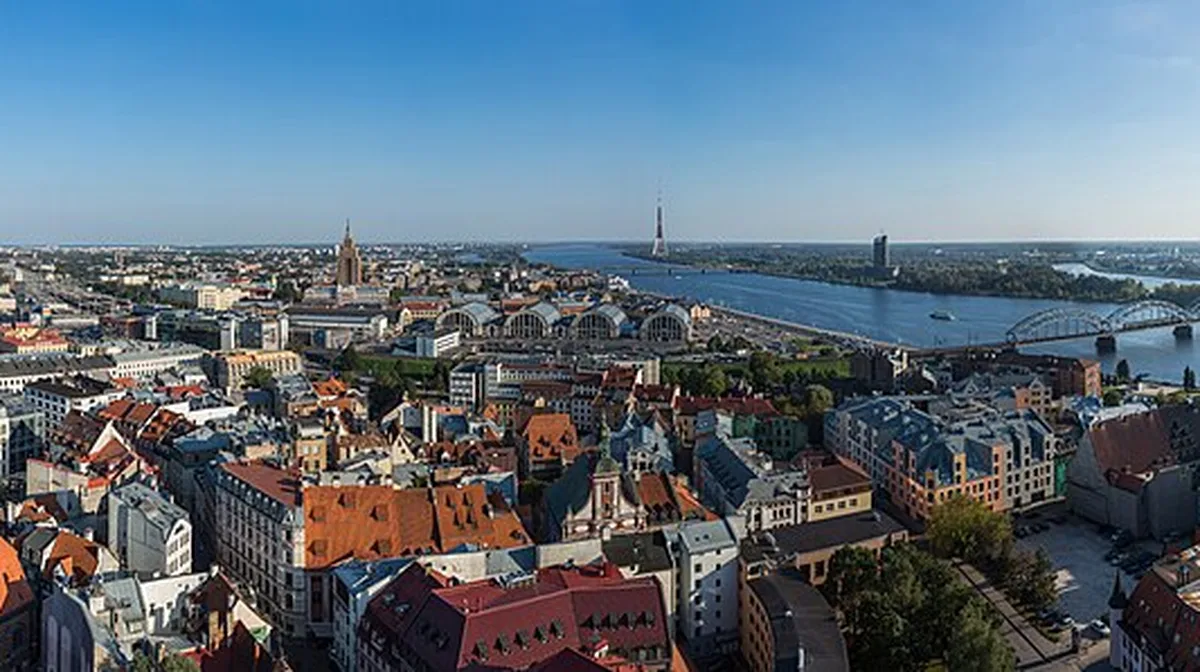
Riga's principal asset is one that most of its own listings never mention. UNESCO inscribed the Historic Centre in 1997 and specifically cited it as holding the finest collection of art nouveau buildings in Europe — around a third of the buildings in central Riga are in the style, concentrated most famously along Alberta iela, and no other city on the continent can make that claim. Alongside it sits a genuine medieval old town, a market housed in former Zeppelin hangars that is among the largest in Europe, and a Baltic beach resort at Jūrmala twenty-five kilometres west and on the commuter rail line. Demand comes from three directions: European city-break travel, a substantial regional and Nordic weekend market, and business travel into the largest economy hub in the Baltics. Rates run near €85 at around 45% occupancy — the softest occupancy of the three Baltic capitals, which is what makes positioning worth the most here. Supply grew about 28% in a year. Small boutique hotels and guest houses in restored art nouveau and merchant buildings compete for the same guest, and several of them have made far more of the architecture than the apartment listings have.
Top Attractions & Landmarks
- The art nouveau district and Alberta iela
- The medieval Old Town, UNESCO-inscribed in 1997
- The House of the Blackheads on Town Hall Square
- St Peter's Church and its spire viewing platform
- Riga Central Market in its former Zeppelin hangars
- The Freedom Monument and the canal park
- Jūrmala's Baltic beach and wooden villas, 25km west
Nearby Markets: Tallinn | Vilnius | Warsaw