

The canal
Three different products
Direct Gulf access, indirect access behind a lock, or freshwater with no Gulf route. State which. Guests with boats will not guess.

Expert short-term rental marketing to grow your bookings and nightly rate in Cape Coral, Florida, USA.
Sixteen services, one team. Everything below is built in-house and scoped to your property and market. Most owners start with the 12-Step System.
Every engagement is quoted to your portfolio. These are the ready-made scopes owners pick most — the AI Efficiency Discount is already applied. A clear proposal within 48 hours.
The work is public. Selected engagements and what changed — and reviews from the owners and managers behind them.
* Market averages. Properties marketed by Cavmir typically exceed these figures by 25–45%. Data sourced from AirDNA, STR market reports, and Cavmir internal analytics.
Cape Coral was not a town that grew. It was a product that was sold. In 1957 two brothers, Leonard and Jack Rosen, bought a large stretch of scrub and mangrove across the river from Fort Myers and set about turning it into what they advertised as a waterfront wonderland, dredging canals and using the spoil to build up the land either side of them, then selling the lots by mail and by aeroplane tour to buyers who in many cases had never seen Florida. The result, seventy years on, is a city of over two hundred thousand people with more than four hundred miles of navigable canals running through it, which is more than any other city in the world. Almost every house has water behind it. The ones on the right canals can put a boat in and be in the Gulf of Mexico in half an hour, past Sanibel and Pine Island Sound. It is not a beach town and does not pretend to be: the beaches are twenty to forty minutes away at Fort Myers Beach, Sanibel and Captiva. What Cape Coral sells is a house with a heated pool, a screened lanai, a dock behind it, and a canal going somewhere.
Cape Coral has just moved from a fairly relaxed regime to a regulated one, and the change is recent enough that many owners have not adjusted. Ordinance 53-25 took effect on 1 January 2026 and substantially updated the city's vacation rental rules: operators must register with the city and meet health and safety standards, with an annual renewal fee reported at $350, and the city has been actively pursuing unregistered units with fines reported to start at $1,000. If you have been operating here for years on the assumption that nobody was counting, that assumption expired at the start of this year. On tax, Lee County levies a 5% tourist development tax on rentals of six months or less, alongside Florida state sales tax and the county discretionary surtax; confirm the current combined figure with the county rather than relying on a general guide. The commercial variable that matters more than any of this, though, is the canal. Direct Gulf access, where a boat can reach open water without passing a lock or a fixed bridge, is worth a great deal. Indirect access behind a lock is worth less. Freshwater canals with no Gulf access at all are a different product again, and pretending otherwise in a listing is the fastest way to a disappointed guest with a boat trailer.
Nearby Markets: Fort Myers & Sanibel | Naples & Marco Island | Sarasota
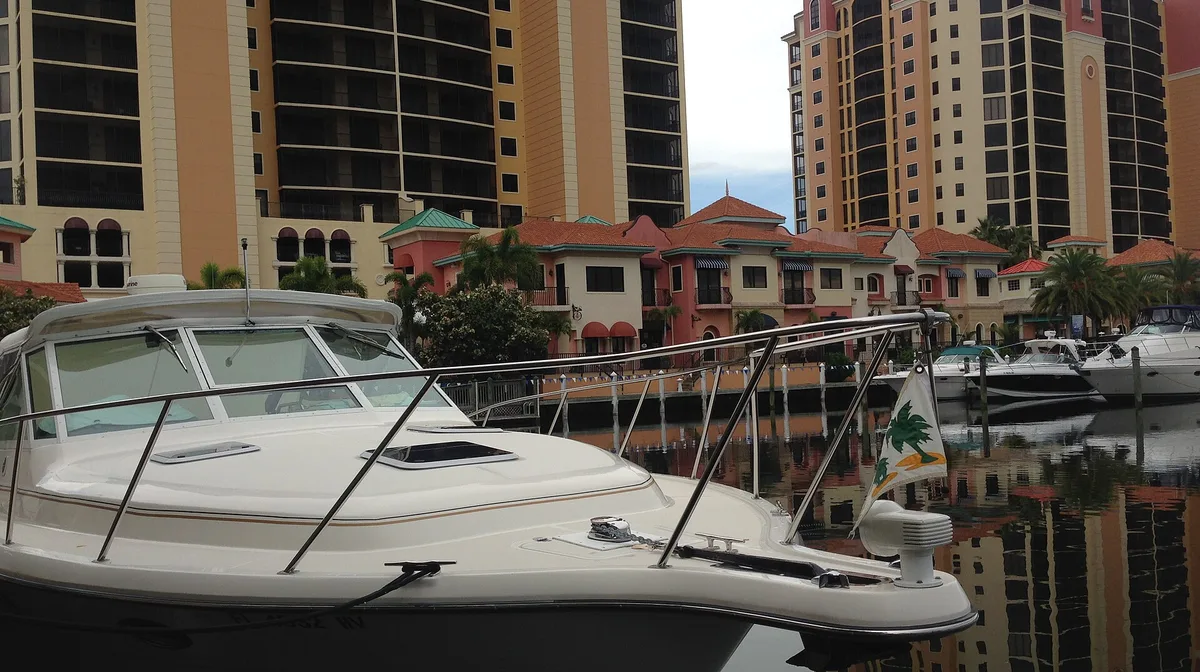
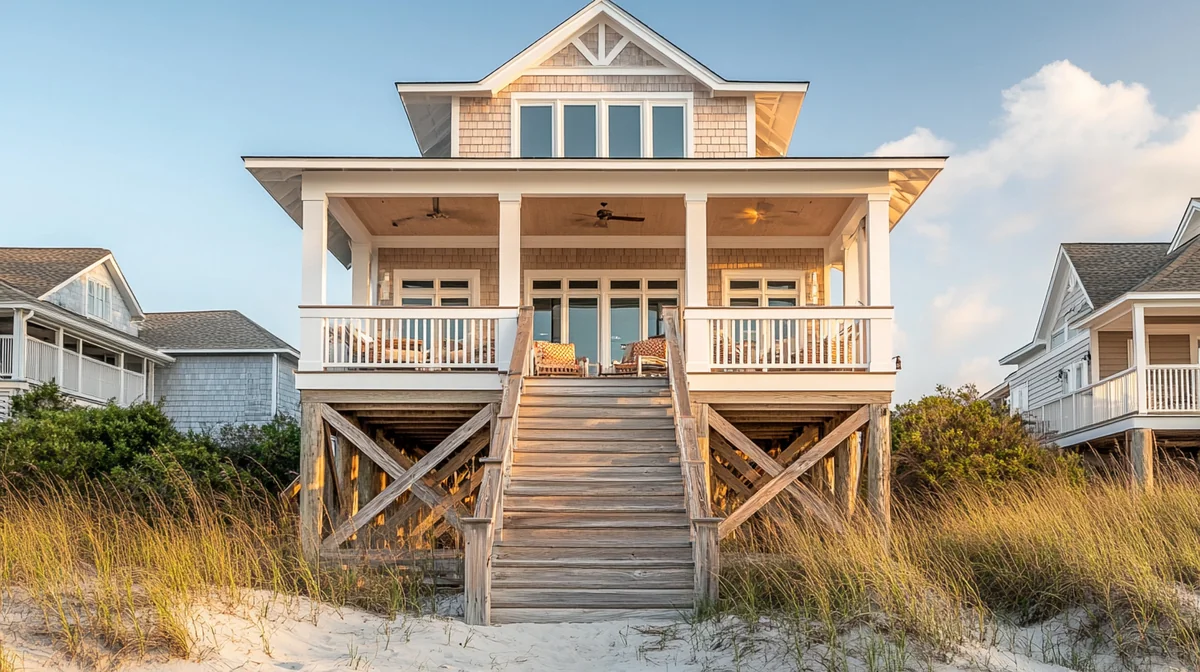
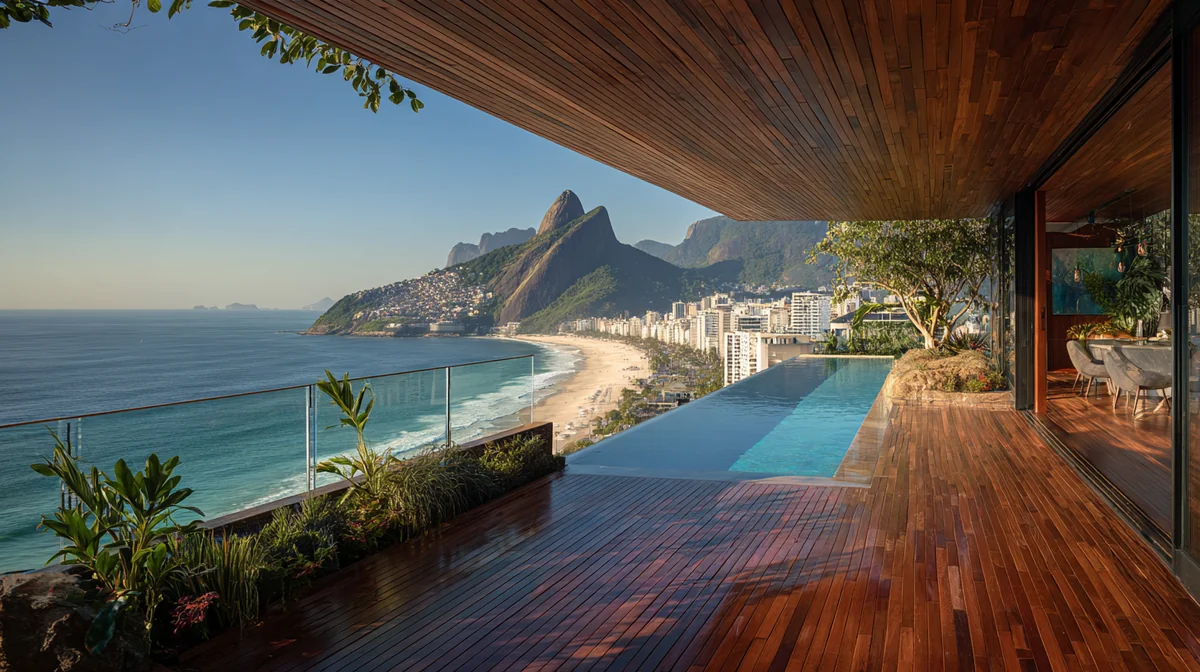
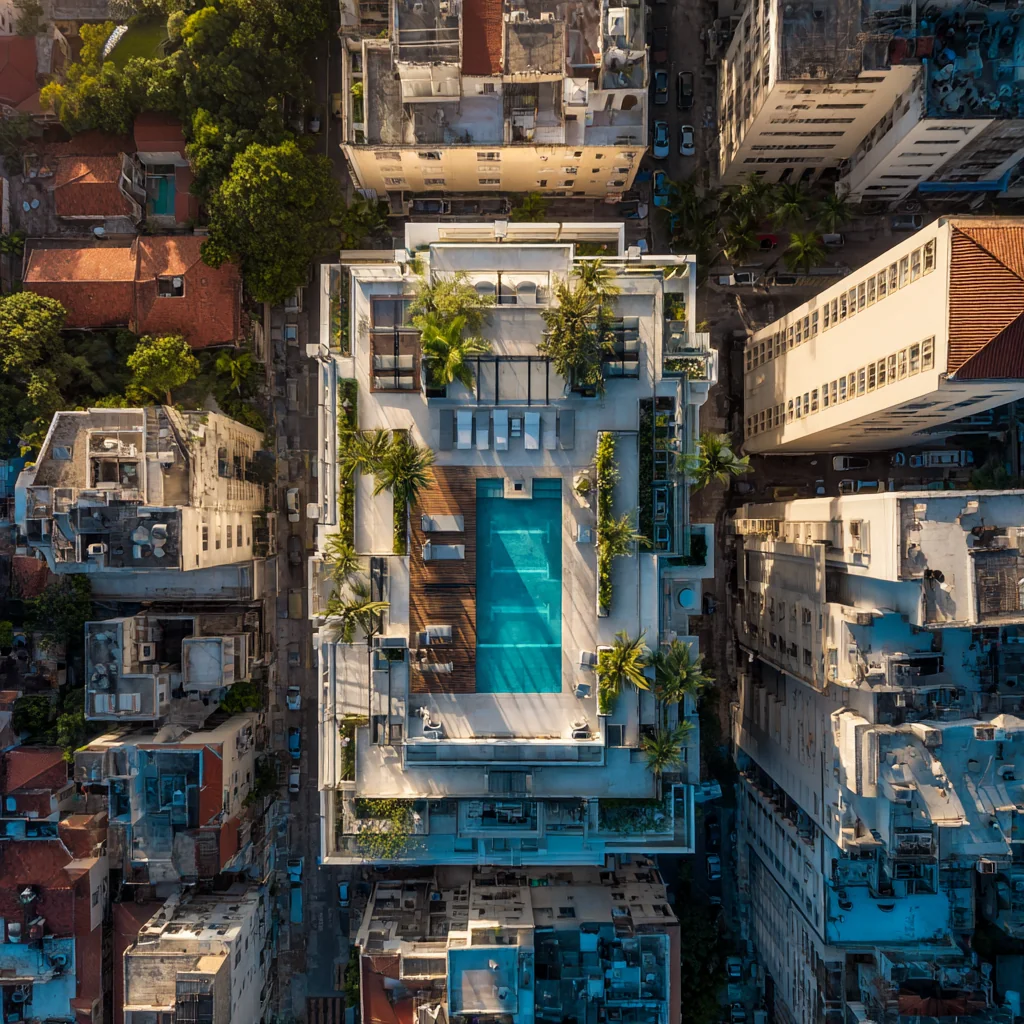
A few of the visual fingerprints we lean into when we shoot, brand and market a Cape Coral property — courtesy of the open Wikimedia Commons archive.
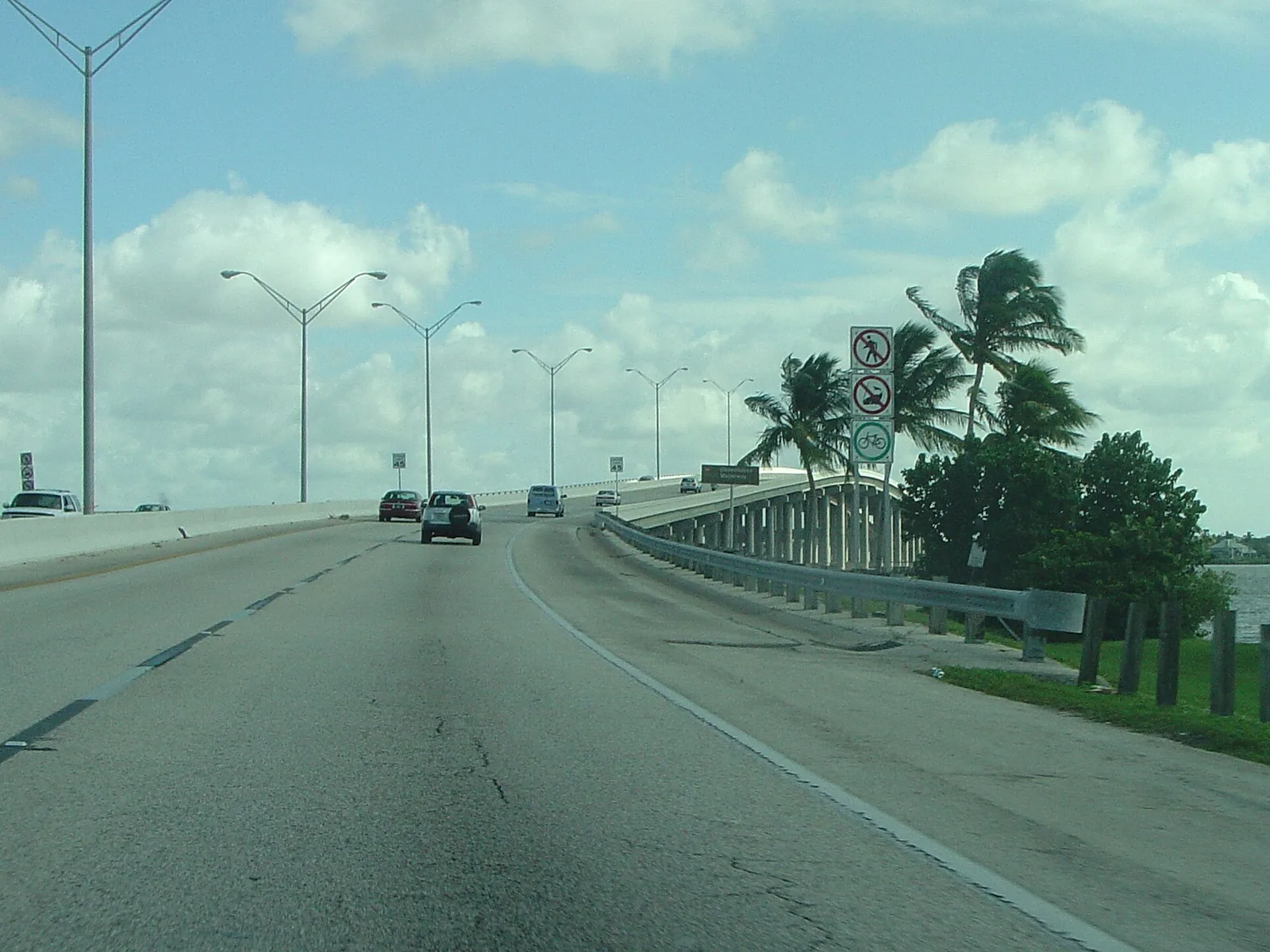
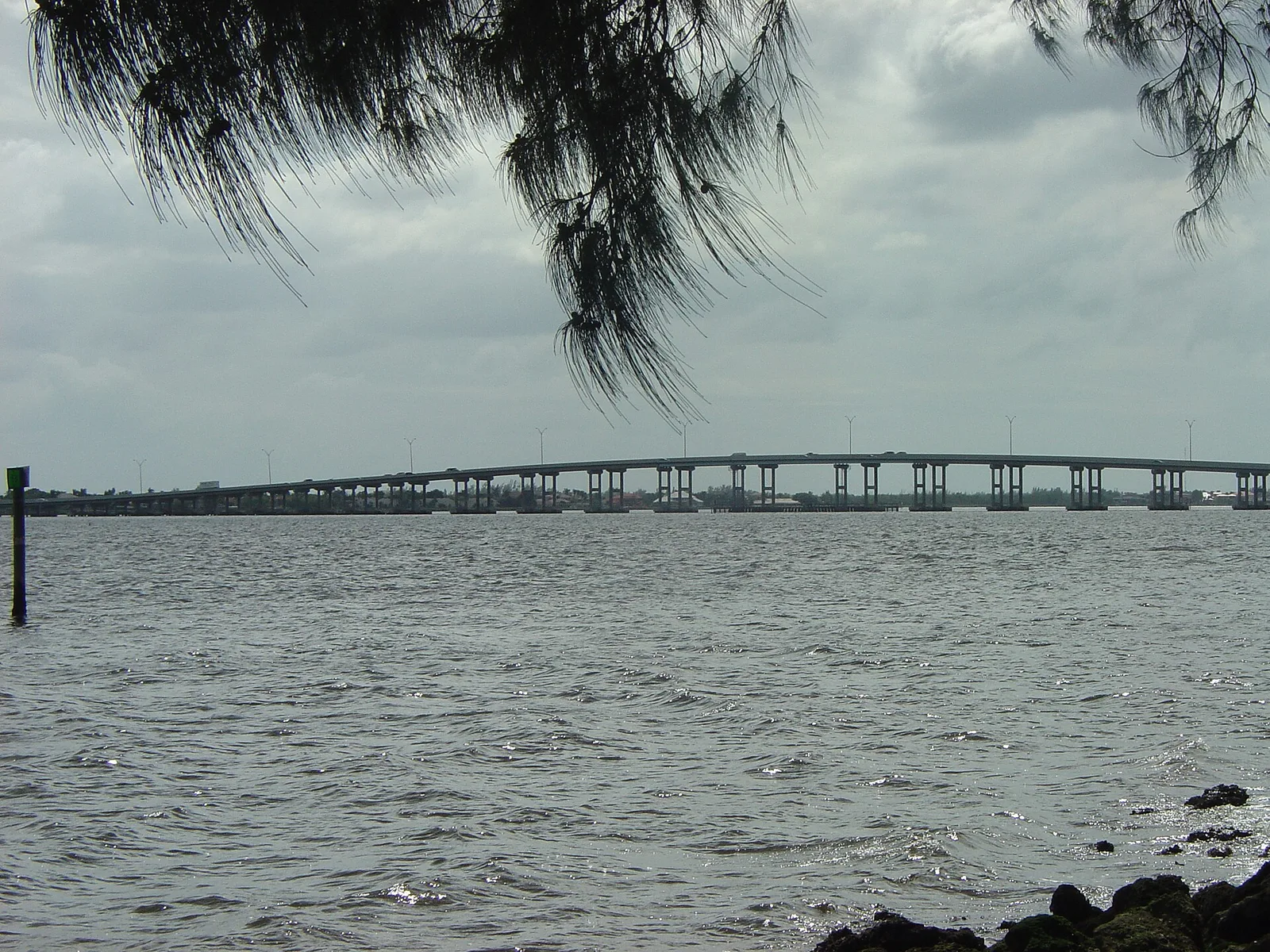
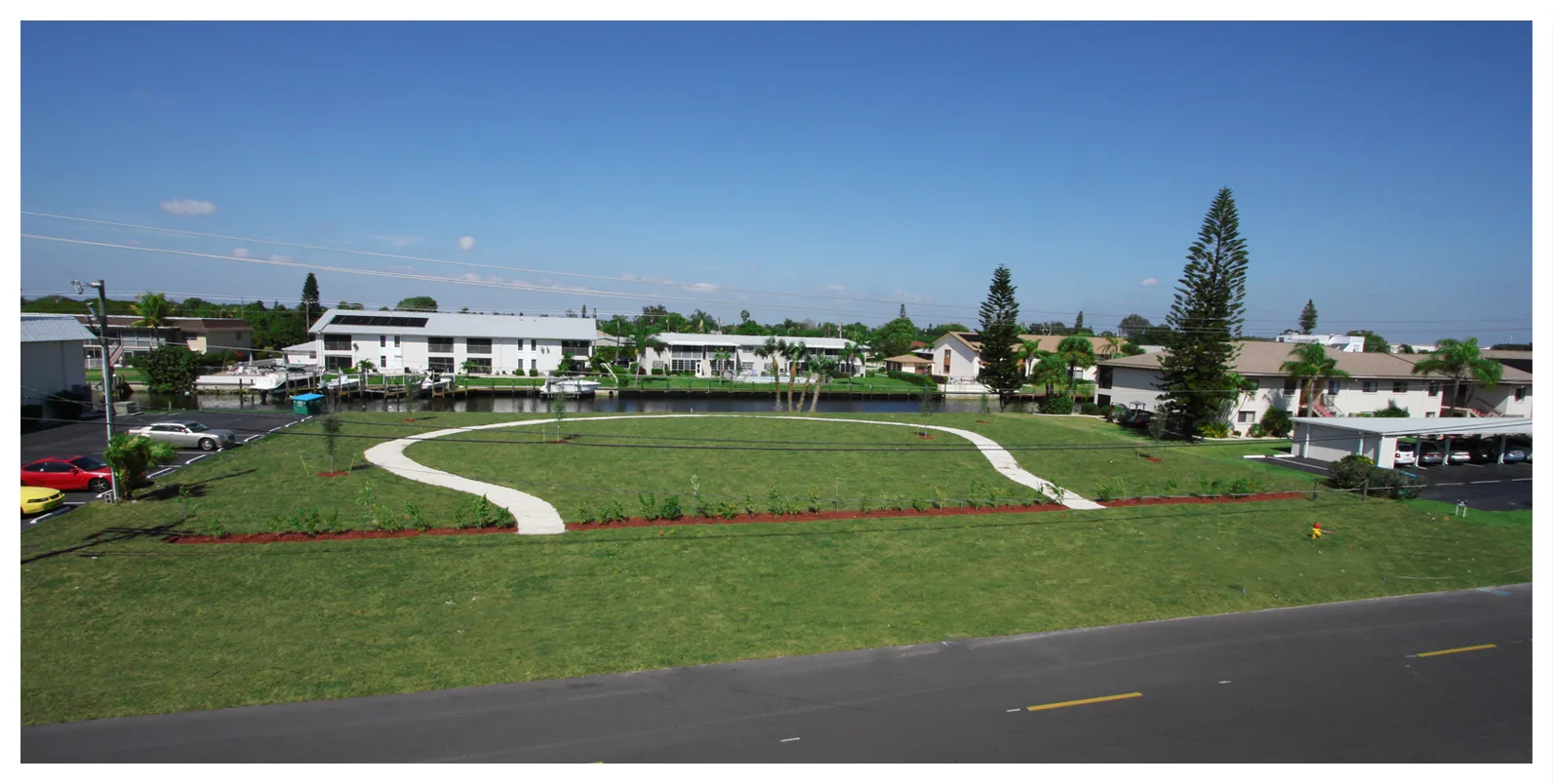

Cavmir markets Cape Coral properties around the two things that decide a booking here, and neither is the kitchen. The first is the pool: in this market a heated, screened, south-facing pool is the product, and the difference between heated and not heated is the difference between a January booking and an empty January. Say it, photograph it properly, and state which way the lanai faces. The second is the canal. Guests bringing or hiring a boat need to know whether they have direct Gulf access, whether there is a lock, whether any fixed bridge limits height, how deep the water is at the dock and whether they can leave a trailer. Most listings here say waterfront and stop. We write the whole thing. Beyond that, this city has a genuinely international guest base, with a long-established European and particularly German following that books long stays months in advance, and marketing to them is a completely different exercise from chasing domestic weekends. We build a direct booking site that can carry all of it, run local search that pulls people here rather than to the beach islands, and hold the guest list that a repeat-heavy long-stay market depends on. We help position and market your property. We never manage it or touch your keys.
Cape Coral was dredged out of the palmetto in 1957 and sold nationwide as a 'Waterfront Wonderland' — with more canals than any city on Earth. Cavmir simply writes the modern chapter.
Cape Coral is one of the largest examples in America of a city that was invented and then sold. In 1957 Leonard and Jack Rosen, two brothers who had made money in direct marketing, bought a large tract of scrub, palmetto and mangrove on the western side of the Caloosahatchee River opposite Fort Myers, and formed the Gulf American Land Corporation to develop it. Their method was dredge and fill: cut canals through the low ground, use the excavated material to raise the land on either side, and you have created both waterfront and buildable lots simultaneously. Then they sold the lots, aggressively, through mail campaigns, free lunches and flights down to see the property, to buyers across the northern United States and later across Europe. The sales practices attracted regulatory attention and the company was eventually forced into significant changes. But the lots sold, the canals were cut, and over the following seventy years the place actually filled in: from empty platted grid to a city of more than two hundred thousand people, one of the fastest-growing in the country for long stretches. The result is a city with over four hundred miles of navigable canals, more than anywhere else on earth, and a street plan of enormous regularity. Hurricane Ian in September 2022 caused severe damage across this region, and the rebuilding since has been substantial.
Before the platforms — before the canals were even finished — the Rosen brothers sold Cape Coral to the whole country with brochures, bus tours and giveaways. Presentation was the product from the very first lot. The channel changed; the work is identical, and here it is almost literal: it is the same business Cavmir is in today.
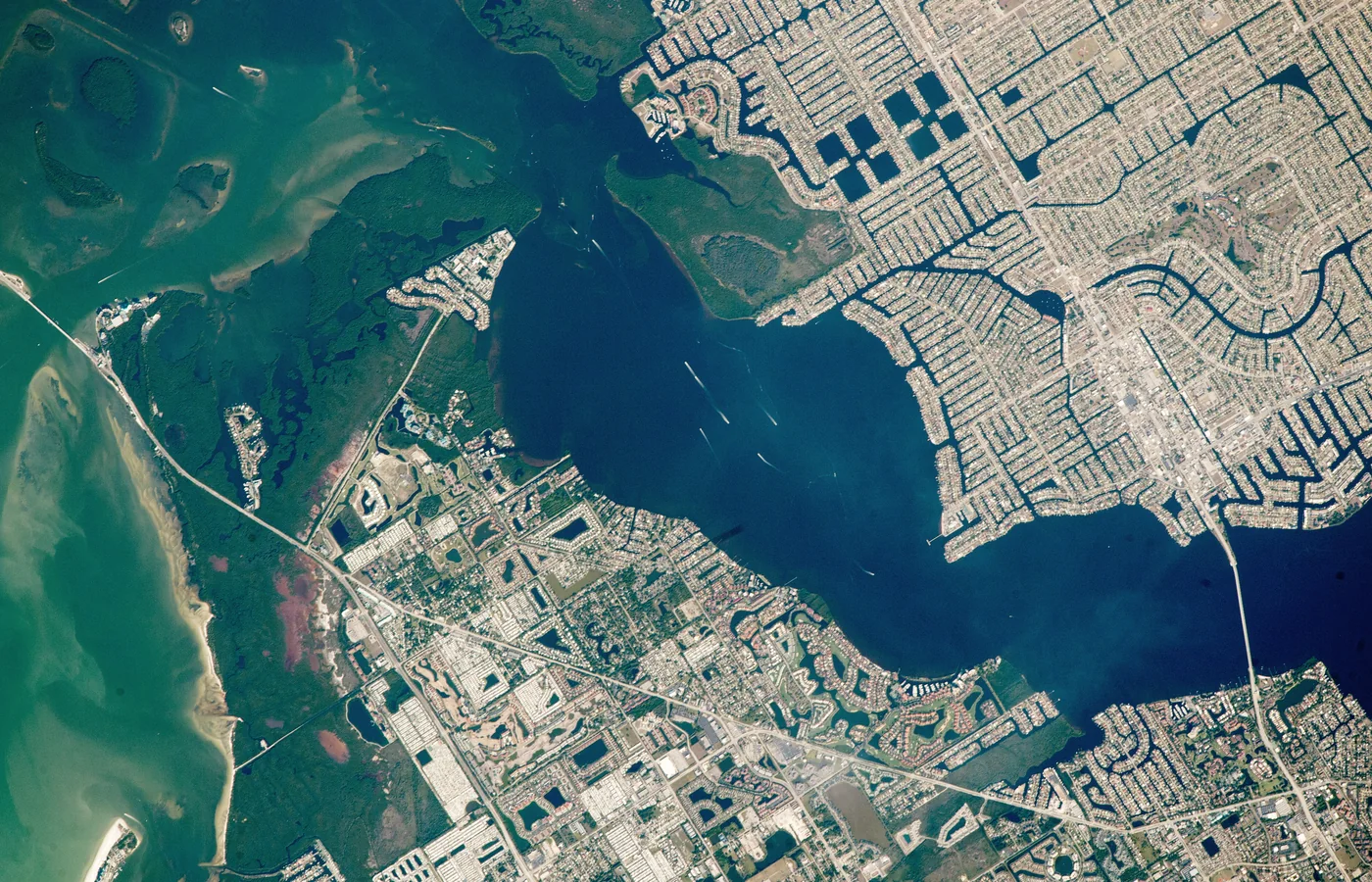
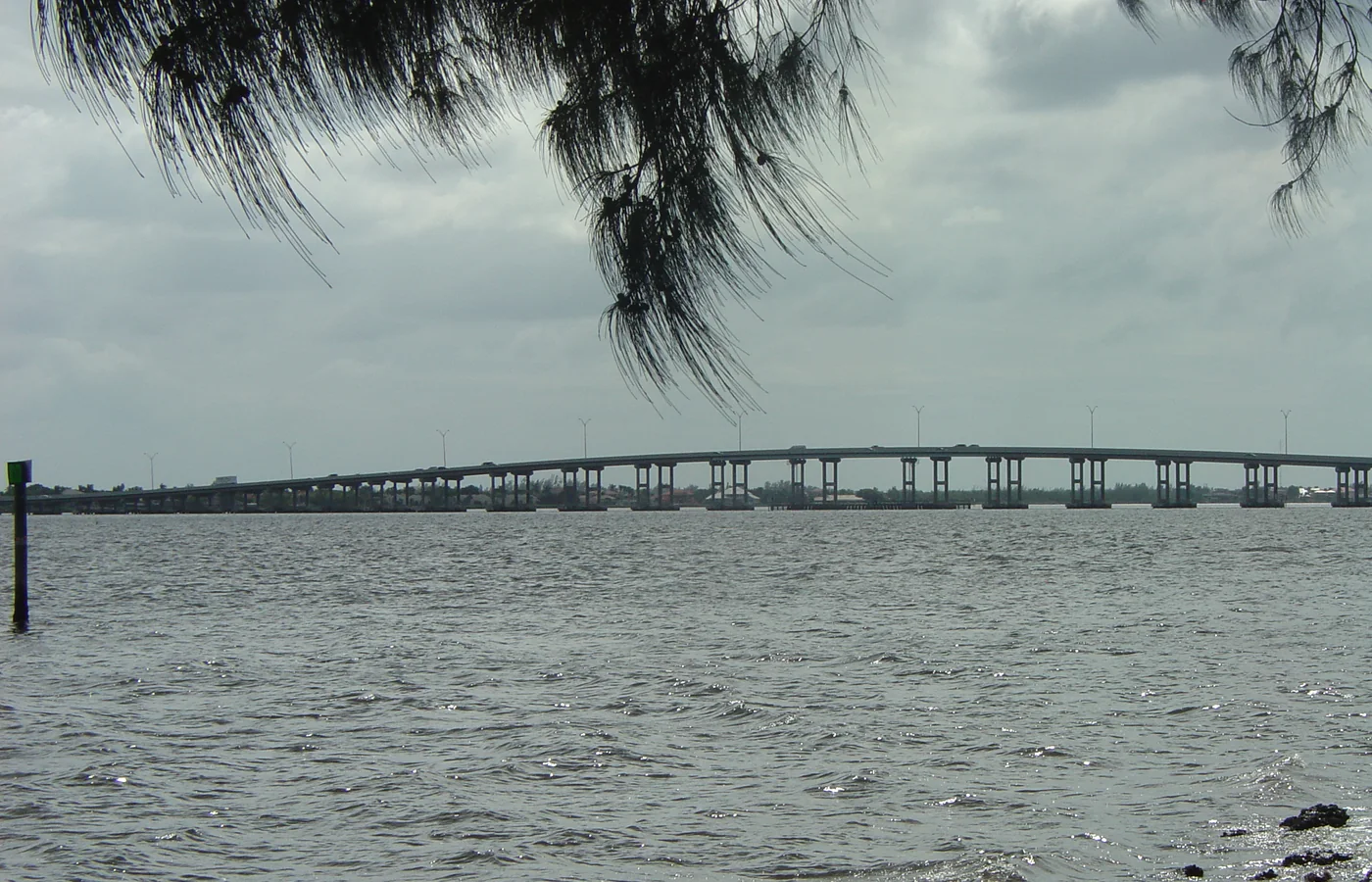
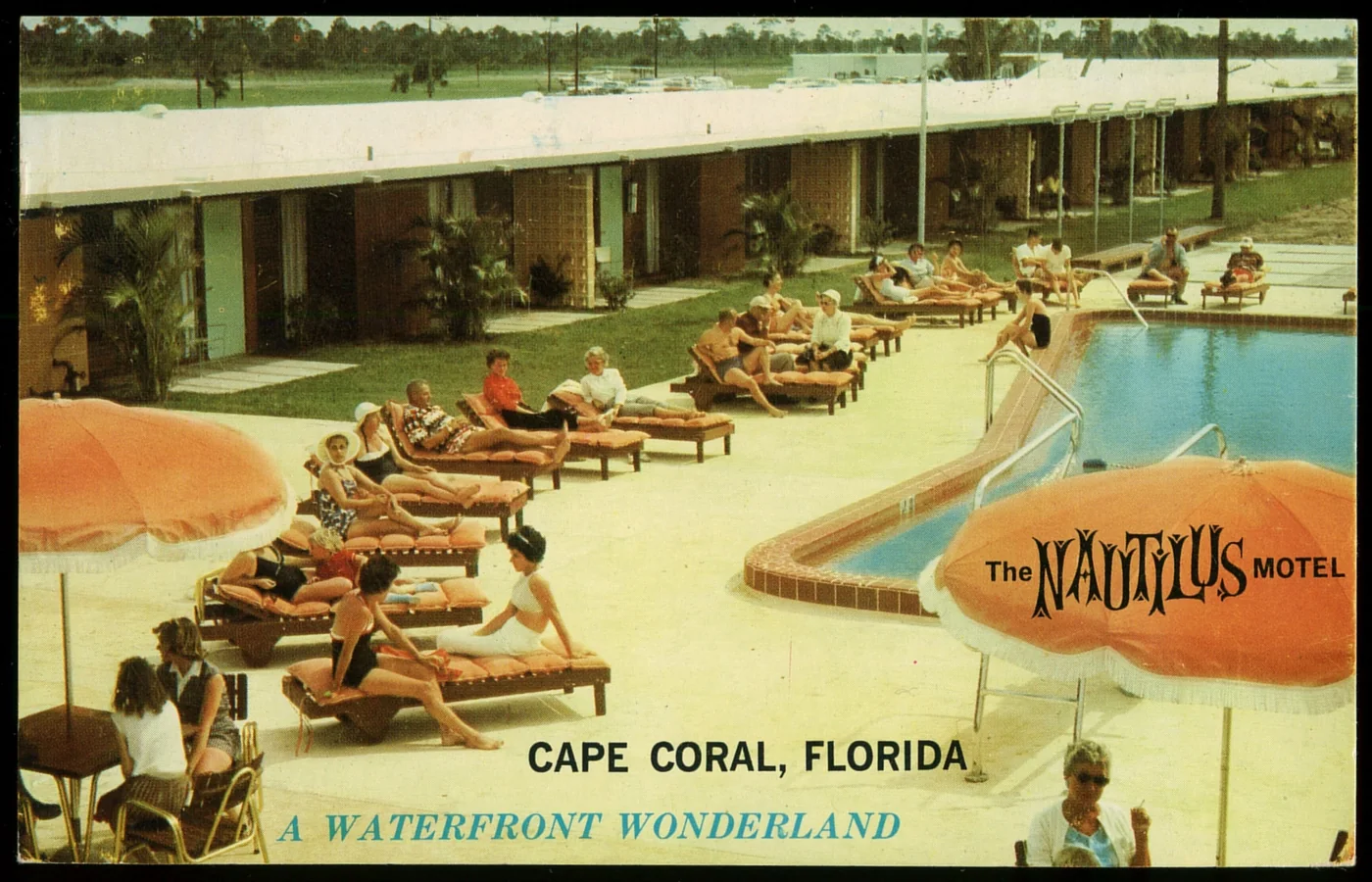
Historical images: public domain and Creative Commons via Wikimedia Commons — NASA and a period Gulf American promotional postcard.
Cape Coral prices on the pool and the canal, in that order, and both are more nuanced than most listings admit. A heated pool is not a luxury here, it is the difference between a booked January and an empty one, because the winter guests who drive this market's longest and most valuable stays are coming from northern winters and will not use an unheated pool in February. Say heated, say screened, and say which way the lanai faces, because a south-facing lanai gets sun all day and a north-facing one does not. The canal is the second variable and it is genuinely tiered: direct Gulf access with no lock and no fixed bridge is the premium product, indirect access behind a lock is a step down, and a freshwater canal with no Gulf route is a different thing altogether that should be sold on quiet water and fishing rather than on boating. Seasonally, this is a long-stay winter market first and a family summer market second. European guests, particularly German-speaking ones, have booked here for decades and typically take two to four week stays booked far in advance, which is the most efficient business in this city. Summer is domestic, shorter and hotter. The autumn is quiet and storm-exposed.
Winter-weighted, which is the opposite of most of this wave. January through April is the peak, driven by northern and European guests taking long stays, and it carries the year. Summer brings a domestic family market, shorter stays and heat. September and October are the quietest and overlap with the most active part of hurricane season. Spring is a strong shoulder. The practical implication is that this is a market where a single well-marketed winter can matter more than an entire summer of weekends.
Cape Coral moved from a relatively permissive position to a regulated one very recently, and the timing matters because many owners have not yet adjusted. Ordinance 53-25 took effect on 1 January 2026 and substantially updated the city's vacation rental regulations. Operators must register with the city and meet specified health and safety standards, with an annual renewal fee reported at $350. The city has been actively identifying unregistered units, with fines reported to start at $1,000, so the previous informal position is no longer available. Florida's state preemption statute limits how far local governments can go in prohibiting short-term rentals or regulating their duration and frequency, while grandfathering ordinances predating 2011, so the city's authority operates within that framework; confirm the details rather than assuming either that the city can do anything or that it can do nothing. On tax, Lee County levies a 5% tourist development tax on accommodation rented for six months or less, and Florida state sales tax plus the county discretionary surtax apply on top; confirm the current combined rate with the county. Beyond city rules, many Cape Coral canals are governed by additional considerations: dock and seawall permits, lock operating hours where applicable, and in some neighbourhoods deed restrictions that limit rental activity independently of anything the city requires. Read the deed restrictions before you buy.
Lead with the pool and say heated. In a market whose best guests arrive in January from a northern winter, an unheated pool is not a pool, and the listings that state heated, screened and the lanai orientation convert far better than the ones that just say pool. Second, describe the canal precisely. Direct Gulf access, indirect access behind a lock, or freshwater with no Gulf route are three different products; state which, name any bridge height restriction, give the water depth at the dock and say whether a trailer can be parked. Guests bringing a boat are your highest-value bookings and they will not guess. Third, market to the long-stay winter guest deliberately. This city has decades of European and particularly German-speaking visitors taking multi-week stays, they book far in advance, they require almost no turnover work, and reaching them is a completely different marketing exercise from chasing domestic weekends. Fourth, be honest about the beaches. They are twenty to forty minutes away and this is not a beach town; selling it as one produces disappointment, while selling the canal, the pool and the boat produces the right guest. Fifth, use the burrowing owls. They are genuinely charming, the city protects them, and guests love them. Sixth, address the hurricane question calmly in your own materials rather than leaving guests to research it alone.
Hurricane exposure is the defining risk in this region and Ian in 2022 demonstrated it comprehensively; insurance costs have risen accordingly and are now a very large operating expense. The new registration regime adds cost and administration to a market that previously had little. Summer heat and humidity make the domestic summer a weaker season than in northern markets. The city is large, low-density and car-dependent, with nothing walkable from most properties, which does not suit every guest. Canal quality varies enormously and water quality events, including algal blooms in the wider region, have periodically affected visitor perception. And the beaches, which many guests assume are close, are a drive away.
Insurance is the single largest operating consideration in south-west Florida and it must be quoted before you commit to a purchase. Windstorm and flood are separate from general property cover and both are material here; Hurricane Ian in 2022 produced both wind and surge damage across this region and the market has repriced accordingly. Elevation matters enormously and flood zone designation drives cost directly, so establish it early. Roof age and shape, window and door protection, construction type and the year built all move premiums substantially, and post-Ian rebuilt or newly constructed properties can cost dramatically less to insure than older ones. Get short-term rental use named on the policy and set liability limits with a pool, a dock and water access in mind; screened pool enclosures are a common and expensive claim in storms. If you supply a boat, kayaks or bicycles, schedule them. Loss of rental income cover is genuinely valuable in a market where a storm can end a season. Seawall condition is worth understanding, since repair is expensive and not always covered. Use a Lee County broker who writes canal-front risk.
Lee County levies a 5% tourist development tax on the rental of accommodation for periods of six months or less, and Florida state sales tax applies alongside it together with the county discretionary surtax, so the combined figure is higher than the headline; confirm the current total with the county tax authorities rather than relying on a general guide, as surtax rates change. Registration for the tourist development tax is with the county, and Florida's Department of Business and Professional Regulation licenses vacation rentals separately. Establish precisely what your booking platform collects and remits versus what you must file yourself, because the split varies and the liability stays with you. As elsewhere in Florida, tangible personal property tax applies to furnishings used in a rental business and is regularly overlooked by out-of-state owners, and non-homestead property tax treatment differs materially from owner-occupied. Note also that a bona fide lease of longer than six months changes the tourist development tax position, which is worth understanding if you are pursuing the long-stay winter market seriously. Ask your accountant to set the structure up before your first season.
Cape Coral is affordable relative to the Florida coast, which is a large part of its appeal, but the financing conversation is dominated by insurance and flood zone. Get both quoted early, because the annual insurance figure feeds directly into affordability calculations and in some flood zones it is large enough to change what you can borrow. Lenders will look at roof age, which is a live issue across Florida, and at whether the property has been repaired or rebuilt since 2022, since post-Ian construction to current codes is viewed favourably by both lenders and insurers. Direct Gulf access commands a premium and appraisals generally support it, but the appraiser needs to understand the distinction between direct access, indirect access behind a lock and freshwater canal, so make sure the difference is documented rather than assumed. Seawall condition can affect valuation. Short-term rental income treatment varies by lender and documented history performs better than projections, particularly now that the city registration regime creates a paper trail. Use a broker in Lee County who has financed canal-front vacation rentals since Ian.
Cape Coral's next few years are shaped by three things. The first is the new regulatory regime: Ordinance 53-25 took effect at the start of 2026, registration is now required, enforcement is active, and the informal era has ended. That will remove some unregistered supply and formalise the rest, which generally benefits compliant operators. The second is insurance and resilience. Hurricane Ian reset expectations across south-west Florida, and the properties that will perform commercially over the next decade are the ones built or rebuilt to current codes, correctly elevated and properly insured; that is now a competitive distinction as much as a safety one. The third is the canal system itself, which is finite, cannot be extended, and is the reason this city exists as a rental market at all; lock arrangements and water management in the wider region remain live local issues worth following. Demand fundamentals look sound: the long-established European winter market is loyal and books far ahead, the domestic drive market from across Florida and the southeast is large, and the product on offer, a private heated pool and a dock at a price that is impossible on the barrier islands, has no obvious substitute nearby.
Cape Coral makes complete sense from the air and very little sense from the ground, which is the natural consequence of a city that was drawn before it was built. In 1957 two brothers bought a stretch of scrub across the river from Fort Myers and started cutting canals through it, piling the dredged material up on either side to make land, and then sold the resulting lots by post to people in Ohio and Michigan and eventually Germany. Seventy years later there are more than four hundred miles of navigable canal here, more than any other city on earth, and a street plan of such regularity that you can be lost and perfectly oriented at the same time. What that produces is a specific and rather good holiday: a single-storey house with a screened lanai, a heated pool, a dock at the bottom of the garden, and a canal that, if you bought on the right one, takes you out past Cape Coral and Pine Island into the Gulf in half an hour. The beaches are a drive away and that is fine, because the water is at the back door. The other thing we like is the owls. A city platted for far more houses than were ever built ended up with thousands of empty sandy lots, which turns out to be exactly what a burrowing owl wants, and Cape Coral now has the largest population in Florida. Residents stake out the burrows to protect them. The owl is the official city bird. There is a day for it in February.
A great property in Cape Coral doesn't just want a listing — it wants a point of view, an audience, and a brand the city itself would recognise.
Eight things that decide how a Cape Coral rental performs, starting with the fact that not all canals go to the same place.
Direct Gulf access, indirect access behind a lock, or freshwater with no Gulf route. State which. Guests with boats will not guess.
The best guests arrive in a northern January. An unheated pool is not a pool in February. Say heated, screened, and which way the lanai faces.
January to April carries the year, with multi-week bookings made far in advance. This is the opposite of most northern markets.
Cape Coral has had a German-speaking visitor base for decades, taking long winter stays. Reaching them is a different marketing job entirely.
More navigable canals than any city in the world, all of them cut by dredge from 1957 onward as part of a land sales operation.
The largest burrowing owl population in Florida, living in the empty lots. Residents stake the burrows. There is a Ground Owl Day in February.
Fort Myers Beach, Sanibel and Captiva are twenty to forty minutes away. Sell the canal and the pool, not a beach you do not have.
Ordinance 53-25 requires city registration, with an annual renewal reported at $350 and fines from $1,000 for unregistered units.
The three examples below are composite and illustrative. They reflect patterns common across canal-front and long-stay winter markets rather than any single Cape Coral client, and no real business is described.
A property described itself as waterfront with a dock and attracted a guest who trailered a boat down from Georgia, only to discover the canal was freshwater with no route to the Gulf.
We rewrote the water description precisely, naming the access type, the lock, any bridge height limit and the depth at the dock, and repositioned the property toward fishing and quiet-water guests.
The mismatch complaints stopped, and the property started attracting guests who wanted exactly what it had rather than ones who had assumed something else.
An owner ran the property as a domestic summer rental with weekend bookings and left it largely empty through the winter, which in this market is the most valuable quarter of the year.
We built a long-stay winter proposition aimed at northern and European guests, priced by the month, emphasised the heated pool, and marketed it in the autumn well ahead of the northern winter.
The winter filled with multi-week bookings requiring minimal turnover, and the annual return improved substantially without touching the summer business.
An owner had operated informally for several years and continued into 2026 without registering under the new ordinance, unaware that the city had begun actively identifying unregistered units.
Marketing was paused until registration under Ordinance 53-25 was completed and the health and safety requirements were met, and the compliance calendar was set up for annual renewal.
The operation was brought into line before enforcement reached it, and registered status then became a trust signal in the listing rather than an exposure.
Demand in Cape Coral peaks around January through April and runs quietest around September through October. Here is how the year actually books — and what to do about each stretch of the calendar.
January through April is the peak and it carries the year, which is the opposite of most markets in this wave. It runs on long stays from northern and European guests, booked far in advance, and a heated pool is the single condition of participating in it. Set those months early and hold them.
Spring is a strong shoulder with good weather and softer rates, and the domestic family summer fills June through August with shorter stays and higher heat. Both are secondary to the winter but neither should be given away.
September and October are the quietest months and overlap with the most active part of hurricane season. The honest response is reduced expectations, a maintenance window, and any longer-stay demand you can find, rather than deep discounting into a month with very little traffic.
Winter long stays book very far ahead, often close to a year, particularly from Europe where the whole trip is planned early. Spring and summer bookings arrive a few weeks to a couple of months out. Repeat guests frequently rebook the same weeks before they fly home.
Long by any standard. Multi-week and monthly stays dominate the winter and are the reason this market works, while the summer runs on shorter family bookings. A property configured for long stays, with laundry, storage and a real kitchen, outperforms one set up for weekends.
A single-storey house with a heated screened pool, a lanai and a dock on a canal with stated access type is the product. Direct Gulf access commands a real premium. Properties without Gulf access should sell quiet water, fishing and the pool rather than implying a boating route they do not have.
Start with photography that shows what a guest actually gets here, then write the listing around a real itinerary rather than a feature list. Build a direct-booking site so returning guests can come back without going through a platform, and keep an email list segmented by season so you can reach last year's visitors before the calendar opens. Local search matters more than people expect in a market this size, because guests search the destination and the attraction rather than the word rental. A marketing agency layer handles the photography, the listing copy, the direct-booking site and the local SEO as one system instead of four disconnected jobs.
January through April is the peak and it carries the year, which is the reverse of most markets. It runs on long stays from northern and European guests, and a heated pool is the condition of taking part. Summer brings shorter domestic family bookings, and September and October are the quietest months.
The winter long stays book very far ahead, often close to a year out, particularly from Europe where the whole trip is planned early, and returning guests frequently rebook before they fly home. Spring and summer bookings arrive a few weeks to a couple of months in advance.
The winter market is unusually international, with a long-established German-speaking following arriving through the regional airport alongside northern American and Canadian snowbirds. The summer is a Florida and southeast drive market from Miami, Tampa, Orlando and Atlanta. The two need completely different marketing.
A heated pool is the single most important amenity, because the best guests arrive from a northern winter and will not use an unheated one. A screened lanai, a dock with the canal access type clearly stated, laundry and a full kitchen for a multi-week stay, and fast wifi all matter enormously.
Run your Airbnb, Vrbo, or website through Cavmir's free grader. It checks the things that decide whether guests book in Cape Coral — photos, listing copy, page speed, local search — and shows you where bookings leak. Takes about a minute, and there's no sales call attached.
If the report says your booking engine is the weak link, that's fixable: a direct-booking website of your own means repeat guests stop paying platform fees to come back to you. That's the work Cavmir does — see Airbnb website design in Cape Coral.
Counted from the Florida DBPR vacation rental license file, deduplicated by permit number — real registry data, not an estimate. See the full Florida permit data →
As of July 2026, the Florida DBPR vacation rental license file shows 949 current licenses on file in Cape Coral. A license is not always one listing — some licenses cover multiple units — so treat this as a verified floor for the size of the legal market.
Cape Coral ranks number 11 of Florida's tracked markets by records on file, holding about 2% of the 50,295 records we compiled for Florida. Every one of those operators shows up in the same searches your guests use — which is why presentation, photography, and a direct-booking path decide who gets seen.
The number above comes from the Florida DBPR vacation rental license file, an official public source, pulled and deduplicated in July 2026. Rules and requirements change — always confirm current licensing requirements with the program directly before you buy or list.
Send us the listing and we'll tell you what we'd change. Not a pitch deck — a straight read on your photos, your title, your rates against the Cape Coral comp set, and whether a direct-booking site would pay for itself.
You'll hear back from a person, usually inside one business day. If we don't think we can move your numbers, we'll say so. Cavmir is a short-term rental marketing agency — we position and market properties, we don't manage them.
Talk to Cavmir today. We'll show you exactly what your Cape Coral property is leaving on the table — and how fast we can change that.
Book a Free Strategy CallPhotography via Wikimedia Commons (images resized and cropped): State of the Art at Cape Harbour Marina - Armstrong (15285101530) by Isles Yacht Club (CC BY 2.0) · Cape Coral Founders Park by Johnrjacobsen (CC BY-SA 3.0) · Burrowing owl, cape coral (24462742516) by Russ (CC BY 2.0) · The Nautilus Motel, A Waterfront Wonderland - Advertising Postcard (4298825360) by Steve Shook from Moscow, Idaho, USA (CC BY 2.0).
